Alaskan Malamute
A powerful Arctic freight breed whose care includes suitable activity, secure handling, double-coat maintenance, and joint, eye, and nerve screening.
How these guides are researched and reviewed
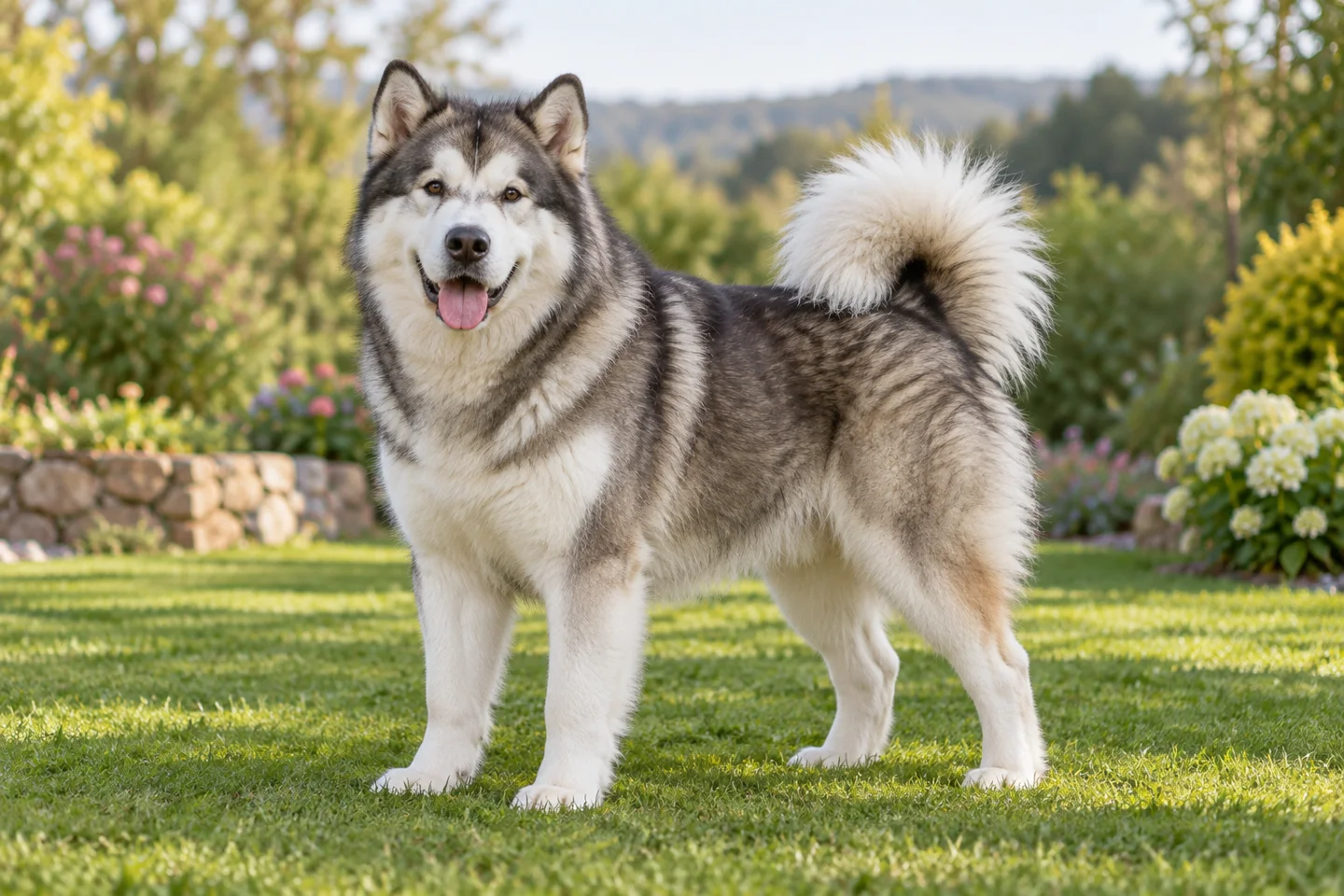
- Reference freighting sizes
- Males about 85 lb; females about 75 lb
- Coat
- Dense double coat with seasonal shedding
- Care priorities
- Conditioning, handling, and heat management
General information for owners. These articles have not been reviewed by a veterinarian. Medical decisions need your dog's history and an examination.
Living with an Alaskan Malamute
An Alaskan Malamute needs a household prepared for strength, a substantial coat, and regular activity with its people. Begin by considering the route outside, secure boundaries, transport, and the person who will handle the dog when another animal appears unexpectedly. A puppy's appealing appearance can make those future tasks feel remote. They become everyday responsibilities as the dog grows, so arrange them before choosing a placement.
Ask what a particular dog does around food, unfamiliar dogs, small animals, visitors, and periods alone. An adult's observed behavior may provide information a puppy cannot yet offer. Choose a companion whose care fits your actual schedule and physical abilities. A large garden does not replace walks, company, training, or medical attention. The household needs a workable plan for rainy weeks, illness, holidays, and the older dog as well as enjoyable outings.
Freight-dog heritage and breed identity
The Alaskan Malamute's history is tied to Indigenous communities in Alaska, particularly the people often called Mahlemut in breed histories, and dogs used for hauling. The modern breed belongs to the American Kennel Club Working Group. Its substantial build suits a history of freight work rather than simply being an enlarged racing dog. The Siberian Husky and Alaskan Klee Kai are distinct breeds, with different standards and care considerations.
Historical work can suggest suitable interests without requiring a companion to perform a particular sport. An individual may enjoy exploring, following scents, or carefully introduced pulling activities. Ask what the dog enjoys now and how it recovers afterward. A working ancestry is not a prescription to load a puppy, exercise through lameness, or demand endurance without conditioning. Let age, health, training, and comfort determine what is appropriate.
Size, eyes, and a functional outline
The breed standard's desirable freighting sizes are approximately 25 inches and 85 pounds for males, and 23 inches and 75 pounds for females. The standard also describes a natural range, so these are reference figures rather than a target for every individual. Avoid feeding toward exceptional size or choosing an advertisement because it promises a giant. Ask the veterinarian to assess condition, development, and movement.
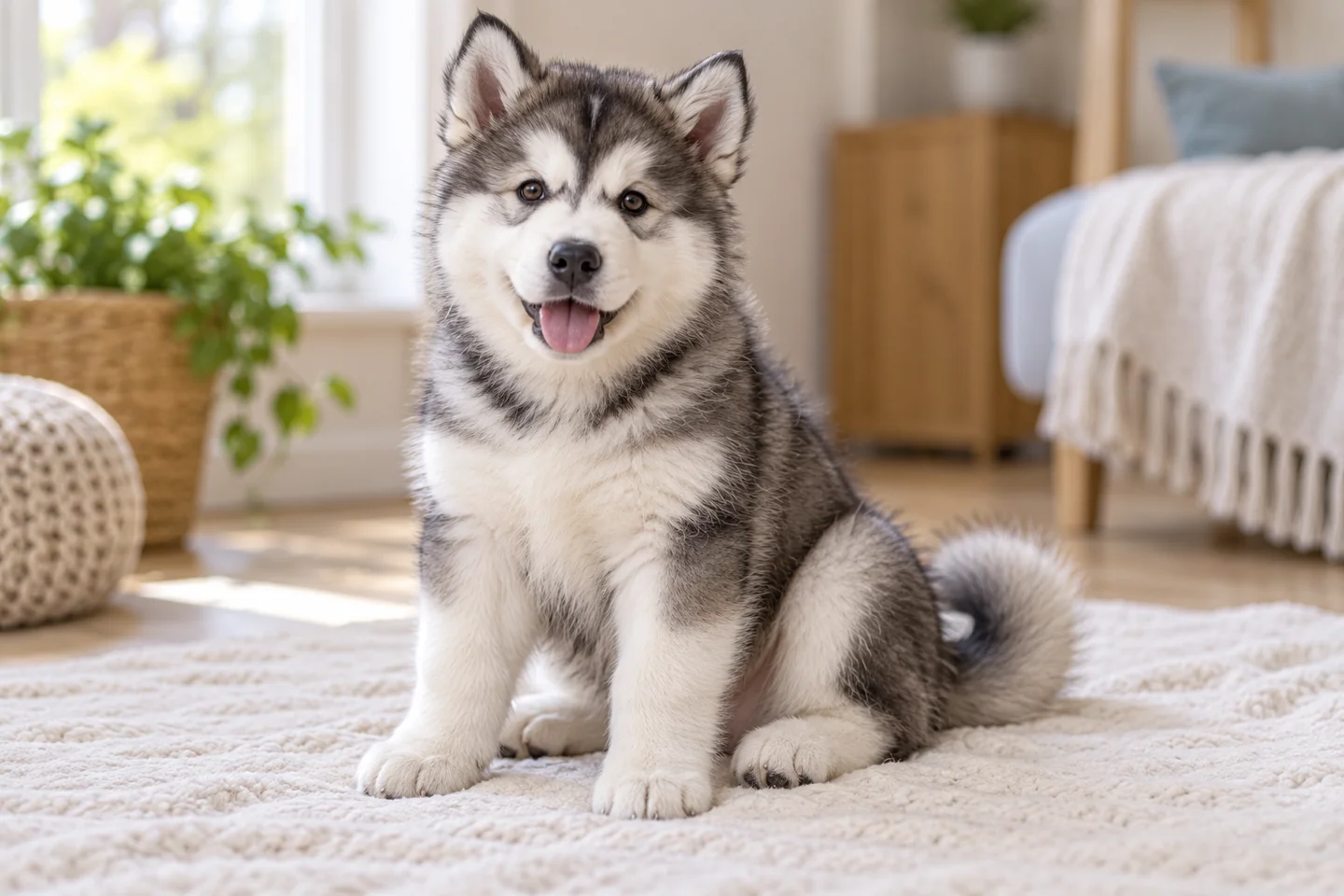
Malamutes have a broad head, triangular ears set relatively wide apart, a dense double coat, and a well-furred tail carried over the back. Brown eyes are a breed feature; blue eyes do not meet the American standard. Appearance alone still cannot verify ancestry. The illustrations show recognizable traits, with healthy-looking proportions, but they are generated images and cannot document a real dog's joint health, pedigree, or behavior.
Secure boundaries and everyday equipment
Inspect fences for gaps, weak sections, accessible latches, and opportunities to dig beneath them. Consider a second barrier where a gate opens toward a road or shared path. Teach everyone who uses the property how the entrance routine works. A boundary must remain effective when the dog is interested in something outside and when someone carrying bags cannot devote full attention to the gate.
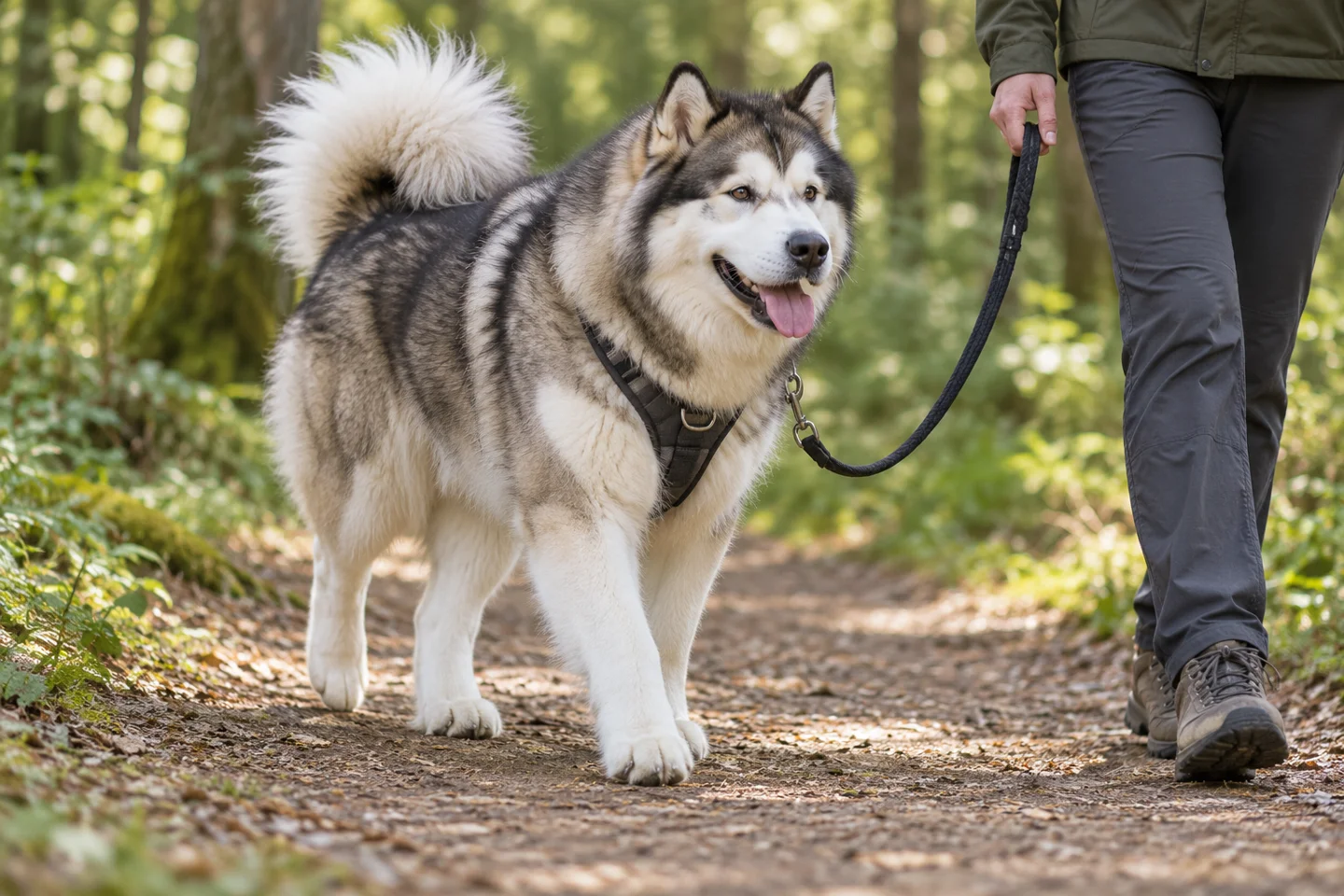
Use well-fitted walking equipment and practice fastening it in a quiet setting. Attach the lead before opening the exterior door. A strong dog should not need to be held by the collar while someone searches for equipment. Keep identification current and inspect leads, clips, and harness stitching for wear. Training a pause supports the arrangement, but physical management should still protect the dog when wildlife, another dog, or an unexpected noise interrupts the routine.
Temperament, human company, and rest
A Malamute may enjoy close involvement with familiar people, yet every dog needs its own assessment of comfort with visitors and handling. Watch what the individual chooses rather than interpreting a breed description as consent to touch. A guest can sit down while the dog remains behind a barrier or rests separately. Calm management gives everyone time to settle without turning the entrance into an excited collision.
Make rest part of ordinary life. After suitable activity, offer a comfortable place to sleep without repeated disturbance. If the dog cannot settle, review sleep, stimulation, anxiety, and physical comfort instead of automatically adding another demanding walk. Persistent pacing, new irritability, or withdrawal deserves attention. Record the pattern and discuss it with a veterinarian or qualified behavior professional when the problem continues or interferes with comfortable daily living.
Children, cats, and household dogs
An adult needs to supervise children around a Malamute closely. A friendly dog's size and movement can still knock a child down. Prevent climbing, grabbing, chasing, and interference with meals or sleep. Provide a retreat that children cannot enter. Use separation when adult attention moves elsewhere. A child should not be expected to manage the lead or decide whether a warning is serious.
Small animals need especially careful consideration because pursuit can have severe consequences. Ask about the dog's actual history, and prepare secure separation rather than relying on one quiet introduction. Other dogs need separate meals, resting places, and the ability to disengage. Some Malamutes have difficulty with particular dogs, including dogs of the same sex. A puppy's easy play does not guarantee every adult relationship. Get help assessing compatibility before a household depends on animals sharing space without management.
Aggression, guarding, and safe decisions
A Malamute's breed does not establish whether it will bite in a particular situation. Assess past incidents, current behavior, health, and the demands of the environment. Stop interactions involving freezing, rigid posture, growling, snapping, or repeated attempts to escape. Give space and prevent access to the trigger. Avoid confrontation intended to prove who is in charge, especially with a strong dog who cannot leave.
For guarding, separate meals and manage valuable objects to prevent rehearsed conflict. Teach exchanges through manageable rewarded practice and obtain a professional plan when risk is present. New handling sensitivity or irritability needs a veterinary examination for pain or illness. If a bite or serious fight has occurred, describe the event accurately and arrange detailed advice before planning more contact. A household must be able to follow the resulting safeguards in ordinary conditions.
Training a strong dog to move with you
Teach loose-lead movement where distractions are low, rewarding the dog for returning attention and moving alongside you. Practice a cheerful change of direction so turning away is familiar before another dog appears on a narrow path. The American Veterinary Society of Animal Behavior recommends reward-based training. Clear teaching and environmental management are more useful than relying on force after excitement is already high.
Recall practice begins in secure space and continues with appropriate lead arrangements. Do not assume a good response at home makes an unfenced wildlife area safe. Teach waiting at doors, resting on a mat, and releasing an object in exchange. Keep sessions achievable, then increase difficulty gradually. If physical handling is beyond your ability, ask for help early. Suitable equipment and training need to work together without depending on constant strength or intimidation.
Exercise, conditioning, and optional pulling sports
Provide activity matched to age, health, fitness, and weather. Walks can offer sniffing and exploration as well as movement. Growing dogs need play and learning without being pushed into an adult workload. Discuss running, jumping, carrying, or pulling plans with the veterinarian. A dog's enthusiasm cannot by itself establish that joints, muscles, and conditioning are ready for the task.
The Alaskan Malamute Club of America describes working activities including sledding, packing, and weight pulling. If one interests you, seek experienced instruction, appropriate equipment, and a gradual conditioning plan. Do not attach improvised heavy objects and see what happens. Learn the handling, surface, temperature, and recovery requirements before beginning. A companion can also have a satisfying routine without competing, provided its activity and opportunities to engage are adequate for the individual.
Heat, cold, and comfortable outings
A dense coat and Arctic history do not make warm-weather decisions automatic. Choose cooler hours, shaded routes, drinking water, and a short way home. Adjust effort to humidity, conditions, and the dog's response. Avoid parked vehicles and spaces where the dog cannot move away from heat. A familiar route can become unsuitable on a different day, so keep the plan flexible.
Unusual difficulty breathing, marked distress, weakness, or collapse requires urgent veterinary advice. Stop activity and contact the clinic for immediate instructions when heat illness is suspected. Cold weather also needs judgment about wind, wet coat, footing, age, and health. A Malamute still needs shelter and monitoring. Do not use breed origin as a reason to leave an individual outdoors regardless of conditions or its ability to remain comfortable.
Grooming and seasonal undercoat
Brush and comb through the double coat regularly, paying attention to loose undercoat and areas where tangles develop. Seasonal shedding can mean extra time and cleaning. Ask a groomer to demonstrate suitable tools and technique rather than scraping repeatedly at the skin. Check behind ears, beneath the harness, around the tail, and between the toes. A clean surface does not prove the coat beneath is comfortable.
Routine shaving is not a replacement for coat care or heat management. Discuss any medical clipping with the veterinary team. Bathing and drying need secure footing, adequate time, and attention to fatigue. Break care into manageable sessions when needed. Check skin changes, lumps, odor, and sore areas, and seek examination when something persists. Do not keep brushing a painful patch in the hope that removing more hair will resolve the cause.
Cooperative handling, teeth, and veterinary visits
Teach brief touches of paws, ears, mouth, and body with rewards and clear pauses. Nail care and tooth brushing become easier when the dog has practiced small steps before a long task is required. Stable surfaces and a quiet setting help. If the dog begins avoiding equipment or resisting touch, review the technique and consider discomfort. Repeated wrestling can make future care more difficult for everyone.
Arrange clinical handling before an emergency when fear or aggression is known. Tell the clinic about previous difficulty, what the dog tolerates, and what has helped. Follow an individual plan rather than withholding that history until staff are close to the dog. A basket muzzle may be useful when appropriately introduced and fitted, but it cannot replace pain relief, distance, or a safe examination strategy. Seek professional guidance for the full arrangement.
Food, growth, and healthy body condition
Choose a complete diet appropriate to life stage and review the amount with your veterinarian. Measure meals and account for rewards, chews, and shared snacks. Assess condition beneath the coat rather than assuming a broad outline requires extra weight. Record growth and weight changes, especially when several people feed the dog. The breed standard's reference size does not justify making an individual heavier than is comfortable or healthy.
Keep food preparation, rubbish, medication, and unsafe items secure. Feed animals apart when needed and allow the dog to eat without interference. Supplements should address an identified need under professional advice rather than a general promise about working performance. If thirst, appetite, stool, or body weight changes, describe the pattern and seek assessment. Repeatedly changing diets without a plan can make a medical problem harder to recognize and discuss.
Health screening and interpreting certificates
The AKC's Working Group screening page lists hip evaluation, ophthalmologist evaluation, and an Alaskan Malamute polyneuropathy DNA test among the national club's recommendations. Ask for identifiable reports, dates, and actual results for the relevant dogs. A routine puppy check does not replace those assessments of breeding adults. Ask your veterinarian what the results establish and whether other findings or family history require questions.
Read the reports even when a CHIC number is available. The number indicates completion and public disclosure of a specified testing program, not that all results were normal. DNA tests, joint imaging, and eye examinations investigate different concerns. No one report excludes every possible condition or guarantees lifelong comfort. For a dog with limited records, build the plan around current examination and clearly stated uncertainty rather than inventing a clean history.
Inherited polyneuropathy and changes in function
Alaskan Malamute polyneuropathy, often called AMPN, is an inherited nerve disorder with a test for a disease-associated variant in NDRG1. UC Davis describes possible signs including exercise intolerance, changed bark, noisy breathing, muscle loss, and progressive gait changes. The condition has autosomal recessive inheritance. Ask a veterinarian or testing laboratory to interpret the exact report rather than drawing conclusions from a seller's brief clear or carrier label.
A dog with new weakness, altered movement, or breathing changes needs clinical assessment regardless of previous results. A genetic test for one condition does not exclude other causes of similar signs. Provide videos when useful and safe, without making the dog exercise to reproduce a problem. Describe onset, progression, and recovery. Severe breathing difficulty or collapse requires urgent advice. A prompt assessment can establish what is happening more usefully than comparing the dog with an online account.
Eyes, joints, and other medical questions
The breed club discusses cone degeneration, also called day blindness, among Malamute health concerns. Ask about available testing and specialist eye examinations, recognizing that genetic tests and clinical assessments answer different questions. Hesitation or difficulty navigating bright settings deserves assessment; so do squinting, redness, or other signs of eye pain. Do not test vision by placing the dog near roads or obstacles that could cause injury.
Joint discomfort can appear as reluctance to rise, changed stride, reduced play, or difficulty with steps. Seek examination instead of assuming a large dog naturally becomes stiff. Other persistent changes in skin, appetite, thirst, or stamina also need attention. Keep an emergency contact and transport plan for an adult who cannot walk. Poisoning, severe weakness, collapse, or unsuccessful retching with abdominal swelling calls for urgent veterinary advice, without waiting for a routine appointment.
Malamute mixes and misleading size claims
A Malamute crossed with a Husky, Shepherd, or another breed can have varied build, coat, activity needs, and behavior. Informal crossbreed names do not create recognized Malamute varieties. Ask what parentage is documented and which details are estimates. A claim about wolf ancestry or exceptional size requires evidence and has practical implications that should not be decided from a striking photograph or a seller's casual wording.
Mixed ancestry does not guarantee easier handling, normal joints, comfortable social behavior, or freedom from inherited conditions. Assess known parental concerns alongside the actual dog. A rescue's household observations may be more reliable than its ancestry estimate, and that information can support a sound decision. Ask about pursuit, time alone, guarding, grooming, and previous conflict. Choose through a care plan that works for the dog in front of you.
Choosing a source, budgeting, and later life
A breeder should discuss health records, adult behavior, early handling, and support after placement. Read terms and return arrangements before paying, and avoid being rushed by color or size claims. For adoption, clarify medical follow-up, bites or fights, escape behavior, and what was observed in foster care. Describe your household accurately, including resident animals and the people available to handle a powerful dog.
Budget for food, equipment, grooming, training help, care during absences, and unexpected veterinary treatment. Review insurance conditions before relying on coverage. Plan how an older or injured dog will use stairs and enter a vehicle. Secure footing, reachable beds, shorter grooming sessions, and suitable outings may become necessary. Keep enjoyable exploration and company available while adjusting demands. A change in function should prompt review rather than being dismissed as an unavoidable inconvenience of age.
A manageable dogsDating outing
Use your Malamute's dogsDating profile to describe preferred activities, dog relationships, pursuit, guarding, and any exercise or handling restrictions. Keep exact home coordinates private and meet in a suitable public place with room to create distance. Discuss the other dog's size and play style beforehand. A calm parallel walk can be a better first option than a confined area where unfamiliar dogs immediately run together.
Use separate handlers and begin at a comfortable distance. Avoid shared toys, food, and tight face-to-face greetings. Allow brief contact only when both dogs remain loose and can turn away. End the outing if one becomes rigid, hides, persistently pursues, or cannot get a break. Choose later plans from the observed response and both owners' ability to manage them. A dog who prefers familiar company does not need to be pushed into a new physical play relationship.
Sources and editorial notes
Sources checked October 21, 2026. Breed measurements describe reference ranges, not a diagnosis or an individual dog's ideal weight. Images are AI-generated breed illustrations and do not document a particular dog or health condition.
- Orthopedic Foundation for Animals: CHIC program and interpretation of numbers
- American Kennel Club: Care of double-coated dogs
- VCA Animal Hospitals: Common emergencies in dogs
- Alaskan Malamute Club of America: Cone degeneration and day blindness
- VCA Animal Hospitals: General feeding guidelines for dogs
- VCA Animal Hospitals: Food aggression in puppies
- American Kennel Club: Working Group health screening requirements
- VCA Animal Hospitals: Heat stroke in dogs
- American Kennel Club: Alaskan Malamute history
- VCA Animal Hospitals: Aggression toward unfamiliar dogs, diagnosis
- UC Davis Veterinary Genetics Laboratory: Alaskan Malamute polyneuropathy
- Alaskan Malamute Club of America: Breed standard and characteristics
- AVSAB: Humane Dog Training Position Statement
- Alaskan Malamute Club of America: Working activities
Keep getting to know dogs.
Read another guide or return to your dogsDating community.
Explore breed guidesBack to dogsDating