Siberian Husky
A medium-sized sled dog who needs secure exploration, thoughtful conditioning, regular coat care, and honest assessment around smaller animals.
How these guides are researched and reviewed
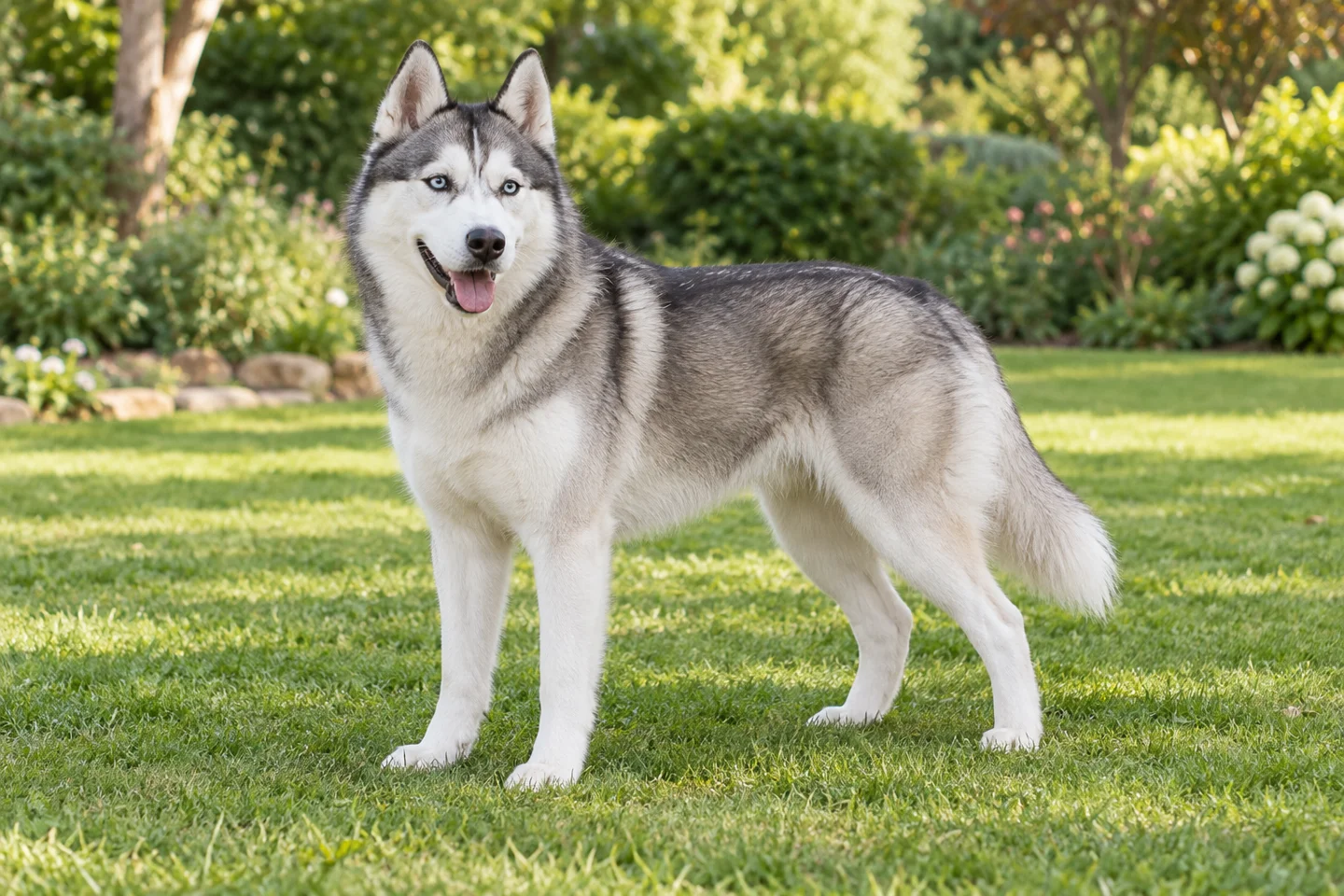
- Adult weight
- About 35–60 lb across sexes
- Coat
- Medium-length double coat
- Care priorities
- Containment, activity, and company
General information for owners. These articles have not been reviewed by a veterinarian. Medical decisions need your dog's history and an examination.
A household that can support a Siberian Husky
A Siberian Husky needs more than admiration for its coat and expression. Daily life may involve secure walks, sustained interest in the outside world, substantial shedding, and a voice that neighbors can hear. The useful starting question is whether your household can provide suitable activity, company, training, and containment through an ordinary week.
Think through the less photogenic moments before choosing one. Someone needs to check gates, dry wet paws, manage muddy equipment, and arrange care when work or illness interrupts the schedule. A large yard can offer space, but it does not replace interaction or make an escape route safe. A dog who enjoys running still needs to learn how to rest at home.
Meet the individual where possible. Ask what it does around unfamiliar dogs, small animals, food, handling, visitors, and separation. An adult with a well-described foster history may suit a household differently from a puppy or an adolescent with little experience indoors. Appearance and breed enthusiasm cannot answer those practical questions.
Sled-dog history and breed identity
The Siberian Husky developed as a sled dog associated with the Chukchi people of northeastern Siberia. The breed club describes later development and work in Alaska and elsewhere. The working background involved moving with people and other dogs over distance. It offers context for activity and cooperation, without requiring a pet owner to reproduce a working kennel's routine.
A Siberian Husky is a domestic dog breed. Blue eyes, a mask, or a particular coat color does not establish wolf ancestry. The Alaskan Malamute is a separate breed, and Alaskan Husky is a term used for working sled-dog populations rather than a simple alternate name for every Siberian. Ask which identity is documented and which is an estimate.
For a companion, choose activities around the dog's actual health and behavior. Scent searches, controlled recreation, and skills practiced with a person can provide interest. If you want to try a pulling sport, find appropriate instruction and medical guidance. Equipment, surfaces, conditioning, weather, and handling need consideration before a dog is asked to pull someone.
Size, coat, and appearance
The breed standard describes males at about 21 to 23.5 inches and 45 to 60 pounds, and females at about 20 to 22 inches and 35 to 50 pounds. These are reference ranges for proportion and type. A healthy weight depends on the individual frame, body condition, and muscle rather than reaching the top of a chart.
The medium-length double coat, upright triangular ears, and balanced build are familiar features. Eye color and coat markings vary. They should not become a substitute for evaluating health or behavior. A striking pair of eyes cannot show whether the dog has had an appropriate specialist examination or enjoys handling.
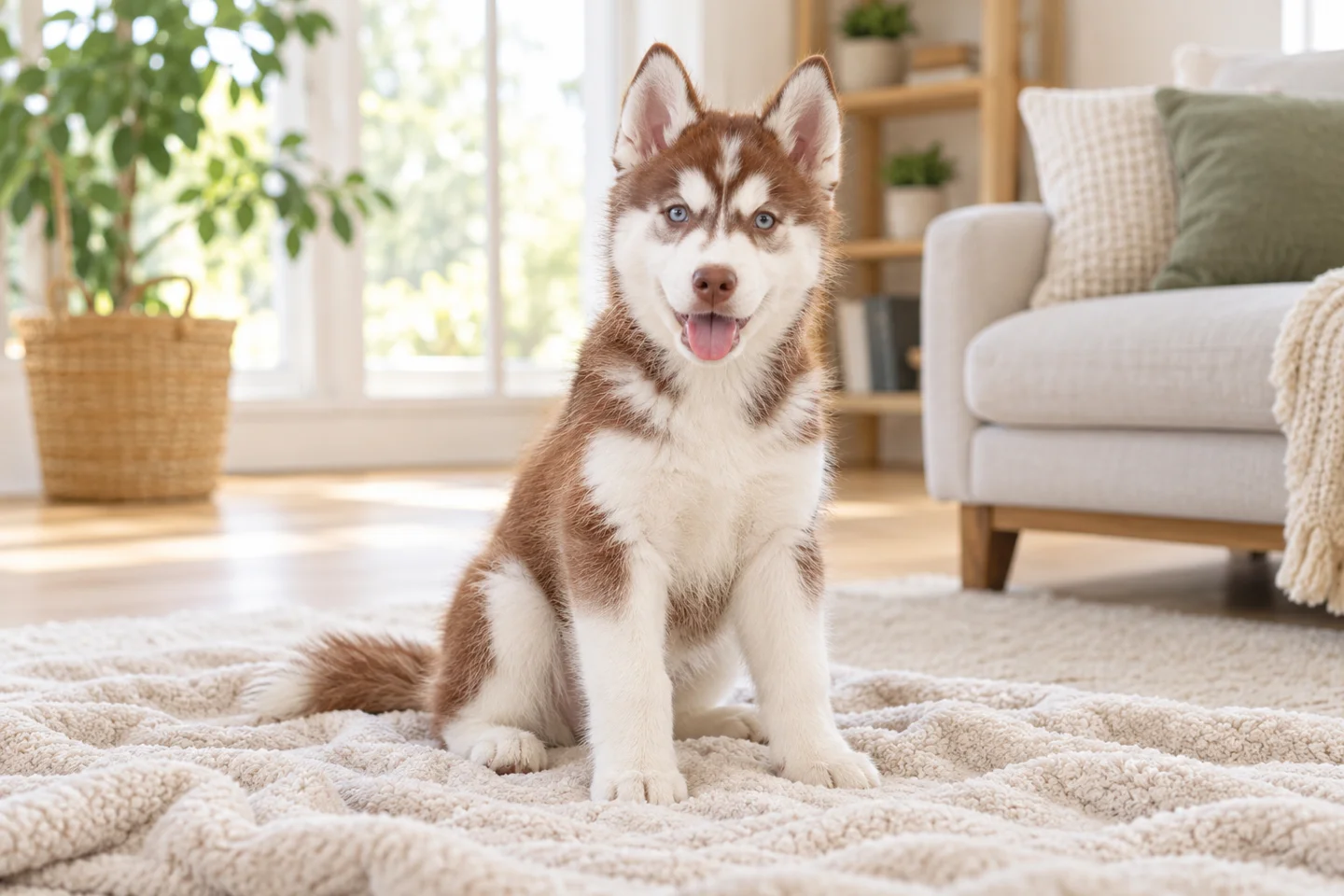
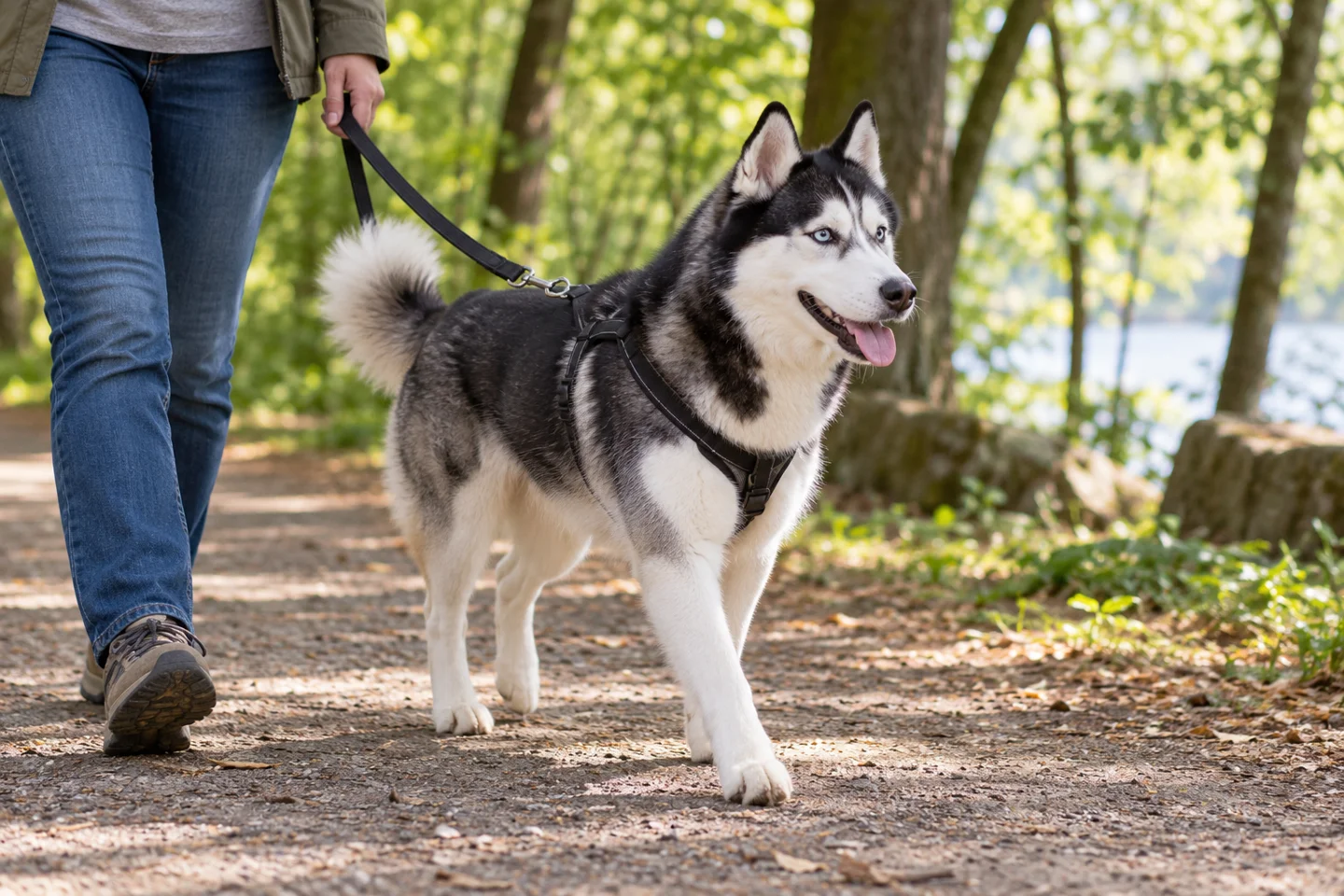
Think about adult equipment and transport before buying for a puppy. Check harness fit as the dog grows, including the chest and areas behind the front legs. A lead needs to be secure without relying on constant tension. Plan a suitable vehicle restraint and a way to move a sick or injured adult if it cannot climb into the car.
Secure boundaries and realistic recall
Inspect fences, gate latches, spaces beneath barriers, and the route through an open front door. Some Huskies dig, climb, or exploit small failures in an arrangement. Check the actual dog and property rather than assuming a particular fence height guarantees containment. Ask visitors and contractors to follow an entry routine.
Teach recall where you can control the consequences of a mistake. Begin with short distances, reward generously, and sometimes allow the dog to return to a safe activity. Use appropriate enclosure or a carefully managed line when reliability is incomplete. Success in one location does not establish the same response near wildlife or traffic.
Keep identification records current and check equipment regularly. A tracker may provide information after an escape, but it cannot prevent a collision or protect an animal being chased. Avoid setting up repeated opportunities to roam because the dog usually comes back. Secure management is part of making exploration possible without asking a recall lesson to solve every risk at once.
Vocal behavior, company, and settling
A Husky may howl, bark, or make other sounds during excitement or frustration. Find out what happens before and after the noise. A brief greeting, repeated reaction to activity beyond a window, and distress during separation need different responses. Describe timing and recovery instead of treating every sound as a breed joke.
Provide a quieter resting location if the dog spends the day watching events it cannot comfortably ignore. Practice settling after manageable activity, with predictable pauses and an appropriate place to sleep. A household that continually starts another game may accidentally make rest harder to learn.
Build absences gradually and arrange care when work exceeds the dog's current ability to cope. Repeated escape attempts, injury, or persistent distress needs veterinary and qualified behavior advice. Another dog is a separate commitment and cannot be promised to cure the problem. Ask for observations of ordinary alone time before adoption, including what is unknown about the dog's history.
Children, cats, and smaller animals
Supervise children actively around a Husky. A strong adolescent can knock someone over during an enthusiastic game. Prevent hugging, climbing, and interference with sleep or meals. Give the dog a retreat the children do not enter, and use separation when an adult cannot pay attention closely enough to intervene.
Take chasing of smaller animals seriously. The AKC identifies strong prey drive as an ownership concern. Some dogs cannot share direct access safely with cats, rabbits, poultry, or other vulnerable animals. A calm introduction through a barrier does not prove how the dog will respond when the animal runs.
Ask about actual history and prepare secure separation before arrival. Do not test the dog's intentions using an animal who cannot escape. Even a dog who has lived with one cat may behave differently with another. If the home includes small pets, the assessment needs to address their safety and the household's ability to maintain reliable boundaries over time.
Aggression, guarding, and dog compatibility
Siberian Huskies can bite, and a friendly breed description cannot establish that an encounter is safe. Fear, pain, conflict over an item, and difficulty disengaging all matter. Create space when a dog freezes, growls, or tries to leave, and avoid forcing more contact because it has tolerated similar situations before.
Feed animals separately and manage access to chews, toys, and resting places. If guarding appears, obtain individual guidance rather than repeatedly taking possessions away. Keep children out of those conflicts. Describe any bite history and injuries accurately to the veterinarian or behavior professional helping with the case.
Working ancestry with other dogs does not guarantee compatibility with every companion. Watch whether both animals choose to continue playing, can pause, and can move away. Stop repeated pursuit of a dog who wants to leave. A Husky may enjoy energetic play with one familiar dog and be uncomfortable with a crowded group. Respect the observed preference and use safer management while a problem is assessed.
Training around movement and distraction
Reward-based methods let you teach useful behavior in steps. The American Veterinary Society of Animal Behavior recommends this approach. Start with returning attention to a person, walking with a loose lead, waiting at a door, exchanging an object, and moving to a resting place. Practice where the dog can respond before adding stronger distractions.
Use rewards that matter in the setting. Food, a suitable toy, or access to a sniffing area may help, depending on the dog. A brief pause beside you can lead to more exploration. That makes the walk a sequence of understandable choices rather than a continuous struggle over movement.
Avoid judging a dog as disobedient because it cannot yet ignore a running animal. Increase distance and teach the easier task. Keep sessions short enough for attention and comfort, and check whether fatigue or arousal is making the lesson harder. A reliable household routine grows from repeated manageable practice, supported by boundaries that prevent serious mistakes during learning.
Exercise, conditioning, and recreational work
Plan regular opportunities for movement and exploration. The suitable amount depends on age, fitness, health, weather, and the demands of the activity. Running on a hard surface, pulling a load, and walking slowly while sniffing are different tasks. Avoid adopting a universal mileage target because another Husky completes it comfortably.
For a puppy or an adult beginning a new activity, discuss an appropriate progression with your veterinarian. Learn the equipment and handling required for any pulling sport before trying it. Check paws, surfaces, and recovery afterward. Enthusiasm during an outing does not rule out soreness or exhaustion later.
Include quieter work such as a simple scent search or a practical training task. Allow undisturbed rest and a clear finish to games. If the dog becomes increasingly frantic, review intensity, sleep, and the household schedule. More exertion can increase fitness without teaching calm behavior, so a plan should include both suitable activity and the ability to stop.
Heat, cold, and outdoor decisions
A thick coat does not make every outdoor condition suitable. In warm weather, choose cooler times, shorter manageable routes, shade, water, and breaks. Change the plan when conditions worsen. A dog who wants to continue still needs a person willing to stop before physical struggle develops.
Weakness, confusion, collapse, or concerning breathing during heat exposure needs urgent veterinary contact. Stop activity, get away from the hot environment where possible, and follow the clinic's directions while arranging care. Never leave the dog in a hot vehicle. Keep emergency details available to anyone responsible for an outing.
Cold tolerance also varies with age, health, wet conditions, wind, and acclimation. Check paws and comfort rather than using a breed's history as permission for unlimited exposure. Provide suitable shelter and care, and bring the dog into a safe environment when it struggles. Snow photographs cannot establish how a puppy, senior, or ill dog should be housed through a particular winter.
Grooming and the double coat
Regular brushing helps remove loose undercoat and gives you a chance to inspect skin and equipment contact points. During heavier shedding, the work can increase substantially. Ask a groomer to demonstrate suitable tools and technique instead of pulling through a dense area until the dog resists.
A short summer shave is not a routine substitute for coat maintenance. Discuss any proposed clipping with a competent groomer or veterinarian, particularly when skin disease, matting, or another medical reason changes the situation. The aim is comfortable care suited to the dog, with attention to how the coat functions and what treatment is needed.
Introduce brushing, drying, paw checks, nails, and toothbrushing through brief lessons. Persistent odor, redness, itching, sores, or pain deserves assessment. Tell professionals about handling concerns before an appointment. A dog who is fearful or uncomfortable may need a different session length or a behavior plan, rather than more force to finish the job.
Feeding and body condition
Feed a complete diet suitable for the dog's life stage and health. Working history does not mean every companion needs a high-calorie working ration. Measure food and account for training rewards and chews. Ask the veterinary team to assess body condition and muscle beneath the coat, where visual guesses can miss a change.
Adjust feeding around the individual rather than a claim that Huskies need a fixed fraction of another breed's meals. Activity can change across seasons, illness, and work schedules. Use weight trends and an agreed review plan. If several people feed the dog, keep a simple shared record so extra meals are less likely.
Persistent appetite loss, weight change, vomiting, diarrhea, or unusual thirst needs investigation. Avoid explaining recurring signs as pickiness without assessment. Bring information about regular food, treats, medication, and possible scavenging. Secure rubbish, unsafe food, and medication, and contact a veterinarian urgently if poisoning or swallowing a dangerous object is suspected.
Health screening and current club guidance
The Siberian Husky Club of America's September 2024 statement calls for regular specialist eye examinations and hip evaluation for breeding dogs. It also includes genetic testing for Shaking Puppy Syndrome Type 1, abbreviated SPS1, and Siberian Husky Polyneuropathy Type 1, abbreviated SHPN1. Ask for the parents' identifiable results and the current guidance.
The club distinguishes clear, carrier, and affected combinations in its breeding advice and cautions against removing all carriers without considering genetic diversity. An owner should ask how the actual pairing was assessed, rather than treating any unfamiliar result as automatically equivalent to disease. A genetics professional or veterinarian can explain the relevant reports.
Read the findings themselves. A generic DNA panel, a normal puppy examination, and a specialist eye assessment provide different information. Screening cannot guarantee the future of every puppy. Discuss family history, what remains uncertain, and the support available after placement. For an adopted adult, acknowledge missing records and begin with available history and current examination.
Eye conditions and neurological changes
The breed club discusses inherited eye disease as a reason for specialist screening. A clear-looking eye or familiar eye color cannot replace examination. Report squinting, a change in appearance, unusual discharge, difficulty navigating, or a sudden change in vision promptly. Ask the clinic how urgently the particular signs need to be assessed.
The University of Minnesota describes SPS1 and SHPN1 testing in its Siberian Husky health panel. These relate to particular inherited neurological conditions; a clear result for one variant does not rule out every possible cause of shaking, weakness, or altered gait. Clinical signs require an examination and appropriate investigation.
Record what changed and when, without deliberately provoking a symptom for a video. A safe recording of an unexpected event may help, but it should not delay care. Collapse, severe breathing difficulty, inability to stand, or rapid deterioration warrants urgent veterinary contact. Avoid assuming a young dog will grow out of significant weakness because it is still developing.
Siberian Husky mixes and misleading labels
Pomsky commonly refers to a Pomeranian and Siberian Husky cross, and Shepsky is often used for a German Shepherd and Husky cross. Informal names can hide uncertainty about the parents or several generations of ancestry. Ask what is documented rather than assuming a name establishes an exact genetic composition.
A cross can inherit different combinations of size, coat, activity needs, and behavior. A small puppy does not promise a small adult, and an attractive coat does not predict suitability for children or cats. Consider relevant health screening from both known parents. Mixed ancestry cannot guarantee freedom from inherited disease or easy behavior.
For an adult with unknown parentage, focus on observed function, medical findings, and the living arrangements it has managed. Discuss chasing and containment honestly. Avoid interpreting a wolf-like appearance as evidence of wolf content or specialized care requirements without reliable information. An accurate account of the actual dog is more useful than an impressive but unsupported label.
Housing, costs, and a routine that lasts
Check housing rules, noise expectations, and the practicality of secure access before committing. Estimate food, preventive care, training, grooming support, sitting, equipment replacement, and emergency costs locally. Include any changes needed to gates and fencing. A dog who requires substantial supervision also creates demands on a caregiver's time.
Plan care during travel and work changes. A sitter needs to understand exits, chasing concerns, exercise limits, and medication, rather than simply having experience with dogs. Think about transporting an injured adult and maintaining separation if another animal becomes ill. A workable plan includes ordinary disruptions as well as enjoyable weekends.
In later life, review traction, bedding, car access, and comfortable activity. New irritability, accidents, confusion, or reduced movement deserves assessment. Keep familiar searches and companionship available at an easier level when needed. A senior Husky may still enjoy exploring while requiring shorter outings and more recovery, so adapt to current function rather than a younger schedule.
Planning a dogsDating outing
Describe your Husky's current play style, approximate size, and relevant history. Include chasing, guarding, containment concerns, and any medical limits. Ask how the proposed companion responds to energetic play and whether it can take a break. Breed identity or a lively profile photograph cannot establish compatibility.
Choose a calm place with room to move apart and secure handling appropriate to both dogs. Begin with a parallel walk when suitable. Keep valued food and toys out if they create conflict, discuss recent illness and veterinary precautions, and avoid sharing exact home coordinates for a first meeting.
Watch the whole interaction, including whether each dog can disengage. End repeated pursuit of an unwilling companion, freezing, hiding, or attempts to escape. A pleasant walk is a useful result even without wrestling. Plan future meetings around what both dogs handled comfortably, and reconsider the arrangement when health, behavior, or circumstances change.
Sources and editorial notes
Sources checked October 21, 2026. Breed measurements describe reference ranges, not a diagnosis or an individual dog's ideal weight. Images are AI-generated breed illustrations and do not document a particular dog or health condition.
- American Kennel Club: Is the Siberian Husky right for you?
- Siberian Husky Club of America: Eye testing
- VCA Animal Hospitals: General feeding guidelines for dogs
- American Kennel Club: Care of double-coated dogs
- VCA Animal Hospitals: Food aggression in puppies
- Siberian Husky Club of America: Health statement approved September 10, 2024
- VCA Animal Hospitals: Heat stroke in dogs
- Siberian Husky Club of America: Breed history
- VCA Animal Hospitals: Aggression toward unfamiliar dogs, diagnosis
- PetMD: Pomsky health and care
- University of Minnesota Canine Genetics Lab: Siberian Husky health panel
- Siberian Husky Club of America: So you want a Siberian Husky
- PetMD: Gerberian Shepsky health and care
- Siberian Husky Club of America: Official breed standard
- AVSAB: Humane Dog Training Position Statement
Keep getting to know dogs.
Read another guide or return to your dogsDating community.
Explore breed guidesBack to dogsDating