Rottweiler
A strong working breed who needs thoughtful handling, reward-based training, realistic household boundaries, and documented health assessments.
How these guides are researched and reviewed
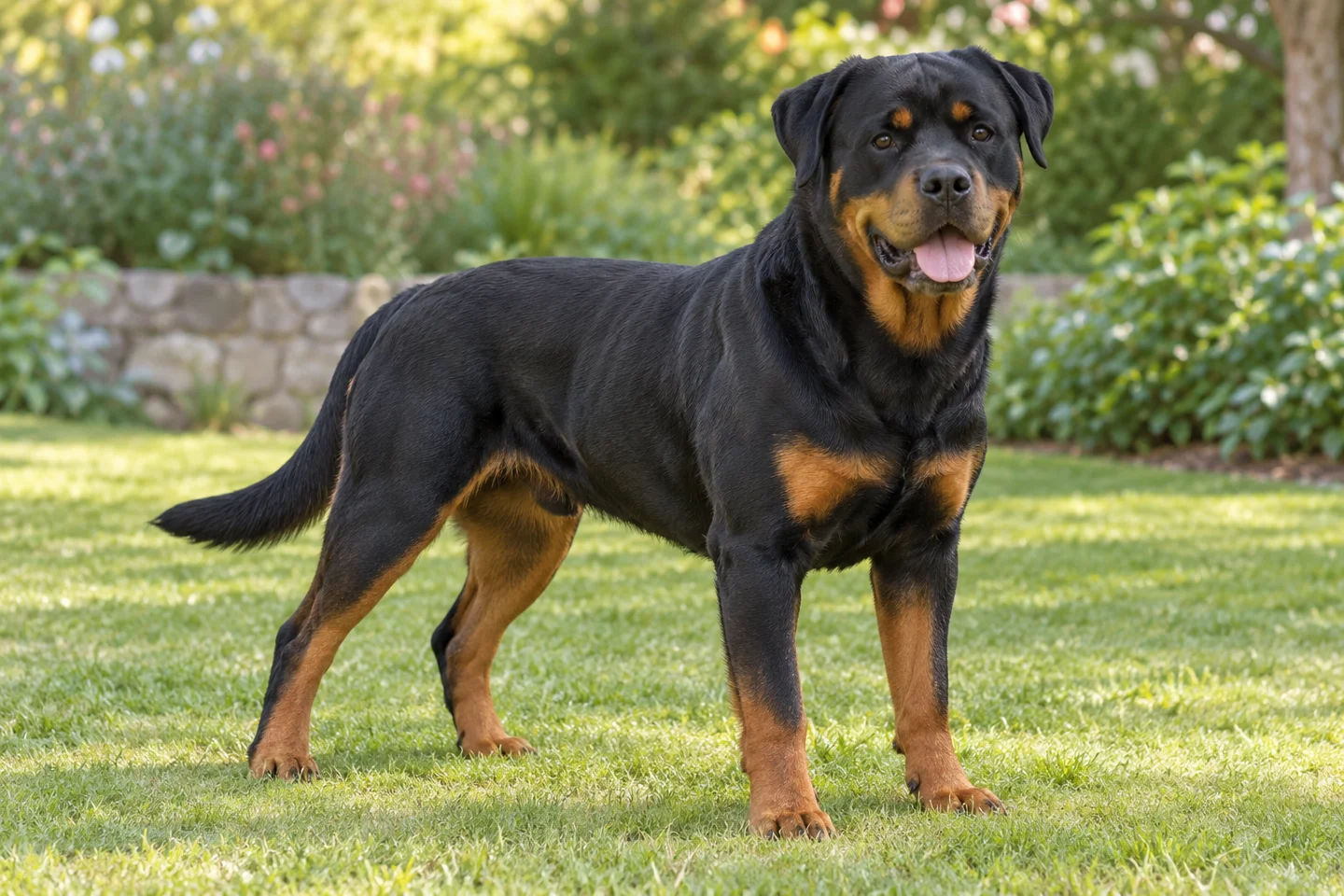
- Adult weight
- About 80–135 lb across sexes
- Coat
- Short, black with rust markings
- Daily care
- Training, activity, and safe handling
General information for owners. These articles have not been reviewed by a veterinarian. Medical decisions need your dog's history and an examination.
Living with a Rottweiler
A Rottweiler needs a household that can manage a large, strong dog calmly and consistently. That means more than holding a lead on a quiet street. Think about opening the front door, passing a barking dog in a narrow corridor, arranging veterinary care, and keeping visitors comfortable. Prepare those situations before the dog arrives. Physical strength becomes easier to manage when the environment and the training already support sensible choices.
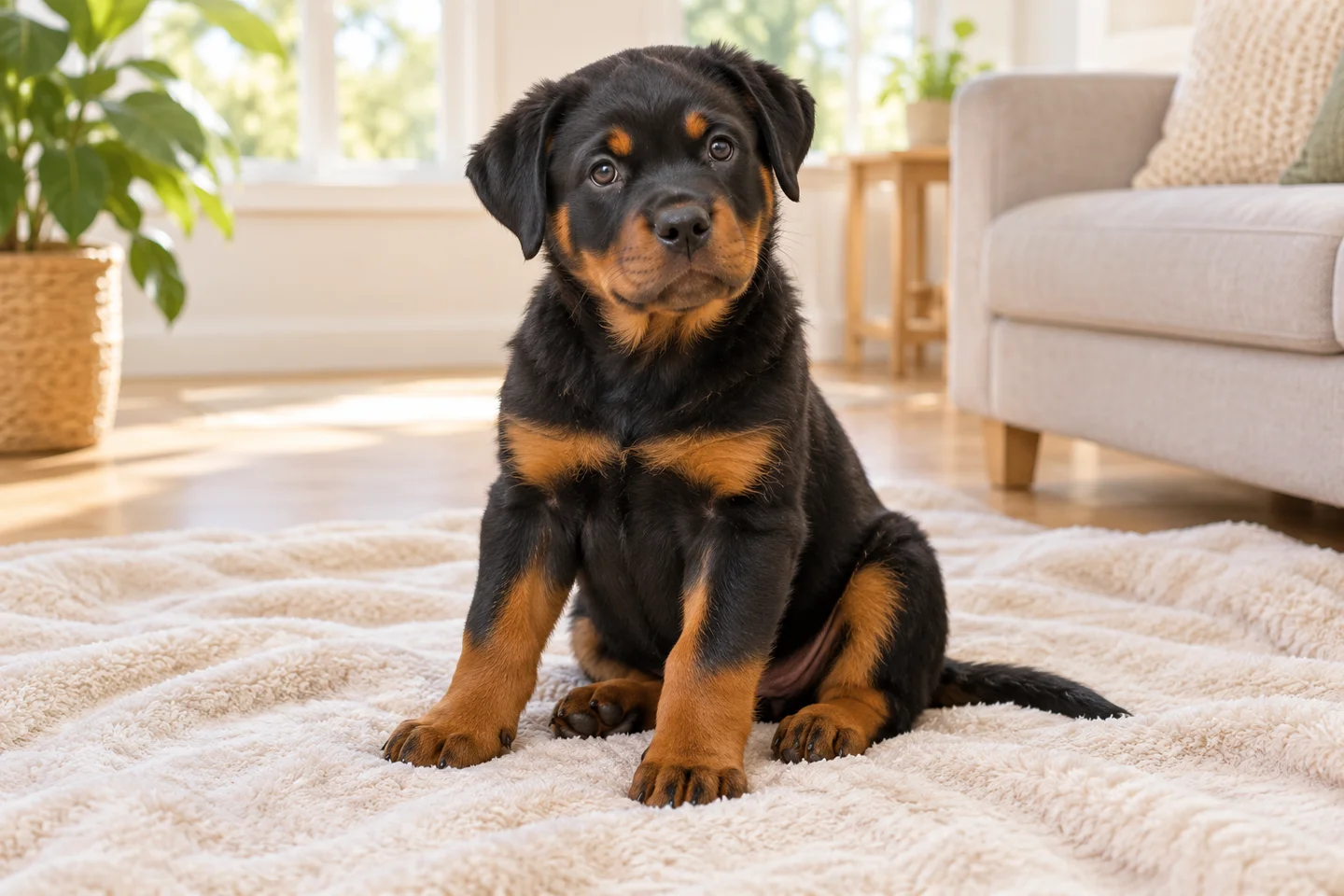
Choose a dog whose observed behavior fits your home. Ask what happens around strangers, during handling, near other dogs, and when someone approaches a resting place. An adult in foster care may have a useful history in a household similar to yours. A puppy offers less certainty about adult behavior and needs substantial teaching. Neither pedigree nor a familiar breed description replaces an honest assessment of the individual.
Cattle-working history and present-day life
The Rottweiler developed in Germany with a history of cattle work and other practical tasks. The American Kennel Club places it in the Working Group. Historical accounts describe dogs used around livestock and the town of Rottweil. That background explains some of the breed's development, but it does not establish a present-day dog's behavior toward a delivery worker, an unfamiliar child, or a neighbor's pet.
Avoid choosing a Rottweiler primarily to frighten people or make independent security decisions. A companion needs to be able to rest while adults control access to the home. Use secure doors, appropriate boundaries, and ordinary household security rather than encouraging suspicion. If you need specialized working training, obtain qualified advice about the actual task and the dog's suitability. Encouraging threatening behavior without a sound plan creates problems for the household and the dog.
Size, coat, and comfortable movement
The AKC describes adult males at about 24 to 27 inches at the shoulder and females at about 22 to 25 inches. The overall adult weight range is broad, commonly around 80 to 135 pounds across sexes. These figures describe a breed population rather than a target for every dog. A veterinarian can assess the individual's body condition, growth, and movement more usefully than an advertisement celebrating maximum weight.
The short black coat has rust-colored markings and sheds. A substantial body still needs a visible, healthy outline and comfortable movement. Avoid selecting an unusually heavy puppy because you want an especially imposing adult. Watch the real dog walking and rising from rest, and ask about any stiffness or previous injury. The illustrations here show breed features; generated images cannot verify sound joints, healthy heart function, or appropriate body condition in an actual animal.
Preparing the home and entrance
Set up barriers that household members can use easily. A gate between the entrance and the main living area lets visitors come inside without an immediate greeting. Provide a resting area where the dog is not repeatedly stepped over or disturbed. Store food, medication, bins, and cleaning products securely. Consider whether doors and garden boundaries remain effective when children, contractors, or guests use them.
Practice the route from the house to the street before expecting smooth departures. Reward a pause while a door opens, then move through together. If another dog frequently waits outside, choose a different time or arrange more distance. Shared buildings may require careful coordination with neighbors and management. A home with limited space can still have a workable routine, but a difficult entrance needs a real solution rather than a promise to be more careful.
Temperament, visitors, and quiet time
Some Rottweilers approach visitors readily; others prefer more distance and a slow introduction. Give the dog a choice about contact and ask guests to follow the household plan. A visitor does not need to touch the dog for the visit to succeed. Resting behind a barrier with familiar comforts may be the safest and most comfortable arrangement, particularly while an unfamiliar situation is being assessed.
Teach settling during ordinary life, and protect rest after busy outings. A dog who follows every movement or repeatedly checks the doorway may need help relaxing. Record what happens and look for patterns in noise, exercise, sleep, and time alone. Persistent distress deserves veterinary and behavior support. Avoid labeling anxiety as admirable vigilance. The aim is a dog who can feel safe while adults make decisions about the environment.
Children, cats, and other household animals
Children need active adult supervision around a Rottweiler, as they do around any dog. Size makes accidental collisions consequential. Keep rough chasing games separate from the dog and prevent climbing, hugging, or disturbing meals and sleep. Give the dog a retreat children cannot enter. When an adult's attention is divided, use a barrier. A long history of gentle behavior does not remove the need for sensible boundaries.
Introduce resident animals gradually and allow separate living areas. A dog who has lived peacefully with one cat may still chase an unfamiliar cat outdoors. Two dogs need individual meals, beds, attention, and opportunities to disengage. Ask about previous conflicts and the circumstances in which they occurred. If the household cannot safely separate animals, a placement that depends on permanent separation may be unsuitable. Discuss that limit before committing to adoption.
Aggression, warning signs, and responsibility
A Rottweiler's breed does not provide a reliable verdict about an individual's bite risk. Assess previous incidents, present behavior, pain, handling tolerance, and the situations the dog will encounter. Stiffening, freezing, avoidance, growling, and snapping call for intervention that reduces pressure. Stop the interaction and create space. Do not ask someone to prove confidence by approaching a dog who is already uncomfortable.
For guarding food or objects, prevent conflict and obtain a professional plan. Separate dogs for meals and avoid taking items repeatedly to test obedience. Teach exchanges at an appropriate level of difficulty. Sudden irritability or a change in tolerance requires a veterinary examination because pain or illness may contribute. If the dog has bitten or made serious attempts, arrange a detailed assessment before introducing visitors, children, or potential walking partners.
Reward-based training for a strong dog
Start useful skills where distractions are low: moving with a loose lead, coming away from an interesting object, waiting at a gate, and resting on a mat. Reward small successes and increase difficulty gradually. The American Veterinary Society of Animal Behavior recommends reward-based methods. A powerful dog needs clear teaching and reliable management; intimidation can add fear and conflict to situations that already require careful handling.
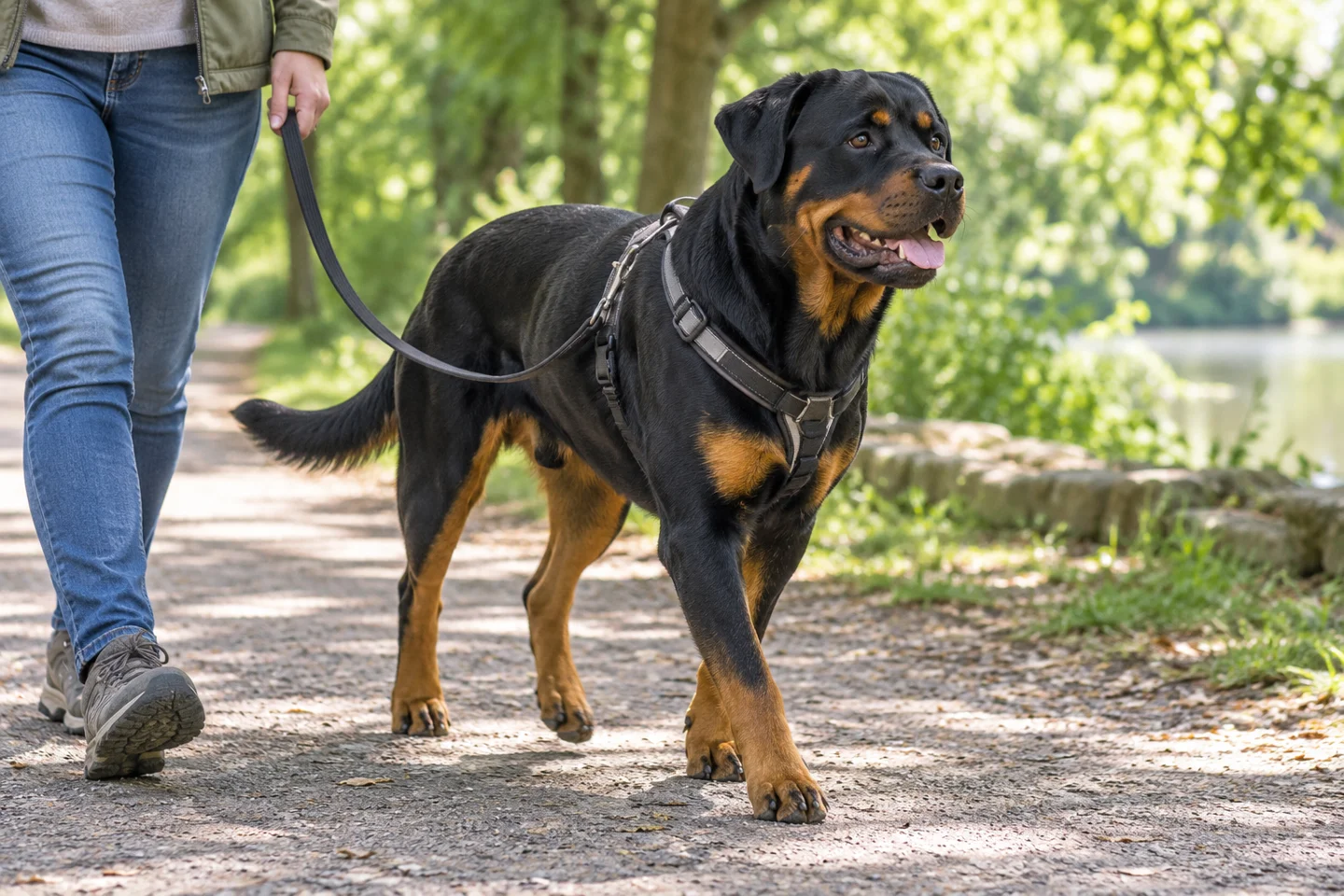
Practice an emergency change of direction on quiet walks so turning away feels familiar. Use well-fitted equipment and ask for help if you cannot safely control the dog in ordinary conditions. A basket muzzle can be introduced gradually with rewards when a professional recommends it, allowing appropriate panting and drinking. It does not make an unsafe interaction acceptable. Keep distance and barriers in place while the underlying behavior is assessed and treated.
Exercise, enrichment, and growing joints
Match activity to the dog's age, medical needs, fitness, and interest. A healthy adult can enjoy walks, scent searches, training, and suitable games. Growing dogs need opportunities to explore and play without being pushed into a demanding adult exercise schedule. Discuss planned running, jumping, or sport with the veterinarian. Avoid using exhaustion as the main way to keep a young Rottweiler manageable indoors.
Notice how the dog moves after activity and the following morning. New stiffness, limping, reluctance to rise, or a changed stride deserves attention. Choose secure footing and increase conditioning gradually after time off. Mental activity can include finding scattered food in a safe area, learning simple tasks, or exploring a new walking route. Give the dog time to recover and sleep. More activity is not always the answer to restlessness.
Grooming, teeth, and handling practice
Brush the coat regularly and check places where collars and harnesses touch the skin. Shedding may increase seasonally, so washable bedding and a manageable cleaning routine help. Keep nails at a comfortable length and begin tooth brushing in small, rewarded steps. The goal is routine care the dog can tolerate without being restrained through a struggle. Ask the veterinary team for a handling plan when you need help.
Prepare for examinations by teaching brief touches of ears, feet, and different body areas, stopping before tension builds. A large adult who is frightened of handling can be difficult to treat safely, so early cooperative practice matters. Persistent ear odor, skin soreness, mouth pain, or a sudden objection to touch needs a clinical assessment. Do not keep practicing on a painful area while waiting for the dog to accept it.
Food, weight, and household safety
Use a complete diet appropriate for growth or adulthood and review the plan with your veterinarian. Measure portions, account for treats, and adjust according to body condition and growth. Keep a record if several people feed the dog. Extra weight can go unnoticed when everyone assumes a large breed should look as heavy as possible. Photographs help track change, but an examination gives better information about condition.
Provide a quiet place for meals and keep household animals apart when food creates tension. Manage rubbish and dropped food before they become recurring problems. Store medication securely and avoid supplements chosen from promises about bulk or strength. If the dog needs a therapeutic diet, check treats and chews with the veterinarian too. Make changes deliberately so appetite, digestion, and weight can be monitored rather than guessing which recent addition caused a problem.
Health screening and interpreting records
The American Rottweiler Club identifies hip, elbow, eye, cardiac, and JLPP screening in its breeding guidance. Ask for identifiable reports and dates rather than accepting a general statement that a dog was vet checked. Screening recommendations have specific methods and timing, and a normal puppy examination cannot replace adult assessments. Ask your veterinarian to explain results that you do not understand.
A CHIC number records participation in a health information program; it does not mean every result was normal or that future disease is impossible. Read the actual findings. Ask about relevant illness in close relatives and the breeder's response when a problem occurs. A DNA panel addresses particular inherited variants, while joint imaging, eye examinations, and cardiac assessment investigate different questions. No single certificate can stand in for the entire health history.
Neurological conditions and other medical concerns
UC Davis includes a neurological disease test in its Rottweiler health panel under the name polyneuropathy with ocular abnormalities and neuronal vacuolation, formerly called juvenile laryngeal paralysis and polyneuropathy, or JLPP. Terminology can differ between laboratory reports and breed-club documents. Ask the laboratory or veterinarian to clarify the exact condition and result. A test name alone does not explain the implications for an individual dog or a proposed mating.
The American Rottweiler Club also discusses cancer among its health concerns. A persistent lump, unexplained lameness, appetite change, or decline in stamina needs examination, but these signs have many possible causes. Avoid diagnosing from breed reputation. Keep previous records and report changes clearly. Sudden breathing difficulty, collapse, a swollen abdomen with unsuccessful retching, or severe weakness requires urgent veterinary advice. Establish the nearest emergency service and a transport arrangement while the dog is well.
Rottweiler mixes and uncertain ancestry
A cross between a Rottweiler and another breed may vary substantially in adult size, coat, activity needs, and behavior. Use documented parentage where available, and describe uncertainty honestly when it is not. Informal mix names are not recognized varieties of the Rottweiler. A rescue's estimate can help start a conversation, but it should not be treated as a guarantee about ancestry or future temperament.
Assess a mixed dog's health and behavior on their own merits. Ask about the known parents' screening, the individual's medical findings, and actual experience in a home. A Labrador cross can still need substantial management around food or unfamiliar dogs; a smaller-looking puppy may still become difficult for a household to handle. Choose based on the care you can provide and the information available, with room for uncertainty.
Choosing a source and making a commitment
Ask a breeder how dogs are selected, how puppies are raised, and how health information is shared with buyers. Request time to read records and contract terms. A responsible discussion includes limitations and support if the placement does not work. Be cautious when a seller focuses on intimidating appearance, exceptional weight, or promises about protection while avoiding health and temperament questions.
A rescue should explain what it has observed and what remains unknown. Clarify previous bites, conflict with animals, medication, veterinary follow-up, and housing needs. Meet with the organization under its safety plan and describe your circumstances honestly. An experienced home still needs a dog who fits its daily life. If everyone would depend on a single physically capable handler being available at all times, make a backup plan before proceeding.
Costs, housing, and later life
Large dogs can require substantial food, equipment, transport arrangements, and clinical care. Obtain local estimates and review insurance terms before relying on coverage. Ask your landlord, housing provider, or insurer about applicable conditions early, then check any local requirements that affect you. Written information prevents an avoidable housing problem after the dog has arrived. Do not assume another household's arrangement applies to yours.
Plan for old age as well as an active adult. A heavy dog who cannot use stairs or step into a vehicle may need equipment and more than one person to help safely. Secure footing, reachable beds, and adjusted walks can make ordinary days easier. Seek assessment when comfort or behavior changes. A quieter routine should still include interesting smells, gentle learning, and social contact the dog enjoys.
Transport and a backup carer
Teach vehicle entry at a manageable pace and use appropriate restraint for travel. Avoid an arrangement that requires lifting an unwilling, fully grown dog into a small space every day. Check the fit of any ramp, secure it properly, and practice without a journey attached. Keep the dog away from an open vehicle door beside traffic. Consider what you would do if illness made the usual entry route impossible.
A backup carer should meet the dog, learn the equipment, and understand the household boundaries before being needed. Write down feeding, medication, veterinary contacts, and situations to avoid. Someone who enjoys dogs may still be unable to handle this particular dog safely on a busy route. Arrange realistic help for work travel, injury, or family emergencies so a sudden absence does not force unfamiliar people into difficult handling decisions.
A considered dogsDating meeting
Describe your Rottweiler's needs plainly in the dogsDating profile. Include preferred walking distance, reactions to other dogs, any guarding history, and whether greetings should be avoided. A profile is useful when it helps another owner choose a manageable meeting. Keep exact home coordinates private and select a public place with sufficient room, secure leads, and an uncomplicated route back to transport.
Start with parallel walking under separate handlers. Give both dogs room and avoid bringing toys or setting down shared food. Watch for loose movement and an ability to turn away, then allow only brief contact if both remain comfortable. End the meeting if either dog becomes stiff, repeatedly pursues, or tries to escape. A calm walk without touching can be a successful first meeting. Future plans should follow the dogs' behavior rather than either owner's expectations.
Sources and editorial notes
Sources checked October 21, 2026. Breed measurements describe reference ranges, not a diagnosis or an individual dog's ideal weight. Images are AI-generated breed illustrations and do not document a particular dog or health condition.
- American Kennel Club: Is the Rottweiler right for you?
- VCA Animal Hospitals: Common emergencies in dogs
- VCA Animal Hospitals: General feeding guidelines for dogs
- VCA Animal Hospitals: Food aggression in puppies
- American Rottweiler Club: Breed health and screening
- American Kennel Club: Rottweiler history
- VCA Animal Hospitals: Aggression toward unfamiliar dogs, diagnosis
- UC Davis Veterinary Genetics Laboratory: Rottweiler health panel
- AVSAB: Humane Dog Training Position Statement
Keep getting to know dogs.
Read another guide or return to your dogsDating community.
Explore breed guidesBack to dogsDating