Boxer
An athletic companion who benefits from calm greetings, compatible play, careful heat management, and informed cardiac screening.
How these guides are researched and reviewed
- Coat
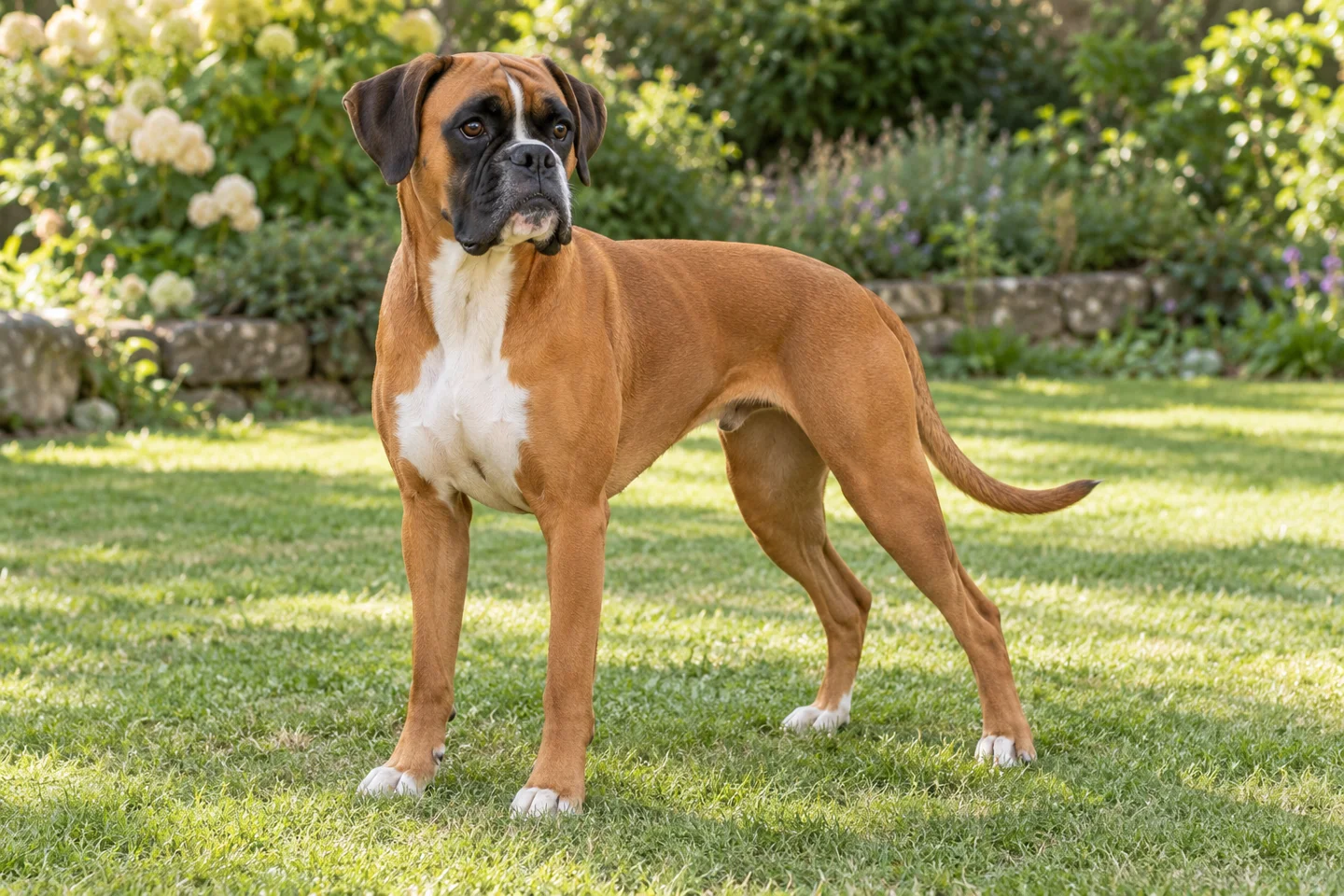
- Short; fawn or brindle with possible white markings
- Daily care
- Activity, settling, and company
- Health focus
- Cardiac screening and comfortable movement
General information for owners. These articles have not been reviewed by a veterinarian. Medical decisions need your dog's history and an examination.
Living with a Boxer
A Boxer needs people who enjoy an energetic dog and can teach calm behavior before enthusiasm becomes difficult to manage. An adult may lean into a visitor, carry a toy around the kitchen, or invite another dog to play with broad, bouncing movements. Those habits can be enjoyable in a suitable home. They also require space, supervision, and adults who can safely handle a strong dog when something unexpected happens.
The useful question is how a particular Boxer fits your actual day. Consider the walk before work, the quiet hours afterward, the person available for a midday break, and the arrangement when visitors arrive. A garden does not organize those things. A puppy needs frequent care and interrupted sleep; an adolescent needs patient repetition; an older dog may need shorter routes and more medical appointments. Choose the stage of life you can support.
Working history and breed identity
The Boxer developed in Germany and belongs to the American Kennel Club Working Group. Its background helps explain why descriptions emphasize an athletic body and close involvement with people. History gives context for the breed's development, but it cannot tell you whether an individual will welcome unfamiliar dogs, tolerate crowded events, or remain comfortable when left alone. Ask about observed behavior in ordinary situations.
When speaking with a breeder or rescue, describe your home accurately. Mention children, other animals, shared hallways, visiting relatives, and any limits on physical handling. Ask what the dog does when a stranger enters and what happens after excitement has passed. An answer about recovery and settling provides more useful information than a general claim about loyalty. Request examples rather than relying on a flattering breed description.
Build, coat, and choosing an individual
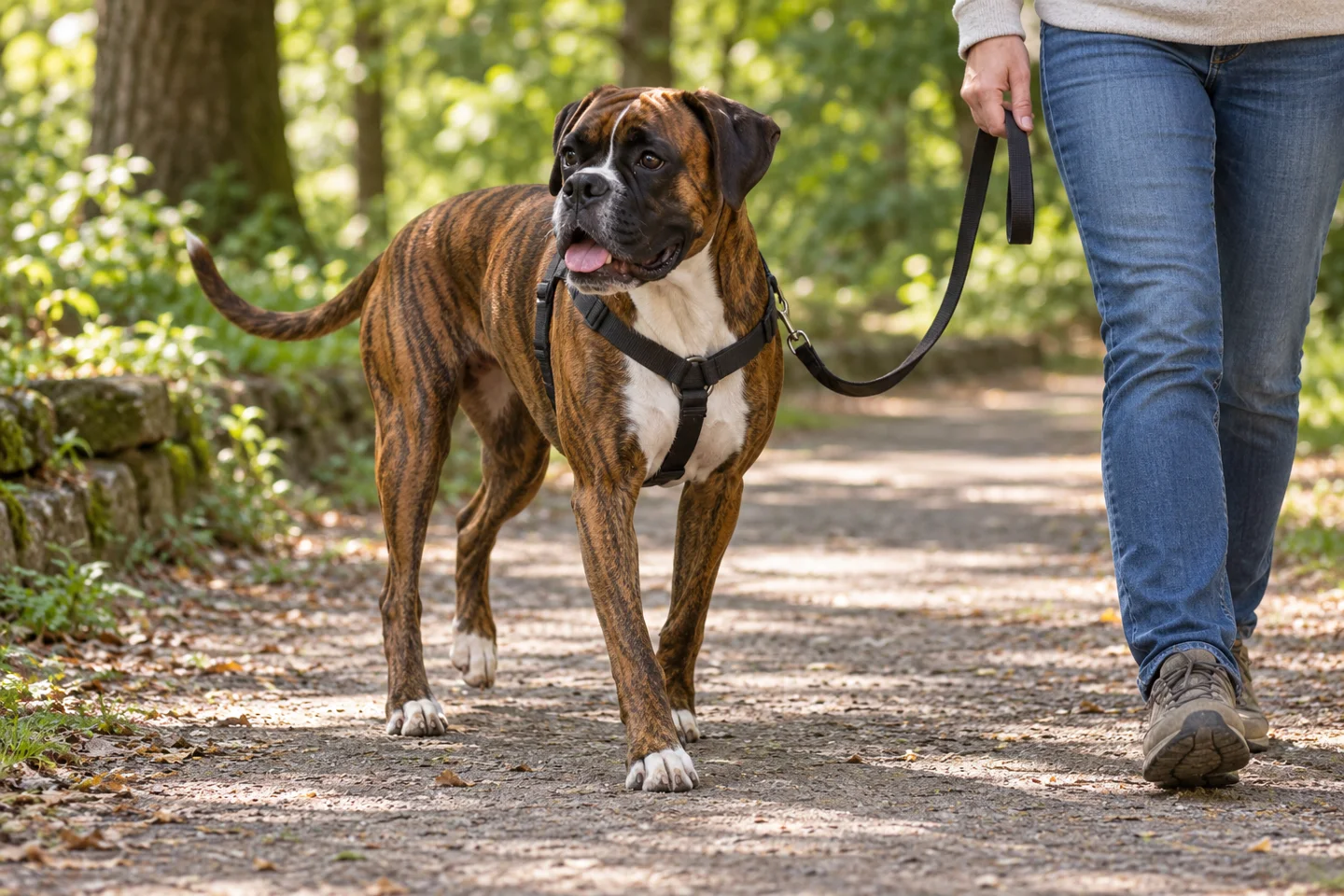
Boxers have a short coat, a muscular outline, and a broad head with a shortened muzzle. Fawn and brindle coats can have white markings. The adult and puppy illustrations in this guide show different coat patterns and natural ears and tails. These are generated illustrations, so they cannot establish correct movement, comfortable breathing, pedigree, or health. Evaluate the real dog and the records that belong to it.
Look for comfortable movement and an ability to rest after appropriate activity. Ask a veterinarian about persistent noisy breathing, difficulty coping with mild exercise, or a body condition that makes movement harder. Avoid selecting for an exaggerated head, unusually heavy build, or a color advertisement that replaces discussion of health. Appearance should not take priority over the dog's daily comfort or your ability to provide care.
A workable household routine
Arrange the entrance before the first excited greeting. A gate or separate room lets someone bring in shopping without a Boxer reaching the open door. Keep a lead where adults can reach it, and provide a comfortable resting place away from the busiest route through the home. Practice the arrangement on quiet days so it feels familiar when the household becomes busy.
A day can include a sniffing walk, breakfast, rest, a short training session, another outing, and time with the household. Adjust the order to your schedule and the dog's needs. Avoid turning every moment of waking into an invitation to play. Learning to relax while people read, cook, or work is a practical skill. A Boxer who cannot settle may need a different routine, support with anxiety, or a medical assessment rather than another exhausting game.
Temperament, company, and being alone
Many owners seek a Boxer because they want an involved companion. Close contact can be welcome, but a dog also needs comfortable independence. Start with brief, manageable periods behind a gate or in a familiar resting area while you remain nearby. Build separation gradually, watching whether the dog can eat, rest, and recover. A camera can help you see behavior that stops when someone returns.
Repeated pacing, attempts to escape, prolonged distress vocalization, or destruction near exits deserve attention. Do not assume the dog is being stubborn or deliberately punishing you. Review the schedule and discuss persistent difficulty with a veterinarian and an appropriately qualified behavior professional. Arrange care while you work on the problem. Leaving a distressed dog for increasingly long periods does not provide useful practice in feeling safe.
Children and other household animals
A bouncing Boxer can knock a child over without intending harm. Use gates and adult supervision to prevent rehearsals of chasing, grabbing clothes, and jumping into faces. Teach children to leave the dog alone during meals, sleep, chewing, and retreat. Give the dog a place children do not enter. If the adult responsible needs to cook, answer the door, or supervise something else, separate them.
Another dog may enjoy the Boxer's play or find it overwhelming. Watch both participants and pause before one repeatedly tries to escape. A resident cat needs secure routes and dog-free rooms; a friendly response to people says little about chasing smaller animals. Introduce household animals gradually with barriers and controlled distance. Ask the rescue about established behavior around animals, and accept that some combinations need permanent management or a different placement.

Aggression, guarding, and bite prevention
Assess aggression through behavior, context, and history. Breed alone cannot establish whether a Boxer will bite or whether a meeting is safe. Freezing, hard staring, stiff posture, avoidance, growling, and snapping are reasons to change the situation. Create distance and prevent access to the trigger. Do not corner the dog to test whether the warning is serious or ask a child to continue an uncomfortable interaction.
For resource guarding, avoid repeatedly taking food or chews away as a test. Feed separately, keep valuable items away from visiting dogs, and teach exchanges in easy situations with professional guidance when necessary. Punishing a warning can make behavior harder to read. A sudden change in tolerance also warrants a veterinary examination for pain or illness. If there is a bite history, obtain a detailed assessment and a realistic management plan before arranging social visits.
Training greetings, recall, and useful pauses
Reward the behavior you want while it is still easy. Practice four feet on the floor with one quiet person before attempting a crowded doorway. A mat can become a place to wait while a visitor enters. Start with short stays and reward often enough that the dog can succeed. If jumping resumes, reduce the difficulty and use the gate rather than repeatedly pushing the dog away.
Teach a cheerful recall in enclosed space, then work with a long line in suitable open areas. Reward returning even when the interesting sniff delayed the response. Use short sessions for leash skills, leaving objects alone, and allowing equipment to be fitted. Reward-based training gives you ways to communicate without intimidation. If a class relies on frightening dogs or forcing proximity during distress, choose a provider whose methods support safety and learning.
Exercise, play, and recovery
Plan activity around age, fitness, weather, and medical advice. A healthy adult may enjoy exploratory walks, training games, and play with a compatible partner. A puppy needs opportunities to move and investigate without being made to complete an adult endurance routine. An older Boxer may still enjoy going out while benefiting from gentler routes, better footing, and more time to recover.
Use pauses during play to see whether the dog can disengage and whether the other participant wants to return. Repeated body slams, relentless pursuit, or a dog hiding behind a person are reasons to stop. Avoid measuring success by exhaustion. Offer sniffing, easy searches for food, and quiet company as well as physical activity. New reluctance, unusual fatigue, weakness, or collapse requires veterinary attention rather than pressure to finish the walk.
Warm weather and comfortable breathing
The Boxer's shortened muzzle makes careful attention to breathing and heat sensible. Choose cooler hours, shaded routes, drinking water, and an easy way home. Check conditions at the actual walking surface and avoid leaving the dog in a parked vehicle. A running partner's schedule should never determine a dog's exercise when the weather or the dog's condition makes that exercise unsuitable.
Stop activity if breathing becomes unusually difficult or the dog seems distressed. Severe weakness, collapse, or suspected heat illness requires urgent veterinary help. Contact the clinic promptly and follow its first-aid instructions while arranging transport. Do not wait for a dramatic symptom simply because the dog has managed a similar walk before. Heat tolerance varies with health, acclimatization, humidity, effort, and the individual dog.
Grooming and cooperative handling
A short coat still sheds and needs regular attention. Brush gently, check the skin, and dry the dog after wet outings. Notice redness beneath equipment, changes around skin folds, and new lumps or sores. Record a clear photograph with a date when you find a change, then ask the veterinarian what needs examination. Do not assume a skin growth is harmless because it is small or resembles an old one.
Introduce nail care, tooth brushing, ear checks, and examinations in small steps. Touch a paw briefly, reward, and stop before the dog struggles. Use veterinary advice for ear discomfort or persistent odor rather than inserting objects into the ear canal. If handling becomes difficult, ask about cooperative care and appropriate clinical support. Wrestling with a painful dog can make the next appointment harder and expose people to bites.
Feeding, growth, and body condition
Choose a complete diet suited to the dog's life stage and discuss individual needs with the veterinarian. Measure meals and count training food as part of the day's intake. A bag's feeding guide provides a starting point; body condition, growth, activity, and medical needs determine adjustments. Keep a simple record when changing food so you can describe appetite, stool changes, and weight trends clearly.
An athletic outline should not be used to justify an extreme diet or rapid muscle-building program. Growing dogs need appropriate nutrition and activity, not supplements chosen from appearance claims. Keep rubbish, medication, and dangerous foods inaccessible. Teach children to avoid sharing snacks and give the dog a quiet feeding area. Ask for advice before adding supplements or making a major diet change, especially when a heart condition or another illness is present.
Health screening and cardiac care
The American Boxer Club recommends screening that includes orthopedic assessments, thyroid testing, and cardiac evaluation, with relevant DNA tests. Ask for the actual reports, the dog's identification, dates, and the clinician's interpretation. Heart tests answer different questions. An echocardiogram assesses structures and blood flow; a Holter monitor records heart rhythm over a longer period. One normal examination does not replace every other recommended test or guarantee lifelong health.
Arrhythmogenic right ventricular cardiomyopathy, often shortened to ARVC, is an inherited concern in Boxers. NC State describes variants in STRN and FOS and explains that genetic results do not perfectly predict disease: a positive result does not establish that signs will develop, and a negative result does not exclude ARVC. Discuss rhythm monitoring and repeat assessments with the veterinarian. Weakness, fainting, or collapse needs prompt clinical investigation even when previous screening looked reassuring.
Other health questions and emergencies
Ask how the breeder evaluates aortic or subaortic stenosis as well as rhythm disease. The American Boxer Club's recommendations distinguish these concerns, so a general statement that the parents' hearts were checked is too vague. Request an explanation of the tests performed and any follow-up plan. Bring the records to your own veterinarian rather than trying to interpret every result from an advertisement or online discussion.
Know how to reach an emergency service before you need it. Repeated unproductive retching, a swollen abdomen, collapse, severe breathing difficulty, or sudden inability to stand requires urgent advice. Keep medication and previous results accessible for the clinic. Do not give human pain medicine or leftover prescriptions while waiting. For gradual changes such as altered gait, reduced stamina, appetite loss, or persistent coughing, book an examination and describe when the problem started and how it has changed.
Boxer mixes and individual assessment
A Boxer crossed with a Labrador, Poodle, or another breed can inherit a wide range of physical and behavioral traits. An informal crossbreed name does not create a predictable size, coat, exercise requirement, or temperament. Ask which parents are documented and which details are estimates. A rescue may know the dog's day-to-day behavior much better than its ancestry, and that information can still support a careful adoption decision.
Health assessment should consider both known parents and the actual dog. A mixed pedigree does not remove the need to ask about cardiac history, comfortable breathing, orthopedic problems, and relevant screening. Avoid assuming that one parent's reputation will cancel the other parent's needs. For an adult, discuss handling, time alone, play style, and responses to unfamiliar animals. Arrange a trial or supported introduction when the organization offers one and explains its conditions clearly.
Choosing a breeder or rescue
A responsible conversation includes the difficult details: past illness, behavior concerns, screening limitations, and what happens if the placement fails. Request records before committing money. Meet the relevant dogs when appropriate and ask how puppies learn about household sounds, gentle handling, and brief separation. Avoid pressure to decide immediately or promises that a particular color, imported label, or price guarantees superior health.
For a rescue Boxer, ask what was observed in foster care and what remains unknown. Clarify medication, veterinary follow-up, bite incidents, and restrictions around children or animals. Be honest if you cannot manage a strong dog on stairs or provide separation within the home. A suitable match may be an adult with an established routine rather than a puppy. Returning to the search after an unsuitable meeting is a responsible choice.
Costs, later life, and household decisions
Budget for ordinary food and preventive care alongside training, secure equipment, care during absences, and unexpected veterinary treatment. Review insurance terms, waiting periods, exclusions, and how pre-existing conditions are handled before relying on a policy. A savings plan also needs a realistic amount and a way to pay an urgent bill while a claim is processed. Obtain local estimates instead of assuming an online average fits your area.
As the dog ages, keep beds easy to reach and floors secure. Reassess the route when hills, steps, or long waits become uncomfortable. Arrange help for lifting or transport before a crisis. Keep social contact enjoyable even if running games stop being appropriate. A quieter Boxer still needs opportunities to sniff, make choices, and spend comfortable time with people. Changes in behavior or willingness to interact deserve attention rather than being dismissed as age alone.
Travel and care away from home
A Boxer needs a safe arrangement in a vehicle, with appropriate restraint and enough room to rest comfortably. Practice short trips before planning a long journey. Check that the person providing transport can secure the dog without opening a route into traffic. Bring familiar bedding, water, identification details, and the contact information for the usual veterinary practice. Schedule breaks around the dog rather than the fastest possible arrival.
For boarding or a sitter, explain the entrance routine, feeding separation, and the cues the dog already knows. Provide written instructions about medication and emergency decisions. Arrange a short introductory visit when possible, and ask how the provider handles dogs who need individual walks or a quiet resting space. A busy communal setting may be unsuitable even for a Boxer who enjoys one familiar playmate. Select care based on what the dog can comfortably manage.
Planning a dogsDating introduction
Use the dogsDating profile to describe your Boxer's real play style and limits. Mention whether the dog prefers parallel walks, becomes excited by running dogs, guards toys, or needs room during greetings. State current restrictions on exercise and choose a partner whose owner can respect them. Keep exact home coordinates private and meet in an agreed public place with enough room to move away.
Begin with separate handlers and a parallel walk at a comfortable distance. Avoid tight face-to-face greetings, shared food, and toys on the first outing. If both dogs remain loose and able to disengage, allow brief opportunities to investigate and then move on. Finish early when the meeting is going well. If one dog freezes, hides, repeatedly pursues, or cannot recover from excitement, create distance and end the introduction without forcing friendship.
Sources and editorial notes
Sources checked October 21, 2026. Breed measurements describe reference ranges, not a diagnosis or an individual dog's ideal weight. Images are AI-generated breed illustrations and do not document a particular dog or health condition.
- NC State Veterinary Hospital: Boxer arrhythmogenic right ventricular cardiomyopathy
- American Kennel Club: Is the Boxer right for you?
- VCA Animal Hospitals: Common emergencies in dogs
- VCA Animal Hospitals: General feeding guidelines for dogs
- VCA Animal Hospitals: Food aggression in puppies
- American Boxer Club: Health screening recommendations
- VCA Animal Hospitals: Heat stroke in dogs
- American Kennel Club: Boxer breed information
- VCA Animal Hospitals: Aggression toward unfamiliar dogs, diagnosis
- AVSAB: Humane Dog Training Position Statement
Keep getting to know dogs.
Read another guide or return to your dogsDating community.
Explore breed guidesBack to dogsDating