American Leopard Hound
An athletic American scent hound whose care includes secure exploration, merle-related breeding questions, and a clear distinction from Catahoula ancestry.
How these guides are researched and reviewed
- Earlier name
- Leopard Cur
- Coat
- Short double coat; several colors and patterns
- Care priorities
- Scent work, boundaries, and merle questions
General information for owners. These articles have not been reviewed by a veterinarian. Medical decisions need your dog's history and an examination.
Life with an American Leopard Hound
An American Leopard Hound needs a home prepared for an active treeing hound, secure exploration, and a voice that may carry beyond the garden. Begin with the daily routine rather than the spotted coat. Consider how the dog gets outside, who provides activity during a workday, and what happens when a scent becomes more interesting than the handler. A placement should fit ordinary weeks as well as enjoyable outdoor days.
Ask whether the individual has lived in a household, worked from a kennel, or experienced both. These histories can create different learning needs around traffic, visitors, sleeping indoors, and time alone. A responsible source should explain direct observations and uncertainty. An adult with a detailed history can provide useful information, while a puppy needs frequent attention and patient teaching. Choose a plan that does not depend on the dog abandoning its interests to suit an unsuitable environment.
Identity and the Leopard Cur name
UKC previously registered this breed as Leopard Cur and changed the name to American Leopard Hound in 2008. Those names therefore do not require separate breed guides. The breed is distinct from the Louisiana Catahoula Leopard Dog. Similar spotted coloring cannot establish that two dogs share the same pedigree or care needs. Ask which registry and ancestry a seller means instead of choosing through an informal label alone.
Accounts of the breed's earliest ancestry include uncertainty. UKC presents historical beliefs about dogs brought to the Americas, rather than a complete documented pedigree extending through every early generation. There is no need to turn those accounts into a precise origin story to understand the present dog. Its established use as a treeing scent hound provides more practical context for activity, pursuit, and voice. Assess the actual animal and the household routine alongside that background.
Size, coat, and functional proportions
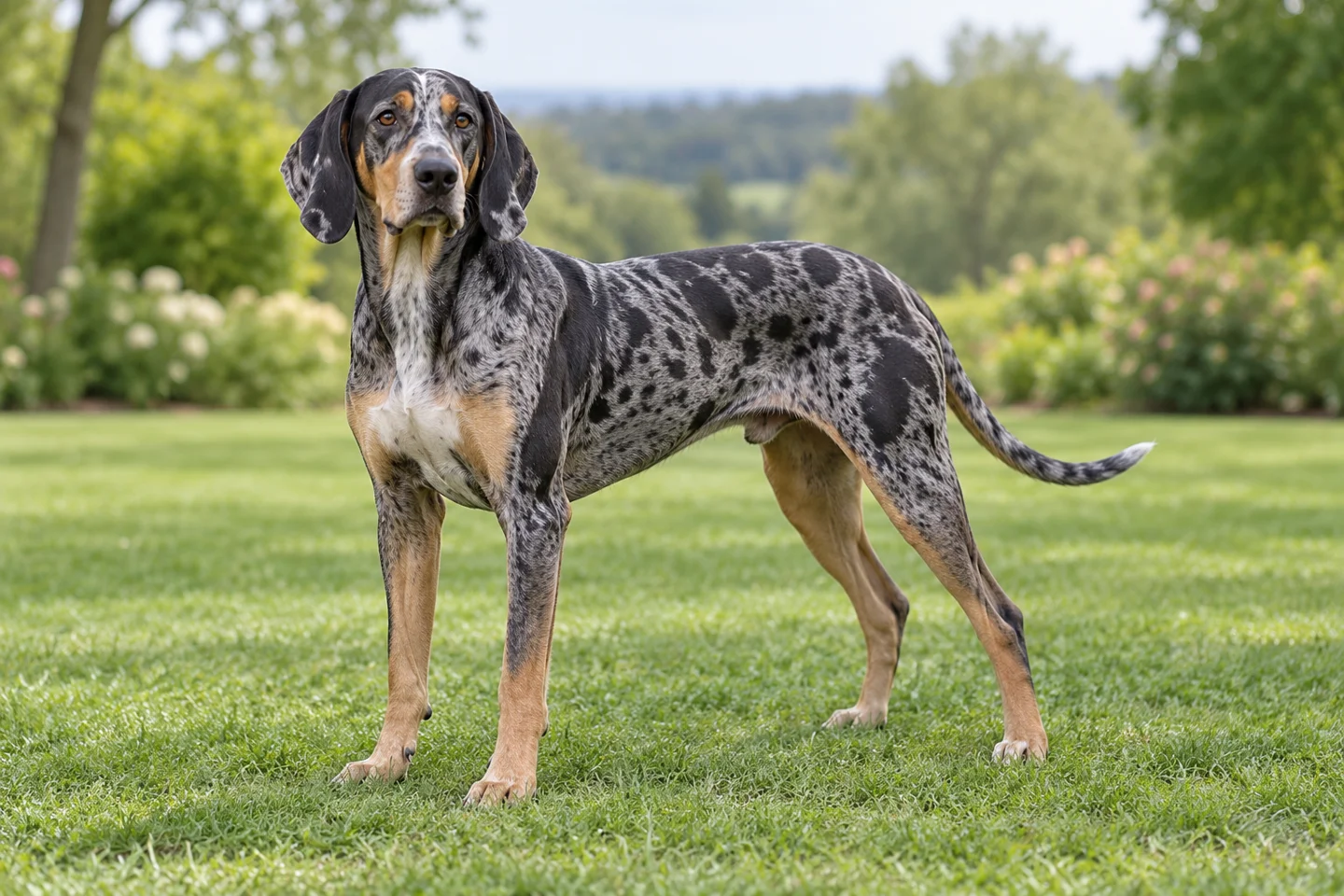
UKC describes a medium-to-large dog with an athletic, slightly longer-than-tall body, dropped ears, and a close, dense coat. The standard allows several colors, so every American Leopard Hound is not necessarily visibly leopard-spotted. Ask about the actual dog's build and adult relatives without assuming a puppy's final size is guaranteed. A veterinarian can assess healthy body condition more usefully than an advertisement celebrating maximum weight.
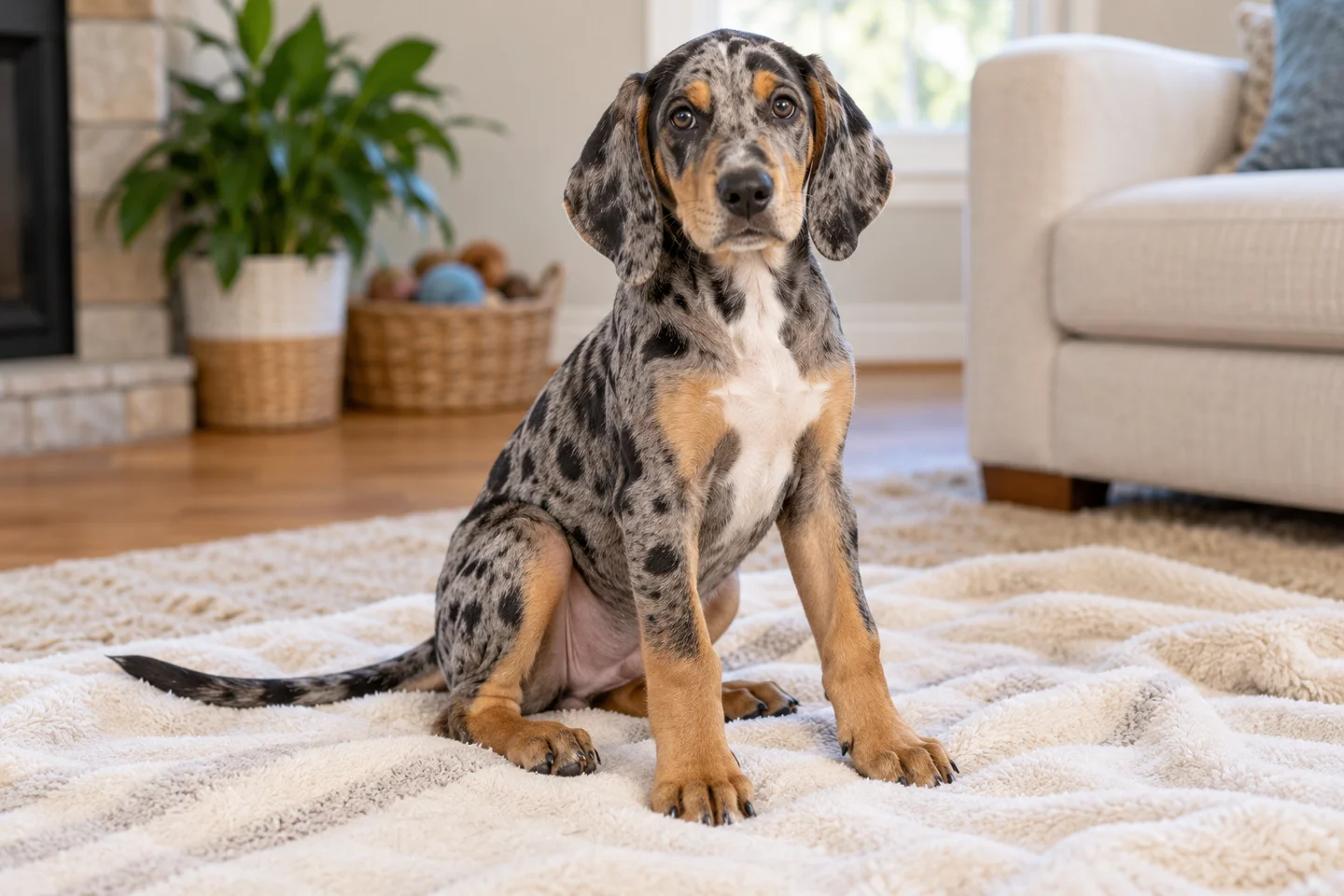
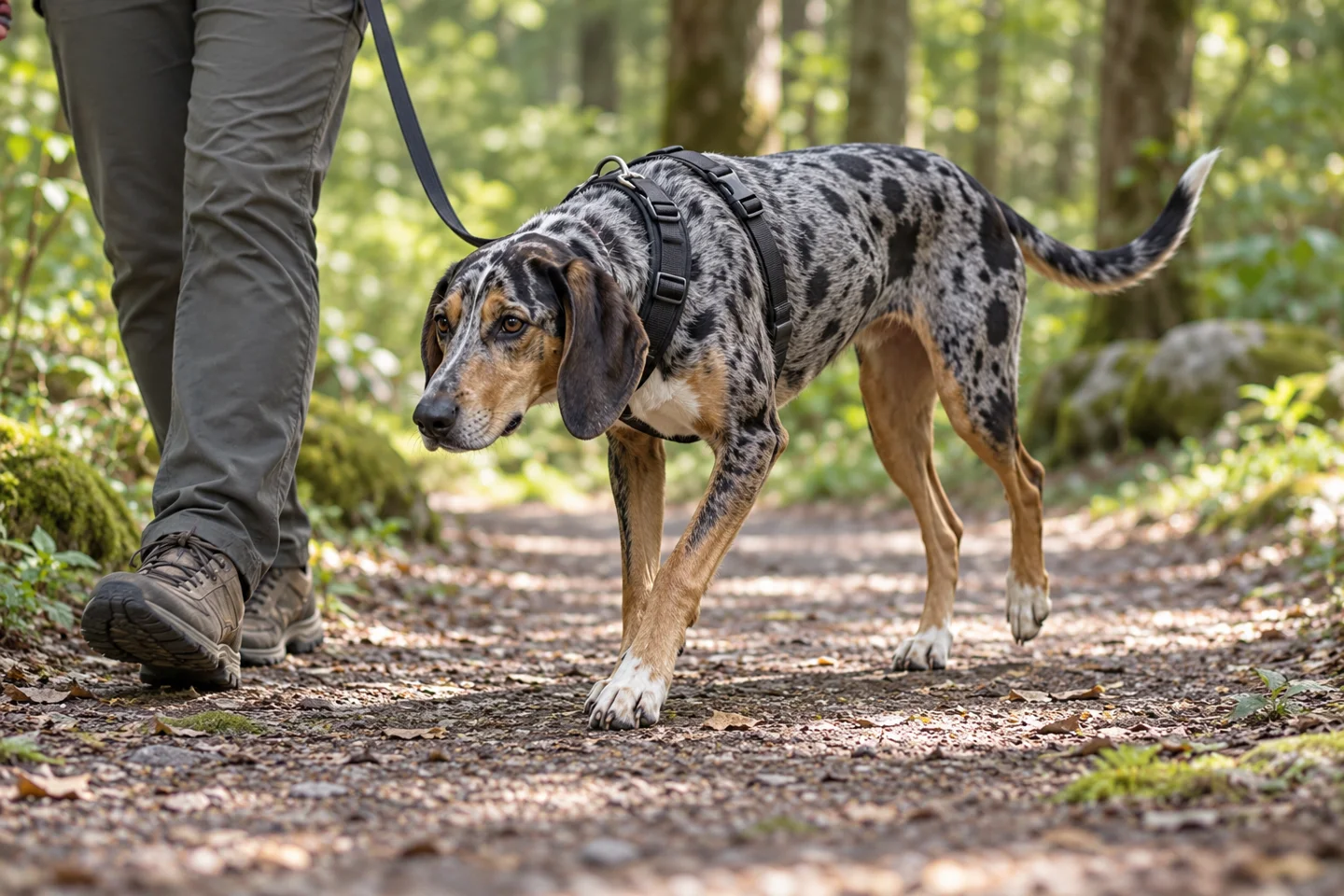
Watch movement, rising, turning, and recovery after appropriate activity. A working description does not prove an individual has comfortable joints or unlimited endurance. The three images here are generated illustrations showing a spotted pattern, natural ears, and long tails. They cannot verify ancestry or medical soundness. A rescue's observed behavior may be more dependable than a photograph-based breed estimate, and that information remains useful even where the exact background is unknown.
Merle, hearing, and eye questions
Merle inheritance deserves a deliberate conversation before breeding or choosing a source. UKC cautions against merle-to-merle mating because of hearing and vision risks. UC Davis explains the inheritance and health implications of merle variants. Appearance alone can be misleading, so ask what genetic testing and professional advice support a planned mating. A coat pattern is not a general health certificate or a reason to dismiss concerns.
For the individual dog, ask about hearing and eye examinations when appropriate and discuss unclear responses with the veterinarian. A dog who does not respond may be distracted, unable to hear, frightened, or experiencing another issue. Do not test hearing with startling noise close to the ears or test vision near hazards. An abnormal finding requires a care plan, not an assumption about the animal's value or ability to enjoy a suitable home.
Boundaries and the scent-led outing
Fit walking equipment carefully and attach the lead before opening an exterior door. A hound can become deeply engaged with a trail, so avoid testing recall beside traffic or wildlife. Choose routes with enough room to move away from other animals and prevent access to livestock. Teach useful responses while retaining physical safeguards where a mistake could put the dog or another animal at risk.
Inspect fences, latches, gaps, and areas where digging could create an exit. Consider a second barrier where a gate opens toward a road. Explain the arrangement to guests and contractors. A tracking device can support identification and recovery, but it does not replace a secure boundary or lead. Check contact information regularly and arrange who could help after an escape before an urgent situation forces the household to improvise.
Children, pets, and shared space
Children need an attentive adult and boundaries around meals, sleep, and valuable objects. Prevent rough chasing, hugging, climbing, and repeated touching when the dog moves away. Provide a retreat children cannot enter. A friendly hound's energetic movement can still cause an accidental collision. Separate when adult attention shifts to another task instead of expecting a child to interpret the dog's warnings or control it on a lead.
Pursuit is an important question around cats and smaller animals. Ask what has been observed in realistic settings and prepare reliable separation. Other dogs need individual food and rest, with opportunities to disengage without being followed. Pack or hunting experience cannot guarantee compatibility with every companion. Some combinations need permanent management or a different placement. Make that decision through actual behavior and the household's capabilities rather than expecting a vulnerable animal to tolerate repeated pressure.
Aggression and guarding in context
Assess risk through history, current behavior, health, and the particular interaction. A breed description emphasizing trainability or sociability cannot establish that a dog is safe with every person or animal. Freezing, stiff posture, avoidance, growling, snapping, and attempts to escape should stop pressure. Create space and record what happened immediately before the warning. Do not corner the dog to see whether it will escalate.
Manage meals and valued items to prevent conflict, and teach exchanges at an achievable level with rewards. Avoid repeatedly taking a bowl as a control test. New sensitivity to touch needs veterinary assessment for pain or illness. If there has been a bite or serious fight, obtain qualified advice before recreating the circumstances. Tell carers and other owners about practical restrictions. A management plan must remain workable during ordinary life, including the absence of the main handler.
Training recall, pauses, and cooperative care
Start in secure, low-distraction settings and reward returning, moving with you, waiting at doors, and resting on a mat. The American Veterinary Society of Animal Behavior recommends reward-based methods. A hound can learn while remaining strongly interested in scent. The task, environment, and reward need to make the desired response understandable. Repeated louder commands do not resolve a training step that is too difficult.
Practice an easy change of direction before needing it near another animal. Use a long line only with appropriate space and handling that avoids tangles or abrupt stops. Teach voluntary approaches to equipment and brief body checks with clear pauses. A dog with limited household experience may need these basic routines introduced patiently. Ask a suitable professional to observe stalled progress, considering fear, fatigue, discomfort, and the dog's previous learning rather than assuming defiance.
Exercise and suitable alternatives to hunting
Provide activity according to age, fitness, health, and conditions. A healthy adult may enjoy exploratory walks, safe scent searches, or other appropriately introduced work. A puppy needs movement and learning without an adult endurance program. After illness or a quiet period, build conditioning gradually. Ask the veterinarian about demanding activities, especially when history or prior injuries are uncertain.
A companion can use its nose without chasing live animals. Begin easy searches in a hazard-free area, supervise unfamiliar equipment, and count food rewards in the daily intake. Watch whether the dog is engaged or becoming frustrated. Notice recovery after physical effort and next-day stiffness. Lameness, weakness, unusual fatigue, or reluctance to rise needs assessment. Rest and quiet company belong in the routine too. The aim is comfortable function rather than exhausting the dog until it cannot remain active indoors.
Voice, neighbors, and time apart
Discuss vocal behavior before placement, especially with shared walls or close gardens. Ask what prompts this dog's barking and how long it continues. Following a scent, anticipating a walk, alerting at a boundary, and distress during absence can require different changes. Keep a brief record and remove repeated preventable triggers where possible. Reward calmer alternatives in manageable conditions instead of adding shouting to the sound.
Build comfortable periods alone gradually and observe whether the dog rests. A camera can reveal pacing, sustained vocalization, or escape attempts. Persistent distress needs a review with the veterinarian and a qualified behavior professional. Arrange suitable care while addressing it. A crate should not be a place where an anxious dog repeatedly injures itself trying to get out. Ask holiday-care providers about quiet accommodation and individual walks rather than assuming communal play will solve every social need.
Grooming and checks after the trail
Brush the close coat regularly and inspect skin, paws, nails, and equipment contact points. Dense hair can conceal debris, small injuries, or irritation. Check between toes and follow veterinary advice about ticks and other local outdoor risks. A standard's description of toughness does not remove the need for inspection, shelter, or recovery after a demanding outing. Any persistent wound, swelling, odor, or soreness needs examination.
Bath when appropriate with suitable products and provide secure footing and adequate drying. Observe ears for redness, discharge, odor, head shaking, or discomfort, and use the veterinarian's cleaning plan. Avoid objects deep in the canal and leftover medication for a new episode. Introduce nail care and tooth brushing through brief rewarded steps. A dog who suddenly resists familiar handling may be painful; stop and investigate instead of treating tolerance as an obedience test.
Food, growth, and body condition
Choose a complete diet suitable for life stage and individual needs. A companion may require a different amount from an actively working hound. Measure portions and count training food, chews, and household snacks. Ask the veterinary team to demonstrate body-condition assessment and monitor changes as activity varies. A lean outline should not be an excuse for weight loss or inadequate muscle, and a sturdy frame does not justify excess fat.
Keep a shared feeding and medication record where several people provide care. Secure rubbish, unsafe foods, tablets, and cleaning products. Report changes in appetite, thirst, digestion, weight, or stamina when they persist. Avoid repeatedly changing food without a plan or adding supplements based on broad performance promises. For a dog with a medical condition, review treats and extras as well as the main diet so the whole intake supports the clinical recommendations.
Health evidence and appropriate screening
Do not confuse a breed standard with a disease-screening protocol. Ask for the actual health records of the relevant dogs and discuss joint, eye, hearing, and other assessments with your veterinarian. Recommendations may differ by program and background. Avoid importing a checklist from a similar-looking breed or interpreting limited published data as proof that this population has no health concerns.
Request identities, examination dates, methods, and findings. A general DNA panel, clinical examination, and joint imaging investigate different questions. Read results and ask about illness in close relatives. A puppy check does not eliminate the need to investigate later symptoms. For an adopted adult with incomplete history, identify the gaps and make a plan around current findings. Screening helps reduce particular uncertainties; it cannot promise lifelong freedom from inherited or acquired illness.
Changes in function and emergency decisions
Observe movement, appetite, thirst, sleep, and willingness to interact. A hound may continue following a scent while uncomfortable, so persistent lameness or altered recovery deserves attention before the dog stops entirely. Changes in visual confidence or apparent hearing also need assessment. Provide a concise dated history and videos where useful without provoking symptoms or delaying care. Avoid diagnosing from breed reputation or another owner's account.
Know the nearest emergency service and plan safe transport for a dog who cannot walk. Severe breathing difficulty, collapse, poisoning, heavy bleeding, or abdominal swelling with unsuccessful retching requires urgent advice. Keep current medication and earlier findings accessible. Do not give human painkillers or old prescriptions while deciding what to do. Arrange backup care and practical lifting or transport help before an illness or absence makes the usual routine unavailable.
Mixes and uncertain ancestry
An American Leopard Hound crossed with another hound, Catahoula, or different breed can vary in size, coat, behavior, and medical needs. Informal mix names do not establish additional recognized varieties. Ask whether parentage is documented and describe estimates plainly. Merle markings alone cannot identify a particular cross. A rescue may have stronger evidence about household behavior than exact ancestry, and that evidence can still support a careful placement.
Mixed ancestry does not guarantee quiet behavior, dependable recall, normal joints, or safe access to small animals. Consider known parental concerns alongside the actual dog's findings. Ask about pursuit, food, handling, time alone, and previous conflicts. Choose through a realistic care plan that works for the individual and the existing household. An appealing combination of supposed parental traits is not enough when the home lacks reliable separation or appropriate daily activity.
Sources, travel, and later-life care
Ask a breeder about health information, genetic decisions, adult temperament, early experiences, and support after placement. Read terms and return arrangements without pressure. For adoption, clarify medication, bites or fights, escape attempts, veterinary follow-up, and which observations came from a home. Explain resident animals, noise limits, work hours, and secure space accurately. Plan an adjustment period with manageable demands rather than expecting immediate unrestricted household access.
Budget for food, equipment, ordinary care, training, care during absences, and unexpected treatment. Review insurance terms and request local estimates. Practice travel with appropriate restraint and provide water, bedding, identification, and veterinary contacts. As the dog ages, adapt footing, vehicle entry, walks, and care sessions around comfort. Preserve gentle exploration and social contact while reporting new difficulties. A backup carer should know the dog's boundaries and when to call the clinic.
Planning countryside access responsibly
Check who controls the land before choosing a route or an exercise enclosure. A quiet field can still contain livestock, wildlife, equipment, or hazards beyond the entrance. Keep the dog under appropriate control and follow the access rules that apply there. A history of hunting does not give a companion automatic permission to pursue animals. Choose activities that suit both the dog and the actual setting, with a clear way to leave if conditions change.
Carry water and the equipment needed for the planned terrain, and let someone know the route when an outing is remote. Think about transport if the dog becomes lame some distance from the vehicle. Build difficulty gradually rather than assuming stamina described in a standard applies to a newly adopted or unconditioned animal.
If you join a working or scent activity, ask how dogs are assessed, handled, separated, and rested. Observe a session before committing. Choose instruction that uses humane methods and explains its safety arrangements. A well-run introduction should give a novice dog achievable tasks and allow an owner to stop. The dog can have an interesting life through suitable exploration and searches without being pushed into work for which its health or experience is unsuitable.
A scent-aware dogsDating meeting
Describe the hound's pace, pursuit, voice, preferred partners, and any handling or exercise limits in its dogsDating profile. Keep exact home coordinates private and agree on a public route with space and safe lead arrangements. Discuss the other dog's size and play style first. A calm parallel walker may be a better initial partner than a dog who immediately seeks chasing games or close physical contact.
Begin with separate handlers and comfortable distance, allowing appropriate investigation without entangled leads. Skip shared food and toys. Allow brief contact only when both dogs remain loose and able to disengage. End or increase space if either freezes, hides, persistently pursues, or repeatedly tries to leave. A quiet first outing can be enough. Further contact should follow the observed response and both owners' ability to manage the arrangement without forcing friendship.
Sources and editorial notes
Sources checked October 21, 2026. Breed measurements describe reference ranges, not a diagnosis or an individual dog's ideal weight. Images are AI-generated breed illustrations and do not document a particular dog or health condition.
- VCA Animal Hospitals: Ear infections in dogs
- VCA Animal Hospitals: Common emergencies in dogs
- VCA Animal Hospitals: General feeding guidelines for dogs
- VCA Animal Hospitals: Food aggression in puppies
- Orthopedic Foundation for Animals: Disease screening information
- United Kennel Club: American Leopard Hound history and standard
- VCA Animal Hospitals: Aggression toward unfamiliar dogs, diagnosis
- UC Davis Veterinary Genetics Laboratory: Merle inheritance and health implications
- AVSAB: Humane Dog Training Position Statement
Keep getting to know dogs.
Read another guide or return to your dogsDating community.
Explore breed guidesBack to dogsDating