Ariegeois
A light French scent hound whose care needs secure exploration, attention to its voice and ears, suitable company, and honest limits on breed health claims.
How these guides are researched and reviewed
- Also written
- Ariégeois
- Origin
- Ariège, France
- Care priorities
- Scent, secure routes, voice, and ear checks
General information for owners. These articles have not been reviewed by a veterinarian. Medical decisions need your dog's history and an examination.
Living with an Ariegeois
An Ariegeois needs an owner who enjoys an active scent hound and can provide secure exploration, patient training, and a realistic plan for its voice. The breed is also written Ariégeois, after the Ariège region of France. A lean body and soft expression can attract attention, but daily life involves more than appearance. Consider how you will manage a dog that wants to investigate a trail, follows movement through the countryside, or calls when something interests it.
Ask about the individual dog's previous home and work. A hound raised among other dogs may need help learning a household routine, sleeping indoors, or spending short periods without familiar companions. An experienced companion may arrive with useful habits, yet still need time to settle. Choose on the basis of observable behavior and care needs. If you want a dog that routinely stays beside you without a lead in open country, discuss that expectation carefully before bringing home a scent-driven hound.
French origins and the breed name
The FCI identifies the Ariegeois as a French scent hound from Ariège. Its documented development involved regional Briquet hounds and larger pack hounds, with ancestry described in relation to dogs such as the Bleu de Gascogne and Gascon Saintongeois. Historical descriptions should not be expanded into a precise family tree for every modern dog. The useful point for an owner is that the breed was developed for scent work, including hunting hare, rather than selected primarily for close household obedience.
Ariegeois is a breed name, not a general label for every black-and-white French hound. Related regional hounds have their own standards and histories. Ask which organization registered a pedigree and how the breeder describes the dogs' work and living arrangements. A rescue may reasonably use an uncertain ancestry label when records are missing. That uncertainty should remain visible. A photograph, ear shape, or plausible story about where a dog was found cannot establish a documented pedigree.
A light hound outline and recognizable markings
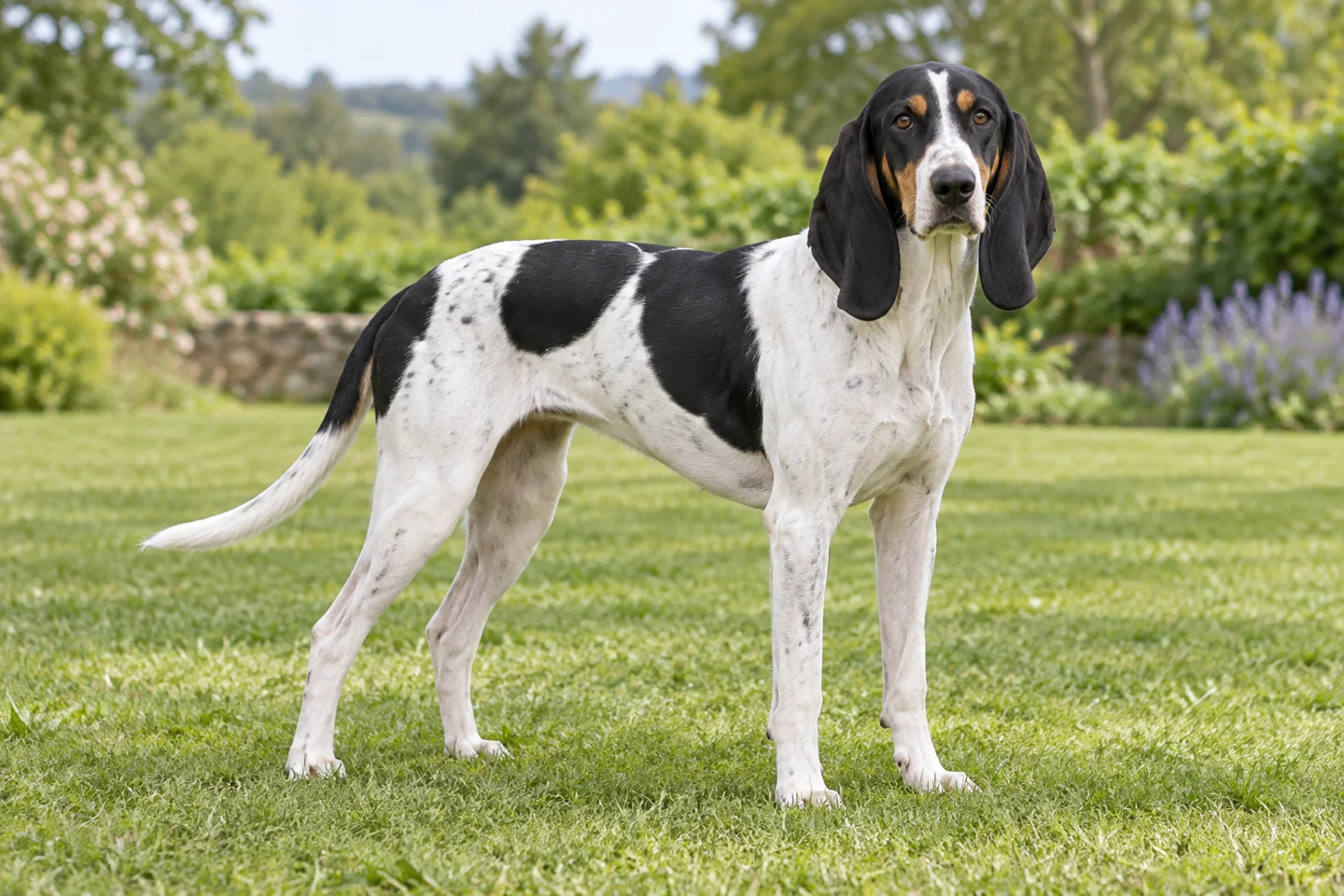
The standard describes a medium-sized, relatively light hound with a white coat, black patches, and modest tan markings around the eyebrows and cheeks. Long, fine dropped ears and a lean, long-legged outline distinguish it from a low, heavy Basset type. These features help identify the intended breed in illustrations, although appearance alone cannot verify ancestry. A dog should move comfortably and maintain a suitable body condition rather than being kept thin merely to match an athletic description.
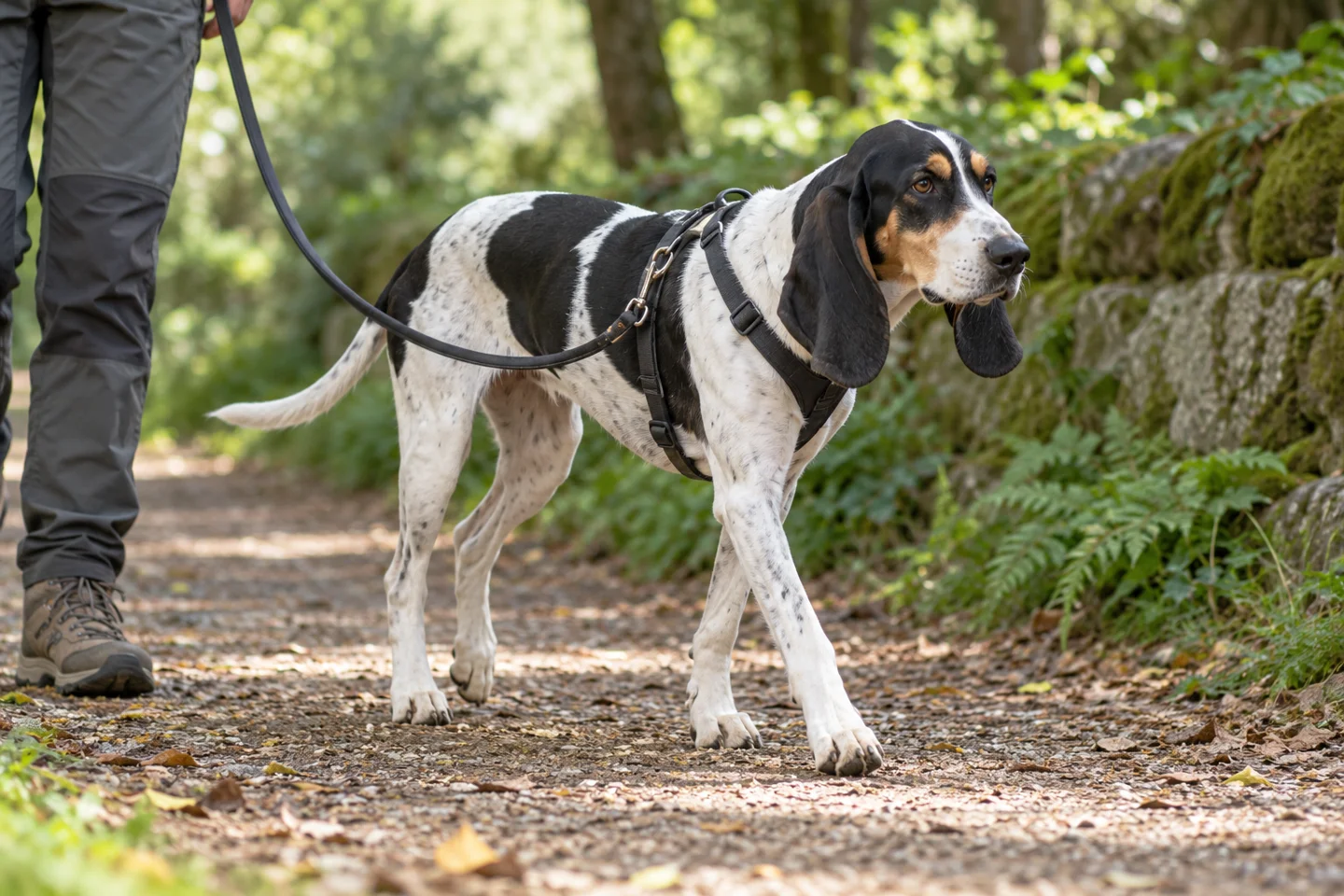
Look at feet, nails, and gait when assessing an individual. A hound that repeatedly favors one leg or struggles to rise needs a veterinary assessment, even if it remains keen to walk. Fit a harness to the actual chest and neck rather than choosing by breed label. Check whether the dog can back out of the equipment when frightened or distracted. Secure fittings, readable identification, and a reliable lead are particularly important when an interesting trail could draw attention away from the handler.
Scent, recall, and countryside boundaries
An Ariegeois may become deeply occupied with scent. Practice a recall in a securely enclosed area, reward it generously, and keep the difficulty manageable. A reliable response in the kitchen does not demonstrate reliability when wildlife crosses a path. Use a lead or appropriately handled long line where escape, traffic, livestock, or wildlife would create danger. Avoid attaching a long line to equipment that could cause injury if the dog suddenly reaches the end at speed.
Check gates and fences before allowing free movement, including at rented exercise fields. Walk the boundary and remove access to gaps or loose panels. Do not assume the dog will remain nearby because it has just arrived and appears tired. Identification and a registered microchip improve the chance of reunion but do not prevent an escape. A tracker can be a useful additional tool while leaving the owner responsible for secure equipment, safe access, and an emergency search plan.
Voice and learning to settle at home
The breed standard refers to a hound voice, and prospective owners should discuss noise honestly. Ask when a particular dog vocalizes, what it sounds like, and how long it takes to settle. Alerting at a gate, calling after other dogs, and distress during isolation may need different responses. Repeatedly shouting over the dog adds noise without explaining the underlying problem. A short recording during an absence can help distinguish a brief reaction from an extended period of distress.
Provide a comfortable resting area away from busy windows and constant foot traffic. Build a predictable rhythm of walks, meals, company, and sleep. Teach short settled periods while you remain nearby before expecting a new dog to cope alone for a long time. If it repeatedly paces, vocalizes, damages exits, or cannot eat after people leave, seek qualified help. Pack-hound ancestry does not establish that the dog will tolerate isolation, and adding another dog is not a dependable treatment for distress.
Children and household boundaries
Children need supervision around an Ariegeois, including a dog that appears gentle and socially interested. Long legs, sudden movement, and enthusiastic greetings can knock over a small child. Teach a calm approach and allow the dog to move away. Keep children out of sleeping spaces and prevent pulling ears, hugging, or leaning over the dog. An adult should manage the lead and doors, especially when the dog is excited by a scent outside or another animal passing.
Separate the dog during meals, chews, and energetic children's games. Visiting children may not understand the household rules, so explain them and use barriers when supervision becomes difficult. A dog that tolerates one familiar child does not automatically tolerate a crowded birthday gathering. Watch for turning away, freezing, hiding, or repeated attempts to leave. Give the dog a quiet retreat before discomfort escalates. Children should call an adult when they need something near a resting dog rather than attempting to move it themselves.
Other dogs, cats, and small animals
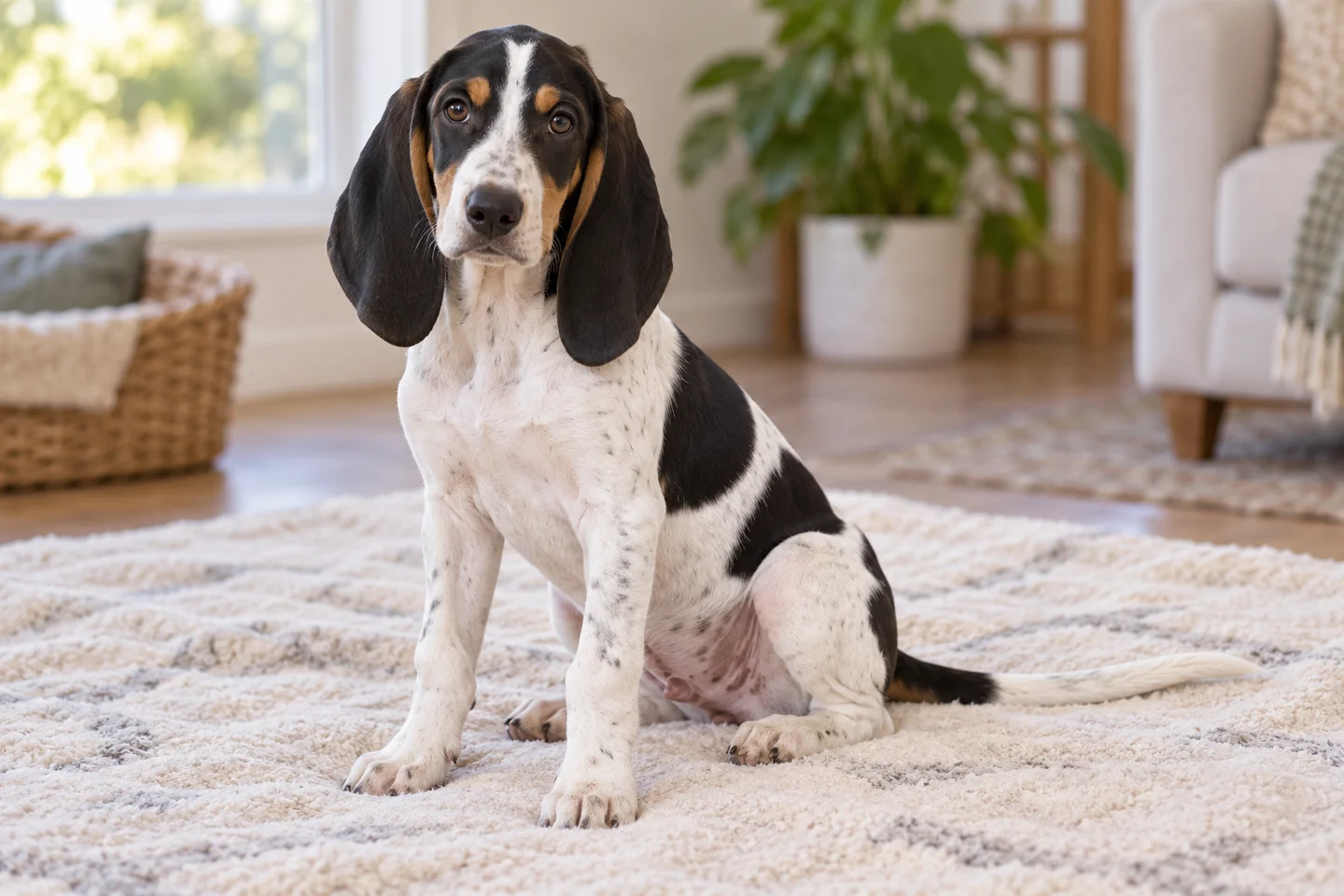
A history of pack work may provide useful information about experience with dogs, but it does not guarantee compatibility with every individual. Begin introductions in an open, neutral setting with enough space for parallel walking. At home, manage bowls, chews, doorways, and resting areas separately until the dogs are comfortable. Ask about previous disputes and the circumstances around them. A dog can enjoy company on a walk while preferring more space around food or during rest.
Cats and small animals require a separate assessment because pursuit can cause serious injury. Familiarity with one household cat does not establish safety with an unfamiliar cat running outdoors. Provide escape routes and dog-free areas, use barriers, and supervise introductions closely. Do not use a small animal to test the dog's reaction. If sustained staring, stalking, or chasing appears, stop access and obtain professional advice. A friendly response to people offers little information about the dog's response to prey-sized animals.
Aggression, discomfort, and bite prevention
Any dog can respond aggressively when frightened, hurt, trapped, or concerned about a resource. Notice changes in posture and behavior before a confrontation develops. Stiffening over a bowl, freezing during handling, growling near a resting place, or repeatedly moving away deserves attention. Increase distance and remove the immediate pressure. Avoid reaching into the dog's space to prove that it should tolerate the interaction. A breed description using words such as gentle cannot determine safety in that specific situation.
Arrange a veterinary examination when behavior changes suddenly or handling becomes uncomfortable. Keep a factual record of triggers, distance, location, and recovery, then discuss recurring problems with a veterinary behaviorist or qualified reward-based professional. Punishing a warning can leave the concern unresolved while making the next response harder to anticipate. Use barriers, separate resources, and suitable walking equipment while a plan is developed. A positively introduced basket muzzle may add protection in appropriate circumstances, with management and treatment remaining necessary.
Training a hound to choose the handler
Make the handler worth checking in with. Reward a glance back, a turn toward you, and a comfortable response to the dog's name in a quiet setting. Use food the dog values or access to an appropriate sniff as a reward. Practice a hand target and a simple change of direction before relying on those skills beside distractions. If the dog cannot respond, increase distance or choose an easier environment. Repetition at an impossible difficulty teaches little beyond pulling and frustration.
Keep sessions brief and clear. Teach one component of a task at a time, then add duration and distraction gradually. A hound can learn household manners, cooperative handling, and a useful settle without being expected to stop enjoying scent. Avoid treating every delayed response as deliberate defiance. Consider whether the cue is familiar, the reward is meaningful, or the environment is overwhelming. Reward-based instruction and practical coaching can help a handler use the lead safely without repeated jerking or escalating restraint.
Exercise and scent work
Build a routine that includes suitable movement and time to investigate. A healthy adult may enjoy long walks and countryside outings once conditioned, but distance should reflect the individual dog's fitness and recovery. Shorter exploratory walks can still be useful on busy days. A garden is a supplement to the plan, particularly if the dog spends much of its time there waiting or reacting at the fence. Observe the dog's actual activity and its ability to settle afterward.
Scent games provide another outlet. Hide a few food rewards in a safe area, teach a simple search for a familiar object, or join an appropriately managed scent-work class. Start easily and prevent access to dangerous materials. Use food within the daily allowance and separate dogs for searches when competition could arise. Stop while the dog remains engaged rather than making every task more difficult. An enjoyable search should fit the dog's physical condition and the owner's ability to supervise safely.
Weather, terrain, and recovery
Plan routes around weather and surface conditions. Shade, drinking water, and an early turnaround matter when temperatures rise. A dog that continues following scent can still become overheated or exhausted. Shorten the outing if its movement, breathing, or responsiveness changes. Collapse or severe breathing difficulty needs urgent veterinary attention. In cold or wet conditions, consider the individual dog's comfort, dry it after the walk, and provide a suitable place to rest away from drafts.
Check paws, ears, and coat after rough ground or tall vegetation. Remove superficial loose debris carefully, but seek veterinary help for embedded plant material, painful swelling, or persistent lameness. Build demanding activity gradually and give recovery time after unfamiliar work. Young dogs need an age-appropriate plan discussed with a veterinarian. Repeated high-impact exercise is not a necessary way to tire a puppy. Older dogs may continue enjoying scent exploration when distance and terrain are adjusted to keep them comfortable.
Grooming and caring for long ears
The short coat needs regular brushing and skin checks rather than elaborate styling. Look for scratches, ticks, irritation beneath equipment, and changes in the skin. Bathe when needed with a dog-appropriate product and dry the dog comfortably. A clean-looking coat does not establish that the ears, teeth, and nails need no attention. Introduce those procedures gradually, pairing brief handling with rewards so routine care does not become a repeated struggle between the dog and owner.
Check ears for odor, discharge, redness, or discomfort, especially after wet outings. Long ear flaps make it useful to establish a consistent inspection routine, but they do not justify inserting objects deeply into the canal or using arbitrary cleaning products. Ask the veterinarian whether cleaning is needed and which method suits the dog. Head shaking or painful ears needs assessment. Keep nails at a comfortable length and discuss dental care, including tooth brushing and professional examination, as part of ordinary preventive care.
Feeding and a healthy working condition
Choose a complete diet appropriate to age and health. Measure meals and adjust according to body condition, weight trend, and actual activity rather than a fixed idea of how much a hunting breed should eat. A companion walking moderate distances may need less than a dog doing sustained work. Ask the veterinarian to show you how to assess ribs and waist. An athletic outline should not be used to excuse poor muscle condition, unexplained weight loss, or inadequate nutrition.
Feed separately from other animals and away from children's traffic. Teach an exchange with rewards instead of repeatedly taking food away to test behavior. Count training treats in the daily intake and provide fresh drinking water. New digestive problems, persistent appetite changes, or increased thirst deserve veterinary advice. If you want to prepare food at home, obtain a recipe from a qualified veterinary nutrition professional. A collection of familiar ingredients does not by itself establish nutritional completeness for a growing or adult hound.
Health records and the limits of breed evidence
Published breed standards describe identity and conformation. They do not provide a population-wide disease survey or prove that the Ariegeois is free from inherited health problems. Reliable breed-specific prevalence information can be limited, so avoid accepting sweeping claims about perfect health or a universal screening checklist without a named program. Ask for veterinary records, family health information, and any formal assessments that were actually performed. Read the results and identify the dog to which each document belongs.
Discuss joint comfort, eyes, hearing concerns, and any condition reported in close relatives with your veterinarian. Tests should answer a relevant question rather than serve as a reassuring list of names. A commercial DNA panel covers selected variants and cannot rule out all inherited or acquired disease. A normal examination today cannot guarantee lifelong health. These limits make clear records and follow-up valuable, especially for an uncommon breed whose health claims may otherwise depend heavily on anecdotes from a small number of owners.
Preventive care, emergencies, and ageing
Agree a preventive care plan suited to local parasite risks, travel, vaccination needs, and the dog's lifestyle. Keep records accessible and tell the clinic about handling concerns before an appointment. Report persistent lameness, coughing, skin changes, or altered behavior rather than assuming they are minor consequences of an active life. Sudden severe symptoms need prompt advice. Keep the nearest emergency clinic's number available and know how to transport the dog securely if it cannot walk normally.
As the dog ages, review walk length, flooring, sleeping surfaces, and access to the vehicle. A reluctance to climb steps or irritability during handling may reflect pain. Veterinary assessment can identify problems that an owner might otherwise call stubbornness or old age. Scent exploration can remain part of the routine when the route is shorter and easier. Monitor recovery after activity and adjust food as energy use changes. A familiar daily record can make gradual changes easier to describe accurately.
Ariegeois mixes and adoption decisions
An Ariegeois mix can vary considerably in size, markings, voice, and interest in scent. A seller's crossbreed name does not establish a predictable combination of traits. Ask which parentage is documented and which was inferred from appearance. For an adopted adult, observations from foster care may be more useful than an uncertain ancestry label. Discuss indoor settling, separation, cats, other dogs, vehicle travel, and any incidents rather than relying on a photograph and a short temperament description.
Mixed ancestry does not remove the need for health care, secure boundaries, or careful introductions. DNA testing can add information about ancestry while leaving individual behavior and many health questions unresolved. If considering a puppy, meet the mother where possible, review available records, and ask how the puppies experience household life. Avoid making a decision solely because the breed is uncommon. A suitable dog is one whose practical needs and observed behavior fit the household's time, resources, and environment.
Costs and a workable dogsDating meeting
Budget for food, preventive care, emergency treatment, secure equipment, fencing where needed, and training support. Arrange a backup carer who understands scent-hound handling and will keep gates secure. Practice a short stay before relying on that person for a longer absence. Check housing rules and consider how noise might affect neighbors. An owner who can maintain company, suitable activity, and a calm resting routine has a clearer plan than one relying on a large garden alone.
For dogsDating, describe this dog's experience and preferred distance while keeping exact home coordinates private. Choose a quiet public route with room for parallel walking and separate adult handlers. Let both dogs investigate at a comfortable distance before considering a closer approach. Leave shared toys and food out of the meeting, and end if either dog becomes stiff, overwhelmed, or persistently pursued. A pleasant walk provides information about that outing. It does not prove that the dogs can share resources, live together, or meet safely in every setting.
Sources and editorial notes
Sources checked October 21, 2026. Breed measurements describe reference ranges, not a diagnosis or an individual dog's ideal weight. Images are AI-generated breed illustrations and do not document a particular dog or health condition.
- VCA Animal Hospitals: Ear infections in dogs
- VCA Animal Hospitals: Common emergencies in dogs
- VCA Animal Hospitals: General feeding guidelines for dogs
- VCA Animal Hospitals: Food aggression in puppies
- Orthopedic Foundation for Animals: Disease screening information
- VCA Animal Hospitals: Heat stroke in dogs
- FCI: Ariegeois, French scent hound standard number 20
- VCA Animal Hospitals: Aggression toward unfamiliar dogs, diagnosis
- AVSAB: Humane Dog Training Position Statement
Keep getting to know dogs.
Read another guide or return to your dogsDating community.
Explore breed guidesBack to dogsDating