Austrian Black and Tan Hound
An Austrian scent hound also called Brandlbracke, whose care includes secure exploration, realistic noise planning, and careful interpretation of limited health data.
How these guides are researched and reviewed

- Also called
- Brandlbracke; Vieräugl
- Coat
- Short black coat with defined tan markings
- Care priorities
- Scent, secure routes, voice, and ear care
General information for owners. These articles have not been reviewed by a veterinarian. Medical decisions need your dog's history and an examination.
A scent hound needs a secure daily plan
An Austrian Black and Tan Hound needs suitable activity, secure exploration, and an owner who takes scent and voice seriously. Its coat can look straightforward while its daily needs require considerable thought. Before adopting, work out where you will walk, how you will manage gates, and what happens during work hours. A household that enjoys countryside outings still needs a plan for rainy days, an injured owner, and a dog that cannot safely investigate every interesting trail without a lead.
Ask about the individual dog's previous work and living arrangements. A hound raised mainly in a kennel may need help with indoor rest, toilet routines, vehicles, and short absences. An adult already living in a home can provide useful observations about those situations. Choose on evidence rather than assuming a hunting description guarantees stamina, friendliness, or easy care. A successful placement depends on the dog in front of you and the routine your household can maintain.
Brandlbracke, Vieräugl, and Austrian history
The breed is also known as Brandlbracke or Vieräugl. The latter name refers to the tan eyebrow markings that create a four-eyed appearance. These are names for the same breed, not separate varieties. The FCI standard identifies Austrian origins and work involving hunting with voice and tracking wounded game. It also acknowledges the lack of definite documented history before the middle of the nineteenth century, which matters when older ancestry accounts are presented as certainty.
A black-and-tan coat does not make every hound a Brandlbracke. Black and Tan Coonhounds, other regional scent hounds, and crossbreeds have distinct identities. Ask which registry issued a pedigree and what is known about a rescue dog's background. If an identification was made from appearance, keep that uncertainty visible. For a working prospect, recent family experience and supervised assessment are more useful than a romantic claim about ancient hunting ability that cannot establish an individual dog's aptitude or household behavior.
Outline, markings, and useful physical assessment
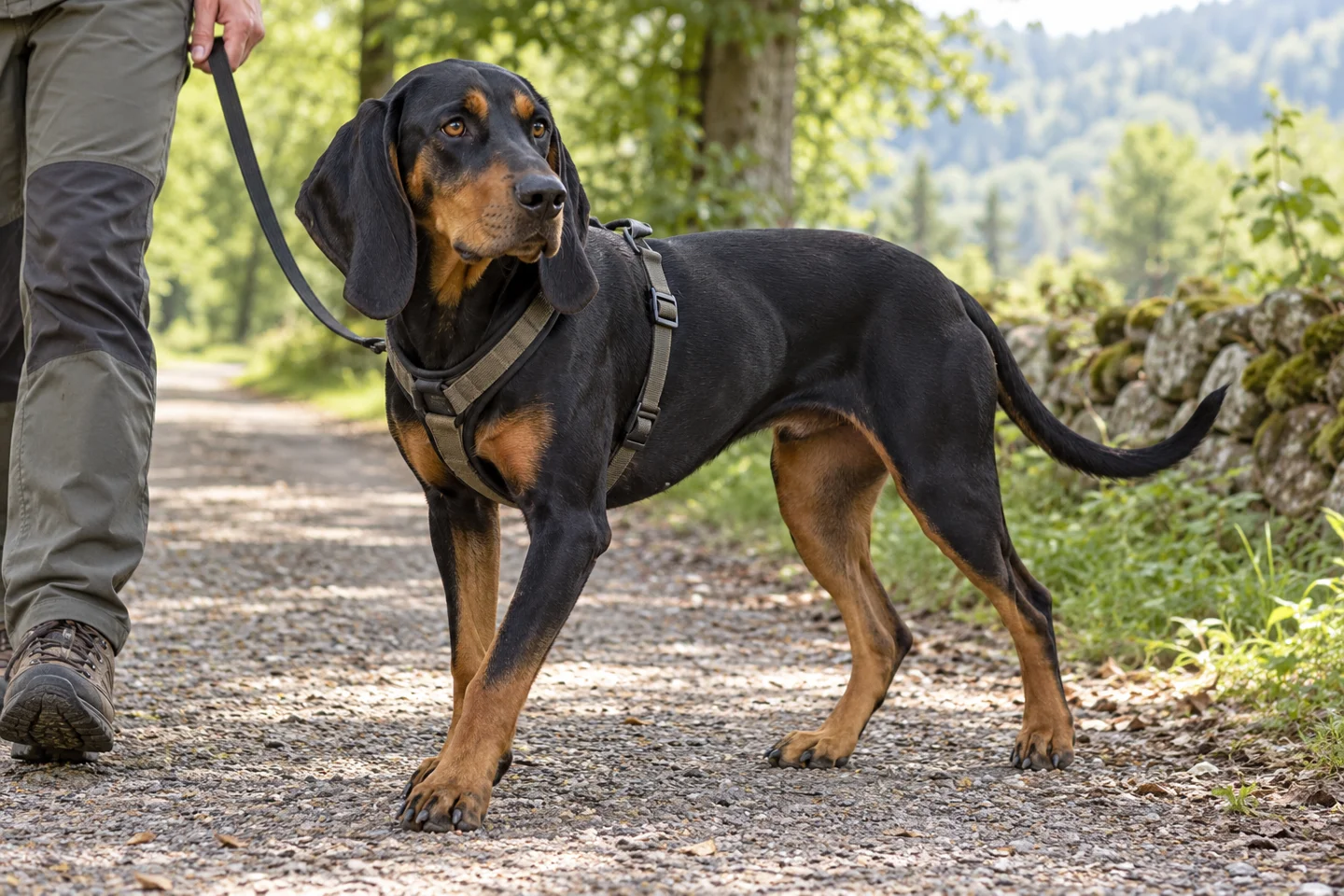
The standard describes a medium-sized hound with a strong, relatively long, supple body and a short glossy coat. Black with defined tan markings, including eyebrow spots, is characteristic. Dropped ears and a long tapering tail contribute to the outline. The illustrations show generated examples with these features. They are not documentary records or evidence of a particular dog's health, and one attractive example cannot define the full range of individuals an owner might meet.
Watch comfortable movement and appropriate body condition when assessing a real dog. It should be able to walk, turn, and rise without repeated hesitation or favoring a limb. Ask about stiffness rather than overlooking it because the dog remains interested in an outing. Fit equipment to actual chest and neck measurements. Check that a hound cannot reverse out of a loose harness, and inspect fasteners and stitching before rough-country walks where a failure could become an escape.
Scent interest and recall training
Practice a recall in secure surroundings and reward it well, but retain physical safeguards where traffic, wildlife, or livestock create risk. A response in the garden does not prove reliability on a fresh trail. Use a lead or appropriately managed long line, paying attention to speed, footing, and entanglement. Avoid treating an off-lead failure as a useful experiment. The dog's interest in scent deserves suitable outlets without requiring other animals or road users to absorb the consequences of a mistake.
Teach a turn away, a brief pause, and attention to the handler in easy conditions. Reward access to an appropriate sniff as well as food when that suits the individual. Choose routes with enough room to move aside from approaching dogs and narrow gates. If the dog becomes unable to respond, increase distance or simplify the setting. A louder command repeated while it is fully occupied rarely provides the missing training or makes an unsafe situation more manageable.
Gates, gardens, and wildlife responsibility
Inspect boundaries at ground level and around gates before giving free access. A rented exercise field still needs checking, including loose panels and adjacent stock. Attach the lead before opening an exterior door and teach a predictable waiting routine. Identification and a microchip help after an escape but do not prevent the initial danger. A tracker can add information while leaving secure access and active supervision necessary, particularly in unfamiliar countryside or accommodation.
Know the local rules for paths, livestock areas, and wildlife protection. Do not assume a right of access means a hound can pursue animals or leave the route. Close gates as required, prevent contact with stock, and choose another path when safe distance cannot be maintained. A dog that follows scent with enthusiasm can still frighten animals or become injured. Responsible exploration includes deciding where the dog will remain on a lead and planning a calm alternative when conditions change.
Voice and adapting to household life
The breed's working description includes vocal hunting, so ask about the actual dog's noise before placement. Find out whether it calls during excitement, responds at a fence, or becomes distressed when alone. Those situations may need different management. A recording during a short absence can provide useful information. Shouting over the dog adds noise without identifying its cause, and a general promise that hounds are quiet indoors should not replace observations of the individual.
Provide a comfortable resting place away from busy windows and a predictable routine of movement, meals, company, and sleep. A dog arriving from a kennel or another home may need gradual learning around doors, appliances, and indoor surfaces. Begin absences briefly enough for comfort and obtain help for persistent pacing, calling, or escape attempts. Another dog is not a dependable treatment for separation-related distress. Consider neighbors and shared entrances before adoption rather than discovering after arrival that the housing arrangement cannot tolerate the dog's voice.

Children and safe family contact
Children need supervision around a hound, including one described as gentle. Sudden movement and excited greetings can knock over a small child. Teach calm invitations and allow the dog to walk away. Keep children out of sleeping places and prevent pulling ears, hugging tightly, or taking objects from the mouth. Adults should manage leads and doors, especially when the dog has noticed a scent or another animal outside and may move suddenly.
Separate the dog during meals, chews, and energetic children's games. Visiting children may be less predictable than familiar family members, so explain the routine and use barriers when adult attention is divided. Observe turning away, freezing, hiding, or repeated attempts to leave. A dog should not need to escalate warnings to obtain space. A comfortable history with one child does not establish tolerance of a crowded gathering, and arrangements need review when age, health, or household circumstances change.
Dogs, cats, and small-animal safety
Ask about particular social experiences rather than assuming that hunting or pack background guarantees comfort with every dog. Begin introductions with parallel walking in neutral surroundings and enough room for both dogs to disengage. At home, manage bowls, chews, doorways, and rest areas separately while assessing comfort. Repeated blocking or pursuit deserves attention even if neither dog has fought. The ability to pause and choose distance provides useful information about whether an interaction is working for both animals.
Cats need gradual introductions and dog-free escape routes. A dog may live comfortably with one familiar cat while pursuing an unfamiliar animal outdoors. Rabbits, rodents, and similar pets require secure protection rather than an informal test. Stop access when sustained staring, stalking, or chasing appears and seek qualified help. Describing behavior as playful does not establish the other animal's safety. A household that cannot maintain separation reliably needs to consider whether the placement is suitable before repeated incidents occur.
Aggression and the context of warnings
A hound can respond aggressively when frightened, hurt, trapped, or concerned about a resource. Notice stiffness, freezing, hard staring, growling, snapping, and attempts to retreat. Increase space and remove the immediate pressure. Do not corner the dog or repeatedly take a valued object to prove that it must tolerate the interaction. Breed descriptions about agreeable temperament cannot establish safety in an individual situation, and explanations involving excitement still require practical measures that protect people and animals.
Arrange veterinary assessment for sudden irritability or new handling sensitivity. Record the circumstances of recurring problems and consult a veterinary behaviorist or qualified reward-based professional. Avoid punishment that suppresses warnings while leaving fear or discomfort unresolved. Barriers and separate resources can prevent rehearsal while a plan is developed. A basket muzzle introduced gradually with rewards may add protection in appropriate circumstances, alongside treatment and suitable distances. It cannot make unwanted contact comfortable or replace supervision.
Exercise, conditioning, and suitable scent outlets
Build daily activity around age, health, and fitness. Walks with time to investigate, controlled searches, and appropriate hiking can provide variety. Increase distance and demanding terrain gradually rather than assuming a hunting breed can begin strenuous work immediately. Puppies need suitable activity and sleep, with high-impact exercise discussed with their veterinarian. An enthusiastic dog may continue despite fatigue, so monitor gait and recovery rather than waiting for it to refuse another outing.
Scent games can be useful on quieter days. Start simple searches in a safe area, using food within the daily allowance or a familiar object. Separate dogs where competition could arise and prevent access to dangerous materials. Stop before frustration builds. These activities supplement suitable walks and company; they do not replace medical assessment if restlessness or poor recovery persists. A sustainable plan needs to work when weather, work, or the owner's health limits the time available for a long countryside trip.
Terrain, weather, and checks after a walk
Mountain or rough-ground work needs conditioning and route planning. Check the forecast, footing, water access, and the ability to turn back. A dog that follows scent eagerly can still become overheated, injured, or exhausted. In warm weather, shorten activity and provide shade and drinking water. Severe breathing difficulty or collapse requires urgent veterinary advice. Cold rain also needs attention to the individual dog's comfort, including drying after the outing and a suitable resting place.
Inspect paws, nails, ears, and skin after vegetation or rocky terrain. Remove loose surface debris carefully, but seek veterinary help for embedded plant material, painful swelling, wounds, or persistent lameness. Keep a record of when an intermittent problem appears, and use a short video only if it is safe and does not delay care. Do not repeatedly provoke discomfort to demonstrate it. The veterinarian needs the dog's history and an examination rather than an owner deciding that every limp is a minor consequence of working terrain.
Grooming and ear care
Brush the short coat regularly and look beneath equipment for irritation. A simple coat still needs inspection for parasites, scratches, and skin changes. Bathe when necessary with suitable products and dry the dog comfortably. Introduce body handling gradually so care does not always predict restraint or pain. A sudden objection to a familiar touch deserves investigation. Ask for help when fear or discomfort makes home care difficult rather than completing a prolonged struggle for the sake of finishing.
Dropped ears make a consistent inspection routine useful. Odor, redness, discharge, head shaking, or pain needs veterinary assessment. Ask whether cleaning is appropriate and which method fits the dog; avoid inserting objects deeply or reusing old medication. Teach tooth brushing and nail care in brief rewarded stages as well. Tell clinic staff about handling concerns before arrival. Cooperative care can make examination easier, but it should never be used as a reason to delay treatment while waiting for perfect training.
Feeding and maintaining working condition
Choose a complete diet suited to age and health and measure the amount. Adjust using body condition, weight trends, and actual energy use rather than the breed's job title. A companion taking moderate walks may need much less than a dog doing sustained field work. Include training rewards within the daily allowance. Ask the veterinarian to demonstrate how to assess ribs, waist, and muscle condition, and avoid assuming a lean outline justifies unexplained weight loss.
Feed away from children and other animals, and teach exchanges without repeatedly removing bowls. Keep rubbish, medication, and unsafe foods controlled. Persistent appetite changes, altered thirst, or digestive problems need assessment. Do not add supplements to a complete growth diet without a veterinary reason. For home-prepared meals, obtain qualified nutritional advice. Review intake during injury, winter rest periods, or ageing so an old work allowance does not continue automatically while the dog spends more time recovering indoors.
Health evidence and screening questions
The breed standard is an identity and conformation document, not a population-wide health study. Reliable prevalence information and a universal international testing program may be limited for this less common hound. Ask what health approach the breeder follows and request the actual reports and family history. Do not accept a claim that the breed has no inherited problems simply because it has a working reputation or because few conditions appear on a brief public description.
Discuss joint comfort, eye concerns, hearing concerns, and illness reported in close relatives with your veterinarian. Formal imaging, specialist examinations, DNA tests, and routine clinical visits answer different questions. A panel covering selected variants cannot exclude all inherited or acquired disease. For an adopted adult with missing records, state the gaps and make a plan from current findings. New symptoms need investigation regardless of previous screening. Clear documentation provides more useful reassurance than an unsupported numerical risk estimate copied from a general breed website.
Mixes and choosing a source
An Austrian Black and Tan Hound mix can vary in appearance, voice, size, and interest in scent. A black-and-tan coat cannot confirm a particular cross. Ask which parts of an identification are documented and which are visual guesses. DNA ancestry results can add context while leaving behavior and many health questions unresolved. Mixed ancestry does not guarantee easier care or eliminate inherited concerns. Plan around the observed dog rather than a combination name intended to predict an ideal outcome.
For a puppy, ask how it experiences household sounds, handling, travel, and quiet periods. For an adult, request information about visitors, cats, other dogs, absences, and previous incidents. A useful source is willing to discuss limits and provide support after placement. Avoid choosing solely because the breed is uncommon or a seller describes exceptional hunting ability. Household suitability depends on ordinary care, practical behavior, and the owner's capacity to maintain secure routines over the dog's lifetime.
Costs, later years, and a dogsDating introduction
Budget for food, preventive care, secure equipment, training help, emergency treatment, and suitable backup care. Practice a short stay with a trusted carer before a necessary absence, leaving written instructions and veterinary contacts. As the dog ages, review footing, bedding, transport, and recovery after activity. New reluctance to rise or sensitivity during handling can indicate pain. Know where urgent care is available for collapse, major injury, severe breathing trouble, or rapidly worsening illness.
For dogsDating, describe individual experience and preferred distance while keeping exact home coordinates private. Choose a quiet public route for parallel walking with separate capable adult handlers. Let the dogs investigate at a comfortable distance and leave shared food and toys out of the meeting. Increase space or end if either becomes stiff, overwhelmed, or persistently pursued. A calm walk is useful without physical greeting. It does not establish that the dogs can share a house, vehicle, or exciting group activity without further assessment.
Sources and editorial notes
Sources checked October 21, 2026. Breed measurements describe reference ranges, not a diagnosis or an individual dog's ideal weight. Images are AI-generated breed illustrations and do not document a particular dog or health condition.
- VCA Animal Hospitals: Ear infections in dogs
- VCA Animal Hospitals: General feeding guidelines for dogs
- VCA Animal Hospitals: Food aggression in puppies
- Orthopedic Foundation for Animals: Disease screening information
- VCA Animal Hospitals: Heat stroke in dogs
- FCI: Austrian Black and Tan Hound history and standard number 63
- VCA Animal Hospitals: Aggression toward unfamiliar dogs, diagnosis
- AVSAB: Humane Dog Training Position Statement
Keep getting to know dogs.
Read another guide or return to your dogsDating community.
Explore breed guidesBack to dogsDating