Basset Artésien Normand
A low French scent hound whose care combines secure sniffing walks, thoughtful home access, ear care, and honest limits on breed health evidence.
How these guides are researched and reviewed
- Origin
- France
- Coat
- Short; tricolor or tan and white
- Care priorities
- Scent, movement, access, and ears
General information for owners. These articles have not been reviewed by a veterinarian. Medical decisions need your dog's history and an examination.
Choosing a Basset Artésien Normand
A Basset Artésien Normand needs an owner who enjoys a scent-led walk and can provide secure access, steady teaching, and comfortable movement for a low-built dog. Short legs do not establish a low activity requirement. Consider the routes, stairs, transport, and daily company available before choosing a puppy. A household looking mainly for an easy dog to leave in a garden may overlook the hound's interest in trails, voice, and contact with familiar people.
Ask how the individual lives on an ordinary day. A dog accustomed to hunting or kennel company may need help learning indoor rest, short absences, and household sounds. An adult already in foster care can provide useful observations about those transitions. A puppy offers less certainty even when the parents are known. Choose according to the care you can maintain, including quiet days and later-life mobility, rather than an attractive photograph or a general promise that French Bassets are affectionate companions.
French identity and the breed's name
The Basset Artésien Normand is a distinct French scent hound. The FCI describes development involving Artois and Normand types, with the combined breed name adopted in 1924. That documented account is more useful than assigning every modern dog a precise ancient ancestry. Its working background includes following and flushing small game with voice. For a companion owner, that helps explain why secure exploration and realistic noise planning belong in the care discussion from the beginning.
This breed is separate from the Basset Hound, Basset Bleu de Gascogne, and Basset Fauve de Bretagne. Basset refers to a low-built type, not one universal breed whose coat merely changes color. Ask which registry issued a pedigree and how a rescue identification was made. An elongated tricolor dog is not automatically an Artésien Normand. Where ancestry is uncertain, state that clearly and evaluate observed behavior and health rather than attaching confidence to a visual estimate.
Long body, short legs, and functional movement
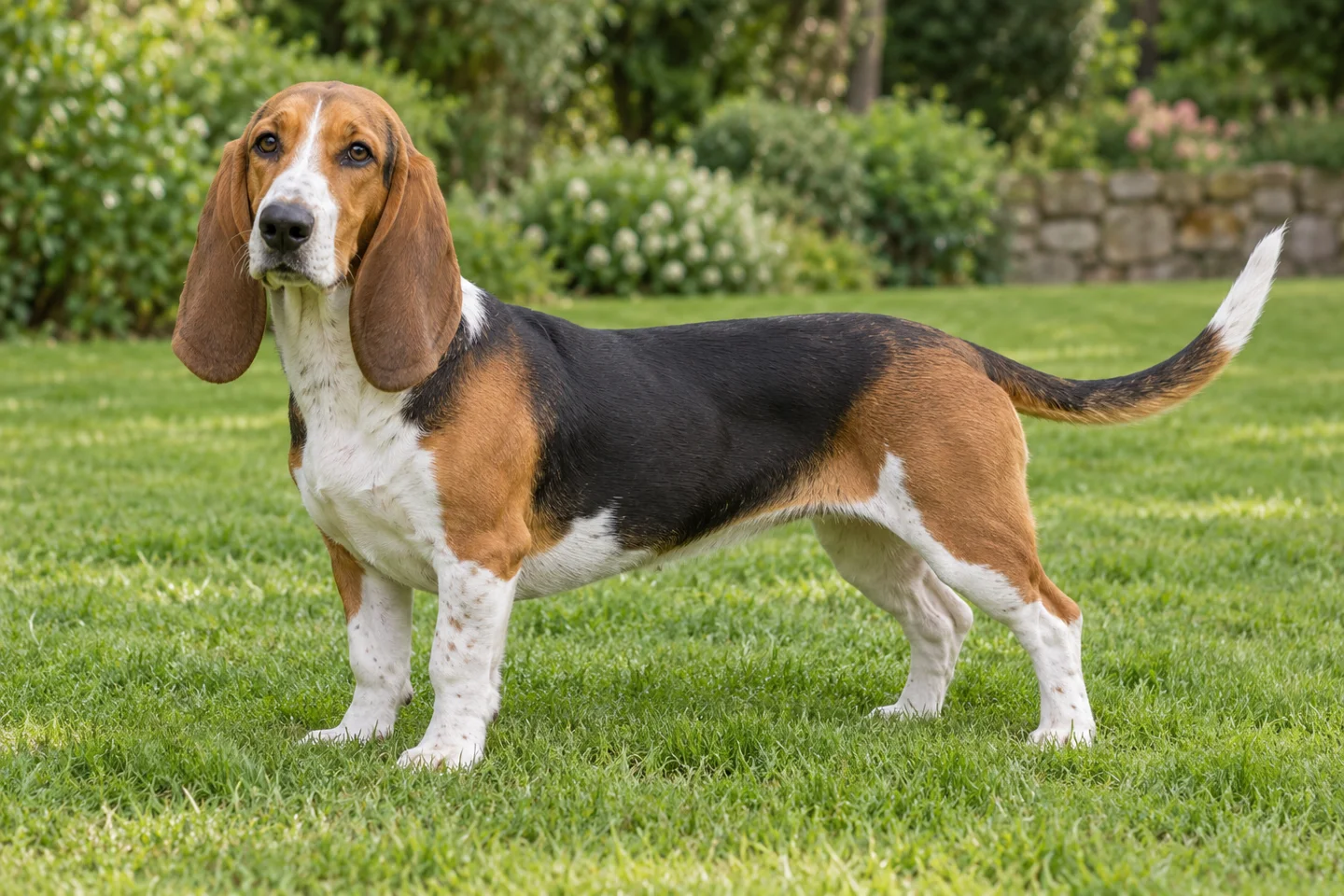
The standard describes a long, low dog with a relatively light, balanced appearance compared with the heavier Basset Hound many readers know. Long fine ears and a short coat are characteristic. Tricolor and tan-and-white descriptions occur within the standard. The illustrations show generated examples, not records of real dogs or a complete account of permitted markings. They cannot establish health, soundness, or ancestry in an animal that simply looks similar.
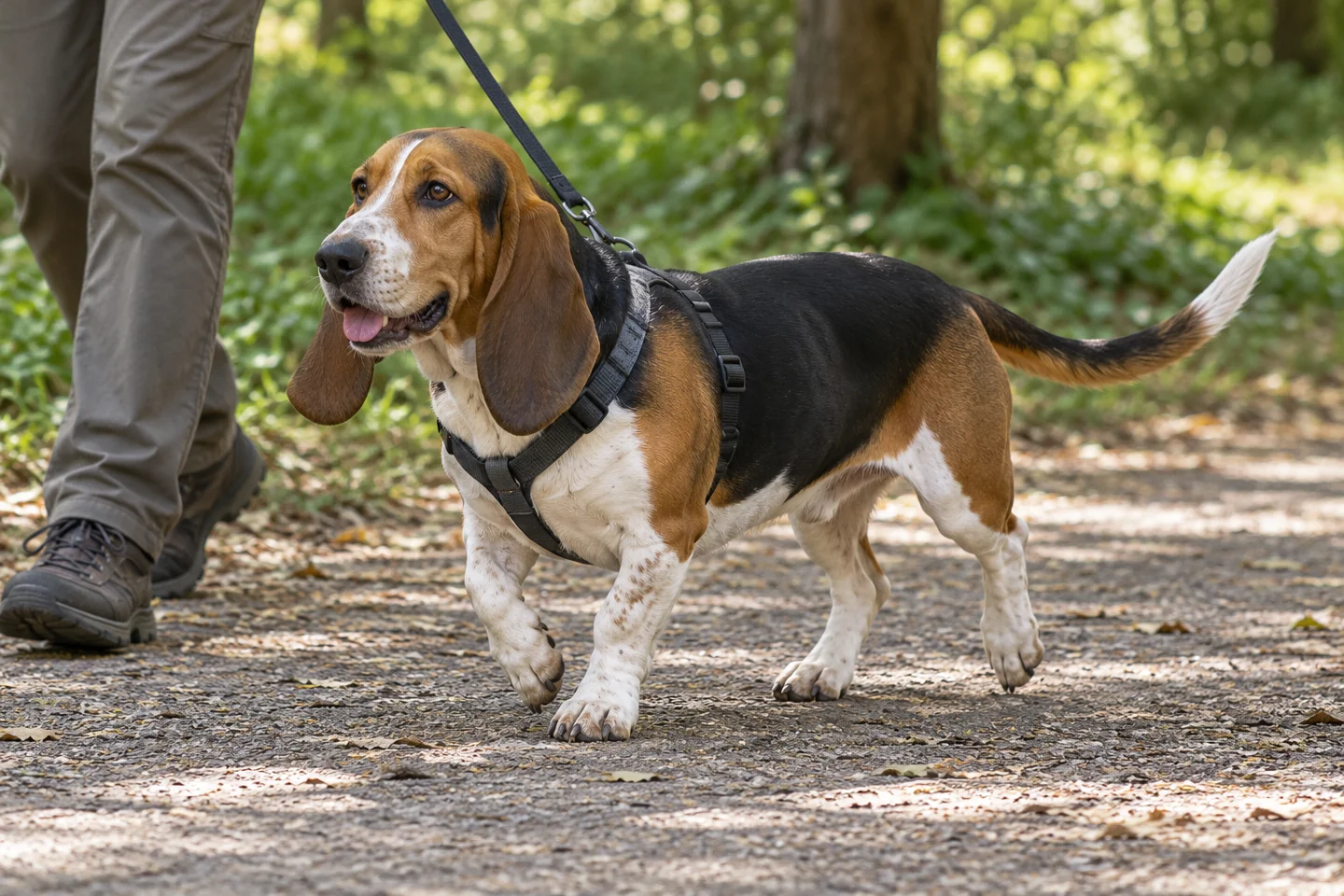
Watch the real dog walk on level ground, turn, and rise after rest. Some curvature belongs to the described front construction, but obvious pain or restricted movement still needs assessment. Ask about persistent limping rather than treating all irregularity as normal for a low hound. A veterinarian can assess the individual's limbs and body condition. Select equipment that fits the chest without rubbing behind the elbows, and teach standing for fitting before a busy outing adds excitement and pressure.
Floors, steps, and entering a vehicle
Look at the home from the dog's height. Slippery floors, steep stairs, and repeated jumps from furniture can create difficult movements. Provide suitable grip and manage access while a puppy learns or an older dog becomes less mobile. A low build does not require permanent inactivity, but it makes practical access worth planning. Avoid assuming a dog that follows people upstairs can descend comfortably or safely when tired, excited, or recovering from an injury.
Teach vehicle entry using an appropriate ramp or supported arrangement before it becomes urgent. If lifting is necessary, ask a professional to demonstrate support for the body rather than pulling on the front end. Check that a household member can manage adult size. Secure the dog during travel and teach waiting before doors open. A rented cottage or boarding facility may have very different flooring and access from home, so ask about those details instead of relying only on a dog-friendly description.
Secure walks and an interesting trail
Practice a recall in enclosed surroundings, rewarding it well, while retaining a lead where traffic, wildlife, or stock create danger. A hound that responds in the kitchen may become deeply occupied on a trail. Do not use a risky off-lead release to discover the limit. A long line can provide room when managed carefully, with attention to footing, entanglement, and sudden speed. Check that the harness remains secure if the dog reverses away from something unfamiliar.
Teach a comfortable change of direction, a pause at a gate, and attention to the handler in easy settings. Reward appropriate sniffing as part of the walk instead of making every outing a continuous march. Choose routes with room to move aside from narrow encounters. If the dog cannot respond, simplify the environment rather than repeating louder commands. Identification and a microchip are useful backup measures, while sound boundaries and an attached lead prevent the initial escape and its consequences.
Voice, company, and household settling
A vocal working history does not show exactly when an individual will call. Ask about excitement, fence activity, and behavior during absences. Shared walls and busy entrances can make noise a significant practical issue. Provide a resting place away from repeated visual triggers and build a predictable rhythm of activity, meals, and sleep. Shouting over a hound does little to identify whether it is alerting, frustrated, or distressed by separation from familiar people or dogs.
Start absences briefly enough for comfort and observe what happens after departure. A recording can show pacing, sustained calling, or attempts to escape. Seek qualified help when those patterns occur instead of assuming another dog or more exercise will solve them. A newly adopted adult may need gradual teaching around indoor surfaces, appliances, and closed doors. Initial quietness can reflect adjustment rather than a complete picture of settled behavior, so keep demands manageable while learning the individual routine.

Children and a resting dog's space
Children need active supervision, including with a dog that approaches willingly. Long ears and a low body can invite touching that the dog did not choose. Prevent pulling, hugging, climbing, and leaning over its face. Keep children out of sleeping areas and away from meals and chews. If something is beside the dog, they should call an adult rather than attempt to move it. Familiar affection does not remove the need for a clear escape route from contact.
Use separation before energetic games when the dog may be overwhelmed or start chasing. Visiting children need the same rules explained, and barriers help when adult attention is divided. Watch freezing, turning away, hiding, or repeated efforts to leave. A dog should not have to escalate warnings to obtain space. Review the arrangement as children become mobile or the dog develops pain. A comfortable history with one familiar child cannot establish tolerance of every party, sleepover, or crowded family visit.
Dogs, cats, and shared resources
A history of pack work may provide experience with dogs without guaranteeing compatibility with every individual. Begin introductions with parallel walking in a neutral place and enough space for disengagement. At home, separate meals, chews, and rest areas while assessing comfort. Watch entrances and access to people, where repeated blocking may cause tension. Both dogs should be able to pause and leave. An owner should interrupt persistent pursuit of an animal trying to rest, even when the pursuer seems enthusiastic.
Cats need gradual introductions and dog-free escape routes. Familiarity with one cat does not establish safety with an unfamiliar animal running outside. Rabbits and other small pets require secure protection rather than an informal test of intentions. Stop access if stalking, fixation, or chasing appears and obtain qualified help. A hound's soft expression or sociability with people offers little information about prey-related behavior. The household must be able to maintain separation reliably while deciding whether the individual placement works.
Aggression, pain, and useful warnings
Stiffening, freezing, growling, snapping, and attempts to retreat mean pressure should stop. Create distance and consider the context, including handling, food, rest, and access to an exit. Avoid cornering the dog or repeatedly taking an object to prove it must tolerate contact. A breed description about a cheerful temperament cannot decide whether a particular encounter is safe. Resource concerns and fear need practical changes rather than a contest over who controls the dog physically.
New irritability or sensitivity during lifting warrants veterinary examination. Pain can affect behavior before a dog stops walking entirely. Record recurring incidents and consult a veterinary behaviorist or qualified reward-based professional. Punishing warnings can leave the concern unresolved while making future risk harder to see. Barriers, separate resources, and a positively introduced basket muzzle may form part of an appropriate plan. They work alongside assessment and treatment, without making unwanted handling comfortable or replacing active supervision.
Training with clear rewards
Reward attention to a name, a hand target, waiting at a door, and releasing an object through an exchange. Begin in quiet conditions and add difficulty gradually. A scent hound can learn useful household skills while remaining interested in the world. If a response is delayed, consider whether the task is familiar, the reward matters, or the setting is too difficult. Repeating commands louder rarely supplies missing instruction or changes the dog's immediate priorities.
Keep sessions short and teach comfortable care as well as visible tricks. Standing for a harness, accepting gentle foot handling, and settling while people prepare food can improve ordinary life. Use a reward-based instructor when timing or equipment is difficult. Avoid repeated lead jerks and forced positions. A dog that learns a task at home still needs practice in new environments. Consistent household cues and access rules help prevent one person rewarding behavior that another person then tries to stop.
Exercise, terrain, and recovery
Provide daily movement matched to age, health, and conditioning. Short legs do not mean the dog needs no meaningful walks, yet demanding distances should be built gradually. Choose footing that allows comfortable movement and avoid repeatedly forcing the dog to keep pace with faster companions. Sniffing and simple searches can add interest. Puppies need suitable activity and sleep, with high-impact exercise discussed with their veterinarian rather than encouraged until exhaustion.
Watch gait after an outing and after rest. Persistent limping, reluctance to rise, or slow recovery deserves assessment. In heat, shorten activity and provide water and shade; severe breathing trouble or collapse requires urgent advice. Check paws and skin after rough vegetation. Remove loose surface debris carefully, but seek help for embedded material, painful swelling, or wounds. A working background should guide sensible conditioning without becoming a reason to dismiss discomfort as an ordinary part of hound life.
Grooming, ears, and dental care
Brush the short coat regularly and inspect skin under equipment. A smooth-looking coat can still hide parasites, scratches, or irritation. Bathe when needed with suitable products and dry comfortably. Long dropped ears make regular observation useful, especially after wet or vegetated routes. Odor, discharge, redness, head shaking, or pain needs veterinary assessment. Ask whether cleaning is appropriate and which method suits the dog rather than inserting objects deeply or reusing medication from a previous episode.
Teach tooth brushing, nail care, and brief body checks through small rewarded steps. Stop to investigate a new objection to touch. Tell professionals about handling concerns before an appointment so they can prepare a suitable visit. Grooming should not become a prolonged restraint session merely to finish every task at once. Cooperative care can help during illness, when a particular area becomes sensitive, but necessary treatment should not wait for perfect training or a complete home examination.
Health evidence and questions for a breeder
The breed standard describes identity and structure rather than providing a population-wide health survey. Reliable prevalence figures and a universal international screening checklist may be limited for this less common hound. Ask what the source actually evaluates, which relatives have had significant illness, and what reports are available. Avoid accepting either a promise that the breed has no inherited problems or an unsupported list of conditions copied from a general website.
Discuss joint comfort, eyes, ears, and relevant family concerns with the veterinarian. Imaging, specialist assessment, DNA testing, and a routine puppy examination answer different questions. A broad panel covers selected variants and cannot exclude all inherited or acquired disease. Read identities, dates, methods, and results. For an adopted adult with missing records, state the gaps and make a preventive plan from current findings. New symptoms need investigation regardless of a working reputation or a reassuring appearance on the day of adoption.
Feeding and maintaining comfortable condition
Use a complete diet suited to life stage and health, then measure portions and adjust using weight and body condition. A low long body should not be allowed to accumulate excess weight because a stocky appearance seems familiar. Ask the veterinarian to demonstrate assessment of ribs, waist, and muscle. Include training rewards in the daily allowance. An enthusiastic appetite does not automatically establish a need for more food, and unexplained weight loss requires assessment rather than praise for an athletic outline.
Feed away from children and other animals and teach exchanges without repeatedly removing bowls. Secure rubbish, medications, and unsafe foods. Avoid supplements without a veterinary reason, particularly with a complete growth diet. Home-prepared meals need qualified nutritional guidance. Review intake during injury, reduced activity, and ageing. Persistent digestive changes, altered thirst, or appetite loss deserves advice rather than repeated unplanned food switches. A treatment-related diet should fit the individual diagnosis and be understood by every person providing care.
Mixes, costs, and safe dogsDating plans
An Artésien Normand mix can vary in size, outline, voice, and scent interest. A tricolor coat and long ears cannot confirm a particular cross. Ask what ancestry is documented and assess observed needs. Budget for suitable equipment, preventive care, training support, emergency treatment, and backup care. Practice a short stay with a trusted carer and leave written routines. As the dog ages, review flooring, transport, bedding, and recovery so pain or reduced mobility receives attention rather than being labeled stubbornness.
For dogsDating, describe this dog's experience and preferred distance while keeping exact home coordinates private. Choose a quiet public route for parallel walking with separate capable adult handlers and compatible pace. Leave shared toys and food out of the first meeting. Increase space or end if either dog becomes stiff, overwhelmed, or persistently pursued. A calm walk can be useful without greeting. It does not establish that the dogs can share a vehicle, home, or valued resource without further assessment.
A practical plan for another carer
Before relying on boarding or a family member, arrange a short trial visit. Demonstrate equipment fitting, vehicle access, and the door routine, then let the carer practice. Provide written instructions about meals, rest, resources, and signs that need veterinary advice. Check that the person can support the dog's body safely if assistance is needed. A familiar, rehearsed arrangement is easier to maintain during an urgent absence than a plan based only on the carer's general experience with dogs of a different size or structure.
Sources and editorial notes
Sources checked October 21, 2026. Breed measurements describe reference ranges, not a diagnosis or an individual dog's ideal weight. Images are AI-generated breed illustrations and do not document a particular dog or health condition.
- VCA Animal Hospitals: Hypoallergenic dog breeds
- VCA Animal Hospitals: Ear infections in dogs
- VCA Animal Hospitals: General feeding guidelines for dogs
- VCA Animal Hospitals: Food aggression in puppies
- Orthopedic Foundation for Animals: Disease screening information
- VCA Animal Hospitals: Heat stroke in dogs
- Fédération Cynologique Internationale: Basset Artésien Normand official breed standard
- VCA Animal Hospitals: Aggression toward unfamiliar dogs, diagnosis
- AVSAB: Humane Dog Training Position Statement
Keep getting to know dogs.
Read another guide or return to your dogsDating community.
Explore breed guidesBack to dogsDating