Bedlington Terrier
A distinctive English terrier whose care combines secure activity, skilled coat maintenance, cooperative handling, and careful interpretation of copper-related liver testing.
How these guides are researched and reviewed

- Origin
- Bedlington, Northumberland, England
- Coat
- Distinctive textured coat requiring maintenance
- Care priorities
- Pursuit, grooming, and copper-testing limits
General information for owners. These articles have not been reviewed by a veterinarian. Medical decisions need your dog's history and an examination.
Choosing a Bedlington Terrier
A Bedlington Terrier needs suitable exercise, patient teaching, regular coat maintenance, and clear health records, particularly concerning copper-related liver disease. Its distinctive outline can attract attention before practical questions about pursuit, handling, and time alone are answered. Start with your ordinary week. Decide who will provide walks, grooming, company, and rest. A small dog still needs a workable routine during bad weather, illness, travel, and the later years when physical activity or tolerance of touch may change.
Meet adults and ask about everyday behavior beyond a show or training field. Find out how the dog responds to visitors, other animals, grooming equipment, and short absences. A puppy's coat and friendly approach provide useful information without predicting every adult need. An adult foster assessment may answer some questions more clearly. Choose the individual according to care your household can maintain rather than assuming a lamb-like appearance means a quiet, passive temperament or universal comfort with children and small pets.
Northumberland origins and breed identity
The Bedlington Terrier's name comes from Bedlington in Northumberland, England. Its history belongs to working terriers, with pursuit and vermin-control roles contributing to the practical background. That context helps explain why a prospective owner should ask about moving animals and secure exploration. Avoid turning a broad historical account into an exact ancestry claim for every modern dog or assuming that a traditional working description predicts the behavior of a particular companion raised in a different environment.
The Bedlington is distinct from the Poodle, Dandie Dinmont Terrier, and other breeds sometimes confused through coat or grooming. Ask which organization issued a pedigree and what supports an identification when records are absent. A curly coat and arched outline cannot establish ancestry alone. A rescue's visual estimate can provide context when its uncertainty remains visible. Recent family health, upbringing, and observed household behavior are more useful for placement than a confident label attached mainly because the dog resembles a familiar silhouette.
Outline, coat, and comfortable function
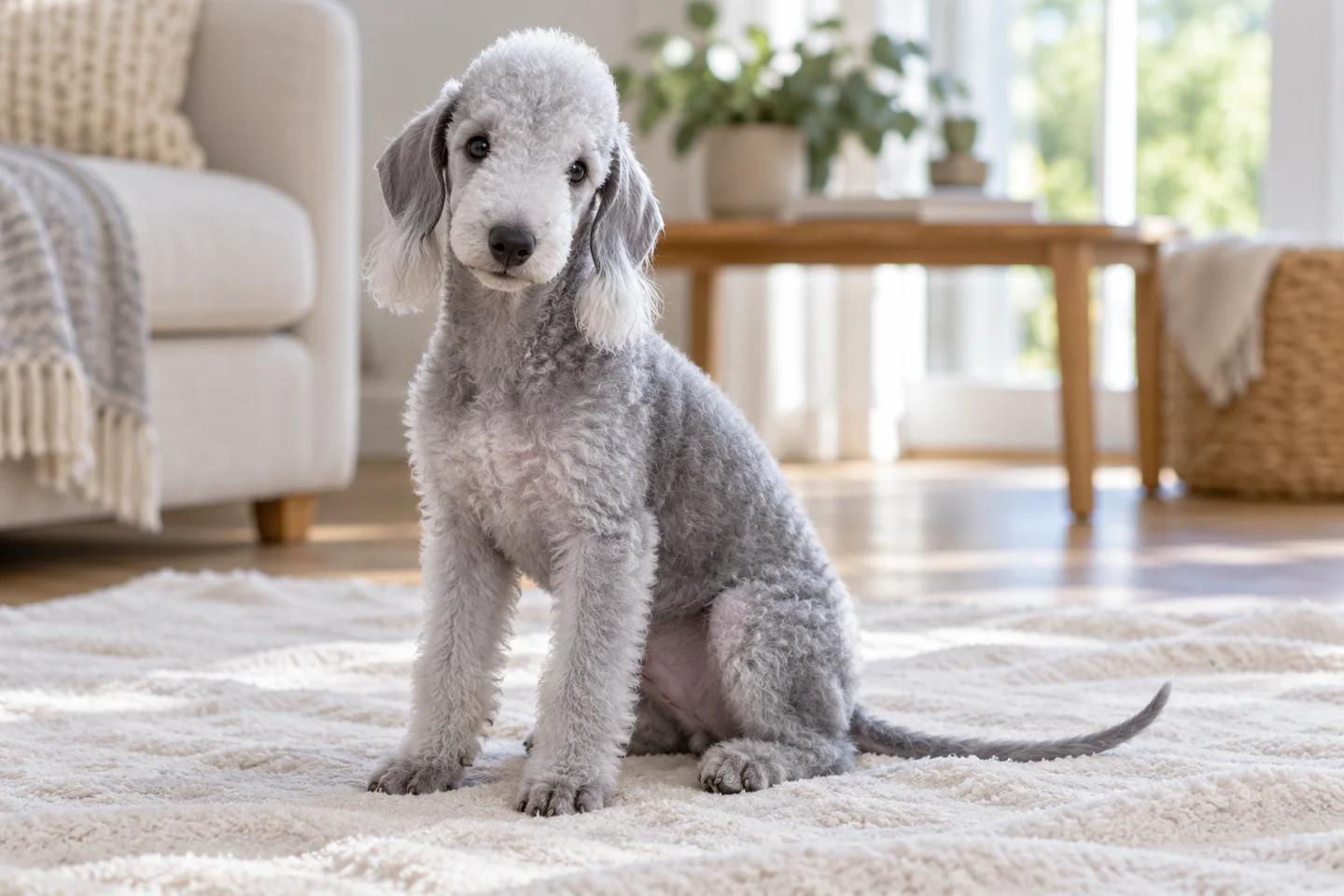
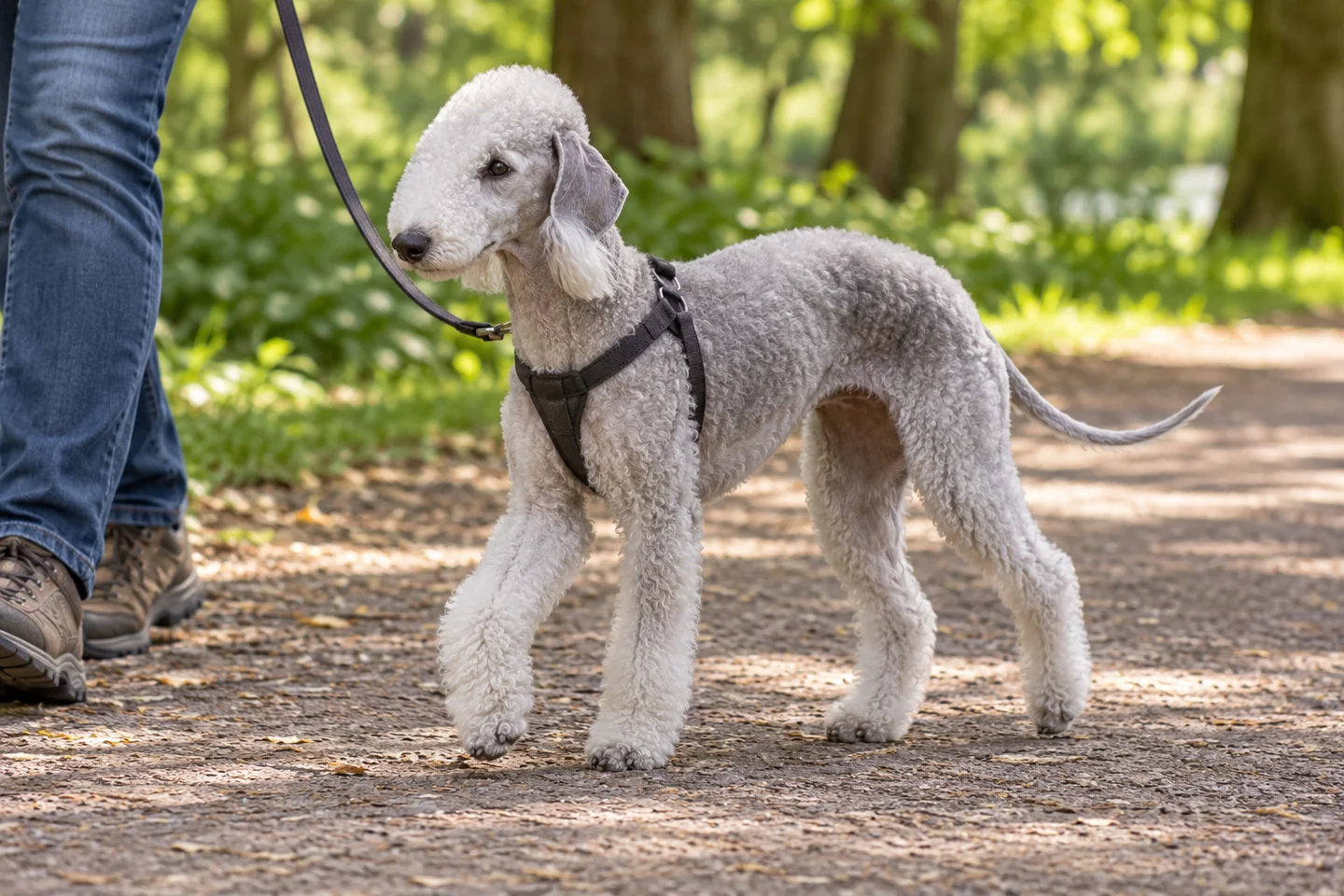
The breed's outline includes a narrow pear-shaped head, an arched loin, dropped ears, and a tapering natural tail. Grooming can emphasize its distinctive appearance. Blue, liver, and sandy descriptions occur within the standard, with variations in markings. The illustrations show generated examples rather than documented animals or medical reference images. An attractive trim cannot establish health. Watch a real dog walk, turn, rise, and recover after ordinary activity, and ask about persistent stiffness or an uneven gait.
Use hands as well as sight when assessing body condition beneath the coat. A trim can hide gradual weight change or make a dog appear more angular without explaining muscle or health. Fit equipment to actual chest and shoulder measurements and inspect skin under straps. A puppy needs repeated adjustments during growth. Teach calm fitting and waiting at doors before an exciting outing makes those tasks harder. Reliable clips, readable identification, and a predictable routine support safe access without relying on catching a moving dog after it notices a distraction.
Grooming beyond the distinctive haircut
The Bedlington coat needs regular maintenance and trimming. Learn a practical brushing and combing routine from a groomer familiar with the texture, checking to the skin rather than only smoothing the surface. Pay attention to tangles around ears, legs, and equipment. Show preparation and a manageable companion trim may involve different choices. Ask what the individual coat needs as it develops, instead of assuming a puppy's easy early maintenance will remain unchanged through adulthood.
Stop rather than pulling through painful mats or completing a prolonged restraint session simply to preserve a style. A professional can advise on safe removal and a routine the household can maintain. Keep vision and the mouth area comfortable, and inspect skin during care. Persistent redness, odor, wounds, or sensitivity needs veterinary advice. A low-shedding description does not mean no grooming, and the dog's comfort should guide decisions when length or presentation becomes difficult to maintain safely.
Cooperative handling, ears, and teeth
Introduce grooming tools, dryers where used, nail care, and tooth brushing in brief rewarded stages. Let the dog learn what happens next and build duration gradually. A sudden objection to familiar touch can indicate discomfort. Stop to assess the change rather than increasing restraint to finish. Tell groomers and clinic staff about handling concerns before arrival so appointments can be planned, including shorter sessions or veterinary support when fear or pain makes ordinary care difficult.
Dropped ears need observation for odor, discharge, redness, head shaking, or pain. Ask the veterinarian whether cleaning is appropriate and which method suits this dog. Avoid deep insertion of objects and reused medication, because similar signs do not establish the same cause. Inspect feet after rough ground and seek help for embedded material, painful swelling, or wounds. Cooperative care can make assessment easier, while needed treatment should not wait until every home exercise is perfect or the owner can examine a painful area fully.
Secure exploration and moving animals
Practice recall in enclosed surroundings and reward it well, while retaining a lead where traffic, wildlife, or livestock create danger. A terrier can respond quickly to movement, and a cue learned at home does not establish reliability during pursuit. Avoid testing the limit through a risky release. A long line may provide room when managed carefully, with attention to speed, footing, and entanglement. Check that equipment remains secure if the dog reverses away from something unexpected.
Inspect garden boundaries at ground level and near gates. Attach the lead before opening an exterior door and agree the same access routine across the household. Teach a comfortable turn away and attention to the handler in easy settings. Choose routes with room to increase distance from distractions. Identification, a microchip, and a tracker can assist after an escape without preventing the initial danger. A small dog can still frighten stock or injure a vulnerable animal, so responsible access includes keeping it attached where mistakes would have serious consequences.
Children and respectful small-dog contact
Children need active adult supervision with a Bedlington. Prevent hugging, climbing, pulling hair, and leaning over the face. Teach calm invitations and let the dog leave. Keep children away from meals, chews, and sleeping places. They should call an adult when something is beside the dog rather than attempting to move it or take an object. A small body and soft coat do not establish tolerance for repeated handling, and an appealing appearance cannot determine whether an interaction feels comfortable.
Visiting children bring different movement and noise from the usual routine. Use separation before energetic games if adult attention will be divided and provide a retreat children cannot enter. Watch freezing, turning away, hiding, or repeated efforts to leave. A dog should not need to escalate warnings to obtain space. Review arrangements when children become mobile or the dog develops pain. Comfortable behavior with one familiar child cannot guarantee tolerance of every gathering, unfamiliar visitor, or sudden attempt to pick up a tired animal.
Other dogs, cats, and small pets
Assess dog compatibility individually. Begin introductions with parallel walking in suitable neutral surroundings and room to disengage. At home, separate bowls, chews, and sleeping areas while observing comfort. Both dogs need pauses and the ability to leave. Repeated blocking or pursuit deserves interruption when the recipient is trying to rest. A size mismatch can cause injury even without obvious aggression, and the more enthusiastic dog's apparent enjoyment does not establish that the interaction is welcome on both sides.
Cats need gradual introductions and dog-free escape routes. Familiarity with one household cat does not predict safety with an unfamiliar animal running outdoors. Rabbits, rodents, and similar pets require secure protection rather than an informal test of intentions. Stop access when fixation, stalking, or chasing appears and obtain qualified help. A terrier's affectionate response to people offers little information about prey-related behavior. The household needs reliable separation while assessing the individual, and should acknowledge when resident animals and the dog's needs cannot be accommodated safely together.
Aggression, fear, and resource warnings
Stiffness, freezing, growling, snapping, or efforts to retreat mean pressure should stop. Increase space and review what happened beforehand, including handling, food, sleep, and escape routes. Avoid cornering the dog or repeatedly removing a valued object to establish authority. A breed reputation or gentle-looking trim cannot determine safety in a particular encounter. Barriers and separate resources protect people and animals while the owner obtains an assessment instead of asking someone else to repeat the same unresolved intrusion.
New irritability or grooming sensitivity warrants veterinary examination. Pain and illness can affect tolerance before obvious loss of activity. Record recurring incidents and consult a veterinary behaviorist or qualified reward-based professional. Punishing warnings can obscure risk while leaving fear or discomfort unresolved. A basket muzzle introduced gradually with rewards may add protection within an appropriate plan, alongside management and treatment. It cannot make painful care comfortable or replace supervision and the dog's opportunity to maintain distance from unwanted contact.
Training clear choices and calm endings
Reward attention to a name, a hand target, waiting at doors, and releasing objects through exchanges. Begin in quiet conditions and add difficulty gradually. Use rewards that matter to the individual, including food, suitable games, and access to an interesting sniff. A delayed response may reflect an unclear task or an overwhelming setting rather than deliberate opposition. Short understandable sessions help both dog and owner remain patient and make it easier to identify what needs changing when progress stalls.
Teach a predictable finish to games and a comfortable resting routine. If barking or jumping reliably restarts activity, review that sequence and reward an alternative. Practice standing for equipment and settling while people prepare food. Reward-based coaching can improve timing and handling without repeated jerks or forced positions. Skills learned at home need gradual practice elsewhere, and safeguards remain necessary near hazards. Useful daily cooperation is more valuable than a complicated trick performed only in a quiet room with one familiar person.
Exercise, conditioning, and recovery
Provide daily movement matched to age, health, and fitness. Walks with investigation, simple searches, controlled games, and suitable training can create variety without repeated maximum-speed effort. Build endurance before long outings or demanding sports. Puppies need sleep and age-appropriate exploration, with repeated high-impact exercise discussed with their veterinarian. A garden supplements the plan without showing whether the dog receives useful activity or spends its time reacting at a boundary and waiting for company.
Observe gait after activity and after rest. Persistent limping, reluctance to rise, or slow recovery deserves assessment. In heat, shorten outings and provide water and shade; collapse or severe breathing difficulty requires urgent advice. Check feet and skin after rough vegetation. A working background does not make the dog immune to fatigue or environmental discomfort. Quiet days can include manageable walks and learning without frantic indoor activity intended to compensate for every missed outing, leaving the dog able to settle afterward.
Health screening and copper toxicosis
The AKC lists patellar and ophthalmologist evaluations and a copper-toxicosis DNA test among national club recommendations for Bedlingtons. Request identifiable reports and the actual results for both parents, including dates, methods, and laboratory interpretation. A routine puppy visit answers different questions from formal screening. Copper toxicosis can involve harmful accumulation of copper in the liver. The OFA explains the COMMD1-associated form while noting that signs can occur in dogs without that particular tested result.
A clear COMMD1 result therefore does not exclude every cause of copper-related liver disease or every other liver condition. Discuss the exact test, family history, and appropriate follow-up with the veterinarian. Do not diagnose illness from a breed guide or manage it through an improvised low-copper diet, supplements, or another dog's medication. New appetite loss, unexplained weight change, vomiting, weakness, or signs of illness needs clinical assessment. Genetic information informs care while an individual diagnosis and treatment plan require veterinary findings.
Reading records and planning ordinary care
A CHIC number records completion and disclosure of specified testing, not a guarantee that every finding was normal. A broad DNA panel covers selected variants and cannot rule out all inherited or acquired disease. Read identities, dates, methods, and results instead of accepting a statement that parents were fully tested. Ask about significant illness in close relatives. For an adopted adult with missing records, state the gaps and make a preventive plan from current examination rather than assuming an unknown history is either reassuring or automatically alarming.
Routine care should address vaccination, parasites, teeth, body condition, and local travel risks. Report eye pain, movement changes, persistent skin problems, or altered behavior regardless of prior screening. Keep health and medication records available for backup carers and other clinics. Know where urgent care is available for collapse, major injury, severe breathing trouble, or rapidly worsening illness. A short safe video can help describe an intermittent problem when recording does not provoke symptoms or delay the assessment the dog needs.
Feeding, mixes, and allergy claims
Use a complete diet appropriate to age and health, measure portions, and count training rewards within the allowance. Adjust using weight and body condition rather than appearance through a trim. Feed separately from children and other animals and teach exchanges without confrontation. Avoid supplements without a veterinary reason and obtain qualified nutritional advice for home-prepared meals. A diagnosed liver problem may require a specific plan; routine feeding advice should not replace clinical interpretation of test results or treatment needs.
A Bedlington mix can vary in coat, size, outline, and pursuit behavior. A crossbreed name does not define a standardized outcome, and mixed ancestry does not guarantee fewer inherited concerns. Ask what is documented and assess the actual dog. No coat or cross guarantees tolerance for someone with allergies, because allergens are not confined to loose hair. Discuss personal concerns with the affected person's clinician and assess contact appropriately rather than relying on a low-shedding claim or a marketing description of the dog as hypoallergenic.
Costs, later years, and dogsDating
Budget for grooming tools or appointments, food, preventive care, training help, emergency treatment, and backup care. Practice a short stay with a trusted carer who can maintain coat checks and follow the routine, leaving written instructions and veterinary contacts. As the dog ages, review footing, bedding, vehicle access, and recovery. New reluctance to rise or sensitivity during grooming can indicate pain. Retain suitable exploration and learning while adjusting physical demands to current comfort rather than expecting the dog to maintain its previous pace.
For dogsDating, describe individual experience and preferred distance while keeping exact home coordinates private. Choose a quiet public route for parallel walking with separate capable adult handlers and a compatible companion. Leave shared food and toys out of the first meeting. Increase space or end if either dog stiffens, becomes overwhelmed, or is persistently pursued. A calm walk can be useful without greeting or play. It does not establish readiness to share a home, vehicle, or valued resource without further assessment.
Sources and editorial notes
Sources checked October 21, 2026. Breed measurements describe reference ranges, not a diagnosis or an individual dog's ideal weight. Images are AI-generated breed illustrations and do not document a particular dog or health condition.
- VCA Animal Hospitals: Hypoallergenic dog breeds
- Orthopedic Foundation for Animals: CHIC program and interpretation of numbers
- Orthopedic Foundation for Animals: Bedlington copper toxicosis and COMMD1 test limits
- VCA Animal Hospitals: Ear infections in dogs
- VCA Animal Hospitals: Food aggression in puppies
- American Kennel Club: Relevant national breed-club health testing recommendations
- VCA Animal Hospitals: Heat stroke in dogs
- American Kennel Club: Bedlington Terrier breed identity and care
- VCA Animal Hospitals: Aggression toward unfamiliar dogs, diagnosis
- Research: Copper toxicosis in Bedlington Terriers and multiple genetic variants
- AVSAB: Humane Dog Training Position Statement
Keep getting to know dogs.
Read another guide or return to your dogsDating community.
Explore breed guidesBack to dogsDating