Black and Tan Coonhound
A large American scent hound whose care includes secure exploration, realistic voice and company planning, appropriate conditioning, long-ear care, and clear screening records.
How these guides are researched and reviewed

- Origin
- United States
- Coat
- Short black coat with defined tan points
- Care priorities
- Scent, boundaries, voice, ears, and company
General information for owners. These articles have not been reviewed by a veterinarian. Medical decisions need your dog's history and an examination.
Choosing a Black and Tan Coonhound
A Black and Tan Coonhound needs secure scent exploration, suitable exercise, company, and an owner who takes its voice and adult size seriously. A relaxed expression or a dog sleeping after an outing cannot show the whole care requirement. Describe your ordinary week before adopting. Decide where the dog will walk, rest, learn, and spend time when people are busy. A garden provides useful space while leaving daily contact, supervision, and teaching necessary, particularly when an interesting trail exists beyond the boundary.
Ask about the individual's background and household routine. A hound raised mainly in a kennel or among familiar dogs may need gradual help with indoor sounds, toilet habits, vehicles, and short absences. An adult in a foster home can provide useful observations, while a puppy brings uncertainty even with known parents. Choose according to care your household can maintain over years rather than expecting an easygoing reputation to guarantee comfort with every person, animal, or period of isolation. A useful source explains limitations and continuing support honestly.
American development and the Coonhound name
The Black and Tan Coonhound is an American scent hound with an established history connected to tracking and treeing raccoons. Its broad working background helps explain sustained scent interest and a carrying voice. Avoid treating a popular ancestry account as a precise documented family tree for every modern line. For placement, recent family health, work, and household behavior are usually more useful than a dramatic story about a remote hunting ancestor or a promise that traditional working dogs automatically adapt to any domestic setting.
This is a distinct breed, separate from other Coonhounds, Bloodhounds, and regional black-and-tan hounds. Color alone cannot confirm ancestry. Ask which registry issued a pedigree and what supports an identification when records are absent. A rescue's visual estimate can provide context when uncertainty remains visible. The actual dog's structure, health, social experience, and care needs should guide decisions rather than expectations imported from a plausible name. A working title documents a defined achievement without guaranteeing indoor settling or compatibility with the household's resident animals.
Long ears and a tall athletic outline
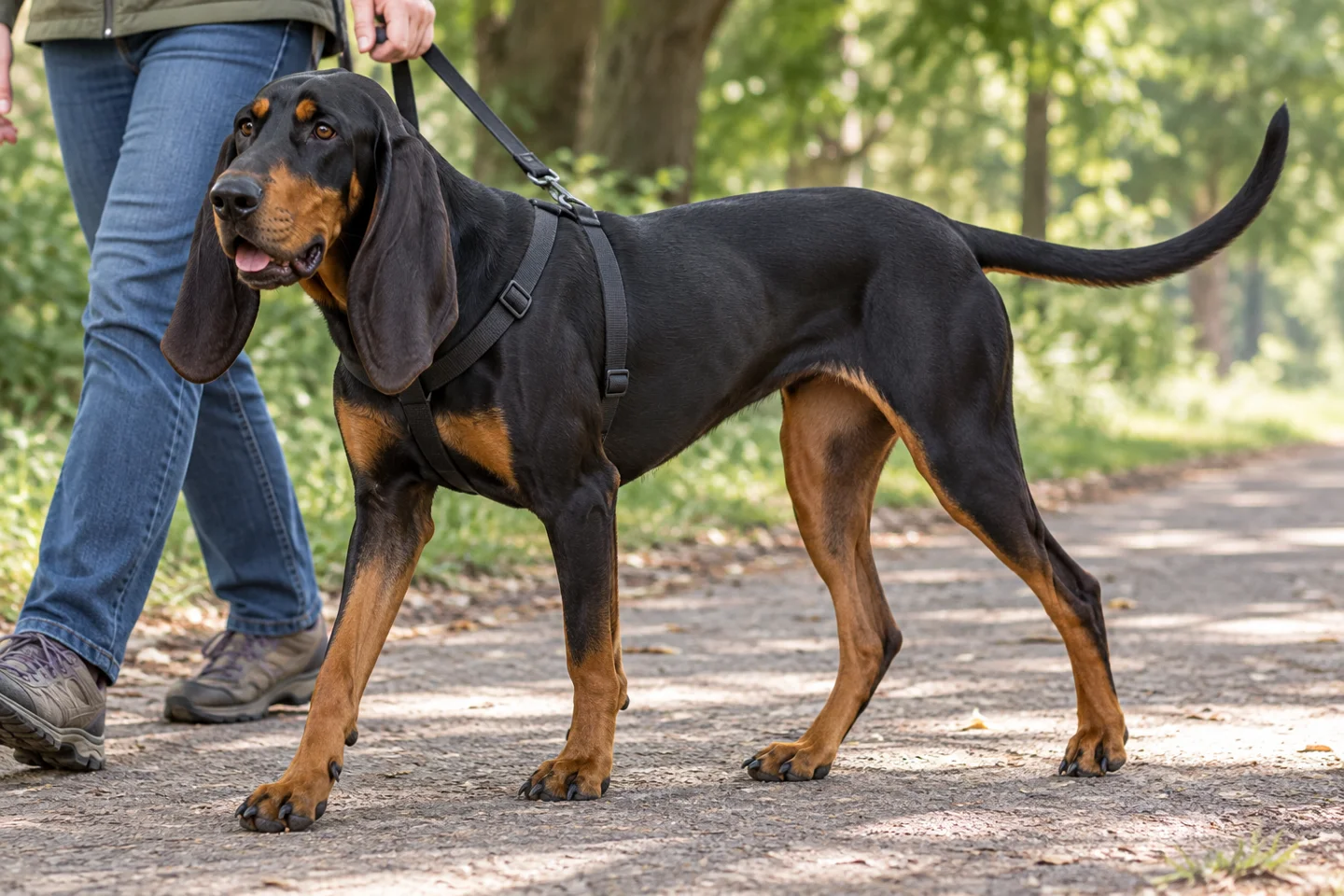
The breed has a large, relatively long-legged athletic body, a short black coat with defined tan markings, very long dropped ears, and a long natural tail. It is not a low Basset type despite familiar ears and coloring. The illustrations show generated examples rather than particular documented animals or medical reference images. Assess the real dog through movement and examination, including comfortable walking, turning, rising, and recovery after activity. An attractive outline cannot establish health or a future ability to tolerate demanding work.
Use hands as well as sight to assess ribs, waist, and muscle, with veterinary guidance. Ask about persistent stiffness or repeated limping even when the dog remains keen to follow scent. Fit equipment to actual chest and shoulder measurements and inspect beneath straps for rubbing. Puppies need repeated adjustments during growth. Teach calm fitting and waiting at doors. Reliable clips, readable identification, and a rehearsed access routine reduce the number of moments that depend on a handler physically stopping a large dog after it has already started moving.
Scent, recall, and keeping physical safeguards
Practice a recall in enclosed surroundings and reward it well, retaining a lead where traffic, wildlife, or livestock create danger. A response at home does not establish reliability on a fresh trail. Avoid discovering the limit through a risky release. A long line can offer room when managed carefully, with attention to speed, footing, branches, and entanglement. It should support exploration rather than stop a fast dog abruptly at full extension or allow access to animals beyond the handler's control.
Teach a comfortable turn away, a brief pause, and attention to the handler in easy conditions before difficult encounters arise. Let appropriate sniffing form part of walks instead of requiring continuous close marching. Choose routes with enough room to move aside. If the dog cannot respond, change distance or difficulty rather than repeating louder commands. Identification, a microchip, and a tracker can assist after an escape while secure boundaries, attached equipment, and suitable decisions prevent the initial danger to the dog, stock, wildlife, and road users.
Gardens, gates, and countryside responsibilities
Inspect ground-level gaps, loose panels, climbable objects, and gate latches before giving free garden access. A rented exercise field also needs checking, including adjacent animals and surfaces. Attach the lead before opening an exterior door and agree a routine across the household. Do not assume the dog will remain nearby because it is tired or newly arrived. An unfamiliar environment can create scent opportunities the owner has not yet noticed, and a large hound may cover substantial distance before anyone recognizes the escape.
Respect local path rules and prevent contact with stock or wildlife. A right of access does not authorize pursuit or leaving the route. Choose another path when safe distance cannot be maintained. Indoors, secure rubbish, medication, unsafe foods, and objects the dog might swallow. Provide appropriate outlets and teach exchanges rather than turning every discovery into a chase. Persistent attempts to escape confinement need assessment of distress as well as inspection of the physical barrier, because a stronger enclosure alone may leave a significant welfare problem unresolved.
Voice, neighbors, and time apart
Ask when this individual calls and how long it takes to recover. Excitement, reacting at a fence, and distress after familiar company leaves can need different responses. A working voice may carry well in a field and be difficult for neighbors sharing walls. Reduce repeated window triggers and provide a quieter resting location. Practice a useful station during mild arrivals before trying the entire routine while guests or deliveries are waiting. Shouting over a hound does not identify the cause or teach an understandable alternative.
Build short comfortable absences gradually and observe what happens after departure. A recording can reveal persistent calling, pacing, or escape attempts that are less apparent at reunion. Seek qualified help for distress rather than assuming another dog or more exercise will solve it. An adopted adult may need gradual learning about appliances, indoor flooring, and closed doors. Keep early demands manageable because initial quietness can reflect adjustment rather than settled behavior. Practice backup care before travel or an emergency requires a new routine with a different person.

Children and safe household contact
Children need active adult supervision with a Black and Tan Coonhound. Adult size and excited greetings can knock over a small child even when the dog approaches sociably. Teach calm invitations and allow it to leave. Prevent hugging, climbing, pulling ears, and leaning over the face. Keep meals, chews, and sleeping places free from interference. A child should call an adult when something is beside the dog rather than trying to move it or take an object, and should not be responsible for holding a strong hound at a busy gate.
Visiting children create different movement and noise from the usual routine. Use separation before energetic games when attention will be divided and provide a retreat children cannot enter. Watch freezing, turning away, hiding, or repeated efforts to leave. A dog should not need to escalate warnings to obtain rest. Review arrangements when children become mobile or the dog develops pain. Comfortable behavior with one familiar child cannot establish tolerance of every crowded gathering, unfamiliar visitor, or sudden attempt to touch a tired or uncomfortable animal.
Dogs, cats, and prey-sized animals
A pack-working background can provide social experience without guaranteeing compatibility with every unfamiliar dog. Begin introductions with parallel walking on suitable neutral ground and room to disengage. At home, separate bowls, chews, and sleeping areas while observing comfort. Monitor narrow entrances and access to people, where repeated blocking can create tension. Both dogs need pauses and control over distance. An enthusiastic pursuer's apparent enjoyment does not determine whether the recipient welcomes the interaction or needs protection from it.
Cats need gradual introductions and dog-free escape routes. Familiarity with one household cat does not establish safety with an unfamiliar animal running outdoors. Rabbits, rodents, and similar pets require secure protection rather than an informal test of intentions. Stop access if stalking, fixation, or chasing appears and seek qualified advice. A gentle response to people provides little information about prey-related behavior. The household needs reliable separation while deciding whether this individual and its resident animals can be accommodated safely, rather than relying on a sociable reputation to guarantee future behavior.
Aggression and respecting early warnings
Stiffness, freezing, hard staring, growling, snapping, or attempts to retreat mean pressure should stop. Increase space and review what preceded the response, including handling, resources, sleep, and escape routes. Avoid cornering the dog or repeatedly removing a valued object to establish authority. Breed identity cannot determine safety in a particular encounter. Barriers and separate resources protect people and animals while the owner obtains an assessment rather than asking someone else to repeat the same unresolved pressure or test whether a warning is serious.
New irritability or sensitivity during touch warrants veterinary examination. Pain and illness can affect tolerance before obvious loss of activity. Keep a factual record of recurring incidents and consult a veterinary behaviorist or qualified reward-based professional. Punishing warnings can make risk less visible while leaving fear or discomfort unresolved. A basket muzzle introduced gradually with rewards may add protection within an appropriate plan, alongside treatment and management. It cannot make painful care or unwanted contact comfortable, and does not replace supervision, suitable distance, or an opportunity to leave.
Training a useful scent-hound routine
Reward attention to a name, a hand target, waiting at doors, and exchanging objects. Begin in quiet surroundings and add difficulty gradually. Food, appropriate games, and access to a suitable sniff can be meaningful rewards. A delayed response may reflect unclear instruction, competing scent, or an overwhelming setting rather than a desire to oppose the owner. Short clear sessions help the handler identify what needs adjustment and stop while both remain patient. Repeating a command louder rarely provides missing training or changes an intense trail's appeal.
Practice standing for equipment, brief foot inspection, and settling while people prepare food. Consistent cues and access rules across carers help the dog understand expectations. Reward-based coaching can improve timing and equipment use without repeated lead jerks or forced positions. Skills learned at home need gradual practice elsewhere, and safeguards remain necessary near hazards. An elaborate trick performed in one quiet location is less useful than comfortable cooperation during travel, veterinary care, and an ordinary visitor arrival handled by another trusted adult.
Exercise, conditioning, and recovery
Provide daily movement matched to age, health, and fitness. Walks with investigation, simple searches, controlled games, and suitable training can create variety without repeated maximum-speed effort. Build endurance before long hikes or demanding sports. Puppies need sleep and age-appropriate exploration, with repeated high-impact activity discussed with their veterinarian. A working heritage does not establish that every individual is physically ready for strenuous exercise, and eagerness may persist despite fatigue or discomfort that the handler needs to notice and respond to.
Watch gait after activity and after rest. Persistent limping, reluctance to rise, or slow recovery needs assessment. Inspect paws, nails, ears, and skin after rough vegetation. Remove loose surface debris carefully and seek help for embedded material, wounds, or painful swelling. In heat, shorten outings and provide shade and drinking water; collapse or severe breathing difficulty requires urgent advice. Cold rain also needs attention to drying and suitable rest. Quiet days can include manageable walks and learning without frantic indoor activity intended to compensate for every missed countryside outing.
Grooming and long-ear care
Brush the short coat regularly and inspect skin beneath equipment. A tidy appearance can hide irritation, parasites, or small wounds. Bathe when needed with suitable products and dry comfortably. Very long dropped ears make regular observation useful, particularly after wet outings and vegetation. Odor, discharge, redness, head shaking, or pain needs veterinary assessment. Ask whether cleaning is appropriate and which method suits the individual rather than inserting objects deeply or reusing medication from a previous episode with similar-looking signs.
Introduce tooth brushing, nail care, and body checks through brief rewarded steps. Stop to investigate a new objection to familiar handling rather than increasing restraint merely to finish. Tell professionals about concerns before arrival so appointments can be planned. Cooperative care can make maintenance and examination easier, while needed treatment should not wait for perfect home training. Keep observations of new lumps, skin changes, or intermittent discomfort so the veterinarian can assess changes without the owner repeatedly provoking a painful response to demonstrate it.
Health screening and reading findings
The AKC lists hip, cardiac, and ophthalmologist evaluations among national club recommendations for Black and Tan Coonhounds. Request actual identifiable reports and read dates, methods, and results. A routine puppy examination answers different questions from formal adult screening. Ask how the breeder's current program accounts for significant illness in close relatives. A statement that dogs hunt well or have never looked unwell is insufficient detail about what was assessed, and the word tested cannot substitute for understanding the actual finding and its limits.
A CHIC number records completion and disclosure of specified testing rather than guaranteeing normal results. Broad DNA panels cover selected variants and cannot exclude all inherited or acquired conditions. New eye pain, weakness, persistent movement changes, or altered behavior needs clinical investigation regardless of earlier screening. For an adopted adult with missing records, acknowledge gaps and plan from current examination. Ordinary vaccination, parasite, dental, and travel considerations remain important alongside inherited concerns and family information. A working reputation cannot replace continued observation and an individual preventive-care plan.
Feeding, mixes, and choosing a source
Use a complete diet appropriate to age and health, measure portions, and count training rewards within the allowance. Adjust using body condition and actual activity rather than the breed's job title or appetite alone. Feed separately from children and other animals and teach exchanges without confrontation. Avoid supplements without a veterinary reason and seek qualified guidance for home-prepared meals. Persistent changes in appetite, thirst, weight, or digestion need assessment rather than repeated unplanned food switches or an assumption that an athletic dog is naturally thin or cannot gain excess weight.
A Black and Tan Coonhound mix can vary in coat, size, voice, scent interest, and social preferences. Long ears and black-and-tan markings cannot confirm ancestry, and mixed parentage does not guarantee easier care or fewer inherited concerns. Ask what is documented and assess actual needs. A useful source discusses visitors, absences, cats, transport, handling, family records, and early experiences honestly. Read contracts and reports carefully and avoid choosing primarily for appearance, rarity, or a promise that an easygoing hound will adapt automatically without continued teaching, company, and management.
Costs, later life, and dogsDating
Plan for suitable equipment, food, secure boundaries, preventive care, instruction, emergency treatment, and backup care capable of handling adult size. Arrange a trial stay with a trusted carer and provide written routines and veterinary contacts. Review flooring, bedding, vehicle access, and recovery as the dog ages. A new reluctance to rise or sensitivity during care can indicate pain. Retain appropriate exploration and learning with physical demands adjusted to present comfort, and know how an injured dog would travel securely if urgent treatment were needed.
For dogsDating, explain the individual's social history and preferred distance while keeping exact home coordinates private. Meet on a quiet public route with separate capable adult handlers and parallel walking at a suitable pace. Keep shared food and toys out of the first outing. Add space or finish when either dog becomes stiff, overwhelmed, or persistently pursued. A relaxed walk provides useful information about that setting without proving comfort in shared housing, vehicle travel, or situations involving valued resources. Further arrangements need their own assessment rather than an assumption based on one pleasant meeting.
Sources and editorial notes
Sources checked October 21, 2026. Breed measurements describe reference ranges, not a diagnosis or an individual dog's ideal weight. Images are AI-generated breed illustrations and do not document a particular dog or health condition.
- VCA Animal Hospitals: Hypoallergenic dog breeds
- Orthopedic Foundation for Animals: CHIC program and interpretation of numbers
- American Black and Tan Coonhound Club: Health information and OFA context
- VCA Animal Hospitals: Ear infections in dogs
- VCA Animal Hospitals: Food aggression in puppies
- American Kennel Club: Relevant national breed-club health testing recommendations
- VCA Animal Hospitals: Heat stroke in dogs
- American Kennel Club: Black and Tan Coonhound breed identity and care
- VCA Animal Hospitals: Aggression toward unfamiliar dogs, diagnosis
- AVSAB: Humane Dog Training Position Statement
Keep getting to know dogs.
Read another guide or return to your dogsDating community.
Explore breed guidesBack to dogsDating