Border Terrier
A small working terrier whose care needs secure boundaries, practical training, coat maintenance, and candid health records.
How these guides are researched and reviewed
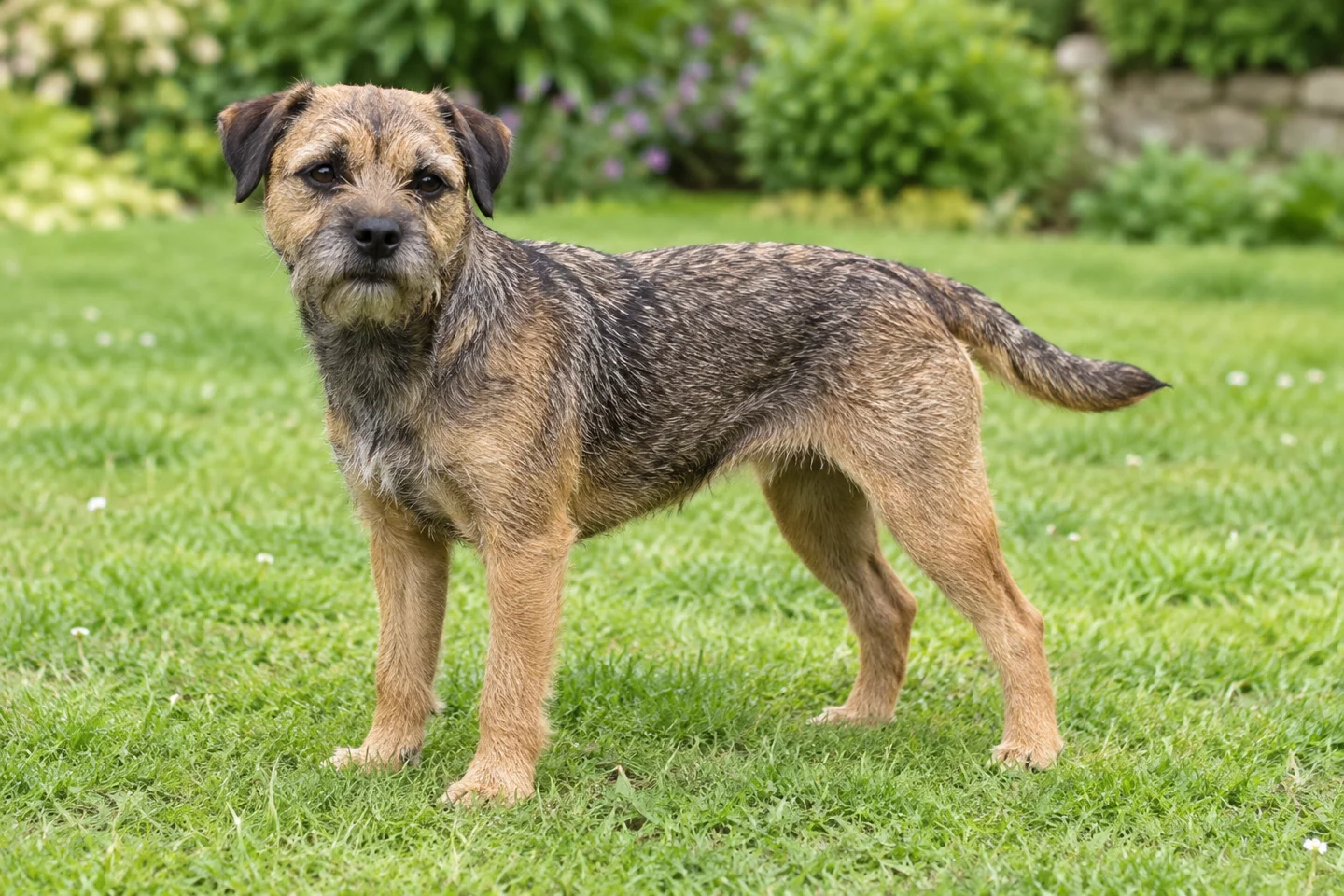
- Origin
- England and Scotland border country
- Coat
- Harsh double coat
- Care priorities
- Digging, pursuit, and cooperative care
General information for owners. These articles have not been reviewed by a veterinarian. Medical decisions need your dog's history and an examination.
Choosing a Border Terrier for ordinary life
A Border Terrier is small enough to carry when necessary, yet its working interests can fill a surprisingly large part of the day. Before choosing one, decide how you will provide safe exploration, teach useful household habits, and manage access to wildlife and small pets. Consider a wet Tuesday as carefully as a weekend hike. The dog will still need company, toileting, something interesting to do, and a place to sleep when nobody feels like a long outing.
Visit adults and watch the unremarkable moments. Does the dog settle while people talk, allow its harness to be fitted, and recover after something exciting passes? Ask what happens when it is left alone and what the owner finds hardest. A responsible source can discuss digging, pursuit, barking, and health records without turning every concern into a joke about terrier character. Choose the particular dog and support available, rather than assuming that small size will make every care task easy.
Border-country history and identity
The breed developed in the border country of England and Scotland, with a working history alongside hunts. That history gives context to its interest in exploring rough ground and following animals. It does not create a ready-made household rulebook. A puppy still needs teaching about doors, domestic pets, food, and human handling. An owner should expect to channel investigation safely rather than hoping that the dog's traditional work will somehow tell it which creatures are permitted to chase today.
The Border Terrier is separate from the Border Collie and from other rough-coated terriers. Similar words or grizzled coloring do not establish a shared registered variety. If a pedigree matters to you, ask for the registry and identifiable family records. With a rescue of uncertain background, describe that uncertainty honestly. Whether the dog proves to be a purebred Border or a mix, useful placement decisions still depend on observed behavior, medical findings, and the care the household can provide consistently.
Otter-like head and practical appearance
The breed standard's familiar otter-like head, small dropped ears, harsh coat, and natural tail make a distinctive outline. Avoid treating an unusually tiny body or an elaborate trim as a sign of superior quality. Watch an actual dog turn, climb a modest step, and move across ordinary ground. Appearance is only one part of the assessment. A lively response to a squeaky toy does not explain why the same dog hesitates when a harness touches its shoulder.
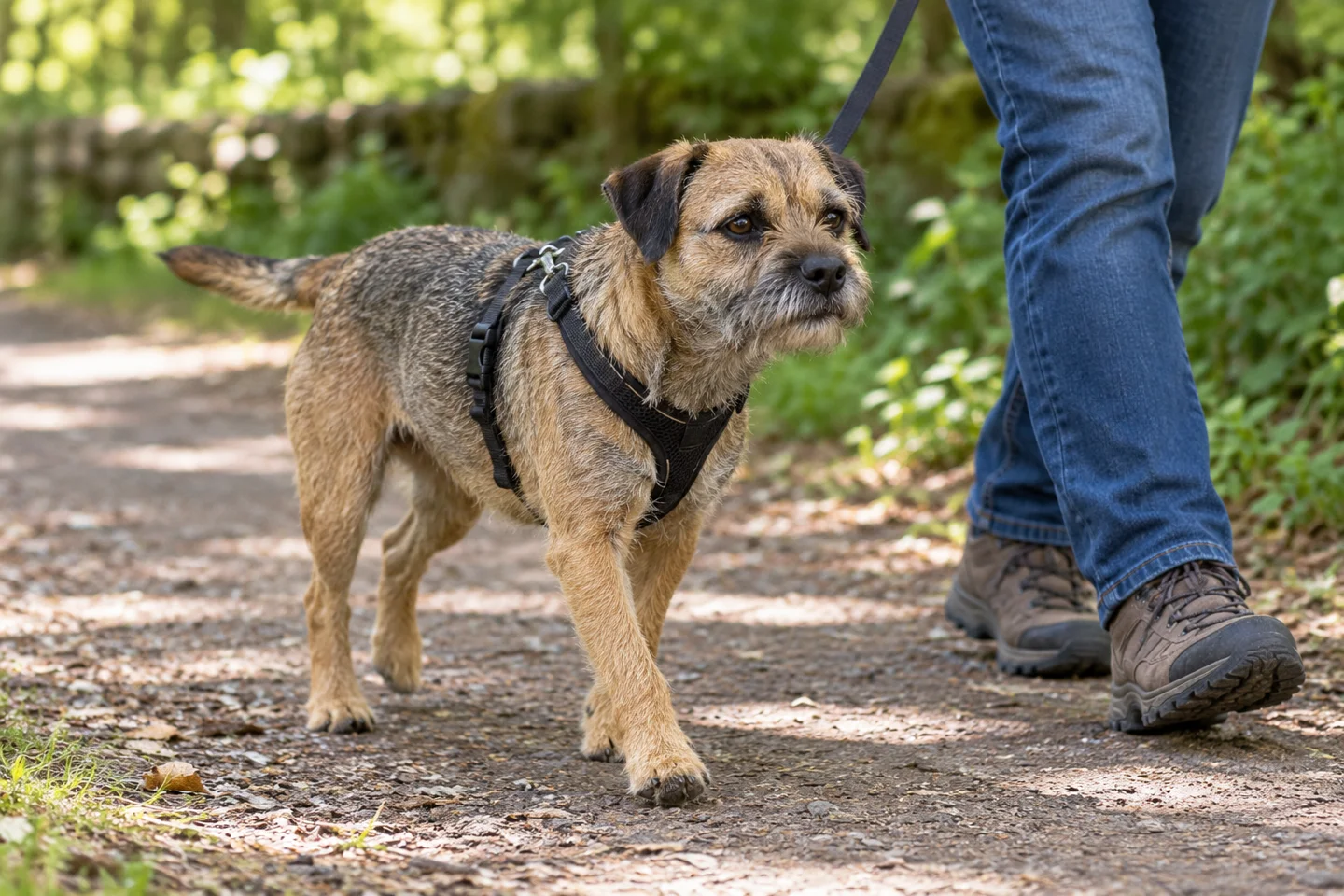
Measure equipment on the dog rather than buying by a breed label. A small gap at the neck or a loose chest strap can let a startled terrier back out. Check for rubbing under the coat, especially after growth or a change in weight. Teach the dog to approach the harness and pause while clips are fastened. That little routine is useful in a narrow hallway where an open exterior door, a visitor, and an impatient dog could otherwise coincide.
Digging in a garden you can actually inspect
Walk the fence line at terrier height. Soil beneath a gate, a gap beside a drain, or access under a shed may offer an exit that looks insignificant to a standing person. Secure tools, garden chemicals, traps, and compost containing unsuitable food. Supervise the dog's first visits to a new enclosure and keep checking after heavy rain or building work. A tracker can help find an escaped dog, but it cannot prevent a road accident before anyone has noticed the signal moving.
A designated digging patch may give an interested Border an acceptable place to work. Encourage use there and block access where excavation would be dangerous. Do not expect a spoken prohibition to operate while nobody is present. If digging is accompanied by frantic escape attempts, investigate what is happening at the boundary and during absences. Fear, isolation, and repeated excitement need their own response. Adding another slab at the fence may contain the dog while leaving the reason for the behavior unresolved.
Scent, pursuit, and responsible walking
A rabbit appearing beside a path can change a quiet walk faster than an owner can repeat a recall cue. Keep a physical safeguard where traffic, livestock, or wildlife would make pursuit dangerous. Train coming back in a genuinely secure place with rewards worth returning for, then practice at manageable levels of distraction. Successful responses in a kitchen do not justify an experimental release beside a field full of moving animals. There is no need to manufacture a crisis to measure progress.
Let the dog investigate suitable ground without reaching every smell at the cost of a tight lead. Reward a voluntary glance toward you and teach a cheerful change of direction. If using a long line, choose open space and learn how to handle it before the dog builds speed. Keep fingers, legs, and other animals clear of loops. Routes with room to step aside are often more useful for learning than narrow paths where each passing bicycle creates an unavoidable close encounter.
Children and a terrier's personal space
A small dog is easy for a child to corner behind furniture or pick up unexpectedly. Design the room so the Border has an accessible retreat and the child has another place to play. Adults should handle lifting and teach that a dog walking away has finished the interaction. Close supervision involves seeing what hands and faces are doing. Being in the kitchen while a child follows the dog into a bedroom does not provide that protection.
Food, chews, and found objects need clear household rules. A child should fetch an adult if the terrier has taken a toy, rather than reaching into its mouth. Set up calm activities such as hiding a suitable treat while the dog waits with an adult. Pause boisterous games before grabbing and chasing begin. Reassess arrangements after a new baby, visiting children, or signs of discomfort in the dog. The history of getting along last month cannot settle what is safe in a changed situation.

Cats, small pets, and canine companions
Terrier interest in a moving rabbit or rodent may be quite different from its affectionate behavior toward people. Keep cages, pens, and doors genuinely secure and avoid informal tests that put a vulnerable animal within reach. Even a familiar cat needs places to rest, eat, and pass through the home without being pursued. If the Border becomes intensely focused, stop access and obtain knowledgeable help. The cat's ability to defend itself should not be the main safety arrangement.
For dog company, think about the individual pair's preferred pace and contact. A terrier may enjoy a brisk walk while another dog wants to wrestle, and that mismatch does not need to be corrected through forced play. Watch whether both can pause and move away. Protect quiet resting spots and feed separately when a new dog joins the home. A small Border can still be injured by a much larger companion's careless collision, even when no aggression is involved.
Aggression and the information in a growl
Imagine the dog stiffening when someone reaches beneath a chair to take a stolen sock. The immediate task is to stop crowding it and prevent a bite, then arrange a safe exchange or professional assistance as appropriate. Repeating the reach to prove that the person is in charge adds pressure without teaching a useful response. Store tempting items better while you work on retrieval and release. An owner's account should describe the object, approach, and dog's actions rather than dismissing the event as terrier attitude.
A Border that suddenly resents foot care or brushing may be sore. Have a veterinarian investigate a change instead of assuming training has failed. AVSAB supports reward-based methods, and a qualified behavior professional can help with repeated guarding or threats. Keep a factual record of incidents and the circumstances that preceded them. A growl is useful warning information; punishing it does not reliably remove fear or pain. Children and visitors should be protected through practical separation while the underlying concern is addressed.
Training with rewards that fit the task
A Border may work readily for a food reward indoors and find access to a smell more valuable outside. Use that information to plan lessons. Reward an easy response, then allow a safe sniff as part of the activity. Keep the cue understandable and the difficulty low enough that the dog can respond. If attention disappears beside a hedge full of animal scent, move farther away and rebuild the exercise. Louder repetition does not make the task clearer.
Teach giving up an ordinary toy before you need the skill around something unsafe. Offer a worthwhile exchange, return suitable objects sometimes, and avoid making every approach predict loss. Practice waiting while a door opens and stepping onto a stable surface for examination. These skills make daily care easier than a long list of tricks that only work in one room. Consistent handling between adults also matters: a dog cannot follow a doorway rule that changes whenever a different person reaches for the latch.
Exercise beyond a quick toilet break
The Border's compact body does not make a garden circuit a complete activity plan. Offer regular walks, safe investigation, and brief training suited to its age and condition. Build longer distances gradually and check how the dog moves later in the day. A fit adult and a young puppy need different expectations. Ask your veterinarian about appropriate activity if there is a medical concern, rather than following a distance schedule copied from another dog's routine.
Quiet alternatives are useful when weather or an owner's illness changes the day. A gentle search for food, a short walk with plenty of sniffing, or a cooperative care lesson can provide occupation without frantic indoor running. After rough ground, check paws for discomfort and remove superficial debris carefully. Skipping steps, limping, or repeatedly stopping should prompt assessment. Enthusiasm can coexist with a problem, so avoid using the willingness to chase one more toy as evidence that all movement is comfortable.
Grooming the harsh coat comfortably
Ask a groomer who knows Border coats to demonstrate how to find loose hair and inspect the skin. Hand stripping and clipping have different effects on coat presentation and texture, and the choice should fit the individual dog's health, coat, and practical needs. A companion does not need to endure a painful session for an idealized rustic appearance. Split home maintenance into short periods and check under the collar and harness where friction can hide irritation.
Dental care deserves the same preparation as brushing. Introduce the toothbrush and brief mouth handling gently, and ask the veterinary team for a realistic routine. For nail care, reward touching a foot before adding tools and seek help when the dog is worried. Avoid probing down the ear canal or reusing medication because an ear smells unpleasant. Pain, discharge, or persistent scratching needs a diagnosis. Tell a groomer about known handling concerns before arrival so the appointment can be organized safely.
Health screening and the SLEM result
The AKC currently lists patella, hip, cardiac, and ophthalmologist evaluations, plus a DNA test for spongiform leukoencephalomyelopathy, for Border Terriers. Use those named assessments to ask focused questions about the parents. Which reports are available, which dog was examined, and what did the result actually show? The Border Terrier Club of America's health statement is an additional source to discuss with the breeder and veterinarian. Avoid accepting a generic assurance that the family has never needed much veterinary care.
The SLEM test addresses a specific inherited disorder. It cannot explain every tremor or coordination problem a terrier might develop, so new neurological signs still need veterinary attention. Ask a veterinarian or laboratory to interpret the actual report, particularly if the result is described only verbally. For an adult with unknown parentage, build a care plan from its present examination and available history. Missing records should be acknowledged plainly rather than replaced by invented certainty that a cheerful, active dog must have been screened.
Food, mixes, and realistic household choices
Measure food and include the rewards used during training. A small treat may represent a meaningful amount for a small dog when it is repeated all day. Use a complete diet appropriate to life stage, and ask for guidance if weight changes or digestion becomes persistently troublesome. Keep bins and food cupboards secure. A terrier investigating a discarded wrapper may need urgent veterinary advice if it has swallowed dangerous contents or packaging; waiting for an obvious symptom can delay useful treatment.
A Border mix may differ substantially in coat, size, pursuit, and comfort around animals. A catchy crossbreed name cannot guarantee predictable grooming or an easier temperament. Ask what is known about the parents and what has been observed in the actual dog. A rough coat also offers no automatic assurance for a person with allergies. Consider direct exposure and appropriate medical advice for that person. The home needs to suit the dog's real requirements, including veterinary costs, company, and dependable care during travel.
Costs and a terrier-friendly dogsDating meeting
Plan money and time for dental assessment, preventive medicine, grooming, equipment, and unexpected treatment. A trusted carer should learn the garden and door routine before an urgent absence. Provide clear instructions about small pets, food, and the situations where a lead stays attached. As the dog ages, review furniture access and walking pace without removing all investigation. New reluctance to jump or irritation when lifted deserves medical attention; it should not be treated as an inevitable personality change.
On dogsDating, explain whether the Border enjoys walking, chase games, or quiet company and whether close body contact is welcome. Keep exact home coordinates private. Choose a public route with enough space for two handlers to create distance. Leave prized toys out of the first meeting and let a calm walk be sufficient. If one dog repeatedly pursues the other after it tries to leave, pause or finish. The app can suggest a possible companion, while the people present must protect both dogs' choices.
Travel practice before a holiday
Try the transport arrangement on a short local journey before a long trip. A secured carrier or appropriate restraint must fit the real dog, and the dog needs time to become comfortable entering it. At a rest stop, attach the lead before opening the vehicle door. Service areas can combine dropped food, unfamiliar dogs, moving vehicles, and tempting gaps beneath fences. Bring current identification details and veterinary contacts, and check the destination's walking options in advance. A property described as dog-friendly may still have an unfenced garden or doors that open directly onto a busy road.
Sources and editorial notes
Sources checked October 21, 2026. Breed measurements describe reference ranges, not a diagnosis or an individual dog's ideal weight. Images are AI-generated breed illustrations and do not document a particular dog or health condition.
- VCA: Ear Infections in Dogs
- VCA: Food Aggression in Puppies
- AVSAB: Humane Dog Training Position Statement
- Orthopedic Foundation for Animals: Diseases
- VCA: Feeding Guidelines for Dogs
- American Kennel Club: Border Terrier
- American Kennel Club: Border Terrier Recommended Health Tests
- VCA: Grooming and Coat Care for Your Dog
- Border Terrier Club of America: Health Statement
Keep getting to know dogs.
Read another guide or return to your dogsDating community.
Explore breed guidesBack to dogsDating