Briquet Griffon Vendéen
A medium-sized rough-coated French scenthound whose voice, scent interests, secure exercise, and grooming deserve a realistic household plan.
How these guides are researched and reviewed

- Origin
- France; Vendée
- Coat and identity
- Rough coat on a medium-sized scenthound
- Care priorities
- Voice, secure scent walks, and rough-coat inspection
General information for owners. These articles have not been reviewed by a veterinarian. Medical decisions need your dog's history and an examination.
Choosing a Briquet Griffon Vendéen
A Briquet Griffon Vendéen brings the practical questions of a hunting scenthound into a medium-sized, rough-coated body. Before choosing one, think about scent, voice, safe outdoor access, and how an active dog will live alongside your neighbors and existing animals. A shaggy face can suggest an easy household companion without revealing what happens when an interesting trail crosses the path. Meet adults outside a brief greeting and ask to see their normal walk and return home.
Ask what the dog does when activity stops, how it travels, and whether it has lived indoors or mainly in a working environment. Those experiences affect the transition you need to arrange. A foster assessment may offer useful information about an adult's habits. A puppy's future still depends on development and learning. Choose a source willing to discuss uncertainty and practical limits. A household that understands the dog's current needs can plan more effectively than one relying on a cheerful photograph or a broad breed description.
Briquet means medium-sized, with its own identity
The FCI standard explains Briquet as a name meaning medium-sized dog. It describes the breed's development through selection before the First World War from a smaller form of the Grand Griffon Vendéen. The modern Briquet has its own standard and identity. It should not be treated as another name for the Petit Basset Griffon Vendéen, the Grand Basset Griffon Vendéen, or any rough-coated hound from the same region. Similar words in their names do not make their structure interchangeable.
The FCI describes hunting with the gun, including large game, fox, and hare, usually in a small pack. That background helps an owner ask relevant questions about scent interest, voice, and previous work. It does not guarantee compatibility with every dog or make a household pet safe around smaller animals. Verify the recorded breed when paperwork exists. When identification is uncertain, describe the evidence accurately and give priority to the animal's observed behavior, build, and needs rather than forcing a confident pedigree label.
A rough coat on a longer-legged hound
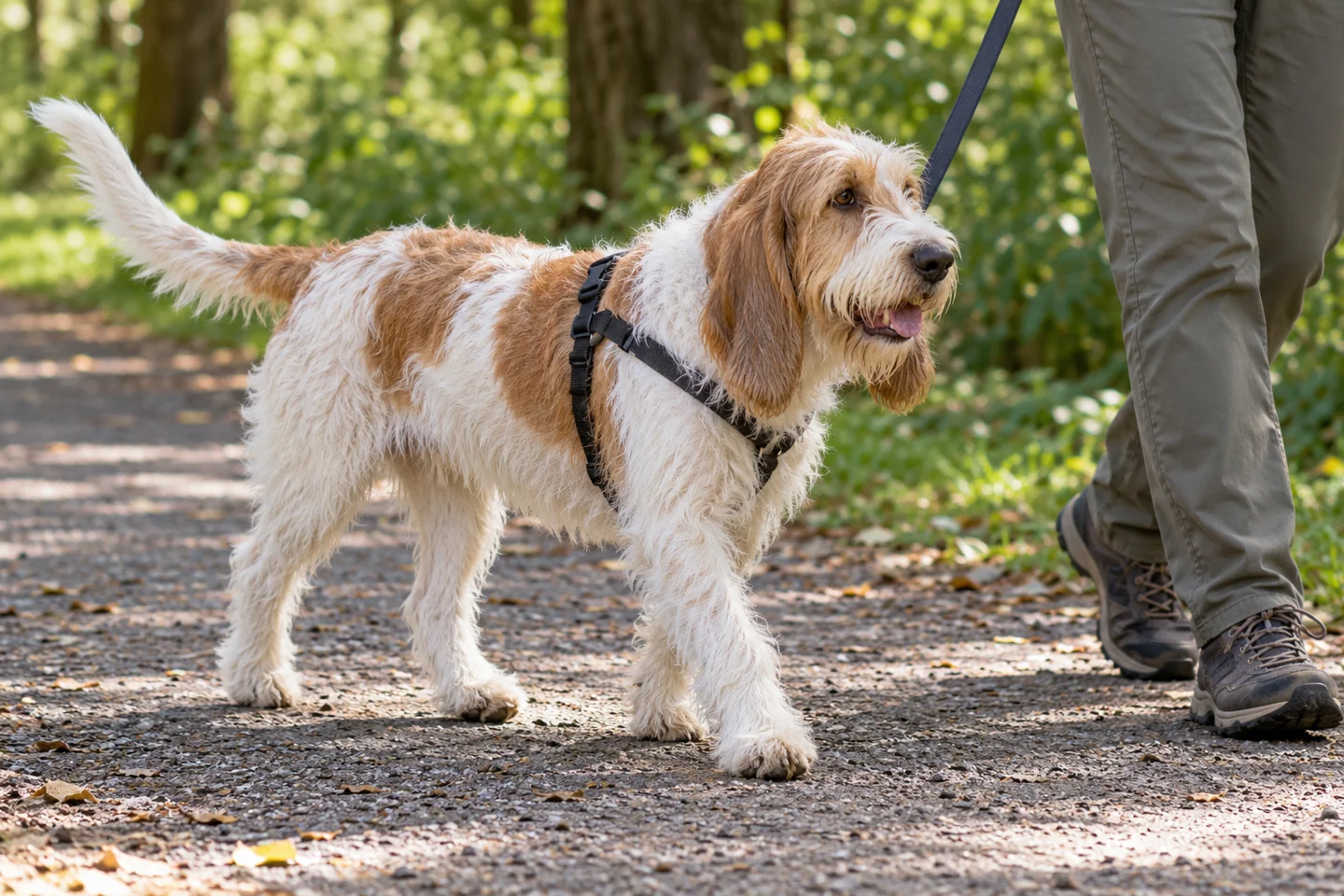
The Briquet is a medium-sized hound with a rough coat, pronounced facial furnishings, and dropped ears. Its legs and proportions distinguish it from the lower-set Basset Griffons. The standard allows several coat patterns, so color alone cannot establish identity. The illustrations here are AI-generated breed examples, rather than photographs of registered animals. They can support recognition of a general outline but cannot demonstrate working ability, a correct pedigree, or a medical finding.
When you meet a dog, watch an ordinary walk on a suitable surface. Notice whether it rises comfortably, turns without difficulty, and uses its limbs evenly. Ask about any recurring lameness even if it disappears during excitement. Check the fit of equipment beneath the coat. A loose-looking harness can still rub in an armpit or allow a dog to reverse out. Practice adjustment in a calm setting and review it as a puppy grows or an adult's weight changes. Secure equipment matters before the first unfamiliar outdoor trip.
Scent changes the way a walk unfolds
A route that looks unremarkable to a person can contain a succession of compelling scent decisions for a hound. Leave time for investigation where it is safe and choose places with room to turn away from hazards. If the dog becomes absorbed near a hedge, move before it reaches the end of the lead at speed. Reward the return toward you and offer another suitable place to explore. The aim is a walk that both participants can manage without constant physical conflict.
A tracking interest does not disappear because the dog has already exercised. Avoid letting it loose beside roads, livestock, or vulnerable wildlife to see whether it will stay close. Use enclosed areas and appropriate lines while building skills. Inspect the enclosure yourself, including gates and the space underneath them. A familiar field can change after maintenance or storm damage. A tracker and current identification may help locate a missing dog, but they cannot prevent the collision or encounter that happens immediately after an escape.
Training that works around the nose
Teach a simple movement away from an interesting place before you need it at a crowded gate or roadside. Begin with mild distractions, mark the turn, and reward near your body. Then release the dog to investigate a safe patch again. Access to sniffing can become part of the learning arrangement. This gives a handler a useful conversation with the dog instead of relying on continuous pulling against a determined nose.
Include waiting for a clipped lead, getting into the vehicle, and settling while equipment is removed. Short sessions within these routines can be more useful than a long formal lesson that leaves everyday transitions untouched. AVSAB recommends reward-based training. Avoid equipment or corrections that depend on causing pain or fear when the dog investigates. If progress stops, ask a suitable instructor to watch the whole sequence. The relevant change may be earlier timing, a quieter route, or a reward the dog can use in that environment.
Voice, neighbors, and quiet periods
The FCI's description includes the hound's voice in its hunting work. In a residential setting, ask precisely when this individual vocalizes. Calling after a scent, barking at a window, and distress during an absence may need different responses. Record the setting and duration instead of assuming every sound has the same cause. A conversation with a previous carer should include what neighbors could hear and what management has already helped.
Reduce repeated triggers where practical. A resting area away from the front window may help a dog that continually follows passing movement. Build a predictable end to outdoor activity, then allow sleep without restarting play at every demand. If noise occurs mainly after departure, observe a short absence with a camera and discuss distress with your veterinarian. Extra running is not a complete treatment for anxiety. Consider your housing honestly before adoption, especially when thin walls or shared entrances make sustained vocalization difficult to manage without conflict.

Exercise, terrain, and a working dog's recovery
A Briquet needs suitable daily movement, with the amount and terrain matched to its condition. Ask what the dog has actually done recently before planning a long hill walk. A working history from years earlier does not establish current fitness. Increase demands gradually and include time to recover. Puppies need opportunities to move and explore without being expected to complete adult distances. Discuss any planned repetitive sporting activity with your veterinarian while the youngster is developing.
Rough ground and dense vegetation require preparation. Check the feet, coat, and ears when returning, and keep a simple first-aid and transport plan appropriate to the outing. Choose cooler hours in hot conditions, offer water, and plan an early exit if the dog struggles. Unusual weakness, severe distress, or collapse calls for urgent veterinary help. Do not leave a dog in a vehicle while finishing another task. Weather and the actual animal's response should decide the outing's duration, even when a route was booked or other walkers want to continue.
Children and the busy parts of a home
Set up the house so the dog can rest without becoming an obstacle in a child's game. A hound returning from a muddy walk may need time to drink, dry, and settle before a child tries to involve it in play. Give an adult responsibility for that transition. Keep towels and equipment ready rather than leaving the dog tethered in a busy doorway while everyone looks for supplies. The arrangement should allow calm care and a clear route to a quiet bed.
Teach children to leave the dog alone with food and chews and to ask an adult for help with a dropped toy. Facial hair and floppy ears are not handles. An adult must actively supervise close contact and separate the dog when attention is elsewhere. When friends visit, explain the same rules rather than assuming a familiar family routine will carry over. If the dog avoids contact, let it move away. Repeatedly inviting it back for a photograph or hug can turn an otherwise manageable visit into an uncomfortable encounter.
Other dogs, cats, and prey animals
Small-pack working history offers context for questions about other dogs, but the actual social record matters more than a general claim that hounds are friendly. Ask whether this individual has shared resting areas and valued items, or only walked beside familiar companions. In a new home, provide separate feeding and resting arrangements initially. Watch for one dog repeatedly preventing another from moving through a doorway or reaching a person. A quiet conflict can matter even without loud growling.
Cats and smaller pets need a separate assessment. A hound following a moving animal can cause serious injury before an owner decides whether it was play. Use reliable physical boundaries and give cats routes the dog cannot access. Do not carry a rabbit toward the dog's face to test its response. Familiarity with a household animal in one setting leaves uncertainty elsewhere. If your home cannot sustain the separation needed during assessment, discuss that limit before placement rather than hoping exposure alone will remove chase behavior.
Aggression, handling, and resources
A dog can object to an ear examination, guard a chew, or threaten another dog for different reasons. Record what happened without reducing all of it to a personality label. Stop a difficult interaction, create space, and prevent a repetition while seeking help. Veterinary assessment is important when behavior changes suddenly or appears during touch. Pain can affect tolerance even in a dog that continues to walk eagerly and greet familiar people.
Reward voluntary cooperation with necessary care and teach exchanges before someone needs to retrieve a dangerous object. Do not repeatedly reach into a bowl to prove ownership. VCA's resource-guarding guidance explains why creating competition around valued items can make a problem worse. If threats recur or a bite occurs, seek qualified behavioral support alongside your veterinarian. A well-introduced basket muzzle may be part of a professional plan, but it does not make forced greetings or painful procedures comfortable. Maintain barriers and safe distances while treatment progresses.
Grooming a rough-coated outdoor dog
Ask an experienced Briquet owner or groomer to demonstrate maintenance for the individual coat. Surface brushing can leave tangled hair underneath, particularly around friction points and facial furnishings. Work in comfortable stages and separate hair gently enough to inspect the skin. Remove loose outdoor debris after a walk and check whether a harness has trapped dampness. Tight mats or painful areas need professional assistance rather than forceful combing or scissors pushed close to hidden skin.
Ears require observation, especially after vegetation or wet conditions. Repeated head shaking, an odor, discharge, or pain deserves veterinary examination. Do not assume a dropped ear automatically needs frequent medication or deep cleaning. Ask which routine suits this dog and avoid inserting tools into the canal. Maintain nails and teeth through gradual, rewarded practice. Handling a foot for a brief moment can be taught before attempting every nail at once. A cooperative care plan makes a difference when the dog returns tired and needs a timely inspection.
Health questions for a comparatively uncommon breed
The breed standard describes identity and working structure; it is not a survey establishing disease frequency. For the Briquet, avoid accepting a generic list copied from another Griffon as if the breeds share a verified screening program. Ask the breeder which assessments are used, why those tests were selected, and what significant conditions have occurred in relatives. Request identifiable records and discuss them with your own veterinarian. An honest account of missing information is more useful than an unsupported assurance of universal good health.
Hip imaging, a specialist eye examination, a physical check, and a DNA panel each provide different information. A result should be interpreted for its actual method and purpose. Do not infer that a test available for another breed is automatically validated for this one. An adopted dog without parental records can still receive sensible preventive and diagnostic care. Describe current symptoms and prior treatment accurately. Screening is information for planning; it cannot replace investigation of new lameness, persistent ear pain, weight change, or altered behavior in the dog in front of you.
Feeding, medical observations, and age
Feed a complete diet that fits age, body condition, and clinical needs. A scent-oriented dog may be very interested in food outdoors, so prevent access to discarded meals, bait, and unknown material. Teach an exchange and carry an appropriate reward rather than relying on wrestling an item away. Contact a veterinarian promptly after suspected poisoning or ingestion of a dangerous object. A dog that appears well immediately afterward may still need advice about what was swallowed.
Measure portions while learning the dog's needs and include rewards used in scent games. Assess condition beneath the coat instead of judging a shaggy outline. In a multi-dog household, separate feeding lets you identify appetite changes and prevents one animal consuming another's allowance. As the hound ages, adapt routes, bedding, footing, and access to the vehicle. A shorter comfortable outing can preserve exploration when endurance declines. Changes in thirst, appetite, mobility, or willingness to be touched deserve a clinical discussion instead of being dismissed as inevitable aging.
Mixes, costs, and finding suitable support
A Briquet Griffon Vendéen mix may have uncertain ancestry and a different combination of coat, size, voice, and chase interests. Avoid treating a crossbreed label as a reliable forecast. Ask what is documented, what has been observed, and what remains unknown. For planned matings, health questions should include both parents. For rescue placement, a detailed account of actual living experience can be especially valuable. A responsible conversation includes the resident animals and neighborhood rather than focusing only on the dog's appearance.
Budget for secure equipment, suitable walking opportunities, grooming, preventive care, training support, and emergency treatment. If using paid exercise fields, check fencing and rules before relying on them. Arrange a backup carer who understands scent-led walks and door security. Let that person practice an ordinary outing while you remain available to help. Consider insurance terms and transport for an injured adult. Medium size reduces some lifting difficulties, but it does not make unexpected surgery, behavior treatment, or long-term medication inexpensive.
Sources and editorial notes
Sources checked October 21, 2026. Breed measurements describe reference ranges, not a diagnosis or an individual dog's ideal weight. Images are AI-generated breed illustrations and do not document a particular dog or health condition.
- AVSAB: Humane Dog Training Position Statement
- VCA Animal Hospitals: Food aggression in puppies
- VCA Animal Hospitals: Heat stroke in dogs
- VCA Animal Hospitals: Aggression toward unfamiliar dogs, diagnosis
- VCA Animal Hospitals: Common emergencies in dogs
- AAHA: Feeding plans for healthy, appropriate weight cats and dogs
- Fédération Cynologique Internationale: Briquet Griffon Vendéen breed standard
- Orthopedic Foundation for Animals: CHIC health screening programs
- VCA Animal Hospitals: Grooming and coat care for your dog
- VCA Animal Hospitals: Ear infections in dogs
Keep getting to know dogs.
Read another guide or return to your dogsDating community.
Explore breed guidesBack to dogsDating