Griffon Bleu de Gascogne
A medium rough-coated blue-mottled hound whose lively outdoor interests need clear training, secure scent exploration, manageable furnishings, and a realistic home routine.
How these guides are researched and reviewed
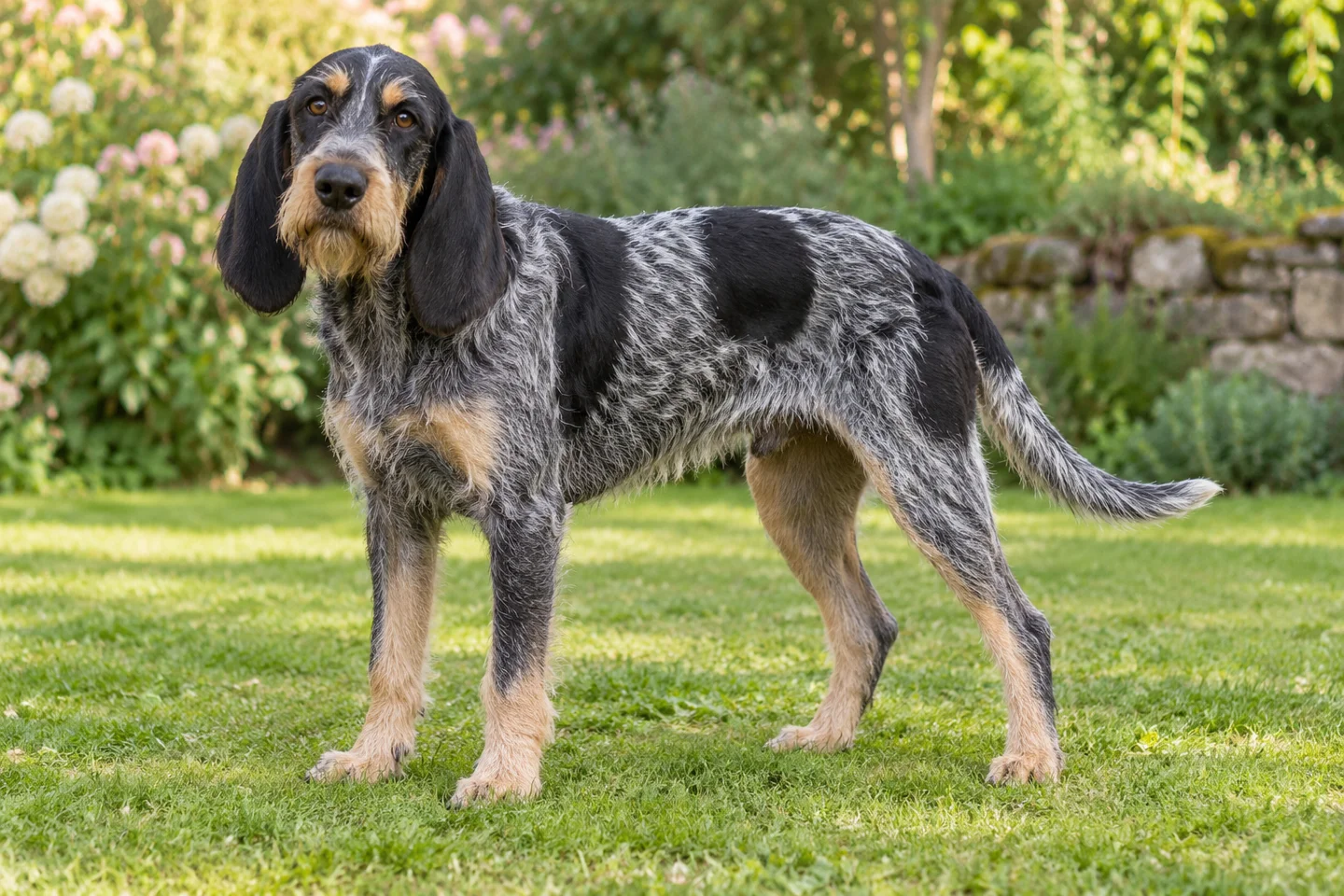
- Origin
- France; Pyrenean background
- Adult height
- Males 50–57 cm; females 48–55 cm
- Coat
- Rough slate-blue mottling with black patches and tan points
General information for owners. These articles have not been reviewed by a veterinarian. Medical decisions need your dog's history and an examination.
A blue Griffon with a distinct identity
The Griffon Bleu de Gascogne is a medium-sized rough-coated French scent hound. It is distinct from the tall, smooth-coated Grand Bleu, the Petit Bleu, and the low Basset Bleu. Confirm which breed a source means before making plans based on blue mottling alone. A beard and shaggy hair can also make it resemble other Griffons when a photograph lacks scale. Ask for records where available and discuss the actual adult dog rather than relying on an attractive family resemblance.
For a companion home, consider the practical place that scent exploration, voice, and coat inspection will occupy in an ordinary week. Someone must manage walks when the weather is wet, remove debris comfortably, and provide care during absences. A garden helps only when access is secure and the dog has an appropriate routine within it. Speak honestly about working hours and neighbors before placement. Meeting adults and observing how they settle after activity can answer useful questions that a puppy visit may leave unresolved.
The documented Pyrenean background
The FCI describes the breed as arising from a medium Gascony Blue crossed with a Griffon, with a Pyrenean background and a role in hare hunting and tracking wild boar. That working account gives context for keenness and persistence outdoors. It should not become a claim that every companion is already trained for such work. Ask what this animal and its family do now, how they are housed, and which ordinary experiences have been introduced. Present-day observations are easier to use in a placement decision than an elaborate origin story.
A dog changing from a working setting to a domestic one may need lessons about traffic, indoor noises, and periods apart from familiar companions. A home-raised puppy also needs gradual exposure and cooperation. Keep useful information from the source, including familiar cues and rewards, while establishing your own simple routine. Avoid making the first days a test of every activity you hope to enjoy eventually. A predictable start makes it easier to see what the dog finds comfortable and where support is needed.
Height, rough mottling, and the adult outline
The current FCI standard gives adult males a height of 50 to 57 centimeters and females 48 to 55. The rough coat carries black-and-white mottling that produces a slate-blue effect, with black patches and tan points. Hair is shorter on the ears than the body, and furnishings should leave the eyes visible. The illustrations follow that appearance with natural ears and a full tail. They cannot establish pedigree, correct movement, or any clinical finding in a real dog.
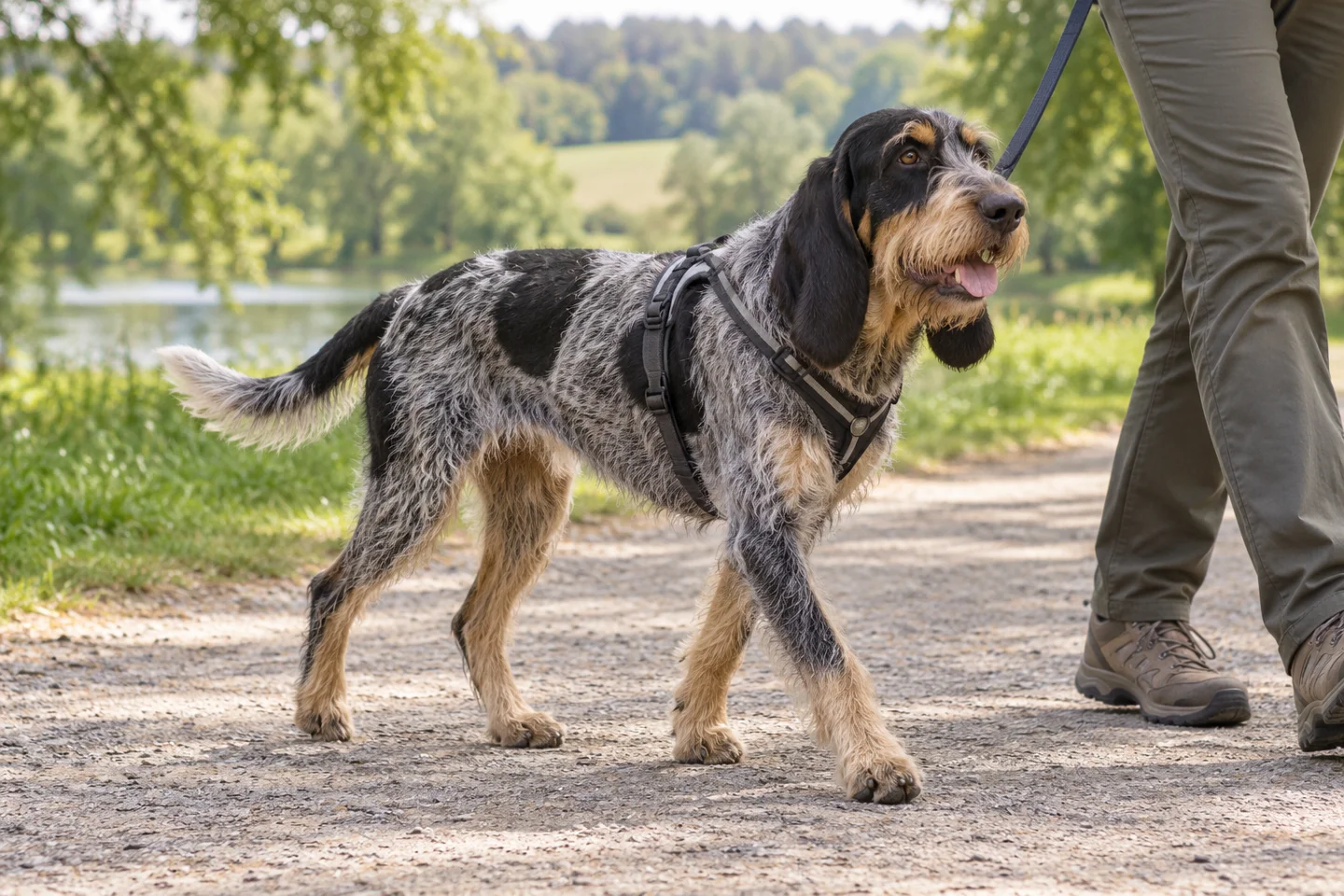
Check equipment fit through the coat rather than tightening a harness until the surface looks neat. Look behind the elbows and where straps cross the chest. Measure the individual for travel space and a comfortable resting area, and review growth regularly in a puppy. Watch the animal rise, turn, and walk in a quiet setting. If a movement seems unusual, ask about it and seek veterinary assessment where needed. A rustic-looking coat should never distract from the body beneath it or become a reason to overlook pain or poor condition.
Liveliness and learning to stop
The FCI description presents a keen, alert hound. Ask how that liveliness appears in the individual: greeting people, anticipating a walk, following scent, or remaining active when the household wants to rest. Those situations need separate observations. A useful source can describe what happens on a normal day and what already helps. Avoid treating a broad adjective as enough information for a home with specific noise, handling, or time constraints. Explain the actual circumstances and ask where the dog has been observed coping with something similar.
Teach a clear end to activity and provide a quiet place to rest. Reward calm behavior before the dog has to demand attention, and avoid making every waking moment an exciting game. If settling remains difficult, review the environment and possible medical or behavioral contributors with appropriate help. Keep a brief account of triggers and recovery. This gives a professional a concrete starting point and helps another carer continue the routine consistently. A plan that only works when one owner is present needs a practical alternative before that owner goes away.
Training a useful response before a trail takes over
Practice a return, a pause, and a turn with the handler in a quiet area. Use rewards that the dog values and make the lesson easy enough to understand. AVSAB recommends reward-based methods for routine skills and behavior work. Introduce distractions gradually rather than expecting a cue learned indoors to compete immediately with a strong trail. A suitable long lead or secure enclosure can keep the lesson controlled. Ask for instruction in handling equipment safely around feet, paths, and other walkers.
Decide what response earns access to the next activity. A moment of attention can lead to a permitted sniff; returning can be followed by another short exploration. This helps the handler become part of the walk rather than only the person who ends it. If the dog repeatedly cannot respond, change the task instead of repeating it louder. A good instructor should demonstrate the easier step and explain how to judge progress. Make sure holiday carers have equally clear instructions and do not have to invent a physical solution after excitement has escalated.
Exercise through scent and suitable conditioning
Choose routes where the dog can investigate under control and where you can leave a difficult encounter. An open field does not become secure because it is far from the usual pavement. Check fences, gates, livestock, and access to roads before using a space. Develop distance and intensity from the individual's current fitness. A puppy, a dog returning from injury, and a fit adult need different plans even when their names match. Ask the veterinary team about suitable activity and signs that the plan needs revision.
Watch recovery, including movement later and the following morning. A hound still interested in scent can need the owner to recognize fatigue or discomfort. Adapt to heat, provide water, and keep a shorter option available. If breathing, coordination, or general condition becomes concerning, stop and contact a veterinarian. A working background does not certify safety in the day's weather. Include transport and waiting time in the same assessment so a comfortable walk is not followed by an unsuitable period in a vehicle or crowded location.
Voice, anticipation, and being left alone
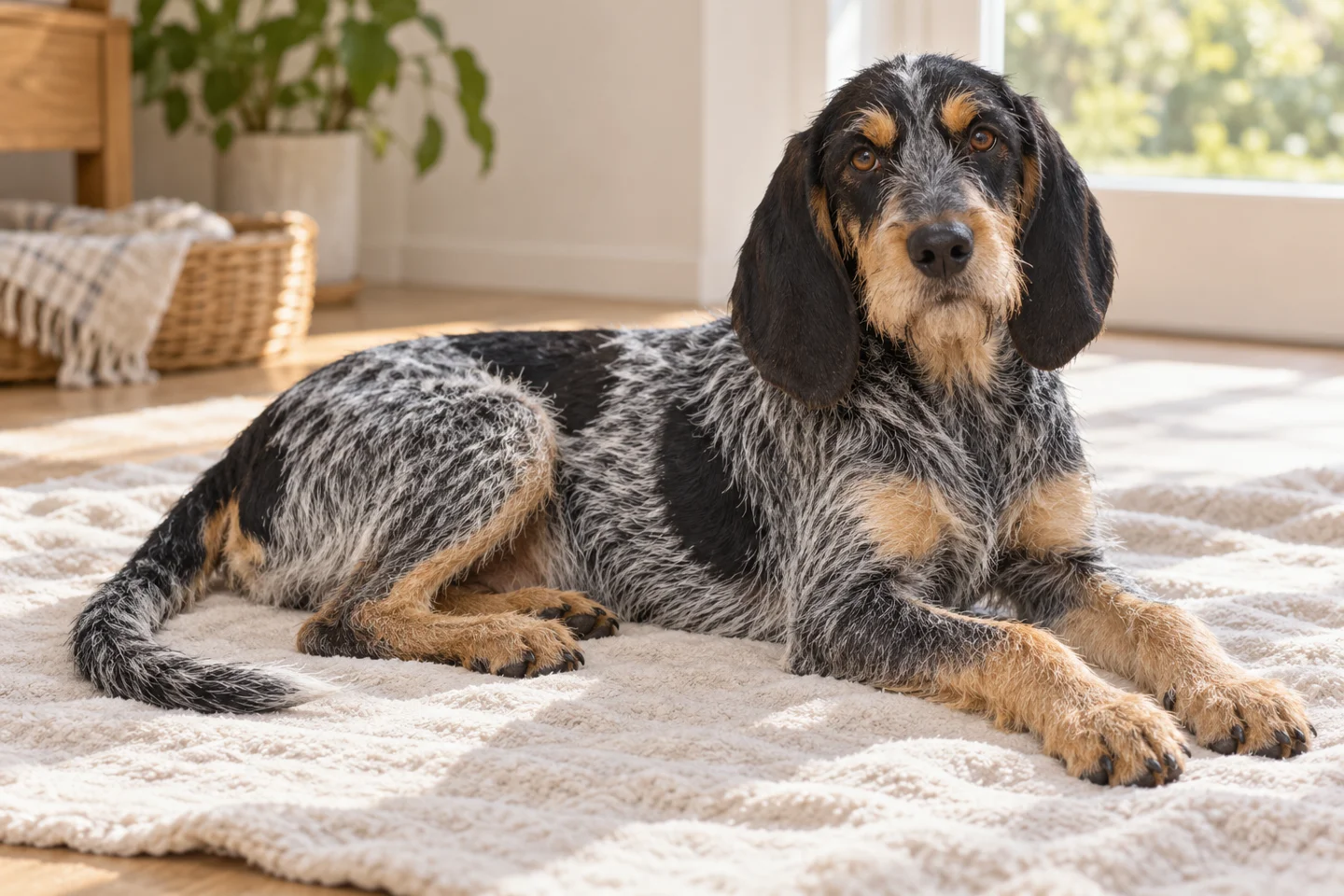
Hear an adult if possible and ask about the settings in which it vocalizes. Noise during scent work, frustration at a gate, and distress when alone may require very different responses. Explain shared walls, nearby gardens, and the hours your home is empty. The size of the dog does not tell you how far its voice carries. An honest placement discussion should include neighbors and available care, with enough information to identify a mismatch before the household and dog must struggle through it.
If a noise problem develops, record what happens before it and how the animal recovers. Change repeated triggers where practical and teach an alternative at a manageable level. Avoid relying on punishment to remove the sound while leaving distress or arousal unaddressed. Seek qualified guidance for persistent difficulty and veterinary advice about sudden changes. A sitter should know what the routine requires and when to call for help. Consistent care gives the dog a clearer lesson than several people reacting differently to the same event each day.
Social experience at a comfortable distance
Discuss suitable early exposure with your veterinarian while a puppy receives vaccinations. Begin with manageable observations of people, surfaces, vehicles, and ordinary sounds. The animal should have time to investigate and leave. For an adult with incomplete experience, use small outings and assess recovery rather than assuming age means every skill is established. A short calm encounter can be worthwhile without a close greeting. Avoid making the first weekend a series of crowded visits that leave little opportunity for rest or useful learning.
The furnished face can attract hands, so manage approaches yourself. Ask people to wait, allow the dog to choose contact, and practice brief cooperative handling at home. A shoulder touch followed by a reward and release can be a starting point for equipment checks. If fear, repeated avoidance, or frantic excitement prevents ordinary care, involve an appropriate professional. Holding the animal more firmly is not the only way to continue. A smaller task and clearer space can provide better information about what it is ready to learn next.
Aggression and the need to describe the event
A snap during brushing, guarding a chew, and a threat toward another dog have different circumstances. Write down what approached, what the animal had, the distance, and its route away. Prevent repetition while advice is arranged. A sudden change in response to touch or movement needs veterinary consideration. Do not call every problem strong working character or punish the warning until it disappears. That approach can hide useful information without improving the animal's ability to cope with the situation.
VCA explains that reactions to unfamiliar dogs can have several motivations. Maintain control and seek qualified help instead of releasing the dog to see what happens. Teach safe exchanges for appropriate objects and leave meals undisturbed. Carers need an honest account of incidents and the current management, including near misses that did not cause injury. If muzzle conditioning is recommended, ask about fit and gradual introduction and preserve the wider safety plan. No piece of equipment makes repeated provocation or unsuitable proximity a reasonable test of progress.
Grooming a rough coat without ignoring the skin
Inspect after outings for light debris and areas that rub under equipment. Part the hair and work gently in small sections rather than brushing only the visible surface. A groomer familiar with rough hounds can show appropriate tools and maintenance for the actual coat. Tight mats close to skin need skilled help. Avoid scissors against an unseen surface or forceful pulling because the animal looks weather-resistant. Stop when an area is painful and arrange assessment. A practical coat routine should remain comfortable enough to repeat throughout ordinary life.
Include ear observation, feet, nails, and the beard where food or moisture collects. Redness, discharge, odor, or repeated head shaking should prompt veterinary advice. The cause of one ear episode may differ from an earlier one, so leftover treatment should not be applied automatically. Ask for a demonstration of prescribed cleaning and avoid probing deeply with cotton buds. Teach short care steps when there is no pain. A new resistance to handling is a reason to investigate discomfort before assuming the dog has decided to be uncooperative.
Health evidence for this breed and this family
The Griffon Bleu breeding commission's May 2023 minutes discuss dentition and dysplasia and propose a voluntary breeding charter involving DNA testing and pelvic radiography. The document records a project with details still to be defined. It should not be presented as proof that every Griffon Bleu breeder now follows a compulsory finished scheme. Ask the club for the current charter, then ask a breeder which provisions the proposed litter actually meets. Request the meaning of any DNA document: identity or parentage evidence does not by itself describe a disease test. A pelvic screening report should identify the dog and the assessment performed.
The mention of dentition also makes the puppy's veterinary examination and any dental findings worth a direct conversation. Obtain the clinician's notes rather than judging health from the beard or a photograph with the mouth closed. Ask whether anything requires follow-up and who will provide that follow-up after collection. For an older hound, include previous procedures and reactions to treatment in its handover. Keep changes in eating, comfort during handling, or movement separate from assumptions about inherited illness until a veterinarian has investigated. Record what you observed and when it began. This produces a usable medical history even when the source has few formal family reports. It also prevents a dated committee discussion from acquiring more certainty than the evidence supports.
Nutrition and paying for care that remains available
Use complete nutrition appropriate to life stage and discuss measured portions with the veterinary team. Include training rewards and review the body beneath the hair. A visually shaggy outline is not a reliable weight assessment. Keep water available and give helpers specific feeding instructions. Changes in activity or health can require a revised plan, while persistent digestive or appetite problems need investigation. Avoid adding products simply because another hound owner recommends them without knowing the animal's medical history or current diet.
Ask local providers about current costs and capacity for preventive care, grooming assistance, training, transport equipment, and cover during absences. Confirm that a sitter can manage scent interest and voice as well as routine feeding. Understand insurance terms or another plan for emergency expenses. Ask a breeder or rescue about follow-up and return arrangements in writing. If suitable help is difficult to find, resolve that before placement rather than treating it as a problem to solve only when you first need to leave the dog with someone else.
Mixes and lookalike rough-coated hounds
A rough blue-mottled dog may be labeled a Griffon Bleu mix without documented ancestry. Ask what supports the description and keep a visual guess separate from a pedigree record. Similar coloring and furnishings do not establish mature temperament, health, or size. An adult's observed behavior and maintenance needs can still be assessed directly. For a puppy, leave room for uncertainty rather than choosing from an illustration or a seller's promise that a particular trait will definitely appear.
Where both parents are known, request relevant medical and family information for each. A cross does not guarantee removal of inherited disease or combine only the easiest features of its parents. Discuss expected care with the source and ask to see the actual adults where possible. Be cautious of a claim that mixed ancestry automatically produces quiet behavior, effortless recall, or low grooming needs. For a rescue, a clear account of settling, handling, and animal responses in a foster home can help placement more than an overly confident statement about exact breed percentages.
Sources and editorial notes
Sources checked October 21, 2026. Breed measurements describe reference ranges, not a diagnosis or an individual dog's ideal weight. Images are AI-generated breed illustrations and do not document a particular dog or health condition.
- AVSAB: Humane Dog Training Position Statement
- VCA Animal Hospitals: Food aggression in puppies
- VCA Animal Hospitals: Common emergencies in dogs
- Orthopedic Foundation for Animals: CHIC health screening programs
- VCA Animal Hospitals: Aggression toward unfamiliar dogs, diagnosis
- VCA Animal Hospitals: Grooming and coat care for your dog
- VCA Animal Hospitals: Ear infections in dogs (otitis externa)
- AAHA: Feeding plans for healthy, appropriate weight cats and dogs
- VCA Animal Hospitals: Heat stroke in dogs
- AVSAB: Puppy Socialization Position Statement
- VCA Animal Hospitals: Dog behavior problems, aggression toward children
- Official breed standard: Griffon Bleu de Gascogne
- Club du Bleu de Gascogne: Griffon Bleu breeding commission meeting, May 2023
Keep getting to know dogs.
Read another guide or return to your dogsDating community.
Explore breed guidesBack to dogsDating