Gascon Saintongeois
A French pack hound whose powerful voice, scent interest, and two size varieties need a practical household plan.
How these guides are researched and reviewed
- Origin
- France
- Varieties
- Grand and Petit; illustrations show Grand
- Adult standard size
- Grand males 65–72cm, females 62–68cm; Petit males 56–62cm, females 54–59cm; ±1cm tolerance
- Care priorities
- Secure scent exploration, voice, long ears, compatible company
General information for owners. These articles have not been reviewed by a veterinarian. Medical decisions need your dog's history and an examination.
Choose the household routine before the hound
A Gascon Saintongeois brings a carrying voice and a serious interest in scent into the home. Before arranging a placement, stand in the garden and consider the nearest road, neighboring animals, shared entrance, and people who would handle the lead on an ordinary weekday. A spacious property still needs usable boundaries. An owner with a small garden may provide good care through reliable outings, while a rural home with broken gates can leave a hound exposed to immediate danger.
Ask how the particular dog spends the hours between activities. Has it lived indoors, shared kennel accommodation, travelled alone, or remained with familiar dogs? Those experiences affect the transition you need to arrange. A foster carer can describe actual routines without predicting everything about the future. With a puppy, meet adult relatives where possible and discuss the likely demands candidly. Choose someone who asks about your existing pets, absence pattern, fencing, and support rather than treating an affectionate greeting as the entire placement assessment.
French origins and the two varieties
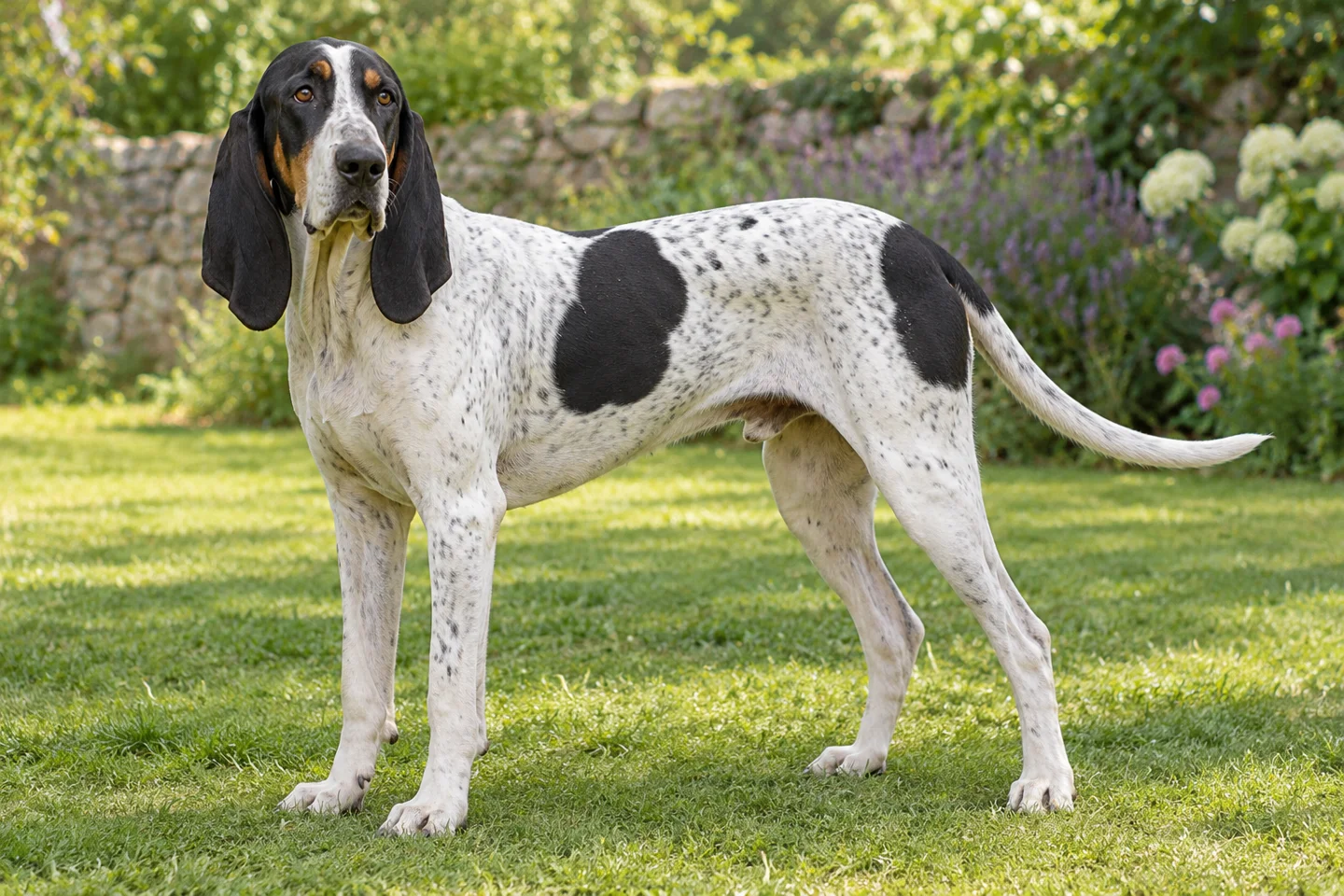
The FCI recognizes Grand and Petit Gascon Saintongeois under one standard. Its historical account places the Grand's development in the nineteenth century through Saintonge hounds and Bleu de Gascogne stock; smaller descendants were selected for the Petit in the twentieth century. Both are scenthounds. The names identify varieties rather than a puppy and its adult form. The illustrations here represent the Grand, and an owner comparing records should ask which variety is actually documented.
The standard gives Grand shoulder heights of 65–72 cm for males and 62–68 cm for females. Petit ranges are 56–62 cm and 54–59 cm respectively, with a 1 cm tolerance either way. Those measurements describe a breeding standard, not a target to force through feeding. A sizeable hound needs a vehicle arrangement with room to stand and turn, and equipment fitted to its own chest and neck. Rescue ancestry can remain uncertain; a familiar head or spotted coat does not resolve every identification question.
Appearance without selecting for exaggeration
White ground, black patches and tan markings, a long muzzle, and hanging ears create the familiar outline. The coat is short, while the limbs and body retain an athletic working shape. Look beyond color when meeting a dog. Watch the transition from lying down to walking, how it negotiates a turn, and whether one side is consistently favored. An attractive photograph supplies none of that information, and a generated illustration cannot certify structure or pedigree.
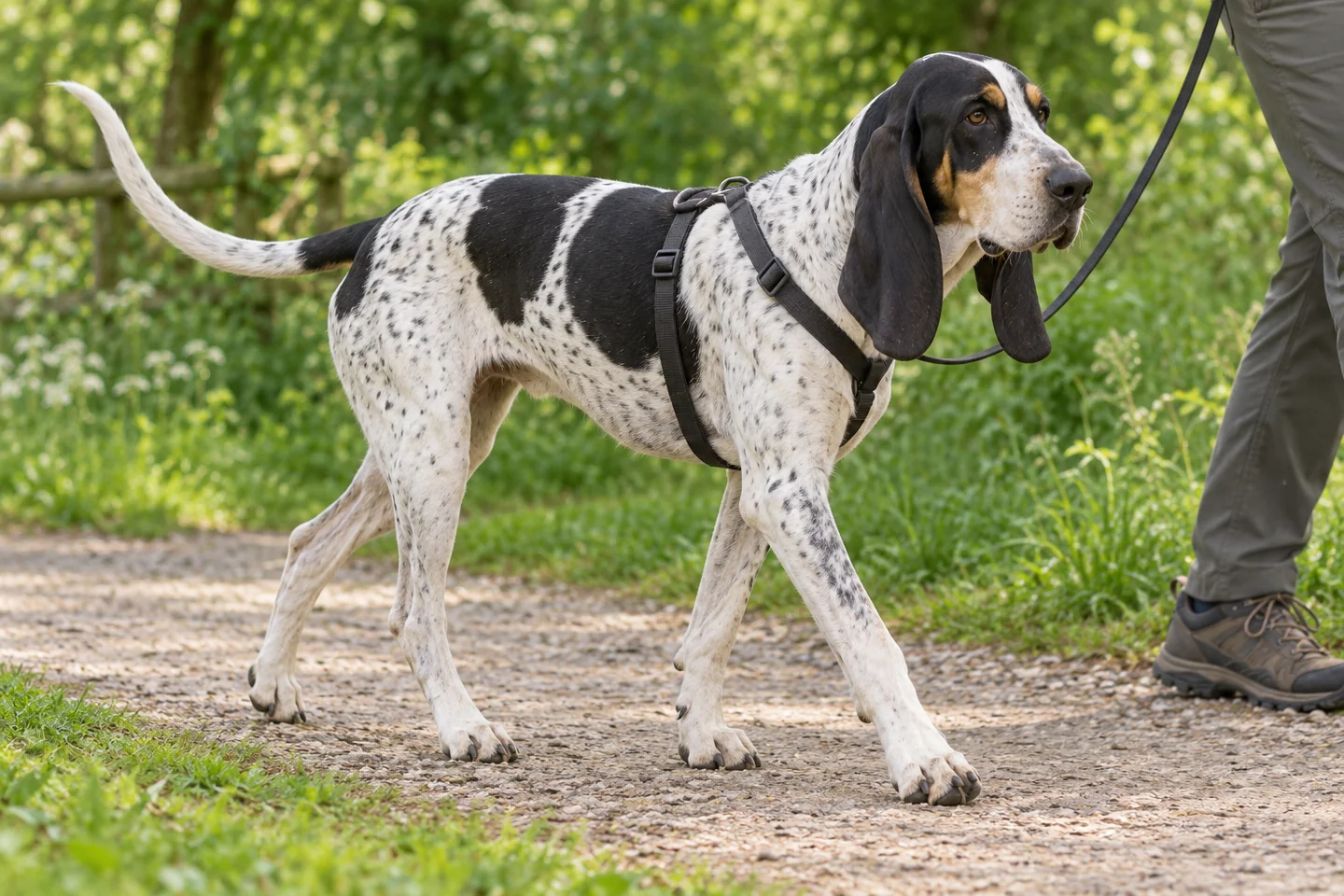
Plan for a nose investigating low ground without allowing equipment to slide forward or trap an ear. Practise fitting a harness in a quiet room and inspect its contact areas after use. A growing puppy needs repeated adjustments, and an adult may change shape with condition. A second handler should demonstrate the same process before providing holiday cover. Clear instructions about clips, gates, and lead attachment are more useful than a vague warning that the dog is strong when it smells something interesting.
Voice, neighboring homes, and time apart
A hound's voice can travel much farther than a person expects while standing beside it. Ask when this individual calls, whether other dogs join in, and how long it takes to settle. Calling during excited departures differs from distress when isolated. Find out what happens after the usual carer leaves, rather than relying on a quiet visit while everyone remains present. Consider the sleeping arrangement and shared walls before assuming a countryside working reputation will fit an urban block.
Build a predictable resting routine and begin absences within the dog's present comfort. A recording can reveal repeated pacing, prolonged calling, or attempts to escape that stop before you return. Seek professional help when separation is distressing. Another dog may add companionship in some homes, but it should not be acquired as an untested treatment. Arrange backup care that fits the individual while learning proceeds, and reduce recurring triggers such as a view directly onto every passing animal when that keeps the dog continuously alert.
Scent exploration with a physical safeguard
At a field entrance, connect the lead before opening the vehicle. Check the route, gates, and neighboring stock before allowing greater freedom. A recall practised in the kitchen has not been established on an absorbing trail. Use enclosed areas for early practice and reward a return with something the dog values. In suitable open space, a carefully handled long line may offer exploration, but its speed, attachments, and path around people need deliberate attention.
Avoid letting a line run across a cyclist's route or around a handler's legs. A fast hound reaching the end abruptly can injure itself or someone nearby. Work with a competent instructor if equipment handling is unfamiliar. Teach moving away from a verge before the scent becomes overwhelming, then practise at gradually harder locations. Identification and a registered microchip help after escape; they do not make an unsafe release appropriate. Review boundaries after storms, building work, or a change in neighboring animals.
Training useful transitions
A practical first lesson can be waiting behind an internal gate while somebody prepares to go out. Reward the pause before unclipping the barrier and keep the sequence easy enough to repeat. Add a hand target for repositioning and a predictable cue to finish an activity. These small tasks can reduce the need to haul a mature hound through a doorway when deliveries arrive or a visitor leaves an outer gate open.
Use food, access to an appropriate smell, or a suitable game according to the situation. Observe whether the reward actually matters to the dog at that moment. AVSAB supports reward-based teaching; escalating physical corrections does not clarify a task the dog has not learned in that setting. Keep sessions short and review your timing. A calmer place may help more than repeating an instruction beside fresh wildlife scent. Ask an instructor to watch an ordinary walk, including the start and finish, rather than assessing only a formal demonstration.
Children and a long-eared dog at rest
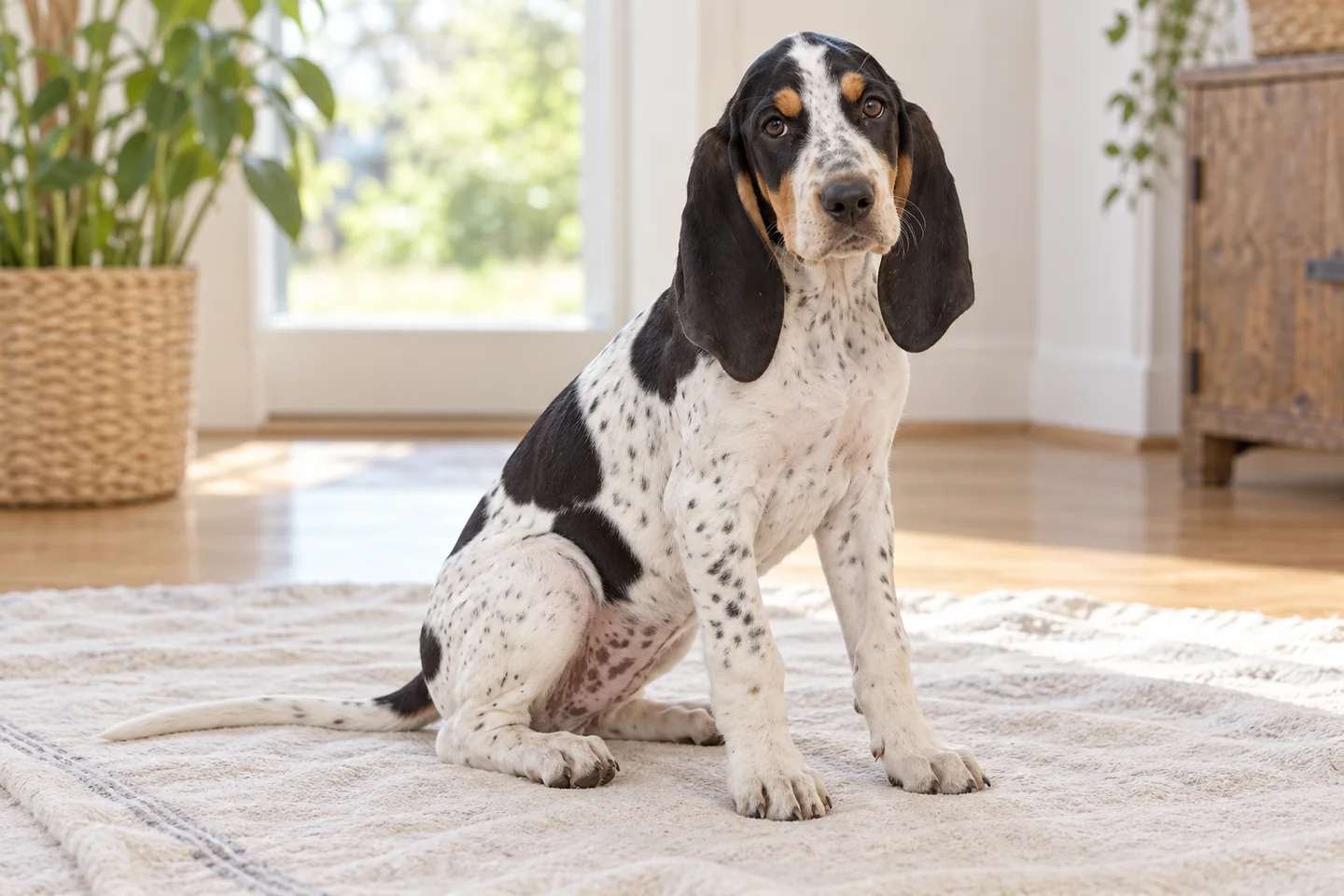
A child's hand can easily find an ear while a hound is sleeping beside a chair. Prevent that arrangement by putting the resting place outside the busiest play area and teaching children to invite contact only when an adult is supervising. Do not allow pulling, climbing, face-to-face embraces, or following the animal into its retreat. Size differences also matter during a friendly greeting, when a turning body or sweeping tail can knock a smaller child off balance.
Give visiting children the same rules before they meet the dog. An adult should manage meals and valued objects, including retrieving a dropped toy that lies close to a chew. If attention must shift to cooking or supervising a noisy game, separate first. A dog that repeatedly leaves, freezes, or looks away should obtain relief without needing a growl. Reassess routines as children become mobile or the animal develops discomfort. Familiarity with one careful child cannot predict every crowded family gathering.
Aggression must be described accurately
A pack background does not prevent guarding, fear, painful handling, or conflict with another dog. If the hound stiffens over a bowl or threatens during ear care, stop the immediate pressure and create a safer arrangement. Write down who approached, what the animal was doing, and whether escape was available. Do not reproduce the incident to see whether it happens again. New sensitivity to touch needs veterinary attention, even if the dog continues to enjoy a walk afterward.
For recurrent threats or a bite, obtain qualified behavioral help alongside medical assessment. Tell carers about actual incidents and provide clear management instructions. Protect meals and use a professionally planned exchange rather than repeatedly taking possessions as a test. Punishing warnings can remove information without solving the underlying concern. A gradually introduced basket muzzle may form one part of a plan when appropriate, while barriers and distance prevent unsafe contact. The equipment does not justify making the dog endure a procedure or greeting it cannot manage.
Dogs, cats, and small animals
Ask what living with other dogs has involved. Sleeping in a familiar group, walking beside a known companion, and sharing food in a new house are different situations. Introduce one suitable dog at a time and watch whether both can move away. At home, give each its own undisturbed resources while preferences become clear. A quieter animal may be crowded without a visible fight, so interrupt repeated following or blocking rather than assuming an absence of noise means agreement.
A hound's response to a running cat or rabbit deserves a separate assessment from its affection toward people. Provide cats with routes the dog cannot follow and protect small-animal housing during cleaning as well as when closed. Avoid putting a vulnerable animal close to the muzzle as a test of gentleness. If fixation or pursuit is evident, stop access and discuss the situation with a qualified professional. Decide whether every regular carer can maintain necessary separation before relying on that arrangement for years.
Exercise across changing terrain
Plan activity around present conditioning. A hound that has managed short local walks should not be expected to complete a full hill day because its breed has endurance in its working history. Introduce distance and difficult surfaces progressively, then observe recovery after sleep. For a youngster, discuss repetitive impact or planned sport with the veterinary team. Include opportunities to investigate at a manageable pace instead of making every outing a continuous march designed to tire the dog as quickly as possible.
Inspect feet after rough ground and notice reluctance to climb into the car, an altered gait, or unusually slow recovery. Persistent changes need assessment. Adjust routes and timing in heat, carrying water and allowing rest. Severe weakness, collapse, or breathing difficulty warrants urgent advice. Quiet days can retain suitable movement and learning while protecting recovery. An owner's illness or an unexpected work commitment should activate a realistic backup plan, rather than force either strenuous exercise from an unprepared carer or prolonged confinement without necessary outings.
Grooming a short coat and protecting the ears
Keep a towel and suitable brush near the place where the dog returns indoors. Remove loose surface debris and check beneath straps before dampness or rubbing is concealed by the next outing. Short hair makes some skin changes visible, but the owner still needs to inspect rather than simply look at the coat from a distance. Seek advice for wounds, persistent odor, irritation, or repeated licking instead of hiding the change with a perfumed product.
The hanging ears need observation for discharge, redness, shaking, or pain. Ask the veterinarian whether cleaning is appropriate for this individual and how to do it safely. Do not probe deep into the canal or reuse medication from another episode. Introduce brief ear presentation, foot handling, toothbrushing, and nail care when the animal is comfortable. If a previously easy task suddenly causes resistance, investigate the change. Tell a groomer or clinic about handling concerns before arrival so necessary care can be planned safely.
Health questions for a less numerous breed
A standard cannot establish disease frequency or provide a complete international screening policy. Ask a Gascon Saintongeois breeder which assessments are used, what significant illnesses have appeared in relatives, and why those particular tests were selected. Request identifiable records rather than an assurance that working dogs are always healthy. Your veterinarian can help interpret unfamiliar reports. Avoid borrowing a checklist from another French hound and presenting it as a verified universal requirement for both Gascon varieties.
Keep parental screening separate from investigation of present signs. Imaging, clinical examination, specialist assessment, and named DNA variants supply different information. If history is missing in an adopted adult, preserve that uncertainty and establish a current baseline. Report persistent changes in movement, appetite, thirst, skin, or behavior. Arrange ordinary prevention for actual activities and travel, and keep an urgent-care contact and transport plan accessible. A hound that remains keen to follow scent can still be ill; enthusiasm should not overrule a meaningful change noticed by its regular carer.
Feeding, mixes, and an affordable lifetime plan
Measure a complete diet suited to life stage and condition, then include rewards given by everyone involved in training. Ask the veterinary team to demonstrate a body-condition check instead of using a heavy outline or insistent appetite as the feeding target. Separate dogs during meals so intake remains clear. Home-prepared diets and supplements need qualified advice within the whole nutritional plan. Record persistent digestive trouble rather than changing several foods without a way to identify what happened.
A Gascon Saintongeois mix can vary in adult size, voice, coat, and response to animals. A combined name cannot promise reduced hunting interest or freedom from inherited problems. Ask what ancestry is documented and what behavior has actually been observed. Budget for secure equipment, routine medicine, training support, emergency care, transport, and competent holiday cover. Practise an overnight routine with the proposed carer before a long absence. As the animal ages, review comfortable access to beds and vehicles while investigating new pain or changes in tolerance.
A dogsDating introduction suited to a hound
Describe the individual's walking pace, response to unfamiliar dogs, voice, and need for space on dogsDating. Keep exact home coordinates private and agree on a public place where both handlers can change direction easily. Avoid beginning beside a narrow entrance or a busy feeding area. Let each dog investigate the surroundings separately before considering closer contact. Owners should exchange relevant information about incidents and current professional plans, rather than expecting a first meeting to reveal everything safely.
Treat a relaxed shared walk as a useful outcome even if neither animal wants physical play. End when one dog repeatedly pursues, blocks, or overwhelms the other. Leave valuable objects out until compatibility around them has been assessed in an appropriate setting. A pleasant outing does not establish comfort in a shared house, kennel, or vehicle. Future meetings should follow the actual pair's preferences and both owners' ability to maintain boundaries, with a straightforward option to stop when circumstances change.
Transport arrangements deserve a rehearsal
A large Grand hound needs enough usable vehicle space, while a Petit still needs secure restraint and comfortable entry. Let the animal approach an appropriate ramp or step without urgency and reward small successful movements. Practise before a veterinary emergency or a holiday departure puts pressure on everyone. Check ventilation and the actual sleeping space at the destination. A general promise of dog-friendly accommodation does not establish the condition of gates or the presence of nearby livestock.
Run a short trial with the person who will provide backup care. Have that person fit the equipment, attach the lead before opening the car, and complete a familiar local walk. Clear difficulties during the trial instead of discovering them during an urgent absence. Leave written information about food, medication, clinic details, resource concerns, and the situations that require extra distance. The plan should remain practical when the usual owner is not available to explain each step in person.
Sources and editorial notes
Sources checked October 21, 2026. Breed measurements describe reference ranges, not a diagnosis or an individual dog's ideal weight. Images are AI-generated breed illustrations and do not document a particular dog or health condition.
- VCA Animal Hospitals: Grooming and coat care for your dog
- VCA Animal Hospitals: Ear infections in dogs
- VCA Animal Hospitals: Common emergencies in dogs
- VCA Animal Hospitals: Food aggression in puppies
- VCA Animal Hospitals: Heat stroke in dogs
- VCA Animal Hospitals: Aggression toward unfamiliar dogs, diagnosis
- AAHA: Feeding plans for healthy, appropriate weight cats and dogs
- Orthopedic Foundation for Animals: CHIC health screening programs
- AVSAB: Humane Dog Training Position Statement
- FCI: Gascon Saintongeois official breed standard
Keep getting to know dogs.
Read another guide or return to your dogsDating community.
Explore breed guidesBack to dogsDating