Grand Griffon Vendéen
A tall rough-coated French hound whose outdoor persistence, voice, furnishings, and substantial handling needs require deliberate companion-home planning.
How these guides are researched and reviewed
- Origin
- France; Vendée
- Adult height
- Males 62–68 cm; females 60–65 cm, with ±1 cm tolerance
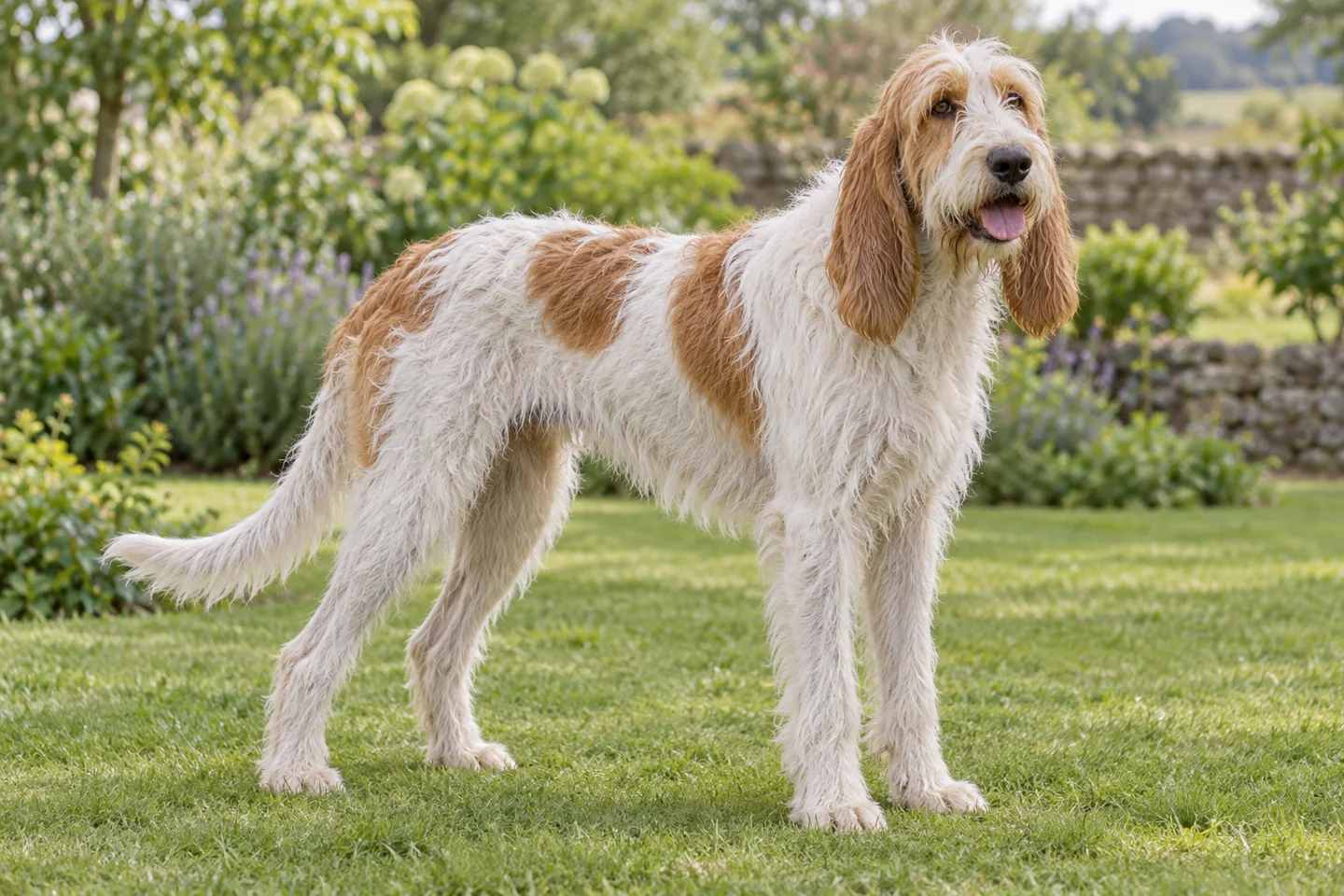
- Illustrated coat
- Harsh white-and-orange coat, natural ears and full tail
General information for owners. These articles have not been reviewed by a veterinarian. Medical decisions need your dog's history and an examination.
The tall Vendéen hound
The Grand Griffon Vendéen is the tall member of a French hound family whose names can easily confuse a buyer. It has full-length legs and a rough coat. It is distinct from the Briquet Griffon Vendéen and both Basset Griffon Vendéen breeds. Confirm the recorded identity before making assumptions from a photograph. A furnished face can make dogs of different sizes look similar when there is no reliable scale. An adult standing beside its handler provides more useful information than a close portrait of a puppy.
For a companion household, the decision begins with practical access to suitable exercise and manageable care. Can the normal walker control an excited adult while opening a gate? Is there somewhere to clean and inspect the coat after wet ground? Will neighbors be able to live with the dog's voice? Discuss these questions with someone who knows the individual and the breed. A large property does not automatically supply the company, teaching, and safe boundaries that a working hound may need to live comfortably there.
A history that remains relevant outdoors
The FCI describes the Grand Griffon as a French scent hound used for large game, sometimes in packs and sometimes on a lead to locate an older trail. Its historical account includes older French hound stock and contributions from other Griffons. That account explains why a prospective owner should investigate scent interest and persistence. It does not certify any particular dog's training. Ask whether the animal has actually worked, how it is housed, and what it has experienced away from that setting.
A dog moving from a kennel routine into a house may need to learn that household noises, closed interior doors, and time on its own are ordinary. Prepare a simple schedule and reduce the number of new demands introduced at once. Find out which familiar cues and rewards the previous carer uses. Carry useful information forward while teaching your own routines gradually. An experienced hound can still be inexperienced in your environment. Treating a difficult first week as evidence of bad character overlooks the amount of learning a change of home can require.
Body size and a coat with a job
The FCI gives males a height of 62 to 68 centimeters and females 60 to 65 centimeters, with a one-centimeter tolerance either way. The standard describes a robust hound, a harsh coat with a dense undercoat, and long hairy ears. The illustrations use white and orange, one of several accepted color combinations. These are visual examples rather than records of actual animals. Adult proportions should help you assess space and handling, while individual condition should guide decisions about weight and activity.
Look at the whole dog when meeting one. Watch it rise, turn, and walk on a comfortable surface. Ask about any hesitation or asymmetry you notice without trying to diagnose it from appearance. Check whether the coat hides a strap or rubs beneath equipment. Measure the dog for its vehicle space and bed, and consider how care would work after an injury. If you cannot assist a substantial adult safely, arrange suitable help in advance. A task that is manageable with a puppy may become physically demanding before its manners have caught up with its growth.
Household temperament needs its own assessment
A determined hound can be appealing to watch outdoors and demanding to manage near an open door. Ask the source to describe the animal during quieter parts of the day. Does it settle after activity, seek constant contact, or become restless when another dog moves away? Those observations help you prepare a home. Words such as affectionate or confident are useful only when accompanied by examples that show what the animal can manage under the conditions you expect it to encounter.
Set up a resting place that people can pass without stepping over the dog. Make access to the outdoors predictable and teach the end of an activity as well as its beginning. A mat or separate quiet room can help organize household movement, provided the dog has learned to use it comfortably. If separation produces distress, seek advice early. Forcing longer periods alone without understanding the response can make daily life harder. Keep a dated account of what happens so a professional can assess the actual sequence rather than relying on a broad impression.
Training before the undergrowth becomes exciting
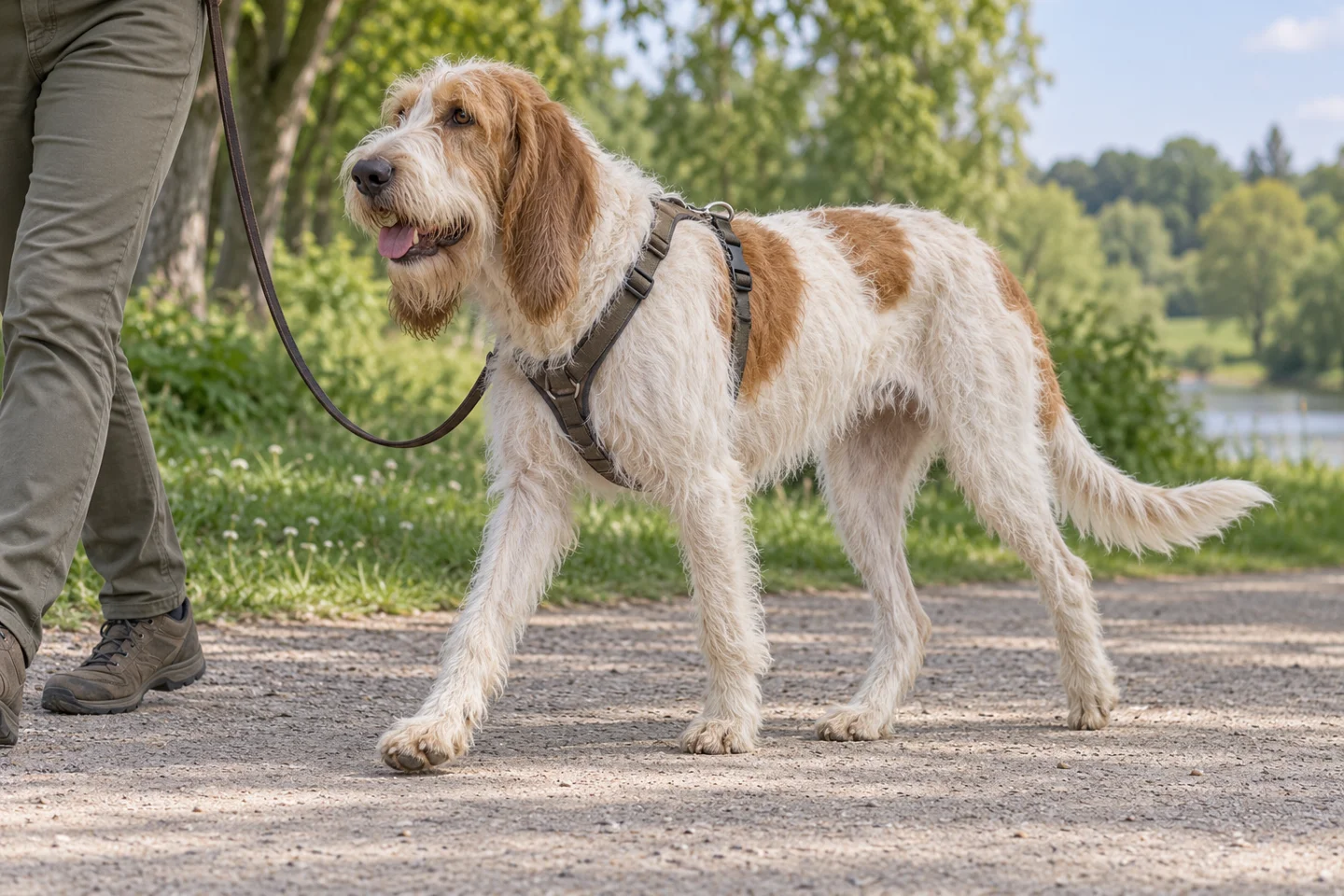
Teach equipment handling, a direction change, and coming toward you in quiet surroundings. Build a reliable reward history before using these skills beside fresh scent. A long lead should be chosen and managed with guidance appropriate to a large hound. Do not let it trail across a path where it can tangle other walkers. When the dog cannot respond, step back to an easier setting and identify the distraction. Repeating a cue while the animal continues the same behavior supplies little useful teaching.
AVSAB supports reward-based methods for ordinary skills and behavior work. The Grand Griffon's persistence makes clear arrangements especially valuable: reward a pause at the gate, then open it under control; reward walking back with you, then allow a safe sniff. Separate these lessons from attempts to impose physical control during high excitement. An instructor who explains what the dog is learning and how you will judge progress can help you practice safely. Ask for a demonstration that you can repeat yourself, including what to do when the task is currently too difficult.
Exercise and the responsibility to choose terrain
The breed standard describes a hound willing to enter difficult cover. A companion owner must still choose ground that is appropriate for the individual. Enthusiasm for a thicket cannot establish that fences, sharp debris, or wildlife beyond it are safe. Explore with controlled access and inspect routes rather than following every pull into vegetation. Discuss the length and intensity of activity with your veterinarian when the dog is growing, recovering, or beginning a more demanding routine. Previous working experience is useful context but not a current fitness certificate.
Balance outdoor exploration with comfortable recovery. Watch how the dog moves later, whether it sleeps normally, and whether the next outing starts with stiffness. Adapt the plan to weather, especially heat. Provide water and an alternative route, and be ready to turn back. If breathing, coordination, or general condition becomes concerning, stop and obtain veterinary guidance. Keep the rest of the day's arrangements in view, including transport and waiting time. The exercise plan should remain workable when your preferred woodland is closed or the weather makes your usual distance unsuitable.
Voice and settling after activity
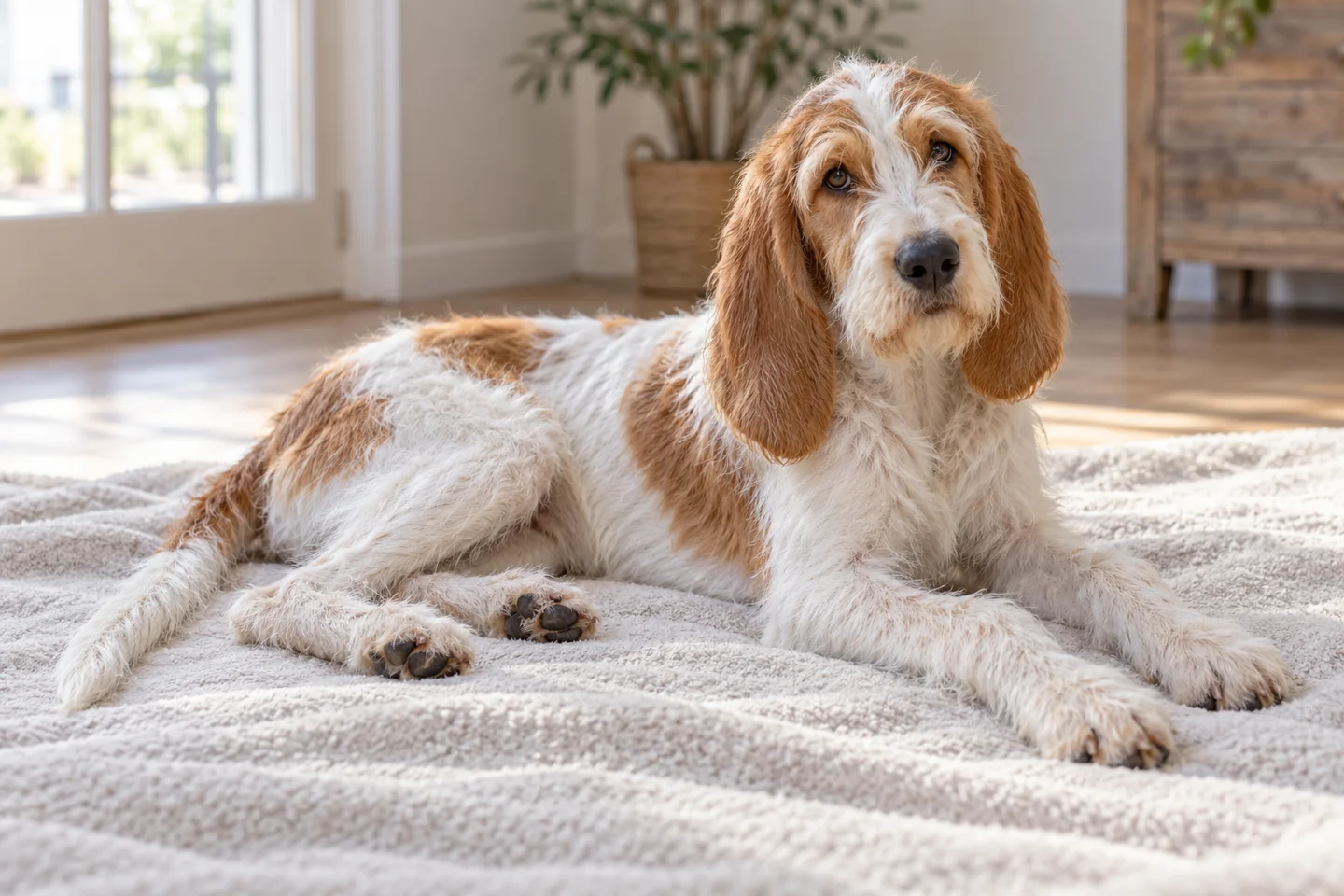
Hear the voice before committing to the breed if possible. A sound intended to carry during hunting may be difficult beside a neighbor's window. Ask when this particular dog vocalizes and what happens when the handler leaves. The distinction matters: an alert at a passing animal requires a different plan from distress during absence. Describe the real home and schedule to the breeder or rescue. Do not rely on a promise that a longer walk will resolve every form of noise.
At home, reduce obvious triggers while teaching manageable alternatives. Covering a repeated view of animals at a boundary may be part of an arrangement, while a comfortable waiting routine may help at walk time. Reward quiet behavior before frustration escalates. Seek professional help for persistent agitation, separation distress, or any sudden change. Pain and illness can also affect behavior, so the veterinary team may need to be involved. Explain the plan to everyone providing care so that the dog is not rewarded for one pattern by one person and punished for it by another.
Socialization around ordinary human activity
A puppy needs safe experience of the world during early development. Discuss suitable places and vaccination considerations with your clinic. Begin with manageable observation of people, vehicles, and surfaces, giving the puppy room to move away. For a newly adopted adult, use the same principle of small, understandable steps. A quiet car journey followed by a short walk may be enough for one day. There is no advantage in filling the first weekend with events that make the animal unable to rest.
The rough face attracts attention, and strangers may reach toward it without noticing discomfort. Manage those approaches yourself. Ask people to wait and allow the dog to choose whether to approach. Practice brief touches and grooming motions at home with rewards, then expand only while the animal remains comfortable. Repeated avoidance is information about difficulty, not a request to restrain more firmly. If fear prevents ordinary care or outings, consult an appropriate professional. Social experience should increase useful familiarity rather than require the dog to endure every interaction someone else wants.
Aggression and honest accounts of warning behavior
A Grand Griffon that guards a chew, threatens at a fence, or snaps during brushing needs careful management and assessment. Describe the event precisely, including what the people did, the space available, and whether pain may have been involved. Avoid explaining every difficult response as hunting determination. That label cannot identify the cause or tell you what arrangement will prevent injury. Stop the triggering interaction and prevent casual repetitions while professional advice is obtained.
Contact your veterinarian when behavior changes suddenly or handling appears uncomfortable. Use a qualified behavior professional for a plan that fits the household's abilities. VCA cautions that lunging toward another dog does not establish what will happen if a barrier is removed. Keep distance until the response is understood. Teach exchanges for safe objects and leave feeding undisturbed rather than proving control by taking items away. Give sitters an accurate incident history. Someone responsible for a strong hound needs more than a general assurance that it is usually friendly.
Children, resident dogs, and smaller animals
Plan for an adult hound moving through spaces shared by children. A narrow entrance, an exciting greeting, and a food-carrying child can create difficult conditions even without an aggressive intention. An adult should supervise actively and manage the lead. Provide a protected resting area and keep children away from meals and chews. If the dog leaves contact, let it go. Separate comfortably whenever full supervision is unavailable, and avoid assigning a child responsibility for holding or physically moving a dog they cannot control.
Ask about other animals individually. A history of hunting in company does not show that a dog will welcome an unfamiliar companion beside a food bowl or remain safe with a cat. Arrange initial dog meetings with room for both handlers to withdraw, and keep resources separate at home. For small animals, begin with secure separation and seek informed help where necessary. Do not stage a chase as a test. Be willing to decline a placement if the household cannot reliably protect the animals already living there.
Grooming a harsh coat after rough ground
Inspect the coat after outings, especially where hair rubs beneath straps and around the underside. Remove light debris gently, working in small sections. A harsh appearance does not make painful tangles or embedded material acceptable. Ask a groomer familiar with rough hounds to demonstrate appropriate tools and maintenance for the actual coat. Tight mats near skin need skilled help; scissors used against an unseen surface can injure a moving animal. Keep the practical aim clear: clean skin, comfortable hair, and handling the dog can tolerate.
The long ears also need observation. Notice changes in odor, redness, discharge, or head shaking, and arrange veterinary assessment when they occur. Use any cleaning product according to the clinic's instructions and avoid pushing objects into the canal. A recurring problem needs its own diagnosis rather than automatic reuse of an old prescription. Teach standing on a nonslip surface and brief ear lifting while the dog is comfortable. If a previously easy touch becomes painful, pause the lesson and seek medical advice before attempting a longer grooming session.
Health questions for a less common breed
The Dutch Griffon Vendéen breed association asks owners to contribute to continuing health registration, including owners of healthy dogs. It requests veterinary documentation when a condition is diagnosed and encourages information to reach the club as well as the breeder. This is useful for a less familiar breed because reports confined to one kennel leave gaps when dogs move away or owners lose contact. Ask a Grand Griffon source how it collects later information from its puppies and whether owners know where to report diagnoses. Check that any advice you receive names the Grand Griffon rather than a different Vendéen breed.
Keep a medical file that can travel with the dog throughout its life. Include examination reports, significant injuries, treatment dates, and the clinic responsible for follow-up. Describe an unresolved problem as unresolved rather than allowing silence after a move to become a claim that it disappeared. When submitting information to a breed programme, use the requested confidential route and confirm what identifying details it needs. You do not need to publish private veterinary paperwork on a social profile. For daily care, agree with the veterinarian what to monitor as this dog's workload changes. A move from regular field exercise to shorter urban outings may require a fresh plan for condition and comfort. The breed's hunting history alone cannot establish that the new routine is appropriate for the individual.
Nutrition and planning the care budget
Agree a suitable complete diet and starting amount with your veterinary team. Account for treats used during training and review the dog's condition rather than estimating needs from the amount of mud on its coat. Activity varies considerably between individuals and weeks. Make feeding instructions precise for anyone helping with care. Keep water available and report sustained changes in drinking, appetite, or body weight. An apparent preference for a new food does not explain every digestive or medical problem that can reduce normal eating.
Price a realistic month of care locally. Include preventive medicine, transport equipment, training support, grooming assistance, and cover during absences. Check that available carers can manage the dog's size and outdoor interests. Ask a breeder or rescue about follow-up, return arrangements, and what would happen if the placement became unsuitable. Review insurance conditions or an alternative plan for major expenses. Buying an uncommon breed can make sourcing familiar professional help more difficult, so identify that help before a routine problem becomes urgent.
Mixes, uncertain ancestry, and reasonable expectations
A mixed rough-coated hound can resemble a Grand Griffon without having documented Grand Griffon ancestry. Ask what supports the name used and which parentage, if any, is known. A familiar-looking beard or coat color does not establish temperament, health, or mature size. An adult dog's observed daily behavior can still be evaluated usefully when ancestry is unclear. Keep those observations specific so another person can distinguish settled evidence from a prediction based on a photograph.
Where both parents are documented, discuss the relevant screening and family information for each. A cross cannot guarantee freedom from inherited disease or supply only the easiest characteristics of its parents. Be cautious about a seller who promises low grooming needs, perfect recall, and automatic household compatibility without explaining the basis. Ask to see the adults and how the young dog is raised. For a rescue, current handling and animal-response information may be more valuable for placement than an unsupported certainty about the exact mixture.
dogsDating meetings for a tall rough-coated hound
In dogsDating, describe what a potential walking partner needs to know: your hound's comfortable distance, whether greetings are currently appropriate, and any difficulty around wildlife or shared objects. Keep exact home coordinates private and use an approximate area when arranging a public meeting. Agree who will handle each dog. Select a route with wide sections and convenient exits rather than relying on a busy enclosed park where leaving requires passing every other animal.
Begin with a quiet parallel walk. Give both dogs room to investigate the route without being pushed into a greeting. Avoid shared toys and food competitions during the first meeting. End contact when either animal repeatedly turns away, becomes stiff, or cannot recover from excitement. Record concrete details afterward, such as the path width that helped and the point where more distance was needed. Plan another short walk only if both handlers can maintain the arrangement. Calm shared exploration can be the purpose of a match, with no requirement for physical play.
Sources and editorial notes
Sources checked October 21, 2026. Breed measurements describe reference ranges, not a diagnosis or an individual dog's ideal weight. Images are AI-generated breed illustrations and do not document a particular dog or health condition.
- AVSAB: Humane Dog Training Position Statement
- VCA Animal Hospitals: Food aggression in puppies
- VCA Animal Hospitals: Common emergencies in dogs
- Orthopedic Foundation for Animals: CHIC health screening programs
- VCA Animal Hospitals: Aggression toward unfamiliar dogs, diagnosis
- VCA Animal Hospitals: Grooming and coat care for your dog
- VCA Animal Hospitals: Ear infections in dogs (otitis externa)
- AAHA: Feeding plans for healthy, appropriate weight cats and dogs
- VCA Animal Hospitals: Heat stroke in dogs
- AVSAB: Puppy Socialization Position Statement
- VCA Animal Hospitals: Dog behavior problems, aggression toward children
- Official breed standard: Grand Griffon Vendéen
- Griffon Vendéen Rasvereniging Nederland: Continuing health registration
Keep getting to know dogs.
Read another guide or return to your dogsDating community.
Explore breed guidesBack to dogsDating