Cesky Terrier
A short-legged Czech terrier whose clipped coat, everyday training, and manageable introductions need consistent attention.
How these guides are researched and reviewed
- Origin
- Czech Republic
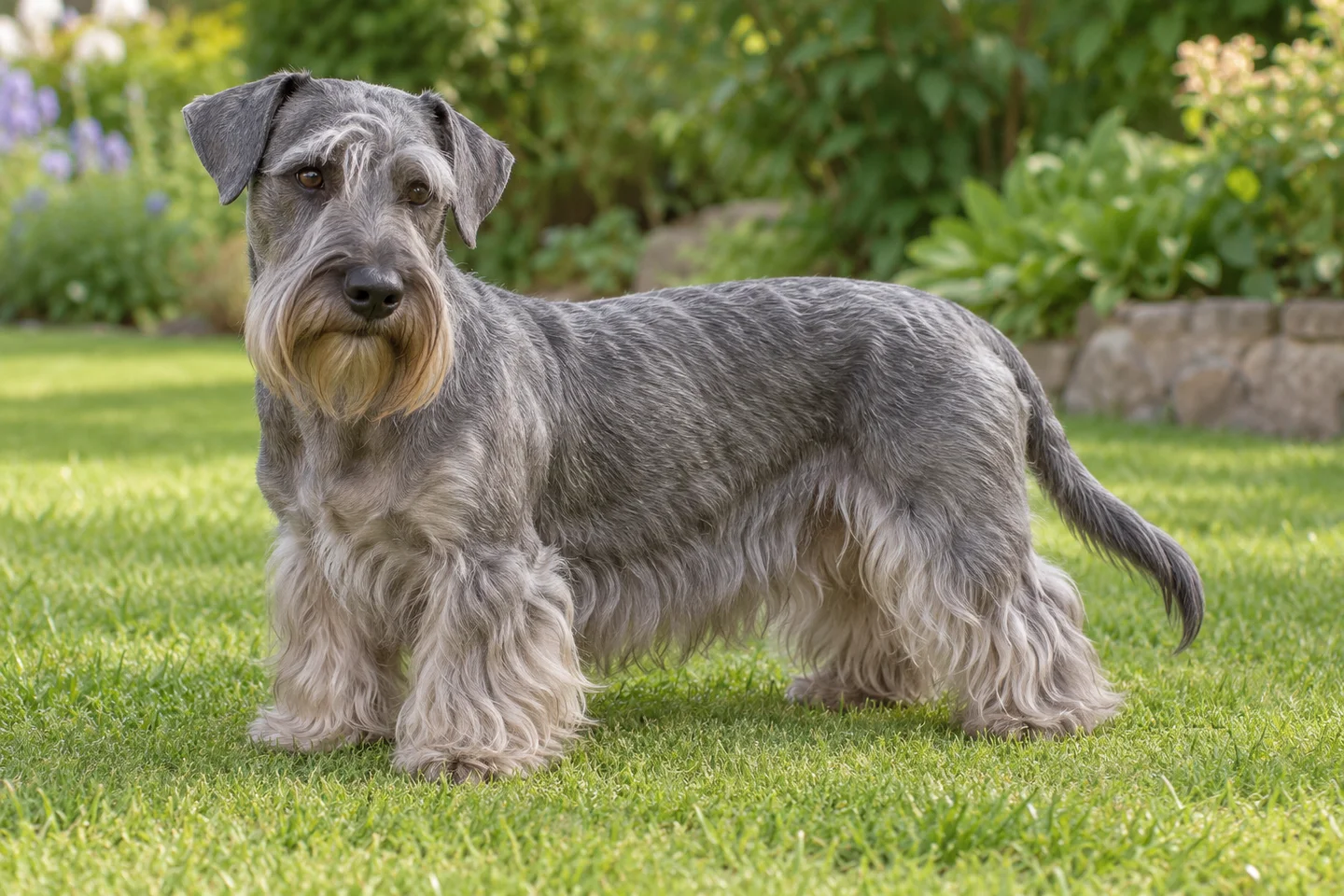
- Appearance illustrated
- Grey-blue adult coat, rectangular short-legged body, natural hanging ears and full tail
- Adult size reference
- FCI height 25–32 cm, ideal males 29 cm and females 27 cm; weight 6–10 kg
General information for owners. These articles have not been reviewed by a veterinarian. Medical decisions need your dog's history and an examination.
A small terrier still needs a complete daily life
A Cesky Terrier can fit a household that wants a smaller walking companion and is prepared to maintain its coat and teach everyday skills. Its short legs do not remove the need for exercise, exploration, or boundaries. Imagine a rainy working day with a delivery at the door and a dog waiting for attention. The household needs a plan for toilet breaks, quiet activities, and a comfortable place to rest while people are occupied.
Meet adult dogs before choosing one because a puppy's size and softness can hide the practical demands ahead. Ask owners how they manage visitors, grooming appointments, barking, and time alone. An adult rescue may offer particularly useful information from foster care. Discuss what has been observed and what is still unknown. A compatible home does not require elaborate entertainment every hour. It does require someone who notices the dog's needs, provides suitable activity, and follows through on instruction. Decide who will help during illness or travel, and introduce that arrangement before an urgent need arises.
The Czech Terrier has a specific breeding history
The FCI describes development from Scottish and Sealyham Terrier ancestry under František Horák, with focused breeding work starting in 1949 and FCI recognition in 1963. Cesky Terrier and Czech Terrier refer to the same breed. It is distinct from the Cesky Fousek, a much larger pointing dog. The standard records a move from hunting use toward a companion role.
These origins provide context for asking about investigation, digging, small-animal interest, and cooperation with people. They do not establish that every individual behaves alike. Find out how the parents live and which situations they find difficult. A breeder should be able to discuss particular relatives, not simply repeat the desired temperament from a standard. If considering an adult, ask whether it has lived in a flat, used stairs, traveled by car, or shared space with cats. Experiences that seem ordinary to one household may be new to the dog. Knowing the starting point lets you arrange a gentler transition and choose training priorities that actually matter.
Adult size and a puppy coat that changes
The FCI height range is 25 to 32 centimeters, with ideal heights of 29 for males and 27 for females; its weight range is 6 to 10 kilograms. These are standard adult references, not a target for every dog's feeding plan. The outline is rectangular and short-legged, with small hanging ears and a full tail.
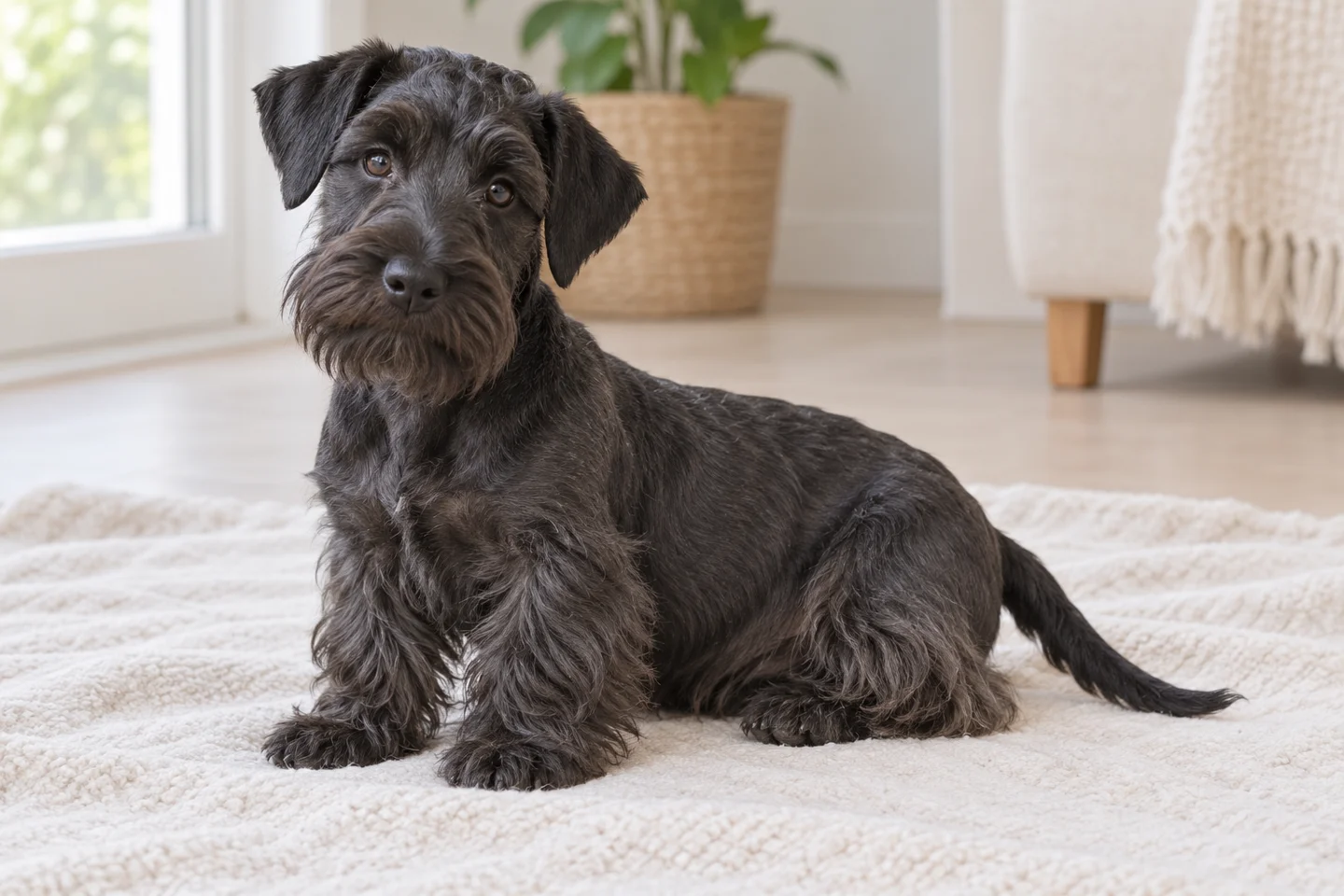
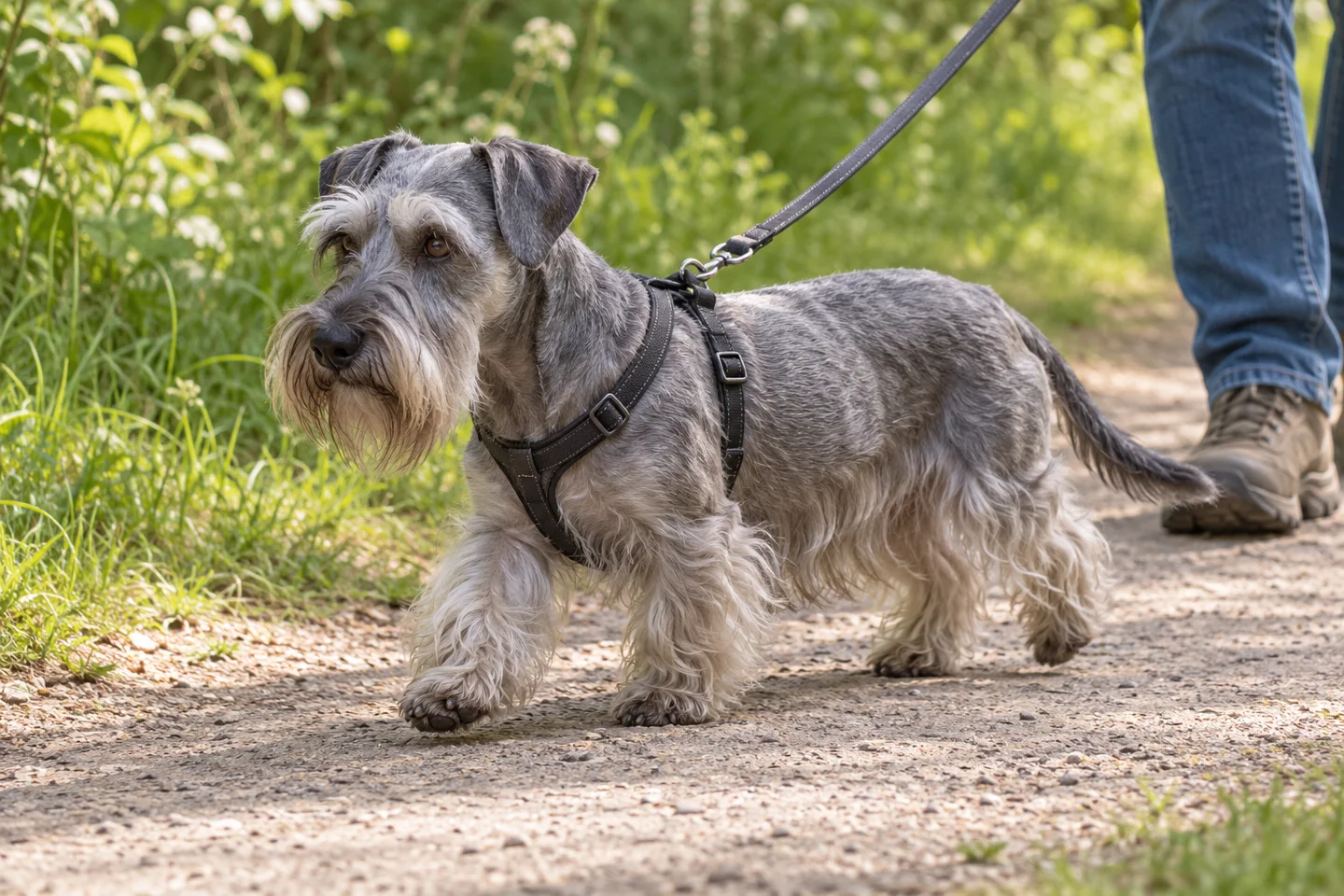
The adult illustrations show the grey-blue variety. In this variety puppies are born black, so the young-dog picture deliberately has a darker coat. The standard also recognizes light coffee brown, with brown-born puppies. A puppy's eventual shade cannot be promised from an AI illustration. Look for comfortable movement and a healthy body condition when meeting a real animal. Check a harness around the chest and behind the elbows, where straps can press into hair. Avoid selecting solely for the smallest size or the most dramatic furnishings. The beard and brows are recognizable features, but the dog beneath them needs the same clinical care and practical assessment as a larger companion.
Training at a height that works for the dog
Set up lessons so the dog can understand them without being crowded. A person bending directly over a small terrier can make an otherwise simple task feel uncomfortable. Stand at an angle, use a target or a clearly presented reward, and give the dog room to choose the requested movement. Begin with coming when called, moving to a bed, and waiting while a door opens.
Keep rewards small enough that repeated practice does not become a large extra meal. Work in brief sessions and stop while the dog still understands what earns reinforcement. If it wanders away, assess whether the setting is distracting, the session has lasted too long, or the requested step is unclear. Avoid treating a terrier label as an explanation that ends the investigation. Reward based methods help build cooperation around the tasks the household actually needs. Practice in more than one room before adding the street or a busy visitor. A behavior learned beside the kitchen cupboard does not automatically transfer to a pavement full of smells.
Toilet habits, being alone, and settled evenings
Give a new dog frequent opportunities to toilet in an appropriate place, with especially close attention after waking, eating, or active play. Accompany it rather than assuming it will work out a new garden by itself. Reward the successful choice and clean indoor accidents thoroughly. Punishment after the event gives the dog little useful information and can make it reluctant to toilet near a person.
Prepare a comfortable resting area with water and suitable enrichment, then introduce brief calm separations. Increase duration according to the dog's response rather than following a rigid timetable. Recording a short absence can help you see whether the dog rests, repeatedly paces, or becomes distressed. Seek advice if separation is difficult. During evenings at home, reward the dog for settling while people read or talk. Give it an option besides climbing onto someone whenever it wants contact. Household independence develops through understandable routines and manageable practice. It should not require leaving a worried dog to struggle for long periods in the hope that exhaustion will solve the problem.
Socialization without compulsory greetings
A puppy benefits from seeing ordinary people, vehicles, and surfaces while it still feels secure. Ask your veterinarian about local infection precautions and suitable early outings. Let the puppy observe a bicycle at a distance before attempting a busy path, and introduce one unfamiliar surface at a time. A small dog may be close to feet and wheels that a taller owner barely notices.
Teach strangers how to interact before they lean down or lift the dog. Calm observation can be enough; nobody needs to pick it up to prove that it is sociable. If it backs away, give it space and make the next experience easier. Adult dogs can also need gradual preparation for grooming tables, lifts, and crowded waiting rooms. Keep a record of what helps. Choose quieter appointment times or wait outside when practical arrangements make an experience more manageable. Avoid combining several difficult experiences into one long outing. Clear, repeatable practice gives you better information about the dog's comfort and creates opportunities to reward calm attention.
Exercise for short legs and an interested nose
Offer regular walks with opportunities to sniff and make discoveries. The dog may enjoy searching for a safe hidden toy, learning simple scent tasks, or practicing familiar cues along a quiet route. Build duration gradually when the dog is young, returning from illness, or previously inactive. Speak with the veterinarian about activities involving repeated jumping or demanding terrain, especially if movement appears uncomfortable.
Check paths from the dog's perspective. Deep mud, high steps, sharp stones, or slippery floors can change the effort required. A trail that seems easy to a human may need pauses or a different route. Do not pull a reluctant dog onward without checking what is happening. In warm weather, avoid hot surfaces, carry water, and keep an easy route home. Weakness, confusion, breathing distress, or collapse requires urgent veterinary advice. Include rest after new activity and observe how the dog moves later. Good exercise supports a comfortable daily rhythm. Constant ball throwing or repeated excitement beside a window can make settling harder without meeting all of the dog's needs.
Children should learn contact at floor level
Children can interact more comfortably when an adult helps them sit quietly and invite the dog to approach. A small terrier should not be carried from room to room, dressed up, or trapped in an embrace. Adults need to manage lifting when it is necessary and teach children to leave the dog's bed and meals alone. A dog that feels physically cornered can have few options for creating distance.
Choose simple activities such as giving a familiar cue with adult guidance or placing a safe puzzle down before the dog approaches. Stop if the child becomes excited or the dog turns away, stiffens, or repeatedly tries to leave. Running games belong elsewhere while a youngster learns not to chase or catch clothing. Visiting children need the same rules as residents, with a comfortable separate area ready before play starts. Small size does not make every interaction safe, and a cheerful reputation does not establish this individual's tolerance. Supervision means an adult is watching and prepared to change the arrangement before either participant becomes distressed.
Other dogs, cats, and animals that move quickly
Arrange first dog meetings in a setting with enough space for separate movement. A large unfamiliar dog approaching rapidly can overwhelm a small terrier even if its owner considers it friendly. Begin with parallel walking and let both handlers maintain distance. Avoid enclosing the dogs together because they appear curious through a barrier.
In a shared home, organize separate meals and resting places. Watch how each dog behaves around a doorway, a favored seat, or a toy. Friendly play still needs pauses when one participant repeatedly seeks escape or becomes tired. Cats require secure routes and areas beyond the dog's reach, particularly during early introductions. Familiarity with one calm cat does not predict the response when another runs. Rabbits, rodents, and other small animals need dependable physical separation. Terrier ancestry is a reason to investigate the individual and manage access carefully. It does not justify exposing another animal to pursuit as a test. Ask for professional help when the household cannot maintain a calm, controlled setup.
Aggression and guarding need precise descriptions
A dog may growl when someone reaches for a chew, snap during lifting, or bark intensely at a passing dog. Those events require different questions. Note what happened before the response, where the dog could move, and whether touch or activity seemed painful. Prevent another incident while seeking advice. Do not repeatedly take the item or lift the dog again to see whether it still objects.
A veterinary examination is important for new or worsening behavior, particularly when handling changes. Pain and other medical conditions may need attention before training can progress. An appropriate behavior professional can help teach voluntary movement, exchanges, and calmer responses at a suitable distance. Avoid punishing warning signals or relying on physical restraint to win a disagreement. A small dog's behavior deserves serious assessment rather than being dismissed as amusing. Tell carers what the individual needs and which situations to avoid. An accurate account protects the dog from repeated distress and allows people to organize care with the right equipment, timing, and level of assistance.
Grooming a clipped coat rather than a generic terrier coat
The Cesky standard describes coat maintenance by clipping, with characteristic longer hair on selected areas. A groomer should understand this outline rather than automatically applying a hand-stripped style used for another terrier. Explain whether your priority is a manageable companion trim, showing, or maintaining particular furnishings. Ask what care is required between appointments and how often the individual should return.
Fine hair can tangle, especially beneath the chest, behind the ears, and where equipment moves against it. Check down to the skin in short sessions and avoid pulling at a knot that has tightened. A professional should handle mats close to skin. Keep the beard clean after meals and allow wet areas to dry. If brushing suddenly becomes uncomfortable, check for skin irritation or pain rather than assuming the dog has become uncooperative. Use a stable nonslip surface and teach standing, brief touch, and release separately. A practical trim can make care easier, but it does not remove the need for regular inspection or guarantee that the dog will tolerate handling without preparation.
Ears, teeth, and routine health handling
Introduce care gently and in separate small steps. The dog can learn to rest its chin on a hand or target, allow a lip to be lifted briefly, and offer a foot for inspection. Reward cooperation and release before it struggles. Ask your veterinary team to demonstrate appropriate mouth, ear, and nail checks so you know what you are looking at and when to stop.
The AKC's published national breed-club recommendations include a dentition examination alongside other screening. That examination is distinct from the everyday work of keeping the mouth comfortable. Discuss a dental-care plan with the clinic rather than assuming a groomer's cosmetic cleaning substitutes for assessment. Ears with discharge, redness, odor, or repeated scratching also need professional attention. Avoid probing deeply with cotton swabs or applying leftover medication. Record changes in appetite, chewing, or tolerance of face handling, since those details can help the veterinarian investigate discomfort. Handling practice should improve access to care, while necessary diagnosis and treatment remain the clinician's job.
Health screening and unusual movement
The AKC lists patella evaluation, cardiac examination, ophthalmologist evaluation, and dentition examination as the national breed club's recommended tests. Ask for identifiable results, their dates, and an explanation from the breeder and veterinarian. Tests answer particular questions; a general claim that a parent passed everything can conceal important differences in what was actually examined.
AKC breed information also discusses Scottie cramp, a movement disorder reported in the breed. Do not use that label to diagnose an episode at home. If the dog develops abnormal movement, record what happened if doing so does not delay care, prevent further strain, and seek veterinary assessment. Other problems can also alter walking, and urgent signs require prompt attention. Ask about relevant family history without accepting an unsupported claim that every dog has the condition or that it is always harmless. Continue routine preventive care and clinical examinations even when parental screening is available. Keep records together so future clinicians and carers can understand previous findings and any limits on activity or handling.
Feeding and mixes need attention to the actual dog
Use a complete food appropriate to life stage and measure portions, including small rewards used during grooming practice or training. A modest amount of extra food can matter for a small dog. Ask the clinic to demonstrate body-condition assessment beneath the coat and review any change in weight or muscle. Persistent digestive upset, appetite loss, or unexpected weight change deserves veterinary attention.
A Cesky Terrier mix may develop a different coat texture, size, or behavior from the dogs shown here. Ask how its parentage was established and request relevant health information for known parents. Mixing does not guarantee protection from inherited conditions. Nor does a silky coat establish that an individual will suit a person with allergies. Discuss the actual exposure and medical considerations with the appropriate professionals before committing. Grooming needs become clearer as the coat develops, so leave room in the budget for that uncertainty. Decisions about diet, handling, and screening should follow the individual rather than a commercial description of the cross.
Costs, sourcing, and a home that can keep the routine
Ask local providers about veterinary care, grooming, training, and backup care before choosing a dog. A specialist groomer may require travel or advance booking. Include equipment, transport restraint, food, and an emergency reserve or suitable financial plan. Universal monthly figures are unlikely to reflect the services and prices available where you live.
A responsible source should discuss temperament, family health, early experiences, and the reasons a particular dog might fit your household. Request records and a clear written agreement about support if difficulties emerge. Be candid about working hours, stairs, children, cats, and previous experience. A smaller dog still needs a secure outdoor area and safe access through shared entrances. Check whether everyone in the household will maintain the agreed grooming and handling routines. The right placement is one that works on an ordinary week, including its less convenient days. If essential care depends on time or help that is not realistically available, resolve that gap before bringing the dog home.
dogsDating should make a first walk easy to leave
Describe the individual in its dogsDating profile. Useful details include preferred walking pace, comfort around larger dogs, and whether toys should stay out of a meeting. Explain any handling limits or previous incidents honestly. Avoid assuming that another small terrier will be an automatic match or that a larger dog will adjust its play appropriately without evidence.
Use an approximate location and keep exact home coordinates private. Agree on a public route with room for two handlers to move apart, and begin with controlled parallel walking. Each person should manage their own dog and allow the first outing to finish without close greeting. If either dog repeatedly crowds, stiffens, or tries to leave, create space and end the encounter. Pick up the dog only when necessary for immediate safety and avoid turning an ordinary approach into an improvised confrontation. Seek advice about recurring difficult interactions. The three pictures here are AI-generated illustrations, including a deliberately black puppy of the grey-blue variety. They cannot verify a particular animal's identity, health, temperament, or compatibility.
Sources and editorial notes
Sources checked October 21, 2026. Breed measurements describe reference ranges, not a diagnosis or an individual dog's ideal weight. Images are AI-generated breed illustrations and do not document a particular dog or health condition.
- AVSAB: Humane Dog Training Position Statement
- VCA Animal Hospitals: Food aggression in puppies
- VCA Animal Hospitals: Aggression toward unfamiliar dogs, diagnosis
- VCA Animal Hospitals: Heat stroke in dogs
- VCA Animal Hospitals: Grooming and coat care for your dog
- VCA Animal Hospitals: Ear infections in dogs
- VCA Animal Hospitals: Feeding guidelines for dogs
- VCA Animal Hospitals: Hypoallergenic dog breeds
- Orthopedic Foundation for Animals: CHIC program and interpretation of numbers
- Fédération Cynologique Internationale: Cesky Terrier breed standard
- American Kennel Club: National breed-club terrier group health testing recommendations
- American Kennel Club: Cesky Terrier breed care and health
Keep getting to know dogs.
Read another guide or return to your dogsDating community.
Explore breed guidesBack to dogsDating