Chesapeake Bay Retriever
An American retrieving dog whose waterfowl background calls for trained cooperation, individual health evidence, and deliberate water safety.
How these guides are researched and reviewed
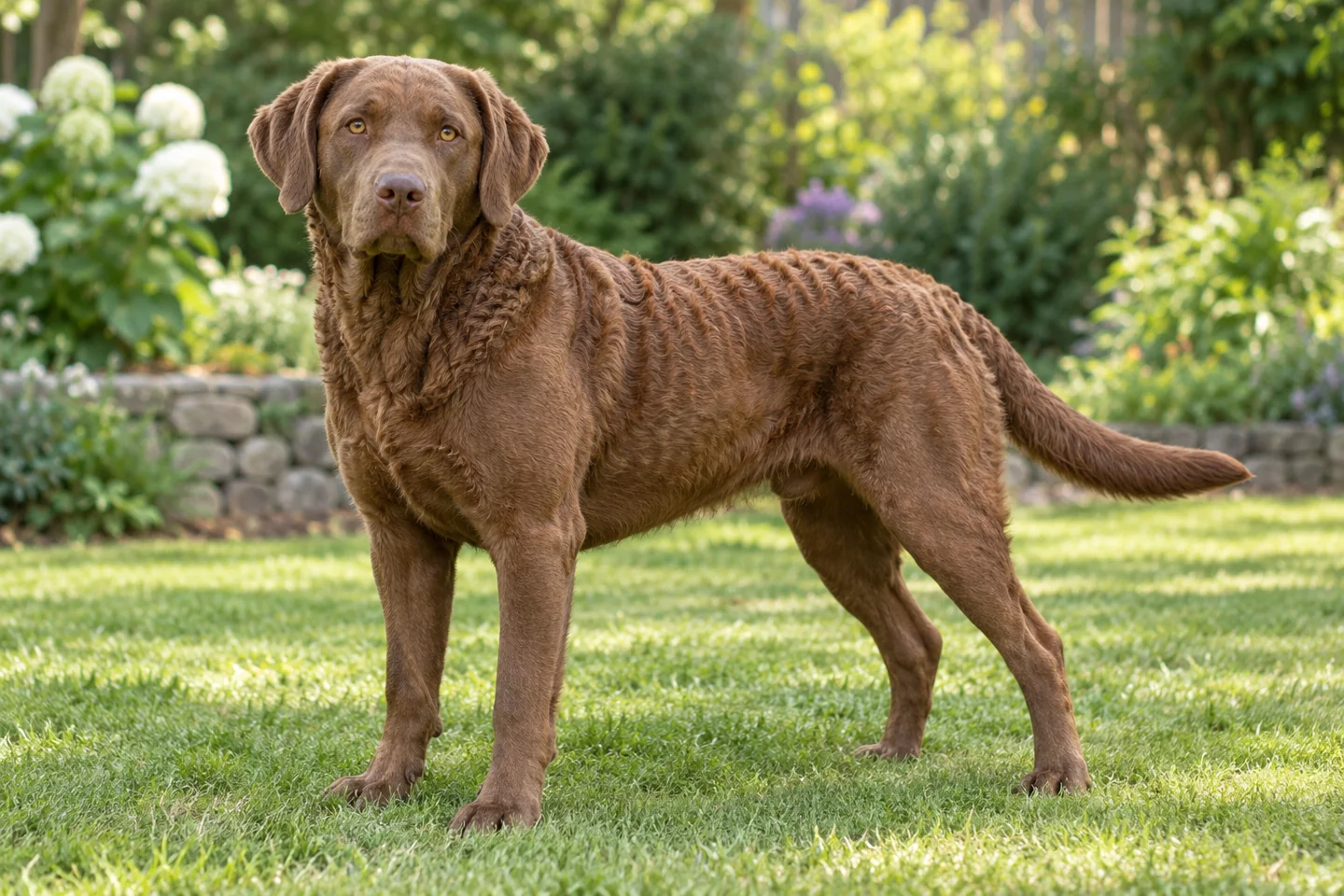
- Origin
- United States, Chesapeake Bay region
- Appearance illustrated
- Solid medium brown short double coat with limited waves, amber eyes, natural hanging ears and full tail
- Adult size reference
- FCI males 58–66 cm and 29.5–36.5 kg; females 53–61 cm and 25–32 kg
General information for owners. These articles have not been reviewed by a veterinarian. Medical decisions need your dog's history and an examination.
Choose the retriever whose routine you can support
A Chesapeake Bay Retriever needs owners who enjoy teaching an active dog and can give it useful work throughout the week. A home near water can offer opportunities, but the address itself does not provide exercise or instruction. Think about the days when the water is unsafe, work runs late, or the handler is unwell. The dog still needs suitable movement, attention, and a predictable way to rest.
Start with the actual household schedule. Decide who will walk the dog, who will teach basic skills, and where a muddy adult can dry without constant conflict. Meet mature examples through a responsible breeder or rescue, and ask about situations that are inconvenient as well as enjoyable. Some dogs may be reserved with unfamiliar people or particular about resources. Obtain individual evidence rather than transferring expectations from a different retriever breed. A good placement brings together the dog's interests, the owner's willingness to train, and practical arrangements for care. The short brown coat is an appearance; the daily relationship is what makes the arrangement workable.
Chesapeake identity and the waterfowl background
The FCI identifies the Chesapeake Bay Retriever as an American breed developed for waterfowl retrieval around Chesapeake Bay. Its standard emphasizes work on land and in water. This background helps explain why owners should ask about carrying objects, persistence, water experience, and the ability to cooperate when excited. It does not establish that an untrained pet is prepared for difficult water or demanding field conditions.
Discuss the particular family's work and home life with the source. A dog bred and raised around field activities may need deliberate preparation for busy pavements or long quiet periods indoors. A puppy raised as a companion still benefits from suitable searching and retrieving tasks. If formal work is part of your plan, ask an experienced instructor how to prepare human and dog together. If it is not, explain that clearly before selecting a puppy. Avoid relying on an attractive historical story to resolve a mismatch between the dog's likely demands and the available routine. Current family observations and the individual dog's experiences are more useful for planning a home.
Size, coat waves, and a working outline
The FCI adult ranges are 58 to 66 centimeters and 29.5 to 36.5 kilograms for males, and 53 to 61 centimeters and 25 to 32 kilograms for females. These standard references are not personal feeding targets. The body should remain functional and proportionate, with healthy condition assessed on the individual.
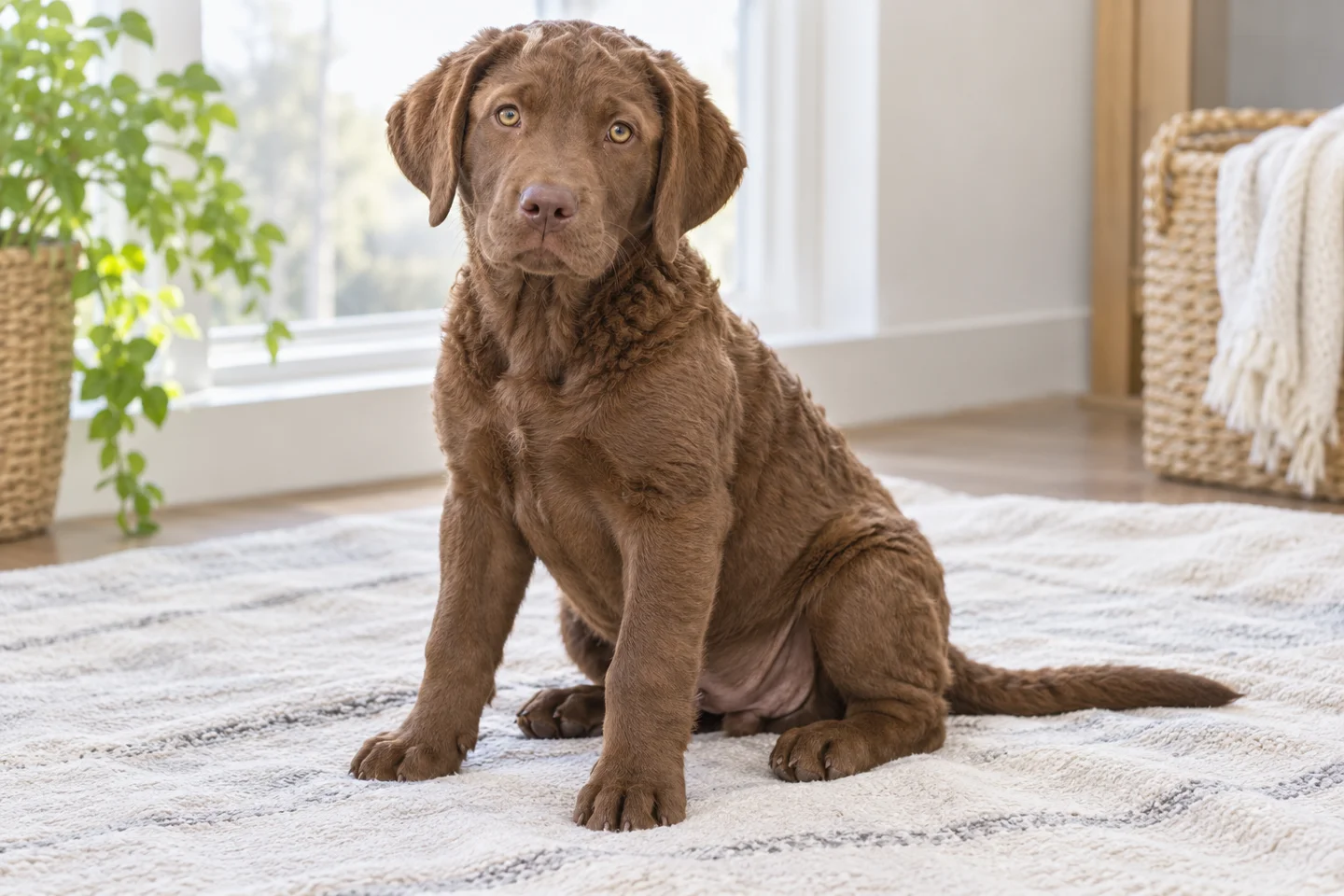
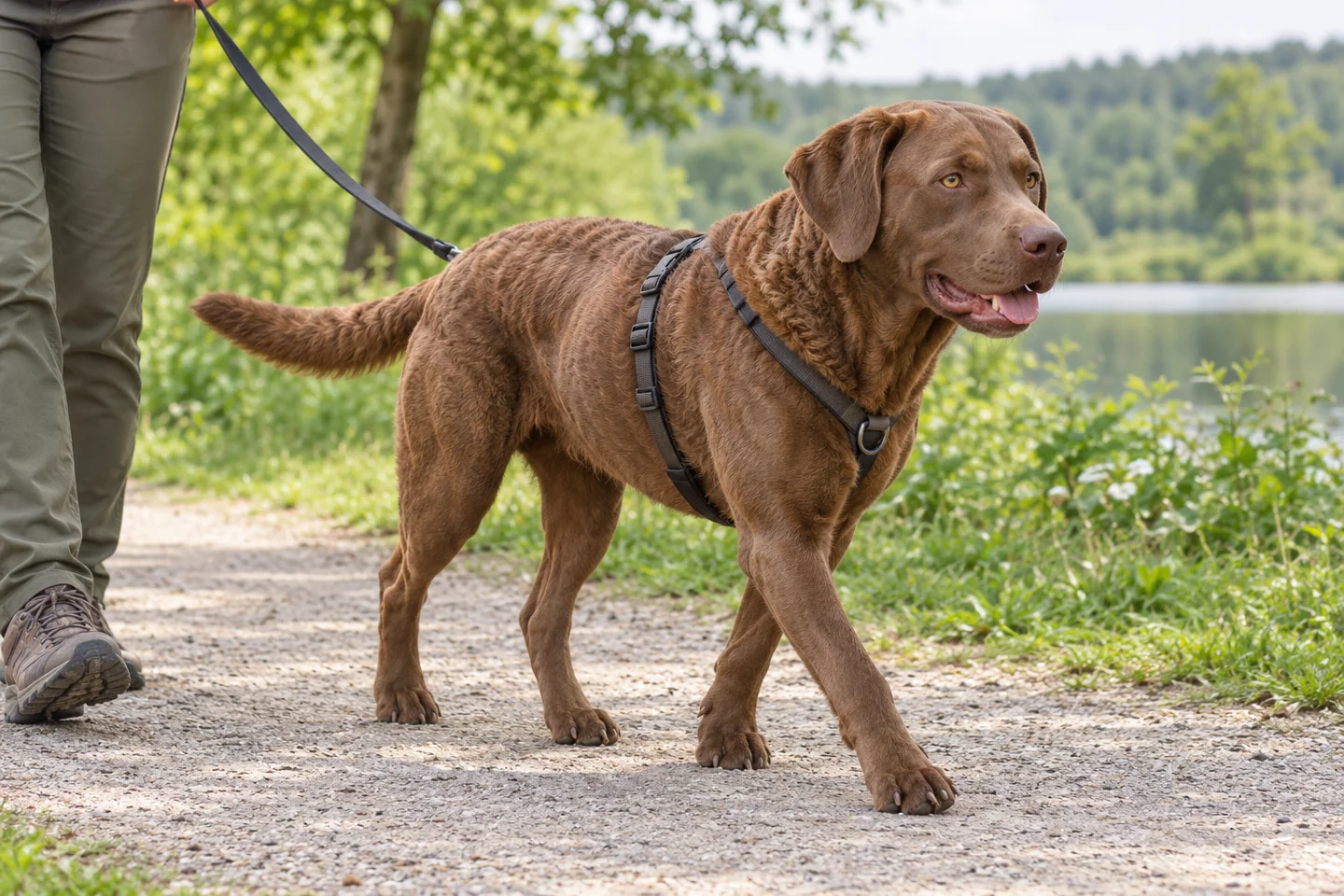
The illustrations show solid medium brown, amber-toned eyes, hanging ears, and a full tail. The characteristic short double coat has waves on the neck, shoulders, back, and loin, with smoother hair on the face and legs. It should not be interpreted as a coat of curls covering the entire dog. Other accepted colors include sedge and deadgrass. Pictures cannot assess the condition beneath the coat or establish pedigree. In person, watch the dog walk and turn, then ask about stiffness, injuries, or reluctance to jump into the vehicle. Plan restraint equipment and a bed around its actual measurements. A practical adult frame matters more than selecting for maximum bulk or a particular shade of brown.
Training attention before adding distance and excitement
Teach the dog to turn toward you, follow a target, and move to a resting place before asking for those behaviors around major distractions. Keep the first lessons quiet and brief, with rewards the individual values. Repetition should create understanding rather than simply continue until the dog becomes tired. If a task keeps failing, reduce its difficulty and examine what the dog can actually see and hear.
A reliable turn and recall need practice in several manageable settings. Begin in secure spaces, then gradually add distractions while maintaining appropriate control. Do not treat successful garden recall as proof that the dog can be released beside wildlife or water. A long line can assist some lessons where it can be handled without snagging or entanglement. Ask for practical coaching if needed. Reward based methods allow owners to build cooperation without making the handler's approach threatening. Keep notes about difficult situations and choose the next lesson accordingly. An intelligent dog still requires clear information, suitable conditions, and enough practice to understand what the owner means.
Retrieving should include a willing exchange
Teach carrying and release as separate skills before creating a long exciting retrieve. Use an object suitable for the dog's mouth and supervise access. Reward bringing the item toward you and exchanging it voluntarily. You can often return an appropriate toy after the exchange, so giving it up does not always end enjoyment. Keep sessions short enough to preserve comfortable movement and attention.
If the dog starts holding objects away from people, avoid turning the situation into a chase. Restrict access to unsuitable items and practice with low-value safe objects in an easier setting. A professional can help if guarding develops. Do not repeatedly put a hand into the mouth to demonstrate ownership. Suspected swallowing of an object, choking, or a lodged item requires prompt veterinary advice. With other dogs present, put retrieving equipment away until you know how each responds to competition. Two dogs that walk comfortably together may have very different opinions about a floating toy. Arrange games around the individuals rather than assuming retrieving always creates a friendly shared activity.
Exercise on dry days and demanding terrain
A balanced routine can include walks, safe searching tasks, skill practice, and opportunities for quiet investigation. Adjust activity to age, physical condition, and experience. A puppy needs time to develop without being pushed to match a fit adult's workload. Ask your veterinarian about the progression for sustained running, repeated jumps, or more demanding sport. Observe recovery later in the day and the next morning, when discomfort may become clearer.
Choose surfaces and routes deliberately. Repetitive turns on slippery flooring, sharp shoreline material, or long descents can add demands that enthusiasm hides. Inspect paws after rough outings and seek advice about persistent lameness. In hot weather, shorten activity, carry water, use shade, and select a route with an easy exit. A dog interested in retrieving may continue offering effort when conditions have become unsuitable. The handler must end the activity before that becomes a crisis. Weakness, confusion, collapse, or breathing distress warrants urgent veterinary contact. Suitable exercise supports comfortable rest afterwards and should not depend entirely on increasing excitement or throwing distance.
Water access requires a separate safety decision
Assess every water location before allowing access. Check entry and exit points, current, weather, debris, and the presence of boats or other users. A retriever's history does not tell you whether a particular dog can cope with this situation. Begin any appropriate water preparation under experienced guidance, giving the dog time to learn rather than throwing it in or forcing an entry.
Keep control where conditions are uncertain and choose another activity when a safe exit cannot be assured. Ask a suitably qualified professional about equipment and preparation for any planned boating or water sport. Never use an AI image or a confident swimming episode elsewhere as evidence of readiness. After an outing, look for injuries, discomfort, or an unusual change in behavior. Contact a veterinarian promptly if the dog struggles to breathe, collapses, or appears unwell after an incident. Tell the clinic what happened and follow its instructions. The safest decision may be staying on land that day. Access to water is an optional activity, while protecting the dog's welfare is an ongoing responsibility.
Socialization and a workable visitor routine
Prepare a puppy for ordinary observations in small steps. Watching a person unload a car from a comfortable distance can be useful without immediate greeting. Ask the veterinarian how to balance local infection precautions with early experiences. Introduce traffic, equipment, household noises, and different surfaces gradually, ending before the dog becomes overwhelmed.
At home, teach a clear routine for visitors. The dog can wait in a comfortable separate space while someone enters, then join only if the situation is suitable. Guests should avoid leaning over it, reaching for objects, or trying to win affection through persistent touching. An adult with limited experience may need more time to understand domestic arrivals. Record which arrangements help it settle and which create tension. Socialization continues as a dog matures and circumstances change. A relaxed encounter with one visitor does not establish comfort with a noisy group carrying bags. Reliable management creates space for learning and allows owners to welcome people without making the dog negotiate every arrival directly.
Aggression and resource concerns need early help
If the dog freezes over a toy, growls when moved from a bed, or snaps during handling, write down the sequence and prevent another occurrence. The immediate question is how to make the situation safe, followed by why it happened. Avoid repeated tests, confrontational restraint, or punishment intended to prove that the person controls the resource. Such actions can make the next encounter more dangerous.
Arrange a veterinary assessment for new or escalating behavior, particularly when touch, activity, or rest is involved. Pain and medical conditions may need investigation alongside the dog's learning history. A qualified behavior professional can help plan exchanges, visitor management, and gradual handling lessons. Be candid about bites and near misses so advice matches the actual risk. A retriever label does not make warning signs less significant, and guarding should not be praised as evidence of devotion. Give carers clear instructions about meals, resting areas, and objects. Management that works before an incident is usually easier to maintain than an urgent rule invented while people are already upset.
Children and other pets need their own arrangements
Keep vigorous games and retrieves separate from young children until adults have established a manageable routine. A large excited dog can cause injury by collision or by grabbing at something a child carries. Adults should handle leads, valuable items, and food. Provide a resting space children do not enter, and separate the dog comfortably before noisy visiting play begins.
For other dogs, start with controlled movement in an open setting where both handlers can create distance. Leave toys out of the first encounter and watch whether each dog can pause and turn away. At home, use separate meals and rest areas while learning about compatibility. Cats require protected spaces and gradual supervised exposure, with pursuit prevented rather than repeatedly interrupted after it begins. Small mammals and birds need secure separation. A dog's response to one familiar animal does not predict every encounter with another. Plan around the individuals involved, and obtain advice if tension develops. Neither shared retriever ancestry nor an affectionate family reputation establishes that all forms of contact will be comfortable.
Grooming a short double coat after outdoor life
The Chesapeake's coat texture is a breed feature, but routine maintenance should serve comfort and healthy skin. Ask a groomer or experienced source to demonstrate suitable brushing and explain how to manage shedding on this individual. Check beneath the outer coat rather than judging only the smooth surface. Equipment areas, feet, the underside, and places that stayed wet deserve attention after outings.
Bathe when necessary using appropriate products and professional advice about frequency. A historical description of coat oils should not become a rule to ignore dirt, skin disease, or an unpleasant change in smell. Conversely, repeated bathing with unsuitable products can create its own difficulties. Record products and timing if irritation follows washing. Avoid painful pulling at debris or mats and seek help for embedded material or sore skin. Nail care should be introduced with rewards and a stable surface before trimming becomes urgent. Comfortable grooming also gives you repeated opportunities to notice changes in weight, muscle, posture, and willingness to be touched, which may otherwise be hidden during busy weeks.
Ear care and an emergency plan that travels
Observe ears regularly, especially when the dog has been wet or has moved through rough vegetation. An unusual smell, redness, discharge, head shaking, or pain needs assessment. Ask your veterinarian which cleaning approach is suitable. Do not insert swabs deeply, pour unapproved substances into the canal, or reuse medication from an earlier episode without advice. Similar-looking symptoms can require different treatment.
Keep veterinary contact details accessible when traveling and identify where urgent care is available near a planned outing. Arrange transport restraint and loading that work if the dog becomes tired or injured. A dog used to jumping into a vehicle may need a different arrangement during recovery. Ask the clinic how to assist safely rather than improvising a painful lift. Severe injury, breathing difficulty, collapse, suspected poisoning, or repeated unsuccessful retching needs urgent contact. Provide a concise account of recent exercise, water exposure, possible ingestion, and medication. That history helps the team decide what to ask next and how to prepare for arrival.
Health screening includes examinations and specific DNA tests
The AKC's national breed-club recommendations list hip and elbow evaluations, an ophthalmologist evaluation, and DNA tests for the common degenerative myelopathy variant, PRA-prcd, and exercise-induced collapse. Ask to see the actual records with the correct dog identities. Discuss what each result covers and how it affects a proposed mating or an individual dog's care. A DNA panel and a clinical eye examination provide different information.
Avoid interpreting one genetic result as a complete prediction of future illness or exercise capacity. A veterinarian or appropriately qualified genetics professional can explain the relevant variant and the limits of interpretation. Family history and clinical findings still matter. For an adult, request previous treatment records, including mobility concerns, eye problems, episodes of collapse, and medication. Report unusual fatigue or changes in coordination rather than assuming that a fit-looking dog is simply distracted. Screening reduces some uncertainty; it does not remove the need for routine examinations or timely investigation. A responsible source should discuss both available results and important information that remains unknown.
Feeding and mixes need individual evidence
Choose a complete life-stage diet, measure the food, and count rewards and chews within the daily total. Requirements may change between an active period and a quiet month. Ask the veterinary team to show you how to assess condition and muscle, then review portions when activity, weight, or health changes. Persistent digestive problems or appetite changes need investigation rather than an endless sequence of food substitutions.
A Chesapeake mix may develop a different coat, adult size, or response to strangers from either parent. Ask how parentage was established and which health information is available. A mixed pedigree does not automatically remove inherited concerns, and a brown coat alone does not identify a precise cross. Foster observations can be valuable when ancestry is uncertain. Request concrete details about handling, visitors, objects, other animals, and settling indoors. Plan grooming, training, and equipment around the actual dog while allowing for change in a youngster. Avoid selecting a mix on a promise that it combines only the easiest traits of both named breeds.
Costs, sourcing, and realistic suitability
Budget for food, preventive care, appropriate restraint and outdoor equipment, training, grooming help where needed, and a plan for unexpected treatment. Check local services and prices rather than relying on one universal ownership figure. Ask possible carers whether they can manage this particular dog's activity, object habits, and visitor responses. Arrange introductory visits well before a holiday creates a deadline.
A responsible breeder or rescue should ask detailed questions about the proposed home and explain why an individual may fit it. Request medical and screening records, a clear account of early experiences, and written terms about ongoing support. Be honest about time alone, other animals, access to secure areas, and your intended activities. A small well-managed home with a committed routine can offer more useful care than extensive land with little supervision, but the actual circumstances need evaluation. Resolve important gaps before committing. The aim is a dog whose needs the household can meet consistently, including muddy days, travel disruptions, and periods when the usual handler needs help.
dogsDating should match walking styles and limits
Describe what your dog currently enjoys in its dogsDating profile. Mention whether it prefers steady walks, needs space around unfamiliar dogs, or should meet without retrieve toys. State relevant resource or handling concerns directly. Other owners need enough information to choose an appropriate setting and decide whether a meeting makes sense.
Keep exact home coordinates private and use an approximate location for discovery. Choose a public route with generous room and an easy exit, with each handler responsible for their own dog. Begin with parallel movement at a suitable distance and let the first meeting remain a walk. Avoid shared food, balls, and water retrieves. If either dog becomes stiff, persistently crowds the other, or struggles to disengage, increase distance and finish. A second visit is a choice to make from observed behavior, not an obligation. The three illustrations accompanying this guide are labeled AI-generated illustrations. They show selected Chesapeake characteristics and cannot document a member's dog, prove swimming ability, certify health, or establish compatibility.
Sources and editorial notes
Sources checked October 21, 2026. Breed measurements describe reference ranges, not a diagnosis or an individual dog's ideal weight. Images are AI-generated breed illustrations and do not document a particular dog or health condition.
- AVSAB: Humane Dog Training Position Statement
- VCA Animal Hospitals: Food aggression in puppies
- VCA Animal Hospitals: Aggression toward unfamiliar dogs, diagnosis
- VCA Animal Hospitals: Heat stroke in dogs
- VCA Animal Hospitals: Common emergencies in dogs
- VCA Animal Hospitals: Grooming and coat care for your dog
- VCA Animal Hospitals: Ear infections in dogs
- VCA Animal Hospitals: Feeding guidelines for dogs
- Orthopedic Foundation for Animals: CHIC program and interpretation of numbers
- Fédération Cynologique Internationale: Chesapeake Bay Retriever breed standard
- American Kennel Club: National breed-club sporting group health testing recommendations
Keep getting to know dogs.
Read another guide or return to your dogsDating community.
Explore breed guidesBack to dogsDating