German Shorthaired Pointer
A versatile German gundog whose field instincts, athletic build, and close partnership with a handler need a workable daily outlet.
How these guides are researched and reviewed

- Origin
- Germany
- Adult male height
- 62–66 cm
- Adult female height
- 58–63 cm
- Coat
- Short, dense; several brown, black, and white combinations
General information for owners. These articles have not been reviewed by a veterinarian. Medical decisions need your dog's history and an examination.
What the name describes
The German Shorthaired Pointer, also called Deutsch Kurzhaar, is a German pointing dog developed for versatile hunting work. The FCI history identifies the breed's stud book from 1897 as an important point in its formal development. A short coat gives a convenient visual description, but the dog was selected for tasks that include finding game and cooperating with a handler. A prospective home should understand that purpose before deciding that an athletic outline and easy brushing will make everyday life straightforward.
Meet adults from the source you are considering and ask what they do on a normal weekday. A dog that looks focused in a field demonstration may have needed substantial teaching to rest in a house, travel quietly, and leave wildlife alone on a public path. Ask about those transitions directly. The useful question is how this particular dog fits the available routine, including days when work overruns or weather restricts an outing. Admiration for hunting ability cannot replace a care arrangement that functions through the rest of the week.
Adult size and coat identification
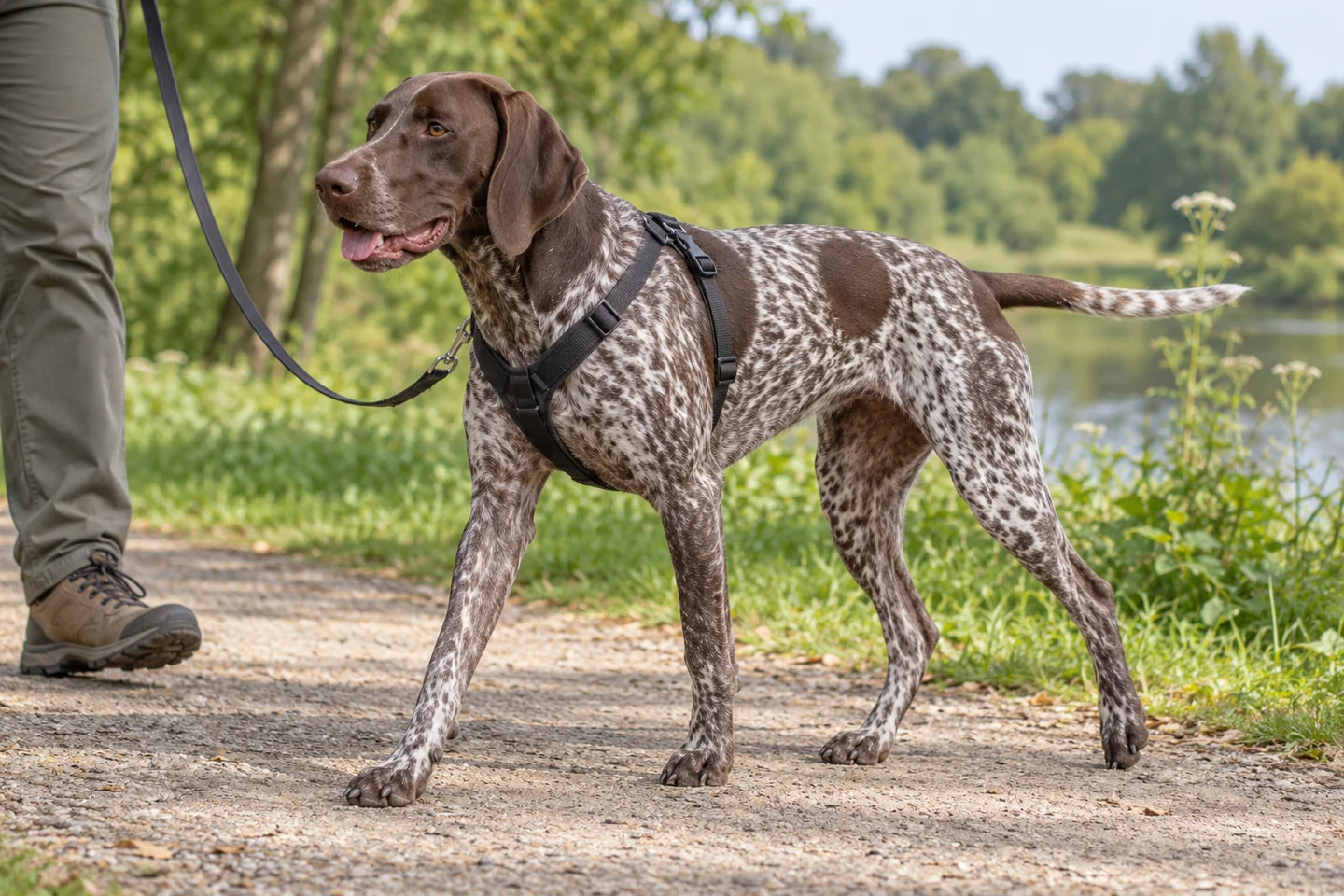
The FCI standard specifies males at 62–66 cm at the withers and females at 58–63 cm. It describes a balanced hunting dog with a short, dense coat and several permitted color arrangements. The illustrations use liver roan, natural ears, and a full tail. A photograph cannot prove a pedigree or predict the adult dimensions of a puppy, and coat pattern cannot tell an owner whether a dog will be comfortable with children or another pet.
Plan equipment and transport around the actual animal. Check the space available when the dog stands and turns in a vehicle restraint or suitable crate. A collar that fitted a growing youngster last month may need adjustment, while a harness should allow comfortable movement without rubbing. Assess weight with veterinary guidance and body condition rather than a target borrowed from an unrelated adult. When discussing a purchase or adoption, ask about expected size using documented relatives while preserving the uncertainty inherent in growth.
Reading attention in a hunting breed
A German Shorthaired Pointer may become absorbed by a scent line or the movement of a bird before a person notices the change. Learn the early signs in your own dog: a shift in pace, a fixed orientation, or difficulty turning back toward you. That is the useful moment to make space and reward a response. Waiting until the dog has committed to running makes the task harder and increases the chance that the cue will be ignored.
Give the animal acceptable ways to use its nose. Simple searches in a secure area, a thoughtfully planned walk, and training that rewards checking in can all fit a companion's life. If hunting or a field activity is planned, work with someone who uses humane methods and understands local access rules. Teach the controls needed for the setting before increasing freedom. A history of returning on a quiet lawn does not establish that recall will work when a hare appears beside a road.
Training recall without gambling on it
Start close enough that responding is easy, reward generously, and release the dog to safe exploration again when appropriate. A recall that always ends every interesting activity has a predictable cost to the learner. Practise in varied secure places before asking for more difficulty, and avoid repeating the word while the animal is already unable to respond. Keep a record of the distractions that change success so the next session can be adjusted sensibly.
Use physical management while learning develops. Choose secure exercise areas or an appropriately handled long line where conditions allow it, taking account of tangling, wildlife, and other people. Off-lead access is a decision about the dog and the location, not a reward due at a particular age. AVSAB recommends reward-based methods; fear and pain are poor foundations for a reliable working relationship. If the training provider proposes suppressing all warning signals or punishing a frightened response, seek an approach that addresses the reason for the behavior.
Exercise and the work of recovering afterward
An exercise plan should contain more than distance. Include time to investigate scent, deliberate practice with the handler, suitable free movement where safe, and rest. The balance changes with age, health, conditioning, and daily demands. A young dog should not be expected to match an experienced adult's outing simply because it tries to follow. Discuss structured sport or an increase in strenuous work with the veterinary team, particularly during growth or after illness.
Watch what happens after the activity as well as during it. Persistent agitation may call for a different routine and professional assessment rather than another round of intense running. Teach a calm arrival home, provide a comfortable quiet place, and make the end of a game predictable. On warm days, adjust route and timing, carry water, and pay attention to signs of overheating. Excitement can keep an animal moving when stopping is the safer choice, so the handler must make that decision.
Building everyday social confidence
Socialization includes learning to watch unfamiliar things without having to approach them. A puppy can observe a bicycle or a person with walking sticks at a comfortable distance, receive a reward, and move on. That may be a more useful lesson than a close encounter in which escape is impossible. Keep experiences brief enough for recovery and vary only one difficulty at a time when the animal is uncertain.
For an adult, begin with what is observable now. Ask about previous living arrangements, travel, separation, and interactions with different people, but do not invent a history to explain every reaction. Record the circumstances in which the dog copes and those in which it struggles. Practise care handling apart from busy outings, and build time alone gradually. A companion dog is not a treatment for separation distress. If departures cause sustained panic or unsafe attempts to escape, obtain veterinary and behavior help and arrange care the dog can currently tolerate.

Children, visitors, and running games
A fast, excited pointer can collide with a child without intending to cause harm. Arrange enough space and adult control that a child's running or squealing does not start a chase through the room. Teach a station away from the entrance before visitors arrive, and use barriers while that skill develops. A dog that can rest behind a gate should have a comfortable setup with water and suitable distance from noise, rather than being left to watch frustrating activity continuously.
Children need clear boundaries around food, sleep, and the dog's body. They should not climb on, restrain, corner, or remove possessions from the animal. An adult must watch and intervene before the interaction becomes uncomfortable. If close supervision is not possible, separate safely. Review the specific history of any dog joining a household with children, including snaps or bites and their circumstances. A friendly approach to adults during a meeting cannot answer every question about life with a toddler or a busy group of visiting friends.
Other animals and the pursuit question
Pointing and chasing are not the same behavior, but an owner must manage access to vulnerable animals regardless of which action appears first. A dog that watches a household cat quietly may respond differently when the cat runs outdoors. Protect small pets with reliable physical separation and avoid testing control by allowing a close encounter. Ask the source what the dog has actually lived with, under what management, and for how long.
For dog introductions, choose companions with compatible activity and opportunities to pause. Some individuals enjoy an energetic chase game, while others become uncomfortable when repeatedly pursued. Watch both participants and interrupt before one has to escalate to obtain space. Walks with room to move apart can offer a useful starting point. In the home, separate meals and valued items during adjustment. Familiarity outdoors does not establish comfort around a narrow doorway, a resting person, or a toy carried into a shared bed.
Aggression and a change in familiar behavior
Keep the description of a threatening incident factual. Note the distance, the people and animals present, any food or object involved, and whether the dog could move away. A stiff response during paw handling needs a different immediate arrangement from conflict over access to a resting place. A breed's reputation for sociability should not erase these details. Protect those involved while a professional assesses what the behavior means and what management is required.
A sudden handling problem warrants veterinary attention because discomfort can alter responses. Tell the clinic before arrival so the examination can be planned safely. Do not punish a warning or recreate the trigger repeatedly for an audience. Prevent access to the difficult situation and work with a qualified professional using humane methods. When passing the dog to a carer, provide a clear account of incidents and the current plan. Omitting an event because it happened only once removes information the next person may need to prevent repetition.
Grooming that follows a field outing
The coat usually avoids the extensive detangling associated with long feathering, but the skin and feet still need attention. After vegetation or rough ground, inspect the visible coat and paws gently. Introduce this routine with rewards before an urgent check is needed. If the dog repeatedly licks one place, develops swelling, or resists touch, ask for veterinary advice rather than digging into the skin with household tools.
Keep nail care and toothbrushing in the schedule, using a gradual handling plan. Observe the ears for discharge, odor, head shaking, or pain and seek a diagnosis when these signs occur. Avoid deep cleaning or reusing medicine prescribed for a different episode. Baths should use suitable products and instructions, with attention to drying and the dog's comfort. Tell a groomer or veterinary team about past difficulty with handling when booking, so they can provide time and an appropriate plan instead of discovering the issue during restraint.
Health screening specific to the German Shorthaired Pointer
The AKC's breed recommendations list hip evaluation, elbow evaluation, cardiac examination, ophthalmologist evaluation, and a DNA test for cone degeneration in the German Shorthaired Pointer. Ask to see the actual results with identifiers and dates. Check which exact condition a DNA result addresses rather than assuming that an eye-related genetic test covers all eye disease. Discuss interpretation with a veterinarian or the relevant health program when deciding what the evidence means for a litter or an individual dog.
Health records should extend beyond a set of certificates. Ask about significant illness in relatives, previous orthopedic problems, and whether the source receives updates from owners over time. A normal screening result does not eliminate future disease, and a broad commercial panel cannot replace an examination. With an adopted adult, record missing information honestly and establish a plan based on current findings. Avoid converting the absence of a recorded diagnosis into proof that the family has no health concerns; limited reporting and confirmed normal results are different kinds of evidence.
Food, body condition, and urgent decisions
Choose a complete food suited to the dog's life stage and needs, then adjust the measured allowance through body condition and veterinary advice. Include food used during training, retrieving practice, or medication. A working period and a restricted recovery period may need different portions, but abrupt changes should be discussed if health concerns are present. Feeding separately also lets the owner see what was eaten instead of assuming an empty shared bowl belongs to the intended dog.
Know where to obtain urgent help and keep contact information available to carers. Repeated unproductive retching, sudden abdominal enlargement, collapse, breathing difficulty, or other severe changes require prompt veterinary attention. Do not wait for a usual meal or walk to see whether the animal returns to normal. Tell the clinic what happened and when, along with any possible access to medicines, waste, or other hazards. Planning a safe route to care is part of ownership, particularly when an outing takes the dog away from familiar facilities.
Choosing activities without creating constant demands
Retrieving games can develop cooperation when they include pauses, a clear finish, and an exchange the dog understands. Begin with suitable objects and a quiet setting. If the animal races away with the item, simplify the task rather than turning every return into a pursuit by the owner. Teach that approaching a person can lead to another enjoyable opportunity. Keep valued equipment away from visiting dogs while these habits are still developing.
Choose organized activities for the present animal, including its physical condition and response to the environment. A class with crowded entrances or prolonged waiting may need adjustments even when the central task is appealing. Speak to the instructor before attending and ask how breaks and space are managed. If the dog cannot recover between turns, shorten the visit and review the plan. The purpose is a sustainable shared activity, not accumulating commitments that leave the animal tired, overstimulated, or unable to rest through an ordinary evening.
Mixes and the practical cost of the choice
A German Shorthaired Pointer mix can inherit a wide range of size, coat, and behavioral traits. A cross with another active breed does not provide a reliable arithmetic average, and a name cannot establish health. Request relevant parent information where available and evaluate the adult dog's behavior directly. Be cautious about promises that a particular mix will remove pursuit, provide automatic recall, or require little training while retaining all the desired athletic ability.
Cost planning should include reliable care, transport, appropriate equipment, training support, preventive health work, and emergencies. Ask a potential carer to practise the actual routine rather than confirming availability in principle. A large garden can offer useful space but does not supply supervision, company, or training. Discuss your work schedule, local access, and other animals candidly with the source. Those details help identify a workable match and the support it needs before the first difficult week tests an optimistic assumption.
Wet weather and the trip home
Practise toweling and waiting at the car on a dry day. A muddy pointer returning from an exciting route may find it difficult to stand still while a person searches for equipment. Keep the towel, water, spare restraint, and any required medication in a predictable place. Teach each part of the return separately so that cleaning feet does not become a wrestling match beside moving traffic. Check that a resting vehicle remains at a safe temperature throughout the stop.
At home, give the dog a clear route to its resting space after the necessary checks. If there are other animals, prevent a rush into their beds while the returning dog is still excited. Record any change in gait or persistent licking noticed during cleanup and discuss it with the veterinarian when appropriate. The routine provides a useful opportunity to observe the animal at the end of exertion, when a concern may be easier to notice than during the activity itself.
dogsDating introductions and private location
Use dogsDating to describe known preferences and limits, such as enjoying parallel walks while finding close restraint difficult. Include relevant incidents and current professional advice so another handler can plan responsibly. Keep exact home coordinates private. Select a public meeting route with room for separate movement and a straightforward exit, and agree in advance that either person can stop the encounter without needing to justify a dog's discomfort.
Start with space and observation. Leave shared toys and food out of the meeting and avoid allowing one dog to pursue the other repeatedly. Pause if a participant cannot disengage or seek distance. A calm first walk can be enough, with closer contact considered only when both animals remain comfortable. The success belongs to that particular meeting under those conditions. It does not prove that the dogs can share a household or that they are suitable breeding partners, which requires separate decisions and appropriate health evidence.
Sources and editorial notes
Sources checked October 21, 2026. Breed measurements describe reference ranges, not a diagnosis or an individual dog's ideal weight. Images are AI-generated breed illustrations and do not document a particular dog or health condition.
- VCA Animal Hospitals: Grooming and coat care for your dog
- VCA Animal Hospitals: Ear infections in dogs
- VCA Animal Hospitals: Common emergencies in dogs
- VCA Animal Hospitals: Food aggression in puppies
- VCA Animal Hospitals: Heat stroke in dogs
- VCA Animal Hospitals: Aggression toward unfamiliar dogs, diagnosis
- AAHA: Feeding plans for healthy, appropriate weight cats and dogs
- Orthopedic Foundation for Animals: CHIC health screening programs
- AVSAB: Humane Dog Training Position Statement
- FCI: German Shorthaired Pointer official breed standard
- AKC: Sporting Group Health Testing Requirements
Keep getting to know dogs.
Read another guide or return to your dogsDating community.
Explore breed guidesBack to dogsDating