Labrador Retriever
A strong, sociable retriever whose food interest, enthusiasm, and need for steady training shape everyday care.
How these guides are researched and reviewed

- Adult weight
- About 55–80 lb
- Coat
- Short, dense double coat
- Colors
- Black, yellow, chocolate
General information for owners. These articles have not been reviewed by a veterinarian. Medical decisions need your dog's history and an examination.
Is a Labrador Retriever a good fit for your home?
A Labrador Retriever often wants to join whatever is happening: a walk, a kitchen chore, a visitor's arrival, or a quiet evening beside the sofa. That interest can make daily life enjoyable. It also means the household needs a plan for a strong dog who may greet people enthusiastically, carry objects around, and take considerable interest in food.
A Lab's reputation as a family dog does not replace an individual assessment. Ask how this dog behaves around children, unfamiliar dogs, meals, handling, and time alone. A settled adult with a known foster history may suit a household very differently from an adolescent who has had little training. Neither coat color nor a pleasant photograph answers those questions.
Before choosing a Labrador, picture an ordinary workday. Decide who will provide toilet breaks, exercise, feeding, training, and company. Include rainy mornings and days when someone is ill. A realistic routine gives you a better starting point than a list of activities you hope to do occasionally. The dog needs a workable home throughout the week.
Origins and retrieving work
The Labrador's history includes working water dogs in Newfoundland and later development in Britain. Retrieving required cooperation with people and an interest in carrying objects. The American Kennel Club classifies the Labrador as a sporting dog. Many modern Labs still enjoy searching, retrieving, swimming, and learning tasks alongside a handler.
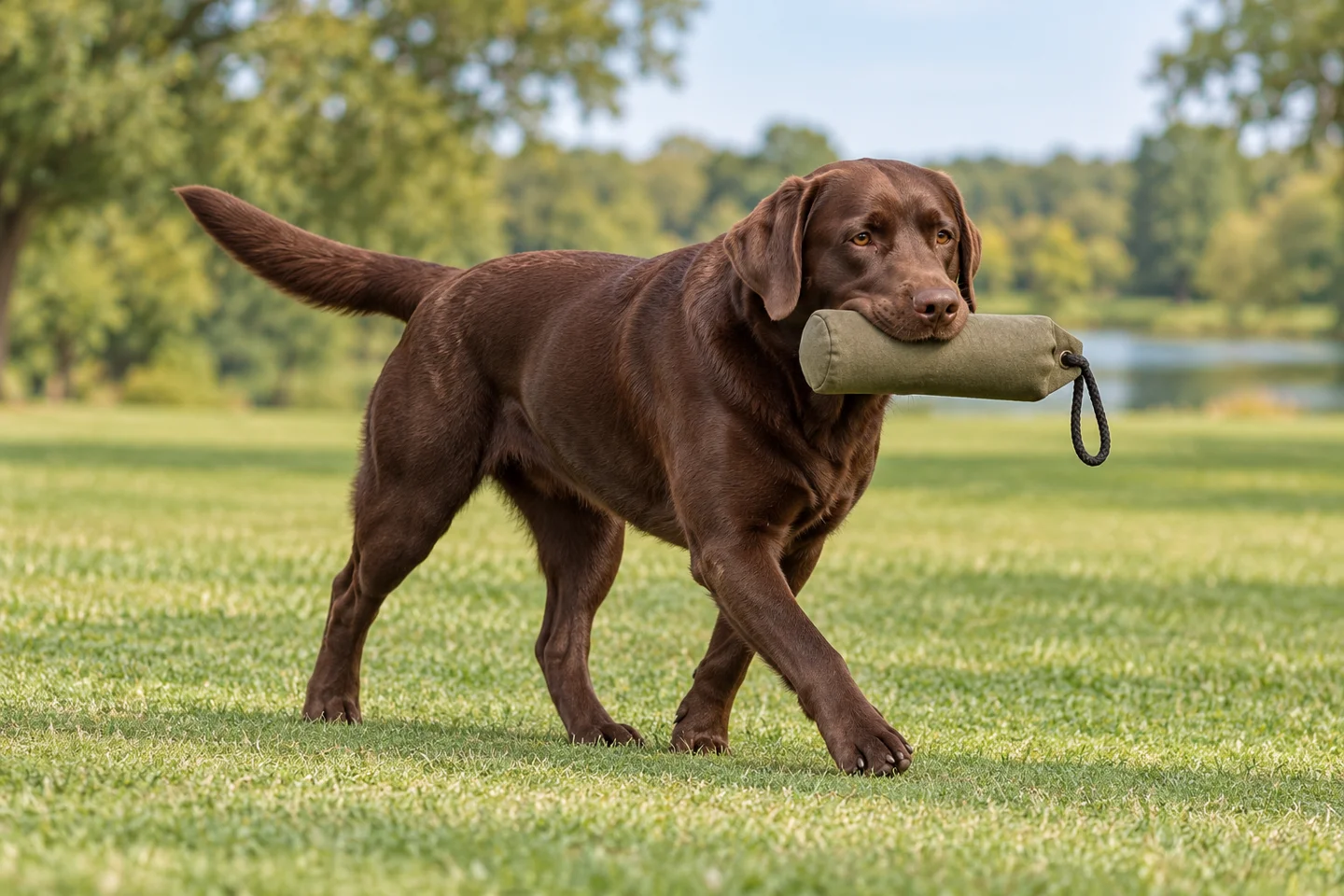
Give those interests suitable outlets. Teach the dog to bring a soft toy, find a hidden retrieving dummy, or wait while you place an object for a search. A thoughtful retrieving game includes pauses and a clear finish. Throwing a ball until the dog is exhausted teaches a different routine and may make stopping harder.
People sometimes use English and American Labrador as shorthand for show and field breeding. Ask what a breeder means by those terms. They do not create a dependable division between quiet pets and energetic workers. Meet adult relatives when possible and discuss ordinary behavior, recovery after excitement, and the work expected from that family of dogs. Choose the individual and breeding goals that fit your circumstances.
Size, coat, and color
The AKC describes adult males at roughly 65 to 80 pounds and females at roughly 55 to 70 pounds. Its height ranges are 22.5 to 24.5 inches for males and 21.5 to 23.5 inches for females. These are breed reference ranges. Your dog's healthy weight depends on frame and body condition, which your veterinarian can assess.
The short double coat can be black, yellow, or chocolate. A broad head and thick tail are familiar features, but appearance alone cannot prove ancestry or establish health. Color should not decide whether a puppy is expected to be calm, intelligent, aggressive, or suitable for a child. Ask about observed behavior and verified health information.
Short hair still sheds. Plan for regular brushing, cleaning bedding, and drying a wet dog before it settles on furniture. Buy equipment for fit and function rather than for a breed label on the packaging. A harness should allow comfortable movement without rubbing, and a vehicle restraint or travel crate should accommodate the adult dog safely. Recheck fit during growth and after weight changes.
Everyday temperament and settling at home
Many Labs are sociable and responsive to rewards. An excited young dog may also jump on visitors, grab a sleeve, or raid an accessible counter. These behaviors need management and teaching. Repeating the same unwanted event gives the dog more practice, even when people respond by shouting afterward.
Arrange the room before the visitor enters. A gate, a suitable chew, and a comfortable resting place can make a greeting manageable. Reward the dog for keeping its paws down or moving to a mat. Practice when the household is quiet so that the first lesson does not happen during a party.
Teach periods of independence gradually. Leave the dog with an appropriate activity while you move a short distance away, then build from success. If the dog panics, injures itself, or cannot relax during separation, discuss the problem with a veterinarian and a qualified behavior professional. A longer confinement period does not itself teach a distressed animal to feel safe. Record when the distress occurs and what the dog does.
Aggression, resource guarding, and bite prevention
A Labrador can bite, including a Labrador who is usually friendly. Watch the circumstances around an interaction. Pain, fear, conflict over a valued object, and difficulty escaping can affect a dog's response. Never assume a breed reputation makes it acceptable to disturb sleep, grab a meal, or allow rough handling.
Resource guarding may involve food, toys, stolen items, or a resting place. Freezing over an object, staring, or growling should prompt more space and a safer arrangement. Avoid reaching into the dog's mouth to prove that it permits handling. Prevent access to dangerous objects, feed animals separately, and keep children away from chews and meals.
Seek professional help for guarding, repeated snapping, a bite, or behavior that is difficult to manage safely. Start with a veterinary assessment when behavior changes or pain may be involved. Keep an accurate account of the event, including what happened immediately before it. Do not stage a repeat encounter to see whether the dog means it. Barriers and distance can protect everyone while a plan is developed.
Children, cats, and other dogs
A Lab may enjoy family activity while still finding a child's running, shouting, or hugging uncomfortable. Large dogs can knock children over without intending harm. Adults should supervise actively, interrupt unsuitable play, and give the dog somewhere to rest without being followed. A sleeping animal does not need to tolerate being climbed on.
Teach children to invite contact and accept a refusal. If the dog moves away, let it leave. Keep children's snacks separate from the dog's meals and reward calm behavior around the table. When an adult cannot pay attention, use a suitable physical barrier rather than expecting the child to manage the interaction.
For cats, provide escape routes and separate resources. Stop chasing from becoming a repeated game. For dogs, begin with enough space for both animals to remain comfortable. A Labrador who likes familiar companions may dislike crowded greetings or rough wrestling. Sharing a home also introduces food, beds, doorways, and human attention, so a pleasant first walk is only the beginning of a careful introduction.
Training useful skills
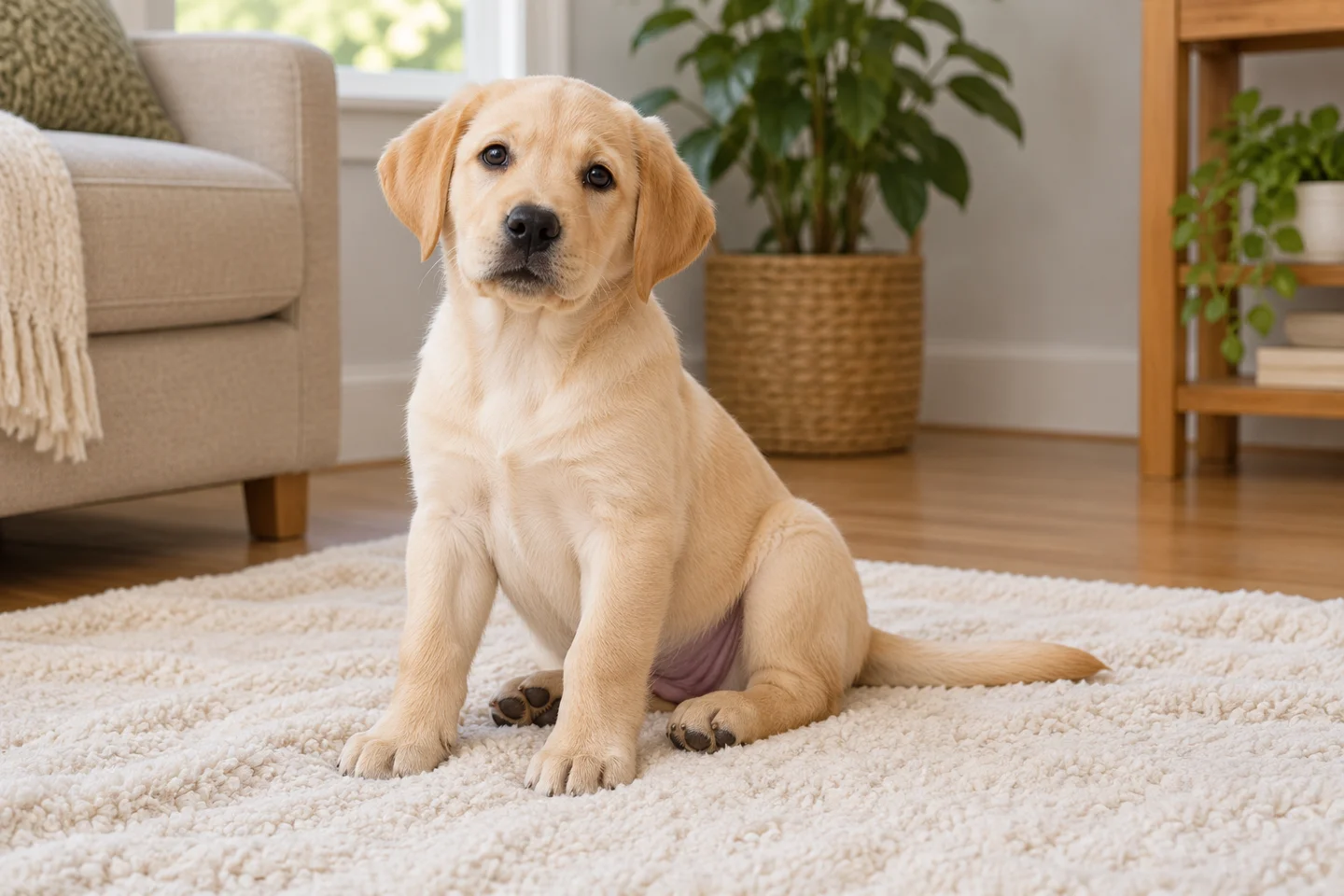
Reward-based training gives a Lab clear information about what works. The American Veterinary Society of Animal Behavior recommends this approach. Useful household skills include a recall, loose-leash walking, waiting at a doorway, leaving an item, exchanging objects, and settling while people are busy. Teach one manageable version before adding distractions.
Use some of the dog's normal food allowance for practice if the diet permits it. Measure rewards so several family members do not unintentionally add a large amount of food. A toy or permission to sniff can also reward behavior. Notice what the particular dog values in the situation rather than assuming every Lab will work for the same thing.
Practice giving an object back in safe circumstances. Offer a suitable reward, let the dog release, and sometimes return the original toy. This can make exchanging more predictable. If the dog already guards, obtain individual advice instead of conducting repeated tests. Training should reduce conflict. Physical confrontations can create fear and place hands close to a worried dog's mouth.
Exercise without creating constant excitement
A Labrador needs regular opportunities to move, explore, and engage with people. The amount and intensity depend on age, health, fitness, weather, and the dog itself. A slow walk with sniffing serves a different purpose from running beside a bicycle or making repeated sharp turns during fetch.
For a puppy, ask your veterinarian about activity during growth. Choose comfortable movement and allow rest. Avoid forcing distance or speed simply because the puppy keeps trying to follow you. An adult returning from an inactive period also needs a gradual plan. Enthusiasm does not show that muscles, joints, or stamina are ready for a demanding outing.
Include quieter tasks such as finding scattered food in a safe area, searching for a toy, and practicing household skills. Watch whether the dog can pause and disengage. If every game ends with frantic barking or grabbing, change the game and its duration. Scheduled rest and predictable endings can help the household manage excitement without relying on physical exhaustion every day.
Water, retrieving, and outdoor hazards
Some Labs enter water eagerly. Others need a slow introduction, and some should avoid particular water activities for medical reasons. Check safe entry and exit points before releasing the dog. Supervise closely, consider a properly fitted canine flotation aid where appropriate, and avoid strong currents, inaccessible banks, and questionable water quality.
Use a retrieving object that the dog cannot easily swallow. Inspect it for damage. Keep sessions short enough that the dog can stop comfortably, and do not let enthusiasm decide the stopping point. Avoid throwing objects into conditions you would be unable to manage if the dog struggled. A safe alternative on land is often the better choice.
In heat, choose cooler times, provide water and breaks, and change the plan when conditions worsen. Never leave a dog in a hot vehicle. Weakness, disorientation, collapse, or concerning breathing needs urgent veterinary attention. If a dog becomes unwell after outdoor activity, tell the clinic about exertion, weather, possible toxins, and water exposure. Those details help the veterinarian assess what happened.
Food interest and weight management
A Labrador's willingness to eat is useful during training, but the household must still control access to food. Secure rubbish, medication, groceries, and children's snacks. Do not assume the dog will avoid an item because it tastes unpleasant or has never stolen food before. Ask everyone who cares for the dog to follow the same storage routine.
Choose a complete diet suitable for life stage and medical needs. Measure portions consistently and include treats, chews, and food toys when reviewing intake. Package instructions are a starting point. Use weight trends and body condition with your veterinarian to decide whether portions need adjustment. A broad build does not make excess body fat harmless.
If appetite suddenly changes, investigate rather than treating it as a personality quirk. Repeated vomiting, diarrhea, weight loss, or unusual thirst also deserves veterinary attention. Avoid adding supplements or switching to a restrictive diet because an advertisement names Labradors. Ask what specific problem a change would address, how progress would be measured, and when the plan should be reviewed.
Grooming, ears, teeth, and nails
Brush the coat regularly to remove loose hair and check the skin. Use those sessions to notice sore patches, lumps, parasites, or places where equipment rubs. Start with brief, comfortable handling and reward cooperation. A short coat makes some maintenance easier, but it does not remove the need to check the dog's whole body.
After swimming or muddy walks, dry the dog as appropriate and inspect the ears and paws. Persistent odor, discharge, head shaking, or pain needs veterinary advice. Avoid inserting tools or repeatedly applying products to an uncomfortable ear without knowing the cause. Ask the clinic to show you any recommended care technique.
Include toothbrushing and nail care in the routine. Introduce equipment gradually and stop before a lesson becomes a struggle. Some dogs need a professional plan for handling because of fear, past experiences, or pain. Discuss that openly with the groomer or clinic. The goal is comfortable care over the dog's lifetime, which may require shorter appointments or a different approach as circumstances change.
Health screening before choosing a puppy
The Labrador Retriever Club lists hip and elbow evaluations, an eye examination, exercise-induced collapse testing, and a dilute-locus DNA test among its recommended clearances tied to the CHIC scheme. It also discusses additional tests, including centronuclear myopathy, cardiac evaluation, and prcd-PRA. Check its current guidance and ask what each result means for the proposed pairing.
Ask for the parents' registered identities and results that can be checked. A puppy's vaccination record and a general veterinary examination answer different questions from breeding clearances. A genetic panel also cannot replace every physical examination. Read actual results and discuss uncertainties rather than treating the existence of paperwork as a complete guarantee.
Health testing cannot promise that every puppy will remain free of illness. Ask about family history, how the breeder responds when a problem appears, and what support is offered after placement. If adopting an adult, request available medical records and describe any missing history to your veterinarian. A practical care plan can account for uncertainty without pretending that undocumented results are normal results.
Exercise-induced collapse and other medical concerns
Exercise-induced collapse is an inherited condition relevant to Labradors. The Labrador Breed Council describes episodes associated with exertion and notes that a DNA test is available. Collapse has other possible causes, so a collapsing dog needs veterinary assessment. Do not assume a familiar breed condition explains the event or deliberately provoke an episode to check.
Tell your veterinarian about weakness, altered gait, reduced exercise tolerance, or unusual recovery after activity. Bring any genetic results and a clear description of circumstances. A safe recording made during an unexpected event may help, but obtaining video should never delay care. Stop the activity and follow the clinic's directions.
Discuss joint comfort, vision, skin and ear problems, dental care, parasite prevention, and vaccination needs during routine visits. Emergency signs such as severe breathing difficulty, collapse, repeated unsuccessful retching with abdominal discomfort, suspected poisoning, or inability to stand require urgent contact. Keep emergency numbers available to walkers and sitters. Breed information can help you ask questions; examination and testing determine what is happening to your dog.
Labrador mixes and uncertain ancestry
Labradoodle usually describes a Labrador and Poodle cross. Goldador commonly refers to a Labrador and Golden Retriever cross. Other names are used inconsistently, and a shelter description may be an estimate. Ask what is documented about the parents and what is inferred from appearance. A name does not establish an exact genetic background.
A cross can inherit different combinations of size, coat, activity needs, and behavior. A Poodle cross may need substantial coat maintenance and cannot be promised to cause no human allergies. Evaluate the relevant health risks and screening from both parents when the parents are known. Mixed ancestry does not remove the need for appropriate veterinary care.
For an adult with uncertain ancestry, focus on useful observations. Ask how the dog handles grooming, visitors, food, transport, separation, and other animals. Discuss any bite or chase history plainly. An observed pattern across several home situations is more useful for choosing a companion than a confident breed guess based on ears, color, or a single photograph.
Adoption, costs, and the first weeks
Ask a breeder or rescue what daily support this particular dog needs. Find out whether information comes from a foster home, a previous owner, or a brief assessment. Ask about house training, medical treatment, handling, and what happens if the placement cannot continue. Prepare a quiet resting area and a way to separate pets before arrival.
Budget for food, preventive veterinary care, equipment, training, care during travel, and emergencies. Request local estimates. A universal monthly figure cannot account for regional costs or an individual dog's illness. Think about transporting an injured adult and managing stairs as the dog ages. Check housing rules before committing to a placement.
Keep the first weeks predictable. Introduce people and places at a pace the dog can manage. Arrange a veterinary visit, check identification details, and continue prescribed treatment until the veterinarian advises otherwise. Avoid scheduling a parade of visitors because the dog seems friendly. Learning a new household takes time, and rest helps you observe what the dog needs.
Meeting another dog through dogsDating
Describe your Labrador's current play style and limits accurately. Include whether toys create competition, whether the dog dislikes being chased, and whether a quiet walk works better than physical play. Do not use a friendly profile photograph as a substitute for discussing behavior. Ask the other owner the same practical questions.
Choose a meeting place with room to create distance and an easy exit. Consider a parallel walk before closer contact. Leave high-value toys and food out of the first interaction if they cause tension. Watch for voluntary breaks and comfortable movement. If one dog repeatedly hides, freezes, or tries to leave, end the encounter calmly.
A good meeting does not require wrestling or immediate friendship. Some Labradors enjoy a familiar walking companion and prefer space from unfamiliar dogs. Respect the dog's response, share accurate information, and choose future meetings accordingly. Compatibility depends on both dogs and the setting, so keep watching even after an earlier meeting went well.
Sources and editorial notes
Sources checked October 21, 2026. Breed measurements describe reference ranges, not a diagnosis or an individual dog's ideal weight. Images are AI-generated breed illustrations and do not document a particular dog or health condition.
- AVSAB: Humane Dog Training Position Statement
- VCA Animal Hospitals: Food aggression in puppies
- VCA Animal Hospitals: Water sports for dogs
- VCA Animal Hospitals: Heat stroke in dogs
- VCA Animal Hospitals: Hypoallergenic dog breeds
- VCA Animal Hospitals: Common emergencies in dogs
- American Kennel Club: Labrador Retriever
- American Kennel Club: Meet the retriever breeds
- The Labrador Retriever Club: Health issues and recommended clearances
- Labrador Breed Council: Health and exercise-induced collapse
- VCA Animal Hospitals: General feeding guidelines for dogs
- VCA Animal Hospitals: Aggression toward unfamiliar dogs, diagnosis
Keep getting to know dogs.
Read another guide or return to your dogsDating community.
Explore breed guidesBack to dogsDating