Chien Français Blanc et Noir
A tall French pack scent hound whose transition to household life calls for secure access, patient instruction, and honest assessment of voice and companionship.
How these guides are researched and reviewed
- Origin
- France
- Appearance illustrated
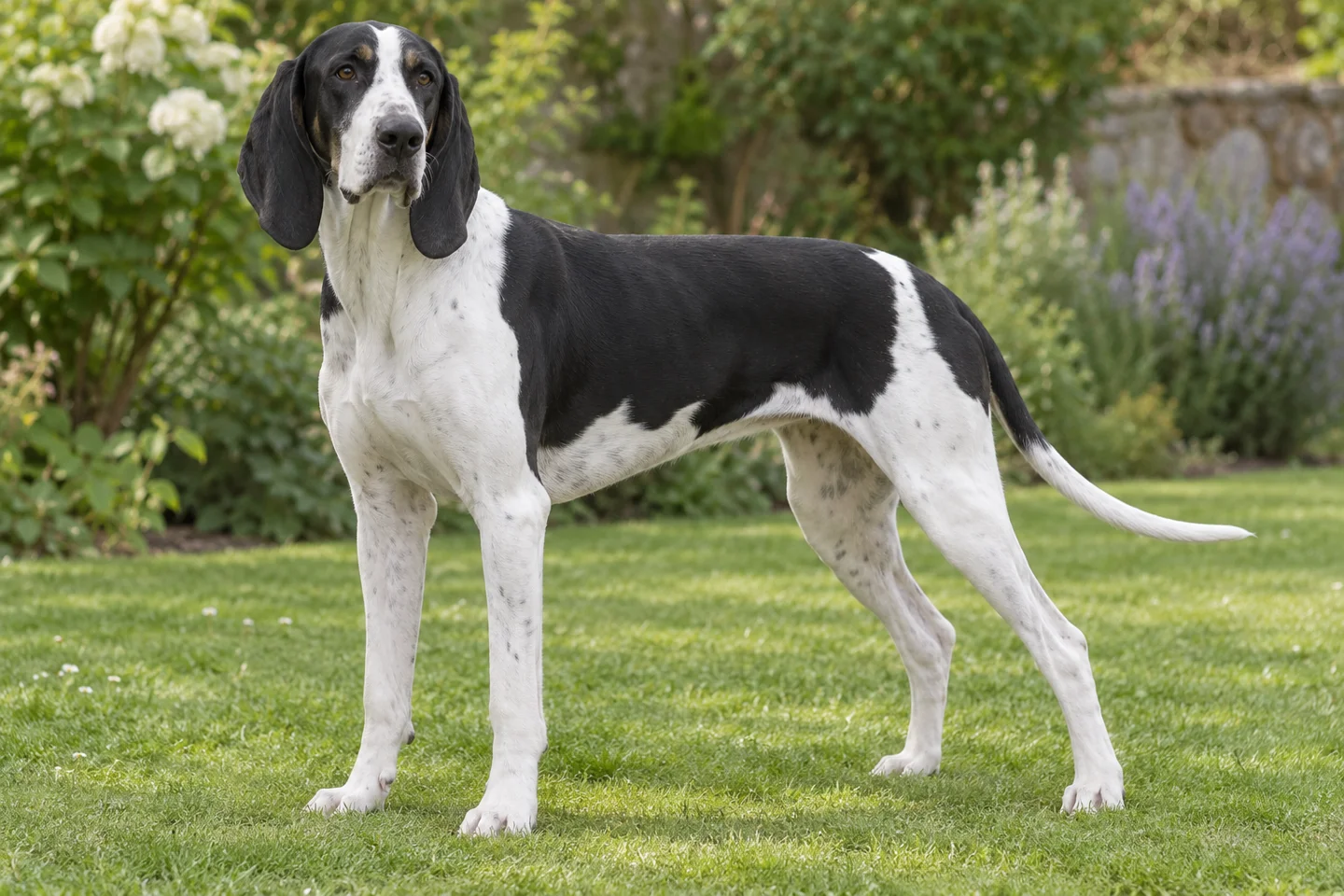
- White and black short dense coat with black mantle, long natural hanging ears and full tail
- Adult size reference
- FCI height: males 65–72 cm; females 62–68 cm; stated tolerance ±1 cm
General information for owners. These articles have not been reviewed by a veterinarian. Medical decisions need your dog's history and an examination.
A large pack hound needs an individual home assessment
The Chien Français Blanc et Noir is a large French scent hound with a pack-working background. A prospective companion home needs to understand what that means for the individual it is considering. Ask how the dog has lived, whether it has spent time indoors, and how it behaves when separated from familiar dogs. A placement cannot be planned from coat color or a general description of hound friendliness.
Consider the first evening in a new house. Stairs, kitchen noises, a television, and a closed bedroom door may all be unfamiliar. The dog may also be missing a previous group and routine. Prepare a quiet area, secure access for toilet trips, and enough time to introduce household expectations gradually. A foster period or detailed observations from an experienced source can help establish what support is needed. Be honest about working hours, nearby neighbors, and the ability to provide suitable outdoor activity. This is a substantial dog whose practical needs continue when the weather is poor and the household is busy.
French identity and the limits of historical accounts
The FCI recognizes the Français Blanc et Noir, translated in its standard as the French White and Black Hound. It is distinct from the Français Blanc et Orange and Français Tricolore. These names identify separate recognized breeds, rather than interchangeable color labels for a single entry. The FCI describes its use as a pack hound for large game.
Its historical account traces development through Saintonge hounds, with later Poitevin and Gascon Saintongeois influence, and records a standard established in 1957. Older population figures printed in a standard should not be presented as a current census. For a placement today, ask the source which dogs and records support the stated identity. A pedigree provides one kind of evidence, while observed domestic behavior provides another. An adult may have extensive working experience and little familiarity with a companion household. A puppy may need suitable outlets even when it has never joined a working pack. Clarify those differences before assuming the breed's history will answer practical questions about the individual.
Height, long ears, and the black-and-white outline
The FCI height ranges are 65 to 72 centimeters for males and 62 to 68 for females, with a stated tolerance of one centimeter. These are adult standard measurements. The standard does not provide a weight range that should be invented for a facts panel. Assess healthy condition with a veterinarian using the individual dog's frame and muscle.
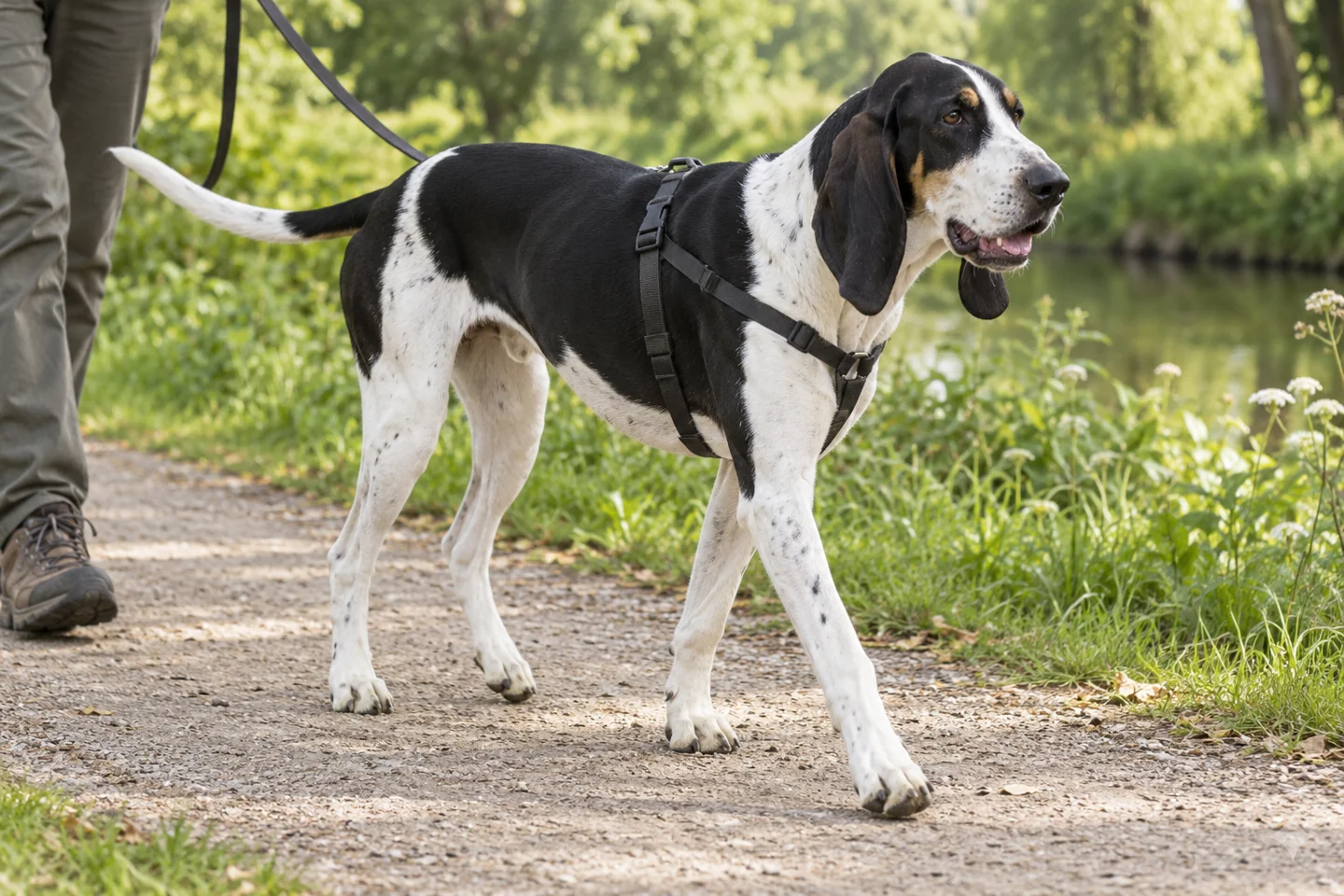
The pictures show a tall black-and-white hound with a black mantle and ears, a short dense coat, long slightly curled hanging ears, and a full tail. Restrained pale tan markings are described in the standard, but the overall appearance should not be confused with the separate Tricolore. In person, watch the dog walk, turn, and rise after resting. Long limbs and a narrow-looking outline can conceal changes in muscle or condition, so ask for a hands-on assessment when unsure. Plan the car restraint and sleeping space around actual dimensions. A breed photograph cannot establish sound movement, comfort, or the suitability of equipment for a particular dog.
The first month should explain the house patiently
Use a simple layout at first. Give the dog a comfortable bed, reliable access to water, and supervised opportunities to explore manageable areas. Block access to places where it could become trapped, steal unsafe items, or find an exit before the household understands its habits. Introduce stairs or slippery surfaces in small steps and provide suitable traction rather than pulling the dog onward.
Teach where to toilet by accompanying it frequently and rewarding the appropriate choice. A dog previously kept in a different setting may need clear instruction about indoor routines. Punishing an accident after the event does not explain the desired behavior. Establish a predictable sequence for meals, outings, rest, and short practice sessions. Keep early visitor numbers modest so you can see how the dog is coping. Write down appetite, sleep, toileting, and the situations that cause difficulty. Those observations help distinguish an unfamiliar routine from a problem requiring professional assessment. Improvement depends on understandable experiences, not on assuming an adult should already know every household rule.
Training attention when scent becomes interesting
Begin by rewarding the dog for orienting toward its handler in a quiet place. Teach a turn, a hand target, and a recall where access is secure and success is likely. These are separate skills that need practice before the environment becomes exciting. A nose lowered to the ground is useful information about attention, not a reason to escalate the volume of repeated commands.
Add distractions gradually while maintaining appropriate control. A response in the garden does not establish reliability along a wildlife trail. Use secure enclosures for freedom and obtain practical instruction about long-line handling if it is part of the plan. Avoid settings where the line can snag, wrap around people, or entangle another animal. Reward returning and occasionally release the dog back to a safe activity. This helps keep the handler relevant without making every recall end the outing. If the dog cannot respond, create more distance and simplify the request. Reward based methods support learning while reducing the conflict that can develop when people try to overpower a large distracted hound.
Exercise should provide movement and investigation
An appropriate routine may combine steady walking, safe scent games, and quieter opportunities to explore. Match the amount to the dog's condition and experience. A recently retired working dog, an inactive adult, and a growing puppy need different starting points. Discuss a sensible progression with the veterinarian, particularly for sustained running, repetitive jumping, or difficult ground. Watch how the dog moves later, after excitement has subsided.
Choose routes with enough space to turn away from distractions and surfaces that suit the individual. Check feet after rough trails and seek advice about persistent lameness or reluctance to rise. Do not assume that a long-legged hound can immediately accompany a human's preferred distance. Warm weather also changes the plan. Carry water, use shade, avoid hot surfaces, and choose a route from which you can leave easily. Weakness, confusion, collapse, or breathing difficulty needs urgent veterinary contact. Exercise should leave time for recovery. Repeated frantic running along a fence can create arousal without providing the balanced activity, cooperation, and rest that the household needs.

Voice and separation need an honest neighborhood plan
Ask specifically about barking, baying, and the dog's response when familiar people or dogs leave. A source may consider a behavior ordinary in a working kennel while the same sound creates difficulty beside a shared wall. Obtain observations from comparable situations whenever possible. Do not promise neighbors that exercise alone will resolve a vocal pattern whose cause has not been assessed.
Introduce time apart in short manageable steps, with a comfortable resting area and appropriate safe activity. A recording can show whether the dog settles or becomes distressed after the door closes. Increase duration according to the response. Seek professional advice if separation is difficult rather than leaving the dog to struggle through repeated long absences. Manage visual triggers too, such as constant access to a window overlooking passing animals. Reward quiet disengagement and give the dog another place to rest. The household may need a different care arrangement during training. Establishing that support early protects welfare and reduces pressure on both the dog and the people living nearby.
Socialization beyond the familiar group
Experience with a pack does not establish comfort with every unfamiliar dog, person, or urban setting. Start from what this individual has actually encountered. A quiet view of traffic from a generous distance may be a useful first session for an adult that has mainly known rural surroundings. A puppy needs suitable early experiences too, with infection precautions discussed with the veterinarian.
Let the dog observe without compulsory close contact. Strangers should avoid reaching into its face or handling its long ears. Introduce ordinary objects, surfaces, and sounds one at a time so you can identify what needs more work. For travel, teach comfortable loading and resting in an appropriate restraint before attempting a long unfamiliar journey. Practice a calm pause outside a veterinary clinic before combining the location with a procedure, where the clinic can accommodate that approach. Keep lessons short enough for the dog to recover. Repeated manageable experiences provide clearer information than a crowded outing in which several new demands arrive at once and nobody knows which one caused distress.
Children and other animals require specific safeguards
A large hound can accidentally knock a child over while turning or greeting. Adults should manage leads and movement through busy rooms, and provide a separate resting area before noisy play begins. Children must leave meals, chews, and sleeping dogs alone. An affectionate relationship with a resident child cannot establish how the dog will respond during a crowded visit from several unfamiliar children.
Ask about prior cat contact and protect cats with routes and spaces the dog cannot reach. Prevent chasing instead of repeatedly trying to interrupt it after it starts. Birds, rabbits, and other small animals need secure separation. Scent-hound work and domestic animal relationships are different contexts, and the dog's actual experience matters. For another dog, begin with controlled parallel walking and observe whether both can pause, disengage, and remain comfortable. At home, establish separate feeding and resting arrangements. Pack history does not prove that shared meals or prized toys will be safe. Choose management that protects each animal while the household learns about the individual relationship.
Aggression and conflict deserve a factual account
If a dog freezes over food, snaps when moved, or lunges at another animal, record the circumstances precisely. Note distance, available space, relevant objects, and what happened immediately before the response. Prevent repetition while arranging advice. Friendly descriptions in a breed standard do not explain away an unsafe encounter or establish the cause of the behavior.
A veterinarian should investigate new or worsening responses, especially when handling or movement appears uncomfortable. Pain and other medical conditions may need consideration alongside experience and environmental pressure. A suitably qualified behavior professional can help organize resource management, exchanges, and gradual practice at appropriate distances. Avoid punishing a growl or provoking the same reaction to demonstrate control. Those choices can increase conflict and remove useful warning information. Tell carers and potential adopters about incidents candidly, including what currently prevents them. A responsible plan may require continued separation in some situations. The measure of success is a workable arrangement that reduces distress and risk, rather than whether someone can force the dog to tolerate a difficult encounter once.
Grooming a short coat includes a full inspection
Use regular gentle brushing to remove loose hair and check the skin, including beneath equipment and around the underside. A short coat makes some maintenance easier but does not prevent irritation, parasites, or injuries. Ask a professional to demonstrate suitable tools and avoid repeated scraping that makes the skin uncomfortable. Teach standing calmly on a nonslip surface in brief rewarded sessions.
After a rural outing, look between toes, inspect pads, and check areas where vegetation has rubbed. Do not dig into tissue for material you cannot see or keep walking a dog that is painful. Seek veterinary advice about embedded objects, persistent lameness, swelling, or wounds. Bathing needs depend on the individual and exposure, using appropriate products and drying. If irritation follows a wash, record the product and timing for the clinic. Nails need individual checks, including any that wear unevenly. Coat care also gives owners a chance to notice changes in body condition or reluctance to accept touch. Those observations are worth recording even when the dog otherwise seems eager for the next outing.
Long ears need comfortable checks and appropriate advice
The ears are a distinctive part of the appearance and should be handled gently. Teach a brief touch followed by a reward and release, gradually progressing to an inspection that remains comfortable. Pulling an ear forward to compare it with a standard is unnecessary during ordinary care. The goal is access for a useful check, not reproducing a judging measurement.
Watch for an unusual smell, discharge, redness, repeated head shaking, or discomfort. Arrange veterinary assessment rather than repeatedly cleaning an ear that remains painful. Ask which routine suits the dog and avoid inserting cotton swabs deeply or applying leftover medication. Similar symptoms can have different causes. Keep notes about wet outings, previous episodes, and products used so the clinician receives a clear history. If a formerly tolerant dog resists face handling, investigate why before increasing restraint. Professional help can make both diagnosis and future care more manageable. Long hanging ears deserve attention, but they do not establish that every individual has an infection or that one cleaning schedule fits the whole breed.
Health evidence should match a rare breed's actual information
Ask the source which current health-screening recommendations apply and request the records behind any claim that dogs have been tested. Identify the animal, the examination or test, the date, and the result. Discuss relevant family history with a veterinarian. It would be misleading to invent a universal medical panel for this breed or copy one from a better-known hound without explanation.
For an adult, obtain previous clinical records, including injuries, recurring skin or ear trouble, medication, and changes in exercise tolerance. Routine preventive care should reflect local disease and parasite exposure. Keep an emergency plan with transport arrangements and accessible clinic details when traveling. Breathing distress, severe injury, collapse, suspected poisoning, or repeated unsuccessful retching needs urgent professional contact. Tell the clinic about recent activity, possible ingestion, and any handling needs. A dog that appears lean and energetic can still have a condition requiring assessment. Clinical evidence and timely examination matter more than a general claim that a working breed is naturally hardy or rarely needs veterinary attention.
Feeding through changes in work and home life
Use a complete diet appropriate to life stage and measure portions. Ask the veterinary team to demonstrate body-condition assessment so changes are recognized before they become substantial. A dog leaving a demanding working routine may require a different intake, while one gradually increasing activity needs review too. Neither an old kennel ration nor an adult standard height tells you the correct daily quantity.
Include training rewards, chews, and extras in the record, especially when several people share care. A short food diary can explain why weight is changing despite apparently consistent meals. Feed in a quiet separate area and allow the dog to finish and move away before collecting the bowl. Persistent vomiting, diarrhea, appetite change, or unexplained weight loss deserves medical advice. Avoid repeatedly replacing food without noting what happened or considering other causes. Discuss supplements before adding them to a complete ration. The most useful nutrition plan is one the household can follow and adjust using the dog's actual condition, rather than a generic portion attached to the breed name.
Mixes, household costs, and responsible placement
A mix with claimed Blanc et Noir ancestry may have a different size, coat, and response to scent or separation from a purebred relative. Ask what supports the ancestry claim and whether either parent is known. A black-and-white coat alone cannot identify a precise cross. Where background is uncertain, detailed foster observations and medical records provide practical evidence for choosing a home.
Budget for appropriate food, veterinary care, secure fencing, transport restraint, training, and backup care. Speak to local providers about prices and whether they can accommodate the individual. A hound that finds separation difficult or has limited indoor experience may need a carefully arranged carer rather than an ordinary last-minute boarding booking. Responsible sources should explain the dog's daily routine, discuss inconvenient behaviors honestly, provide records, and offer clear terms about support. Be candid about neighbors, time alone, other animals, and available activity. Resolve important uncertainties before committing. A successful placement requires a household prepared to teach domestic life while respecting the interests and limits of the dog it actually receives.
dogsDating should begin with compatible walking
A useful dogsDating profile describes how the individual behaves today. Explain whether it enjoys walking alongside one calm dog, becomes absorbed in scent, or needs distance from unfamiliar animals. Mention separation or resource concerns that would affect a meeting. A general statement about pack friendliness gives another owner too little information to judge compatibility.
Use an approximate discovery area and keep exact home coordinates private. Agree on a public route with room for each handler to turn away. Begin with controlled parallel movement, leave toys and food out of shared space, and allow the first visit to end without a close greeting. Observe whether both dogs can disengage and recover after interest in the other. Persistent crowding, stiff attention, or attempts to escape contact are reasons to increase distance and finish. A calm short walk can be enough information for the first day. The three accompanying pictures are AI-generated illustrations of selected breed characteristics. They cannot verify a real dog's ancestry, health, working ability, or suitability for social contact.
Sources and editorial notes
Sources checked October 21, 2026. Breed measurements describe reference ranges, not a diagnosis or an individual dog's ideal weight. Images are AI-generated breed illustrations and do not document a particular dog or health condition.
- AVSAB: Humane Dog Training Position Statement
- VCA Animal Hospitals: Food aggression in puppies
- VCA Animal Hospitals: Aggression toward unfamiliar dogs, diagnosis
- VCA Animal Hospitals: Heat stroke in dogs
- VCA Animal Hospitals: Common emergencies in dogs
- VCA Animal Hospitals: Grooming and coat care for your dog
- VCA Animal Hospitals: Ear infections in dogs
- VCA Animal Hospitals: Feeding guidelines for dogs
- Orthopedic Foundation for Animals: CHIC program and interpretation of numbers
- Fédération Cynologique Internationale: Chien Français Blanc et Noir breed standard
Keep getting to know dogs.
Read another guide or return to your dogsDating community.
Explore breed guidesBack to dogsDating