Chien Français Tricolore
A large French pack hound with a short tricolor coat, long legs, and a working background that calls for secure management and thoughtful household preparation.
How these guides are researched and reviewed
- Origin
- France
- Adult male height
- 62–72 cm
- Adult female height
- 60–68 cm
- Coat
- Short, rather fine, tricolor
General information for owners. These articles have not been reviewed by a veterinarian. Medical decisions need your dog's history and an examination.
Identity before the color description
The Chien Français Tricolore is the French Tricolour Hound, identified by the FCI as breed number 219. It is a French pack hound for large game. The FCI records definitive recognition in 1959, and its current English standard was published in 2023. Tricolor markings alone do not establish this identity. Many unrelated hounds and mixed dogs carry white, black, and tan, so a photograph needs supporting records before it can be treated as evidence of ancestry.
Distinguish this breed from the Grand Anglo-Français Tricolore, which has a separate identity, and from the other French hounds whose names describe different colors. A seller using a shortened label should be able to explain what it means. Ask for registration details where available and the animal's actual living history. The working background is important, but it does not supply every fact about the individual. A hound moving from a group working environment to a companion home may need assessment and teaching for household tasks that its previous routine never required.
Adult size and the illustrated hound
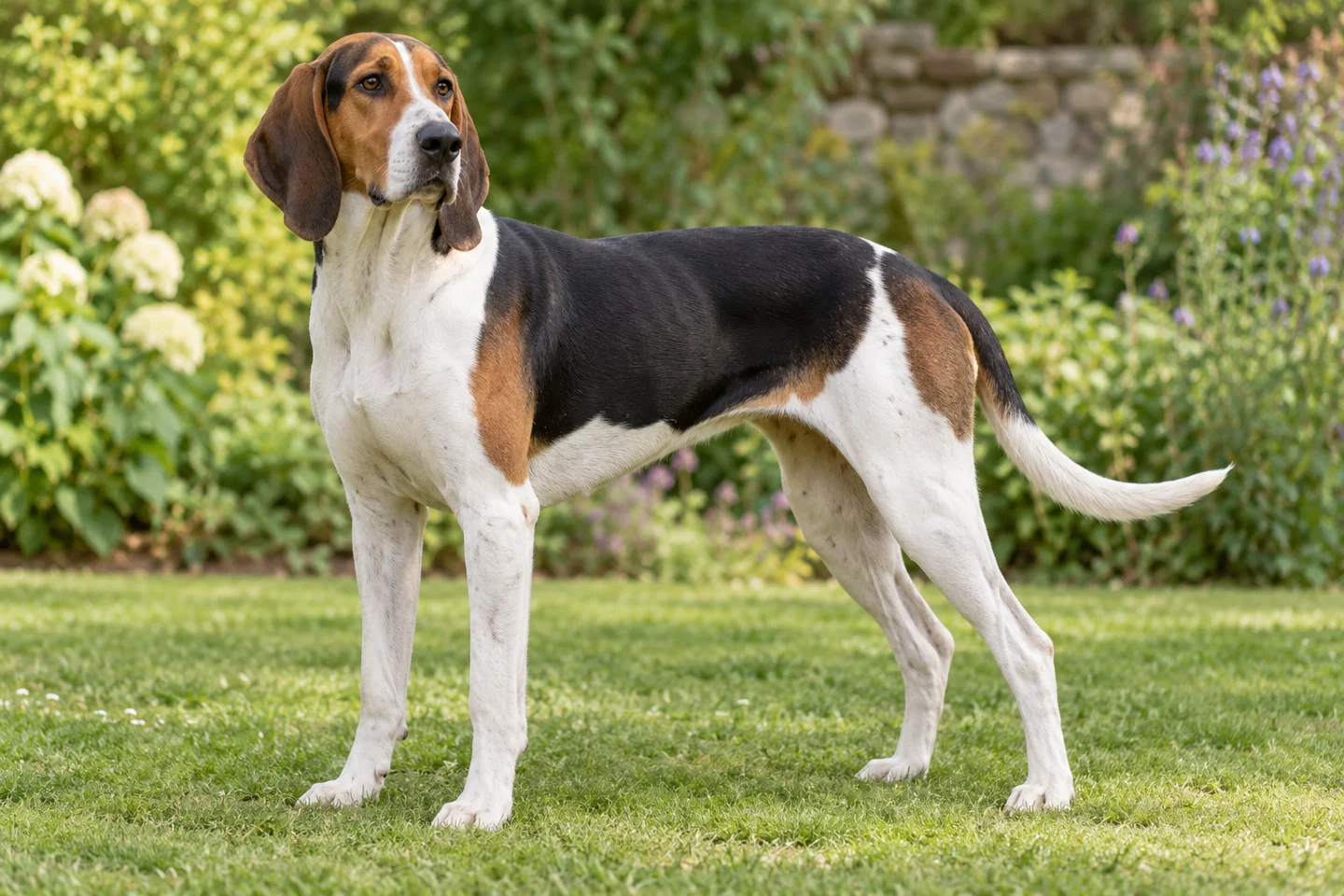
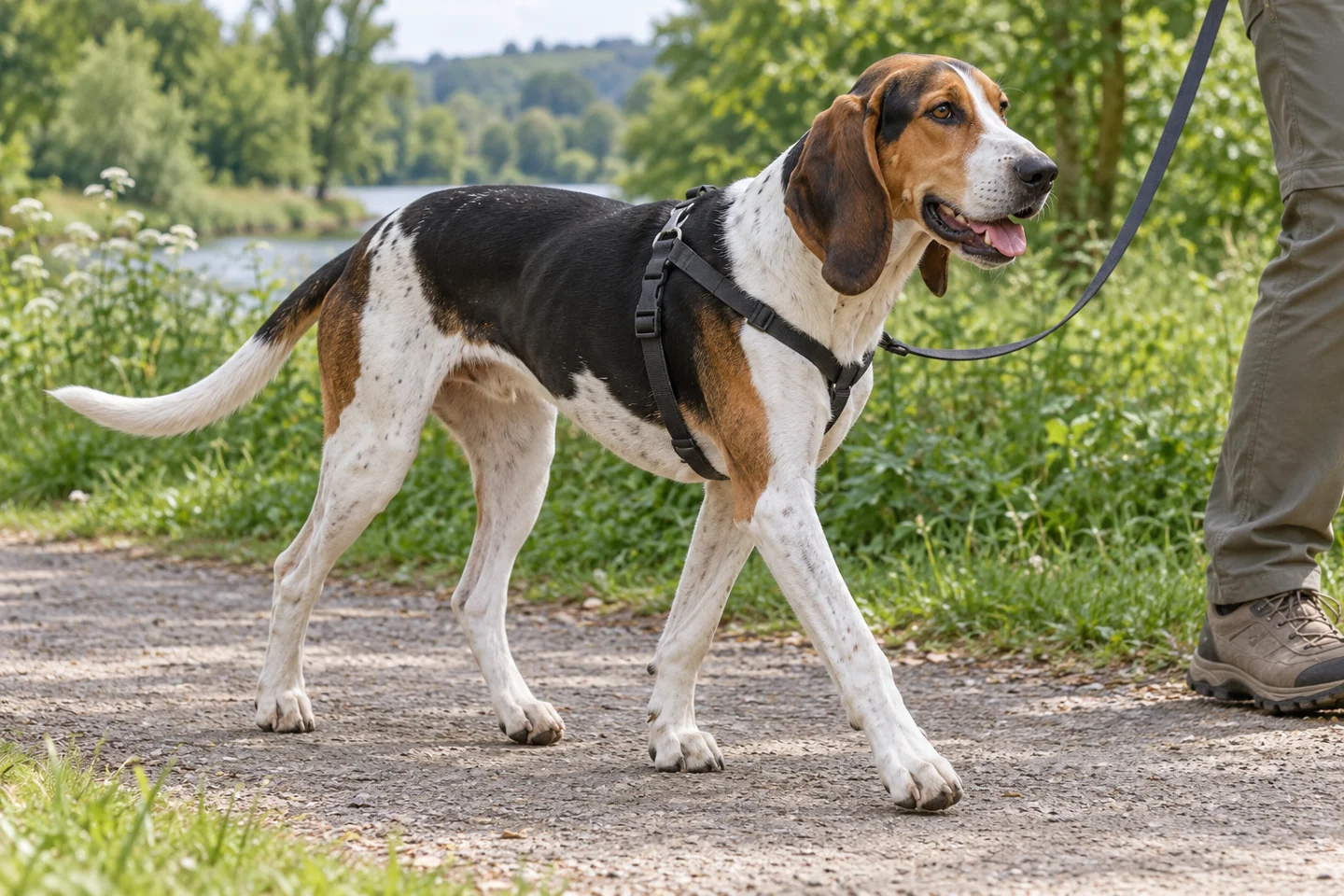
The current FCI standard specifies 62–72 cm at the withers for males and 60–68 cm for females. It describes a large, well-muscled hound with a short, relatively fine coat and tricolor markings. These illustrations show long legs, hanging ears, a black saddle, white areas, copper-tan markings, and a full natural tail. They are not documentary photographs of a particular line and should not be used to infer an individual's health or behavior.
Plan for the adult's physical presence. Check transport space, narrow entrances, and where the dog can rest without blocking household movement. A tall dog reaching a countertop may gain access to items the owner previously considered secure. Fit equipment to the actual animal and practise using it before a busy outing. The standard does not provide a universal feeding target or guarantee the eventual dimensions of a puppy. Discuss growth and condition with the veterinary team and consider who could help if an unwell adult needed assistance into a vehicle.
A working history and a new domestic routine
The designation pack hound describes intended work, not automatic competence in a living room. Ask what the individual has experienced: sleeping indoors, being alone, traveling in a smaller vehicle, meeting children, and receiving care from one person at a time. A dog may be highly experienced in one environment and unfamiliar with another. Treat those gaps as skills to assess and teach rather than evidence that the animal is unsuitable for learning or should already know what people expect.
Introduce the home in manageable stages. Set up a comfortable resting space, a clear route outdoors, and simple meal and toilet routines before arranging a parade of visitors. Reward the actions that help daily life and prevent access to hazards while the new arrangement becomes familiar. If the source cannot provide a history, preserve that uncertainty. An invented account of previous hardship or excellent training can lead the household to overlook what the animal is actually showing in front of them during the adjustment period.
Scent interest and safe outdoor choices
A hound may devote close attention to a scent while the person holding the lead is looking elsewhere. Learn the early changes in this dog: pace, direction, intensity of investigation, and ability to turn toward the handler. Reward voluntary check-ins and practise moving away before the task becomes too difficult. A request made only after the animal has committed to following an absorbing trail gives the learner a much harder problem than a well-timed easy response.
Provide deliberate searching opportunities within secure boundaries. A simple hidden object or food search can be taught in steps, with a clear start and finish. Choose locations where other animals and hazards will not become part of the exercise. If organized working activities are planned, seek instruction that uses humane methods and respects access rules. The breed's traditional purpose cannot authorize pursuit across roads, private land, or areas containing vulnerable animals. Interesting work and effective management need to exist together, especially when the animal becomes more enthusiastic than it was at the beginning.
Training that transfers beyond a familiar handler
Teach useful actions with rewards: waiting for equipment, entering a resting area, turning away, coming through a gate, and exchanging something carried in the mouth. Practise where success is easy, then add distance, duration, and distraction gradually. A dog that responds beside a familiar kennel door may need new practice at an apartment entrance or a public car park. Repeating a cue more urgently does not replace the missing experience of performing the task there.
AVSAB recommends reward-based methods. Ask a trainer how they handle fear, frustration, and a dog unable to disengage from a scent or another animal. The practical plan should include prevention of unwanted rehearsals, achievable teaching, and professional referral where medical or behavior concerns require it. Explain the routine to backup carers and let them practise. A system that works only when one person anticipates every movement does not provide reliable daily care when that person is ill, delayed at work, or away from home.
Exercise, conditioning, and recovery
Choose activity according to the individual's age, fitness, health, and experience rather than copying a schedule from an unrelated working hound. Walks, suitable movement in secure space, scent exploration, and training can meet different needs. Discuss strenuous work or a major increase in exertion with the veterinary team, particularly during growth or after illness. Notice comfort later in the day as well as eagerness to leave the house. A dog may still start enthusiastically while needing an adjusted recovery plan.
Build quiet periods into the routine. Provide a resting place away from repeated interruptions and teach a predictable end to activity. If every restless approach starts another intense game, review the household sequence before deciding that still more exertion is the only answer. In warm conditions, adjust timing and exposure, provide water, and stop for signs of difficulty. The short coat does not remove heat risk, and an animal following an interesting trail may continue trying. Conditions and the decision to finish remain the handler's responsibility.

Children and a large moving body
Consider the adult's reach and turning space around children. A tall hound moving toward a doorway can knock a small child down without any threat display, while food held at face level may attract unwanted attention. Arrange barriers and resting areas before busy visits. Teach calm movement and give the dog a private place where children do not follow. Adults should manage access rather than leaving the child to enforce a rule against an animal that is excited or seeking something valuable.
Children should not climb on, restrain, lift, hug tightly, or remove possessions from the dog. Contact should stop when the animal moves away or appears uncomfortable. Supervision requires an adult watching closely and ready to act. If that is unavailable, separate comfortably. Ask about the individual's history around children, including ages and the circumstances of any incident. Enjoying a meeting with one calm visitor does not establish how the dog will respond to a toddler, a noisy party, or an unexpected approach while it is resting.
Aggression and the information behind an incident
A growl, snap, or lunge needs an accurate description rather than a reassuring breed label. Note who approached, how close they came, any food or object involved, whether the dog could retreat, and what happened afterward. Concern during ear handling has different immediate management needs from conflict at a gate. A pack-working background does not explain every event or establish safety with every person and animal. The details help a professional assess the relevant risks and possible causes.
Protect those involved while advice is arranged. A sudden change in response to touch or movement warrants veterinary attention, and the clinic should know about handling concerns before arrival. Do not punish warnings or recreate an incident repeatedly to prove that it has passed. Separate valuable resources and difficult situations reliably while a qualified behavior professional helps develop a plan where needed. Tell carers about previous threats, snaps, and bites. Omitting an episode because it seemed out of character can leave the next person unable to avoid the same pressure.
Other dogs and the limits of working together
Experience near other hounds can be useful information without proving universal compatibility. Ask which dogs the individual has lived or worked with, how new animals were introduced, and whether resources were managed separately. A familiar group and an unfamiliar single dog at a tight entrance are different situations. Begin meetings with room to move apart and opportunities for separate sniffing. Watch whether each animal can pause, disengage, and respond to its person.
Interrupt repeated approaches when the recipient seeks space. Silence or a wagging tail alone cannot establish that the same contact is welcome to both dogs. At home, plan independent feeding and resting areas during adjustment, with attention to doorways, favorite people, and valued objects. Outdoor familiarity does not answer every indoor question. If tension continues, seek professional advice instead of relying on the animals to settle all disagreements. Every resident needs a reliable opportunity to rest, move, and leave an interaction without persistent pressure.
Cats, small animals, and secure boundaries
Protect vulnerable animals physically while assessing the dog. Ask about observed experience with cats or other species and whether it involved supervision or barriers. A still cat and a running cat present different situations, so one quiet encounter cannot establish every future response. Do not test obedience by placing a small pet within reach. The home must provide safe access for all animals to food, water, rest, and ordinary movement, including times when the main handler is unavailable.
Inspect gates, fence edges, and the routes visitors use. A boundary should remain effective when an interesting scent lies beyond it, not merely while the dog is relaxed nearby. Practise returning indoors with rewards in quiet moments rather than using the cue only to end every enjoyable activity. In public, choose routes and secure equipment suited to current skills. Long lines require appropriate handling and space; they are not suitable for every busy path, road edge, or area with wildlife and livestock.
Voice, absences, and neighborhood demands
Ask when the dog vocalizes and what follows. Calling during work, reacting to passersby, and prolonged distress after departure need different assessment and management. Record the circumstances rather than assuming the breed name supplies a complete explanation. A dog quiet during a short visit may behave differently after the household leaves. Where possible, observe departures and recovery directly or through an appropriate recording so a professional has more information than the greeting on return.
Build absences gradually within present coping ability and seek veterinary and behavior help for sustained distress or unsafe escape attempts. Arrange care the animal can tolerate while the longer plan develops. In shared housing, consider corridor noise and unavoidable close encounters before placement. Reduce repeated exposure to triggers that cause escalating arousal while teaching alternatives. Another dog or a larger garden cannot be promised as a solution. The practical objective is a routine that the individual can manage, with reliable support for the situations still being learned.
Grooming a short coat and checking long ears
Use regular gentle brushing and skin observation rather than assuming the fine coat requires no care. Check areas beneath equipment and after vegetation or rough ground. Persistent redness, irritation, unusual odor, or repeated licking warrants veterinary advice. Suitable bathing products and instructions matter, but stronger cleaning cannot replace finding the cause of a continuing problem. Teach the dog to stand or rest comfortably for checks before an urgent concern makes handling more difficult.
Observe the visible ear areas and ask for advice about pain, head shaking, discharge, or unusual smell. Do not probe deeply or reuse medication from an earlier episode without instructions. Keep nail care and toothbrushing in a separate, manageable routine with appropriate guidance. If the animal becomes suddenly unwilling to present a foot or tolerate touch, describe the change to the veterinary team. Tell professionals about earlier handling difficulty when booking so the visit can be planned, rather than discovering a problem only after restraint has begun.
Health evidence for a less familiar breed
Do not invent an international checklist or a disease prevalence figure for the French Tricolour Hound from another breed's program. Ask the source which assessments it uses, why those were chosen, and what identifiable results are available for relevant dogs. Discuss orthopedic, eye, cardiac, or other investigations according to the actual family history and veterinary advice. A performance record describes an activity outcome and cannot substitute for the specific health evidence a question requires.
Ask about significant diagnoses in close relatives, known ages at death, and whether later owner reports are collected. Missing information should remain explicit, especially for an adopted adult. A commercial DNA panel covers selected variants rather than every possible illness, and a healthy-looking working demonstration cannot establish normal findings in every body system. Plan current care with the veterinarian, preserving records so later clinicians can see what was actually examined or tested. A rare breed needs better documentation, not a confident promise that limited reporting proves the absence of medical concerns.
Nutrition and knowing when to seek care
Feed a complete diet suitable for life stage, body condition, activity, and medical needs. Measure a starting allowance, include training food, and review portions with veterinary guidance as conditions change. A working period and a restricted recovery period may create different needs. Feed away from competition and observe what this dog eats. An empty shared bowl cannot identify the animal that consumed the intended meal or establish that appetite has remained normal.
Record persistent changes in drinking, appetite, movement, skin, or behavior and seek advice. Collapse, breathing difficulty, repeated unproductive retching, or sudden abdominal enlargement requires prompt veterinary attention. Keep urgent-care contacts and a transport plan accessible to carers, including arrangements for an adult unable to walk comfortably. Secure medicines, waste, and visiting bags. When traveling for an activity, identify local veterinary access before an emergency occurs. The dog's willingness to continue investigating its surroundings should not override a significant clinical change or delay a call for help.
Mixes, costs, and an honest household match
A French Tricolour Hound mix may vary in proportions, coat, voice, and interest in pursuit. A combined name cannot guarantee an average of convenient traits or freedom from inherited problems. Request relevant parent records where known and assess an adult's current behavior. Tricolor markings alone cannot confirm the contribution of this breed. Base the care plan on documented information and observation rather than an attractive ancestry guess supplied from a photograph.
Budget for transport, suitable equipment, training support, reliable care, preventive medicine, and emergencies. Practise a short handover with the proposed carer while the owner remains available, covering gates, equipment, feeding, and the actual walk. Discuss work hours, other animals, visitors, and physical access candidly with the source. Consider how care could change with age or reduced mobility. A home needs a routine that can function on an ordinary difficult weekday, with support available when plans change, rather than depending entirely on optimism about the first enjoyable meeting.
dogsDating meetings and location privacy
Describe current social preferences on dogsDating, including relevant incidents and professional limits. Identify the breed accurately where records support it and preserve uncertainty where they do not. Keep exact home coordinates private. Agree on a public route with generous space and a clear exit, checking for narrow gates, traffic, or uncontrolled dogs that could make the arrival difficult. Both handlers should know they can finish the outing if either animal needs distance.
Begin with separate exploration and walking rather than forced close contact. Leave shared food and favorite toys out of the encounter, and pause when a participant repeatedly turns away or cannot recover from excitement. A short comfortable walk supplies useful information without requiring play. The result applies to those animals under those conditions. Living together and reproductive decisions require separate evidence and planning; a pleasant introduction cannot establish comfort around indoor resources, medical suitability, or a reason to proceed toward breeding.
Sources and editorial notes
Sources checked October 21, 2026. Breed measurements describe reference ranges, not a diagnosis or an individual dog's ideal weight. Images are AI-generated breed illustrations and do not document a particular dog or health condition.
- VCA Animal Hospitals: Grooming and coat care for your dog
- VCA Animal Hospitals: Ear infections in dogs
- VCA Animal Hospitals: Common emergencies in dogs
- VCA Animal Hospitals: Food aggression in puppies
- VCA Animal Hospitals: Heat stroke in dogs
- VCA Animal Hospitals: Aggression toward unfamiliar dogs, diagnosis
- AAHA: Feeding plans for healthy, appropriate weight cats and dogs
- Orthopedic Foundation for Animals: CHIC health screening programs
- AVSAB: Humane Dog Training Position Statement
- FCI: Chien Français Tricolore official breed standard
- FCI: Français Tricolore breed nomenclature and recognition
Keep getting to know dogs.
Read another guide or return to your dogsDating community.
Explore breed guidesBack to dogsDating