Dandie Dinmont Terrier
A long, low Scottish terrier with a pale topknot, needing secure investigation, considerate access, proper coat work, and informed eye-health discussions.
How these guides are researched and reviewed

- Origin
- Great Britain; Scottish border history
- FCI size
- 20–28 cm at withers; working-condition weight 8–11 kg
- Coat colors
- Pepper or mustard; pepper illustrated
- Care priorities
- Pursuit safety, coat, comfortable movement, and eyes
General information for owners. These articles have not been reviewed by a veterinarian. Medical decisions need your dog's history and an examination.
A low terrier still needs a full care plan
A Dandie Dinmont Terrier's unusual outline can attract attention before its daily needs are considered. Plan secure investigation, regular activity, coat work, and sensible access for a long low body. Ask how the adult will enter a vehicle or reach a resting place without repeated uncontrolled jumps. A small dog is not automatically easy to lift during pain or fear. Before selecting a puppy, decide who will provide routine care and who can help when the usual owner is unavailable.
Meet adults and ask about the difficult ordinary moments: a rabbit appearing on a walk, a delivery at the gate, nail maintenance, or time alone. A calm visit cannot establish every future response. An adult foster assessment may offer useful detail for a household needing more predictability. Look for candid health records and continuing support rather than an advertisement that makes rarity or toughness sound like freedom from medical needs. The individual should fit the home the owner can maintain through ordinary weeks as well as enjoyable outings.
Border-terrier history and a literary name
The breed has a British border-country terrier background, and its name comes from the character Dandie Dinmont in Walter Scott's novel Guy Mannering. That literary connection explains the unusual name without turning a fictional character into evidence about a modern dog's temperament. Working use offers context for interest in investigation and pursuit. It does not mean a puppy already understands which animals and household objects may be approached, carried, or chased. Those decisions require teaching and dependable management.
The Dandie is separate from the Border, Skye, Cairn, and other small terriers. A pale topknot, beard, or low body alone cannot prove ancestry in a rescue. Ask which organization issued registration and what supports the description when records are missing. Preserve uncertainty where the label is visual. A mixed dog may share practical needs without being a recognized variety. Assess actual movement, medical findings, care tolerance, and social experience rather than relying on an appealing name to supply information that has not been documented.
Topknot, low outline, and standard dimensions
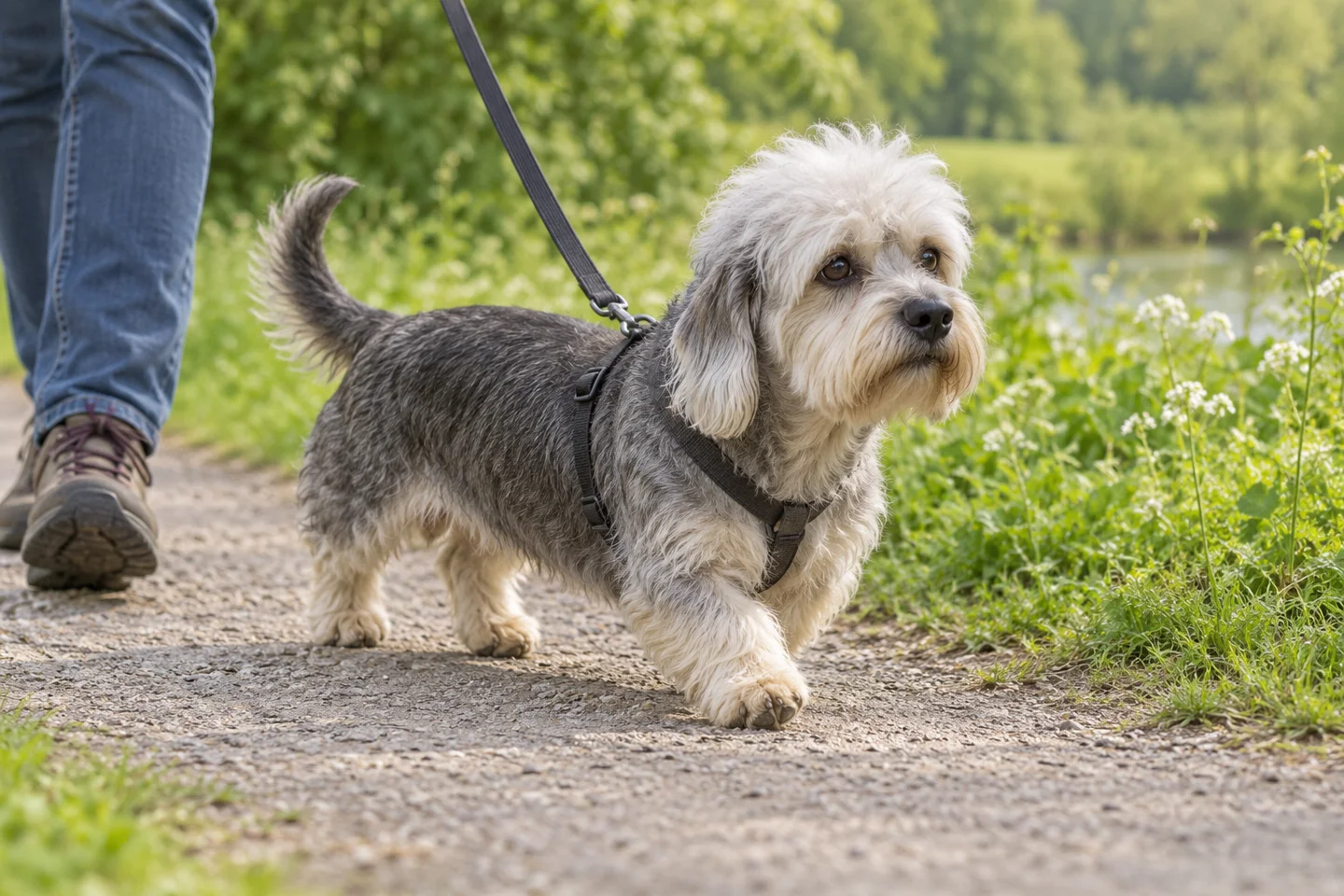
A long body, short legs, substantial head, soft pale topknot, and naturally hanging ears form the recognizable outline. Pepper and mustard are the described colors; these illustrations choose pepper. The coat combines textures rather than resembling a fully clipped Poodle or a uniform silky curtain. The intact natural tail has a gentle scimitar-like curve. A real dog should be assessed through comfortable movement and condition, not solely by how unusual its head appears in a posed portrait.
FCI size is 20–28 cm at the withers, with a working-condition weight of 8–11 kg. Individuals vary, and those figures are not targets for feeding an animal to a number. Ask your veterinarian to demonstrate appropriate condition assessment and track changes over time. A low frame still carries meaningful weight when lifting is necessary. Choose equipment for actual measurements and check whether a harness rubs behind the legs or shifts when the dog backs away. Comfortable secure fit matters more than a label for small terriers.
Access that respects the individual body
Review steps, furniture, floors, and vehicle entry before the dog develops a problem. A stable nonslip aid may help some individuals, but it needs suitable fit and gradual introduction. Avoid an improvised steep ramp that creates a frightening slip. Teach voluntary approach and reward small steps while there is no urgency. A puppy's enthusiasm should not be the only reason to permit repeated drops from furniture. Ask a veterinarian about limits appropriate to age, medical history, and current comfort.
Support the body correctly when lifting is required and ask a professional to demonstrate. Children should not carry the dog, especially by the front end or around the middle without support. A new reluctance to jump, climb, rise, or be picked up warrants assessment rather than dismissal as stubbornness. Keep a transport plan usable by another adult during illness. The goal is comfortable daily movement, not a universal claim that every long-bodied dog must follow the same restrictions regardless of individual health.
Digging, scent, and secure boundaries
Inspect the garden at ground level. Soil beneath a gate, access under a shed, and a gap beside a drain may be more significant to a small terrier than fence height alone. Supervise initial use and recheck after storms or repairs. Store tools, traps, chemicals, and unsafe food securely. A tracker and identification can help after escape, while a maintained enclosure and a routine everyone understands prevent the initial danger. Neither device can guarantee that the owner notices before the dog reaches a road.
Offer suitable outlets for exploration and, where helpful, a permitted digging place. Protect areas where excavation would be unsafe rather than relying on a verbal instruction when nobody is present. If attempts to leave become frantic, investigate distress, isolation, or boundary excitement instead of only strengthening the fence. A dog left on patrol may rehearse barking and rushing repeatedly. Manage access and views while teaching calmer behavior, and obtain qualified support if the reaction is difficult to interrupt or recovery remains poor.
Recall where a chase would have consequences
Teach returning and a comfortable turn toward the handler in manageable surroundings with worthwhile rewards. Keep physical control where wildlife, livestock, or traffic makes failure dangerous. A response learned indoors does not establish reliability beside a running animal. The owner should consider the consequences of a mistake as well as progress. There is no need to release the dog into a risky setting to discover whether training has reached its limit. Safe investigation can continue with an attached lead and thoughtful route choice.
Long lines need space and careful handling to avoid entanglement or a fast stop at full length. A shorter secure arrangement may be preferable beside obstacles, other animals, or uneven ground. Reward check-ins and allow suitable sniffing without letting every interesting smell dictate pulling. If the dog cannot respond near a distraction, increase distance and make the lesson easier. Repeating a cue louder over the same overwhelming event supplies little useful learning and can add frustration for both the terrier and its person.

Children and a dog's option to leave
A topknot and expressive face can invite close attention from children, which makes adult decisions important. Prevent hair pulling, neck-hugging, climbing, and face-to-face posing. Give the Dandie a private rest area away from busy routes, and teach that a dog moving away has finished the interaction. Adults should supervise closely enough to interrupt before a child follows into a corner or reaches for an object beside the mouth. Small size should not make unwanted lifting a normal part of the relationship.
Keep meals, chews, and sleep protected from play. Children can help prepare an easy search while another adult manages the dog, rather than wrestle for a toy. Separate before loud visiting games when attention will be divided. Previous tolerance of one familiar child is useful history but does not establish comfort with every visitor or handling style. Reassess after pain, illness, or a change in mobility. A new warning deserves attention to the setting and health, not punishment because the dog used to accept similar contact.
Aggression and practical respect for a warning
A terrier can guard a found object, react defensively when cornered, or object to painful brushing. When freezing, growling, or threats occur, reduce pressure and arrange distance. Do not repeatedly approach to prove control. Keep children and visitors out of unresolved situations, use separate resources, and seek qualified help for recurring concerns. A veterinarian should assess a sudden change in tolerance. Management needs to work immediately while teaching or treatment addresses the cause over time.
AVSAB recommends reward-based methods. Punishing a warning may make it harder to recognize while leaving fear or discomfort unresolved. Record what happened before the event, what the dog did, how it recovered, and any injury. Labels such as feisty or stubborn do not tell a future carer which approach caused trouble. A useful professional plan can include medical care, environmental changes, and gradual learning. It should reduce risky encounters without requiring another person or animal to recreate the pressure as a test of character.
Training a useful response without a physical contest
Prioritize approaching equipment, moving to a mat, entering transport, and releasing a suitable object through an exchange. Break tasks into short understandable steps with rewards the individual values. If the dog cannot respond beside another animal, increase distance or simplify the task before repeating the cue. A terrier background is a reason to plan motivation and safeguards carefully, not an excuse to abandon patient teaching or assume harsher equipment supplies the understanding that is missing.
Cooperative body care also needs practice. Reward a brief stand, a paw touch, or a comfortable chin rest, adding duration gradually on stable surfaces. Coordinate with clinicians if a painful problem needs treatment before training is complete. Household adults should share cues and rules, especially around doors and food. One person rewarding jumping while another physically corrects it creates needless uncertainty. An instructor who explains humane learning can help owners improve timing and make practical skills usable outside the quiet room where they began.
Exercise with a sustainable low-dog pace
Provide regular comfortable activity, investigation, and short training according to age, condition, medical history, surface, and weather. A low outline does not make a quick toilet trip a complete daily plan. Build longer routes gradually and watch recovery after sleep as well as enthusiasm during the outing. Persistent limping, stiffness, or reluctance to move needs assessment. Do not use an interest in one more game as evidence that the dog is comfortable with every demand placed on its body.
In warmth, choose cooler periods, shade, water, and an easy return. Collapse or marked respiratory distress requires urgent advice. Quiet days can include a gentle search and manageable walks instead of frantic indoor chasing intended to compensate for a missed long outing. Teach a clear end to activity and allow undisturbed rest. A useful routine fits ordinary work commitments and temporary owner limitations, with support when needed. Age-related changes can alter distance and access while leaving enjoyable exploration and companionship available at a comfortable level.
Grooming mixed textures and a soft topknot
Ask a groomer familiar with Dandie coats to explain maintenance, removal of loose coat, and the practical difference between companion care and exhibition preparation. The soft topknot and body texture need appropriate tools rather than a generic treatment copied from another terrier. Check close to skin, especially beneath equipment and around friction areas. A tidy outline does not prove the absence of tangles or irritation. Keep sessions short enough for comfort and adapt positioning if standing becomes difficult.
Tight mats close to the body need professional help rather than blind cutting with scissors. After countryside activity, inspect feet and the underside for debris. Dry damp areas gently and seek advice for persistent odor, redness, sores, or repeated licking. Introduce tools and a nonslip surface calmly with rewards. Tell professionals about handling concerns or sensitive areas before the appointment. Coat presentation should not delay relief from painful maintenance, and a practical plan may need adjustment while the dog learns to participate more comfortably.
Eyes and glaucoma questions for the family
The Southern Dandie Dinmont Terrier Club discusses primary glaucoma and assessment of the drainage angle through gonioscopy. Ask what eye examinations the parents and individual have received and how current club guidance applies. A test has a defined purpose and should be interpreted by the relevant professional. Do not invent a guarantee from a reassuring report or assume one assessment removes every later risk. Records and continued observation are more useful than a claim that an uncommon breed is naturally free from illness.
A red, painful, cloudy, or persistently squinted eye needs prompt veterinary attention. Do not wait for the dog to lose all interest in food or movement before asking for help, and avoid leftover drops without a diagnosis. Keep reports accessible when clinics change. Gentle preparation for face handling can support examination, while urgent treatment should not wait until the owner can inspect everything at home. Explain previous handling concerns when booking so the team can arrange necessary care safely and comfortably.
Health evidence, ears, teeth, and nails
The AKC's current terrier-group page lists no recommended national-club health tests for Dandies. That does not mean inherited or acquired disease is absent, and it should be discussed alongside current eye guidance from the relevant club. Ask about significant diagnoses, mobility issues, vision changes, unexplained deaths, and follow-up reports in the family. A standard describes identity, not a complete disease survey. Avoid invented prevalence or a guaranteed lifespan when reliable information for the particular population is limited.
Ear pain, discharge, head shaking, or scratching needs assessment rather than probing or reused medication. Introduce toothbrushing and nail care in short rewarded steps and ask professionals to demonstrate suitable methods. Hair can hide nail length and foot debris. A new objection to touch may indicate discomfort. For a rescue with missing records, document the gap and plan from a current examination. Necessary clinical care and future training can proceed together, without expecting the owner to perform every examination or procedure unaided.
Food, mixes, costs, and dogsDating
Use a complete diet suited to life stage and health, measuring portions and including training rewards. Monitor condition rather than feeding toward a standard weight without individual assessment. Dandie mixes vary in coat, proportions, pursuit, and medical needs; a combined name cannot promise allergy compatibility or easier care. Budget for coat work, preventive and dental care, training, transport support, dependable holiday cover, and unexpected treatment. A carer should know the same boundaries and handling precautions as the owner.
On dogsDating, describe the individual's pace, preferred contact, lead needs, and any limits around larger or faster companions. Keep exact home coordinates private. Choose a quiet public route with two attentive handlers and room to separate. Begin with a short parallel walk, leaving valued toys out and respecting pauses. End when one dog is repeatedly crowded or cannot disengage. A calm walking friendship can be enough, while resource sharing or close indoor access should follow separate assessment and both owners' continuing attention to comfort.
Preparing a short stay away
Visit a potential carer and discuss steps, furniture access, equipment, coat maintenance, and the dog's known responses to animals. A place welcoming small dogs may still rely on a busy mixed-size play group that does not suit this individual. Demonstrate the usual routine and arrange a brief trial when appropriate. Leave current medical instructions and veterinary contacts, including any eye follow-up. A clear practical plan is more useful than expecting the carer to infer the dog's needs from its terrier identity or appealing face.
Sources and editorial notes
Sources checked October 21, 2026. Breed measurements describe reference ranges, not a diagnosis or an individual dog's ideal weight. Images are AI-generated breed illustrations and do not document a particular dog or health condition.
- AVSAB: Humane Dog Training Position Statement
- VCA: Food Aggression in Puppies
- VCA: Grooming and Coat Care for Your Dog
- VCA: Ear Infections in Dogs
- VCA: Feeding Guidelines for Dogs
- Orthopedic Foundation for Animals: Canine Health Assessments
- VCA: Common Emergencies in Dogs
- VCA: Heat Stroke in Dogs
- VCA: Hypoallergenic Dog Breeds, Is There Such a Thing?
- American Kennel Club: Terrier Group Health Testing Requirements
- Southern Dandie Dinmont Terrier Club: Health
- American Kennel Club: The Dandie Dinmont Terrier Is a Big Dog in a Little Body
- FCI: Dandie Dinmont Terrier Breed Standard
Keep getting to know dogs.
Read another guide or return to your dogsDating community.
Explore breed guidesBack to dogsDating