German Wirehaired Pointer
A versatile German hunting dog with a weather-resistant working coat, a furnished face, and a strong need for structured cooperation.
How these guides are researched and reviewed
- Origin
- Germany
- Adult male height
- 61–68 cm
- Adult female height
- 57–64 cm
- Coat
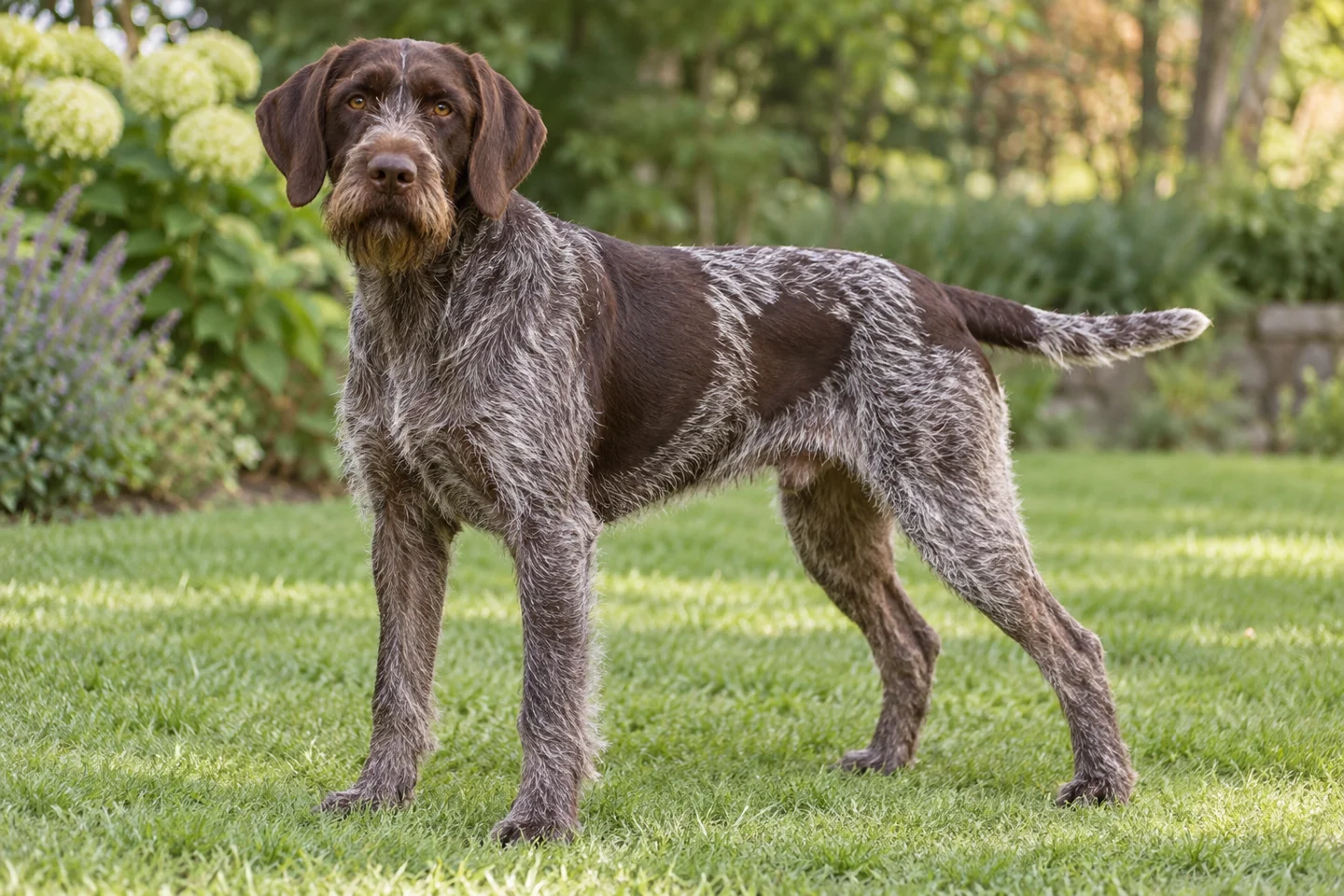
- Harsh, close-fitting wire coat with beard
General information for owners. These articles have not been reviewed by a veterinarian. Medical decisions need your dog's history and an examination.
A versatile dog with a specific working background
The German Wirehaired Pointer is a German pointing breed also known as Deutsch Drahthaar. Its development involved systematic selection for versatile hunting work around the end of the nineteenth century and the beginning of the twentieth. The furnished face and rough coat are visible features of that working type, but the intended partnership extends beyond appearance. A home considering one should discuss how the source develops cooperation, steadiness, and practical control in the environments where its dogs spend time.
Ask which registry and working program applies to the dog you are considering. German Wirehaired Pointer and Deutsch Drahthaar communities can operate under different registration and selection arrangements. Do not assume that a statement about one program describes every dog using a similar name. Request the exact documents and ask what they show, including the relationship between performance records, health assessments, and ancestry. A conversation with people who live with adults from that source can reveal how field ability translates into travel, visitors, quiet evenings, and other demands of companion life.
Size, coat, and natural features
The FCI standard gives males a height of 61–68 cm at the withers and females 57–64 cm. It describes a harsh, close-fitting outer coat with protective undercoat and the characteristic beard and eyebrows. These illustrations show a brown-roan dog with natural ears and a full tail. Coat texture should be assessed on the actual animal rather than inferred from a photograph, especially when planning grooming and equipment. A heavy-looking beard can conceal a slender jaw or wet skin beneath the hair.
Allow room for an adult to stand, turn, and rest in the chosen transport arrangement. Fit a harness so furnishings are not caught beneath straps and movement remains comfortable. The numerical standard describes the breed's adult proportions; it is not a feeding prescription. Review growth and body condition with the veterinary team. When a puppy's eventual size matters for stairs, lifting, or housing restrictions, ask about documented relatives and be honest about the uncertainty that remains until the individual has grown.
Finding a place for the hunting interest
This dog's working background matters on a walk past birds, rabbit cover, or a freshly disturbed scent. Learn what happens before the animal stops responding easily: a concentrated sniff, a change in pace, or a fixed direction of travel. Use that information to create distance and ask for an achievable action before arousal rises further. A handler who notices these transitions can plan a more useful session than one who waits for the full chase and then repeats a recall.
Offer scent work and other suitable tasks within secure boundaries. Hide a familiar object in an easy location, reward the search, and finish while cooperation is still available. Increase difficulty gradually instead of making every attempt a prolonged test. If formal field work is intended, choose an instructor who understands both the activity and humane learning. The equipment and controls required by that setting should be taught beforehand. Neither ancestry nor enthusiasm means a young dog already understands what the handler needs around other animals, public routes, and hazards.
Training a partner through ordinary transitions
Practise the events that occur around the exciting work: waiting while the vehicle opens, moving through a gate, exchanging an object, and resting while the handler talks. These moments often determine whether an outing is safe and manageable. Teach them first in quiet surroundings with useful rewards. When a new setting makes the task difficult, simplify it. The dog should have a clear path to success rather than a sequence of increasingly forceful instructions it has not learned to follow there.
AVSAB recommends reward-based training. Ask a prospective trainer how they respond when the animal is frightened, confused, or too excited to continue. A plan should address the situation and the skill that is missing, with management to protect people and animals meanwhile. Punishing a warning does not tell the handler that discomfort has resolved. Agree on cues across the household and show backup carers the actions that already work. Consistency means the dog can predict what follows a behavior, not that every person must handle it with identical physical strength.
Exercise with recovery built into the day
Plan activity around the individual dog's health, age, condition, and current experience. Walking, appropriate movement in secure space, sniffing, and brief training can make different contributions. A long outing is not automatically better than a shorter one with time to process the surroundings. Discuss demanding sport and increases in exertion with the veterinary team, particularly for a growing animal or one returning after injury. Record changes in comfort afterward rather than judging only by willingness to start.
Give the dog a quiet recovery area and a predictable end to activity. If returning home leads to repeated frantic games, review how the household responds to requests for attention and whether the schedule allows actual sleep. During warm weather, alter timing and exposure, provide water, and stop when the animal shows difficulty. The rough coat does not make heat irrelevant, and a motivated dog may keep trying to work. The handler remains responsible for conditions, surfaces, pace, and the decision to finish before enthusiasm turns into a medical problem.
Socialization without compulsory greetings
A useful early experience may involve watching an unfamiliar person from a comfortable distance, taking a reward, and leaving. It does not require being touched by everyone encountered. Introduce noises, surfaces, transport, clothing, and ordinary household movements gradually. Allow the youngster to observe without being crowded. If the dog freezes, hides, or tries to escape, reduce the demand and seek advice rather than holding it in place until it stops protesting.
Keep care handling separate enough to teach clearly. Brief attention to feet, beard, ears, and equipment prepares the dog for later necessities without mixing them into a crowded outing. For an adopted adult, ask what has been observed in the current home and then start from the present response. Unknown history should remain unknown. A story about what probably happened can distract from the distance, timing, and support that actually help this animal cope now. Record progress in practical terms that another carer can understand and reproduce.
Children and an energetic furnished dog
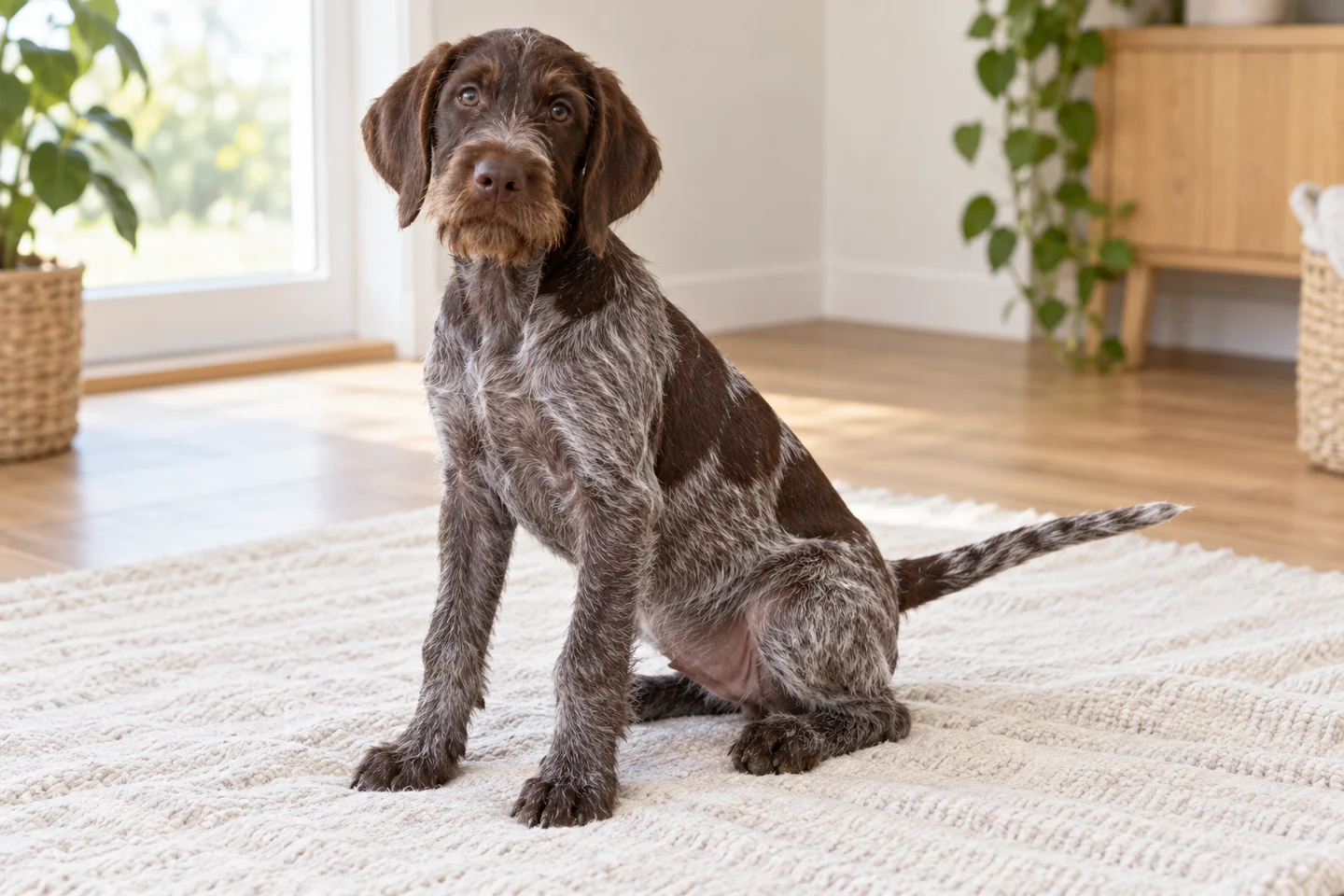
A beard and expressive eyebrows can invite close face-to-face attention from a child, but the dog still needs room to choose contact. Teach children to remain beside rather than over the animal and to stop when it turns away. Arrange a protected resting area that is not part of play. Children should not remove food, climb on the body, or hold the head for affection. Adults must take responsibility for keeping those boundaries during everyday activity and visits.
Excited running games also need planning. A large pointer turning quickly through a room can knock a child down, and grabbing equipment during the rush creates another difficult interaction. Use gates or separate spaces before excitement builds and practise a resting station at quieter times. Review any incidents with children in the individual dog's history. If close supervision cannot be maintained, provide comfortable separation. Friendly contact at one meeting does not establish that the dog can manage a different child's movement, noise, or approach to a valued possession.
Aggression, guarding, and what to tell a professional
Describe concerning behavior as an event with circumstances. Record the resource involved, who approached, the distance, the dog's available escape route, and the response of those nearby. A snap during removal of a wet harness has different immediate management needs from repeated threats at a garden boundary. Avoid using working drive or loyalty as a complete explanation. Those broad descriptions cannot tell a professional whether pain, fear, resource protection, frustration, or several factors require assessment.
Protect the household while help is arranged. Stop provoking the situation, separate valuable items where needed, and tell the veterinary team about sudden changes or handling sensitivity. Pain and illness can affect behavior, so a medical assessment may be part of the plan. Do not punish the dog for warning or assume silence means comfort. Share a clear incident history with carers, including what the current management requires. Where a bite has occurred, professional guidance should shape future contact rather than an owner's hope that the episode was an isolated misunderstanding.
Cats, wildlife, and secure boundaries
A pointer's behavior around familiar people says little about its response to a running cat or a small pet. Ask for specific observed history, including whether previous contact involved barriers and supervision. Protect vulnerable animals physically and avoid introducing them as a test of obedience. A dog that has remained still beside a resting cat may make a different choice when movement starts. House layout must allow animals to eat, rest, and travel through necessary spaces without persistent pressure.
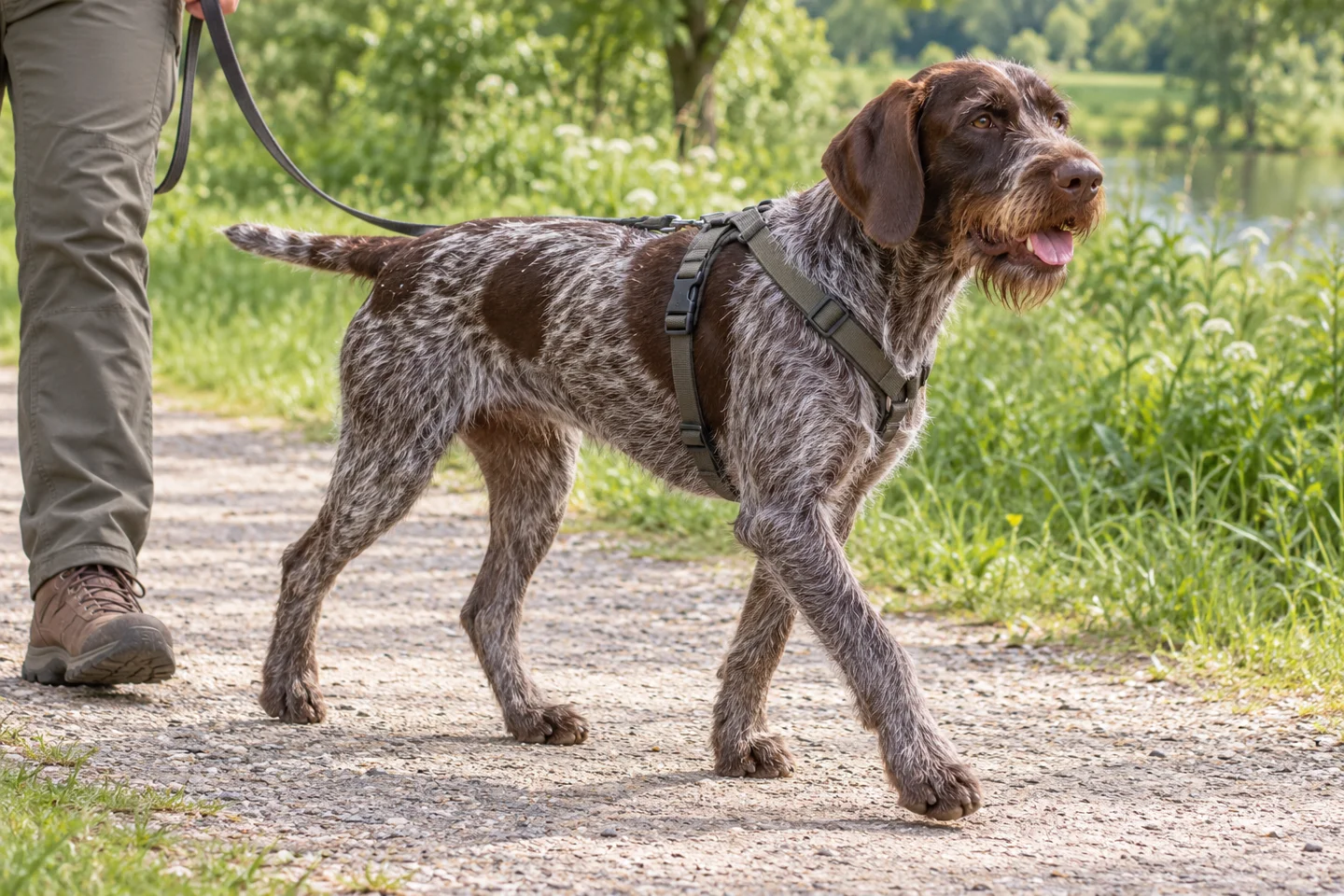
Inspect fences and gates before relying on a garden. Check the ground level, access used by visitors, and objects that create routes over a barrier. Teach returning indoors when nothing urgent is happening, and reward it without always ending all enjoyment. In public, select equipment and routes that prevent pursuit while skills develop. A long line requires suitable handling and open space; it is not a universal solution near roads, livestock, dense vegetation, or people who could be caught by it.
Other dogs and compatible activities
Look for a companion whose preferred pace and contact style suit this individual. Some dogs enjoy chasing with regular pauses; others prefer sniffing along a path with little bodily contact. Begin in a place where handlers can move apart and the dogs can explore separately. Watch the animal receiving attention as carefully as the one offering it. Repeated avoidance, stiff posture, or attempts to hide behind a person are reasons to create space rather than encourage another approach.
End while both participants are still comfortable. A first meeting does not need wrestling or prolonged close restraint to be successful. At home, arrange independent meals and resting places as dogs adjust, and manage access to cherished objects. Outdoor familiarity does not settle every indoor question. Tell the other handler about incidents, present restrictions, and what usually helps this dog recover after excitement. Accurate information makes it easier to choose an activity that each animal can enjoy without asking one to absorb the other's persistent pressure.
Grooming the wire coat and beard
Discuss the actual coat with a groomer familiar with wire-coated dogs. The methods and frequency needed depend on texture, condition, lifestyle, and the chosen practical finish. Ask for a demonstration of gentle maintenance rather than assuming every wire coat should be treated identically. Check beneath furnishings for tangles, debris, and skin changes. Tight matting or a dog that becomes painful during care needs professional attention; pulling harder or cutting blindly close to the skin can cause injury.
The beard deserves an ordinary cleaning and drying routine because water and food can collect there. Check the skin beneath it if odor or irritation develops and obtain veterinary advice for persistent problems. Examine the visible ears and seek help for discharge, pain, head shaking, or unusual smell. Do not insert objects deeply or reuse old medicine without instructions. Teach brief cooperative sessions for feet, nails, mouth, and face so essential care does not depend on surprise restraint when the dog is already tired after work.
Health screening and program-specific evidence
The AKC's German Wirehaired Pointer recommendations list hip evaluation, elbow evaluation, cardiac examination, ophthalmologist evaluation, and thyroid evaluation. Ask for identifiable results and the dates and methods behind them. If a source follows another registry's program, request its precise requirements and supporting records. Similar names and shared working history do not establish that every program has the same tests or that a performance result answers a health question.
Discuss significant diagnoses in close relatives and ask how later owner reports are collected. A screening result addresses a particular assessment at a particular time; it does not certify lifelong freedom from disease. Commercial DNA panels also test selected variants rather than every possible condition. For an adult with missing records, document the gap and plan current care with a veterinarian. Avoid inferring normal hips, eyes, or thyroid function from a strong working demonstration. Enthusiasm and appearance supply observations, while the relevant examination or test supplies different evidence.
Nutrition and practical observation
Feed a complete diet suited to age, activity, condition, and medical needs. Measure a starting allowance and include rewards used during training and handling. Check ribs and body condition beneath the rough coat with veterinary guidance. A reduction in work or a period of recovery may require a portion review. Separate feeding areas make it easier to monitor intake and prevent competition, particularly where another dog quickly finishes its own meal and searches for more.
Track persistent changes in appetite, drinking, stool, movement, or behavior and seek advice rather than attributing everything to hard exercise. Know the route to urgent care, especially when traveling to an unfamiliar working area. Collapse, breathing difficulty, severe distress, or repeated unproductive retching requires prompt veterinary attention. Give carers medical contacts, current treatment instructions, and relevant history. A prepared transport plan matters when a large dog cannot walk comfortably; the person available that day may be unable to lift it safely without suitable help.
Rest, absences, and help from another carer
Practise quiet periods while somebody remains at home before building absences gradually. A dog that sleeps nearby during an evening has not necessarily learned to cope with everyone leaving. Observe what happens after departure where possible, and seek help for sustained distress or unsafe escape attempts. Arrange care the animal can presently manage rather than extending panic in the hope that endurance will develop. Any change in schedule should take account of the individual's current skills.
A backup carer needs a practical handover. Demonstrate equipment, routes, gate routines, food measures, and the cues used for exchanges or waiting. Start with a short trial while the owner is available. Ask what was difficult and adjust before planning a full day away. Someone experienced with dogs generally may still need to learn this animal's response to birds, visitors, or a muddy return from a walk. Reliable support depends on the details working in practice, not simply on the person's willingness to help.
Mixes, suitability, and costs
A German Wirehaired Pointer mix can vary in furnishings, shedding, size, and behavioral priorities. The appearance of a beard does not establish a predictable maintenance schedule or a particular working ability. Request relevant parent information where ancestry is documented, and assess an adult's actual behavior. Be cautious about claims that a cross automatically removes inherited problems or combines only the easiest qualities. Each dog needs its own health and suitability assessment.
Budget for grooming support where needed, training, transport, reliable care, preventive medicine, and emergencies. Discuss hunting interest and other animals honestly with the source, along with working hours and the physical layout of the home. A household can make a thoughtful plan without participating in every traditional activity, but it must offer safe outlets and workable management. If the proposed routine depends on the dog being calm without teaching, ignoring wildlife, or accepting a crowded house immediately, change the plan before committing.
dogsDating meetings and private coordinates
On dogsDating, describe the dog's current social preferences and any limits recommended by a professional. A clear account of enjoying spaced walks while finding tight greetings difficult helps another handler choose wisely. Keep exact home coordinates private, and agree on a public location with room to leave. Check practical access and avoid a meeting that starts inside a narrow gate with loose dogs gathering around the arrival point.
Begin with separate exploration and movement in the same general direction. Keep valued toys and food out of the encounter, and create a pause if either dog repeatedly seeks distance. Finish early if the conditions become too difficult. A successful outing can be a short comfortable walk without direct play. It supplies information about that pairing in that setting, while home sharing and reproductive decisions remain separate questions requiring their own evidence, planning, and appropriate health discussion.
Sources and editorial notes
Sources checked October 21, 2026. Breed measurements describe reference ranges, not a diagnosis or an individual dog's ideal weight. Images are AI-generated breed illustrations and do not document a particular dog or health condition.
- VCA Animal Hospitals: Grooming and coat care for your dog
- VCA Animal Hospitals: Ear infections in dogs
- VCA Animal Hospitals: Common emergencies in dogs
- VCA Animal Hospitals: Food aggression in puppies
- VCA Animal Hospitals: Heat stroke in dogs
- VCA Animal Hospitals: Aggression toward unfamiliar dogs, diagnosis
- AAHA: Feeding plans for healthy, appropriate weight cats and dogs
- Orthopedic Foundation for Animals: CHIC health screening programs
- AVSAB: Humane Dog Training Position Statement
- FCI: German Wirehaired Pointer official breed standard
- AKC: Sporting Group Health Testing Requirements
Keep getting to know dogs.
Read another guide or return to your dogsDating community.
Explore breed guidesBack to dogsDating