Giant Schnauzer
A large German working breed with a harsh coat, furnished face, and the strength to make careful visitor routines and training essential.
How these guides are researched and reviewed
- Origin
- Germany
- Adult height
- 60–70 cm, both sexes
- Adult weight
- 35–47 kg
- Coat
- Harsh wire coat with beard and eyebrows
General information for owners. These articles have not been reviewed by a veterinarian. Medical decisions need your dog's history and an examination.
The Giant Schnauzer as a working breed
The Giant Schnauzer developed in southern Germany, where its history includes driving cattle. The FCI account records entry in the breed stud book from 1913 and recognition as a working breed in 1925. It shares a recognizable coat and outline with smaller Schnauzers but is a distinct large breed. A prospective owner should plan for the adult's strength and responses to its surroundings, rather than imagine that familiar eyebrows make it a larger version of an easy household ornament.
Ask a source how its adult dogs live when they are away from formal work or showing. Observe a transition through a doorway, the arrival of an unfamiliar person, and the end of an activity where possible. These ordinary situations reveal practical demands that a posed photograph cannot. A knowledgeable breeder or rescue should discuss the animal's limits as well as its accomplishments. Match the dog's present skills and likely support needs to the home, including the people who will care for it when the main handler is absent.
Adult dimensions and natural appearance
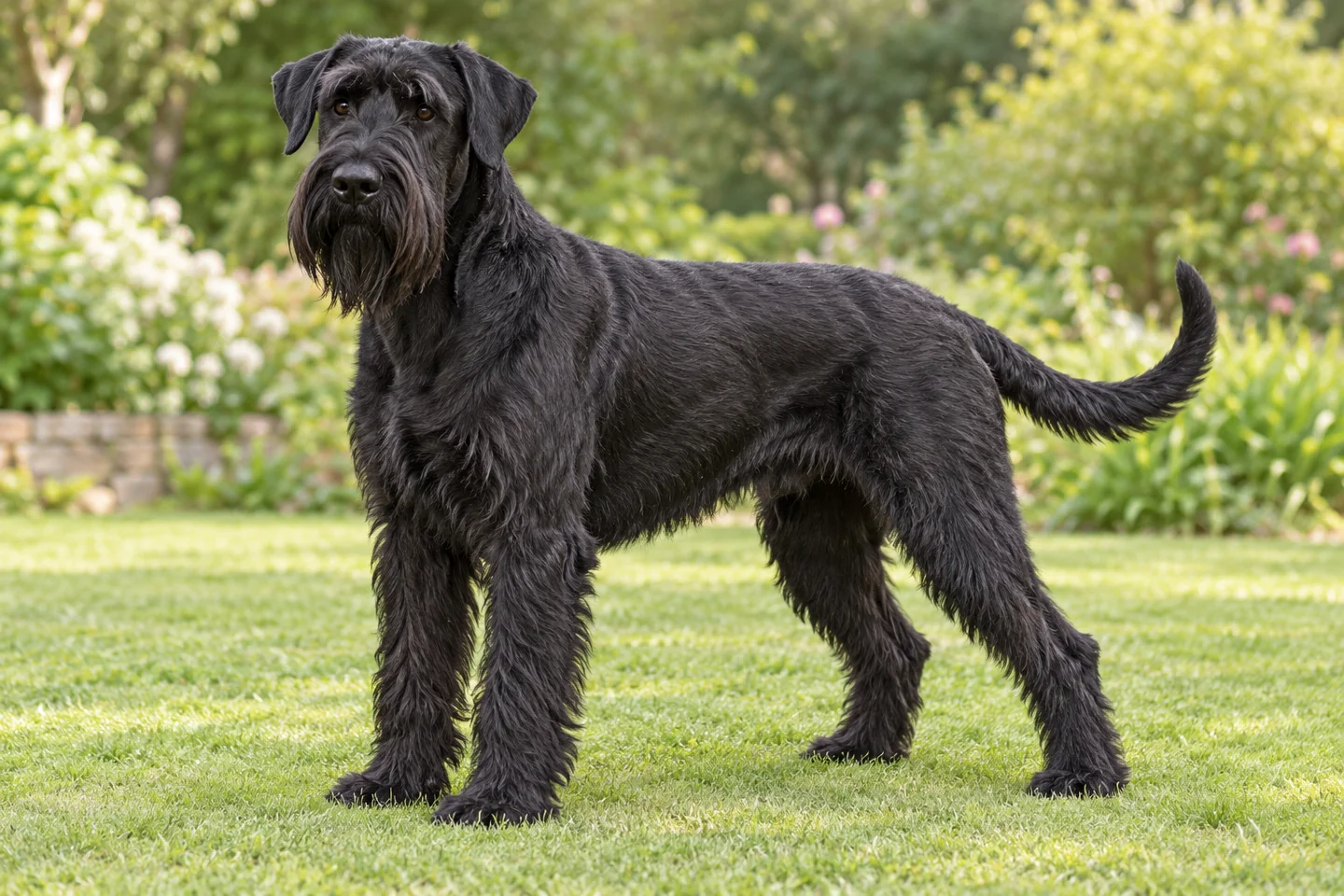
The FCI standard specifies a height of 60–70 cm for both sexes and a weight of 35–47 kg. It describes a powerful, squarely built dog with a harsh coat and characteristic facial furnishings. The illustrations here show a black Giant Schnauzer with natural drop ears and a full tail. Neither an ear alteration nor a dramatic pose is necessary to explain the breed. A dark coat and strong outline also cannot establish whether a particular dog will feel comfortable around an unfamiliar visitor.
Before taking one home, measure the practical spaces. Can the adult turn in the vehicle arrangement, pass safely through a narrow entrance, and rest away from household traffic? Consider who could assist if illness makes walking difficult. Weight figures are reference information, not feeding targets. Ask the veterinary team to assess condition beneath the coat and discuss growth. Equipment must fit the individual without restricting movement or rubbing, and anyone expected to walk the dog needs practice with that equipment before a difficult encounter occurs.
Noticing people without taking charge of them
A Giant Schnauzer may pay close attention to a person approaching the home. Give that attention a manageable destination: turning toward the handler, moving behind a barrier, or resting on a familiar station. Practise with planned arrivals before relying on the routine during an unexpected delivery. The dog's size means an impulsive movement can have consequences even when the person handling it believes the encounter is friendly. Physical arrangements should prevent contact while the behavior is still being learned.
Agree on what visitors will do. They should know where to wait and which door will open, without needing to read the animal's expression through a gate. Put the dog in its prepared space before admitting people. Once the immediate activity settles, decide whether contact is appropriate for this individual and this visitor. A greeting is optional. Calm separation can allow a visit to proceed comfortably while avoiding a situation in which a worried dog or guest must tolerate repeated approaches.
Training for strength, control, and cooperation
Start with actions that make care and movement easier: entering a resting area, waiting while a door opens, following a hand target, releasing an object, and walking on equipment without pulling. Teach each in a setting where the dog can succeed, then add difficulty gradually. A behavior learned beside the kitchen table may need careful practice at a busy entrance. Repeating a cue more loudly does not supply the missing experience of performing it under that distraction.
AVSAB recommends reward-based methods. With a powerful dog, a plan based on confrontation can expose people to avoidable danger while failing to resolve fear or confusion. Ask trainers how they prevent rehearsal of unwanted behavior and how they respond when the dog is uncomfortable. The answer should include management and teaching, with veterinary or behavior referral when needed. Show family members and carers the same practical routine. A system usable only by the strongest person in the home leaves the household vulnerable whenever that person is unavailable.
Exercise with mental work and real rest
Plan exercise through the individual dog's age, health, condition, and experience. Suitable walks, searching tasks, training, and appropriate movement in secure space can serve different needs. Discuss strenuous activities with the veterinary team, especially during growth or after injury. An enthusiastic dog may attempt more than its body can comfortably recover from. Notice gait, willingness to rise, and behavior later in the day rather than judging the plan only by excitement at the sight of the lead.
Teach an end to activity. A household that restarts a game whenever the dog becomes restless may accidentally build a routine that is difficult to sustain. Provide a quiet place and reward settling at times when the animal is ready to succeed. Adapt to heat with appropriate timing, shade, water, and attention to signs of distress. A dark coat does not provide a complete measure of risk, and a motivated working dog may continue despite difficulty. The handler must make decisions about surfaces, weather, effort, and finishing the session.
Children in a home with a large dog
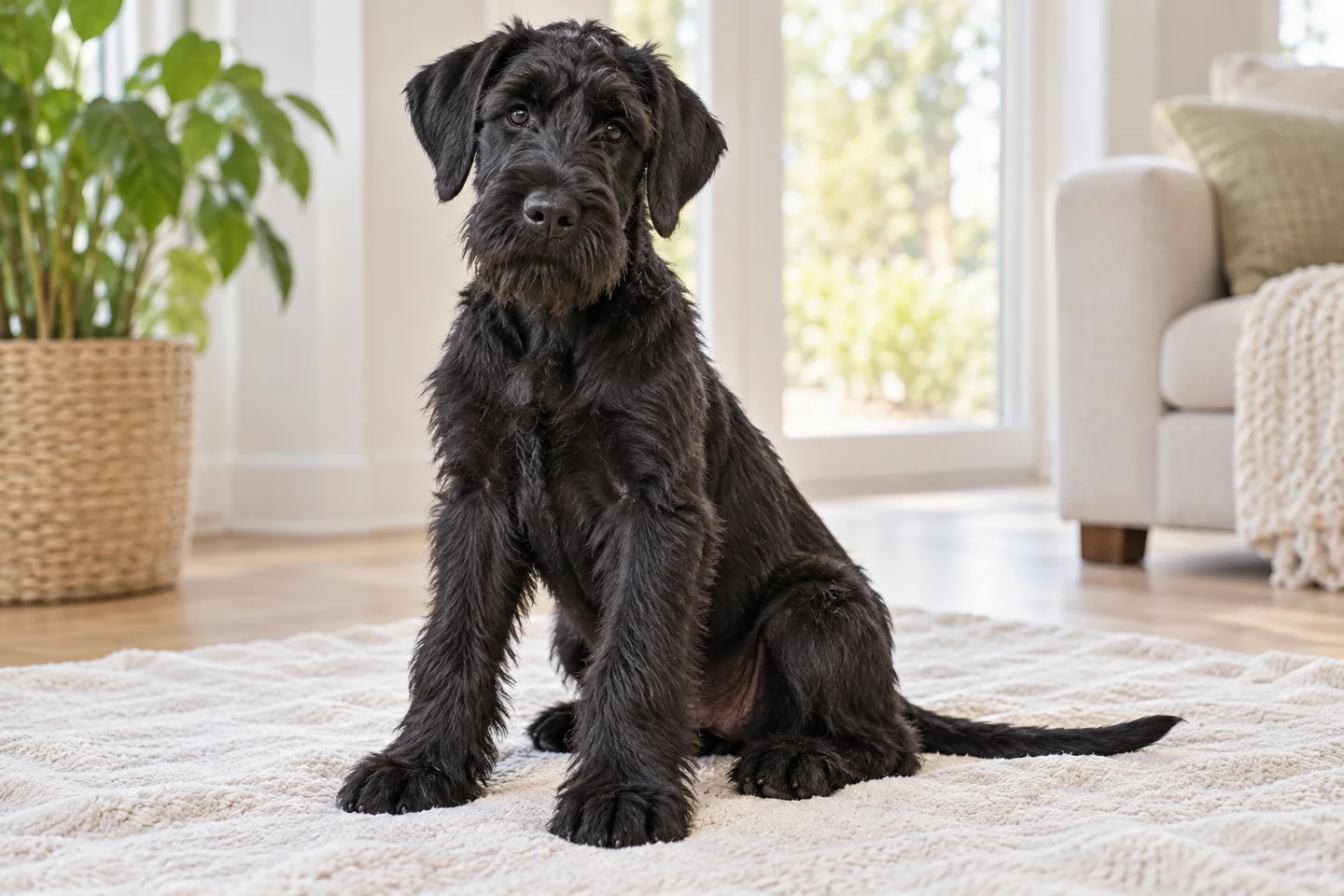
Plan the physical layout around the adult's size. A turn in a narrow hallway can push a young child against furniture without any aggressive intent. Gates and designated resting places help adults manage busy periods before excitement builds. Children should have protected areas of their own, while the dog's bed should remain free from interruptions. Teach calm movement and respect for space, with adults responsible for enforcing the arrangement rather than expecting a child to remember every rule.
Food, chews, sleeping, and uncomfortable care are adult responsibilities. Children should not take possessions, climb on the animal, hug its neck, or hold its face still. An adult must observe contact closely and intervene when the dog seeks distance or the child becomes excited. If that supervision is unavailable, separate comfortably. Discuss the specific dog's history around children before placement. A calm encounter with one visitor cannot establish safety for every age, noise level, movement pattern, or situation involving something the dog values.
Aggression and the need for a factual assessment
A threatening display by a Giant Schnauzer deserves a practical response based on the event. Write down who approached, what the dog had, the distance, the route of retreat, and what happened immediately before and afterward. Calling the animal protective does not explain whether the behavior involved fear, pain, guarding, frustration, or several interacting factors. Those distinctions affect the management needed and the questions a professional will ask.
Prevent further exposure while advice is arranged. A sudden change during touch or movement needs veterinary attention, and the clinic should know about handling concerns before arrival. Do not punish warnings or repeatedly provoke an incident to obtain a video. Work with a qualified behavior professional in coordination with the veterinarian where appropriate. Give carers an honest account of snaps, bites, or threats and the current restrictions. The animal's strength means a plan must work before the next encounter, rather than depend on somebody catching it at the last moment.
Other dogs and the space to disengage
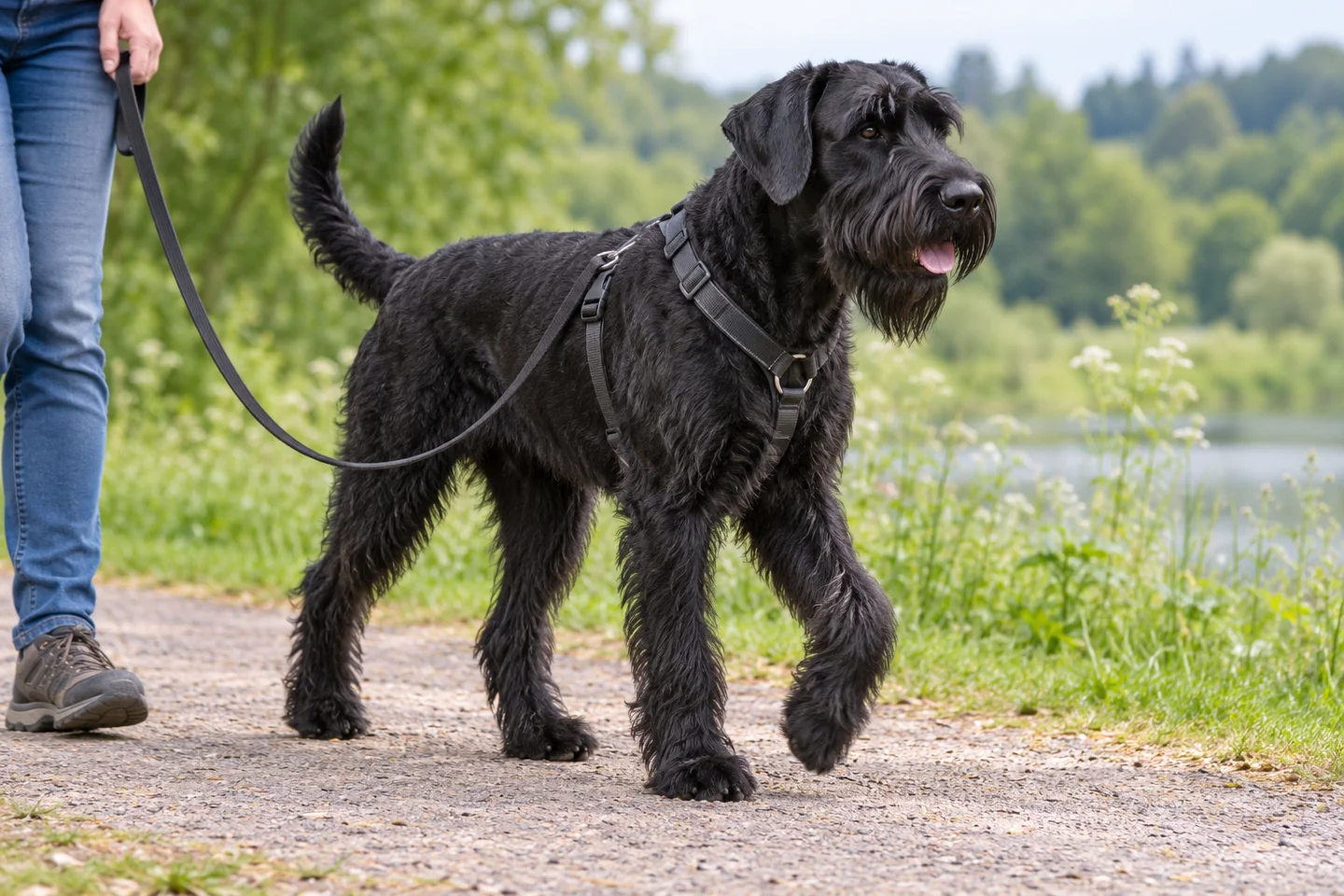
Choose introductions with room to move independently. A large dog's approach can feel intense to a smaller or more cautious companion, even if the approaching dog wants contact. Begin with separate exploration and observe whether both can pause and turn away. Do not allow persistent following simply because no fight has occurred. An animal that repeatedly seeks distance needs the handler to provide it before the encounter becomes a confrontation.
For a household introduction, think beyond the first walk. Arrange separate meals, beds, and access to valued objects during adjustment. Watch narrow passages and competition for human attention as well as obvious toys. A familiar outdoor companion may still find close indoor sharing difficult. Make the separation system simple enough for every carer to use. If tension persists or incidents occur, obtain professional guidance rather than leaving the dogs to settle all disagreements themselves. Size and confidence differences can make that approach especially costly for the more vulnerable animal.
Small animals, gates, and neighborhood life
Ask what the dog has actually lived with and under which conditions. A history of seeing a cat through a barrier does not establish safe unsupervised sharing, and quiet behavior toward a resting animal may change when it runs. Protect small pets with secure physical arrangements. Avoid testing control by placing a vulnerable animal within reach. The home must allow each resident to eat, sleep, and travel to necessary areas without being repeatedly pursued or watched at close range.
Inspect garden boundaries and the access used by workers or visitors. A large body can exploit a weak gate or move objects that seemed adequate for another dog. Use a planned routine for deliveries and maintenance. On walks, select routes that let the handler create space before a difficult pass. Practise turning away in easy conditions so it is available when needed. If the person responsible cannot safely manage the adult in the likely neighborhood setting, solve that problem with suitable support before relying on daily improvisation.
Grooming the beard, furnishings, and wire coat
Arrange a consultation with a groomer who can assess the actual coat and explain the available maintenance methods. Stripping and clipping have different practical implications, and the chosen finish should fit the dog's condition and tolerance as well as the owner's goals. Ask how to maintain between visits and which areas tend to tangle on this individual. Tight mats or painful skin need professional attention rather than forceful pulling or scissors used against a hidden skin surface.
Clean and dry the beard as needed after food and water, checking beneath the hair if irritation or odor develops. Maintain short, cooperative sessions for feet, nails, mouth, and equipment handling. For ears, seek veterinary advice for shaking, pain, discharge, or unusual odor; do not probe deeply or reuse old medication without instructions. Tell a groomer about previous difficulty when booking. A dog of this size needs a planned approach to safe handling, with pauses and appropriate professional support, rather than a surprise struggle once a long appointment has started.
Health screening and family records
The AKC's Giant Schnauzer recommendations list hip evaluation, elbow evaluation, ophthalmologist evaluation, and thyroid evaluation. Ask for the actual results with dog identifiers, dates, and methods. Discuss them with a veterinarian or the relevant health program if interpretation is unclear. A general statement that a dog has been checked does not establish that these assessments occurred, and a performance title does not substitute for the relevant health evidence.
Also ask about significant illness in close relatives and how the source receives updates as dogs age. Screening addresses selected risks and cannot promise lifelong health. A commercial DNA panel covers particular variants, while examinations and clinical history supply other information. When records are absent for an adopted adult, make that explicit and establish care from present findings. Do not infer normal joints or thyroid function from an active appearance. Preserve results in a form that can be shared with future carers and clinicians rather than relying on an old conversation about everything having been fine.
Feeding, body condition, and urgent care
Choose a complete diet suited to the animal's life stage and medical needs, measure a starting portion, and review body condition with the veterinary team. Include rewards used for training and care. A beard can make meals look messier without revealing the amount actually eaten, so observe intake directly where necessary. Feed away from competition and give the dog time to finish without a child or another animal approaching the bowl.
Plan how to obtain urgent care before illness occurs. Severe breathing difficulty, collapse, repeated unproductive retching, or sudden abdominal enlargement requires prompt veterinary attention. Give a carer the relevant contact information and transport arrangements, particularly if one person could not move an unwell adult safely. Persistent changes in appetite, drinking, movement, skin, or behavior also warrant advice. A working reputation should not become a reason to wait through a significant change. Record when the problem started and any possible access to medicines, waste, or other hazards to help the clinical team assess it.
Alone time and a realistic support network
Teach short calm separations gradually, beginning within the dog's current coping ability. Resting while the owner works nearby is different from tolerating everyone leaving the home. Where possible, observe what happens after departure rather than judging only by the greeting on return. Sustained distress, destructive escape attempts, or an inability to settle calls for veterinary and behavior advice. Arrange care that the dog can manage now while the longer-term plan develops.
A backup handler needs practice with this animal. Demonstrate entrances, equipment, the chosen walk, and the response to an approaching person or dog. Arrange an initial trial while help is available, then discuss what needs adjustment. Experience with smaller or less responsive dogs does not automatically prepare somebody for the physical and practical demands here. Budget for suitable professional help when needed. An owner's willingness to work hard is valuable, but reliable care also depends on support that remains available during illness, travel, and changes in employment.
Mixes, costs, and choosing the household
A Giant Schnauzer mix may vary in size, coat texture, maintenance, activity, and response to unfamiliar people. A combined breed name cannot guarantee moderate versions of each parent's traits or freedom from inherited disease. Request relevant health information where ancestry is known and evaluate an adult's present behavior directly. A furnished face alone does not establish the degree of grooming, the eventual adult weight, or the type of social support the animal will need.
Costs include appropriate transport, substantial equipment, grooming, training support, reliable care, preventive medicine, and emergencies. Discuss stairs, access through the building, visitors, children, and other animals with the source before committing. Consider later life as well as the puppy months: a household that can manage a young mobile adult may need ramps, changed sleeping arrangements, or help if mobility declines. Choose from the practical evidence available, including any limitations, rather than a promise that confidence and affection will solve every difficulty after arrival.
dogsDating and a controlled first meeting
Describe current social preferences clearly on dogsDating, including any professional restrictions and relevant incidents. Keep exact home coordinates private and agree on a public location with generous space and an easy exit. Both handlers should be able to manage their animals without depending on the other person to hold back a greeting. Check entrances and nearby activity before arriving so an otherwise suitable plan does not begin in an unavoidable crowd.
Start with separate sniffing and walking at a comfortable distance. Avoid shared valuable objects and interrupt repeated approaches when either dog seeks a break. A short outing can be a complete success without direct play. End if control, recovery, or comfort becomes difficult. The information gained applies to those individuals in that setting. Home sharing and breeding suitability require separate assessment, records, and decisions; enjoying one walk does not answer questions about indoor resources, reproductive health, or future management.
Sources and editorial notes
Sources checked October 21, 2026. Breed measurements describe reference ranges, not a diagnosis or an individual dog's ideal weight. Images are AI-generated breed illustrations and do not document a particular dog or health condition.
- VCA Animal Hospitals: Grooming and coat care for your dog
- VCA Animal Hospitals: Ear infections in dogs
- VCA Animal Hospitals: Common emergencies in dogs
- VCA Animal Hospitals: Food aggression in puppies
- VCA Animal Hospitals: Heat stroke in dogs
- VCA Animal Hospitals: Aggression toward unfamiliar dogs, diagnosis
- AAHA: Feeding plans for healthy, appropriate weight cats and dogs
- Orthopedic Foundation for Animals: CHIC health screening programs
- AVSAB: Humane Dog Training Position Statement
- FCI: Giant Schnauzer official breed standard
- AKC: Working Group Health Testing Requirements
Keep getting to know dogs.
Read another guide or return to your dogsDating community.
Explore breed guidesBack to dogsDating