Grand Basset Griffon Vendéen
A rough-coated French scent hound with a long, low outline, substantial ears, and an outdoor interest that needs secure outlets.
How these guides are researched and reviewed
- Origin
- France
- Adult male height
- 40–44 cm
- Adult female height
- 39–43 cm
- Coat
- Harsh; several permitted colors, illustrated tricolor
General information for owners. These articles have not been reviewed by a veterinarian. Medical decisions need your dog's history and an examination.
Understanding Grand, Basset, and Griffon
The Grand Basset Griffon Vendéen is a French scent hound associated with the Vendée. Its name describes a larger basset form with a rough coat. It is a distinct breed from the Petit Basset Griffon Vendéen and should also be distinguished from the taller Briquet Griffon Vendéen. The FCI history traces its selection from larger Griffon stock, with work beginning in the late nineteenth century and Paul Dezamy contributing to the established type. Those relationships explain a family resemblance without making the breeds interchangeable.
Ask a source to identify the dog through records rather than a photograph caption alone. A long-bodied furnished hound may be difficult to distinguish in an image without scale and provenance. For a companion home, discuss what this individual does when a scent catches its attention, a visitor arrives, or the household leaves. The useful assessment combines identity with current behavior. A documented pedigree cannot tell the owner that recall, quiet waiting, or comfortable handling has already been taught under the conditions of a new home.
Adult dimensions and an appropriate outline
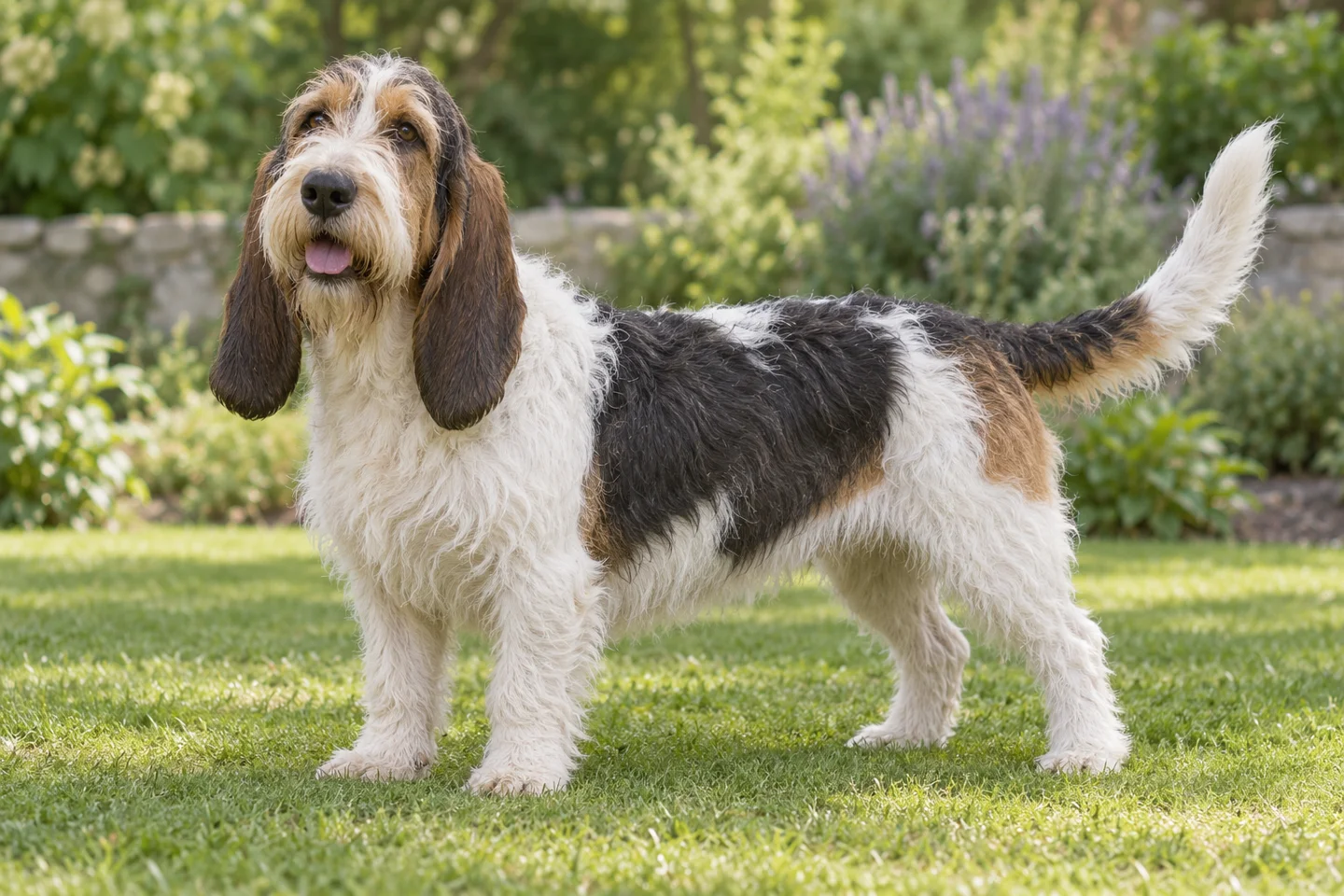
The FCI height range is 40–44 cm for males and 39–43 cm for females. The standard describes a somewhat elongated basset outline with straight forelegs and a harsh coat that should not become excessively long. The illustrations here use tricolor markings, natural ears, and a full tail. The breed's name does not mean that it should look like a shrunken version of every larger Griffon. Check the correct standard when comparing size and proportions.
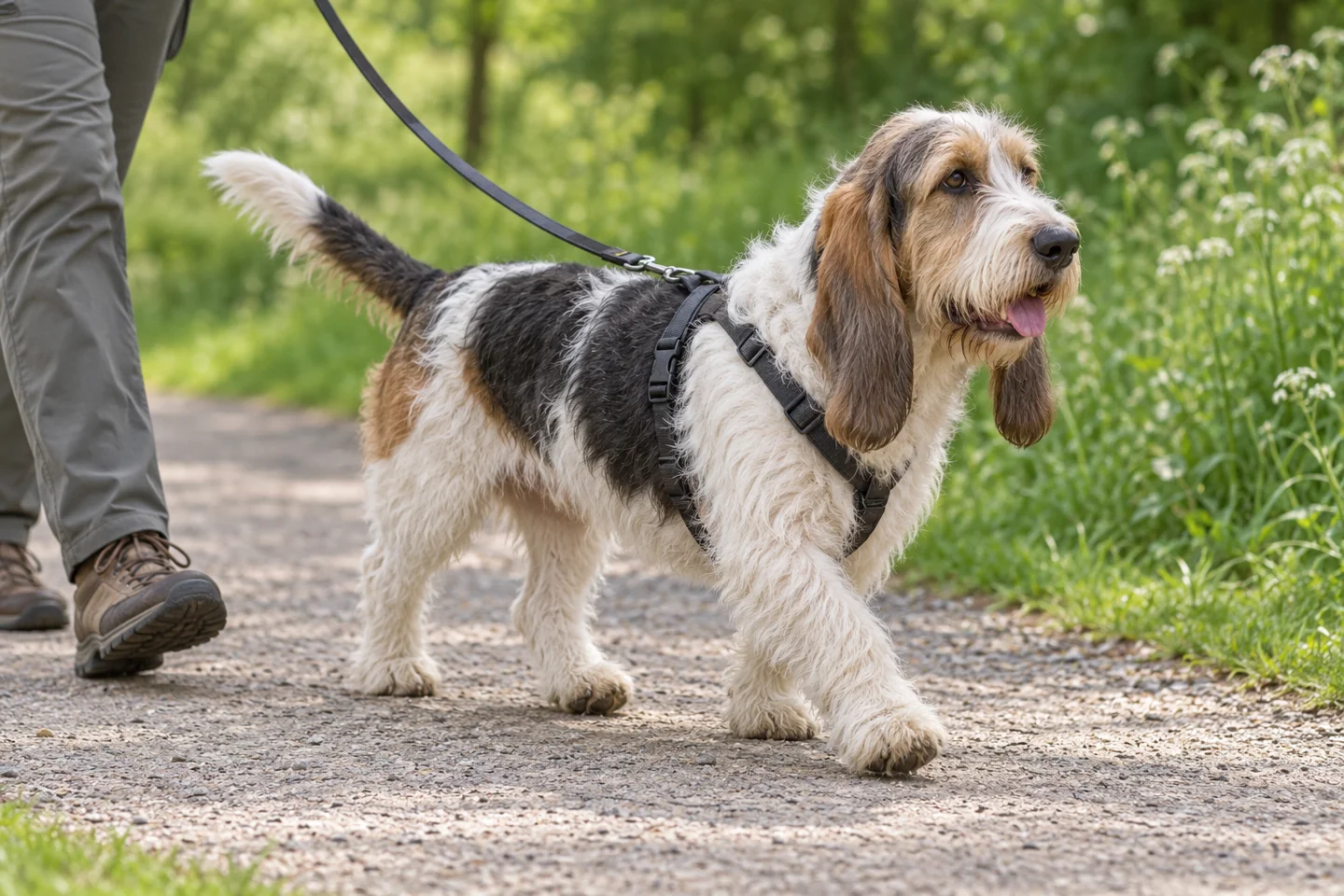
Before placement, consider transport and access. A low hound can still be substantial to assist, especially when tired, injured, or reluctant to enter a vehicle. Ask the veterinary team about suitable support and fit equipment to the actual body rather than choosing by height alone. Check that straps are not tangled in furnishings and do not chafe. Growth and body condition need individual assessment. No owner should increase portions simply to reproduce the impression of a heavy adult in a photograph or assume that a longer body can be handled without considering its comfort.
The walk begins with the nose
A GBGV may find the scent beside a gate more interesting than the destination its handler selected. Make time for appropriate investigation while maintaining physical security. Watch the dog's ability to turn back toward you and respond before the scent becomes all-consuming. Reward a voluntary check-in and practise changing direction in easy places. If every request interrupts the most interesting moment and ends the outing, the dog has little reason to view cooperation as worthwhile.
Use scent interest constructively. A simple search for a familiar object in a secure area can teach waiting, looking, finding, and returning to the handler. Keep the first tasks easy enough to understand and avoid leaving objects where wildlife or another dog may take them. For organized tracking or hunting-related work, choose instruction consistent with humane training and local access rules. The working background does not give a companion automatic permission to pursue animals or range across property. A safe outlet needs both an interesting task and boundaries that remain effective when interest intensifies.
Training when the surroundings offer competing rewards
Train actions that solve everyday problems: coming through a doorway, standing while equipment is attached, exchanging a found item, and moving to a comfortable resting place. Use rewards the dog values and make the action clear. A hound sniffing a new environment may need a shorter task or more space before it can respond. Adjusting the request supplies a path to success, while endlessly repeating a word risks turning it into background noise during the activity already being enjoyed.
AVSAB supports reward-based methods. Use that evidence to choose modern instruction rather than treating an old breed description as a complete training manual. Ask how a trainer handles fear, frustration, or a dog unable to disengage from a scent. Good practical answers include management, achievable steps, and professional referral when behavior or medical concerns require it. Teach the household the same simple routines. A backup carer should be able to use the plan without relying on stronger restraint or an argument over whether the animal is being stubborn.
Exercise that suits a low working hound
Choose activity through age, conditioning, health, and the response later that day. A low outline should not imply a life without exercise, and a working history should not imply that every route or distance is suitable. Walking with sniffing opportunities, appropriate movement in secure space, and learning tasks can serve different needs. Discuss demanding sport or increased exertion with the veterinary team, especially during growth or after an interruption caused by illness or injury.
Pay attention to surfaces, obstacles, and access at the end of the route. A dog that has enjoyed exploring may still need help with a high vehicle entrance. Provide quiet recovery at home and observe stiffness, persistent licking, or a change in willingness to move. Warm weather calls for altered timing, water, and close attention to difficulty. Excitement about a scent is not a safety assessment. The handler must choose conditions and stop when necessary rather than wait for the animal to abandon an absorbing task by itself.
Voice, neighbors, and a workable home
Listen to when the individual uses its voice. Is it during an outdoor scent pursuit, while waiting for another dog, when people pass the window, or after the family leaves? Those situations need different plans. A hound label does not provide a reason to ignore prolonged distress, and silence during a short viewing does not establish that the dog will remain quiet throughout an ordinary day. Ask for observations from the setting in which it currently lives.
Manage the environment while teaching alternatives. Reduce repeated access to a view that causes arousal, practise waiting in short steps, and build comfortable separation within the dog's abilities. If recordings show sustained distress after departure, obtain veterinary and behavior advice and arrange suitable care while the plan develops. In shared housing, discuss real conditions with the source, including corridor noise and unavoidable close passes. The practical question is whether the daily routine works for the dog and neighbors, with support available for the parts that still need teaching.
Children and the furnished face
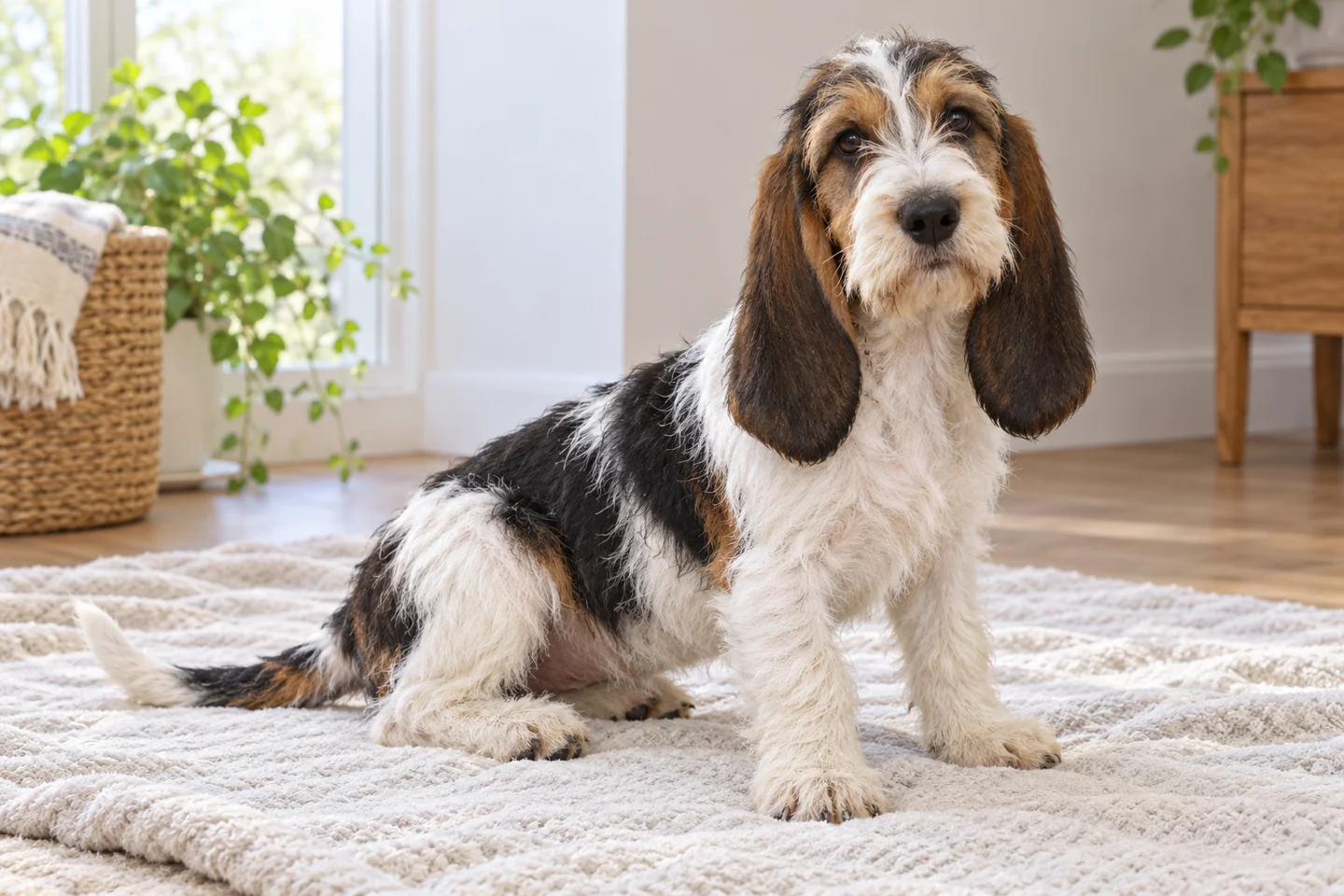
Long ears and a whiskered muzzle can attract a child's hands, so teach that these features are not handles. Children should invite contact from beside the dog and stop when it moves away. They should not hug tightly, lift, climb on, or restrain the animal. Give the hound a private bed and protect it when the household is busy. A dog that usually enjoys company still needs the ability to rest without a person following it into a confined place.
Adults should manage food, chews, and care tasks. Close supervision requires watching and being ready to intervene, not merely remaining somewhere nearby. During meals or visits where that attention is unavailable, separate comfortably. Ask about the individual dog's experience around children and any incidents, including the circumstances and ages involved. One pleasant greeting cannot establish comfort with a toddler reaching for an ear or taking a found object. Plan the environment so the child's learning does not depend on the dog tolerating repeated mistakes.
Aggression, warnings, and medical changes
If a dog growls, snaps, or threatens, describe the event accurately. Note the approach, distance, object or food involved, location, and whether the animal could leave. A response when a tangled ear is touched is a different immediate situation from conflict at a feeding area. Neither should be dismissed as simply a hound being difficult. The context allows a veterinarian and qualified behavior professional to identify the questions that need assessment and the management needed meanwhile.
Stop repeating the trigger and protect people and animals. A sudden change during handling warrants veterinary advice, with the clinic warned before arrival so an examination can be planned. Do not punish warning signals or repeatedly take possessions to prove that the behavior has improved. Teach safe exchanges separately under appropriate guidance and keep hazardous items inaccessible. Give carers a factual account of incidents and current limits. Omitting a snap because the person believes no harm was intended removes information the next handler may need to avoid injury.
Other dogs and the limits of a pack reputation
A background involving work around hounds does not guarantee that every individual welcomes every companion. Begin meetings with space and separate exploration. Watch the dog receiving an approach and whether it can leave, pause, or seek its handler. Repeated following can become unwelcome even when the pursuer appears playful. A short comfortable walk gives useful information without requiring bodily play or a prolonged face-to-face greeting on tight leads.
Indoor sharing needs its own plan. Arrange independent meals, beds, and management of valued possessions during adjustment. A hound may be relaxed beside a dog on a path and concerned when it approaches a sofa or a person at home. Watch narrow routes and resting interruptions as well as obvious toys. If tension persists, obtain professional help rather than assuming the animals must resolve all disagreements. The management should be reliable for the person caring for them on an ordinary busy evening, not only during a carefully watched first introduction.
Cats, wildlife, and secure outside space
Ask what the dog has actually experienced with cats or other animals, including the role of supervision and barriers. A calm response to a still animal does not predict every reaction to movement. Small pets need physical protection, and introductions should never use a vulnerable animal as a test of the hound's obedience. Arrange household access so each resident can reach food, water, and rest without being repeatedly followed or watched at close range.
Inspect gardens for gaps beneath gates, loose edges, and access points opened by workers. A barrier must work when an interesting scent lies beyond it, not merely when the dog is resting nearby. Teach returning indoors with rewards during quiet moments. In public, choose secure equipment and settings suited to present skills. A long line requires suitable space and careful handling, especially around vegetation, people, and other dogs. Off-lead access depends on the individual and location, while traffic, livestock, and wildlife may make restraint necessary regardless of the dog's progress elsewhere.
Grooming a practical rough coat
Ask a knowledgeable groomer to assess texture, furnishings, and the maintenance the actual coat needs. Demonstrate the home routine so advice can address where tangles form or care becomes uncomfortable. Check beneath ears, around equipment, and between moving body areas rather than brushing only the outer surface. Debris collected during exploration can remain hidden against the skin. Tight matting or painful areas need professional attention; scissors used blindly near the skin can cause injury when the dog shifts.
A practical finish should preserve comfort and access for checks. Discuss bathing, drying, and suitable tools without assuming every rough-coated dog needs an identical schedule. Persistent odor, irritation, or hair loss warrants veterinary advice rather than stronger products or more vigorous brushing. Teach a comfortable standing or resting position in brief sessions with pauses. If the dog begins resisting a previously easy task, investigate the change. A care routine is useful when it can reveal a problem and remain manageable, not when it produces a tidy photograph through repeated distress.
Ear, foot, and mouth care after exploration
Long ears and facial furnishings make inspection an important part of the return from an outing. Check the visible areas gently and teach the dog to participate before something becomes painful. Head shaking, discharge, unusual odor, or sensitivity needs veterinary advice. Do not push objects deeply into the ear canal or reuse medication prescribed for another episode. Tell the clinician what changed and when, including any recent vegetation, swimming, bathing, or handling difficulty.
Keep nail care and toothbrushing in the routine, with appropriate instruction and gradual practice. After rough ground, notice persistent licking or reluctance to bear weight rather than assuming the animal is simply tired. A thorn or skin problem should not become a household digging exercise with sharp tools. If care must be done by a professional, discuss handling concerns in advance. Planning time and support before the appointment allows safer choices than discovering a serious problem once the dog is already frightened or restrained.
Health records for a Grand Basset
The AKC's Grand Basset Griffon Vendéen recommendations list hip evaluation and ophthalmologist evaluation. Ask for identifiable results, dates, and the methods used, and check the current program followed by the source. Do not substitute a Petit Basset's test list or a commercial panel from a different hound for the evidence relevant here. Similar names and shared ancestry do not mean every breed has the same screening recommendations or disease variants.
Ask about significant illness in relatives and whether the source receives later updates from owners. Screening addresses selected concerns and cannot certify lifelong freedom from disease. A normal result also differs from an absence of information. For an adopted adult, record unknown ancestry and missing assessments honestly, then establish current care with the veterinarian. Discuss persistent clinical changes directly rather than using a lively appearance as reassurance. The breed standard describes the desired type; it does not provide a population disease rate or a guarantee for an individual dog.
Nutrition, costs, and daily support
Choose a complete food appropriate to life stage, body condition, and medical needs. Measure an allowance that includes food used in training and grooming practice, and review it when activity changes. Feed separately from other pets so intake can be observed without competition. Ask the veterinary team to demonstrate a condition check beneath the coat. The dog's outline should not be used as an excuse for excess weight or as a reason to pursue an arbitrary number.
Budget for training help, grooming advice, suitable transport, reliable care, preventive medicine, and emergencies. Test a backup carer with a short practical handover while support is available. Demonstrate gate routines, equipment, the usual route, and the response to an interesting scent. Consider future access if mobility declines or the owner cannot lift an unwell adult. A workable home depends on care that can be delivered and adapted, rather than the amount of outdoor space alone or an expectation that another dog will solve every absence.
Mixes and dogsDating meetings
A Grand Basset mix can vary in proportions, coat, voice, and pursuit interest. A combined name cannot guarantee an average of the easiest traits or freedom from inherited disease. Request relevant parent records where known, and assess an adult's actual behavior. On dogsDating, describe preferences, relevant incidents, and any professional limits honestly. Keep exact home coordinates private and agree on a public route with room to separate.
Begin with walking and independent sniffing, keeping shared food and cherished toys out of the encounter. Create space if one participant repeatedly avoids contact or cannot recover from excitement. A short meeting may supply all the useful information needed that day. End while comfortable choices remain available. Enjoying a walk does not establish indoor sharing or reproductive suitability, which require their own evidence and planning. Both handlers should feel able to stop rather than continuing because an advertised breed personality suggested that friendship would be automatic.
Sources and editorial notes
Sources checked October 21, 2026. Breed measurements describe reference ranges, not a diagnosis or an individual dog's ideal weight. Images are AI-generated breed illustrations and do not document a particular dog or health condition.
- VCA Animal Hospitals: Grooming and coat care for your dog
- VCA Animal Hospitals: Ear infections in dogs
- VCA Animal Hospitals: Common emergencies in dogs
- VCA Animal Hospitals: Food aggression in puppies
- VCA Animal Hospitals: Heat stroke in dogs
- VCA Animal Hospitals: Aggression toward unfamiliar dogs, diagnosis
- AAHA: Feeding plans for healthy, appropriate weight cats and dogs
- Orthopedic Foundation for Animals: CHIC health screening programs
- AVSAB: Humane Dog Training Position Statement
- FCI: Grand Basset Griffon Vendéen official breed standard
- AKC: Hound Group Health Testing Requirements
Keep getting to know dogs.
Read another guide or return to your dogsDating community.
Explore breed guidesBack to dogsDating