Griffon Fauve de Bretagne
A medium fawn rough-coated hound from Brittany whose care needs controlled scent outlets, realistic voice planning, practical grooming, and clear family-health information.
How these guides are researched and reviewed
- Origin
- France; Brittany
- Adult height
- 48–56 cm, with 2 cm tolerance for exceptional specimens
- Coat
- Harsh golden-wheaten to brick-red fawn
- Identity
- Distinct from the short-legged Basset Fauve de Bretagne
General information for owners. These articles have not been reviewed by a veterinarian. Medical decisions need your dog's history and an examination.
The full-legged Fauve
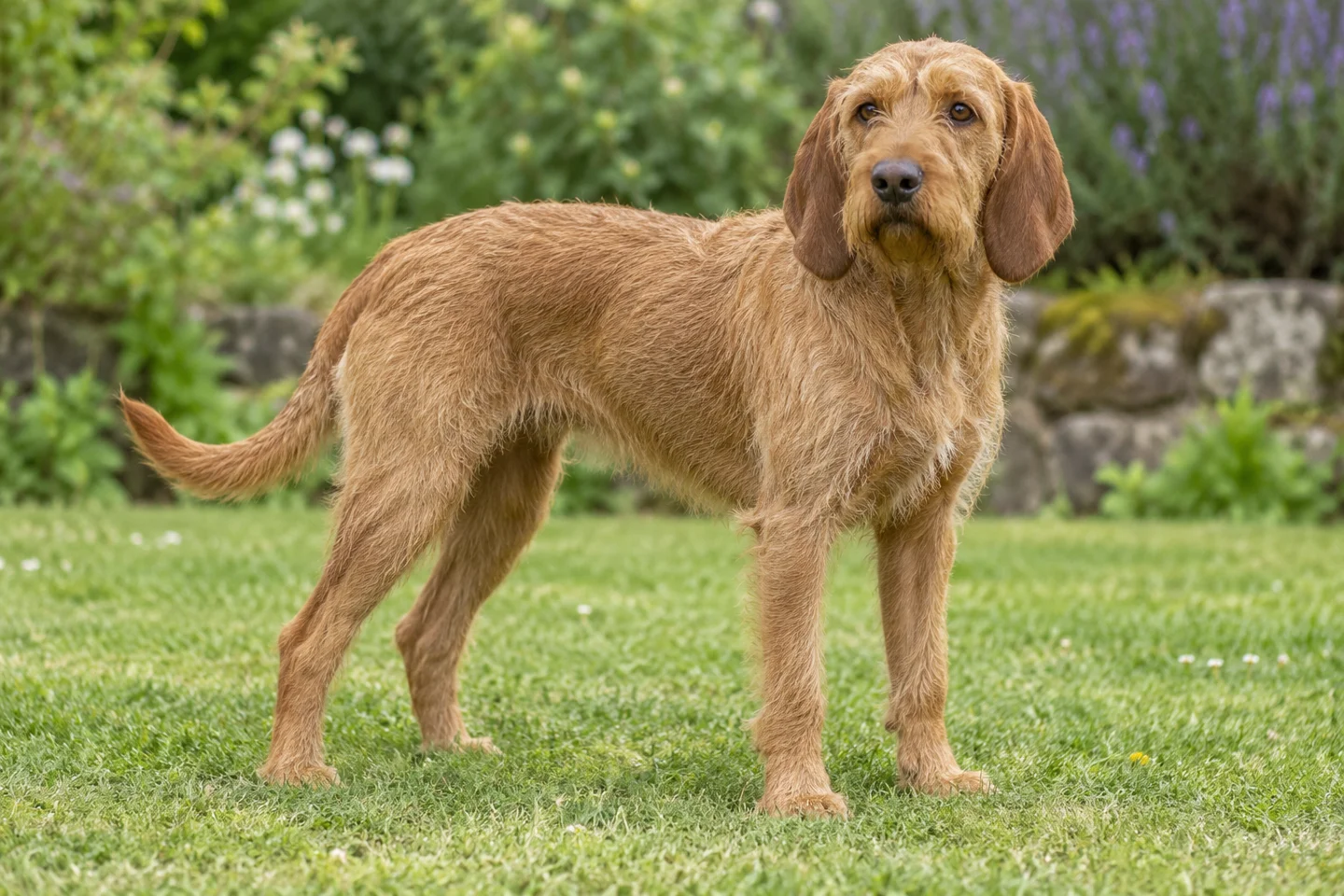
The Griffon Fauve de Bretagne is a medium-sized French scent hound with a rough fawn coat and full-length legs. It is distinct from the Basset Fauve de Bretagne, whose shorter outline can create different practical questions about access and handling. Confirm which breed a source is describing. A photograph of a shaggy fawn face without scale may not settle the matter. Use records where available, then assess the individual dog and the household routine it will actually enter.
Before placement, consider who will provide secure exploration, teach manageable responses around scent, and inspect the coat after outdoor activity. Ask about the voice as well as the appearance. A dog that suits rural outings may still need deliberate preparation for your particular neighborhood. Describe shared walls, working hours, and other animals honestly to the source. An appealing size does not remove the need for a reliable fence, competent care during absences, or support if a difficult behavior appears after the first few weeks.
Brittany history and a current working interest
The FCI account identifies a French hound from Brittany, describes earlier wolf hunting, and records Marcel Pambrun founding the breed club in 1949. It links the Griffon and the derived Basset while treating them as separate breeds. That history provides context for a companion's likely outdoor interests. It should not be used to claim exact behavior in every modern dog. Ask about current work, housing, and observed response to everyday events rather than expecting a historical account to resolve an individual placement decision.
A dog raised in a working setting may need new lessons about traffic, appliances, house visitors, and rest apart from familiar animals. A home-raised puppy also needs preparation outside the house. Keep the initial routine straightforward and retain useful information from the previous carer, including cues and rewards. Explain your intentions clearly if you want to pursue structured work or simply provide companion outings. The source can then discuss suitability honestly, while you can prepare the support and instruction needed before the animal arrives.
Adult dimensions and a genuinely rough fawn coat
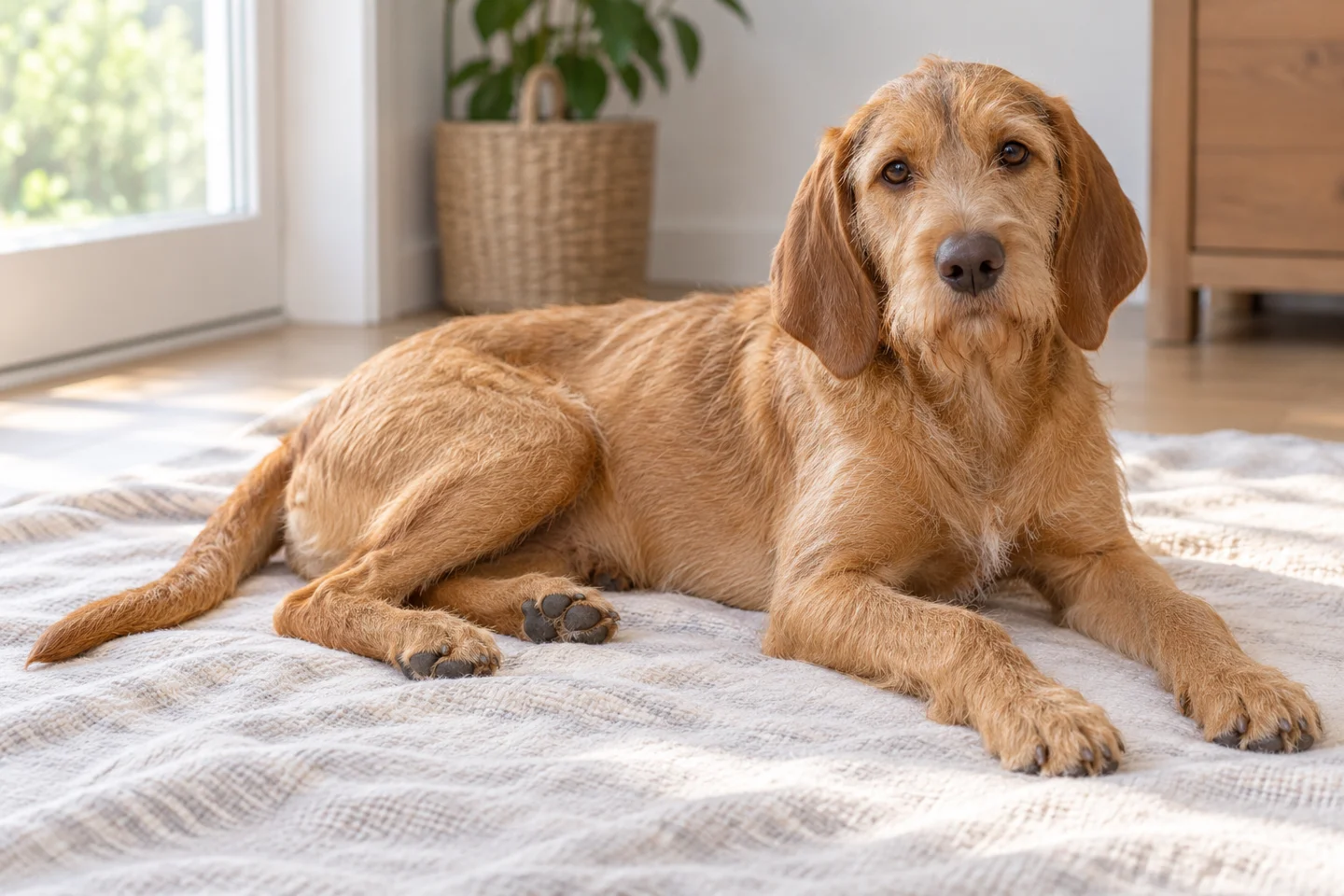
The FCI height reference is 48 to 56 centimeters for both sexes, with a two-centimeter tolerance for exceptional specimens. Coat color runs from golden wheaten to brick red, with harsh hair and modest facial furnishings. The illustrations use golden-wheaten fawn, natural ears, and a full tail. They show general type and cannot verify a real animal's pedigree, comfort, or health. A rustic appearance should not become a reason to overlook skin underneath the hair or assume every movement is sound.
Measure the dog for equipment and review fit beneath the coat. Check behind the elbows and around the chest, allowing for growth or condition changes. Arrange a resting area where it can stretch without constant traffic, and make sure travel space allows comfortable turning. Watch an adult rise and move in a quiet setting. Ask about any stiffness, hesitation, or previous injury rather than trying to diagnose from one glance. The standard's dimensions help planning, while the actual body and veterinary assessment determine what equipment and activity are suitable.
A good-natured description still needs examples
The standard describes a sociable hound with strong hunting interests. Ask how those qualities appear in the actual dog. What happens after a walk, when another dog leaves, or when the doorbell interrupts rest? A useful account includes context and recovery. An animal can be affectionate while still needing help with excitement or solitude. Avoid using a friendly greeting as evidence that every domestic skill is established. Explain the conditions you need the dog to manage and ask where something similar has actually been observed.
Set up a predictable schedule and a quiet place for rest. Teach the end of play and reward settled moments before the dog needs to demand attention. If it cannot switch off, review activity, environment, and possible discomfort with appropriate help. Continually adding games can make an already busy day harder to settle from. Keep a short record of difficult periods so a trainer or veterinarian can assess the actual pattern. Share the routine with all carers, including what happens when the dog needs a break from household movement.
Training before scent and excitement compete strongly
Begin with a return cue, a turn toward the handler, and calm movement through a gate in a quiet place. Reward clearly and make the next step achievable. AVSAB recommends reward-based methods for routine training and behavior work. A hound's persistence does not justify rough handling or punishment. Ask an instructor to demonstrate the task and how you should make it easier when attention fails. Repeating a cue at increasing volume while the dog follows another interest teaches little about what response will work.
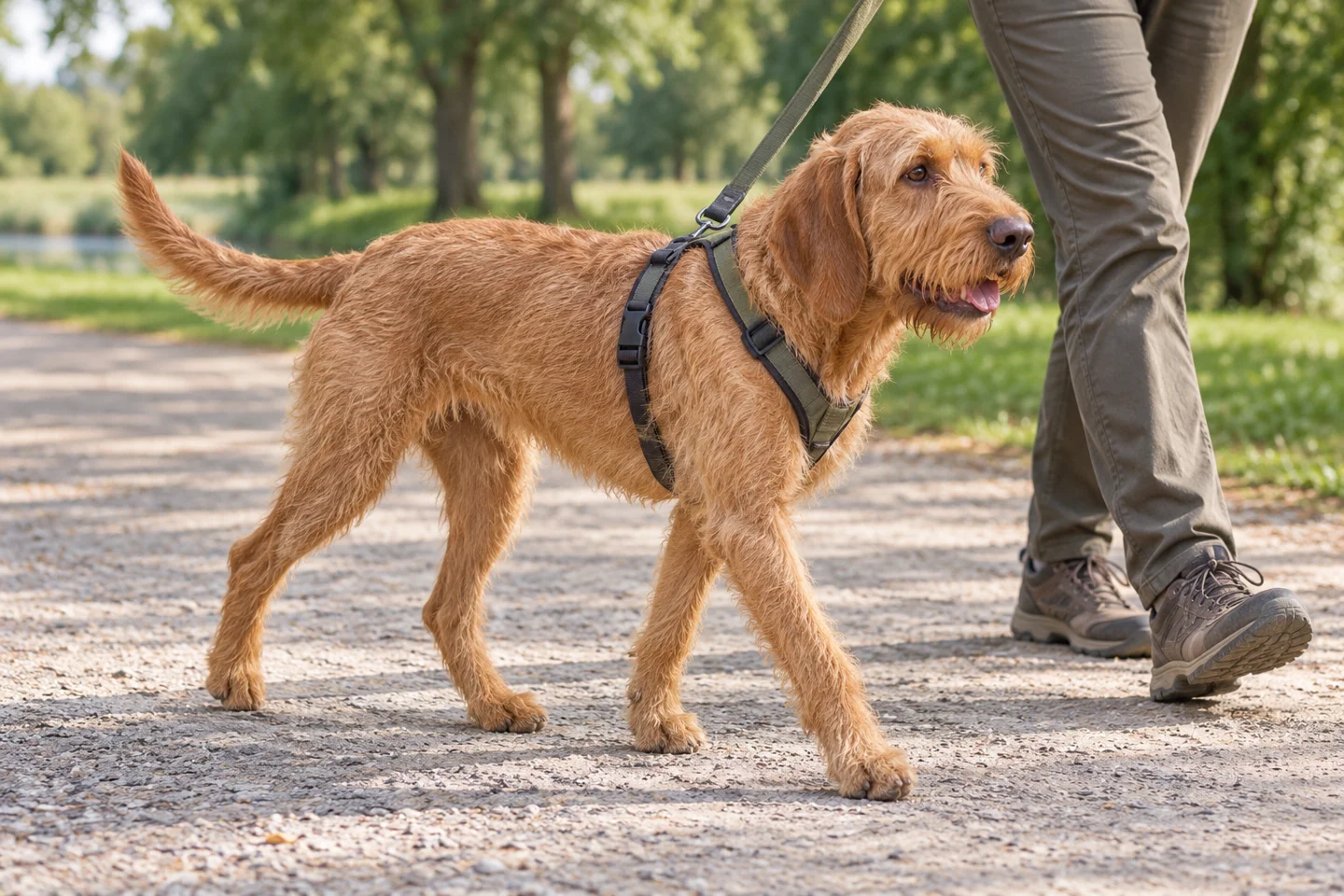
Use safe control while outdoor skills develop. A suitable long lead or secure enclosed area can support exploration, provided the handler knows how to prevent tangles and sudden force. Practice returning and then being released to another permitted sniff so the handler is not only the person who ends the outing. Rehearse the same equipment and cues with anyone who will help. A sitter should not be expected to solve excitement through strength after the owner leaves. Keep a practical route and distance plan as well as the training goal.
Exercise that gives the nose useful work
A controlled scent walk can provide exploration without treating off-lead access near hazards as essential. Select routes with clear boundaries and room to turn away. Check for livestock, wildlife, traffic, and difficult exits before choosing a location. Increase the workload from the dog's present fitness rather than from the breed's historical capacity. Puppies, older animals, and dogs returning from illness need individual advice. Notice recovery later in the day and the next morning, especially if the animal appears keen enough to continue despite discomfort.
Prepare an alternative for poor conditions or closed access. Short learning tasks and a quieter route may be appropriate when a preferred long outing is unavailable. Heat requires changes in timing, distance, and rest, with water and shade available. If the dog struggles to breathe, becomes weak, or appears generally unwell, stop and contact a veterinarian. Do not insist on reaching the car by continuing the same pace regardless of signs. The plan should include transport and waiting time, so the entire day remains suitable for the individual.
Voice, gates, and the quiet parts of the day
The breed's working description includes a sustained voice made of short repeated notes. Hear adults where possible and ask how this individual vocalizes at home. Noise on a scent, an alert at the boundary, and distress when alone need different observations. Be realistic about neighbors and the hours you expect to leave. A placement should not depend on a promise that every sound can be removed by a single lesson or device. Discuss the actual property and availability of care before making that commitment.
When a problem appears, record what triggers it, how long it lasts, and whether the dog can recover. Change repeated sources of arousal where practical and teach a manageable alternative while the situation is easy. Avoid punishment intended only to suppress sound. Persistent distress or a sudden behavioral change deserves appropriate professional assessment, including veterinary input where needed. Ask helpers to follow the same arrangements. A dog encouraged to bark at one moment and frightened for barking at another receives an unclear lesson that can make the household goal more difficult.
Socialization with space to think
For a puppy, discuss safe early exposure with the clinic while vaccination progresses. Choose short, manageable experiences with people, surfaces, vehicles, and sounds. Let it investigate and move away rather than requiring close greetings. An older dog arriving with limited experience also needs a starting point based on observation. A quiet visit can be successful without a crowd. The important evidence is whether the animal remains comfortable and recovers, not how many photographs or introductions the owner can collect during the outing.
Introduce handling in small steps at home. A brief shoulder touch, a reward, and release can lead toward equipment or grooming checks. Ask strangers to wait before reaching for a shaggy head. If the dog repeatedly avoids, freezes, or becomes frantic, reduce the difficulty and seek guidance. A skilled professional can help decide an appropriate distance and task. Forcing an interaction until visible resistance stops is not proof that the experience has become safe or useful. The animal still needs a comfortable way to leave or pause.
Children, other dogs, and small animals
An adult should supervise children and handle the dog during greetings. Give the hound a protected place to rest and keep meals or chews away from children's activities. Explain that withdrawal ends contact. A child should not remove an object, pull a collar, or hold a lead to restrain an excited animal. Use comfortable separation when active supervision is unavailable. A pleasant reputation cannot establish safety for every age and situation, and a calm first meeting does not remove the need to arrange subsequent contact carefully.
Assess other animals by species and circumstance. A hound familiar with dogs outdoors may still need separate food and rest when sharing a home. Introduce a new canine companion with room for both handlers to leave, and protect the quieter animal's ability to disengage. Keep cats and small animals securely separated where safety has not been established. Do not make a chase the assessment method. Discuss the household honestly with the source, and avoid a placement that relies on barriers or care arrangements you cannot maintain reliably.
Grooming without turning a rough coat into a neglect rule
Ask a groomer familiar with harsh coats to demonstrate appropriate maintenance for this dog. Inspect beneath the surface, especially around equipment, moving limbs, and the underside after wet ground. Remove light debris gently and work in small sections. A tight mat close to skin requires skilled help. Avoid scissors against an area you cannot see or forceful pulling because the breed looks weather-resistant. The practical goal is comfortable skin and coat, not a particular rough silhouette preserved at the cost of pain.
Check the beard after eating or drinking and include feet and nails in the routine. Observe ears for redness, odor, discharge, repeated scratching, or head shaking. Seek veterinary advice when those signs appear rather than applying an old prescription. Have any cleaning routine demonstrated and avoid pushing cotton buds down the canal. Teach care during comfortable moments, with a stable nonslip surface and breaks. If the animal suddenly resists a familiar touch, consider pain and arrange assessment before assuming more restraint is the answer.
Health records without a borrowed screening list
Be precise about the name on a Fauve's medical and pedigree records. Griffon Fauve de Bretagne and Basset Fauve de Bretagne are separate breeds, and an account concerning the Basset should not silently become a claim about the longer-legged Griffon. Centrale Canine's LOF Select provides individual dog records with separate health, ancestry, and performance information, as well as access to breed information. Ask the source to open the actual parents' profiles and explain the current Griffon recommendations it follows. Where a result is supplied separately, check the dog's identity with the source and ask what the assessment measures.
For a mature Griffon coming from a kennel, arrange a quiet medical handover as carefully as the social one. Ask whether its usual appetite, bowel routine, and activity have changed recently and whether any treatment is still under way. Obtain the veterinary record behind an account such as 'he had something for his skin' so the new clinic knows the diagnosis, medication, and response rather than repeating a guess. Do not continue another dog's medicine or stop a prescribed course on advice from a casual breed conversation. If no diagnosis was made, state that openly. A dated account of what happened helps the receiving veterinarian choose the next step. Neither a fauve coat nor a working pedigree supplies that missing clinical detail, and neither supports a numerical claim about disease frequency.
Nutrition and the costs of a workable routine
Use a complete diet appropriate to life stage and agree measured portions with the veterinary team. Include rewards and review body condition beneath the coat. A busy outing does not calculate an exact extra food allowance, and an apparent change in appetite may have more than one explanation. Keep water available and give helpers clear instructions. Report persistent digestive, drinking, or weight changes instead of repeatedly switching products without a plan. Separate feeding in a multi-animal home helps you observe what the individual actually consumes.
Seek current local estimates for preventive care, training, grooming help, transport equipment, and cover when you are away. Confirm that available carers can manage the dog's scent interest and voice. Understand insurance exclusions or another way to meet emergency costs. A breeder or rescue should explain support and return arrangements clearly before placement. The decision becomes more sustainable when the time and services are genuinely available. Rarity or an appealing appearance does not compensate for a daily care requirement that the household has no practical way to provide.
Mixes, aliases, and visual guesses
A fawn rough-coated mixed dog may resemble a Griffon Fauve without confirmed parentage. Ask what the description is based on and distinguish records from a visual guess. The recognized Griffon and Basset Fauve names refer to separate breeds, not informal mixed-breed labels. An adult animal with uncertain ancestry can still be assessed through its actual size, handling, coat, and behavior. A confident-looking name should not prevent you from asking the same practical questions you would ask about any unfamiliar dog.
When both parents are known, request relevant health evidence for each and discuss the findings appropriately. Crossing breeds cannot guarantee removal of inherited problems, predictable adult size, or only convenient temperamental traits. Be cautious about claims of effortless recall, quiet behavior, or very low grooming needs without observations from the family involved. For a rescue, accurate accounts of settling, animal responses, and everyday care may guide placement more directly than an unsupported pedigree narrative. Keep uncertainty visible so the household can plan for what remains unknown.
dogsDating routes for an active nose
Describe what another handler will meet: the dog's usual pace, comfortable distance, and any need to avoid close greetings or smaller animals. Use an approximate location and public meeting point, keeping exact coordinates and your home address private. Choose a route with wide sections and simple exits and ask each adult to manage their own dog. Avoid an entrance where unfamiliar animals must pass tightly together before either handler has assessed the situation. A manageable arrangement is a better starting point than a crowded social event.
Start by walking in the same direction at a distance both dogs can handle. Allow sniffing without pulling them into contact and postpone shared toys or food games. If either animal stiffens, repeatedly turns away, or cannot recover from excitement, increase space or end the outing. Note which part of the route worked and what would need a change. A familiar partner for calm exploration can be a worthwhile dogsDating match. Neither animal has to play physically or accept an unfamiliar dog in its home for the meeting to have served a useful purpose.
Sources and editorial notes
Sources checked October 21, 2026. Breed measurements describe reference ranges, not a diagnosis or an individual dog's ideal weight. Images are AI-generated breed illustrations and do not document a particular dog or health condition.
- AVSAB: Humane Dog Training Position Statement
- VCA Animal Hospitals: Food aggression in puppies
- VCA Animal Hospitals: Common emergencies in dogs
- Orthopedic Foundation for Animals: CHIC health screening programs
- VCA Animal Hospitals: Aggression toward unfamiliar dogs, diagnosis
- VCA Animal Hospitals: Grooming and coat care for your dog
- VCA Animal Hospitals: Ear infections in dogs (otitis externa)
- AAHA: Feeding plans for healthy, appropriate weight cats and dogs
- VCA Animal Hospitals: Heat stroke in dogs
- AVSAB: Puppy Socialization Position Statement
- VCA Animal Hospitals: Dog behavior problems, aggression toward children
- Official breed standard: Griffon Fauve de Bretagne
- Centrale Canine: LOF Select records and breed-specific information
Keep getting to know dogs.
Read another guide or return to your dogsDating community.
Explore breed guidesBack to dogsDating