Griffon Nivernais
A lean, shaggy French scent hound whose persistence outdoors needs secure boundaries, purposeful learning, practical coat care, and candid health evidence.
How these guides are researched and reviewed
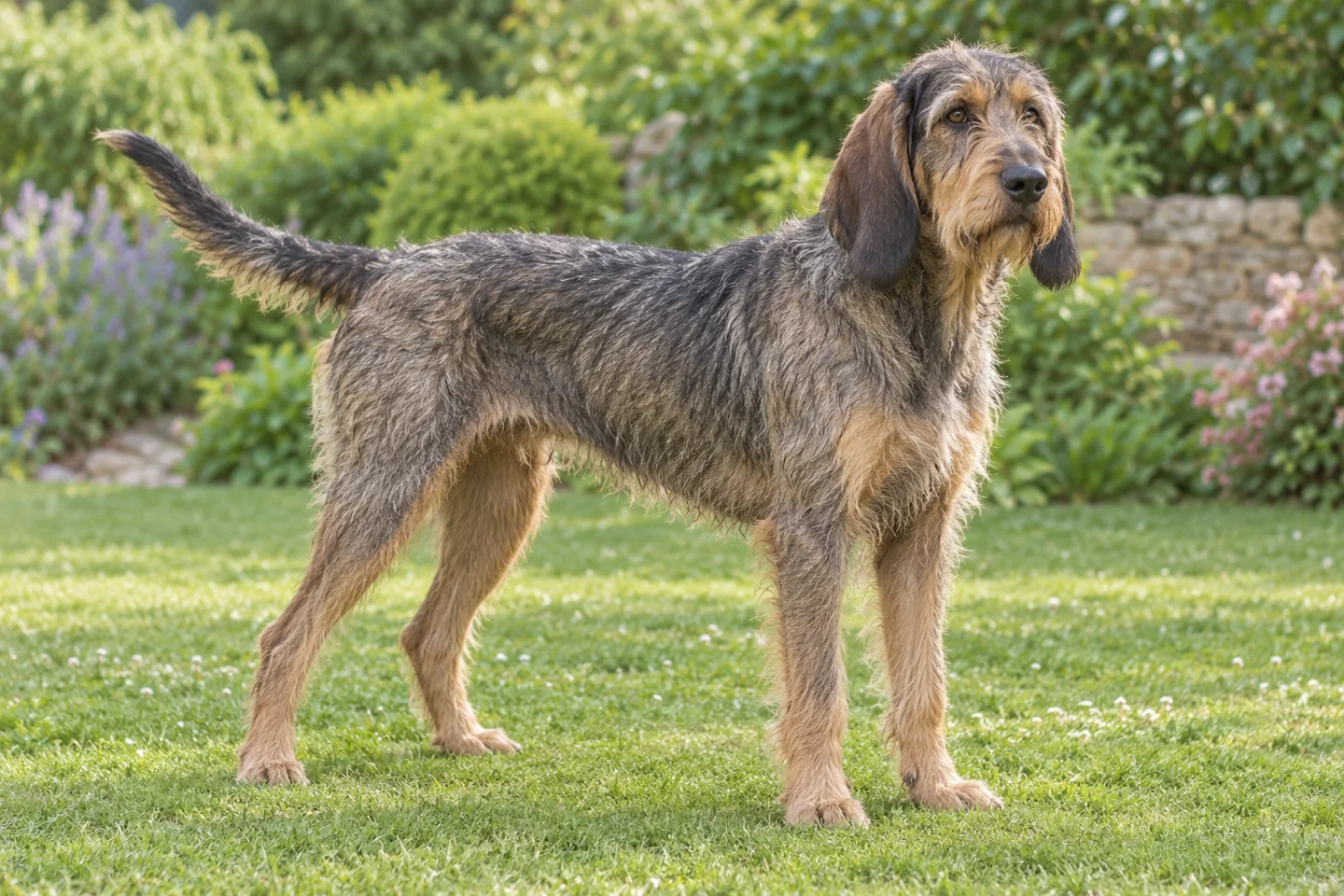
- Origin
- France; Nivernais
- Adult height
- Males 55–62 cm; females 53–60 cm, with ±1 cm tolerance
- Illustrated coat
- Rough wolf-gray from black-tipped fawn hairs, with subtle tan points
General information for owners. These articles have not been reviewed by a veterinarian. Medical decisions need your dog's history and an examination.
A lean shaggy hound rather than a household ornament
The Griffon Nivernais is a French scent hound with a rough coat and a lean, full-legged outline. Choosing one for the shaggy face alone leaves the more important questions unanswered. Who will provide controlled exploration, inspect the coat after undergrowth, and teach manageable routines around scent? What happens when the normal walker is unavailable? A household needs those answers before placement, including a reliable fence and a way to organize arrivals without allowing the dog direct access to an open road.
Ask a source to confirm identity through available records. Several rough French hounds have family resemblances, especially in close photographs without scale. The Griffon Nivernais is a distinct breed, and its information should not be replaced with a more familiar Griffon's description. Meet adults where possible and ask about ordinary behavior: resting, being apart from other dogs, handling feet, and responding when a visitor arrives. A hunting record or an attractive portrait cannot show how those parts of companion life will work in your particular home.
Nivernais history with uncertainty left intact
The FCI history describes preservation and recreation in the Nivernais region, later contributions from other hounds, and a club founded in 1925. It presents some early ancestry as possible rather than certain. Keep that distinction rather than turning an old hypothesis into a definite pedigree extending through centuries. The documented working role is scent hunting, especially wild boar. That context makes persistence relevant to a companion owner, while the individual dog's actual experience still needs its own assessment.
Find out whether the animal has worked, how it has been housed, and what it knows about domestic surroundings. A dog raised around kennels and countryside may be new to appliances, indoor barriers, or close pavement traffic. A puppy raised inside also needs structured exposure outside. Keep the initial routine manageable and ask the previous carer which cues and rewards are familiar. The historical background can explain why certain activities attract interest, but it should not be used to excuse a care gap or predict every response without observation.
Adult size and the black-tipped coat
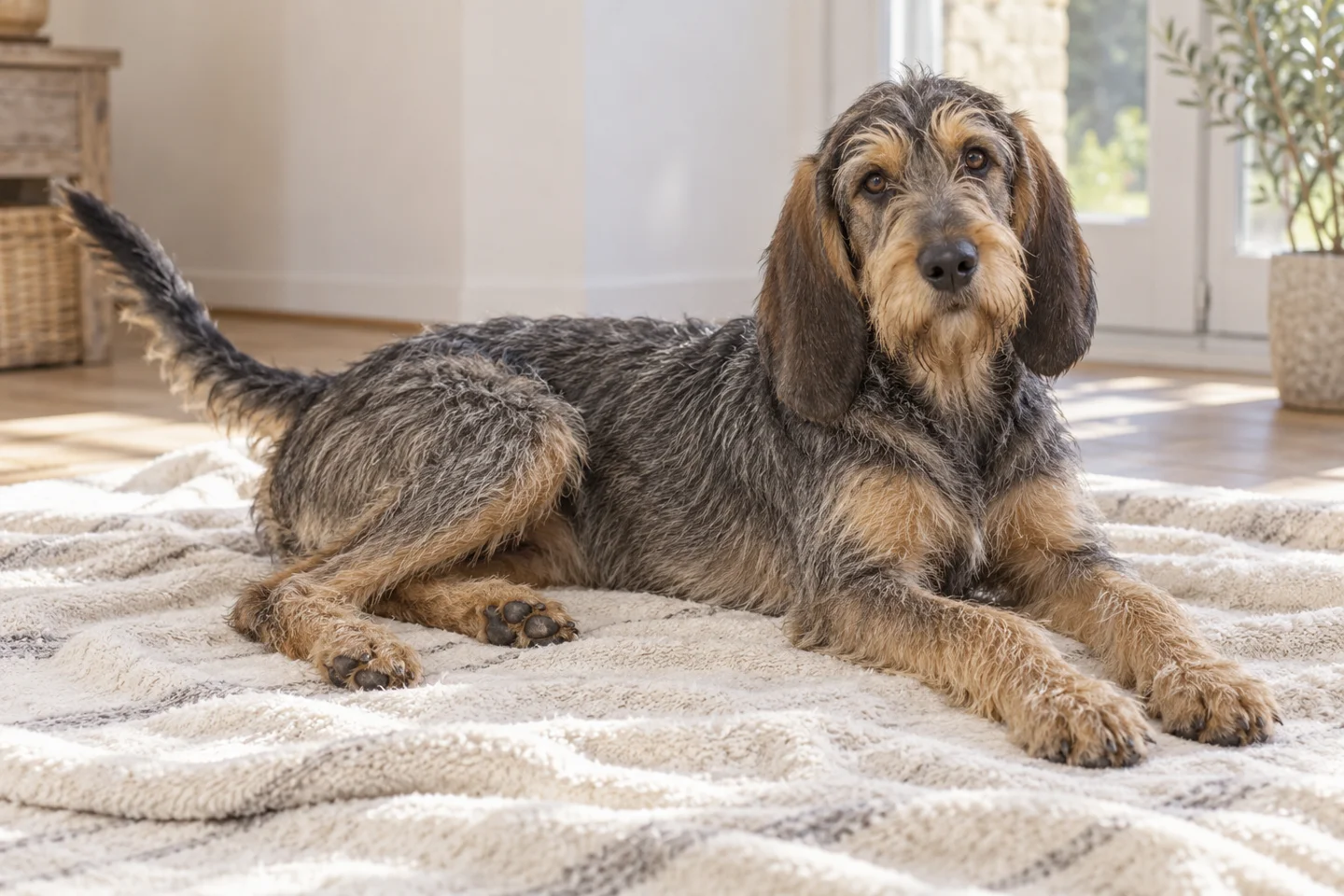
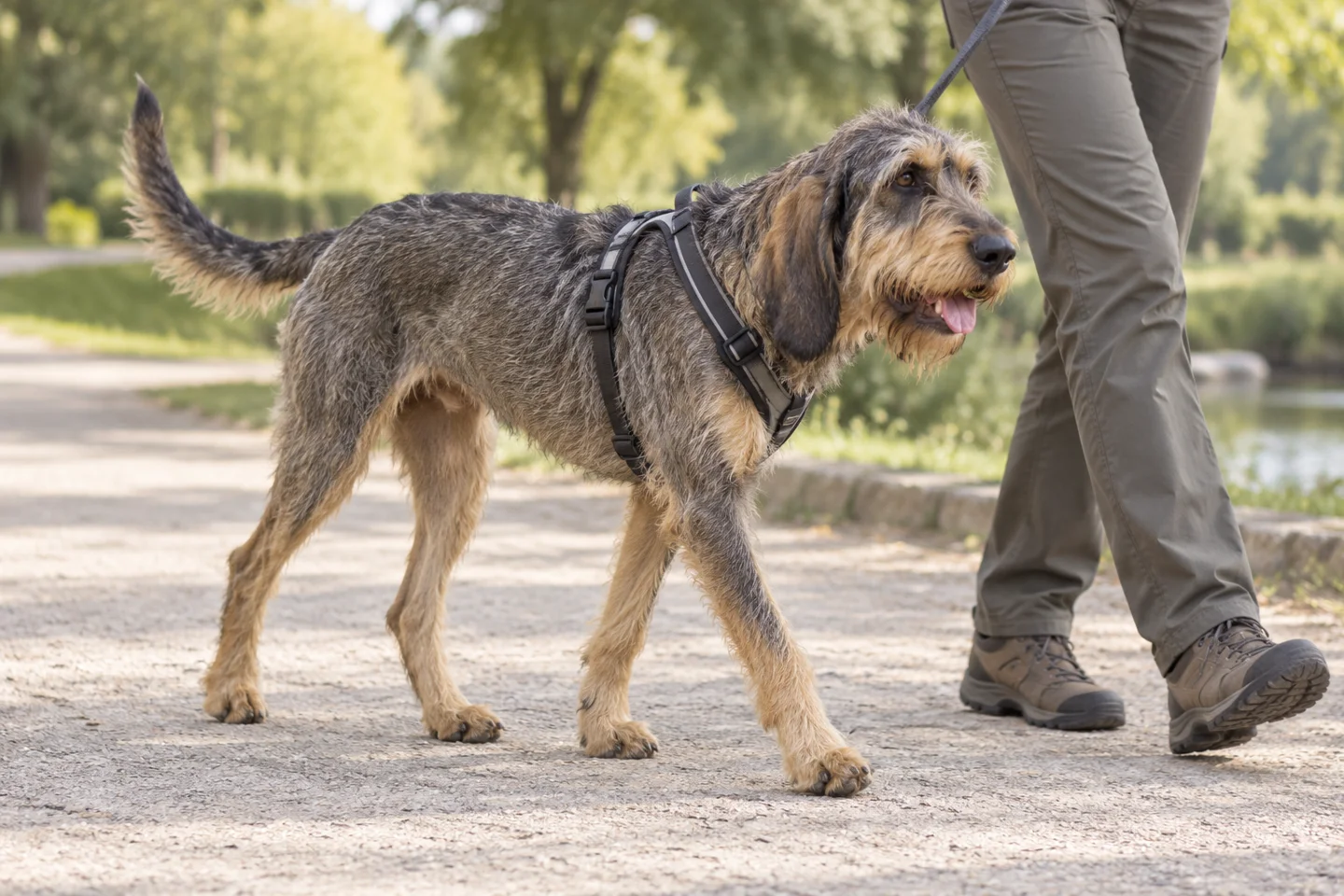
FCI heights are 55 to 62 centimeters for males and 53 to 60 for females, with a one-centimeter tolerance either way. The rough coat is based on fawn hairs darkened at the tips, with permitted shades including wolf gray. Tan markings may be more obvious in puppies and diminish with age. The images use a wolf-gray example with natural ears and a full tail. They cannot promise a puppy's eventual shade or establish the pedigree or health of a real animal.
Look beneath the coat when assessing condition and fitting equipment. Check where straps meet the chest and limbs and whether hair has become caught underneath. Measure the individual for travel and sleeping space rather than estimating from another hound's dimensions. Watch comfortable movement and ask about any hesitation or stiffness. The breed's lean outline is not a reason to overlook poor condition, and its rough appearance does not show that skin is healthy. Professional assessment is useful whenever a physical change is persistent or difficult to interpret.
Independence and the ability to rest
A hound described as independent still needs a predictable relationship with its carers. Ask how it responds when a familiar person or dog leaves and how it settles after activity. Separate observation from expectation: a dog may be able to work away from its handler without being comfortable alone in a new house. Explain your working hours and the company available. Useful answers describe the actual routine and any difficulty rather than rely on a broad personality label.
Create a quiet resting option and teach it while daily life is calm. Reward the behavior you want to see between outings, including short comfortable periods behind a barrier. Avoid making every approach to the dog the start of play. If rest remains difficult, review the environment and seek advice about possible behavioral or medical contributors. Record triggers and recovery so a professional can work from clear information. A sustainable routine should also be understandable to a sitter, who cannot be expected to recreate an owner's instinctive response to every change.
Training before the hound commits to another plan
Start with coming toward the handler, turning together, and waiting at an exit in a quiet place. Use clear rewards and increase distraction gradually. AVSAB recommends reward-based methods and advises against aversive techniques. An independent working description does not make painful control necessary. Ask an instructor to demonstrate how a lesson should look when the dog succeeds and how to reduce the demand when it cannot. Repeating the cue after attention is lost can leave the animal rehearsing the very behavior the owner wanted to interrupt.
Practice outdoor skills under safe control. A suitable long lead or enclosed area can allow exploration while learning develops, provided the handler understands safe equipment use. Returning should sometimes lead to another permitted activity so approaching the owner does not always mean all interest ends. Rehearse the same process with any regular helper. Keep barriers and sensible route choices available rather than declaring management unnecessary after a few successful lessons. A cue reliable in the yard may still need practice around wildlife, unfamiliar dogs, or a strong trail elsewhere.
Exercise through suitable terrain and recovery
The FCI describes a hound willing to work in difficult cover, but the companion owner remains responsible for choosing safe ground. Inspect fences, debris, livestock access, and exit routes. A dog pulling toward vegetation cannot know every hazard beyond it. Build workload from the individual's age, conditioning, and clinical needs. Ask the veterinary team about growth, recovery, or a new sport plan. A rustic appearance and a working history cannot certify that an animal is ready for a long strenuous outing today.
Judge recovery as well as initial enthusiasm. Notice movement later, willingness to rise, and any change the next morning. Keep a less demanding alternative available when weather or access changes. Heat needs particular planning around timing, shade, water, and transport. If the dog struggles to breathe, becomes weak, or appears unwell, stop and contact a veterinarian promptly. Do not continue a predetermined route merely because the hound still notices scent. A useful exercise plan includes permission for the owner to turn back and seek help when the evidence changes.
Voice and the decision about where the dog will live
Ask to hear adults and discuss the situations that produce vocal behavior. A call used during work may carry a considerable distance in a residential setting. Noise during excitement and distress during absence require different accounts even if a neighbor hears both as barking. Explain shared walls, nearby animals, and the hours your home will be empty. Do not base placement on a promise that one device, cue, or very long walk will resolve every reason for a hound to vocalize.
When difficulty appears, identify what happens immediately before and whether the dog can recover. Reduce repeated triggers where possible and teach a quieter alternative at an easier level. Avoid punishment focused only on sound. Persistent distress, agitation, or a sudden change warrants appropriate professional input, with veterinary assessment where indicated. Give helpers the same plan so they do not accidentally reinforce a pattern you are trying to change. A calm routine is easier to teach when every person understands both the goal and the conditions under which the dog currently needs more support.
Socialization and comfortable handling
A puppy needs safe early experience with ordinary environments, discussed with the clinic while vaccinations progress. Begin with short observations of people, vehicles, surfaces, and noises at a manageable distance. Let it investigate and move away. For an adult with limited history, choose a starting point based on what it can handle now. A quiet outing can be useful without close contact. Avoid crowding the dog's first days with unfamiliar visitors or treating attendance at a busy event as proof of successful socialization.
Introduce grooming and body checks in small steps during comfortable moments. A brief touch, a reward, and release can form a lesson without restraint escalating. Ask strangers to wait before reaching into facial furnishings. If the animal repeatedly avoids, freezes, or becomes frantic, reduce the task and obtain informed help. Continuing at the same intensity until resistance stops does not show that the dog understands or feels safe. Keep records of useful distances and positions so future care begins from an achievable step rather than a fresh struggle.
Aggression cannot be explained by a working label
Record a warning or threatening episode as a sequence: who approached, which object or place was involved, what room the dog had, and what followed. A snap during coat care deserves different immediate management from repeated conflict at a boundary. Prevent another exposure while assessment is arranged. Do not dismiss the response as determination or punish the warning to make it less visible. A new sensitivity to touch or movement needs veterinary consideration because pain may change an animal's tolerance.
VCA explains that reactions toward unfamiliar dogs can involve different motivations. Retain control and suitable distance rather than removing a barrier to discover whether the animal will be friendly. Seek qualified behavior support that fits the household's abilities. Leave meals undisturbed and teach safe exchanges for appropriate objects. Carers should know about bites, snaps, and near misses and receive the current restrictions clearly. If muzzle conditioning is advised, introduce it gradually with correct fit and preserve the wider plan. Equipment does not make repeated provocation an appropriate test.
Children and the animals already living with you
Plan a protected resting area and keep meals and chews away from children's play. An adult should supervise contact actively and handle the hound during greetings. Children need to let a dog leave and should not pull its collar or take something from its mouth. Use comfortable separation when supervision is unavailable. Ask about specific experience with ages and activities before placement. A pleasant interaction with an older child cannot establish safety with every younger visitor or a crowded family occasion.
Consider other animals separately from the general claim that a hound has worked in company. A resident dog needs its own food, rest, and access to carers. Arrange introductions where both handlers can withdraw, and watch the quieter animal's ability to disengage. Cats and small animals need reliable protection where safety is not established. Do not release a smaller animal to test pursuit. Explain your home honestly to the source and avoid a placement whose necessary barriers or supervision cannot realistically be maintained throughout ordinary days and absences.
Grooming the shaggy coat after exploration
Work gently through the coat in small sections, parting hair to inspect skin rather than brushing the outer surface alone. Check equipment areas, the underside, and places where vegetation collects. Ask a groomer familiar with rough hounds to show suitable tools and maintenance. The naturally tousled appearance is not a rule to leave painful tangles or debris. Tight mats near skin require skilled help; scissors against an unseen surface can cause injury when an animal moves. Stop if an area is painful and arrange appropriate assessment.
Include feet, nails, beard, and ears in routine observation. Notice discharge, odor, redness, repeated head shaking, or a change in tolerance of touch. Ear disease needs a diagnosis, and old drops should not be applied automatically. Have prescribed cleaning demonstrated and avoid probing deeply into the canal. Teach standing or another comfortable position on a nonslip surface, with rewards and pauses. A dog that suddenly resists an easy action may have discomfort that needs investigation. Make any limits clear to a sitter or groomer before they begin handling.
Health evidence for a less numerous breed
The Swedish Griffon Nivernais club's published strategy page illustrates why dates and sample size matter. Its historical account reports hip assessments in three breeding dogs and three offspring, all graded A, alongside discussion of the population in 2016. Six observations cannot establish the hip status of the whole breed or of a puppy offered today. Ask the club what newer information and breeding advice are available. Treat older statements about a hardy hunting population as the context in which people worked, rather than a promise that inherited disease is absent. A seller should be able to explain which records concern the actual family being discussed.
For a hound moving from a hunting household into another kind of home, ask what previous veterinary care followed accidents, reduced performance, or missed outings. A dog may have been rested without a diagnosis, and that gap should remain visible in the history. Tell the new veterinarian about it rather than converting it into a clean bill of health. Collect medication instructions and arrange a first examination that allows time to discuss the dog's former workload. New discomfort may appear most clearly during ordinary tasks such as getting up after sleep or being fitted with a harness. Those observations help the clinician decide what to investigate. They do not justify guessing at a particular inherited condition from the breed name alone.
Food, finances, and support after placement
Discuss complete nutrition and measured portions appropriate to life stage and current activity. Account for rewards used during lessons, and learn to assess condition beneath the hair. A shaggy silhouette cannot tell you whether weight has changed appropriately. Keep water available and write clear feeding instructions for helpers. Report persistent appetite, digestive, or drinking changes instead of repeatedly adding products without understanding the cause. In a multi-animal home, separate feeding also makes it easier to know what this individual actually consumes.
Get current local estimates for prevention, training, grooming help, transport equipment, and cover during absences. Confirm that a provider can manage the actual dog's voice and outdoor interests. Understand insurance conditions or another emergency funding arrangement. Ask the source to explain follow-up, known medical information, and return provisions before placement. The household needs a routine that continues when work, travel, or illness changes the usual day. Rarity and affection are not substitutes for a service or skill that nobody is currently available to provide.
Mixes and resemblance between shaggy hounds
A rough-coated gray dog may be called a Griffon Nivernais mix without recorded ancestry. Ask what supports that description and distinguish a visual guess from documentation. A beard, color, or rescue location does not establish exact parentage. An adult can still be evaluated through its observed behavior, body, and care needs. Keep those details concrete so the household can make a useful decision even where ancestry remains uncertain. For a puppy, allow flexibility because mature traits cannot be read reliably from one photograph.
If both parents are documented, ask about relevant health and family evidence for each. Crossing breeds does not remove every inherited condition or guarantee quiet behavior, effortless recall, or a particular coat. Be cautious about promises that combine only the easiest traits associated with the claimed parents. Meet the animals where possible and ask about support after placement. For a rescue, a foster carer's account of ordinary handling, rest, and responses to animals can be more useful than an unnecessarily certain pedigree story that does not explain how the dog lives today.
dogsDating partners for controlled outdoor company
Describe the dog's actual needs in dogsDating, including pace, comfortable distance, voice, and restrictions around other animals. Share an approximate area and choose a public meeting point while keeping exact coordinates and your home address private. Each adult should manage their own animal, with a clear plan to leave if necessary. A wide route with several exits is more useful for an initial assessment than a busy enclosed park requiring close contact at its only gate.
Begin by moving in the same direction at a distance both dogs can handle. Leave toys and feeding games out of the first meeting and allow either animal to withdraw. Increase space or finish when stiffness, repeated avoidance, or uncontrolled excitement prevents comfortable movement. Record what actually worked so any next outing begins from evidence. A quiet familiar walking partner can be a successful match even when close greeting or physical play remains unsuitable. The owners' interest in company should support a manageable experience rather than determine what the animals must tolerate.
Sources and editorial notes
Sources checked October 21, 2026. Breed measurements describe reference ranges, not a diagnosis or an individual dog's ideal weight. Images are AI-generated breed illustrations and do not document a particular dog or health condition.
- AVSAB: Humane Dog Training Position Statement
- VCA Animal Hospitals: Food aggression in puppies
- VCA Animal Hospitals: Common emergencies in dogs
- Orthopedic Foundation for Animals: CHIC health screening programs
- VCA Animal Hospitals: Aggression toward unfamiliar dogs, diagnosis
- VCA Animal Hospitals: Grooming and coat care for your dog
- VCA Animal Hospitals: Ear infections in dogs (otitis externa)
- AAHA: Feeding plans for healthy, appropriate weight cats and dogs
- VCA Animal Hospitals: Heat stroke in dogs
- AVSAB: Puppy Socialization Position Statement
- VCA Animal Hospitals: Dog behavior problems, aggression toward children
- Official breed standard: Griffon Nivernais
- Svenska Griffon Nivernaisklubben: Published breed strategy and historical health observations
Keep getting to know dogs.
Read another guide or return to your dogsDating community.
Explore breed guidesBack to dogsDating