Hygen Hound
A Norwegian scent hound whose care calls for secure nose-led exploration, realistic noise planning, suitable company, and honest limits on rare-breed health claims.
How these guides are researched and reviewed
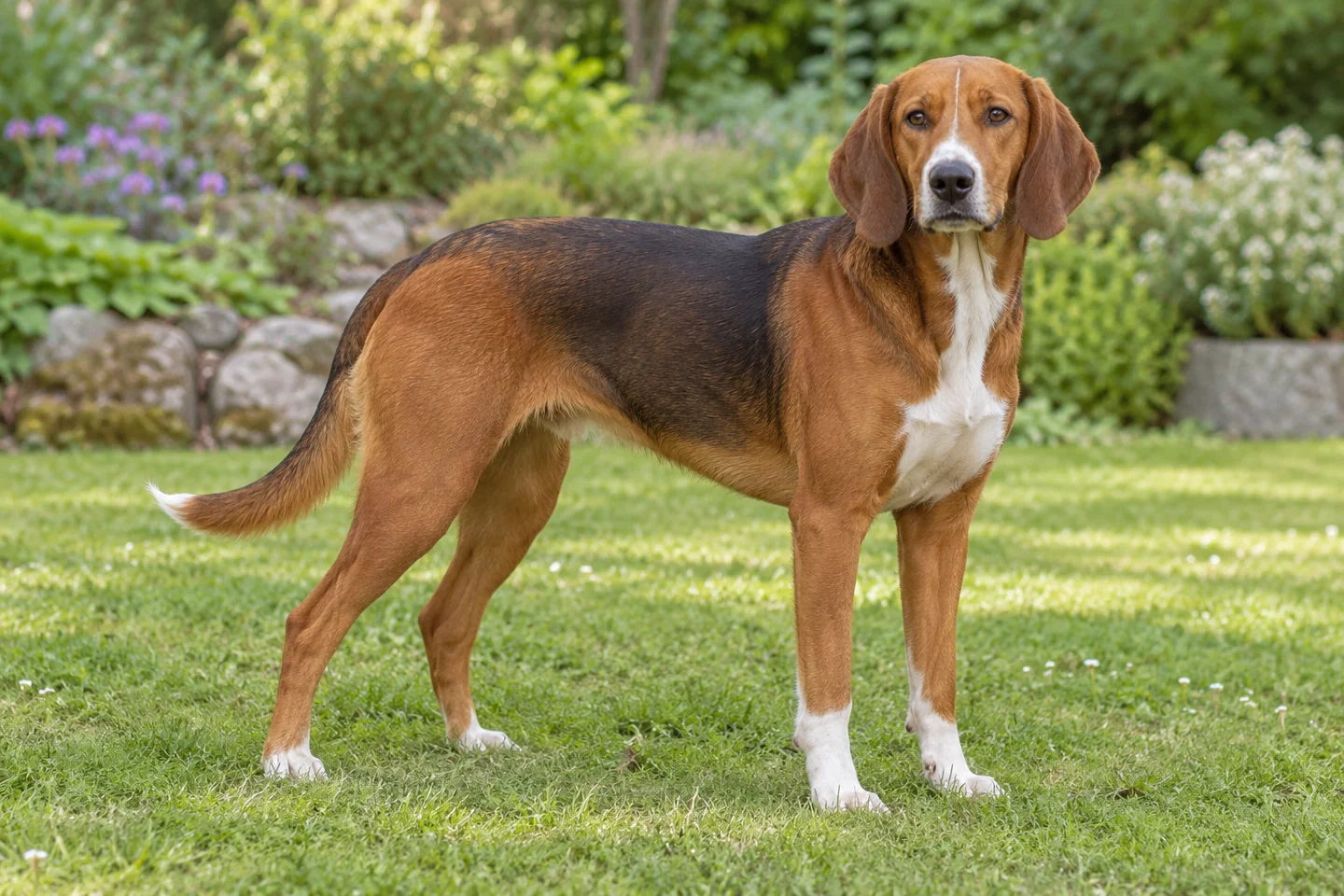
- Origin
- Norway
- Adult standard size
- Males 50–58 cm, ideal 54; females 47–55 cm, ideal 51
- Illustrated coat
- Red-brown with black shading and white markings
General information for owners. These articles have not been reviewed by a veterinarian. Medical decisions need your dog's history and an examination.
A Norwegian scent hound with a particular identity
The Hygen Hound is a Norwegian scenthound, also called Hygenhund. It is a distinct breed rather than a general name for a Scandinavian hunting mix. Start a conversation with a source by asking about records, adult relatives, and how the dogs spend an ordinary week. A companion home needs to understand scent interests, voice, company, and handling before concentrating on appearance. Meet an adult where possible and ask to see calm routines as well as an exciting outdoor demonstration.
The FCI places it among medium-sized scenthounds with a working trial. That tells you about its intended role, but a registration document does not prove that an individual is prepared for city traffic, a long absence, or sharing a house with smaller animals. Ask what the dog has actually experienced. If it comes from a hunting household, discuss how time outside work is managed and which skills have been taught indoors. Avoid assuming that a successful field history either guarantees or prevents a suitable companion placement. The details of the individual and the proposed home determine what needs preparation.
Size, color, and a compact working body
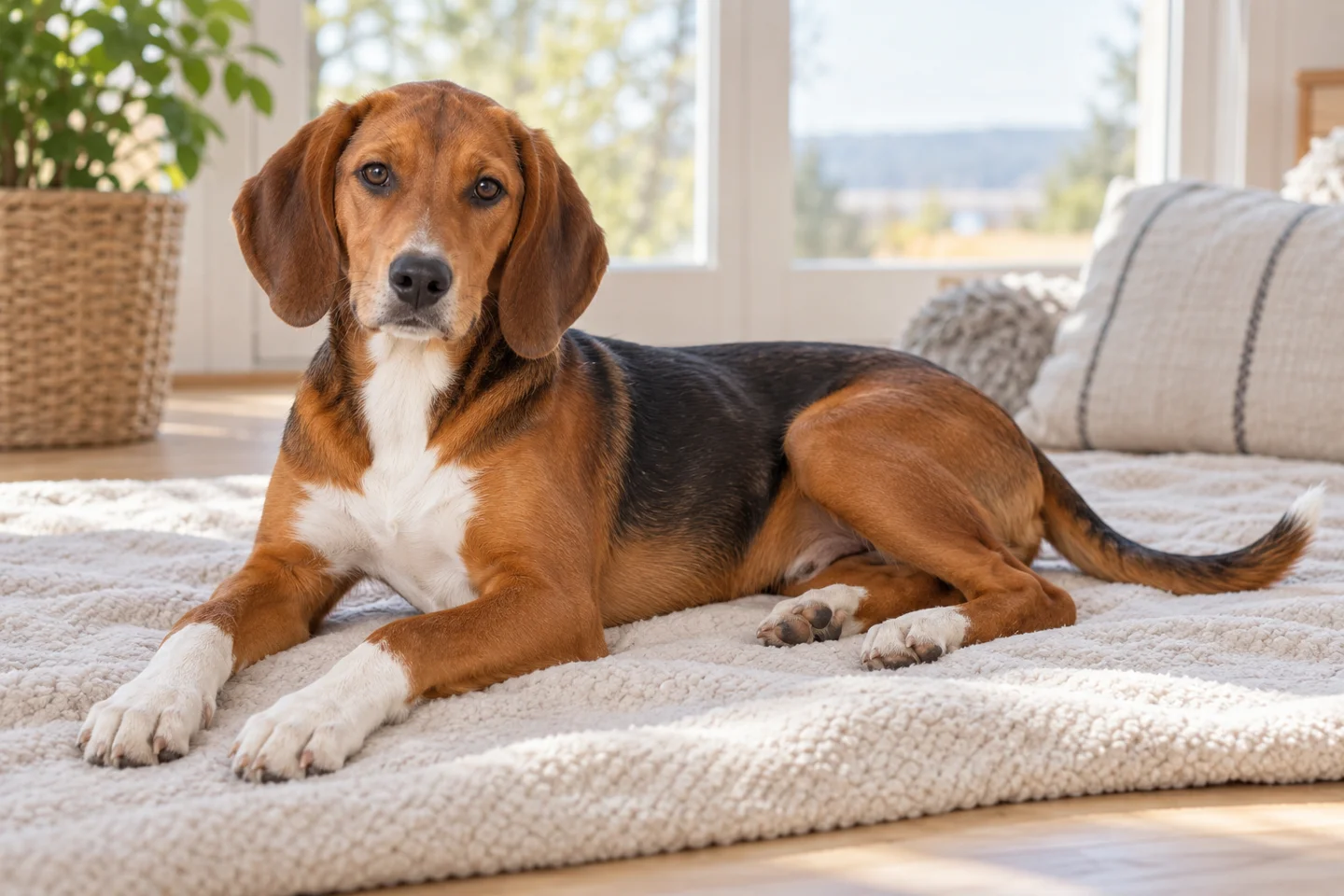
The FCI gives males a height range of 50–58 cm, with 54 cm as ideal, and females 47–55 cm, with 51 cm as ideal. It describes a solid, compact, rectangular animal, with a strong topline and hanging ears that are not excessively long. The illustrated example is red-brown with black shading and white markings. Other defined color combinations are recognized. Its coat is straight and dense, and the long tail may be straight or gently curved. These are identification references, not a body-condition prescription.
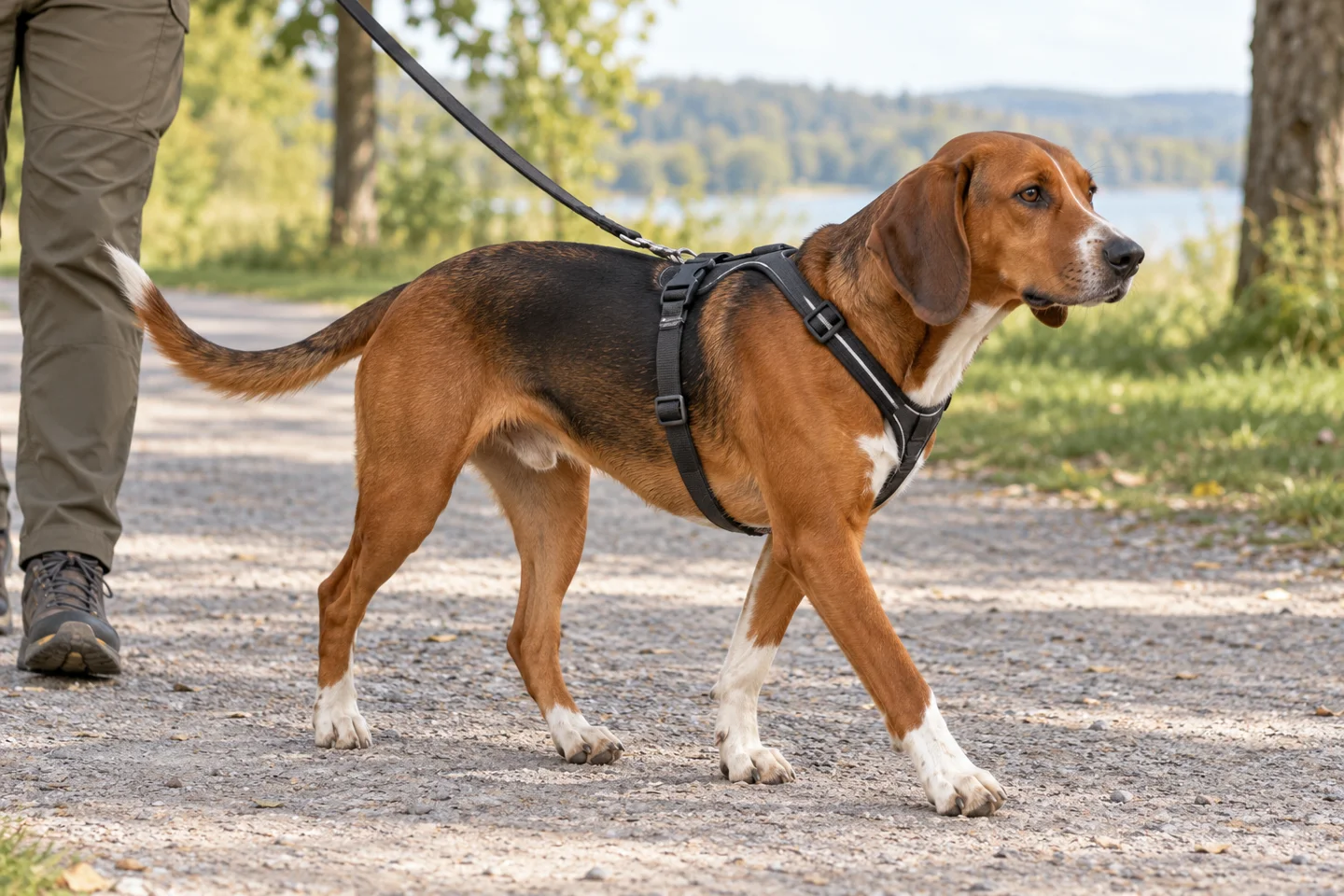
Measure for the equipment and transport space your dog actually needs. A hound can pull toward a sudden scent even if it appeared quiet at home, so check harness fit and fastening before leaving the garden. Ensure it can stand and lie comfortably in its travel restraint area. Ask the veterinary team how to assess weight beneath the coat rather than choosing a food amount solely from height. If a puppy's equipment starts rubbing or becomes easy to escape, replace or adjust it promptly. Growth makes yesterday's satisfactory fit a poor reason to ignore today's problem.
What a scent-led walk feels like
A walk with a Hygen should make room for investigation while retaining safe boundaries. Choose where the dog can sniff and where you need a short, organized passage. A route that repeatedly crosses livestock, wildlife cover, or a narrow busy road may demand more management than a quieter alternative. Learn what happens just before attention locks onto a trail. Calling repeatedly after the animal is already absorbed can teach less than rewarding an earlier check-in while it remains able to respond.
Plan the route with options to turn back. A suitable lead and well-fitted equipment allow scent exploration without handing control of the destination to the dog. Discuss long-line handling with an instructor before using it in open ground. Extra length can create a sudden stop or tangle if used carelessly. Explain the route and equipment to a sitter rather than assuming experience with another hound transfers perfectly. A successful outing gives the dog useful activity and gets everyone home comfortably. The distance traveled is only one part of judging whether it suited the day.
Training around competing rewards
Teach a simple response to the name in a low-distraction place, then practice turning, coming closer, and waiting briefly at an exit. Reward the behavior you want while the dog is still capable of offering it. If scent makes food or a familiar cue irrelevant, increase distance from the distraction or choose an easier location. AVSAB recommends reward-based learning and advises against aversive methods. Noise or physical force cannot supply the missing stages between a quiet-room lesson and an outdoor task containing strong competing interests.
Choose practical exercises that another carer can reproduce. For example, practice walking through the gate after a pause, then returning to the house without dragging the dog away from a scent patch. Keep sessions short and provide a clear end. Record which parts worked so the next person does not expect more than has been taught. A class is helpful when the environment allows spacing and the instructor explains how to progress. Avoid a lesson that repeatedly puts the hound beyond its ability to respond and then treats the predictable failure as disobedience requiring punishment.
Exercise and conditioning for the current dog
Provide daily opportunities for movement and useful mental activity, with the level chosen for the individual. A mature, conditioned hound's routine cannot simply be copied for a young puppy, an older animal, or one recovering from injury. Ask your veterinarian before sustained running or a demanding change in workload. Observe recovery after an outing, including willingness to rise, gait, and interest in ordinary activity. Persistent stiffness or an unusual change deserves assessment even if the dog remains keen to follow another trail.
Have a manageable alternative for difficult weather or an interrupted schedule. A short exploratory route, a quiet search, and comfortable rest may suit a particular day better than pushing through the original plan. On warm days, consider temperature, footing, shade, and water before leaving. A Scandinavian origin is not protection against heat illness. Stop when the animal struggles and contact a veterinarian if concerning signs occur. Keep the clinic number accessible during remote outings and know how you would reach transport. The plan should still work when a dog cannot walk the final distance back.
Voice and company deserve a household plan
Ask specifically about vocal behavior. What does the dog do when it detects scent, sees another animal, hears a neighbor, or is left alone? Those are different situations, and one strategy may not address them all. A breed's hunting use makes voice a reasonable topic to investigate, but it does not establish how much a particular companion will vocalize. Speak to people who live with the adults rather than relying on a short meeting in an unusually quiet setting.
Look at the home before a noise problem develops. Windows facing a busy path, access to a boundary, and prolonged waiting near a door can repeatedly provide triggers. Arrange a calmer resting space and reward quiet behavior during manageable practice. If vocal distress occurs during absence, ask for professional help and review the schedule instead of simply increasing confinement or adding exercise. A neighbor's complaint may identify when something happens, but the dog's experience and the practical care arrangement still need investigation. Tell prospective sitters what they should expect and what the current plan requires.
Aggression, handling sensitivity, and prevention
A Hygen Hound's intended temperament cannot establish that it will never threaten or bite. If it stiffens at a bowl, growls when moved from a bed, or snaps during an examination, stop the interaction and make a safer arrangement. Record the approach, relevant objects, and room available to leave. Do not ask someone to repeat the incident for confirmation. Prevent another exposure while you seek advice, and tell the veterinary team about sudden changes or signs that touch or movement is uncomfortable.
A professional assessment can consider medical, learned, and environmental factors together. Management should be clear enough that a sitter can apply it without improvising during a crisis. Leave meals undisturbed and teach exchanges with safe items under suitable conditions. Avoid punishment of warning signals or physical contests over possessions. If a basket muzzle is recommended for a specific plan, introduce it gradually and check fit and ventilation. It cannot compensate for painful handling or an unsafe meeting. Protecting the hound from repeated situations it cannot manage is part of protecting the people and animals around it.
Children and the dog's ability to leave
Make a resting place where children cannot follow the hound. Keep contact brief and supervised by an adult who can notice when either participant needs a break. A child should not grab ears, climb onto the dog, interfere with food, or wake it. When the adult must cook, answer a call, or supervise another activity, use a comfortable secure separation. Rules explained beforehand are easier to apply than instructions shouted after a child has already cornered an animal.
Ask about the specific history behind any family-suitability claim. Which ages has the dog met, in what setting, and with what response? An adult assessed around an older child may have no experience of a toddler's movement. Missing history needs cautious planning rather than a favorable assumption. Suitable shared activities can include an adult-led walk or a simple search prepared away from the dog. Avoid using chase and rough play as proof of affection. The household should make ordinary life predictable enough that the child and hound can enjoy each other's presence without constant pressure for physical contact.
Other dogs and smaller animals
Assess another dog through planned encounters with space and separate handlers. Start with movement in the same direction rather than an abrupt nose-to-nose meeting. Watch whether both animals can disengage and remain comfortable. A pack-working background does not mean every unfamiliar companion will be welcome in a small room or beside food. At home, give each animal separate eating and resting options while you learn what needs management. Seek help early if tension keeps returning in the same circumstances.
Discuss cats, birds, rabbits, and other small animals as separate questions. Ask about actual behavior around movement, not simply whether the hound has seen that species before. Maintain reliable separation where needed and provide protected space for a resident cat. Do not release the dog to discover whether a chase will happen. Familiarity in one setting may not transfer to the garden or a fast-moving animal outdoors. If management would be impossible when a door opens or someone is away, reconsider the proposed placement before bringing the animals together.
Grooming and checks after outdoor activity
A dense straight coat needs gentle brushing and routine inspection even when it looks naturally tidy. Look beneath equipment, around feet, and across the underside after rough or wet outings. Remove loose surface debris without pulling hard at skin or digging into tissue. Persistent lameness, an embedded object, swelling, or a wound that appears painful needs clinical advice. Introduce foot handling while the dog is comfortable so the first lesson does not coincide with an injury.
Hanging ears deserve observation for redness, smell, discharge, scratching, or repeated head shaking. Ask your veterinarian to demonstrate any recommended cleaning and avoid placing cotton buds deeply in the canal. An ear medicine prescribed for another occasion may not suit the current problem. Record recurring episodes and possible recent exposures without diagnosing the cause yourself. Grooming can make such changes easier to notice, but treatment remains an individual clinical decision. A short daily check is useful only if it remains comfortable enough to perform and leads to appropriate help when something changes.
Health planning under Norway's harehound programme
Norway's kennel club published a joint programme for Dunker, Halden Hound, and Hygen Hound effective from July 2026. It recommends hip radiographs for breeding animals and addresses preservation of genetic variation in these small populations. Ask a Hygen breeder how a proposed litter fits that programme and request the parents' actual hip findings. A generic statement that working dogs have sound movement leaves the specific recommendation unanswered. The programme distinguishes requirements from recommendations, so a buyer should retain that distinction rather than describe every measure as a universal international rule.
NKK also records a historical problem with epiphyseal dysplasia in Dunker and Hygen Hounds and describes genetic research aimed at identifying the cause. Research toward a test is not evidence that a predictive test is already available. Ask about affected relatives and how the source handles such information. If a youngster develops persistent lameness, arrange veterinary examination instead of accepting growing pains or field enthusiasm as an explanation.
Read the programme's breed references carefully: its discussion of a 2022 owner survey concerns Dunkers, and those findings should not be assigned to Hygen Hounds. For your veterinarian, collect the individual dog's injuries, examinations, and treatment history, including any interruption of work. That gives a much clearer starting point for activity and follow-up decisions than borrowed population statistics.
Feeding, finances, and the practical week
Choose a complete food suitable for life stage, then review portions using condition, weight trend, and actual activity. Include rewards and extras in the same daily record. A hound that enjoys food does not need access to every snack offered by visitors, and a busy outing does not supply a precise calorie calculation. Ask the clinic to show how to assess condition and review unexpected changes. Keep medication and diet instructions distinct and clear for anyone covering care while you are away.
Budget using current local quotations for food, veterinary prevention, training, equipment, and suitable boarding or sitting. Read insurance conditions and consider how an emergency would be financed. A source should explain continuing support and arrangements if placement fails. Test the ordinary routine on paper: who provides the first outing, where the dog rests during work, and who covers an unexpected absence? If those tasks have no reliable owner, resolve the gap before acquiring the dog. An unusual breed should receive an ordinary, workable care plan rather than depend on its novelty sustaining enthusiasm.
Mixes and uncertain identities
A Hygen mix is not a recognized new variety, and a red, black, and white coat cannot prove parentage. Ask which ancestry comes from records and which is an estimate based on appearance. For an adult, actual height, coat maintenance, animal responses, and handling are useful evidence for placement. A puppy leaves more uncertainty about mature size and behavior. Prepare the household for that range instead of accepting a promise that it will inherit only the most convenient traits from each claimed parent.
Where parents are known, ask health questions relevant to both and examine the available reports. Crossing does not establish that all inherited risks have been removed. If records are unavailable, acknowledge that and build clinical care from current findings. Assess support after placement, including what the source will do if a significant concern emerges. Avoid treating a confident marketing name as better evidence than a foster carer's detailed account of daily life. The useful question is whether the dog you may bring home can have its observed needs met consistently.
dogsDating meetings that leave room for a scent hound
Use the dogsDating profile to describe this hound's current preferences, such as a quiet route, extra space from small animals, or practice walking without direct greetings. Choose a public meeting point using an approximate area and keep your home address and exact coordinates private. Agree that each adult will handle their own dog. Check that the route has room to turn away and does not begin at a crowded gate or narrow footbridge where both animals are forced into contact.
Walk in parallel at a comfortable distance. Do not introduce shared toys, food competition, or free chasing as the first activity. If one dog repeatedly retreats, stiffens, becomes fixed, or cannot respond to its handler, widen the gap or end the walk. Afterward, note useful details and discuss whether another small step is suitable. A hound that happily investigates scent while another dog walks nearby may already be having a successful meeting. Physical greeting and play are optional; both dogs should retain an easy way to disengage.
Sources and editorial notes
Sources checked October 21, 2026. Breed measurements describe reference ranges, not a diagnosis or an individual dog's ideal weight. Images are AI-generated breed illustrations and do not document a particular dog or health condition.
- AVSAB: Humane Dog Training Position Statement
- VCA Animal Hospitals: Food aggression in puppies
- VCA Animal Hospitals: Common emergencies in dogs
- Orthopedic Foundation for Animals: CHIC health screening programs
- VCA Animal Hospitals: Aggression toward unfamiliar dogs, diagnosis
- VCA Animal Hospitals: Grooming and coat care for your dog
- VCA Animal Hospitals: Ear infections in dogs (otitis externa)
- AAHA: Feeding plans for healthy, appropriate weight cats and dogs
- VCA Animal Hospitals: Heat stroke in dogs
- AVSAB: Puppy Socialization Position Statement
- VCA Animal Hospitals: Dog behavior problems, aggression toward children
- Fédération Cynologique Internationale: Hygen Hound official breed standard
- Norwegian Kennel Club: Norwegian harehound breeding programme, July 2026
Keep getting to know dogs.
Read another guide or return to your dogsDating community.
Explore breed guidesBack to dogsDating