Transylvanian Hound
A black-and-tan Hungarian scenthound shaped by work over difficult ground, with an independent nose and a need for secure, purposeful activity.
How these guides are researched and reviewed
- Origin
- Hungary
- Adult standard size
- Ideal 55–65 cm; minimum 25 kg
- Illustrated coat
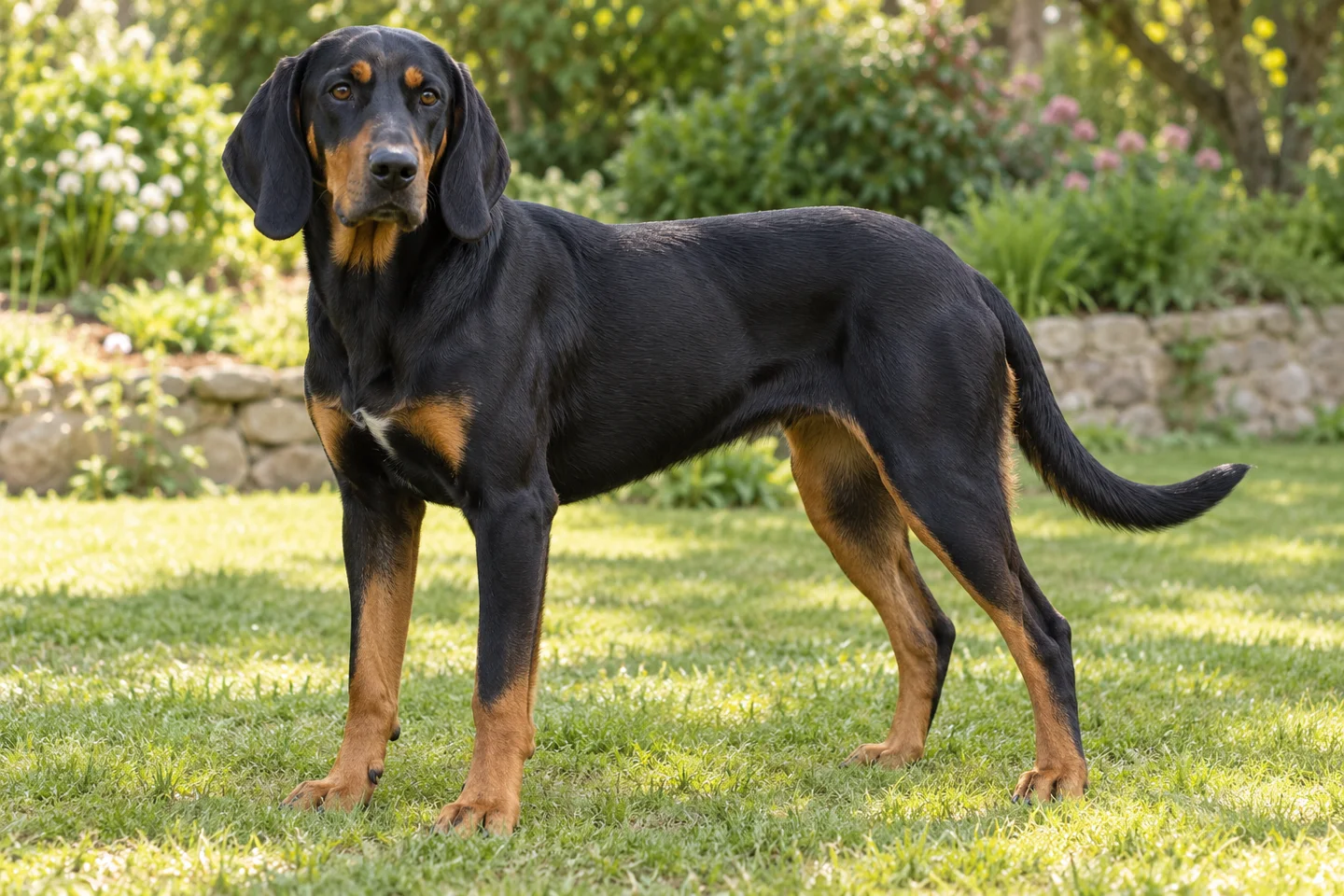
- Black and tan, small white chest marking
General information for owners. These articles have not been reviewed by a veterinarian. Medical decisions need your dog's history and an examination.
A Hungarian hound with a regional name
The Transylvanian Hound is also known by its Hungarian name, Erdélyi Kopó. The FCI lists Hungary as origin and describes a scenthound developed for difficult hunting conditions. The regional English name should not encourage invented national or historical claims beyond the actual standard. A prospective owner needs to understand a capable hunting dog whose present household routine may differ greatly from the work that shaped its background.
The black-and-tan outline can resemble other hounds at a distance. Registration and known parentage are different evidence from color alone. For a rescue whose ancestry is uncertain, describe what is observed and what is not known. A clear account of behavior around people, handling, and animals can support placement without pretending a photograph supplies a pedigree.
The breed's history includes differing types described in the standard's account. An owner should check the actual current standard and the dog's registration rather than assuming every historical size has the same present status. The dog in this guide is the recognized longer-legged black-and-tan form. Daily decisions should follow the individual animal's needs, with secure exercise and useful teaching rather than an expectation that a hunting title or regional story guarantees easy pet life.
Adult scale and a functional short coat
The FCI gives an ideal shoulder height of 55 to 65 centimeters and a minimum weight of 25 kilograms. Overall balance matters rather than the measurement alone. Those figures describe the adult standard, not a reason to make a puppy gain weight quickly. Ask the veterinarian to assess development and condition. A dog that looks slim beside a heavier breed may be appropriately athletic, while a real loss of condition still deserves attention.
The coat is short, dense, and coarse with an undercoat. Black predominates, with clearly separated tan markings including points above the eyes and on the muzzle and legs. White can occur within the standard's limits. Our illustrations use a small white chest marking rather than a large piebald pattern. The natural ears hang, the nose is black, and the complete tail is carried according to activity without a tight spitz curl.
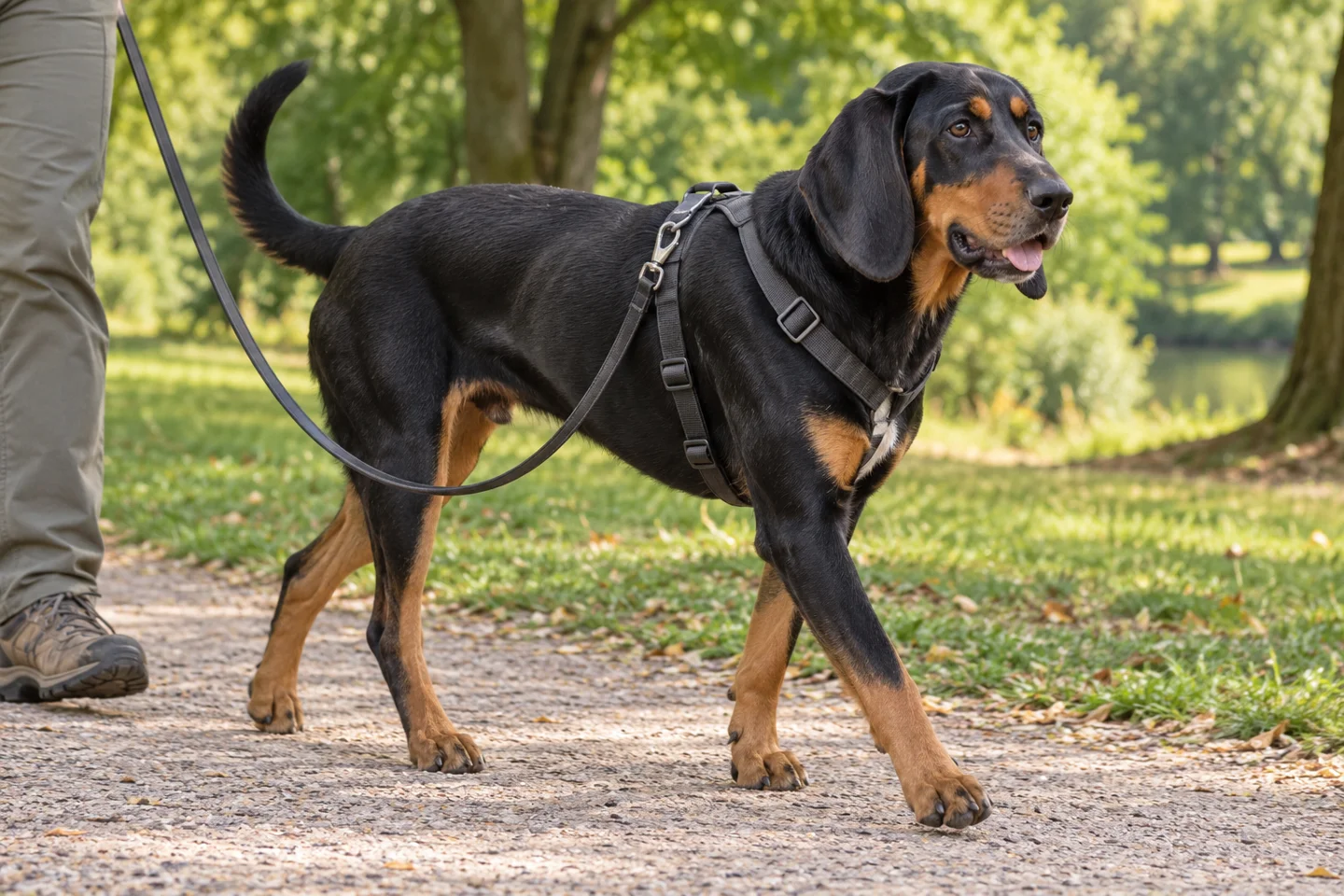
The three images are labeled AI-generated illustrations. A puppy naturally has a softer young appearance and developing proportions. Artwork cannot establish the health of a real dog's joints, ears, or eyes. Fit equipment to the actual chest and neck, checking for rubbing after movement. Reassess as the dog grows rather than expecting the first harness to remain appropriate through adolescence.
What the dog does when a route becomes interesting
A scenthound may notice a trail that has little meaning to its handler. The walk can change abruptly from ordinary movement to concentrated investigation. Plan for that transition. Use appropriate control and practice a turn in easier conditions before relying on it near wildlife. An owner who waits until the dog is already absorbed may find that repeated cues provide little useful information.
Allow safe investigation as part of a shared routine. Reward checking back or following a few steps, and sometimes permit further sniffing when the location is suitable. That makes cooperation relevant to what the dog wants. A person trying to prevent every pause may create an outing that frustrates both participants. The workable balance is directed movement alongside opportunities the owner can manage safely.
Inspect gates and vehicle handovers. Secure the dog before opening access, and agree which person holds responsibility. A keen hound can leave while people exchange equipment or assume someone else is watching. Identification and current microchip details provide another practical layer. They should not become a substitute for changing a boundary that has already allowed repeated escapes.
Training for a home as well as a trail
Teach a mat during meals, a comfortable wait while equipment is attached, following a hand target, and release of safe objects. Begin where the dog can succeed and reward promptly. Add one distraction rather than making every part of the lesson harder simultaneously. A dog that performs indoors has not automatically learned the same task beside strong scent and moving animals.
Build recall in secure settings and avoid making every return end access to the outdoors. Reward arrival and sometimes release for more exploration. A suitable long line can support managed practice where it can be used safely, with attention to entanglement and other people. A roadside animal is not an appropriate test. The cost of failure is high and the pursuit itself may be rewarding.
Choose a reward-based trainer who can explain how the setup prevents rehearsal and how progress is measured. Necessary handling should be taught separately in small pieces. Brief ear, foot, and mouth checks can all predict rewards. If a previously comfortable task becomes difficult, consider pain. Increased restraint may finish one attempt while making future care more concerning and leaving the cause unresolved.
Exercise over terrain the body can manage
Build conditioning before demanding outings. A puppy, a dog returning after a quiet season, and a fit adult need different plans. The breed's working history cannot certify the individual's current readiness. Increase workload gradually and observe recovery later at home. A hound that remains eager to investigate may still have sore pads or developing discomfort that becomes more visible after rest.
Use varied walks and manageable searches rather than constant high-speed pursuit. A simple scent task can be introduced in a safe location and made harder only when the dog understands it. Inspect search areas for litter, chemicals, and hazards. Organized activity may also suit the individual, provided instruction includes preparation and safe progression. Mental work supplements basic movement, rest, and contact rather than replacing them.
Check weather and footing before committing to a route. Carry water when needed and choose cooler activity periods in heat. A short coat cannot prevent overheating or protect feet from every surface. Be willing to turn back if the dog changes gait, loses comfortable recovery, or shows unusual fatigue. Completing a planned distance is less important than maintaining a routine the body can recover from.
Sound, sleep, and the household schedule
Ask when this hound vocalizes and what happens afterward. Tracking voice, boundary alerting, and distress during an absence are different patterns. A general statement that the breed is vocal does not explain which change would help. Record triggers, duration, and recovery. Housing rules and neighbors' tolerance should be considered before placement rather than discovered only after the first week.
Provide a resting place away from repeated interruption and teach a calm transition after activity. Water and quiet household behavior can help make the end of an outing recognizable. Constantly restarting games may make rest harder to find. With a newly adopted adult, gather observations across time instead of defining temperament from one exhausted evening after travel or one unusually lively greeting.
Practice short absences and observe whether the dog settles. Persistent pacing, repeated calling, or escape attempts deserve attention and appropriate help. Another pet cannot be promised as a cure. Arrange reliable care for work and travel, including a backup person who can use the equipment and gate routine. The weekday plan matters as much as enthusiasm for long weekend outings.

Aggression and accurate information about the event
No breed account can certify an individual as incapable of biting. Stiffening over an object, snapping during handling, or lunging at a person requires attention to context. Prevent another close encounter while veterinary and qualified behavioral advice is arranged. Consider pain when tolerance changes. A dog that once accepted a foot check may now have an injury that a firmer lesson cannot resolve.
Give meals and valuable chews away from passing children and pets. Prevent access to likely stolen items and practice exchanges with safe objects in easy conditions. If guarding already creates risk, obtain help before escalating the exercise. Repeated removal to demonstrate control may make approaching hands predict loss. The household needs a clear arrangement that every carer understands rather than improvised confrontations.
Tell relevant professionals and carers about incidents factually, including contact and injury. A friendly encounter in one setting does not erase another response at home. Some individual plans may include a positively introduced basket muzzle, but no equipment removes distress or makes unlimited pressure acceptable. Distance, barriers, and informed handling remain part of a practical plan while the underlying questions are assessed.
Children and other animals
Children should leave sleep, meals, and retreats undisturbed. No pulling ears, hugging the head, or retrieving objects from the mouth should occur. Arrange contact while an adult can observe both participants and stop when the dog withdraws. A medium-large hound can knock over a small child unintentionally, so provide space and choose activities with a clear adult-controlled structure.
Fast group games can create a different experience from quiet contact with one familiar child. Use separation when adults cannot supervise or when the dog becomes too excited to respond. Children should call an adult about stolen items or conflict between animals. The dog should never be assigned responsibility for interpreting every child's intention because it is described as loyal or tolerant.
Assess canine compatibility individually and provide separate resources at home. Cats need escape routes and careful assessment, while rabbits, rodents, and poultry need secure protection from a hunting dog. A calm encounter with one familiar animal cannot establish safety with a fleeing unfamiliar one outdoors. Retain appropriate control around wildlife and stock. No animal should be exposed to a chase simply to discover whether recall will work.
Grooming after a demanding outing
A short coat still needs gentle brushing and skin inspection. Check equipment-contact areas, the underside, and between toes after rough ground. Ordinary surface debris can be removed carefully; embedded material, pain, or a damaged nail needs help. A hound may continue investigating despite discomfort, so the inspection should be part of recovery rather than postponed until it visibly refuses to move.
Lift the ear flap gently and look without inserting implements into the canal. Discharge, repeated shaking, odor, or pain warrants veterinary advice. Ask whether this individual needs a cleaning routine and have it demonstrated. Long hanging ears make inspection a useful habit, but appearance cannot diagnose infection or its cause. Leftover drops from another episode may be unsuitable.
Maintain nails and teeth through short rewarded sessions. A tidy glossy coat cannot establish oral health, and frequent walking does not guarantee appropriate nail wear. Persistent itching or skin odor should be investigated rather than addressed through stronger washing alone. Keep a record of products and timing. If handling tolerance changes suddenly, consider discomfort before increasing restraint or assuming the dog has become uncooperative.
Health planning for an active scenthound
The AKC breed page offers a broadly reassuring health description, but it does not supply a reason to promise that every Transylvanian Hound is disease-free. Ask about confirmed diagnoses in this family and which examinations have actually been completed. If screening is advertised, request its named result. Do not create a universal panel by borrowing one from a different hound simply because the coat and body look similar.
For a dog that works over difficult ground, distinguish inherited-disease claims from the practical medical history. Previous injuries, recurrent lameness, wounds under equipment, and ongoing medication can affect the proposed routine. Ask what follow-up was recommended and whether it happened. A transfer between homes should carry original clinical notes when available, rather than erase unresolved questions behind a statement that the dog passed a check.
Keep useful observations after activity. Note the surface, duration, and when a gait change appeared. A short safe video of an intermittent issue may help the veterinarian. Do not repeatedly recreate strenuous work to prove the problem or assume that eagerness excludes pain. The clinician can choose the examination and diagnostic steps that address this dog, instead of the owner selecting a condition from a list online.
Parental information remains relevant without becoming a lifetime guarantee. Ask how later confirmed diagnoses are shared among owners and what support the source provides. A broad DNA report concerns its included variants and cannot replace clinical investigation. Missing evidence should be acknowledged, not filled by invented prevalence figures or a claim that a less common working breed naturally avoids modern disease.
Feeding, mixes, and a realistic long-term arrangement
Use a complete life-stage diet and measure intake, including rewards from everyone who trains. Workload may change across seasons or after injury, so review portions instead of retaining a former active-day ration automatically. Ask the clinic to demonstrate condition assessment. Persistent appetite, thirst, or weight changes need investigation rather than repeated brand changes or supplements selected from another owner's experience.
A Transylvanian Hound mix may differ in size, coat, voice, and response to animals. Ask what is documented about both parents and what is inferred from appearance. Black and tan alone cannot identify a particular cross. A fashionable name cannot guarantee improved health or predictable temperament. An adult's observed history can guide placement even where ancestry remains uncertain, while a puppy's development requires room for adaptation.
Obtain local costs for preventive care, dental work, secure transport, training, boarding, and unexpected treatment. Check a provider's fencing and handover routines and arrange a backup walker who understands wildlife precautions. Read insurance terms before relying on them. Ask the source what continuing advice is available and how serious difficulties would be handled. Reliable people and time form a major part of the commitment beyond the acquisition fee.
A dogsDating route with room for a scent pause
On dogsDating, describe the hound's pace and whether it becomes vocal or absorbed by ground scent. Ask whether the prospective partner is comfortable with pauses and independent investigation. Two energetic dogs may still want different walks. Agree that shared movement can be the entire goal of a first meeting without adding toys, free running, or physical play.
Choose a public path with room to turn and avoid a close gate greeting. Begin with the dogs apart and watch whether each can return to its own surroundings after noticing the other. If pursuit, stiffness, or avoidance persists, make the setup easier or end calmly. Continuing until exhaustion provides less useful information than a short experience both handlers can manage.
Keep exact user coordinates private. Approximate discovery and a named public landmark can arrange the meeting without exposing a residence or a private hunting location. Compare observations afterward, including pace and recovery. Those details can guide another walk or a decision to choose a different partner, while the animals' responses remain more important than the owners' hope for an immediate friendship.
Sources and editorial notes
Sources checked October 22, 2026. Breed measurements describe reference ranges, not a diagnosis or an individual dog's ideal weight. Images are AI-generated breed illustrations and do not document a particular dog or health condition.
- AVSAB: Humane Dog Training Position Statement
- VCA Animal Hospitals: Food aggression in puppies
- Orthopedic Foundation for Animals: CHIC health screening programs
- VCA Animal Hospitals: Aggression toward unfamiliar dogs, diagnosis
- VCA Animal Hospitals: Grooming and coat care for your dog
- VCA Animal Hospitals: Ear infections in dogs (otitis externa)
- AAHA: Feeding plans for healthy, appropriate weight cats and dogs
- VCA Animal Hospitals: Heat stroke in dogs
- AVSAB: Puppy Socialization Position Statement
- VCA Animal Hospitals: Dog behavior problems, aggression toward children
- American Kennel Club: Transylvanian Hound
- Transylvanian Hound: official breed standard
Keep getting to know dogs.
Read another guide or return to your dogsDating community.
Explore breed guidesBack to dogsDating