Montenegrin Mountain Hound
The Montenegrin Mountain Hound is a black-and-tan Balkan scenthound whose working identity matters in a companion home. Plan for scent-led exploration, secure walking, gradual household adjustment, and veterinary care based on the individual’s history.
How these guides are researched and reviewed
- Origin
- Montenegro
- Adult standard size
- 44–54 cm; ideal males 49–50 cm, females 48–49 cm
- Illustrated coat
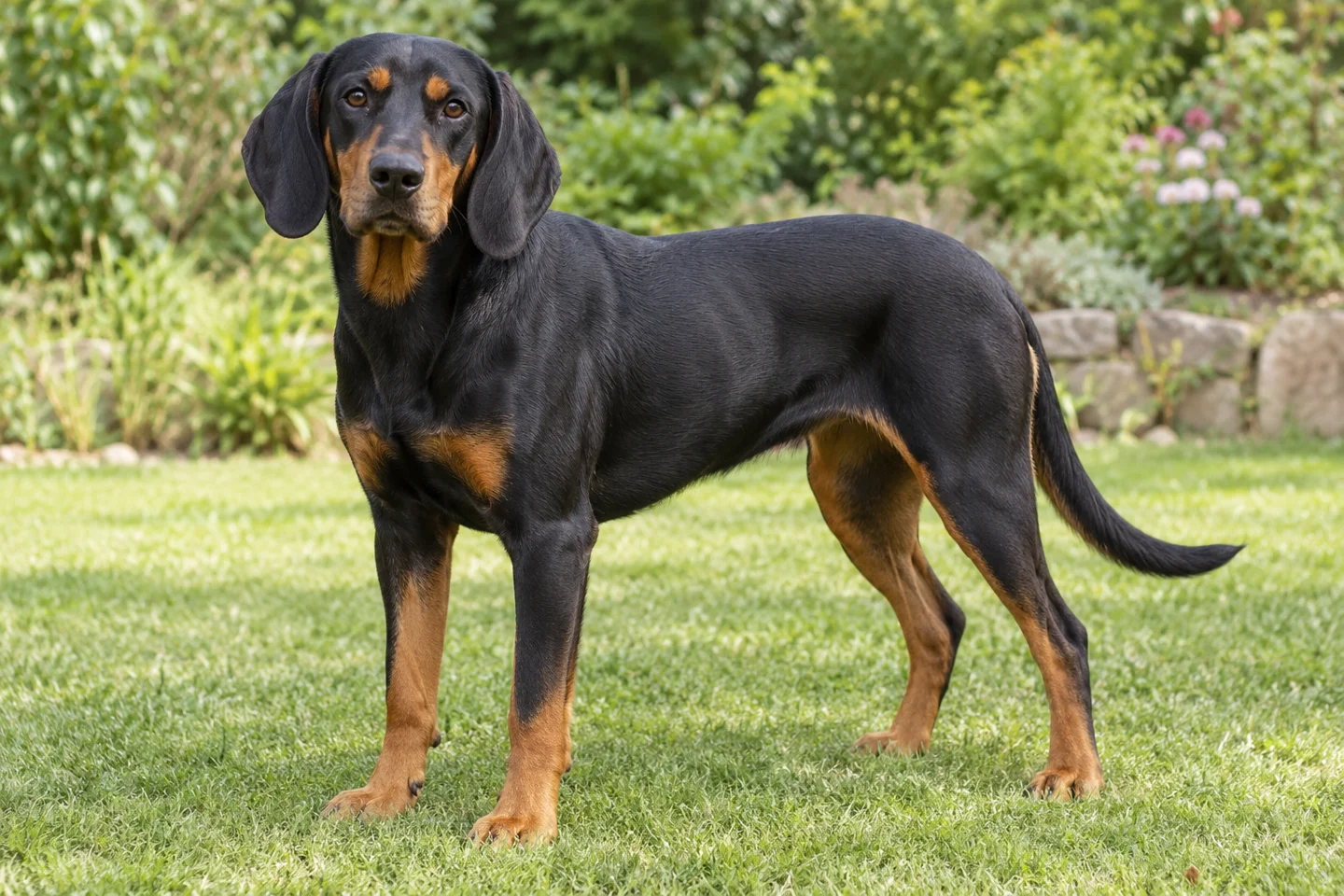
- Black with tan markings
General information for owners. These articles have not been reviewed by a veterinarian. Medical decisions need your dog's history and an examination.
Identity beyond a black-and-tan coat
The Montenegrin Mountain Hound is Crnogorski Planinski Gonič in its country of origin. It is a distinct medium-sized scenthound from Montenegro. A black-and-tan shelter dog is not automatically this breed, and a photograph cannot confirm ancestry. For a registered puppy, ask for the pedigree, the parents' identification, and the registry that issued the documents. For a rescue described by appearance, keep uncertainty about ancestry separate from what is known about its behavior and care.
The FCI classifies the breed among scenthounds and lists a working trial. A companion home should take that working identity seriously without assuming that every dog has the same level of hunting experience. Ask whether the individual has lived indoors, traveled in a car, met cats, or walked on a lead around traffic. A dog accustomed to rural working life may need patient introduction to a different environment. Arrange that transition before adoption rather than expecting an unfamiliar home to make immediate sense to the animal.
History and present-day expectations
The FCI account connects the breed with other Balkan hounds, records a first standard in 1924, and notes international recognition in 1969. The historical name black hound also appears in that account. These details explain identity and registration history. They do not provide evidence that a modern dog is naturally immune to illness or perfectly suited to every household because its ancestors worked in demanding country.
For an owner, the useful history is the life of the actual dog and its close relatives. Ask about the surfaces it works or walks on, how it is housed, and what happens when an interesting scent leads away from the handler. If buying a puppy, find out how the litter experiences ordinary household activity and necessary handling. If adopting an adult, ask for examples of recovery after something frightening. A quiet animal at the first meeting may be comfortable, tired, or inhibited. Give yourself time to observe before making confident predictions about its future personality.
Size and characteristic appearance
The FCI height range is 44–54 cm at the withers, with an ideal of 49–50 cm for males and 48–49 cm for females. Its body is slightly longer than its height, with a solid, agile build. Those measurements describe adult conformation. They do not establish the right food portion or fitness level for an individual. Ask a veterinarian to assess body condition and movement, particularly if the dog's former routine differs from the exercise you intend to provide.
The short, dense coat is predominantly black with tan marks above the eyes, on the muzzle, and on the lower legs. Pendant ears lie close to the head, and the full tail is carried in a sabre shape below the back. The illustrations here follow those features and are labeled AI-generated illustrations. They are unsuitable for verifying a real dog's pedigree or detecting illness. When assessing a prospective dog, watch it move freely and look at the actual records instead of treating an attractive image as evidence of soundness.
Scent, attention, and daily temperament
A scenthound can remain intensely interested in information a person cannot perceive. When the nose finds something compelling, the handler's familiar cue may become difficult for the dog to follow. That situation calls for preparation and management rather than an argument. Let safe walks include deliberate sniffing, then teach a separate cue for turning back toward you. Reward the response in easy surroundings before expecting it beside wildlife or fresh tracks.
At home, provide a resting area and a predictable rhythm. An adult arriving from kennels or a working setting may need to learn indoor surfaces, appliances, and short periods without company. Avoid crowding it with visitors during the first days. Watch whether it can eat, sleep, and recover normally as the surroundings become familiar. If it struggles persistently, discuss the problem with the veterinary team and a qualified behavior professional. A description of the breed as attached to its handler does not mean every dog will understand separation or household rules without teaching.
Exercise and safe exploration
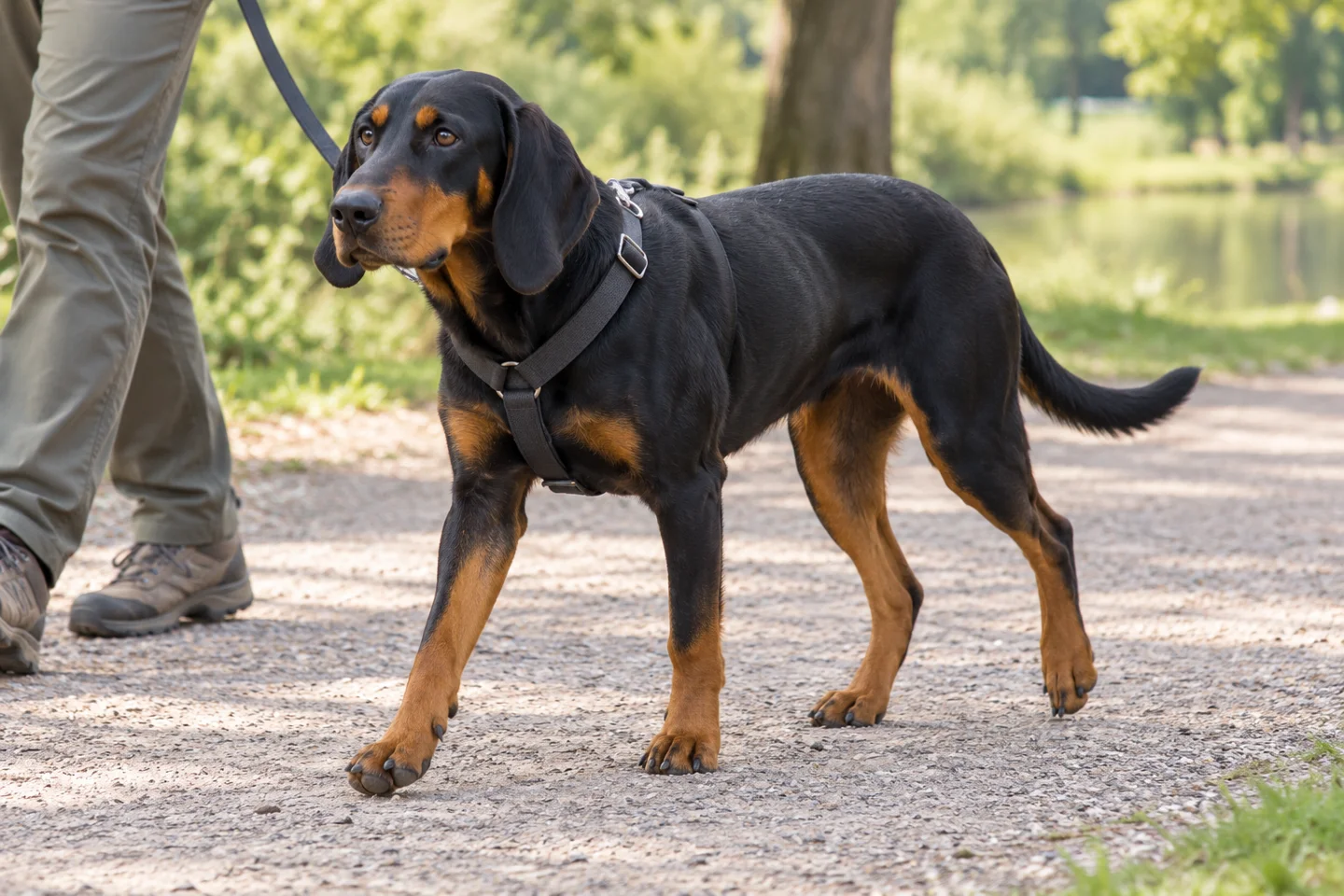
Daily activity should include movement suited to the dog's age, condition, and previous fitness. A newly adopted adult may have spent recent weeks inactive, despite coming from a working breed. Build the routine from what it can comfortably manage. Choose routes with good footing and room to move away from busy traffic. A long line can allow exploration in an appropriate safe place, but the handler must prevent it from crossing paths, tangling legs, or reaching dangerous ground.
Check local access rules and keep the dog controlled around livestock and wildlife. Do not release it simply because the area looks remote. A scent can lead across a road or beyond the boundary you can see. In warm weather, carry water, plan shade, and adjust timing. After rough or wet outings, inspect feet and equipment-contact areas and allow recovery. Changes in stride, repeated stopping, or unusual fatigue deserve attention. The dog's willingness to continue should be considered alongside its movement and recovery, rather than being treated as unlimited physical capacity.
Training a hound to return and cooperate
Teach recall as a rewarding action with a reliable history, not a word repeated while the dog is already disappearing. Begin indoors or in a secure enclosure, reward generously, and sometimes allow the dog to resume exploring afterward. This avoids making every return predict the end of enjoyment. Outside a secure area, use suitable equipment while the response is being developed. Even a well-practiced recall does not remove the need to consider local hazards and the dog's individual hunting interest.
Useful companion skills include waiting while a gate opens, entering a vehicle calmly, releasing an object, and resting on a mat. Practice each in short sessions before combining them with a busy outing. If progress stalls, change the difficulty, reward, or environment. Choose professional help that uses reward-based methods and explains how management protects learning. Frightening a dog for failing to respond can add fear to an already distracting situation. It also tells you little about whether the dog understood the task or could perform it at that level of difficulty.

Aggression and honest safety decisions
A breed standard's description of temperament cannot certify that an individual will never bite. Look for the situations that make this dog uncomfortable. Restraint, food, pain, unfamiliar handling, and close approaches from other dogs may all require consideration. Allow escape from interactions where possible. If the dog stiffens, turns away repeatedly, or warns someone off, stop and review what happened instead of demanding more tolerance.
Do not reach into a conflict between dogs or pull an object forcibly from the mouth as a routine teaching method. Prevent access to dangerous items and practice exchanges with safe ones. A dog with a bite history needs an individual management plan and appropriate professional support. Inform carers accurately, including the circumstances and any known injuries. New reactions during touch or movement require a veterinary assessment for discomfort. The goal is a household arrangement that people can maintain reliably. Reassuring yourself that the dog is a rare breed, a hunting dog, or usually gentle cannot substitute for those decisions.
Children and a protected retreat
Children need an adult to supervise contact and arrange the space. A hound resting after activity should be able to sleep without being climbed over or followed into its bed. Teach children to invite the dog over and accept a refusal. Gentle training games can create shared enjoyment when the adult controls the rewards and watches the dog's response. Rough wrestling and chasing can become difficult to stop once excitement rises.
Ask what the dog has actually experienced with children. A history of living near children is less useful than a clear account of ages, activities, and reactions. For an animal with incomplete history, start cautiously and use separation whenever close supervision is unavailable. A gate or quiet room protects both the child and dog during parties or meals. Children should call an adult about stolen objects and never try to remove food or physically move a reluctant dog. If fear or repeated warnings develop, seek help before continuing the same interaction and hoping familiarity will solve it.
Cats, livestock, and canine companions
Treat the dog's response to other animals as an individual question with a working background that may matter. A calm response to a cat indoors cannot establish safety around a running cat outdoors. Use secure separation while assessing interest and reward disengagement. Small pets should have housing that the hound cannot reach or harass. Livestock require physical control and respect for the landowner's arrangements; a dog should never be allowed to investigate by chasing.
For other dogs, begin with space and movement rather than immediate sharing of a confined room. Observe whether each dog can turn away, pause, and respond to its handler. Household integration also involves resources. Feed apart and provide separate sleeping places while you learn how the animals behave. A working history with several hounds does not automatically establish compatibility with every pet. If one dog repeatedly blocks, pursues, or frightens the other, change the setup. Professional assessment is preferable to allowing repeated confrontations in the hope that a stable relationship will emerge afterward.
Grooming, ears, and outdoor checks
The short coat makes brushing relatively straightforward, but outdoor care extends beyond removing loose hair. After a walk, look between the toes and along the limbs for lodged material or irritation. Inspect the skin where a harness sits. Check the underside of the tail and areas that remain damp after rain. Teach the dog to stand comfortably on a nonslip surface so these checks do not require a struggle.
Pendant ears should be observed regularly without pushing implements into the canal. Persistent head shaking, odor, discharge, or pain calls for veterinary advice. Do not select an ear treatment solely because someone recommends it for hounds. Nail care and toothbrushing also need gradual introduction. Start with brief contact and rewards, then increase the procedure the dog can accept. A dog newly arrived from a different care routine may need more time. Let the clinic know if essential examination is difficult so medical needs and behavior training can be planned together rather than making every appointment an improvised restraint exercise.
Health questions for a breed with limited public data
The FCI standard describes expected structure and identifies departures that matter for conformation. It is not a medical survey, and its descriptions cannot establish the frequency of inherited disease in this population. Ask a source for the clinical history of the parents and close relatives: what diagnoses were made, at what age, and whether a veterinarian documented them. Request original reports where screening has been performed. Do not accept a claim of universal health simply because a breed is uncommon in your country.
Discuss the dog's actual records and intended activity with your veterinarian. An examination can establish a useful baseline for movement, oral health, eyes, skin, and general condition. If a breeder advertises a special health program, ask who operates it and what the current requirements actually say. A competition result or pedigree answers a different question from a clinical assessment. For an adult with gaps in history, prioritize the examination and follow-up appropriate to that dog. Avoid collecting random tests merely to create a longer list without understanding what each result would change.
Travel history and veterinary handover
If the hound has lived or worked in another region, give the new veterinarian its location history and dates. ESCCAP's travel advice uses destination and circumstances to guide parasite precautions. A vaccination document does not by itself describe all relevant exposure or preventive treatment. Ask the former owner which products were used, when they were administered, and whether any clinical tests were performed. Keep product names and reports instead of relying on the word treated.
Plan future travel before departure so the clinic can consider both prevention and any official requirements. Explain whether the dog will walk in woodland, spend time in kennels, or encounter other animals. On return, retain the travel history in its medical record. If illness develops later, tell the clinician where the dog has been even if the journey seems remote from the current problem. This is a practical handover issue rather than a claim that every imported hound is ill. Care should follow the actual exposure and examination, without assumptions based solely on country of origin.
Feeding, mixes, and choosing a household
Feed a complete diet suitable for life stage and adjust the amount using body condition and the dog's workload. A hound moving from regular work to a quieter companion routine may need a different intake, while an underconditioned dog needs a veterinary plan rather than unrestricted rich food. Measure portions and include rewards. Changes in appetite, weight, or drinking should be recorded and discussed when persistent or accompanied by illness.
A cross described as a Montenegrin Mountain Hound mix may have uncertain ancestry and different needs from a registered dog. Evaluate its actual size, behavior, coat, and records. Mixed ancestry does not establish freedom from inherited disease. Budget locally for preventive care, secure containment, training, transport, and emergency treatment. Consider help during absences and whether your address can accommodate vocal behavior without constant conflict. A rural setting is useful only if boundaries and daily care are adequate. An adult whose observed preferences suit your routine may be a better choice than a puppy selected largely for rarity.
Meeting on dogsDating without exposing home location
Describe the individual hound's preferences clearly on dogsDating. State whether it enjoys a steady sniffing walk, becomes distracted by wildlife, or needs room around unfamiliar dogs. Select a public route with space to turn aside and agree on walking equipment before arrival. Begin with parallel movement and let the handlers manage distance. A narrow gate or a stationary nose-to-nose encounter may create pressure that a wider route avoids.
Keep exact user coordinates private and use an approximate area for discovery. Arrange the public meeting point without sharing the house entrance, kenneling location, or routine absence schedule. Avoid photos that show identifying documents or address details. If the dog cannot disengage from the other animal or repeatedly tries to escape, end the introduction and record what occurred. A successful first meeting can simply establish that the dogs can walk in the same area calmly. Closer interaction should depend on their behavior, not on an expectation created by a digital match.
Sources and editorial notes
Sources checked October 22, 2026. Breed measurements describe reference ranges, not a diagnosis or an individual dog's ideal weight. Images are AI-generated breed illustrations and do not document a particular dog or health condition.
- AVSAB: Humane Dog Training Position Statement
- VCA Animal Hospitals: Food aggression in puppies
- Orthopedic Foundation for Animals: CHIC health screening programs
- VCA Animal Hospitals: Aggression toward unfamiliar dogs, diagnosis
- VCA Animal Hospitals: Grooming and coat care for your dog
- VCA Animal Hospitals: Ear infections in dogs (otitis externa)
- AAHA: Feeding plans for healthy, appropriate weight cats and dogs
- VCA Animal Hospitals: Heat stroke in dogs
- AVSAB: Puppy Socialization Position Statement
- VCA Animal Hospitals: Dog behavior problems, aggression toward children
- ESCCAP: advice for travelling with a dog in Europe
- Fédération Cynologique Internationale: Montenegrin Mountain Hound official breed standard
Keep getting to know dogs.
Read another guide or return to your dogsDating community.
Explore breed guidesBack to dogsDating