Jack Russell Terrier
The Jack Russell Terrier is a small working terrier whose curiosity, speed, and persistence need practical outlets. Good ownership includes secure boundaries, reward-based training, and honest assessment around other animals.
How these guides are researched and reviewed
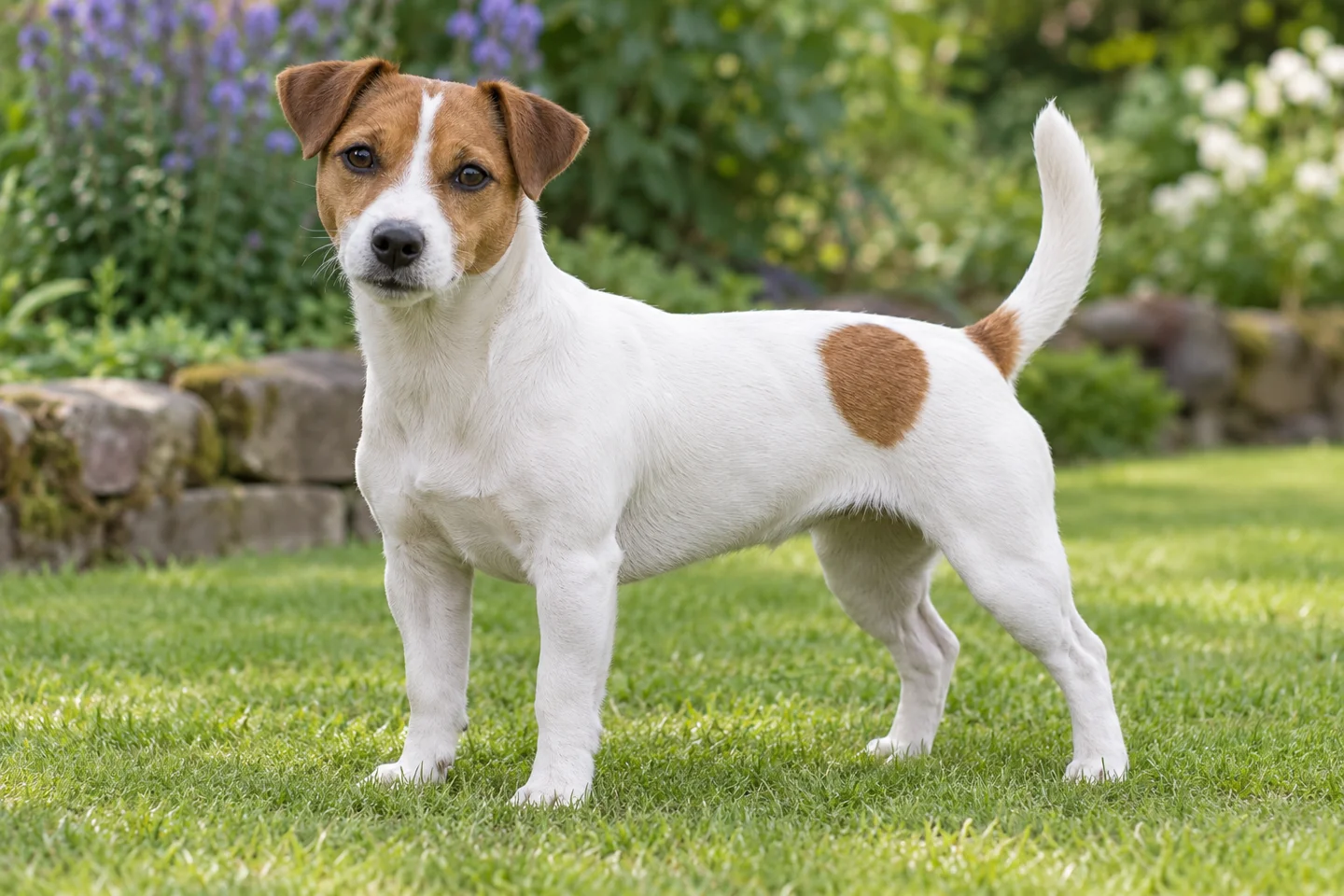
- Origin
- England; development in Australia
- Adult standard size
- Ideal 25–30 cm; approximate proportional reference 5–6 kg
- Illustrated coat
- Smooth white with tan markings
General information for owners. These articles have not been reviewed by a veterinarian. Medical decisions need your dog's history and an examination.
Which Jack Russell this guide describes
The Jack Russell Terrier in this guide follows the FCI breed standard for the shorter, slightly longer-bodied working terrier developed in Australia from English roots. The Parson Russell Terrier is a separate, taller, more squarely built breed. Everyday use of the name Jack Russell is broader than a registration category, so ask which registry and standard a breeder means. A dog described informally as a Jack Russell may still be a suitable companion, but its name alone cannot verify ancestry, adult dimensions, or health records.
The breed's working background deserves practical attention. A small terrier can investigate a fence gap, follow moving wildlife, or persist at a hole long after its owner has lost interest. Plan where the dog can explore safely before worrying about decorative accessories. Meet adults from the source you are considering and ask how they behave on ordinary walks. A confident introduction in the breeder's kitchen reveals only part of the dog's life. Request details about travel, visitors, other dogs, handling, and time spent alone.
History and the work behind the behavior
The FCI history traces these terriers to the Reverend John Russell's nineteenth-century English working dogs. Their tasks required a body and disposition suited to following quarry, including work below ground. Australian development contributed to the recognized Jack Russell type. This history helps explain why an owner should provide purposeful activity, but it does not prove that every modern dog will hunt, dig, or react in the same way.
You can offer safe investigation without allowing uncontrolled pursuit. Hide a food reward in an accessible container, teach a search cue, or provide a designated digging area where the dog can uncover appropriate objects. Secure the area before starting, and supervise any game involving containers or loose material. A dog that chooses its own occupation may select a flowerbed, a neighbor's chickens, or the gap behind the shed. Give the household a shared plan for those situations. Waiting until the dog has rehearsed an escape repeatedly makes the problem harder to manage.
Adult size and visible features
The FCI ideal height is 25–30 cm at the withers. Its proportional weight reference is approximately 1 kg per 5 cm of height, giving examples of about 5 kg at 25 cm and 6 kg at 30 cm. These are conformation references for adults, not feeding targets for every dog. Assess body condition with a veterinarian and account for muscle, age, and the individual frame. Extra weight can be difficult to notice when a small dog remains eager to run.
The body is slightly longer than tall, with a strong muzzle, dark eyes, and button or dropped ears. Smooth, broken, and rough coats are recognized. White predominates, with black or tan markings. The illustrations here show a smooth white-and-tan dog with natural ears and a full tail. An AI-generated illustration cannot demonstrate pedigree, sound movement, or clinical health. Avoid selecting a puppy chiefly for an unusual marking. Observe how it moves and interacts, and compare its documents with the actual dog and its identified parents.
Living with an interested, persistent dog
A Jack Russell can be deeply engaged in whatever is happening nearby. That interest may make teaching enjoyable, while also making a quiet afternoon difficult if the dog has learned that every movement begins a game. Establish routines that include deliberate rest. Reward the dog for remaining on a comfortable bed while someone cooks or works, starting with durations it can manage. Avoid repeatedly waking it to entertain visitors or show a trick.
Prepare for periods when your own activity drops. Illness, deadlines, and poor weather do not suspend the dog's needs. Arrange a suitable walker or carer before relying on one, and explain escape risks and animal preferences accurately. Practice manageable absences early rather than leaving for a full workday as the first experiment. Persistent vocalizing, destruction around exits, or inability to settle alone deserves assessment. Additional exercise may help a bored dog, but it cannot be assumed to treat separation-related distress. The cause and the individual dog's response should guide the plan.
Aggression, handling, and bite prevention
Terrier persistence is not a diagnosis of aggression. Assess what the individual does and the circumstances in which it happens. A dog may guard a chew, react to restraint, or struggle when another dog approaches its face. Use distance and barriers to prevent repeated conflict while seeking qualified help. Do not hold the dog down to prove that a person controls it. That confrontation can make handling more threatening and increase the chance of injury.
Teach object exchanges with safe items and rewards before an emergency theft occurs. If the dog has something dangerous, avoid turning the situation into a chase and contact the veterinarian when ingestion may have occurred. Growling or snapping during touch also warrants a medical check, especially if the behavior is new. Record the body area touched and the dog's posture rather than labeling it bad-tempered. Tell sitters and veterinary staff about previous bites or near bites. Specific information allows safer arrangements and is more useful than a reassurance that the dog usually likes people.
Children and games that remain manageable
A lively child and a lively terrier can excite each other quickly. Keep games structured enough for an adult to stop before the dog begins grabbing clothes or hands. Searching for scattered food, practicing a simple cue, or walking together with adult control can be easier to supervise than wrestling. Children should never be responsible for removing a stolen object, interrupting a dog fight, or enforcing rest on a dog that is already overwhelmed.
Provide a protected sleeping space and explain that the dog is left alone there. A child visiting occasionally may need a separate introduction even when the dog lives comfortably with familiar children. Watch for the dog's attempts to leave and make sure furniture or a corner does not block the exit. Small size does not make carrying automatically safe. An adult should decide whether lifting is necessary and support the dog appropriately. If the household cannot maintain supervision, separate the child and dog physically until someone can give the interaction their full attention.

Cats, small animals, and other dogs
A terrier's interest in chasing deserves particular care around cats, poultry, rabbits, and other small animals. Familiarity with one household cat does not establish safety with an unfamiliar cat outdoors. Provide secure separation and avoid introductions in which the smaller animal has no escape. Cages alone may be inadequate if the dog can repeatedly rush or paw at them. Consider the other animal's stress and safety when deciding whether the household arrangement is workable.
With dogs, select companions by behavior rather than assuming that another terrier will be an automatic friend. Some individuals enjoy energetic play, while others become tense when pursued or crowded. Interrupt before arousal makes responding difficult, and allow recovery apart. Feed household dogs in separate places and remove valuable chews during early introductions. If there is a history of fights, seek professional help before sharing unrestricted space. A new puppy can change an established dog's routine sharply. Plan separate walks and individual attention so the older dog does not have to manage every puppy interaction itself.
Training that gives persistence a useful job
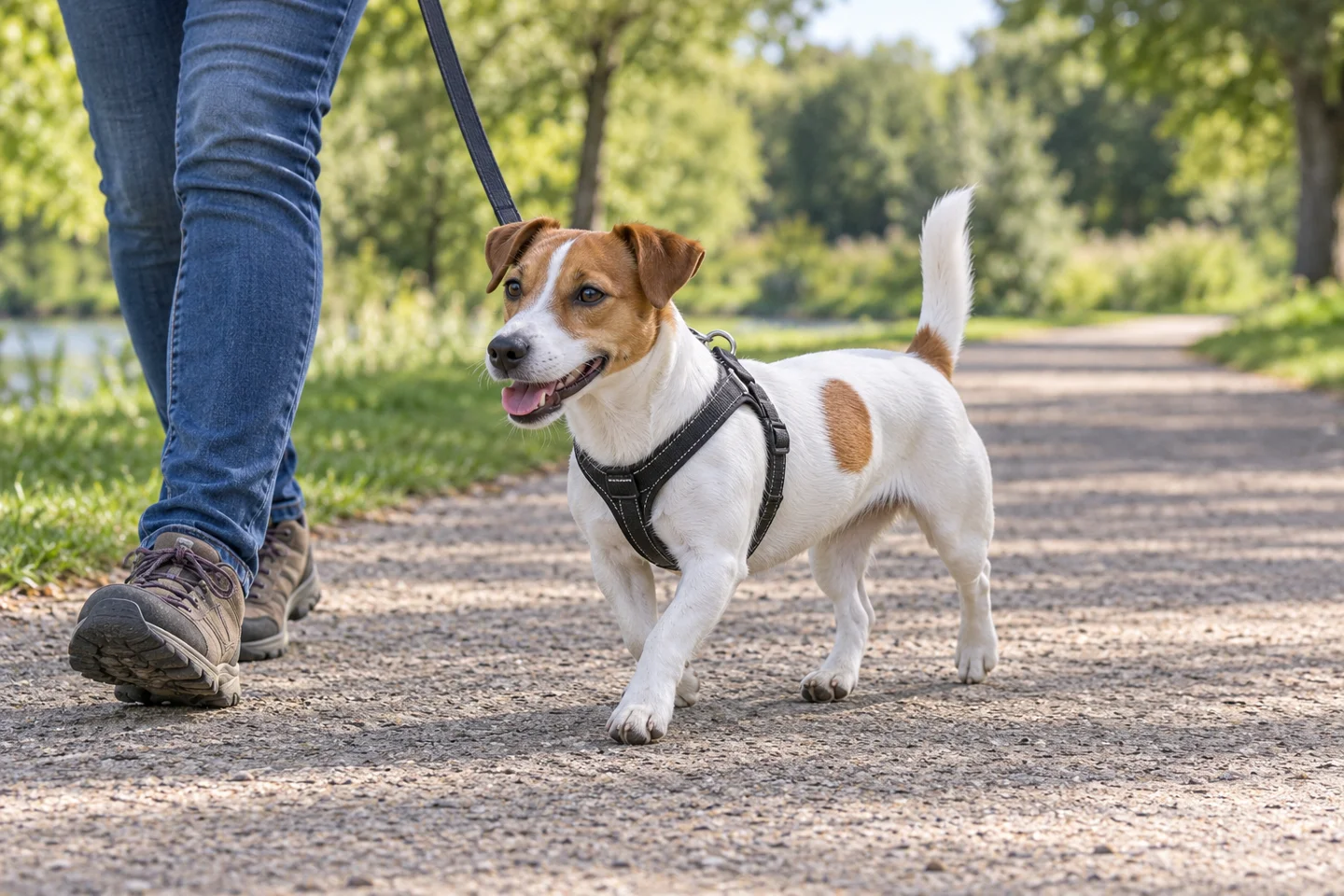
Reward the behavior you want the dog to repeat. A Jack Russell may learn a search task rapidly when the reward is worth finding, yet ignore a familiar cue beside a moving squirrel. Practice in easy environments first, then increase distraction gradually. A long line attached to a well-fitted harness can protect a recall exercise in an appropriate open space. It does not justify practicing beside traffic or allowing the line to entangle people and dogs.
Teach coming back, releasing a toy, moving away from the door, and pausing before leaving the car. Make the release cue meaningful by sometimes returning the toy after the dog lets go. During tug, keep hands clear and stop calmly if teeth contact skin. Avoid constant testing until the dog fails. A reward-based instructor can help divide a difficult task into achievable steps. Ask the instructor how they will handle chasing and frustration. The answer should describe teaching, management, and safety instead of relying on pain or intimidation to suppress a response.
Exercise without endless escalation
Provide daily movement, exploration, and suitable mental work, with the amount adjusted to health and maturity. A route with time to investigate smells can offer more variety than repeated laps at a hurried pace. Build fitness gradually. An enthusiastic dog may continue after fatigue has affected its movement, so the handler must make sensible stopping decisions. Ask the veterinarian about activity when the dog is growing, returning from injury, or beginning to slow down.
Repeated high-speed ball chasing is only one possible activity and can become difficult to interrupt. Mix games with calmer searches and recovery periods. Inspect the surface before running or jumping and avoid slippery landings. In warm weather, adjust the route and timing, carry water, and stop if the dog is struggling. Plan a way home if it cannot continue. A weekend adventure should suit the dog's usual conditioning. A small terrier's willingness to follow you is not evidence that a sudden long hike or prolonged cycle ride is appropriate.
Containment, digging, and daily escapes
Inspect boundaries from the dog's height. A gap beneath a gate, loose panel, or object placed beside a fence can defeat an otherwise secure garden. Check after deliveries, maintenance, and visitors rather than assuming the gate was closed. Provide a second barrier around a busy entrance when possible. Identification and current contact details matter if a mistake occurs, but they do not replace physical security.
Give digging an acceptable location if the dog enjoys it, and supervise the alternative while preventing access to unsafe spots. Do not encourage exploration of unknown holes or spaces beneath structures. The animal may encounter wildlife, sharp objects, or a route you cannot reach. Inside, store food, medication, and attractive small objects securely. A dog that has learned to open a cupboard needs a changed latch or storage arrangement. Calling it clever does not resolve the practical problem. Explain household rules to visitors so one open door does not undo a carefully managed routine.
Check the fit of walking equipment again after growth or changes in body condition. Practice putting it on calmly before opening the front door, so fastening a buckle does not become a race against an excited dog.
Grooming smooth, broken, and rough coats
Coat care depends on the actual hair texture. A smooth coat still sheds and needs brushing and skin checks. Broken and rough coats may need a groomer experienced with terrier texture to explain maintenance. Describe whether your goal is comfortable pet care or preparation for a conformation event. Do not repeatedly pull at resistant hair while the dog struggles. Painful mats or inflamed skin need a different plan from an ordinary grooming session.
After outdoor activity, inspect paws and the coat for material caught against the skin. Check ears without pushing tools into the canal, and ask the veterinarian about odor, discharge, or repeated head shaking. Keep nails at a functional length through gradual, rewarded practice. Dental care also requires training; introduce mouth handling gently and obtain advice on brushing and appropriate products. The ease of wiping mud from a short coat should not hide the time required for these tasks. A dog that avoids grooming may need a change in technique or assessment for discomfort.
Health screening and useful clinical information
The Royal Kennel Club's Jack Russell recommendations identify PLL DNA testing, with additional recommendations for late onset ataxia, spinocerebellar ataxia, and clinical eye examination. Ask for named results linked to the correct dogs and confirm the current program with the relevant registry or breed club. An eye examination and a DNA test answer different questions. A favorable result for one tested variant cannot explain every possible future eye or neurological problem.
For a prospective puppy, discuss what is known about affected relatives and how the breeder will communicate a later diagnosis in the family. For a rescue with incomplete history, arrange an individual veterinary plan instead of guessing that missing records imply either illness or good health. If balance, coordination, or vision changes, seek assessment rather than diagnosing an inherited condition from a video or the dog's breed. Take the timing, medication history, and available reports to the appointment. A clinical diagnosis can require investigating several explanations, and the appropriate next step depends on the examination.
Feeding, mixes, and financial planning
Use a complete food appropriate to life stage and measure the portion. Training can involve many small rewards, so include them when reviewing daily intake. Adjust the plan with the veterinarian when body condition, appetite, or activity changes. A dog that appears permanently hungry does not necessarily need unrestricted food. Store food and discarded packaging where the terrier cannot raid them, including in visiting bags or children's rooms.
Names used for Jack Russell mixes may describe the intended parents but do not guarantee temperament, coat, or adult size. Ask about both parents when that information exists, and evaluate an adult's actual behavior in the proposed home. Mixed ancestry cannot promise freedom from inherited disease. Obtain realistic local costs for routine care, training, boarding, dental treatment, and emergencies. Read insurance terms before assuming a long-term condition will remain covered. The initial fee is only part of ownership. Arrange a source of practical help as well as money, particularly if your schedule changes or the dog needs restricted exercise after treatment.
A suitable home and meetings on dogsDating
A Jack Russell suits people who can enjoy active involvement while maintaining boundaries. Garden access helps only when the space is secure and someone still provides walks and teaching. An apartment can require additional planning for shared entrances, noise, and toileting. Consider the individual adult dog when your home has firm constraints. Ask a rescue or breeder for specific examples of how it copes with those constraints instead of accepting a general claim that terriers adapt to anything.
On dogsDating, state whether your dog prefers walking partners, avoids close greetings, or needs a toy-free introduction. Agree on a public route with room to change direction. Begin with both handlers moving, and leave play equipment out of the first encounter if competition may complicate it. Keep exact user coordinates and your home address private; an approximate discovery area is enough to begin a conversation. End the meeting if either dog remains tense despite more distance. Later matches should reflect what you observed, including a preference for calm parallel walks when loose play did not suit the dog.
Sources and editorial notes
Sources checked October 21, 2026. Breed measurements describe reference ranges, not a diagnosis or an individual dog's ideal weight. Images are AI-generated breed illustrations and do not document a particular dog or health condition.
- AVSAB: Humane Dog Training Position Statement
- VCA Animal Hospitals: Food aggression in puppies
- Orthopedic Foundation for Animals: CHIC health screening programs
- VCA Animal Hospitals: Aggression toward unfamiliar dogs, diagnosis
- VCA Animal Hospitals: Grooming and coat care for your dog
- VCA Animal Hospitals: Ear infections in dogs (otitis externa)
- AAHA: Feeding plans for healthy, appropriate weight cats and dogs
- VCA Animal Hospitals: Heat stroke in dogs
- AVSAB: Puppy Socialization Position Statement
- VCA Animal Hospitals: Dog behavior problems, aggression toward children
- Royal Kennel Club: Jack Russell Terrier identity and health standard
- Fédération Cynologique Internationale: Jack Russell Terrier official breed standard
Keep getting to know dogs.
Read another guide or return to your dogsDating community.
Explore breed guidesBack to dogsDating