Mudi
The Mudi is a Hungarian herding dog with a wavy coat, upright ears, and a ready response to its surroundings. A suitable home provides useful work, manageable social experiences, and deliberate practice at settling.
How these guides are researched and reviewed
- Origin
- Hungary
- Adult standard size
- Males 41–47 cm; females 38–44 cm
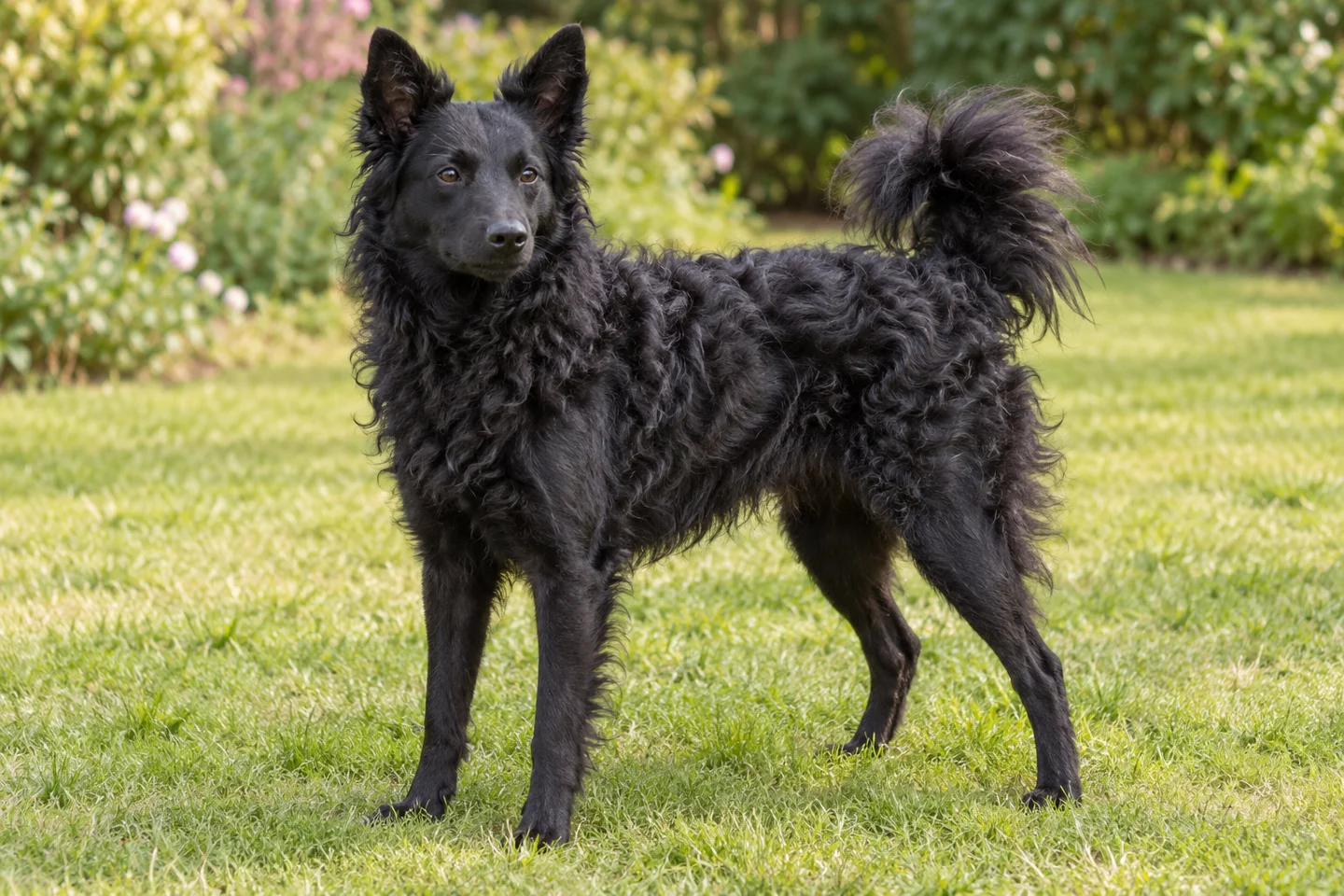
- Illustrated coat
- Solid black wavy coat
General information for owners. These articles have not been reviewed by a veterinarian. Medical decisions need your dog's history and an examination.
The Mudi as a working companion
The Mudi is a distinct Hungarian herding breed, not a coat variety of the Puli or Pumi. Its smooth face, upright ears, and wavy body coat provide useful visual clues, but appearance alone cannot verify pedigree. Ask a breeder which registry holds the parents' records and check identification on health reports. For an adult described by a rescue as a Mudi or Mudi mix, separate verified history from a reasonable visual guess.
Before choosing one, consider how you feel about a dog that pays close attention to movement and activity. A household can offer useful learning and exercise while still being too busy or unpredictable for a particular individual. Discuss the proposed routine in detail with the source. Ask about visitors, other animals, time alone, and recovery after excitement. Meeting adult relatives or observing an adult candidate in a home setting can provide more relevant information than watching a short performance in which the dog follows familiar cues enthusiastically.
Hungarian farm work and modern expectations
The FCI describes the Mudi's development among Hungarian herding dogs and its use in livestock work and farm vigilance. Those roles help explain the importance of responsiveness and physical agility in the breed. They do not establish that every dog will enjoy a crowded training venue or understand how to behave around children running through a home. Useful traits in work still need guidance in a companion setting.
Think about the work you can provide when no livestock is involved. A search exercise, careful foundation skills for a suitable sport, or learning to carry out a short sequence can use attention constructively. Avoid making uncontrolled chasing the main activity. Also decide what ends a task. A clear finish followed by a quiet place to rest can be as valuable as the next challenge. If you are attracted chiefly by fast action videos, spend time around the dogs between those performances. Daily ownership includes waiting, handling, visitors, and days when the person has less energy than usual.
Adult measurements and the wavy coat
The FCI height ranges are 41–47 cm for males and 38–44 cm for females, with narrower ideal ranges within them. These adult measurements do not tell you the correct weight or food portion for an individual dog. Evaluate body condition and muscle with the veterinarian, especially when preparing for a demanding activity. A light, athletic appearance does not make a dog ready for unrestricted repetitive jumping during growth.
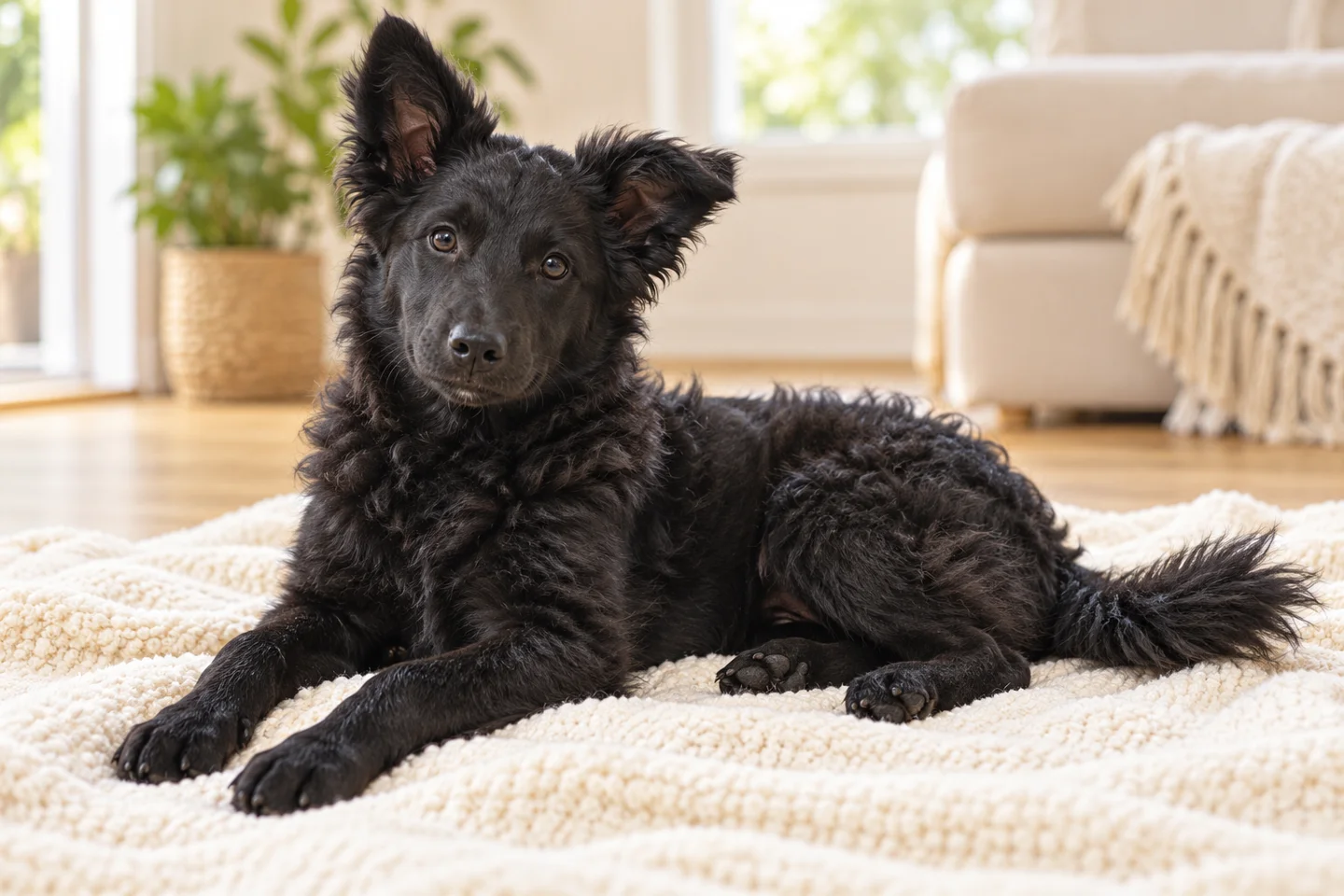
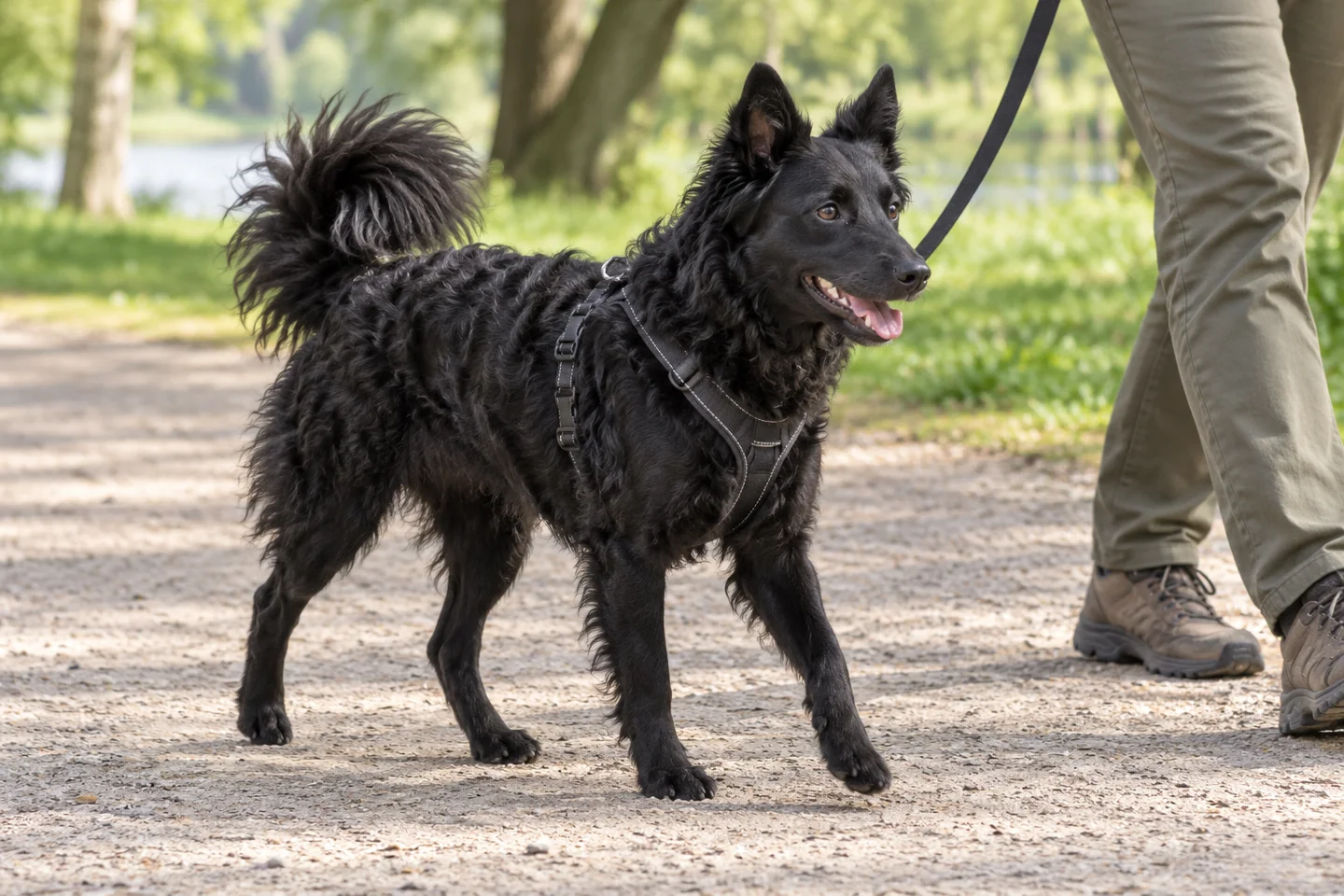
The smooth hair on the face and fronts of the limbs contrasts with a wavy to slightly curly body coat. Several colors are recognized; the illustrations here select solid black, natural upright ears, and a full feathered tail. Natural short tails can also occur. The three pictures are AI-generated illustrations and cannot demonstrate a real dog's identity, correct anatomy, or medical status. When assessing a dog, watch actual movement and ask about its care history. A photograph of an exciting leap can conceal far more than it reveals about comfortable everyday function.
Alertness without a permanent state of readiness
A responsive dog may notice a person rising from a chair, an animal crossing the garden, or a sound outside before anyone else reacts. Teach a useful alternative to following every event. Reward resting while you move briefly around the room, then build the duration and difficulty. Use a comfortable location that does not force the dog to monitor the busiest entrance. A quiet routine should be taught when the surroundings are easy enough for success.
If a dog remains unable to settle after ordinary activity, look at the pattern rather than automatically adding exercise. It may need more sleep, fewer difficult exposures, help with a specific fear, or assessment for discomfort. Keep a simple record of events and recovery. Prepare alone time gradually too. A dog that happily works with a person may still struggle when separated from them. Discuss persistent distress with the veterinarian and a qualified behavior professional. Another pet or a longer run cannot be assumed to address the underlying cause.
Training with clear information
Keep cues consistent and reward the response you want. A Mudi that learns quickly can also learn details the handler did not intend, including that a repeated cue matters only the third time or that barking starts the next game. Set up a small task, mark success clearly, and end before fatigue creates confusion. When something fails, examine timing, distraction, and reward value before deciding the dog is being deliberately difficult.
Teach everyday cooperation alongside any sport skills. Waiting at a doorway, turning away from a moving animal, releasing a toy, and entering a secured travel space make ordinary life safer. Practice in several manageable places before expecting performance in a busy setting. Reward-based instruction is particularly helpful when you want to develop both enthusiasm and calm control. Ask how a trainer handles fear, frustration, and mistakes. Methods that rely on pain or intimidation may suppress a visible response while creating additional concern about the people or surroundings present during training.
Agree on release words as well as start cues when several people train the dog. One person asking for stillness while another begins play creates an avoidable conflict. Keep a brief shared note of the skills being taught and the version the dog currently understands. This is particularly useful when a sitter needs the same doorway routine or when a young dog moves between family members during the week.
Socialization and choosing the right distance
A puppy needs appropriate experience of the life it will actually lead. It can observe traffic from a quieter location, meet a calm person without being crowded, and learn about different stable surfaces. Coordinate disease precautions with your veterinarian. The purpose is to make ordinary experiences manageable, not to obtain the maximum number of greetings. Give the dog a way to disengage and watch how readily it recovers afterward.
For an adult whose history is limited, start with the same principle. A training class may be useful if spacing and the instructor's approach suit the dog; a crowded room may be too difficult initially. Ask about the setup before attending. If the dog repeatedly freezes, flees, or cannot respond at all, adjust the environment and obtain help where needed. Keep successful outings short enough to leave room for rest. Several family members should coordinate plans so the animal is not taken to a different demanding place by each person on the same day.
Exercise, coordination, and recovery
Provide daily opportunities to move and investigate, matched to health, maturity, and current fitness. Alternate active tasks with less intense exploration. A dog that can perform a fast sequence may still benefit from an ordinary walk where it can smell and choose a direction within safe limits. Build demanding activity progressively and ask the veterinary team about appropriate restrictions during growth or after injury.
Check surfaces and equipment before practicing turns or jumps. Slippery flooring and awkward landings can make a technically simple exercise unnecessarily risky. Warm weather changes the plan: choose suitable timing, carry water, and provide a cool place to recover. Watch for changes in movement or willingness to continue. Enthusiasm should not be used to dismiss a limp or unusual fatigue. If the dog requires restricted activity, ask which quiet learning or search exercises are compatible with the treatment plan. Recovery games should support the restriction rather than becoming energetic activity in a smaller room.
Aggression and managing movement-related conflict
An individual Mudi may become excited by movement, but herding identity should not be used to excuse grabbing clothing or frightening people. Prevent rehearsal while teaching an alternative response at a manageable distance. Use gates or other barriers during busy household activity if necessary. Do not arrange repeated encounters that require the dog to cope beyond its current ability and then punish the result.
Assess warnings around food, touch, or other dogs separately. A dog that stiffens, retreats, growls, or snaps is providing information about a particular situation. Stop, create space, and seek assessment when the pattern repeats. New reactivity during handling calls for consideration of pain. If a bite has occurred, disclose the circumstances accurately to carers and obtain an individual safety plan. The breed standard is not a prediction that every registered dog will be safe in every context. Management should reflect this dog's observed behavior and the people who must carry it out reliably.
Children and a sensible boundary around play
Children running, squealing, and changing direction can create a demanding situation for an alert dog. An adult should choose activities that remain manageable, such as practicing a familiar cue or hiding a reward for a simple search. Avoid games that encourage the dog to pursue the child. End the session before excitement makes gentle behavior difficult, and let the dog rest without being followed.
Ask about the actual child's age and the dog's previous experience instead of accepting the broad phrase good with children. A calm interaction with an older child differs from life with a mobile toddler. Use separation when full supervision is unavailable, particularly during meals, visitors, or rough play. Teach children to call an adult about stolen objects and to leave sleeping dogs alone. If the dog repeatedly avoids a child, respect that information. Close contact should develop through comfortable experience rather than a demand that the dog accept holding, hugging, or constant touch because it belongs to the family.
Other animals and households with several dogs
Introduce new animals through arrangements that allow separation and observation. A resident cat needs protected routes and places beyond the dog's reach. Reward a Mudi for disengaging, and do not let repeated chasing become the normal introduction method. Livestock contact requires informed handling; ancestry alone does not give an untrained companion permission or skill to work someone else's animals. Discuss any intended herding activity with a suitable instructor and the animal owner.
With dogs, consider pace and play preferences. A fast, persistent player may overwhelm a dog that wants quieter contact. Watch for voluntary returns, pauses, and the ability to stop when a handler intervenes. At home, provide individual resting places and feed separately while relationships develop. A successful outdoor walk cannot establish how dogs will behave over a valued toy. If tension appears, change the arrangement early. Repeated conflict can harm welfare and make later integration harder, whereas reliable separation gives people time to seek advice and teach useful alternatives.
Grooming a wavy working coat
The coat needs inspection even when it appears naturally tidy. Gently work through longer hair where friction and debris collect, including behind the ears and around the tail and hindquarters. Check skin beneath the harness and look at paws after rough ground. A short smooth face does not mean every part of the coat has the same maintenance needs. Ask an experienced groomer to show you suitable tools if you are unsure.
Make checks cooperative. Teach standing on a stable surface and brief paw presentation before expecting a long examination. Introduce nail care and toothbrushing in small stages, using rewards and stopping before the dog becomes distressed. Observe the ears and obtain veterinary advice about persistent irritation or discharge rather than selecting a treatment from appearance alone. If the dog suddenly resists a previously comfortable grooming task, investigate pain or skin trouble as well as technique. A brisk maintenance routine is useful only if it reaches the areas that need attention and remains physically comfortable for the animal.
Health records and the updated cardiac requirement
The Mudi Club of America's 2025 statement lists hip, elbow, patella, and specialist eye evaluations, with basic cardiac evaluation added from August 2025. It also lists optional evaluations. This date matters when comparing reports from different years. Ask a source to show what was actually completed and to explain the current protocol rather than relying on an old checklist or the presence of a general health badge.
Read reports alongside the dog's identity and age at examination. Screening helps assess particular concerns; a favorable result cannot predict all later illness or every cause of reduced performance. Ask how new diagnoses in relatives are communicated after placement. If a dog develops unusual stiffness, difficulty moving, or a change in vision, arrange a clinical examination instead of interpreting the symptom through a single screening result. For a rescue with missing records, your veterinarian can establish an appropriate baseline and decide what further information would change care. An unverified claim that all ancestors were healthy should remain a claim, not become a substitute medical history.
Feeding an active dog without guessing
Use a complete diet appropriate to life stage, then review the amount against body condition and activity. A dog attending training can consume substantial rewards outside meals. Measure those rewards and coordinate with other household members. An energetic manner does not prove that a dog needs unrestricted calories, and a lean-looking coat outline cannot replace feeling the body and assessing muscle.
When workload changes, reassess the plan gradually with professional guidance as needed. Record persistent appetite changes, unusual thirst, or weight loss rather than compensating indefinitely with extra food. If a medical diet is prescribed, ask how training rewards can fit it. Avoid adding supplements simply because a product shows a sport dog on the label. The useful questions are what the product supplies, whether the individual needs it, and whether it affects existing treatment. Keep the veterinarian informed about everything the dog receives so feeding advice is based on the full intake rather than only the main food.
Mixes, sourcing, and costs that recur
A Mudi mix may have different coat texture, frame, and behavioral tendencies from the dog pictured here. A confident breed label on a photograph cannot establish parentage. Ask what is known, evaluate the individual, and avoid promises that crossing breeds guarantees better health or a particular temperament. An adult with detailed foster observations may offer useful information about the home conditions it can manage.
Budget for preventive care, training, safe equipment, travel, and care during absences. Include emergency assessment and the possibility of rehabilitation or restricted activity after treatment. Obtain local costs and examine insurance exclusions, especially for ongoing conditions and prior symptoms. Consider who can handle the dog if you become ill or your schedule changes. A source should be willing to discuss health records, sensitivity to the environment, and support when difficulties arise. Rarity is a poor reason to rush a decision. The practical match between the dog's needs and a household's reliable resources is what supports a lasting placement.
A dogsDating introduction with room to respond
Use dogsDating to communicate the details that affect this Mudi's meetings. Explain whether it likes steady movement, needs a quiet arrival, or finds rapid chasing difficult to interrupt. Select a public area where handlers can adjust distance without blocking other people. Begin on a parallel walk and let the dogs observe each other while moving. Leave favored toys behind if they would create competition or excessive excitement.
Keep exact user coordinates and the home address private. Approximate discovery can identify a potential partner without publishing a private training location or daily routine. Agree on a public landmark and review photos for identifying information. If either dog remains tense, cannot disengage, or repeatedly avoids the encounter, finish calmly. A short, comfortable walk is enough for a first meeting. Record useful observations so the next arrangement can reflect the dogs' actual preferences. A fast or athletic appearance does not establish that two dogs want the same style of interaction, even when their handlers hope for a play partnership.
Sources and editorial notes
Sources checked October 22, 2026. Breed measurements describe reference ranges, not a diagnosis or an individual dog's ideal weight. Images are AI-generated breed illustrations and do not document a particular dog or health condition.
- AVSAB: Humane Dog Training Position Statement
- VCA Animal Hospitals: Food aggression in puppies
- Orthopedic Foundation for Animals: CHIC health screening programs
- VCA Animal Hospitals: Aggression toward unfamiliar dogs, diagnosis
- VCA Animal Hospitals: Grooming and coat care for your dog
- VCA Animal Hospitals: Ear infections in dogs (otitis externa)
- AAHA: Feeding plans for healthy, appropriate weight cats and dogs
- VCA Animal Hospitals: Heat stroke in dogs
- AVSAB: Puppy Socialization Position Statement
- VCA Animal Hospitals: Dog behavior problems, aggression toward children
- Mudi Club of America: 2025 parent club health statement
- Fédération Cynologique Internationale: Mudi official breed standard
Keep getting to know dogs.
Read another guide or return to your dogsDating community.
Explore breed guidesBack to dogsDating