Old English Sheepdog
The Old English Sheepdog is a large British herding breed whose shaggy coat requires deliberate care. A suitable home plans for grooming, physical space, useful training, and health records that distinguish clinical examinations from specific genetic results.
How these guides are researched and reviewed
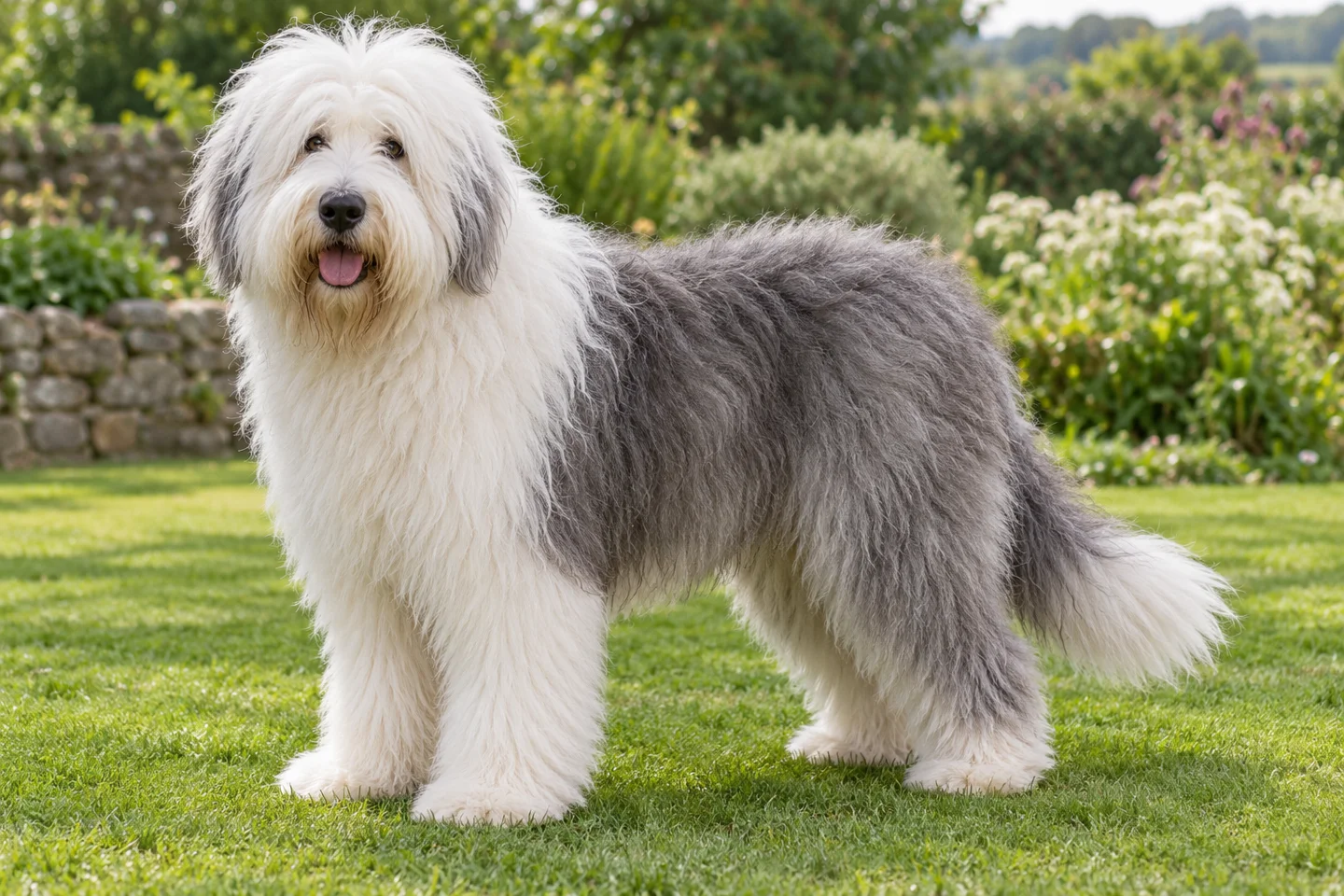
- Origin
- Great Britain
- Adult standard size
- Males 61 cm and upwards; females 56 cm and upwards
- Illustrated coat
- Grey and white shaggy coat
General information for owners. These articles have not been reviewed by a veterinarian. Medical decisions need your dog's history and an examination.
A large dog beneath a shaggy outline
The Old English Sheepdog is a distinct British breed, often abbreviated OES. The historical nickname Bobtail does not mean every individual must have a short tail. Natural full tails are appropriate and are shown in this guide's illustrations. Do not confuse the breed with the Bearded Collie or Dutch Schapendoes simply because all can have shaggy faces. Check registered identity when purchasing a puppy and separate visual guesses from documented ancestry in rescue listings.
The coat can dominate a first impression, but daily ownership involves the body beneath it. Consider how the dog will turn through a hallway, enter your vehicle, rest comfortably, and receive care when muddy or unwell. Meet adults before deciding whether your space and routine fit. A large dog that enjoys contact still needs protected sleep and teaching. The most useful source discusses ordinary maintenance, handling, and behavior in detail rather than relying on the charm of an animal whose eyes disappear beneath a carefully arranged topknot.
Herding history and present-day purpose
The FCI places the breed among sheepdogs and describes the substantial, mobile dog associated with its working identity. Historical accounts help explain its build and activity, but they do not give a puppy trained herding skills or certify suitability for every family. Ask about the parents' actual lives and what the source selects for. A working or show title provides information for a particular purpose, while a companion placement also needs evidence about ordinary household behavior.
If you want to explore an organized activity, find suitable instruction and discuss physical preparation with the veterinary team. A companion can also enjoy searches, learning, and safe exploration without reproducing a historical occupation. Teach a clear finish and allow rest between tasks. Spending time with adults after the exciting demonstration is useful: can they relax while people talk, accept routine care, and move through a busy entrance calmly? Those observations help translate interest in the breed into a realistic plan for the dog that will share your home.
Adult size, coat color, and a full tail
The current FCI standard lists males at 61 cm and upwards and females at 56 cm and upwards at the withers, while emphasizing proportion and overall type over size alone. These are conformation references, not a goal of maximum weight or rapid puppy growth. Ask the veterinarian to assess the individual frame, muscle, and body condition. A thick coat can conceal both excess fat and a change in condition.
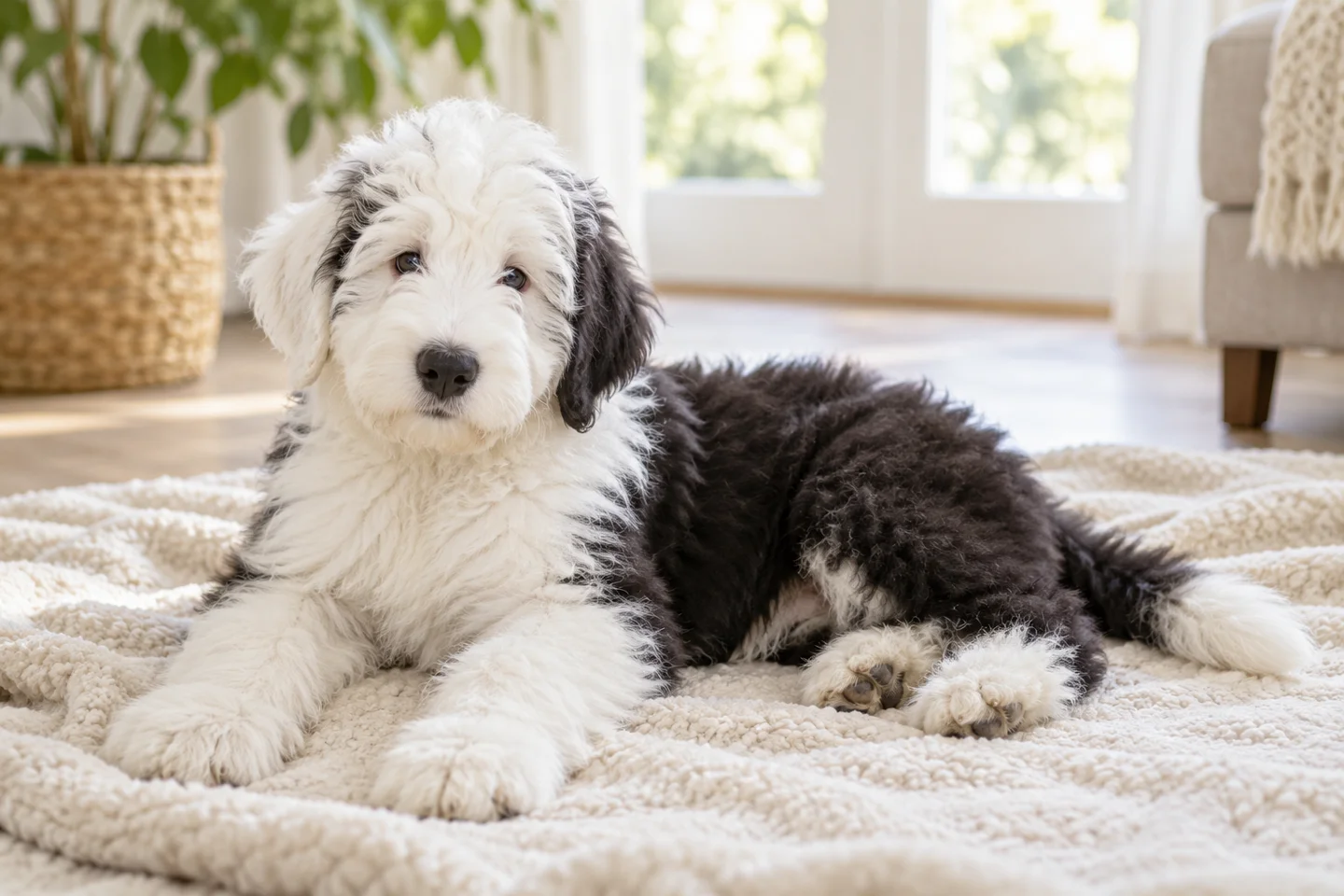
The outline is substantial and approximately square, with a topline that rises gently toward the loin. The coat is abundant and shaggy rather than tightly curled. This guide's AI-generated illustrations select grey and white, natural small drop ears, and a full shaggy tail. Puppies may look darker before the adult coloring develops. The images cannot establish pedigree, comfortable movement, or clinical health in a real animal. Watch an actual dog rise, turn, and walk. Ask about any previous treatment rather than judging soundness from the volume of hair or the size of the head.
The coat is a recurring practical commitment
Plan a place, equipment, and schedule for coat care before the puppy arrives. The dog should stand or lie comfortably on a stable nonslip surface, with enough room for the person to work without awkward pulling. Ask an experienced groomer to demonstrate sectioning the hair and reaching the areas near the skin. A brush passing smoothly over the outside can leave compacted tangles beneath it.
Check high-friction areas, including behind the ears, under equipment, around the legs, and beneath the tail. Puppy-to-adult coat changes can alter maintenance demands. Arrange professional help before the household falls behind, rather than treating painful mats as something that must be brushed out through restraint. A medical or comfort need may require a different coat arrangement from a show presentation. Discuss the actual dog's condition with the professional. The priority is comfortable skin, movement, and access for care. A shaggy appearance should never be used to justify knots, trapped moisture, or difficulty seeing and examining the animal.
Ask the person providing holiday care whether they can maintain the agreed routine, and demonstrate the tools before leaving. Several days of deferred care after wet outings can make the next session harder, especially in a changing young coat.
Grooming cooperation and veterinary access
Teach components of care separately. Reward a brief paw touch, a comfortable stand, or gentle contact near the mouth, then release before adding duration. Introduce tools and equipment sounds gradually. A short session the puppy understands can prepare for longer care better than waiting until maintenance is urgent and expecting stillness through an unfamiliar procedure. Adults with difficult past experiences may need the same preparation.
Nail care, toothbrushing, and ear observation belong in the plan as well as coat work. Do not insert implements into the ear canal, and seek advice about persistent odor, discharge, or head shaking. If the dog suddenly avoids a previously comfortable area, consider pain or skin trouble. Explain handling concerns to the clinic or groomer before the appointment. Necessary treatment may need a professional approach while cooperative training progresses. The physical ability to restrain a large dog is an unsuitable measure of success. Care should be practical enough to repeat without steadily making the next session more frightening.
Temperament and a place to rest
An individual Old English Sheepdog may enjoy close family involvement while still needing teaching around excitement. Reward calm behavior before pushing into people becomes the standard way to obtain attention. Place the bed where the dog can relax without blocking a passage or being continually stepped over. Protect sleep, particularly when visitors want to touch a fluffy puppy repeatedly. Rest is part of a manageable routine, not a reward that must be earned through exhaustion.
Ask a source about recovery after play, visitors, and new settings. Watch patterns over time in a newly adopted adult. A quiet first evening can reflect fatigue or inhibition, while an excited greeting reveals only one context. Prepare periods apart and care by another person gradually. Persistent distress during absences deserves veterinary and behavioral assessment. A second dog or additional exercise cannot be assumed to solve the cause. A useful plan considers the individual, the environment, and what happens before and after the difficulty, rather than assigning every response to a breed stereotype.
Training before the puppy becomes a powerful adult
Teach walking with the handler, waiting at openings, returning in a secure place, and entering a travel space calmly. Reward easy versions first, then add distraction gradually. A puppy allowed to jump against everyone is rehearsing an adult problem. Arrange greetings that reward feet remaining on the ground and explain the same routine to visitors. Consistency gives the dog information it can use.
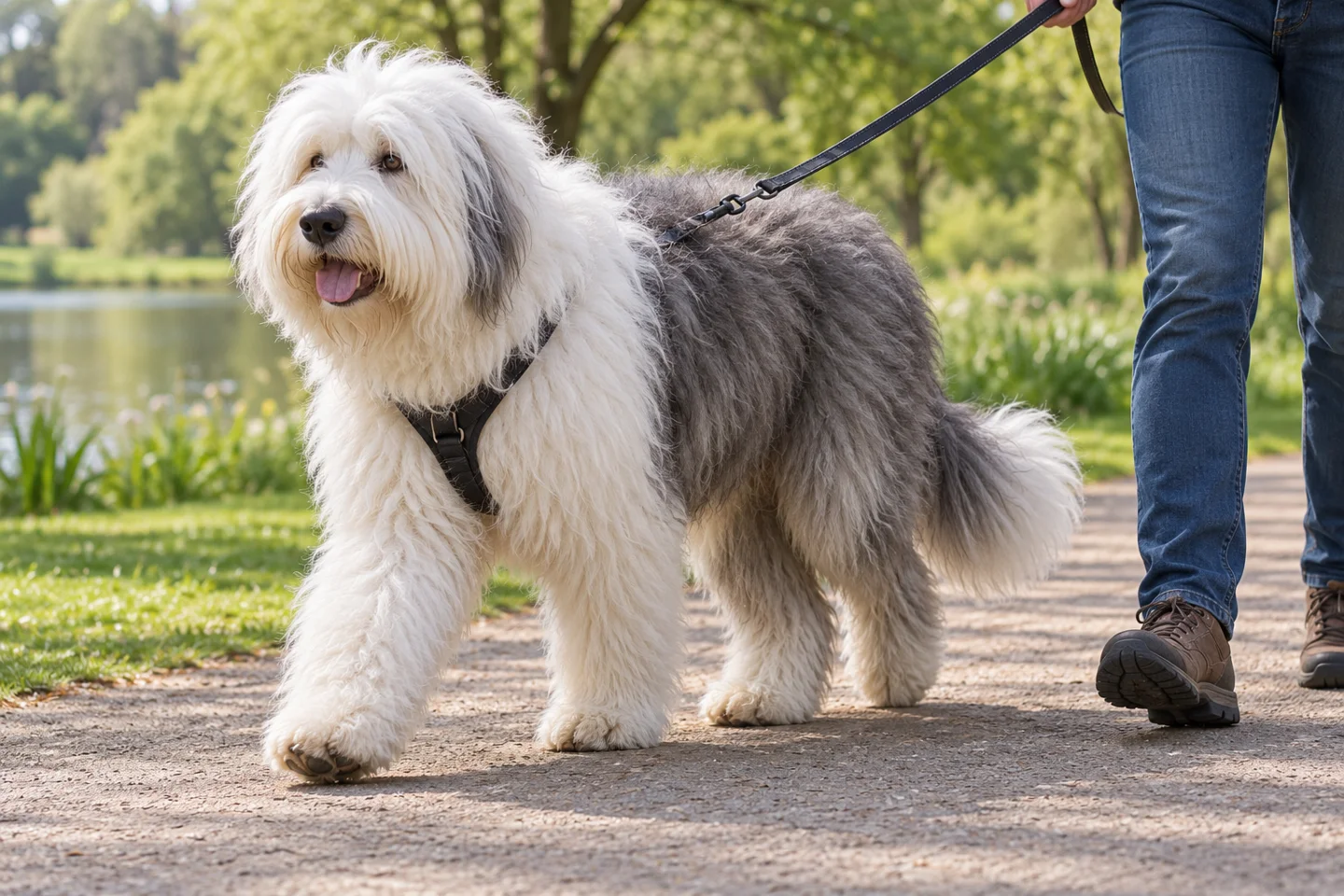
Use barriers and appropriate equipment to prevent unsafe situations while teaching. Practice fastening a harness and waiting before a car door opens somewhere quiet. Check fit after growth or a change in body condition, including beneath the coat. A reward-based professional can help when excitement, pursuit, or handling difficulties become hard to manage. Ask how the trainer responds to fear or a failed attempt. Frightening methods may add concerns about people or places without clarifying the task. Reliable routines reduce dependence on physical strength when the dog is large, distracted, or temporarily uncomfortable after medical treatment.
Exercise, surfaces, and recovery
Provide regular movement and investigation, adjusted to health, maturity, and current fitness. A growing puppy should not be pushed into strenuous repetitive exercise simply because it looks substantial. Ask the veterinary team about the activities you intend to pursue. Build longer outings progressively and observe recovery. Ordinary walks with time to smell can complement structured learning without making every session a test of endurance.
Check footing at home and outdoors. Slippery surfaces, abrupt turns, and awkward steps can become problematic during growth, illness, or rehabilitation. In warm weather, adjust timing and demands, provide water, and allow access to a cool resting place. Inspect paws and equipment-contact areas after activity. A dog eager to follow you can still be sore or fatigued. Seek assessment when normal movement changes or recovery becomes unusual. During restricted activity, obtain specific advice about quiet tasks and tell carers the limits. Moving a vigorous game indoors does not necessarily make it compatible with a treatment plan.
Aggression and reading the body beneath the hair
Facial hair can obscure some expression, so watch posture, movement, and attempts to withdraw. If the dog becomes still, avoids contact, or warns someone away, pause and review the circumstances. Pulling a painful tangle or reaching toward a valued item may change an otherwise familiar encounter. New handling reactions require consideration of discomfort and a veterinary examination rather than an immediate judgment about character.
Practice exchanges with safe objects and prevent access to dangerous items. Do not repeatedly remove food to test trust or corner the dog beneath furniture. A bite history requires honest disclosure and qualified support for an individual plan. Explain what preceded the incident and whether the dog could leave. Reliable separation can prevent another incident while assessment proceeds. Avoid physical contests intended to establish authority. A friendly breed reputation cannot certify safety, and a large dog's brief reaction can injure someone. The goal is a daily arrangement people can maintain, with teaching and medical care addressing the actual problem.
Children and movement around the home
A large young dog can knock over a child during enthusiastic contact without intending harm. Adults should choose activities that remain manageable, such as a simple search or familiar cue. Avoid games where the dog pursues a running child. Invite contact at floor level and let the dog leave. Children should not pull hair, climb on the animal, or disturb its bed and meals.
Ask what ages and situations the individual has experienced. Familiarity with one quiet older child gives limited evidence about a toddler or a noisy visiting group. Use a barrier whenever direct supervision is impractical. Children should call an adult about stolen objects and never intervene in animal conflict. Watch for avoidance before an overt warning becomes necessary. End contact if either participant is frightened and obtain help when concerns repeat. A comfortable relationship develops through experiences both can manage. It should not depend on forcing a hug or requiring the dog to tolerate constant handling because people describe the breed as affectionate.
Health records and the changing test list
OESCA's current health-registry page lists hips, specialist eyes, thyroid, EIC, and MDR1 among five CHIC tests, identifying MDR1 as required from 2026. An older paragraph on the same page still calls it optional. Confirm the current OFA program rather than treating an outdated summary as complete. Obtain the actual reports and distinguish normal results from completion of a scheme. The presence of a number does not establish that every result was favorable.
Discuss those records alongside clinical history and affected relatives. Eye and thyroid follow-up may need updating, so a test date matters. Ask how new family information is communicated after placement. A favorable screening record cannot predict every later condition. If movement, vision, or usual activity changes, seek assessment rather than relying on old paperwork. For an adult with incomplete records, establish a useful baseline and decide with the veterinarian which additional information would influence care. A broad genetic panel is only one kind of evidence and cannot replace the examinations or clinical judgment needed for the individual.
EIC and medication information for the clinic
UC Davis lists the Old English Sheepdog among breeds appropriate for its exercise-induced collapse test. This concerns a particular genetic neuromuscular disorder; it is not a test for every cause of weakness or collapse. If an animal becomes weak, uncoordinated, or collapses, stop the activity and seek veterinary advice according to the seriousness of the event. Do not deliberately repeat strenuous exercise to see whether the same signs occur.
Retain MDR1 results with the dog's medical record and tell the treating team before medication or a procedure is planned. The breed club discusses medication sensitivity associated with the variant. Drug and dose decisions belong with the veterinarian, so do not stop prescribed treatment or invent a list of safe alternatives from an online article. Ask how the result affects the specific proposed care. Make sure an emergency clinic or sitter can access the original information. A verbal summary such as genetically clear can conceal which test was performed and offers less useful detail than the actual identified report.
Food, mixes, costs, and dogsDating
Measure a complete diet appropriate to life stage and assess condition beneath the coat. Include rewards and review intake as activity changes. Tell the veterinarian about supplements and persistent appetite, thirst, or weight changes. An OES mix may have different coat, dimensions, and behavior from either pictured parent. A crossbreed label cannot guarantee predictable maintenance or improved health. Evaluate the individual and request evidence. Budget locally for grooming, dental care, training, transport, boarding, and emergencies, and read insurance terms for previous symptoms and continuing conditions.
On dogsDating, describe the dog's preferred pace and style of contact. Choose a wide public route and begin apart, making sure a large friendly approach does not overwhelm the other animal. Keep exact user coordinates and the household address private; approximate discovery and a public landmark are enough to plan. Check photographs for identifying details. If either dog remains tense or repeatedly avoids the encounter, finish calmly. A short comfortable walk can be a useful first meeting without loose play, and observed preferences should guide any later arrangement.
Sources and editorial notes
Sources checked October 22, 2026. Breed measurements describe reference ranges, not a diagnosis or an individual dog's ideal weight. Images are AI-generated breed illustrations and do not document a particular dog or health condition.
- AVSAB: Humane Dog Training Position Statement
- VCA Animal Hospitals: Food aggression in puppies
- Orthopedic Foundation for Animals: CHIC health screening programs
- VCA Animal Hospitals: Aggression toward unfamiliar dogs, diagnosis
- VCA Animal Hospitals: Grooming and coat care for your dog
- VCA Animal Hospitals: Ear infections in dogs (otitis externa)
- AAHA: Feeding plans for healthy, appropriate weight cats and dogs
- VCA Animal Hospitals: Heat stroke in dogs
- AVSAB: Puppy Socialization Position Statement
- VCA Animal Hospitals: Dog behavior problems, aggression toward children
- American Kennel Club: Herding group health testing requirements
- Old English Sheepdog Club of America: health registries and current CHIC list
- UC Davis Veterinary Genetics Laboratory: exercise-induced collapse
- Old English Sheepdog Club of America: MDR1 medication sensitivity information
- Fédération Cynologique Internationale: Old English Sheepdog official breed standard
Keep getting to know dogs.
Read another guide or return to your dogsDating community.
Explore breed guidesBack to dogsDating