Nederlandse Schapendoes
The Nederlandse Schapendoes is a lightly built Dutch herding dog beneath a substantial shaggy coat. Daily life should provide movement, learning, and careful coat maintenance without treating its cheerful appearance as proof that every encounter will be easy.
How these guides are researched and reviewed
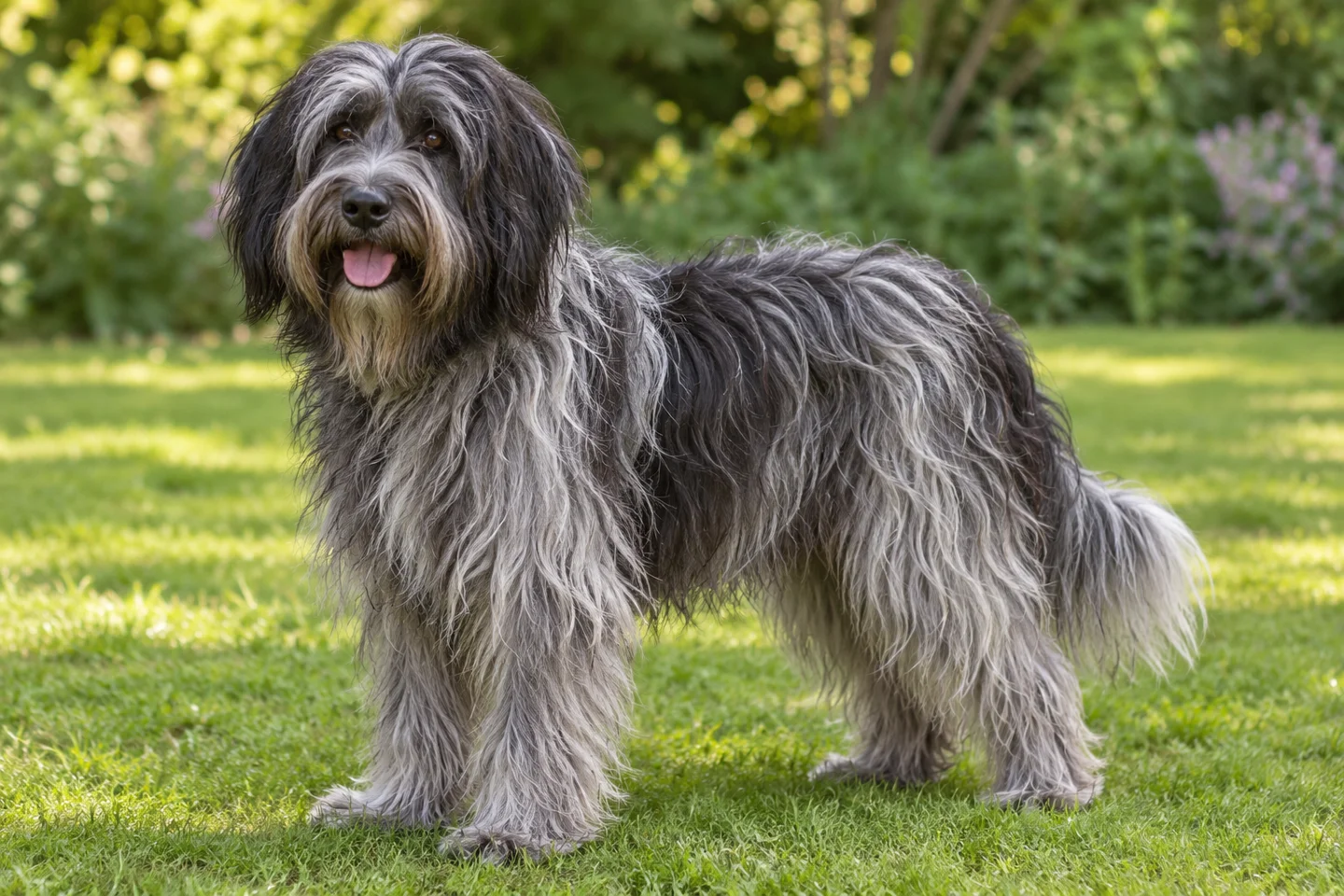
- Origin
- Netherlands
- Adult standard size
- Males 43–50 cm; females 40–47 cm
- Illustrated coat
- Grey and black long coat
General information for owners. These articles have not been reviewed by a veterinarian. Medical decisions need your dog's history and an examination.
The Dutch Schapendoes beneath the coat
The Nederlandse Schapendoes is also called the Dutch Schapendoes. It is a distinct herding breed from the Netherlands, rather than a small Old English Sheepdog or a generic shaggy cross. The long hair can obscure the relatively light frame and make a photograph misleading about the dog's build. Ask for registered parentage when that is part of a sale. In a rescue description, separate a possible breed identification from confirmed observations of the individual.
The coat and active manner both belong in the decision about ownership. Consider where you will brush a muddy dog, how you will provide walks, and who can maintain care if you are temporarily unavailable. Meet adults outside a posed photograph. Watch how the dog moves, rests, and responds when something changes. A source who explains the ordinary demands of grooming and behavior offers more useful information than one who describes every dog as an effortless family pet because it looks soft and approachable.
Herding history and a modern role
The FCI account places the Schapendoes among the herding dogs used around Dutch sheep flocks and records the breed club's formation in 1947. Its working background helps explain the emphasis on easy movement, attention, and agility. It does not give every companion dog automatic skill around livestock. Work involving animals requires informed instruction, suitable conditions, and the livestock owner's permission.
Without sheep, an owner can provide worthwhile tasks through learning and safe exploration. Searches, cooperative handling skills, and foundations for an appropriate activity can use the dog's attention. Ask breeders or foster carers how their dogs behave between tasks, including when someone is working at a desk or preparing a meal. A companion's ability to settle is part of the practical match. The schedule should include ordinary quiet periods rather than a constant effort to produce more entertainment. Observe whether the dog can recover after excitement and discuss persistent difficulty before it becomes the household's daily pattern.
Adult size and visible features
The FCI ranges are 43–50 cm at the withers for males and 40–47 cm for females. The body is slightly longer than tall, with a light, flexible structure beneath the hair. These adult dimensions are conformation references. Assess a particular dog's body condition and muscle by touch and veterinary examination instead of estimating from coat volume. A fluffy outline can conceal both excess fat and loss of condition.
The coat is abundant and lightly waved, with a topknot, beard, and moustache. This guide's illustrations select grey and black, with natural hanging ears and a long feathered tail. They are labeled AI-generated illustrations and cannot document a real dog's pedigree or health. Keep the dog's ability to see, move, and receive care in mind when interpreting a heavily coated show image. Ask an experienced groomer to demonstrate how to inspect the skin and clear tangles. A shaggy appearance is compatible with careful maintenance; it is not a reason to leave painful knots undisturbed.
Temperament and an ordinary household day
A Schapendoes may enjoy close participation in family activity and be ready to learn what people are doing. That participation needs limits that make sense to the dog. Reward resting on a comfortable bed while someone moves briefly around the room, then build the difficulty. Place the bed where the animal can relax without being continually stepped over or summoned to greet visitors.
Prepare for changes in routine before they happen. Teach manageable periods apart and introduce a suitable carer while the household is calm. A dog that follows someone from room to room has not necessarily learned how to cope when that person leaves. If it remains distressed during absences, consult the veterinarian and a qualified behavior professional. Avoid assuming another dog will supply the missing coping skill. For a newly adopted adult, allow time to learn the home before judging its settled personality. Record sleep, appetite, and recovery alongside visible activity so your impression is based on more than a lively greeting.
Training that includes stopping
Use clear cues and rewards that suit the individual. Teach coming back, walking with you, waiting at an opening, and releasing an object before expecting those skills in a busy setting. Begin with easy versions and increase distraction deliberately. An energetic dog may perform well in one familiar place and need substantial practice elsewhere. Repeating the cue louder is usually less useful than arranging a version it can understand and complete.
Include the end of a game as a learned routine. Put equipment away, offer a calm transition, and allow rest. If every pause starts another chase, the dog may struggle to disengage. A reward-based trainer can help you build both enthusiasm and control without creating fear around mistakes. Ask how they would handle a dog that avoids a jump, worries about a stranger, or becomes noisy in class. The answer should consider the environment, physical comfort, and teaching steps. A fast learner still needs information that is consistent enough to use in ordinary life.
Exercise, surfaces, and fitness
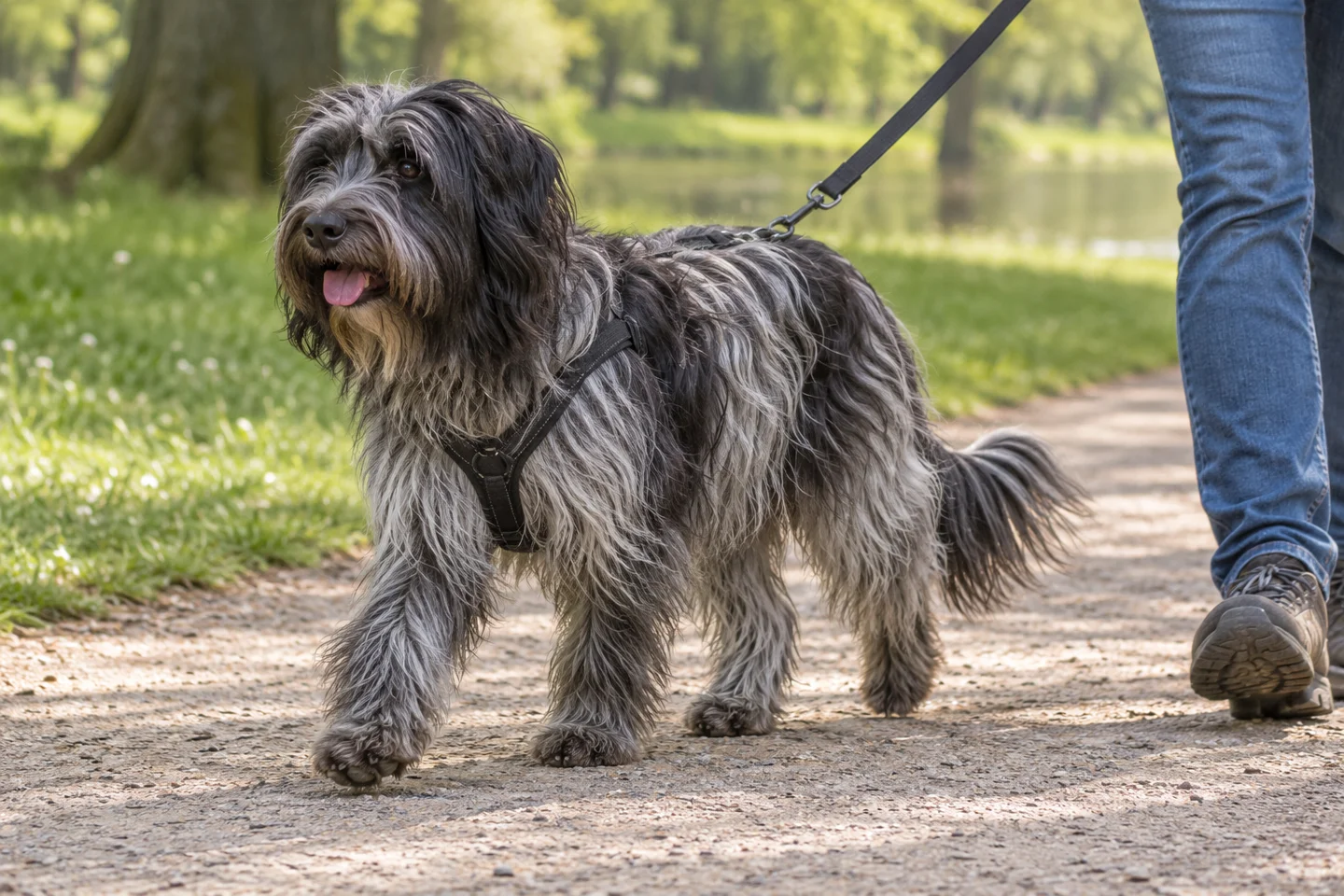
Plan daily movement that reflects age, fitness, and health. A herding background does not make a growing puppy ready for repetitive high jumps or long forced runs. Build exercise gradually, and ask the veterinary team about suitable activity after injury or a period of inactivity. A varied walk with time to investigate smells can be valuable alongside structured learning. The dog does not need every outing to be a performance session.
Check footing before running or practicing turns. A dog whose feet are hidden by hair can still slip on a smooth floor or collect material between the toes. In hot conditions, select cooler hours, provide water and shade, and watch recovery. After wet outings, dry and inspect the coat appropriately. If the dog becomes reluctant to move, changes its stride, or tires unusually during familiar activity, seek assessment. Enthusiasm and a cheerful expression should not be used to dismiss a change in function. Keeping a brief activity record can help explain when the change began.
Aggression and reading a shaggy face
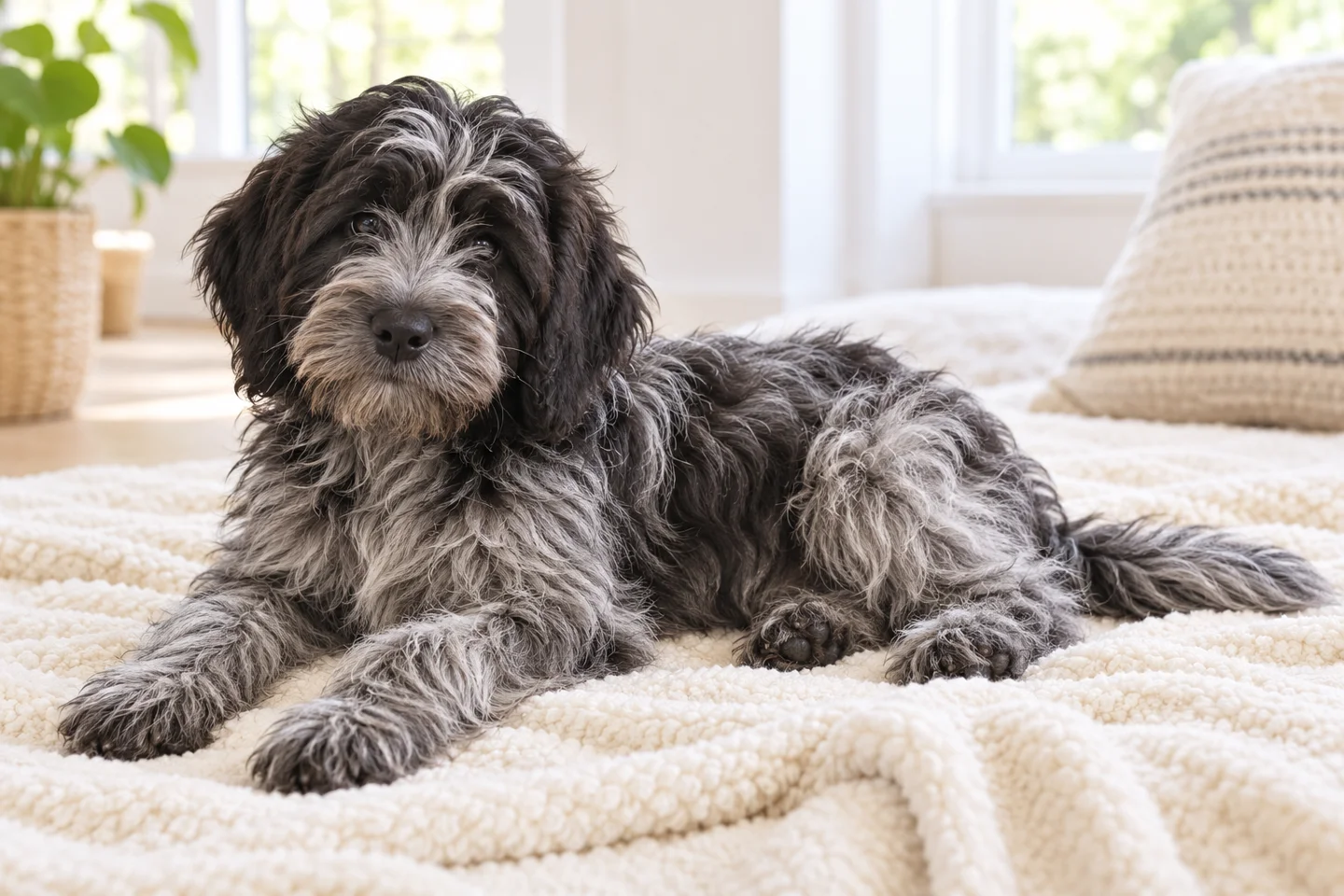
Long facial hair can make subtle expression harder for a person to notice. Look at posture, movement, and attempts to withdraw as well as the visible face. If the dog becomes still, avoids contact, or warns when someone reaches toward it, stop and review the situation. Pulling a tangle or touching painful skin can make an otherwise familiar procedure difficult. A new handling reaction deserves medical consideration rather than an immediate judgment about temperament.
Protect resources and teach exchanges with safe objects before conflict develops. Do not repeatedly remove food to test tolerance or corner the dog beneath furniture. If snapping or biting occurs, disclose the history to carers and seek an individual assessment. Explain the sequence and whether the dog had an exit. Breed descriptions cannot guarantee safety, and a soft-looking coat does not make forced contact acceptable. Reliable barriers and a changed routine can prevent another incident while a qualified professional helps the household understand what the dog needs to learn or avoid.
Children and games with clear limits
Children can share enjoyable activities with a Schapendoes when an adult chooses the setup and supervises closely. A simple search or a familiar cue can provide contact without encouraging pursuit. Running and shouting may raise excitement, so use separation during activity the dog cannot manage calmly. Never let children pull hair, climb on the dog, or follow it into a protected sleeping place.
Invite the dog to approach rather than arranging a hug. Children should learn that turning away ends contact and that an adult handles stolen objects. Ask about the actual dog's previous experience with different ages, especially if the history is incomplete. A friendly response to a quiet teenager is not evidence about life beside a toddler. During visits, explain the rules before opening the barrier. If the dog repeatedly retreats or the child becomes frightened, end the interaction. Their relationship can develop through comfortable experiences over time; it should not depend on either being compelled to accept close contact.
Grooming from the skin outward
Part the coat and work through manageable sections so you can reach the areas close to the skin. Check behind the ears, beneath the harness, around the legs, and at the base of the tail. Brushing only the outer layer can leave compacted tangles hidden underneath. Keep the session physically comfortable with suitable tools and a nonslip surface. Stop pulling at a knot that causes distress and ask for help with safe removal.
Arrange a demonstration from a groomer experienced with the breed's coat. Ask how frequently your particular dog needs thorough checking, especially as the puppy coat changes. A show outline does not have to dictate a pet-care routine when comfort or a medical need requires a different approach. Check the skin after muddy or wet outings and dry the coat sufficiently. Include the feet, nails, and mouth in your plan. A dog that repeatedly resists one area may be sore. Investigating that concern is more useful than increasing restraint to finish a predetermined grooming schedule.
Practice drying equipment gradually too. Introduce the sound at a comfortable distance and reward calm investigation before expecting the dog to stand beside it. Tell a professional groomer if a dryer or a particular surface frightens the dog, so an appointment can be planned around that difficulty.
Eye health and breed-specific PRA documentation
The Dutch Schapendoes Club's breeding information discusses clinical eye examination and a PRA genetic test relevant to the breed. Ask for the specific reports and the current rules of the organization involved. A genetic result and an ophthalmic examination provide different information. Broad wording such as DNA tested is inadequate when it does not identify the condition, laboratory, dog, and result. Confirm any parentage-based conclusion through the relevant documentation rather than a verbal claim.
Discuss what those results mean for the proposed mating or individual with an informed veterinarian. They cannot remove the need to investigate later changes in vision. If the dog becomes hesitant in dim light, bumps into objects, or appears to have a painful eye, arrange assessment rather than deciding the cause from a breed article. Keep clinical records and original laboratory reports together. Ask how a breeder shares later information about relatives and updates available health data. For an adult rescue without paperwork, begin with an examination and an appropriate plan instead of assuming that missing documents prove either disease or freedom from it.
Food and care beneath the furnishings
Use a complete diet appropriate to life stage and measure the portion. Long hair can make it easy to miss a gradual change in body condition, so learn to assess the dog by touch with veterinary guidance. Include training rewards in the total intake and coordinate feeding among household members. An active manner is not a reliable measure of calorie need, and food requirements may change when activity or medical treatment changes.
Keep the beard and mouth area clean enough to inspect comfortably. Introduce toothbrushing gradually and ask about suitable products. Check paws and nails even when the dog walks regularly; activity does not guarantee that every nail wears appropriately. If the dog refuses food, loses weight, or changes its drinking pattern, note the timing and seek advice as appropriate. Avoid repeatedly adding supplements or richer foods without understanding the reason. Accurate details about the full diet and any medications help the clinic make better decisions than a description limited to the brand of the main meal.
Mixes, sourcing, and the maintenance budget
A Schapendoes mix may have a different coat and different behavioral tendencies from either parent shown in an advertisement. Crossbreed names cannot establish a predictable grooming burden or guarantee freedom from allergies and inherited disease. Ask what is known about both parents and evaluate the individual. For an adult, detailed foster observations can help clarify whether the dog copes with the proposed address and schedule.
Budget for professional help with the coat as well as home tools, preventive veterinary care, training, transport, and emergencies. Obtain local estimates and read insurance terms around ongoing conditions and earlier symptoms. Consider the practical backup plan if you cannot groom for several weeks. A source should discuss coat changes, activity, handling, and medical records in ordinary terms. Ask about support if difficulties develop and what happens if the placement fails. A rare breed can involve a waiting period, but rarity is not a reason to accept poor documentation or rush a decision that affects the dog's future home.
Meeting safely through dogsDating
Tell other dogsDating users what this Schapendoes actually enjoys. It may prefer a moving walk with space, enjoy brief play with interruptions, or need a quiet arrival before any greeting. Choose a public route that permits those choices and begin apart. Watch the whole body beneath the hair as far as possible, including attempts to move away. Do not assume a bouncing gait means the dog wants closer contact.
Keep exact user coordinates private. Use approximate discovery and agree on a public landmark without publishing the household entrance or daily schedule. Check photographs for address details or identifying paperwork. If either dog becomes tense or persistently avoids the other, increase distance or finish. A successful first walk can remain a walk. Record the conditions that helped so future arrangements become more specific and easier to manage. Human enthusiasm about matching two shaggy companions should remain secondary to the dogs' observed preferences and each handler's ability to maintain comfortable space.
Sources and editorial notes
Sources checked October 22, 2026. Breed measurements describe reference ranges, not a diagnosis or an individual dog's ideal weight. Images are AI-generated breed illustrations and do not document a particular dog or health condition.
- AVSAB: Humane Dog Training Position Statement
- VCA Animal Hospitals: Food aggression in puppies
- Orthopedic Foundation for Animals: CHIC health screening programs
- VCA Animal Hospitals: Aggression toward unfamiliar dogs, diagnosis
- VCA Animal Hospitals: Grooming and coat care for your dog
- AAHA: Feeding plans for healthy, appropriate weight cats and dogs
- VCA Animal Hospitals: Heat stroke in dogs
- AVSAB: Puppy Socialization Position Statement
- VCA Animal Hospitals: Dog behavior problems, aggression toward children
- Schapendoes Club: breeding, eye examinations, and PRA testing
- Fédération Cynologique Internationale: Nederlandse Schapendoes official breed standard
Keep getting to know dogs.
Read another guide or return to your dogsDating community.
Explore breed guidesBack to dogsDating