Puli
The Puli is a Hungarian herding dog whose mature corded coat needs informed, hands-on care. Beneath it is a medium-sized, active companion that benefits from clear teaching, appropriate exercise, and a household able to protect rest.
How these guides are researched and reviewed
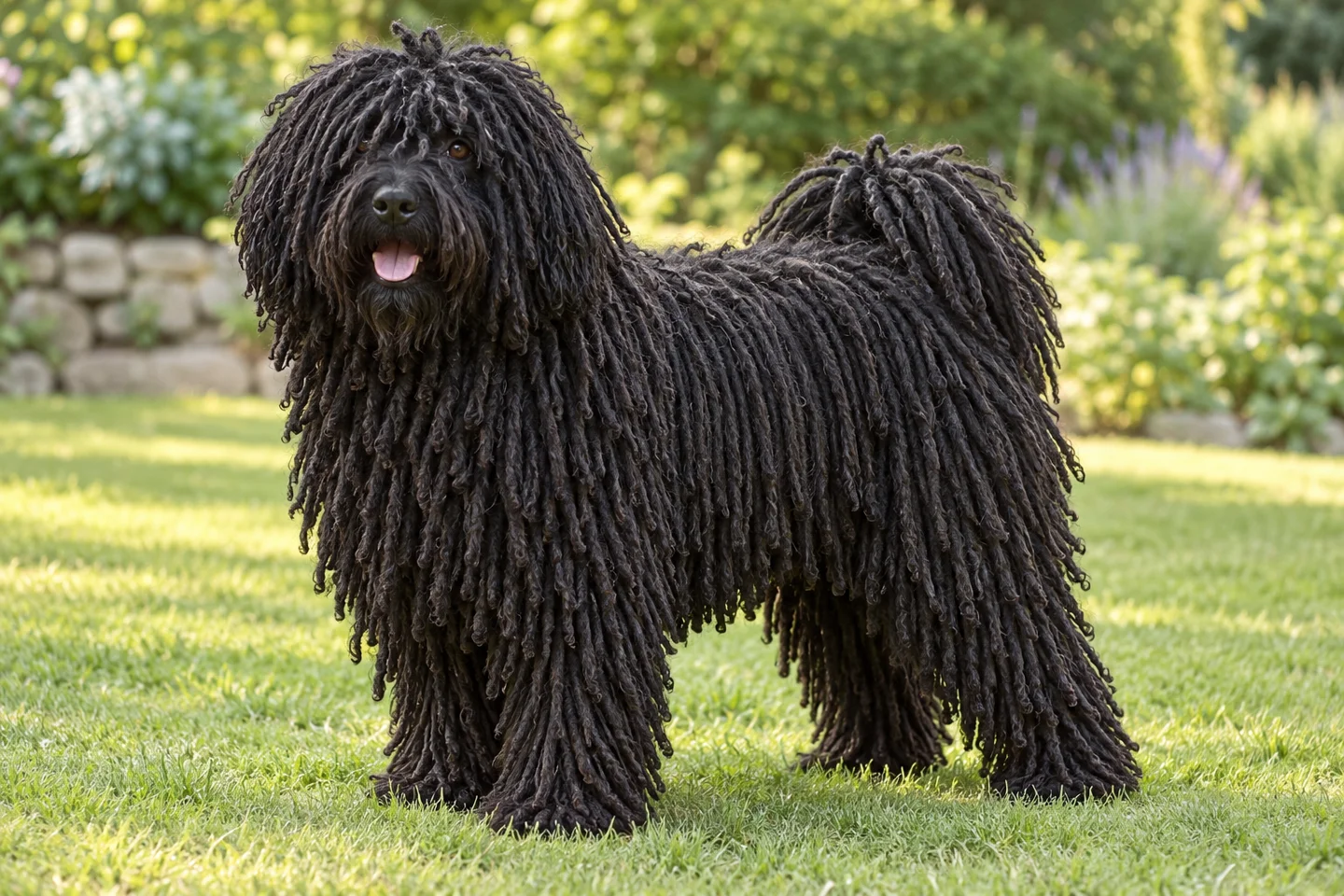
- Origin
- Hungary
- Adult standard size
- Males 39–45 cm/13–15 kg; females 36–42 cm/10–13 kg
- Illustrated coat
- Solid black corded coat
General information for owners. These articles have not been reviewed by a veterinarian. Medical decisions need your dog's history and an examination.
The Puli beneath its cords
The Puli is a distinct Hungarian herding breed. It is smaller than the Komondor and differs from the Pumi, despite names that can confuse a new owner. Its mature coat may obscure the shape of the body, so a photograph offers limited evidence about size or condition. Ask for the registered identity and parentage when buying a puppy. In a rescue description, separate a visual breed guess from confirmed information about the actual dog.
Start the ownership decision with the routine rather than the remarkable coat. Where will the dog walk, sleep, receive care, and dry after rain? Who can maintain that care during an illness or holiday? Meet adults and discuss ordinary life with people who keep the breed. A dog that performs an entertaining trick or looks dramatic in motion still needs handling skills and a manageable home environment. The right match depends on the animal's needs and the resources your household can provide consistently, including quiet days when nobody has time for an elaborate outing.
Herding history and useful modern work
The FCI identifies the Puli with Hungarian herding traditions and describes an active, readily learning dog. History gives context for responsiveness and movement; it does not supply trained skills or establish that every individual enjoys the same activity. Ask what the parents do now and which traits the source selects. A working or show record answers a particular question, while companion suitability also involves visitors, other animals, handling, and being alone.
Without livestock, useful work can involve searches, short learning sequences, or foundations for an appropriate sport. It should also include learning when a task is over. Put equipment away, reward a calm transition, and allow sleep. Continually adding entertainment can leave an alert dog waiting for the next event. If you are drawn to videos of fast athletic performance, spend time around adults between those sessions. Observe recovery and ask how the owner manages ordinary workdays. That information helps turn a general interest in the breed into a realistic plan for a particular companion.
Adult size and a coat that changes with age
FCI adult ranges are 39–45 cm and 13–15 kg for males, and 36–42 cm and 10–13 kg for females. These are conformation references, not instructions to force puppy growth or restrict food to reach a fashionable size. Assess frame, muscle, and body condition with your veterinarian. Feeling beneath the coat is especially important because hair volume can disguise both excess fat and loss of condition.
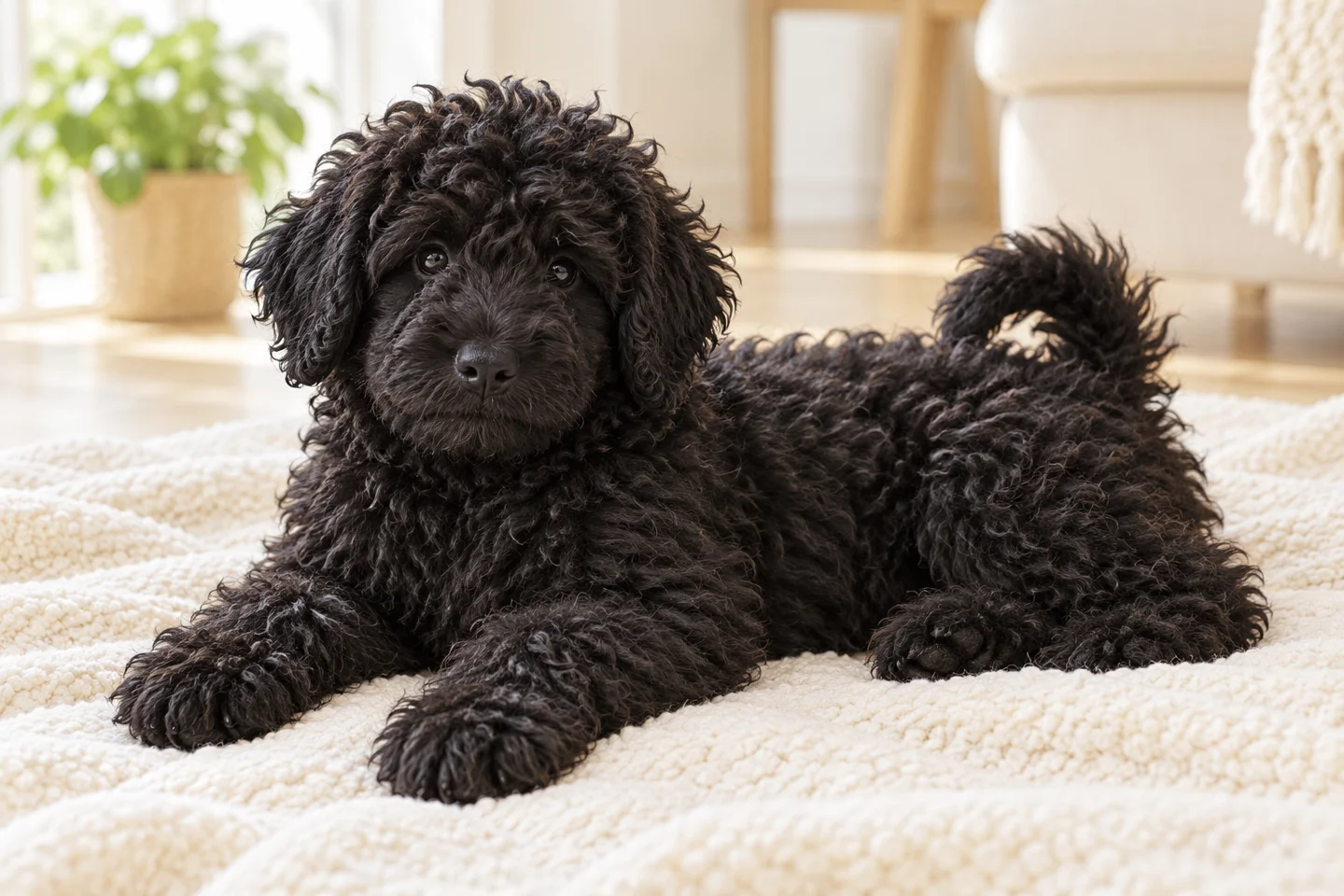
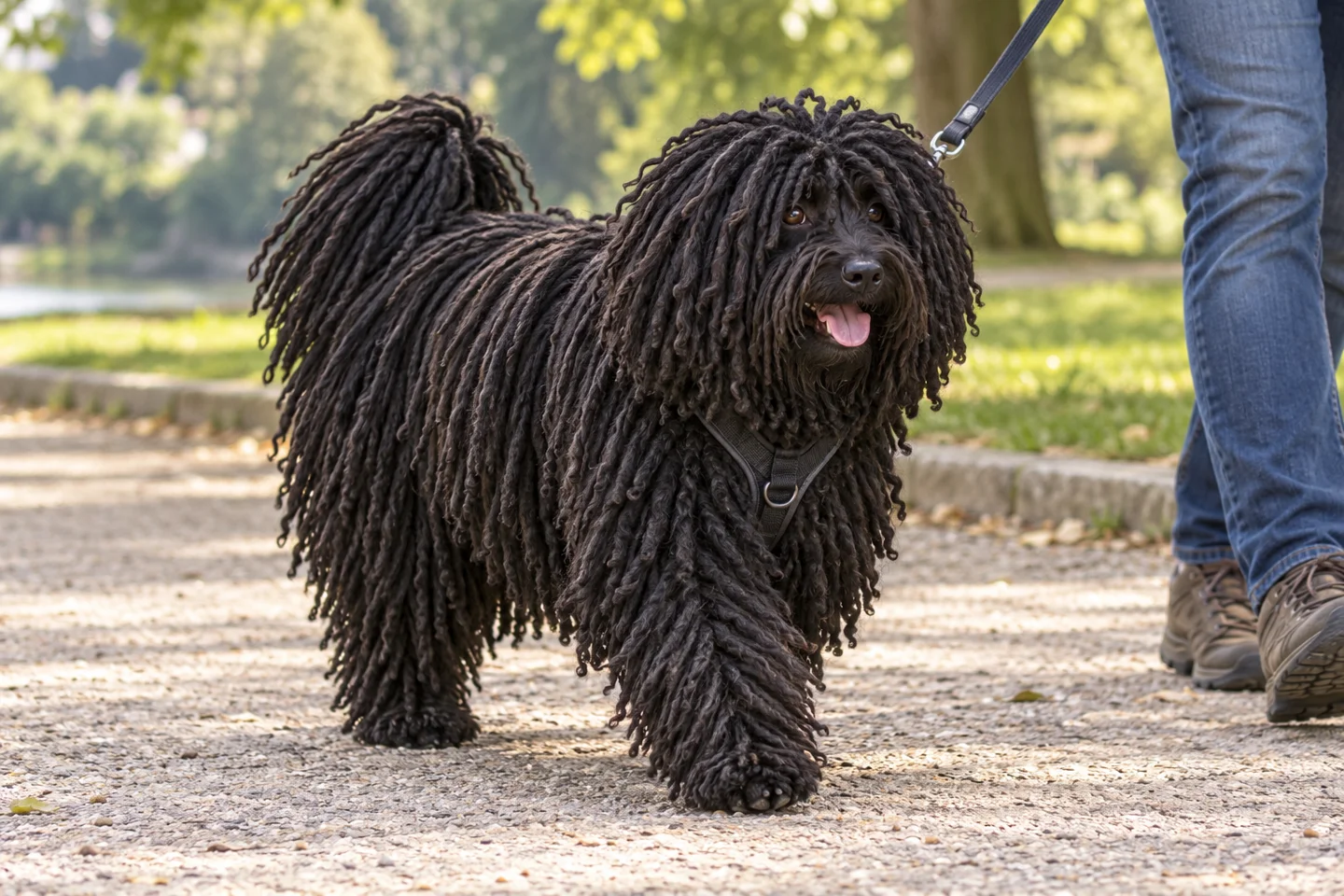
The coat begins soft and develops its mature texture over time. This guide's AI-generated illustrations select solid black, natural pendant ears, and a full coated tail curled over the back. The puppy image should show puppy hair rather than adult floor-length cords. These pictures cannot establish a real dog's pedigree, medical status, or correct movement. Watch an actual dog rise, turn, and walk, and ask about prior treatment. The characteristic coat should not become an explanation for ignoring discomfort or an excuse to avoid examining the body hidden beneath it.
Grooming starts before the mature coat
A Puli's cords form through the interaction of its coat textures; they are not braids an owner adds to a smooth-haired dog. The breed club explains that developing cords need separation so the coat does not become one compacted sheet. Obtain a practical demonstration from someone experienced with Pulik while your puppy is still young. The texture and stage of the actual coat should guide the work.
Arrange a stable, comfortable place for care and teach the dog to accept brief contact before a long session is necessary. Ask where to inspect the skin, which areas collect debris, and how to recognize a problem requiring professional help. Do not pull at painful compacted hair while increasing restraint. A dog that suddenly avoids one area may be sore. The maintenance plan should make ordinary inspection possible rather than preserve an appearance at the expense of comfort. Keep contact details for a suitably experienced groomer before the household falls behind or a medical procedure changes the routine.
Bathing, drying, and practical coat choices
The Puli Club of America emphasizes thorough rinsing and the substantial time needed to dry a corded coat. Plan a bath when that follow-through is possible, rather than beginning late at night and leaving the dog damp. Ask for instruction on safe equipment and handling. Heat, airflow, the animal's comfort, and access to rest all matter; a dryer should never become an unattended solution to a difficult schedule.
Discuss coat options with an experienced professional. A companion's routine may differ from show preparation, and a medical or welfare need may change what is appropriate. Ask what each choice requires over the coming months, including how regrowth will be maintained. The ability to provide reliable care matters more than an impressive photograph. After wet walks, inspect areas that remain damp or collect dirt. Report persistent odor, redness, or discomfort. Repeated home cleaning cannot replace examination when skin remains inflamed, and shortening hair does not remove the need to investigate an underlying problem.
Before leaving the dog with a carer, demonstrate the current coat routine on the animal. Show which areas need attention after a wet walk and where professional help is available. Written directions alone may not reveal a developing tangle or the dog’s preferred handling position.
An alert companion and a quiet household rhythm
A Puli may notice movement quickly and become involved in what familiar people do. Help it learn that every person standing up does not begin a game. Reward resting in a comfortable place while you make a small ordinary movement, then build duration. Place the bed away from a route where the dog will be stepped over repeatedly. Protect sleep instead of summoning it continually to entertain visitors.
Watch recovery after activity. If the dog remains unable to settle, examine the pattern rather than automatically adding exercise. It may need more rest, a less demanding environment, help with a particular worry, or assessment for discomfort. Prepare manageable time apart and observe the actual response. Persistent pacing, noise, or distress deserves veterinary and qualified behavioral help. Another dog cannot be assumed to provide a missing coping skill. For an adult changing homes, allow adjustment and gather observations across several days and contexts before deciding that a quiet first evening or excited greeting represents its whole personality.
Training practical skills through the coat
Teach returning in a secure area, waiting at openings, walking with the handler, and releasing an object for a reward. Begin with an easy version and increase distraction gradually. An animal that responds in the kitchen may need careful practice near other dogs or livestock. Use suitable boundaries and equipment while teaching so a missed cue does not create an emergency. Practice before the busiest outing rather than attempting the hardest lesson at departure.
Check the fit of equipment beneath the coat and ask for fitting help where necessary. Teach calm fastening, entry into a secured travel space, and waiting before exit. These procedures should be familiar to an occasional carer too. Choose reward-based instruction when excitement or handling becomes difficult. Ask how a trainer responds to fear, confusion, and failed attempts. Frightening pressure may suppress a response while adding concern about people or places. Useful teaching makes the alternative clear enough that the dog can perform it, with the environment arranged to prevent repeated failure while the skill develops.
Exercise with sound footing and sensible recovery
Provide daily movement and opportunities to investigate, adjusted to maturity, health, and current fitness. Build demanding activity progressively. A growing puppy should not be pushed into repetitive jumps or long forced runs simply because the adult breed can be athletic. Discuss intended activities with the veterinarian, particularly after injury or a quiet period. Ordinary walks with time to smell can complement structured learning and provide variety without requiring a performance every day.
Check surfaces before turns and running, and inspect feet after unfamiliar ground. In warm weather, adjust timing and demands, provide water, and offer a cool resting place. Coat volume should not obscure awareness of effort or heat. Notice changes in gait, willingness, and recovery. An eager dog can still be tired or uncomfortable. Seek assessment when normal activity becomes difficult. If exercise is restricted, clarify appropriate quiet tasks and tell every carer the limits. Moving a vigorous game indoors does not automatically make it compatible with a rehabilitation plan or reduce the demands on the body.
Aggression and reading the whole dog
Dense facial hair can make some expressions less obvious. Watch posture, movement, and attempts to leave as well as the visible face. If the dog becomes still, avoids contact, or warns someone away, stop and review the situation. Painful coat handling, a trapped position, or a valued item may matter. Do not suppress a warning while continuing the pressure that produced it.
Practice exchanges with safe objects and prevent access to repeated hazards. New reactions during touch require consideration of discomfort and a veterinary examination. A bite history should be disclosed accurately to carers, with the circumstances and any known injuries. Seek qualified support for an individual management plan. Reliable barriers can prevent another incident while the cause is investigated. Physical confrontation intended to establish authority is an unreliable route to cooperation. A breed description cannot certify safety, and an affectionate response to familiar people does not answer every question about visitors, children, or other animals in a difficult context.
Children and space the dog can protect through retreat
Adults should arrange contact that remains manageable for the dog and child. Invite the dog over and allow it to leave. Simple supervised searches or familiar cues can provide shared activity without encouraging pursuit or wrestling. Children should not pull cords, hug around the neck, or follow the dog into its bed. Meals and sleep need protection, with separation available when close supervision is impractical.
Ask what ages and situations the individual has experienced. A good encounter with one quiet older child provides different information from life with a toddler or a noisy visiting group. Children should call an adult about stolen items rather than cornering the dog under furniture. Watch for repeated avoidance before an overt warning becomes necessary. If either participant is frightened, end the interaction and reassess. A comfortable relationship develops through experiences both can manage. It should not depend on forced touching or an expectation that the dog must accept every approach because a historical breed description praises its response to children.
Other animals and controlled introductions
Herding ancestry does not provide trained permission to chase household pets or work someone else's livestock. Prevent repeated pursuit and seek informed instruction for any planned animal work. Cats need protected routes and areas beyond the dog's access. Reward disengagement and use dependable separation while assessing the response. Familiarity with one cat indoors does not establish safety around an unfamiliar running animal outdoors.
Introduce dogs with room to move and handlers able to interrupt. Look for pauses and voluntary returns, and stop persistent following of a dog seeking shelter. At home, provide separate meals and resting areas during adjustment. A calm shared walk is a different context from a chew, narrow passage, or access to a person. Change the setup early if tension appears. Serious conflict warrants professional advice before another unrestricted trial. Similar size or a matching herding identity cannot guarantee compatibility. The useful evidence concerns these animals in the daily circumstances they will actually share, including the periods when people are busy or absent.
Health records and genetic test limits
For a Puli litter, request the parents' hip and patella evaluations, specialist eye examinations, and degenerative myelopathy DNA results listed in the current AKC recommendations. Keep those categories separate when comparing records. A seller who sends only a genetic package has not supplied the joint or eye assessments. Ask which identity appears on each report and read the finding rather than accepting the phrase tested as a summary of the result.
Mobility deserves observation beneath the cords throughout life. Note whether the dog rises differently, shifts weight, hesitates on a familiar surface, or shortens a walk. A coat can obscure the outline, and a willing herding dog may still participate while uncomfortable. Bring a safe video and the timing of the change to the clinic. A DM result concerns the variant tested; it cannot establish the cause of every later weakness or replace a clinical examination.
Ask the breeder how they receive and share medical information as littermates age. Knowing whether a relative had a confirmed diagnosis is different from hearing that it slowed down. For an adopted adult, obtain whatever original reports exist and make a baseline care plan with the veterinarian. Record unavailable evidence as unavailable. A working ancestry and an attractive corded coat cannot fill a gap in the medical history.
Feeding, mixes, and the maintenance budget
Condition checks need to reach beneath the cords. Ask the veterinary team to show how the ribs and waist should feel, then use that same method at home. Measure a complete life-stage diet and count food used during training. If someone else supplies chews or extra meals, include those in the discussion. A change in weight or appetite should be investigated with the clinic rather than hidden by the assumption that an active herding dog always needs a richer ration.
A Puli cross may not develop cords like those illustrated here. Ask which parents are documented and what their coats and health records actually show. A name for the cross cannot predict whether the adult coat will tangle, shed, or need professional work. For an adopted dog, have the present coat assessed directly and build a maintenance routine around what is there.
Price the care arrangements locally, especially the time and facilities needed to wash and dry a corded dog. A backup carer should understand moisture checks and the owner's grooming routine before taking over during a holiday. Request veterinary and boarding estimates, and read insurance exclusions. Ask the source how advice continues after placement and what would happen if the home could no longer care for the dog. Those answers matter throughout the recurring coat work, long after the first photograph has lost its novelty.
A dogsDating meeting with comfortable space
A corded outline can make a Puli's posture harder for an unfamiliar owner to read. On dogsDating, explain how this dog signals that it wants a break and whether barking accompanies excitement. Ask the walking partner's owner to describe their own dog's responses as well. Similar size or enthusiasm does not establish that both will enjoy the same kind of play.
Use a broad public route and keep the opening minutes free of toys or other resources that could complicate the interaction. Walk with a gap so each dog can look away and investigate independently. Notice whether the Puli repeatedly moves out of reach or keeps trying to restart contact after its partner withdraws. Either pattern calls for a change in distance or an end to the outing, rather than waiting for a sharper warning.
Keep exact user coordinates private while arranging the meeting. Approximate discovery can identify a convenient district, and the owners can select a named public entrance without revealing a residence. Check shared images for personal details. Discuss the moments when the dogs were most comfortable, including pace and separation, before proposing another walk. That information is more useful than insisting that the first encounter progress to loose running or a close photograph.
Sources and editorial notes
Sources checked October 22, 2026. Breed measurements describe reference ranges, not a diagnosis or an individual dog's ideal weight. Images are AI-generated breed illustrations and do not document a particular dog or health condition.
- AVSAB: Humane Dog Training Position Statement
- VCA Animal Hospitals: Food aggression in puppies
- Orthopedic Foundation for Animals: CHIC health screening programs
- VCA Animal Hospitals: Aggression toward unfamiliar dogs, diagnosis
- VCA Animal Hospitals: Grooming and coat care for your dog
- AAHA: Feeding plans for healthy, appropriate weight cats and dogs
- VCA Animal Hospitals: Heat stroke in dogs
- AVSAB: Puppy Socialization Position Statement
- VCA Animal Hospitals: Dog behavior problems, aggression toward children
- American Kennel Club: Herding group health testing requirements
- Puli Club of America: frequently asked questions about the coat and care
- Puli Club of America: Puli overview and coat options
- Fédération Cynologique Internationale: Puli official breed standard
- VCA Animal Hospitals: Ear infections in dogs (otitis externa)
Keep getting to know dogs.
Read another guide or return to your dogsDating community.
Explore breed guidesBack to dogsDating