Norwich Terrier
The Norwich Terrier is a small British terrier with upright ears and a dense wiry coat. Choose with attention to the individual’s activity, handling preferences, and airway health, alongside the practical needs of a persistent small dog.
How these guides are researched and reviewed
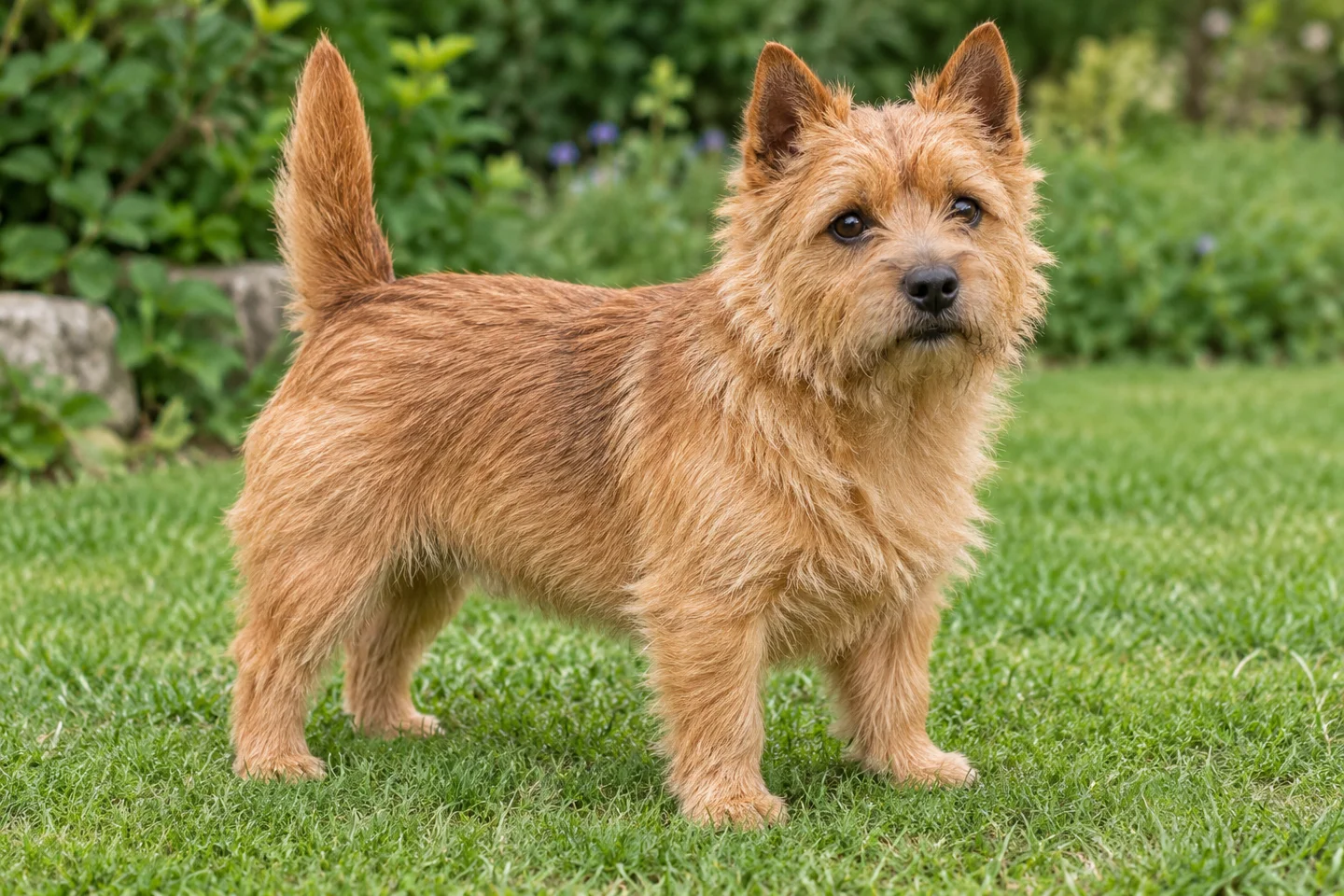
- Origin
- Great Britain
- Adult standard size
- Ideal height 25 cm
- Illustrated coat
- Red wiry coat
General information for owners. These articles have not been reviewed by a veterinarian. Medical decisions need your dog's history and an examination.
Recognizing the Norwich Terrier
The Norwich Terrier has upright ears. The closely related Norfolk Terrier has folded ears and is a separate breed. The names can be confused because the two share a history, but documents should identify the actual registered breed rather than treating ear carriage as a casual style choice. A red, prick-eared rescue dog may resemble a Norwich without having verified ancestry. Keep the certainty of a label separate from what is known about the animal's behavior and care.
A Norwich is small and sturdy, with a hard coat and an active interest in its surroundings. Convenient size does not remove the need for secure boundaries, appropriate exercise, and respectful handling. Before choosing one, consider how it will move through your home, who will maintain the coat, and whether your routine allows suitable learning and rest. Meet adults and observe more than the initial greeting. A composed portrait cannot tell you how a dog responds when a person reaches for its feet or when another animal runs past.
A working history without romantic shortcuts
The FCI describes the breed among East Anglian terriers and records separation of the Norfolk and Norwich in 1964. Historical quarry work provides context for persistence and investigation. It cannot prove the health, safety, or personality of a puppy available today. Ask about the actual parents and their lives, including the behavior the source finds easiest and the situations it manages carefully.
For a companion placement, useful questions concern daily life: can the dog settle while someone works, tolerate a quiet grooming session, and travel comfortably in a secured space? Has it lived with cats or children, and what did those interactions involve? Avoid accepting a broad claim that a terrier is suitable for everyone because it is small. An adult with detailed foster observations may offer clearer information about existing preferences. A puppy allows early teaching while leaving more uncertainty about adult drive and social style. Both routes require a household willing to adapt to the individual rather than a fixed image of the breed.
Size and the illustrated outline
The current FCI standard gives an ideal height of 25 cm at the withers. It calls for a low, compact dog with substance. This adult conformation reference should not determine food restriction or a goal of making a puppy unusually tiny. Assess body condition with the veterinarian and learn how to feel through the coat. A stocky outline is different from excess fat, and a small dog can gain weight without a dramatic change in appearance.
The coat is hard and straight with undercoat, and several colors are recognized. This guide's AI-generated illustrations select red, natural upright pointed ears, and a full tapering tail. They cannot verify pedigree, clinical health, or correct movement in a real animal. Watch a prospective dog walk, turn, and recover after ordinary activity. Ask about treatment and any procedure already performed. A well-maintained coat may make the dog look comfortable, but it does not reveal the condition of the airways, joints, mouth, or skin concealed beneath it.
Airway health deserves a direct question
Norwich Terrier Upper Airway Syndrome is a specific concern discussed by the breed club and veterinary researchers. It involves abnormalities around the larynx and can be associated with breathing noise or difficulty. An apparently ordinary muzzle does not rule it out. Ask whether the dog has had airway investigation, what prompted it, and whether the original report and follow-up recommendations are available. A video of a quiet dog resting is limited evidence about function during activity.
Do not assume every noise is this syndrome or that familiar snorting is harmless. Other conditions can obstruct an airway, and assessment belongs with the veterinary team. Tell the clinic about exercise intolerance, unusual breathing sounds, recovery, and any previous treatment. Research describes variation among affected dogs; it does not support predicting an individual's outcome from the breed label alone. Breathing distress requires prompt veterinary attention. Keep the discussion practical: what the dog currently does comfortably, what examinations show, and which changes require review. These questions are more useful than treating a score as a complete description of lifelong health.
Before an elective procedure requiring anesthesia, make sure the treating team has any airway reports and knows about breathing changes. A previous operation at another practice may have produced information that is absent from a brief vaccination record. Request the records in advance so the clinician can plan from the original findings. Do not assume that a past uneventful anesthetic answers every question about the next procedure or the dog’s current condition.
Screening beyond the airway
AKC's current Norwich recommendations identify patella, hip, and specialist eye evaluations. Obtain the actual records and confirm the relevant organization's current program. A screening result, a genetic report, and a routine wellness examination answer different questions. Ask which dogs were assessed, how they were identified, and when. The paperwork should allow an informed discussion rather than ending with a vague statement that the line is health tested.
Ask about clinical diagnoses among close relatives and how the source shares later information after placement. A favorable record cannot predict every later illness. If your dog begins moving differently, avoids touch, or develops a visual change, arrange assessment rather than relying on an old summary. For a rescue with incomplete records, establish a useful baseline and discuss which further information would alter care. Randomly adding tests without understanding their purpose may create expense without clarity. The value lies in accurate evidence and appropriate clinical follow-up, including an honest account of what remains unknown about the individual.
Exercise with attention to breathing and recovery
Plan regular walks, investigation, and suitable games, with demands adjusted to health, age, and fitness. A terrier's eagerness is not proof that it should continue indefinitely. Watch gait, breathing, and recovery as well as willingness. Build longer outings gradually, and discuss activity with the veterinarian if there is an airway diagnosis or another condition. Advice for an unaffected active dog may be inappropriate for a particular patient.
Warm conditions can make exercise more demanding. Choose appropriate timing, carry water, and provide shade and a cool resting place. Avoid hot surfaces and routes without a practical exit. If the dog struggles, stop and seek help according to the seriousness of the signs. Do not use a long walk as a test of whether breathing noise matters. Quiet search tasks can provide variety on days when outdoor conditions are unsuitable, but they should still fit any medical restriction. Keep carers informed about the normal routine and the specific signs that require them to contact the clinic.

Training a small dog to make useful choices
Start with the skills that prevent hurried intervention: waiting at a door, returning in a secure area, releasing an object, and moving with the handler. Reward success and introduce distraction gradually. A Norwich interested in something beyond the fence may be unable to respond to a cue it only knows indoors. Change the setup before concluding that repetition or a louder voice will solve the problem.
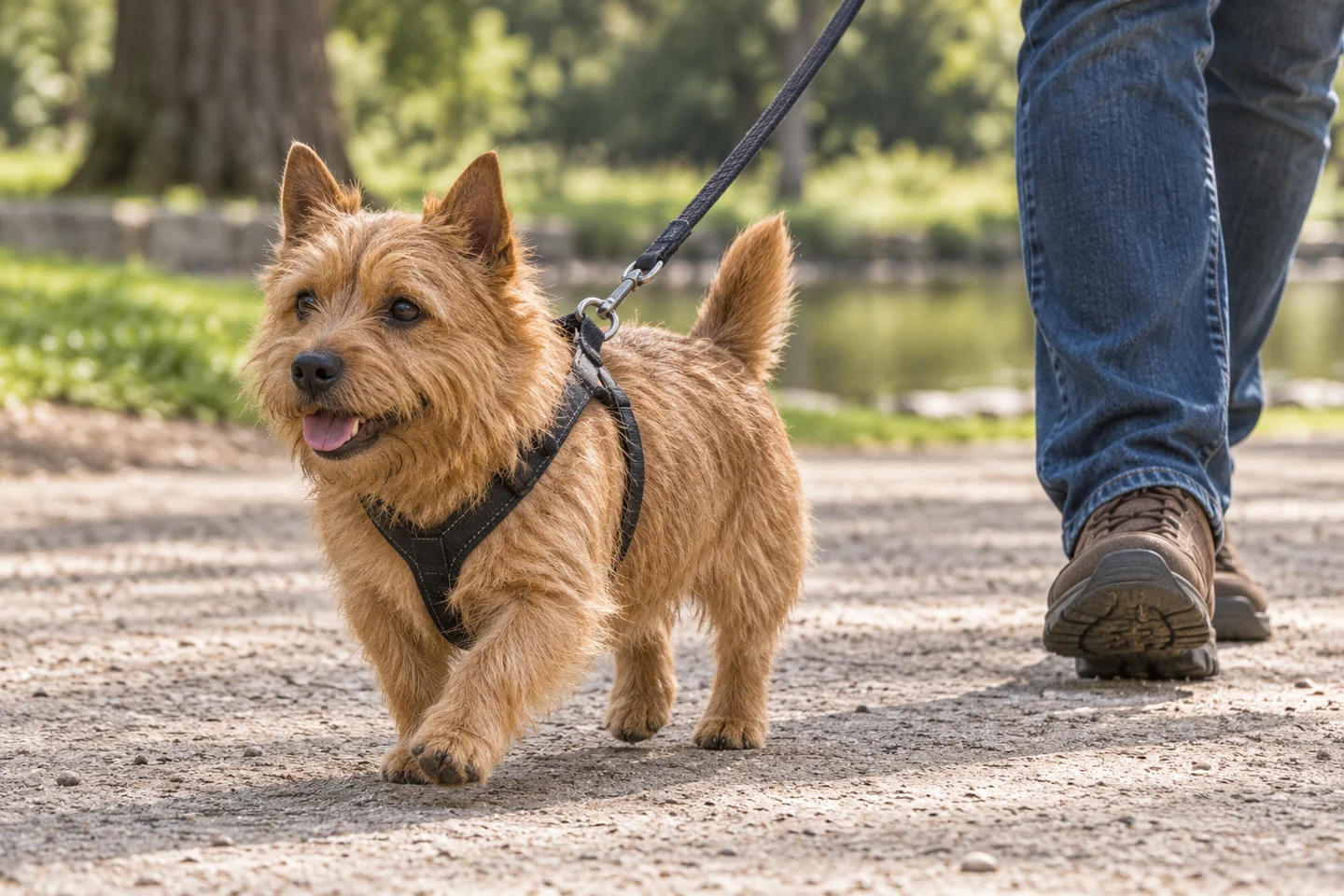
A second barrier can protect doorway practice, and suitable walking equipment can prevent an unsafe chase. Inspect the fit as the dog grows or changes condition. Teach calm fastening and entry into a travel space separately from a busy departure. A reward-based professional can help with pursuit, frustration, or handling difficulties. Ask how they adjust the task when the dog cannot succeed. Frightening methods can add worry about people, other animals, or the training place. Clear information and reliable management give the dog a better opportunity to learn a response that remains useful in ordinary life.
Temperament, rest, and being apart
A Norwich may enjoy investigating household activity and staying near familiar people. Make room for that interest without encouraging constant vigilance. Reward resting on a comfortable bed while someone moves nearby, starting with a short easy period. The bed should be protected from being stepped over or repeatedly approached. Sleep is part of care, and a dog should not be summoned continually because visitors want to see its personality.
Prepare for manageable time alone and for care by someone else. Observe the actual response during absences rather than assuming silence proves relaxation. Persistent pacing, distress, or vocal behavior deserves assessment. A second dog or increased exercise cannot be presumed to solve the cause. With a new adult, allow a transition before judging the settled personality. Record patterns across different times and settings. A calm first evening may reflect fatigue or inhibition, while an excited arrival may change as the routine becomes familiar. Use that developing evidence to guide support rather than attaching a fixed label immediately.
Aggression and preventing conflict over objects
A small terrier can still cause injury, so take warnings seriously. If the dog becomes still, withdraws, growls, or snaps when approached, stop and consider what preceded the response. A painful area, valued object, or blocked exit may matter. Do not punish a warning and continue the same pressure. New reactions during touch should prompt consideration of pain and an individual veterinary examination.
Practice exchanges with safe items, offering a reward rather than grabbing at the mouth. Secure medication, food packaging, and small dangerous objects so the household is not repeatedly forced into emergency retrieval. If the dog has something unsafe or may have swallowed it, contact the clinic. Disclose any bite history to carers and obtain qualified behavioral help when incidents recur or safety is uncertain. An accurate account includes where the person stood and whether the dog could leave. General breed descriptions do not certify individual safety, and physical confrontation is an unreliable method for teaching trust or cooperation.
Children and contact the dog can leave
Adults should create comfortable supervised interactions. A child can hide a reward for an easy search or ask for a practiced cue while an adult controls the setup. Avoid chasing, hugging, and carrying as default play. The dog should be able to walk away without being followed. Its bed and meals need protection, with a barrier available when the household becomes too busy for direct supervision.
Ask which ages and activities the individual has experienced. A quiet older child differs from a toddler or a noisy visiting group. Children should call an adult about a stolen toy and never corner the dog under furniture. Watch for avoidance before a warning becomes necessary, and stop if either participant is frightened. A relationship can develop gradually through successful experiences. Forcing closeness to demonstrate that the dog is a family pet can create the opposite result. When warnings or fear repeat, seek help and change the daily arrangement rather than expecting familiarity alone to resolve the difficulty.
Cats, small animals, and other dogs
Terrier identity is a reason for careful assessment around small animals. A dog living comfortably with one cat can respond differently to an unfamiliar running animal outdoors. Provide reliable separation while evaluating the response, reward turning away, and protect the cat's escape routes. Cages should be beyond the dog's reach so smaller pets are not repeatedly rushed or pawed at. Their stress matters even when contact is prevented.
With dogs, choose compatibility through observation. A large enthusiastic playmate may overwhelm a Norwich, while a Norwich may also persist with an unwilling partner. Look for pauses and voluntary returns. In a shared home, separate meals and resting areas help prevent avoidable pressure during adjustment. A calm greeting cannot answer every question about valued objects or human attention. Interrupt repeated pursuit or blocking and seek help when conflict develops. Serious incidents call for advice before another unrestricted trial. Similar size or another terrier label cannot guarantee that the animals enjoy the same interaction or can share the proposed routine.
Grooming and cooperative care
Work through the wiry coat gently, checking places where friction creates tangles. Ask a groomer experienced with terriers to explain suitable tools and the implications of clipping or stripping for the actual coat and your goals. A pet-care routine should be sustainable and comfortable. Avoid pulling through painful knots while someone increases restraint. Severe matting may require professional removal, and irritated skin needs assessment rather than more vigorous brushing.
Teach brief paw contact, a stable stand, and gentle handling around the face before adding duration or tools. Include nail care and dental brushing as separate skills. Examine the ears externally and contact the clinic about persistent odor, discharge, or head shaking; do not insert implements into the canal. A dog that resists a previously easy task may be uncomfortable. Tell professionals about handling concerns before an appointment begins. Necessary care may need a clinical plan while training develops. The ability to hold a small dog still is not evidence that a procedure is comfortable or the best preparation for future cooperation.
Feeding, mixes, costs, and dogsDating
Measure a complete life-stage-appropriate diet and assess condition beneath the coat. Include training rewards, and ask the vet about persistent appetite, thirst, or weight changes. Avoid supplements without a clear purpose. A Norwich mix may have different size, coat, and behavior from a pictured parent, and mixed ancestry cannot guarantee better health. Evaluate the individual and request evidence. Budget locally for grooming, dental care, training, routine visits, and emergencies, including any specialist follow-up. Read insurance terms about previous symptoms and ongoing conditions.
On dogsDating, describe the dog's preferred pace and any need for a short, cool, quiet walk. Agree on a wide public route and allow distance before closer greetings. Keep exact user coordinates and the home address private; approximate discovery and a public landmark are sufficient. Check images for identifying information. If either dog remains uncomfortable despite an easier setup, finish calmly. A brief shared walk can provide useful information without loose play. The digital match creates an opportunity to plan, while the dogs' observed responses determine whether the meeting should continue.
Compare the practical support offered by a source as well as the fee. Ask who responds if a health concern appears, how a later diagnosis in a relative is communicated, and what happens if the home cannot keep the dog. For an adult rescue, discuss a supported introduction and the observations available from foster care. A written agreement should be read carefully before commitment. The time spent clarifying these matters can prevent the dog from moving between homes after a difficulty that should have been discussed at the beginning. Clarify who can provide practical help during the first weeks, especially when the dog needs a gradual adjustment.
Sources and editorial notes
Sources checked October 22, 2026. Breed measurements describe reference ranges, not a diagnosis or an individual dog's ideal weight. Images are AI-generated breed illustrations and do not document a particular dog or health condition.
- AVSAB: Humane Dog Training Position Statement
- VCA Animal Hospitals: Food aggression in puppies
- Orthopedic Foundation for Animals: CHIC health screening programs
- VCA Animal Hospitals: Aggression toward unfamiliar dogs, diagnosis
- VCA Animal Hospitals: Grooming and coat care for your dog
- VCA Animal Hospitals: Ear infections in dogs (otitis externa)
- AAHA: Feeding plans for healthy, appropriate weight cats and dogs
- VCA Animal Hospitals: Heat stroke in dogs
- AVSAB: Puppy Socialization Position Statement
- VCA Animal Hospitals: Dog behavior problems, aggression toward children
- American Kennel Club: Terrier group health testing requirements
- Norwich Terrier Club of America: Norwich Terrier Upper Airway Syndrome
- Johnson and colleagues, Journal of Veterinary Internal Medicine, 2021: Norwich Terrier upper airway syndrome outcomes
- Fédération Cynologique Internationale: Norwich Terrier official breed standard
Keep getting to know dogs.
Read another guide or return to your dogsDating community.
Explore breed guidesBack to dogsDating