Parson Russell Terrier
A taller, approximately square Russell terrier, with guidance on pursuit, recall, hearing assessment, coat varieties, and calm introductions.
How these guides are researched and reviewed
- Origin
- Great Britain
- Ideal adult height
- Males 36 cm; females 33 cm
- Coat varieties
- Smooth, broken, and rough
- Illustrated coat
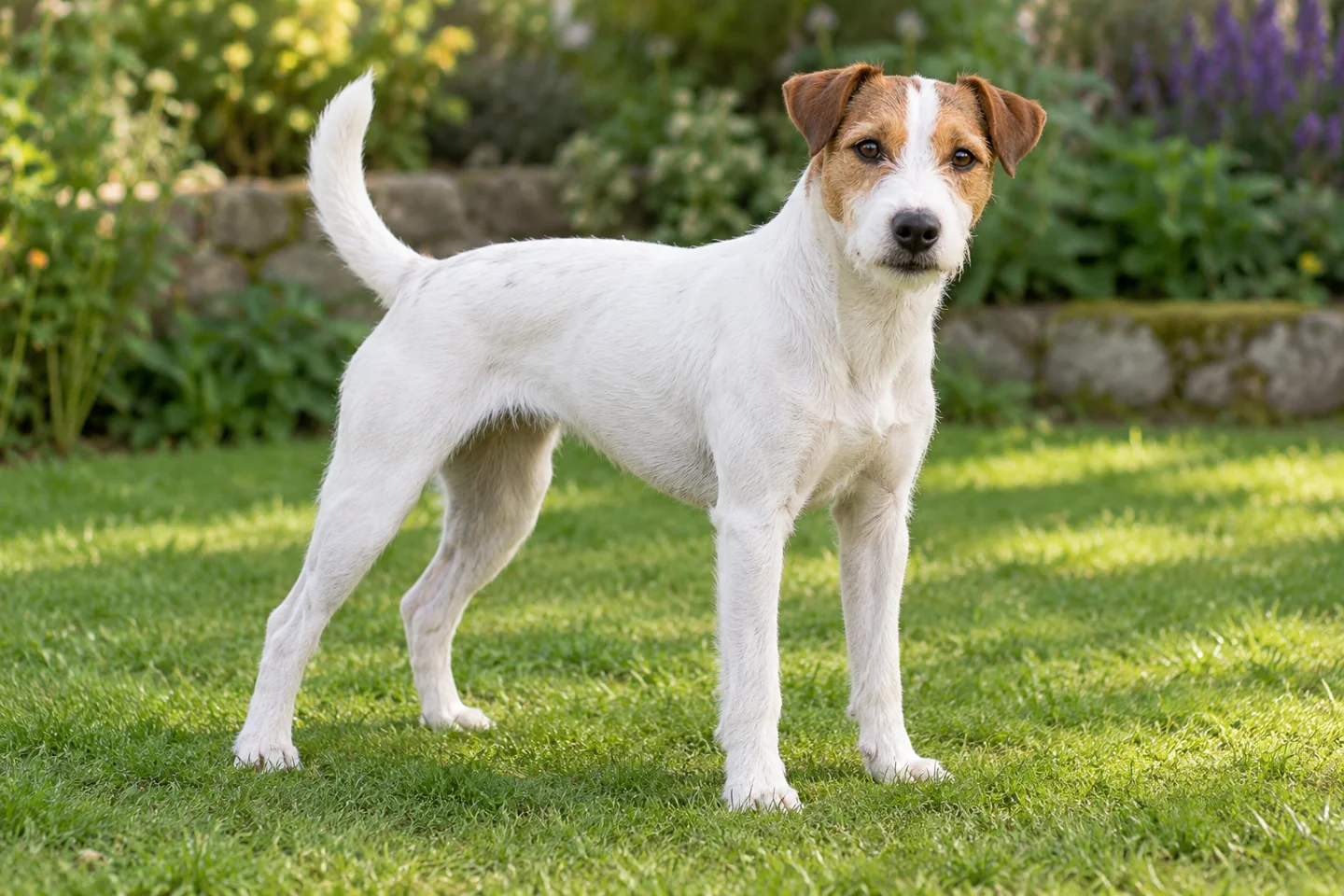
- Smooth white with tan head markings
General information for owners. These articles have not been reviewed by a veterinarian. Medical decisions need your dog's history and an examination.
A long-legged terrier with a clear identity
The Parson Russell Terrier is an active, predominantly white working terrier with a relatively square outline and legs suited to covering ground. It is closely related historically to the Jack Russell, but the names should not be treated as interchangeable labels for any small white terrier. The current FCI Parson standard describes its own proportions and adult height references. Documents should identify which breed and registry a seller means.
The illustrations here show a smooth-coated white dog with tan head markings, natural forward-folding ears, and a full tail. Rough and broken coats also occur within the breed. The appearance can be tidy and compact while the dog's interests remain demanding. Before choosing one, think about safe exploration, digging, recall practice, and the ability to rest between activities. A person who likes a terrier's alert attention should also be prepared to teach what happens when that attention lands on a squirrel, an open gate, or a noisy neighbor.
Working history and the job you provide today
The FCI account connects the Parson to the Reverend John Russell's nineteenth-century work with terriers. Its historical task involved following quarry and the ability to work below ground. The standard still gives importance to a functional chest and balanced construction. Those descriptions explain selection goals; they do not require a companion owner to allow access to burrows, wildlife, or unsafe holes to keep the dog fulfilled.
Provide safer outlets for investigation. A supervised digging area, a scent trail ending in a reward, and searching for food in an appropriate container let the dog solve problems without choosing a garden boundary as its project. Check the activity before release so equipment, loose material, and potential traps do not create an injury risk. Ask breeders what the parents do in ordinary domestic life as well as in sport or work. A pedigree and a title give context, while daily settling and handling still need direct questions.
Adult height and the limits of a standard
The October 2026 FCI standard gives ideal heights at the withers of 36 cm for males and 33 cm for females. It emphasizes soundness and balance alongside those figures. It does not provide a single compulsory adult weight. Use the dog's frame and veterinary body-condition assessment when planning food rather than turning height into an invented kilogram target. A muscular terrier can still carry unnecessary fat around the ribs and waist.
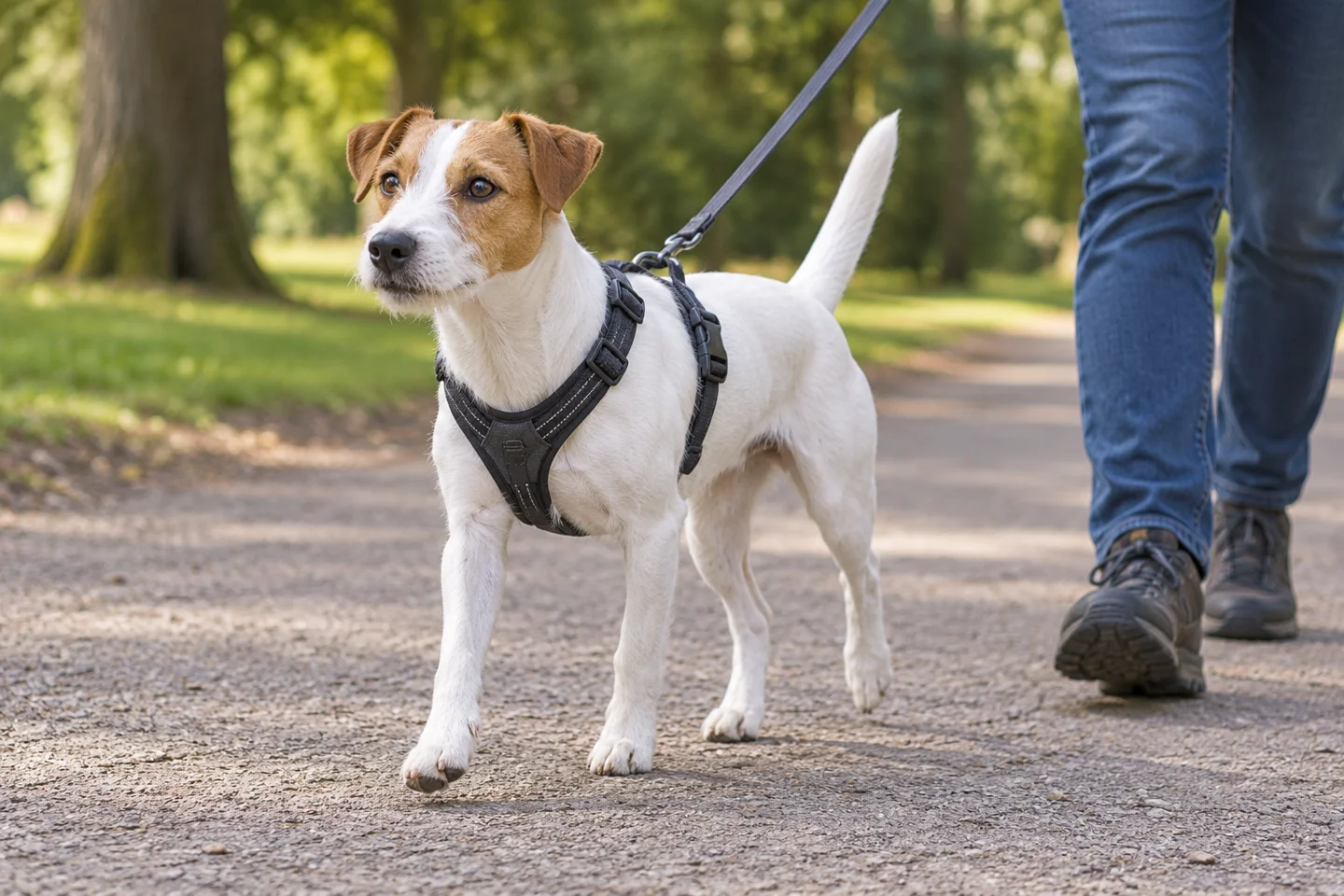
The Parson's outline is approximately square, with body length slightly exceeding height, and forelegs a little longer than body depth. These are useful distinctions from a shorter-legged Jack Russell type. They are not an invitation to select extreme height or a very narrow body at the expense of comfortable movement. Watch the dog walk, turn, and settle on an ordinary surface. Choose equipment that fits the chest without rubbing behind the elbows, and reassess after growth, weight change, or a different coat trim.
Energy and the skill of doing less
A Parson may be ready to respond quickly to movement, sound, or an opportunity to investigate. Giving it constant action can create a day in which every pause becomes a demand for another game. Teach resting as deliberately as recall. Reward the dog for lying on a mat while people sit, and provide quiet time after stimulating outings rather than continuing to throw a toy until physical exhaustion forces a stop.
Separate unmet needs from an inability to settle. A dog that has spent the whole day confined needs suitable movement and engagement. A dog that has already had a busy outing may need a calmer environment and help disengaging. Notice the pattern over several days, including sleep, play, appetite, and reactions outside. If behavior changes abruptly or the dog cannot rest despite reasonable care, discuss health and behavior with appropriate professionals. Calling every difficult moment excess energy can conceal pain, worry, or an exercise routine that keeps excitement elevated.
Training recall, exchanges, and a useful stop
Start recall close by, with a reward worth turning toward, and release the dog back to safe exploration on some repetitions. If coming always ends the interesting part of the walk, the cue can become less attractive. Use a long line in appropriate places until the response works under the distractions you actually encounter. Do not treat success in a quiet garden as proof that a running animal will be ignored.
Teach an exchange for found objects before a dangerous item is involved. Offer a suitable reward, let the dog move away from the object, and recover it calmly. Practice leaving a doorway and pausing while a gate opens. Reward-based training gives the owner practical ways to influence behavior without physical confrontations. Avoid scruffing, pinning, and lead corrections. If the dog repeatedly fails, simplify the exercise or change the environment. A qualified instructor can help build timing and management rather than escalating force against a determined small dog.
Exercise with safe surfaces and controlled pursuit
Combine walking, sniffing, and suitable problem-solving rather than relying on repeated chasing. Introduce dog sports gradually when the animal is physically ready, using instruction that values warm-up, footing, and recovery. A growing puppy should not be asked to perform high-impact repetitions simply because it eagerly follows a toy. Enthusiasm is useful information about motivation, not a medical assessment of what the joints can tolerate.
Inspect enclosed spaces before letting the dog run. Low gaps, loose panels, and an attractive scent outside the boundary can turn an exercise break into an escape. Avoid access to wildlife burrows and unstable banks. In warm weather, carry water and shorten activity if the dog cannot recover comfortably. If it limps afterward or hesitates on a previously easy movement, reduce the challenge and seek advice. An adult's fitness plan should be adjusted to its health and daily response rather than copied from the schedule of a working or competition dog online.

Children and terrier games that stay manageable
Children and a lively terrier can quickly increase one another's excitement. Adults should organize calm interactions and end games before chasing, grabbing, or rough mouthing develops. Teach the child to invite the dog toward them, pause contact, and let it walk away. A dog trying to leave should never be followed into its bed or cornered under furniture. Use a gate when adult attention is needed elsewhere.
Food, chews, and stolen objects belong under adult management. A child should not pull a sock from the dog's mouth or take a bowl away as a lesson in obedience. Provide alternatives such as helping lay a food search or rewarding a familiar cue with supervision. Watch for stiffness, avoidance, and changes in facial expression rather than waiting for a growl. The breed standard's friendly ideal cannot establish safety for a particular dog with a particular child. Familiar behavior at home also does not cover every visiting child or noisy group.
Aggression and the context behind a quick reaction
A fast-moving terrier can make a defensive response seem sudden, but the lead-up often contains useful information. Record the approach, resource, distance, and available escape route after an incident. A dog reacting when another animal pushes into its bed needs a different arrangement from one snapping during painful ear handling. The practical goal is preventing recurrence while identifying what the dog needs, rather than deciding whether it has a bad personality.
Arrange veterinary assessment for an unexpected change in tolerance and seek reward-based behavior support for recurring threats or bites. Do not repeat the trigger to prove the problem or punish growling until the warning disappears. Manage valued objects, create distance from unfamiliar dogs, and use barriers during busy household periods. Where a muzzle adds protection, introduce it gradually and choose a suitable basket design. It remains an extra measure, not a reason to allow contact that the dog is already trying to avoid.
Dogs, cats, and animals that run
Start dog meetings with separate handlers and parallel movement. A Parson that enjoys familiar play may still object to being rushed by a stranger or crowded while investigating a scent. Look for voluntary approaches and the ability to break away. Interrupt repeated pursuit when the other dog tries to stop, and do not interpret every noisy interaction as harmless terrier behavior. Keep first meetings short enough to assess recovery.
Prey interest deserves a specific plan around cats, rabbits, poultry, and wildlife. Use barriers for introductions and maintain routes the cat can use without passing the dog. Prevent chasing rather than allowing it as an experiment. Small animals should have secure housing and separation regardless of a quiet first observation. If the household cannot keep animals safely apart when nobody is watching, discuss suitability before adoption. Training may improve responses, but it cannot responsibly promise that every sudden movement will be ignored for the rest of the dog's life.
Grooming smooth, broken, and rough coats
The Parson standard recognizes smooth, broken, and rough coats with a weather-resistant texture. The illustrated smooth variety needs a different routine from a dog with more facial furnishings. Brush to remove loose hair and inspect skin, feet, and areas beneath the harness. For a rough or broken coat, ask an experienced groomer to explain appropriate maintenance rather than clipping it into an assumed universal terrier style.
Check for plant material and small injuries after exploration. Do not dig into a sore foot or pull a deeply embedded object in an attempt to finish the task at home. Maintain nails and teach tooth brushing. The naturally folded ears should be checked for odor, irritation, and discharge, with veterinary advice for persistent head shaking or pain. Grooming is easier when the dog learns short, rewarded handling sessions early. A new objection to touch should prompt investigation of discomfort, particularly if it consistently concerns one side or one part of the body.
Health screening for eyes, knees, and hearing
The Parson's current AKC recommendations list patella evaluation, ophthalmologist evaluation, and BAER hearing testing. The knee assessment matters to an active terrier even when enthusiasm conceals an intermittent problem. VCA explains that a luxating patella moves out of its normal position; some dogs skip or hold a leg up briefly before using it again. Record that behavior rather than dismissing it as a terrier habit, and ask the veterinarian to examine the dog. Several conditions can produce altered movement, so a video is supporting information rather than a diagnosis.
Ask what a patella report records, which dog was examined, and how a finding would change the breeding plan or activity advice. Treatment decisions depend on the individual examination and severity, not the breed's reputation for toughness. Until assessed, avoid repeatedly provoking the movement to capture a better clip or increasing jumping to strengthen the leg by guesswork. Use nonslip footing and manageable activity, then follow the clinician's plan for review. Eye and hearing results remain separate evidence and should be documented independently; a normal response to a household sound cannot establish normal hearing in each ear.
Hearing differences and safe communication
If hearing is reduced or uncertain, arrange proper assessment and adapt handling rather than assuming a dog is ignoring spoken cues. Visual signals, a predictable approach, and reward-based teaching can support daily communication. Let the dog see someone before touching it and prevent visitors from startling it while asleep. Discuss suitable techniques with the veterinarian and a qualified trainer, using the assessment to guide expectations.
Reliable physical boundaries remain important for any terrier, especially when an auditory recall may not be available. Practice attention and visual cues in secure places and use appropriate leads outside them. Tell carers exactly which signals the dog understands and how they should approach. A dog that detects vibration or responds to some sounds may still have a meaningful hearing difference; informal experiments cannot establish full hearing in each ear. Clinical information helps people choose safer routines without mistaking a sensory limitation for stubbornness or punishing a response the animal cannot provide.
Feeding, fitness, and ordinary veterinary changes
Measure meals, include rewards in the day's intake, and assess the dog's waist and ribs. An active terrier can gain unnecessary weight if every training session adds a large amount on top of food. Adjust portions with the veterinary team as life stage, activity, and condition change. Use a balanced diet rather than adding supplements to compensate for an unplanned collection of ingredients.
Notice changes in appetite, drinking, movement, and comfort. A dog that still chases a toy can have pain, and one that stops eating may need assessment rather than a more tempting topping. Keep medicines and household hazards physically secured. Contact a veterinarian promptly after a suspected toxic ingestion, significant injury, collapse, or breathing difficulty, and provide the product or circumstances when known. Do not give a human painkiller or wait for an online group to diagnose the problem from a short clip. Store emergency contacts where another household adult can find them.
Mixes, cost, and a realistic ownership decision
A Parson mix may have different adult proportions, coat care, social responses, and interest in pursuit from either parent. A crossbreed label cannot guarantee an easier version of the terrier. Ask about relevant health assessment in both parental breeds for a planned mating. For an adopted dog, build the routine around what it does, how it moves, and what the home can support rather than an uncertain ancestry percentage.
Budget for preventive care, training, secure boundaries, equipment, grooming where needed, and an emergency reserve or suitable insurance. Obtain local estimates and confirm that a carer can manage the dog without relying on a child or an unsecured garden. A Parson may suit someone who enjoys patient teaching and active exploration. It is harder to fit into a plan that requires minimal exercise, unstructured access to small pets, or instant recall without practice. Discuss those expectations honestly with a breeder or rescue before making a commitment.
dogsDating introductions with sensible escape routes
Describe the Parson's actual social preferences on dogsDating. Mention whether it likes a calm walking partner, plays roughly, or needs space from dogs approaching head-on. Keep your address and exact home coordinates private. Use an approximate area to choose a public place with broad paths and separate ways to leave, avoiding a first introduction beside small loose animals or a fence that invites running contests.
Start with both securely leashed dogs moving in the same direction at a comfortable separation. Let them notice one another without demanding contact, and keep toys or shared food out of the meeting. Pause if either becomes stiff, fixated, or unable to disengage. A brief outing can end successfully without play. Compare what each handler observed before arranging another meeting, including how quickly the dogs settled afterward. Nobody should be pressured to continue because the animals are small, closely related breeds, or expected to sort out their own disagreement.
Sources and editorial notes
Sources checked October 22, 2026. Breed measurements describe reference ranges, not a diagnosis or an individual dog's ideal weight. Images are AI-generated breed illustrations and do not document a particular dog or health condition.
- AVSAB: Humane Dog Training Position Statement
- VCA Animal Hospitals: Food aggression in puppies
- VCA Animal Hospitals: Common emergencies in dogs
- Orthopedic Foundation for Animals: CHIC health screening programs
- VCA Animal Hospitals: Aggression toward unfamiliar dogs, diagnosis
- VCA Animal Hospitals: Grooming and coat care for your dog
- VCA Animal Hospitals: Ear infections in dogs (otitis externa)
- AAHA: Feeding plans for healthy, appropriate weight cats and dogs
- VCA Animal Hospitals: Heat stroke in dogs
- AVSAB: Puppy Socialization Position Statement
- VCA Animal Hospitals: Dog behavior problems, aggression toward children
- FCI Parson Russell Terrier standard 339, October 2026: proportions, coat varieties and ideal heights
- American Kennel Club: Terrier Group health testing recommendations for Parson Russell Terrier
- VCA Animal Hospitals veterinary guidance: luxating patella in dogs, signs and individual treatment decisions
Keep getting to know dogs.
Read another guide or return to your dogsDating community.
Explore breed guidesBack to dogsDating