Peruvian Inca Orchid
A Peruvian companion in three sizes and hairless or coated forms, with practical guidance on skin protection, dental care and safe social experiences.
How these guides are researched and reviewed
- Origin
- Peru
- Small adult standard
- 25–40 cm; 4–8 kg
- Medium adult standard
- 41–50 cm; 8–12 kg
- Large adult standard
- 51–65 cm; 12–30 kg
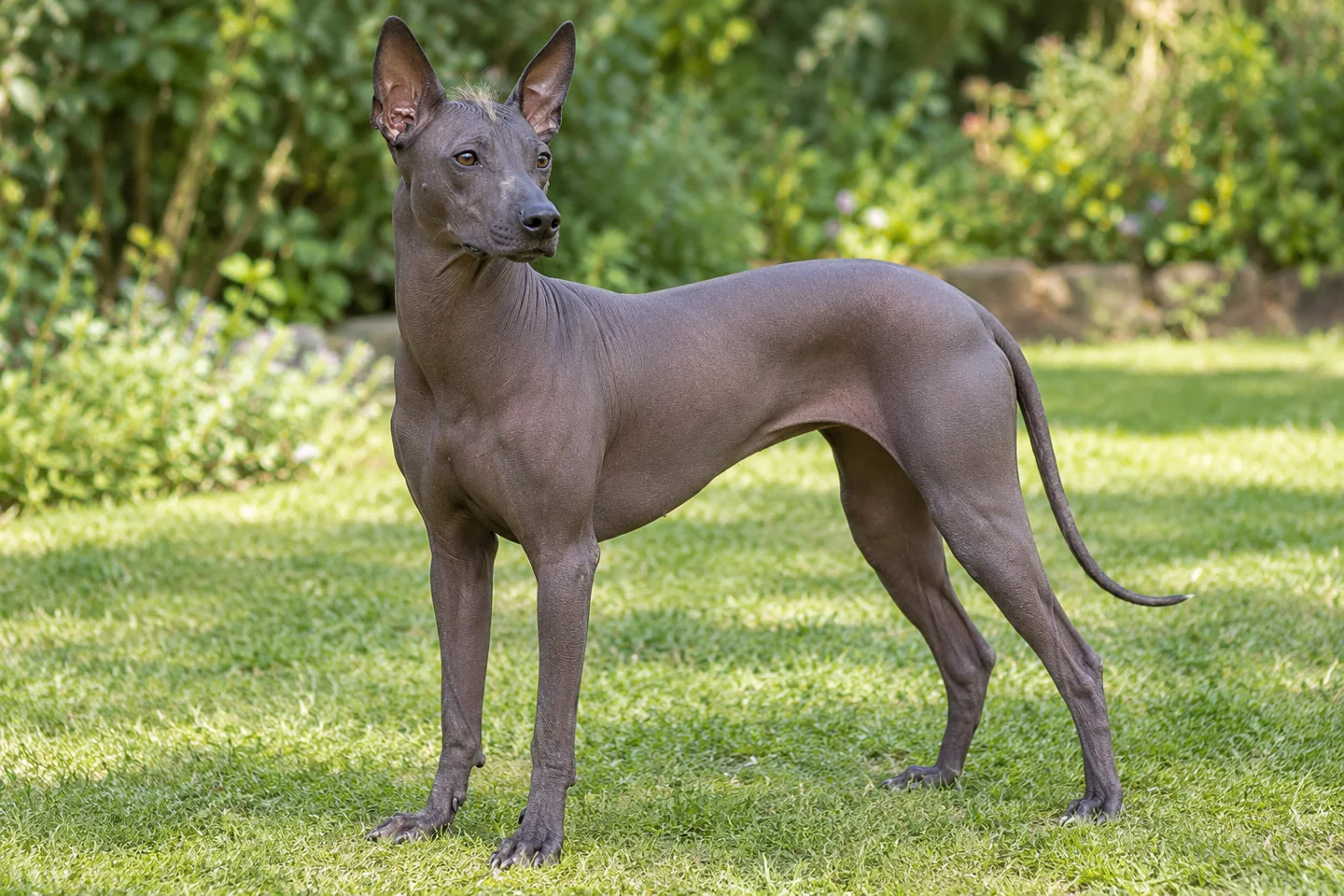
- Illustrated variety
- Medium-size hairless, dark slate skin
General information for owners. These articles have not been reviewed by a veterinarian. Medical decisions need your dog's history and an examination.
A Peruvian breed in hairless and coated forms
The Peruvian Inca Orchid is also known internationally as the Peruvian Hairless Dog or Perro sin Pelo del Perú. The hairless appearance is familiar, but coated dogs are part of the breed too. Both forms occur within its breeding history. A coated individual should not be dismissed as an unrelated dog merely because an online search mostly returns images of bare skin. Confirm the registry and parentage when a seller makes claims about breed identity.
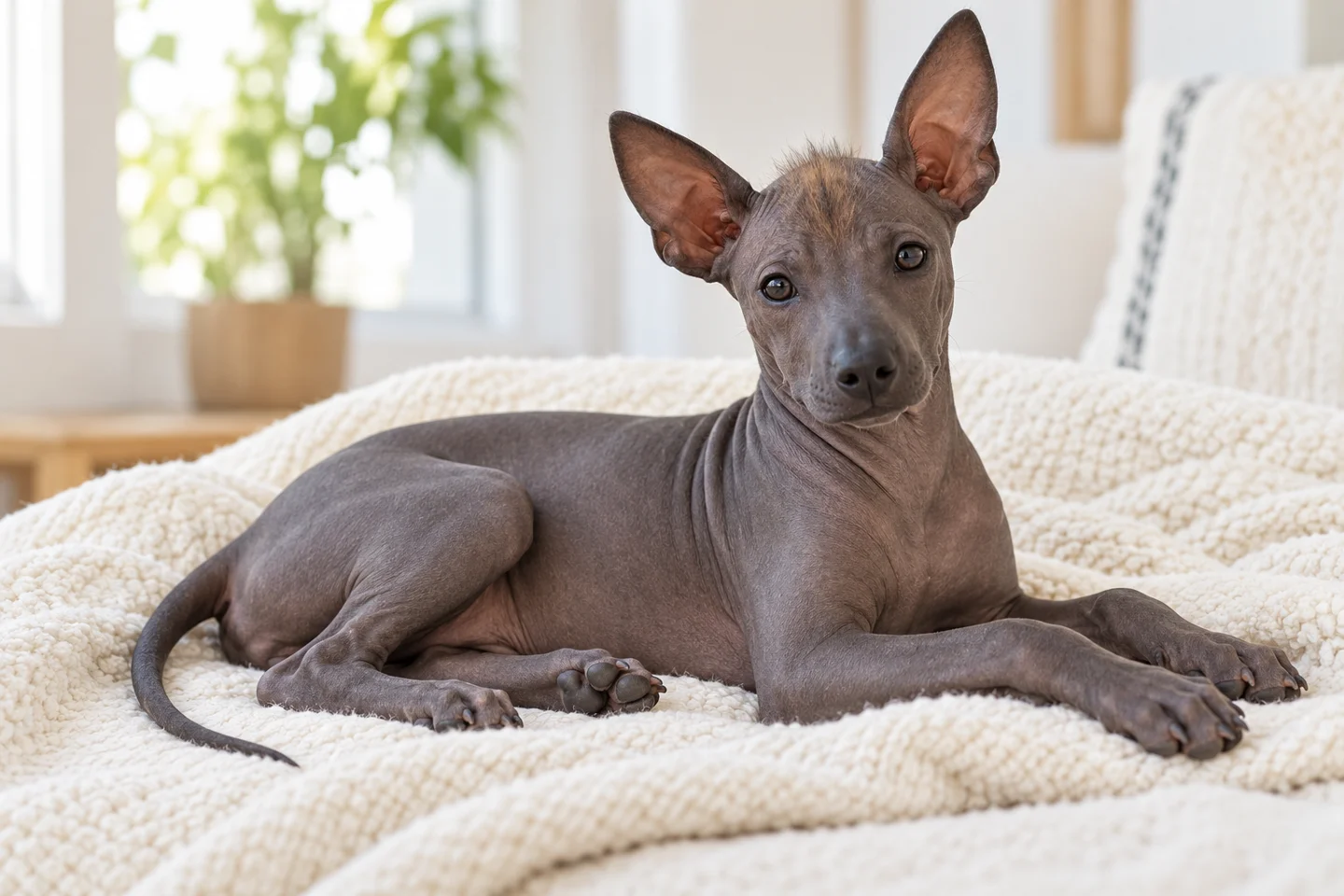
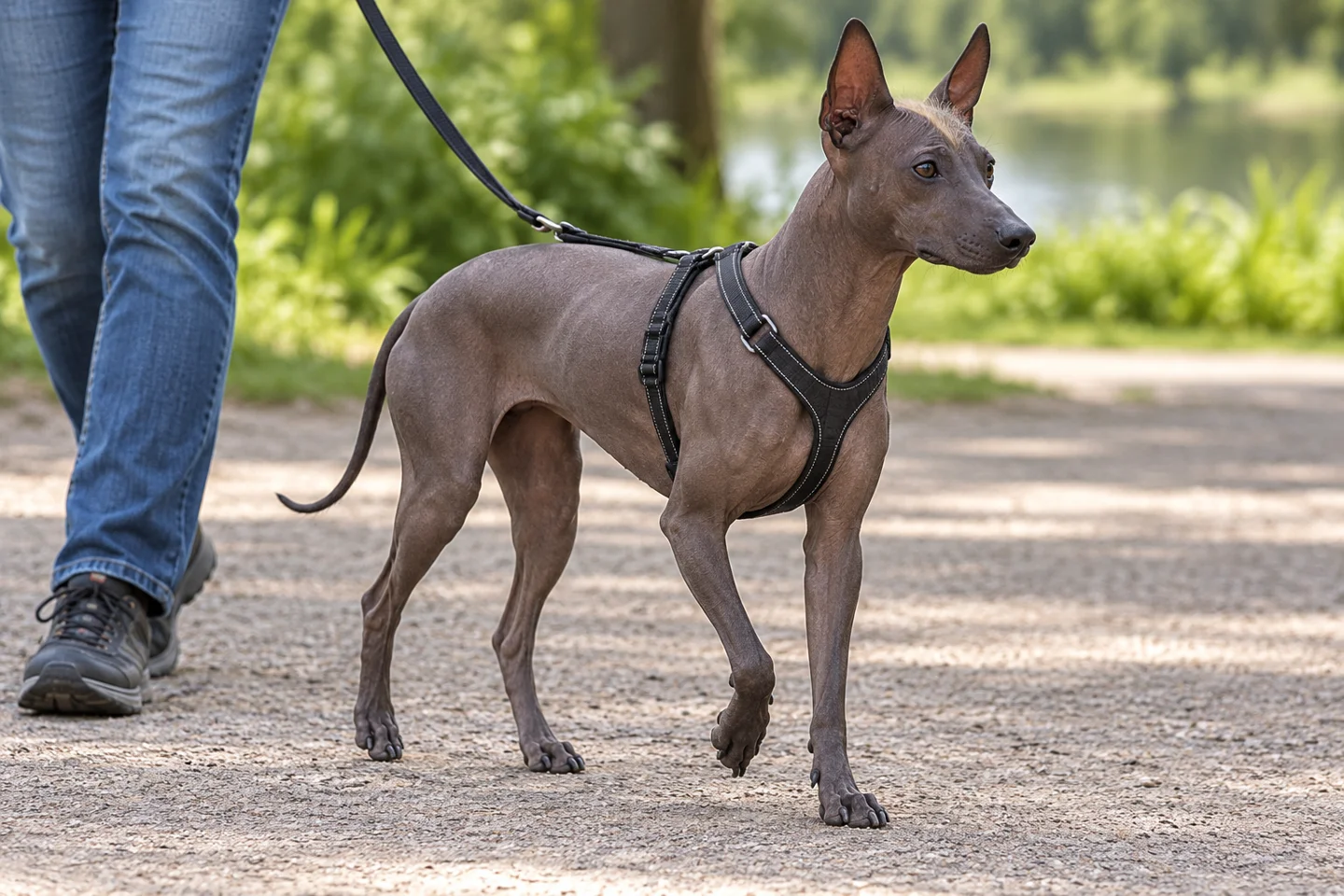
The illustrations here select a medium-size hairless dog with dark slate skin, natural ears, and a full tapered tail. They are AI-generated illustrations showing a chosen variety rather than documentary photographs. The article covers other sizes and the coated form as well. Owners need to plan around the actual dog's skin, mouth, behavior, and environment. Hairlessness changes some care tasks, but it does not eliminate grooming, parasite prevention, temperature management, or the ordinary need for a comfortable indoor home.
History and the meaning of different registry names
Primary breed accounts describe Peruvian dogs represented in pre-Inca material and discuss the continued presence of hairless and coated relatives. The FCI standard explains why retaining the coated form matters to the breed's genetic resources. Those accounts should be distinguished from stories that assign a modern puppy an unbroken personal lineage through a named ancient culture. Historical images provide context, not an individual pedigree.
Registry terminology and recognition dates can differ, so use the relevant current documents when entering an event or interpreting a breeder's paperwork. For ownership, ask what the puppy has experienced, how the parents behave, and which care instructions the breeder provides for that particular coat type. A dramatic origin story cannot tell you whether the dog tolerates a busy street or enjoys unfamiliar handling. Specific observations from daily life and identifiable veterinary records make the decision more concrete than an attractive label such as ancient or exotic.
Three adult sizes with separate measurements
The FCI standard gives the same size categories for males and females. Small dogs measure 25–40 cm at the withers and weigh 4–8 kg. Medium dogs measure 41–50 cm and weigh 8–12 kg. Large dogs measure 51–65 cm and weigh 12–30 kg. Weight is related to size. These are adult standard references, not a reason to push a growing puppy toward a category boundary or choose the largest possible adult.
Ask which size category the parents occupy and have the veterinarian assess growth and condition. A lean outline should still contain healthy muscle and an appropriate amount of body fat. Bare skin can make changes visible, but it cannot replace an examination. Choose equipment for the individual chest and neck, checking contact points for friction. An ill-fitting harness can create irritation that would be easier to miss under hair. Reassess the fit frequently during growth and after any meaningful change in weight.
Appearance without treating bare skin as a diagnosis
The breed has an elegant, muscular outline, a moderate tapering head, and a long full tail. The FCI describes attentive erect ears and allows their carriage to change at rest. The hairless form can carry limited hair in specified areas; it is not required to resemble a polished plastic surface. The coated form has its own ordinary coat rather than being a hairless dog that needs treatment for growing fur.
Describe any skin change by its location, onset, and appearance rather than assuming it belongs to the breed. A new sore, persistent redness, or patch that behaves differently needs clinical attention. Similarly, do not diagnose coat type or ancestry from one puppy image. Ask the breeder to explain development, permitted features under the relevant registry, and what changes merit a veterinary call. Normal anatomical variation, conformation rules, and medical findings are related topics, but they are not the same kind of evidence.
Skin protection in sun and changing weather
Hairless skin needs a deliberate sun-protection plan. Choose shade and suitable outing times, and discuss appropriate canine products with the veterinarian. VCA's solar dermatitis guidance warns that some human sunscreens can be toxic to dogs. Do not simply use the nearest human product or assume that dark skin makes unlimited sunbathing safe. Clothing can provide useful coverage when it fits comfortably, but exposed areas and heat still require attention.
Check the skin after time outside and contact the veterinarian for persistent redness, crusting, ulcers, or a lesion that fails to heal. Avoid scraping, squeezing, or applying strong household treatments. Keep the dog's bed away from direct heat sources that could burn skin, and provide comfortable protection from cold and wet conditions when needed. Clothing should be removed and inspected regularly so seams and trapped moisture do not create a new problem. The goal is comfortable ordinary life, not keeping the animal wrapped continuously without checking temperature or skin condition.
Grooming for the chosen coat type
For the hairless form, grooming includes gentle cleaning, inspection, and a skin routine suited to the individual. Ask the veterinarian how often bathing is appropriate and which products to use if there is a recurring problem. More washing is not automatically better, especially if it leaves the skin irritated. For a coated dog, brush as needed for its coat and inspect underneath rather than assuming the presence of hair removes all skin concerns.
Maintain nails, check feet after rough ground, and inspect ears for odor, soreness, or discharge. Repeated head shaking deserves advice rather than a guessed cleaning regime. Teach the dog to stand on a comfortable nonslip surface while a person checks equipment contact points. Introduce each step briefly and reward cooperation. If it suddenly objects to an area being touched, investigate pain. Hairless skin makes some findings easier to see, but it does not mean that every irritation is minor or suitable for home treatment.
Mouth care when the hairless form has missing teeth
The parent club's published health statement identifies missing teeth as a genetic feature in the hairless variety and stresses dental care. Missing teeth should not be used as a reason to overlook the condition of those present. Ask the veterinarian to record the mouth at routine visits and explain whether any finding needs further assessment. A breed feature does not establish that an animal chewing awkwardly is comfortable.
Introduce gentle lip lifting and tooth brushing with dog-appropriate toothpaste, using brief rewarded sessions. Discuss feeding texture if the individual has difficulty eating, rather than assuming every hairless dog requires the same soft diet. A change in appetite, dropping food, odor, swelling, or resistance around the mouth warrants examination. Do not force a painful mouth open to demonstrate the problem. Keep dental records with the dog's medical history so another practice can distinguish an established pattern of missing teeth from a new loss, injury, or change in oral health.
Training that protects choice and cooperation
Teach a hand target, coming away from a doorway, stepping into a harness, and resting on a mat. These skills make routine care easier and reduce the need to grab a dog that may be quick to move. Reward in quiet conditions before adding distractions. Choose rewards the individual values, and keep sessions short enough that it can remain comfortable and interested rather than repeating an exercise until frustration takes over.
Handling practice should include the sensations the dog will encounter: a soft cloth, a clothing fastener, a paw check, and a veterinary examination. Present one manageable element, reward, and pause. Avoid forcing the dog into clothes or holding it still for prolonged stranger contact. Harsh corrections can increase worry and do not explain the requested behavior. If the dog resists a routine essential for health, involve the veterinarian and a qualified reward-based professional early so care can be made safer without waiting for an emergency.
Exercise and safe outlets for pursuit
Provide regular walking, sniffing, and suitable play, with activity adjusted to age, fitness, health, and weather. Some individuals enjoy structured sports, but preparation and safe footing matter. A puppy should not perform repeated hard turns or high jumps just because it follows a lure eagerly. Build physical demands gradually and observe recovery later in the day as well as enthusiasm during the activity.
Use secure fencing or a suitable line when recall is still developing. Interest in a moving animal can appear even when the dog normally stays close, and a quiet location can become distracting quickly. Check gates and avoid letting an unsecured dog practice chasing wildlife. Plan shade and shelter for an outing rather than assuming hairlessness provides cooling protection. In cold or wet conditions, keep sessions manageable and inspect any protective clothing for rubbing. A dog that slows unexpectedly, changes gait, or struggles to recover needs a revised plan and possibly veterinary assessment.
Children and contact with sensitive skin
Teach children to invite contact and touch gently without gripping skin, pulling ears, or trying to carry the dog away. Bare skin can make adults notice handling risks, but the same right to retreat applies to a coated dog. Provide a bed that children cannot enter and use a gate during meals, chews, and periods when an adult cannot actively supervise. Avoid allowing a child to dress the dog repeatedly as a game.
Watch for turning away, stiffness, avoidance, or repeated attempts to leave. End contact before the dog must escalate a warning. A child can assist with a calm search or a familiar training cue under adult guidance, while adults remain responsible for clothing, skincare, and veterinary handling. Familiarity with household children does not establish comfort around a noisy group of visitors. Plan separate spaces for parties and energetic play, and tell visiting adults the rules rather than assuming that everyone understands how to approach a cautious dog.
Aggression, pain, and warning signals that need a response
Aggression requires an individual assessment of circumstances and health. A dog that snaps when a harness crosses an irritated area needs a different immediate response from one guarding a chew. Record the approach, touch, resource, and escape route, then prevent a repeat. Do not diagnose a protective personality or a bad temperament from a short clip. Sudden changes in tolerance should prompt veterinary attention, particularly when skin, mouth, or movement appears uncomfortable.
Move people away from a tense dog and use reliable barriers while seeking help. A qualified reward-based professional can work on visitor routines, exchanges, and comfortable handling. Punishing a warning can suppress information without resolving the fear or pain behind it. Do not repeatedly test whether the dog will bite again. Where a basket muzzle provides added protection, teach it gradually and ensure it does not rub unprotected skin. The equipment should support a safer plan, not allow someone to force the animal through unwanted contact.
Health screening and making hearing information usable
The Peruvian Inca Orchid Club of the United States' published statement recommends patella evaluation, cardiac examination, ophthalmologist evaluation, and BAER testing. Ask for reports with the dog's identity and discuss how the results inform a mating or an individual care plan. BAER provides hearing information that ordinary observations cannot fully establish. A puppy responding to a dropped object does not by itself demonstrate normal hearing in each ear.
If hearing differs, adapt communication and approach. Teach visual signals, let the dog see you before touching it, and give carers clear instructions about waking and handling. Maintain secure boundaries instead of relying on an auditory recall the dog may not hear reliably. Eye, heart, and knee findings also need their own interpretation; one favorable result does not answer the others. The club statement's date should remain visible when discussing it, and owners should confirm the current program with the relevant club or registry before planning breeding decisions.
Dogs, cats, and smaller animals in the same home
Introduce another dog with separate handlers and enough room to move in parallel. Let both animals disengage and keep early contact brief. Skin protection matters during play, but adding clothing cannot make incompatible play styles safe. Stop repeated chasing or body slamming when the other dog is trying to leave. In a shared home, feed separately and provide resting places where neither dog can block all comfortable options.
Introduce cats through barriers and preserve routes they can use without passing the dog. Interest in small running animals is a reason to prevent pursuit, not a reason to let the dog chase once as a test. Rabbits, birds, and similar pets need secure separation. Ask about previous behavior, but recognize that a calm response to one animal does not guarantee the same response to every new movement. If reliable separation is not feasible, discuss suitability before adding the dog rather than hoping affection toward people will generalize automatically.
Food, mixes, and the actual cost of care
Choose a balanced food appropriate to life stage and measure portions against body condition and activity. Missing teeth may require individual advice about comfortable eating, but they do not establish a universal diet for the breed. Count training rewards and review unexpected weight change, persistent digestive upset, or altered appetite with the veterinarian. Avoid adding supplements or skin products without a clear purpose and a plan to assess their effect.
A Peruvian Inca Orchid mix can differ in coat, adult size, teeth, and behavior from either parent. A crossbreed name cannot guarantee hairlessness or easier skincare. Ask about relevant parental assessment for a planned litter and use clinical findings for a rescue with uncertain ancestry. Budget for routine care, suitable clothing and sun protection where needed, dental assessment, equipment, and emergency treatment. Obtain local estimates and arrange a carer who can maintain the specific skin and handling routine rather than assuming a hairless dog requires little practical maintenance.
dogsDating meetings that respect space and skin
Describe the dog's current preferences on dogsDating, including its comfort with unfamiliar people, preferred play style, and whether a parallel walk suits it better than direct contact. Keep exact home coordinates and your address private. Choose a quiet public meeting from an approximate area and consider shade, weather, surface temperature, and easy exit routes. A first introduction should not require prolonged exposure to sun or a crowded enclosed space.
Start with separate handlers moving in the same direction at a comfortable distance. Watch both dogs and avoid shared toys or food. Contact remains optional, and clothing or bare skin should never become a reason for strangers to reach toward the dog without permission. Stop if either animal stiffens, retreats, or cannot recover from excitement. Discuss the actual response afterward before arranging another meeting. A short outing that preserves comfort is useful even when the dogs never play, and each person should be free to decline a different kind of encounter.
Sources and editorial notes
Sources checked October 22, 2026. Breed measurements describe reference ranges, not a diagnosis or an individual dog's ideal weight. Images are AI-generated breed illustrations and do not document a particular dog or health condition.
- AVSAB: Humane Dog Training Position Statement
- VCA Animal Hospitals: Food aggression in puppies
- Orthopedic Foundation for Animals: CHIC health screening programs
- VCA Animal Hospitals: Aggression toward unfamiliar dogs, diagnosis
- VCA Animal Hospitals: Grooming and coat care for your dog
- VCA Animal Hospitals: Ear infections in dogs (otitis externa)
- AAHA: Feeding plans for healthy, appropriate weight cats and dogs
- VCA Animal Hospitals: Heat stroke in dogs
- AVSAB: Puppy Socialization Position Statement
- VCA Animal Hospitals: Dog behavior problems, aggression toward children
- FCI Peruvian Hairless Dog standard 310: coated and hairless forms, dentition and three adult sizes
- American Kennel Club: Peruvian Inca Orchid identity, varieties and care
- Peruvian Inca Orchid Club of the United States: April 2020 health statement, hearing, patella, cardiac, eyes and dental care
- VCA Canada veterinary guidance: solar dermatitis in dogs and safe sun protection
Keep getting to know dogs.
Read another guide or return to your dogsDating community.
Explore breed guidesBack to dogsDating