Petit Basset Griffon Vendéen
A small French rough-coated scenthound, with guidance on scent-led exercise, coat care, glaucoma testing and comfortable introductions.
How these guides are researched and reviewed
- Origin
- France
- Adult standard height
- 34–38 cm, with ± 1 cm tolerance
- Coat
- Harsh rather than silky or woolly
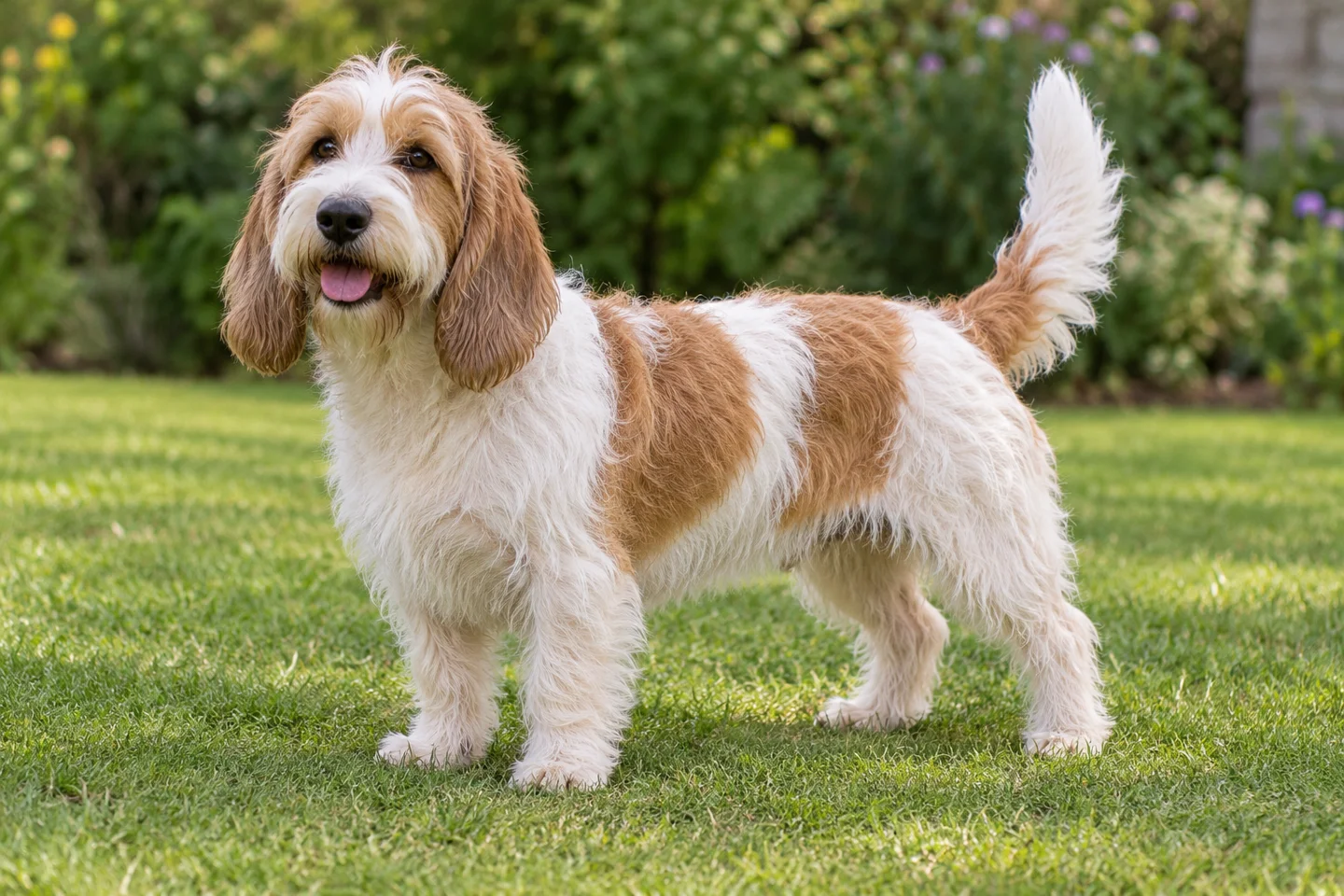
- Illustrated coat
- White with orange patches
General information for owners. These articles have not been reviewed by a veterinarian. Medical decisions need your dog's history and an examination.
A small rough hound with a nose-led agenda
The Petit Basset Griffon Vendéen is a small French scenthound with a harsh coat, expressive furnishings, hanging ears, and a body slightly longer than its height. The name is often shortened to PBGV. It is a distinct breed from the larger Grand Basset Griffon Vendéen, rather than a puppy version that will eventually become a Grand. Ask which breed a breeder records and compare the documents with the parents and puppy.
The illustrations select a white-and-orange dog with natural ears and a full tail. The rough coat can suggest a casual companion that needs little attention, while the breed's working interests require deliberate exercise, training, and boundaries. Think about how you will manage a scent beside an open gate, wet facial hair after drinking, and the need to settle when household life becomes quiet. Meeting adults in an ordinary setting can help distinguish the appeal of the appearance from the daily routine the dog actually needs.
Vendéen history and the distinction from the Grand
The FCI account describes the PBGV as a hunting hound developed in the Vendée and emphasizes that its proportions differ from those of the Grand. A smaller height alone is not the whole distinction. Its historical use around scrub and rabbits helps explain why exploring vegetation and following scent can be rewarding. Those interests can be accommodated safely without allowing a companion to pursue wildlife or enter a dangerous patch of ground.
Ask how the parents behave outside work or exhibitions. A breeder should be able to discuss ordinary handling, waiting, visitors, and periods alone, as well as performance. A young dog still needs guidance about domestic life even when it comes from experienced working stock. For a rescue, gather the individual history that is available and observe current responses. A breed's traditional task provides context, but cannot tell you whether this particular dog can pass a cat, rest near another hound, or remain comfortable when someone touches its feet.
Adult height and proportions that allow movement
The FCI standard gives a height at the withers of 34–38 cm, with a tolerance of 1 cm either way. It does not provide a compulsory adult weight range. Judge the individual by frame and veterinary body-condition assessment rather than an invented kilogram target. A low-set hound can gain weight without appearing dramatically different under the rough coat, so check ribs and waist with hands as well as eyes.
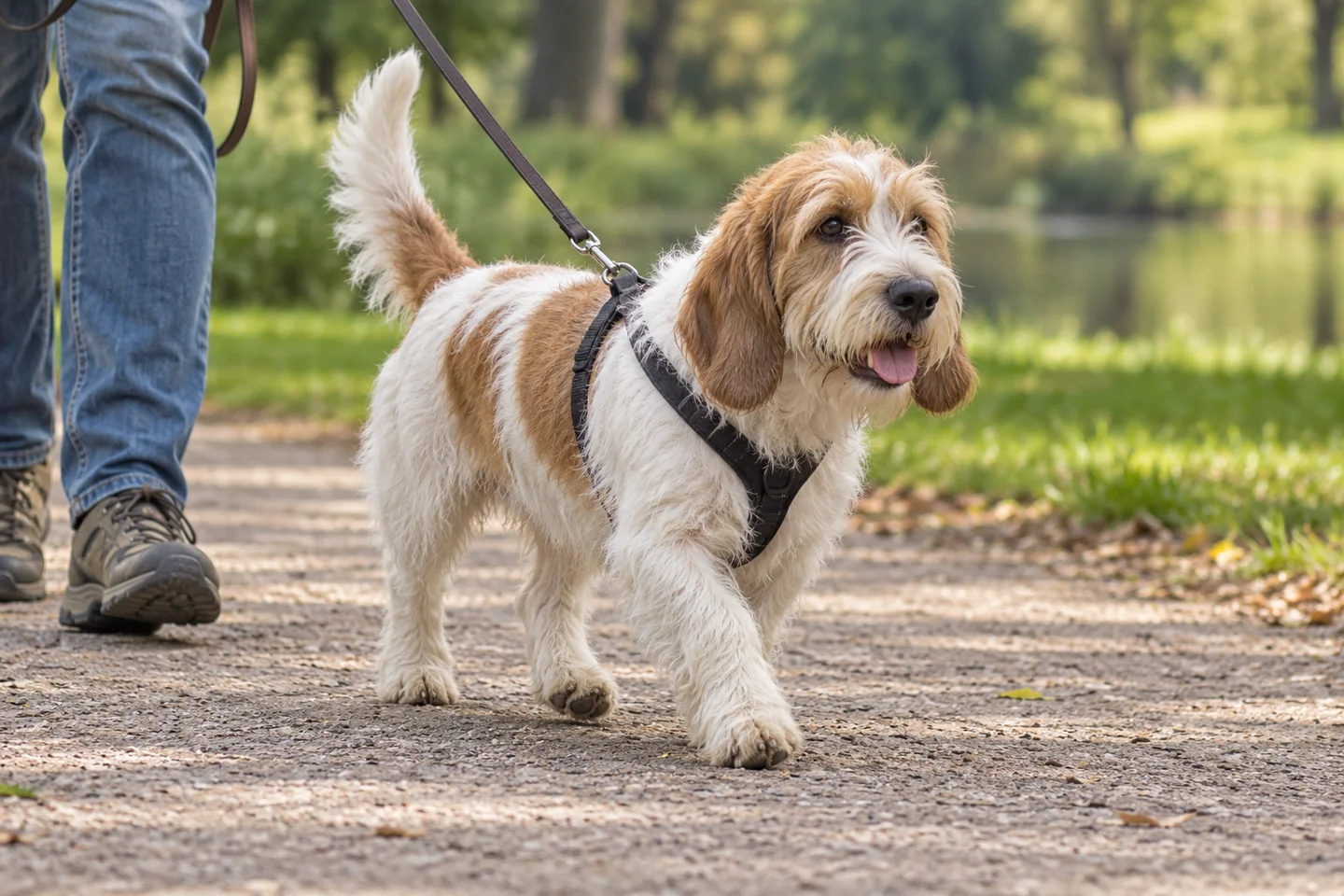
The standard asks for a functional small hound, not extreme leg shortening or exaggerated bowing. Watch comfortable movement on a normal surface and ask about any persistent gait change. Equipment should fit the chest without rubbing or limiting the shoulders. Recheck the harness as the puppy grows and after coat maintenance. Plan a safe way into the vehicle and avoid repeated awkward jumps as a default. If the dog hesitates, investigate footing and comfort instead of assuming that a determined hound is merely refusing to cooperate.
A busy voice and a workable home routine
A hound may announce excitement, frustration, or an interesting scent, and the household needs a plan that does not rely on shouting back. Notice what starts the vocalizing and whether the dog can recover. Move beds away from a window if passing traffic repeatedly triggers a response, and reward coming away before excitement becomes difficult to interrupt. A quiet alternative needs teaching rather than being expected after the dog is already highly aroused.
Prepare periods alone gradually. Begin with brief comfortable separation while someone can observe the response, then increase only when the dog remains able to settle. A companion accustomed to constant company may need a different approach from one that already rests independently. Record pacing, vocalizing, eating, and recovery rather than interpreting damage as revenge. If distress persists, involve a veterinarian and a qualified behavior professional. Living with another dog does not automatically resolve separation distress, and acquiring a second hound adds its own care and compatibility questions.
Training through access to useful rewards
A PBGV can learn practical skills when cooperation leads to something worthwhile. Teach a name response, returning to the handler, stepping away from a gate, and settling on a mat. Use food or permission to inspect a safe scent as appropriate rewards. Practice while the dog can succeed, then add difficulty gradually. A recall learned in a kitchen has not yet been tested beside a fresh wildlife trail.
Teach exchanges with ordinary objects before a dangerous find appears. Offer a reward and let the dog leave the item rather than opening its mouth by force. Keep the environment arranged so stolen food and rubbish are not available during unsupervised time. Avoid collar jerks, physical confrontation, or punishment for growling. If training repeatedly fails, check distraction, fatigue, motivation, and discomfort before escalating demands. An instructor who understands reward-based teaching can help make the walk and household routine safer without expecting a hound to stop being interested in its surroundings.
Exercise with time to investigate and time to recover
Build outings around walking, sniffing, and suitable searches instead of constant ball chasing. Check vegetation and ground before allowing close exploration, particularly where litter, unstable banks, or wildlife holes may be hidden. Use a suitable long line while recall develops and keep it clear of other people and dogs. A fenced garden helps only when gates, gaps, and digging opportunities are assessed regularly.
Adjust the day to age, condition, weather, and recovery. Puppies need manageable movement and sleep rather than forced endurance. Older dogs can still enjoy a shorter search even when distance decreases. Carry water, choose cooler periods in warmth, and avoid assuming a rough coat protects against heat illness. If the dog becomes stiff, changes stride, or is reluctant the following day, revise the plan and seek veterinary advice when needed. Enthusiasm during an activity cannot establish that repeated jumping, sudden turns, or a long route is comfortable for the individual.
Children and a rough-coated face that still gives warnings
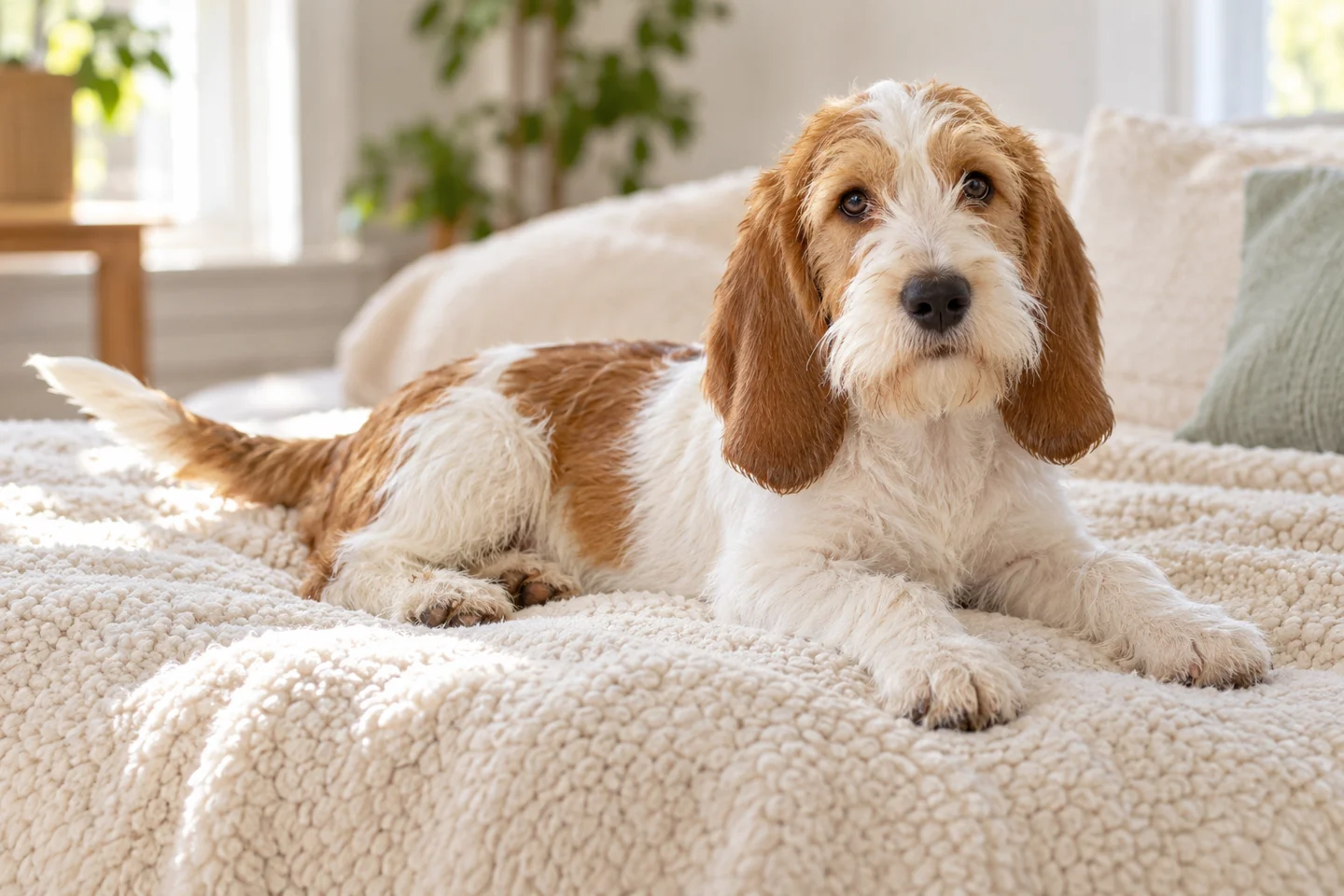
Adults need to supervise children actively and protect the dog's meals, chews, and resting area. The beard and brows can make a face look permanently comic, but they do not remove warning signals or the dog's need to leave. Notice stillness, turning away, repeated retreat, and a tightening body. End contact before the animal must growl or snap to make the situation stop.
Teach children to invite the hound toward them, touch gently, and pause. Prevent lifting, hugging around the neck, or following the dog into a bed. Children can help lay a supervised search or reward a known cue, while adults manage found objects and exchanges. Separate the dog during running games and noisy gatherings if those raise excitement. A familiar child's calm company does not demonstrate safety around every visitor. Use a gate whenever the supervising adult needs to focus on cooking, another child, or an activity that prevents close observation.
Aggression and preventing conflict over resources
Describe an incident in concrete terms: who approached, what the dog had, whether it was resting, and where it could move. A PBGV growling over a chew needs prevention and safe exchange work, while one objecting to painful ear handling needs clinical assessment. General labels such as stubborn or dominant do not reveal the practical change that will keep the next interaction safer.
Move people and animals away when tension develops. Do not repeatedly reach toward a guarded item to prove the dog will tolerate it, or punish the warning until it disappears. Seek veterinary assessment for a new change in behavior and reward-based behavior support for recurring threats or bites. Use barriers, separate resources, and suitable walking distance while learning develops. A basket muzzle may add protection when introduced gradually and fitted appropriately, but it does not make an overwhelming encounter acceptable. After a bite, obtain appropriate medical advice and prevent repetition rather than immediately testing whether the dog is now sorry.
Grooming a harsh coat without disguising a problem
The PBGV coat should be harsh rather than silky or woolly. Work gently through the beard, legs, and areas beneath equipment, checking for tangles, debris, and skin irritation. Ask an experienced groomer to demonstrate a suitable routine rather than assuming every rough-coated dog needs the same treatment. An untidy outline can be natural, but tightly matted hair and painful pulling are avoidable care problems.
Check ears for odor, discharge, and discomfort after exploring or wet outings, and contact the veterinarian for repeated head shaking. Do not insert tools deeply into the ear. Maintain nails, introduce tooth brushing, and inspect feet for soreness without digging into tissue. A dog that resists one area of grooming may be reporting pain. Break handling into short rewarded steps and seek advice if necessary. Dry damp furnishings appropriately and review recurrent skin problems clinically instead of repeatedly applying products recommended for a different dog's coat or ears.
Health: open-angle glaucoma needs more than watching for pain
Primary open-angle glaucoma is a specific concern worth discussing in the PBGV. UC Davis Veterinary Genetics Laboratory describes a genetic inversion affecting ADAMTS17 and explains that the disorder can progress without obvious pain. Waiting for crying or dramatic discomfort is therefore an unreliable way to decide whether an eye needs assessment. Ask the veterinary team about appropriate clinical monitoring and what changes in vision or appearance should prompt contact.
The current AKC recommendations list ophthalmologist evaluation and POAG DNA testing. These address different evidence: a genetic result for the relevant variant and a clinical examination of the eyes. Ask for both kinds of record and confirm that the test is the PBGV-specific one, rather than another breed's similarly named assay. Avoid converting a study's sample proportion into a current worldwide rate. An individual result should be interpreted with the laboratory and veterinarian, and any new eye problem needs assessment even when inherited-risk information appears favorable.
Helping a dog with a change in vision
A dog that begins hesitating in dim areas, misjudging a familiar step, or behaving differently around moving objects needs veterinary assessment. Those signs can have several explanations, and home observation cannot establish glaucoma. Record when the change occurs and whether it affects ordinary movement, then arrange appropriate care. Do not repeatedly rearrange obstacles to test vision or wait for an enlarged-looking eye before asking for help.
If a visual impairment is confirmed, ask the clinician how to manage the home and follow-up. Keep routes predictable, protect stairs and water hazards, and teach a calm verbal cue before changes in level. Warn carers about the diagnosis and approach the dog in a way that avoids startling it. A DNA result does not replace this daily management, and a clinical examination should not be interpreted as a lifetime guarantee. Follow the individualized plan for review rather than using an online calendar designed for another dog's disease or treatment.
Meals, body condition, and household hazards
Measure food, include rewards in the day's intake, and check body condition beneath the coat. A hound's interest in eating does not establish the correct portion size. Review growth, activity, and weight with the veterinary team and choose a balanced diet suited to life stage. Avoid adding supplements or changing to a restrictive diet because an online owner claims every PBGV needs the same food.
Secure bins, food bags, medicines, and dangerous household products. Teaching leave and exchange skills helps, but physical prevention remains important when nobody is watching. After a suspected toxic ingestion, contact a veterinarian promptly and provide the product and estimated amount when known. Persistent digestive upset, unexpected weight change, or altered drinking deserves clinical advice. For several dogs, use separate feeding areas and keep children away during meals. Repeatedly taking a bowl away to test tolerance can create conflict instead of teaching the dog that approaching people are safe.
Mixes, cost, and an informed choice
A PBGV mix may differ in coat, adult proportions, voice, and interest in pursuit. A crossbreed label cannot promise the same appearance with easier maintenance. For a planned litter, discuss relevant assessment of both parents, including any breed-specific eye risks, rather than assuming crossing removes inherited problems. For a rescue dog, prioritize current behavior and veterinary findings over attempts to identify a beard from a photograph.
Budget for preventive care, possible specialist eye assessment, grooming, equipment, transport, and emergency treatment. Obtain local estimates and find a carer who can manage scent-led walks and maintain secure gates. Think about wet outings, vocalizing, absences, and the space available for calm rest. An owner who enjoys patient teaching and ordinary outdoor exploration may find the routine workable. A household needing a consistently quiet dog with automatic recall should discuss those expectations honestly before committing, rather than relying on size or a friendly expression to resolve the mismatch.
dogsDating introductions with a public meeting plan
On dogsDating, explain the PBGV's current social preferences: whether it enjoys quiet parallel walks, needs space while sniffing, or becomes overexcited during direct greetings. Keep your address and exact home coordinates private. Use an approximate area to choose a public place with broad paths and separate exit routes. Avoid beginning inside a guarded home or beside a narrow entrance where neither dog can turn away comfortably.
Walk in the same direction at a suitable separation, allowing both dogs to notice one another without demanding contact. Keep shared toys and food out of the encounter and have each adult focus on one animal. End the outing if either dog freezes, hides, or cannot recover from excitement. Playing is optional, and a short comfortable walk gives useful information. Compare observations afterward before deciding whether another meeting would suit both dogs, without pressure to continue because they are hounds or expected to be sociable.
Sources and editorial notes
Sources checked October 22, 2026. Breed measurements describe reference ranges, not a diagnosis or an individual dog's ideal weight. Images are AI-generated breed illustrations and do not document a particular dog or health condition.
- AVSAB: Humane Dog Training Position Statement
- VCA Animal Hospitals: Food aggression in puppies
- VCA Animal Hospitals: Common emergencies in dogs
- Orthopedic Foundation for Animals: CHIC health screening programs
- VCA Animal Hospitals: Aggression toward unfamiliar dogs, diagnosis
- VCA Animal Hospitals: Grooming and coat care for your dog
- VCA Animal Hospitals: Ear infections in dogs (otitis externa)
- AAHA: Feeding plans for healthy, appropriate weight cats and dogs
- VCA Animal Hospitals: Heat stroke in dogs
- AVSAB: Puppy Socialization Position Statement
- VCA Animal Hospitals: Dog behavior problems, aggression toward children
- FCI Petit Basset Griffon Vendeen standard 67: proportions, history, coat and adult height
- American Kennel Club: Hound Group health recommendations for Petit Basset Griffon Vendeen
- UC Davis Veterinary Genetics Laboratory: PBGV primary open-angle glaucoma, breed-specific mutation and clinical signs
Keep getting to know dogs.
Read another guide or return to your dogsDating community.
Explore breed guidesBack to dogsDating