Pharaoh Hound
A tan Maltese hound with guidance on pursuit, secure exercise, individual health assessment and social meetings that preserve choice.
How these guides are researched and reviewed
- Origin
- Malta
- Adult male standard height
- 56–63.5 cm
- Adult female standard height
- 53–61 cm
- Coat and pigment
- Short tan coat, flesh-colored nose and amber eyes
General information for owners. These articles have not been reviewed by a veterinarian. Medical decisions need your dog's history and an examination.
A Maltese hound behind an Egyptian-sounding name
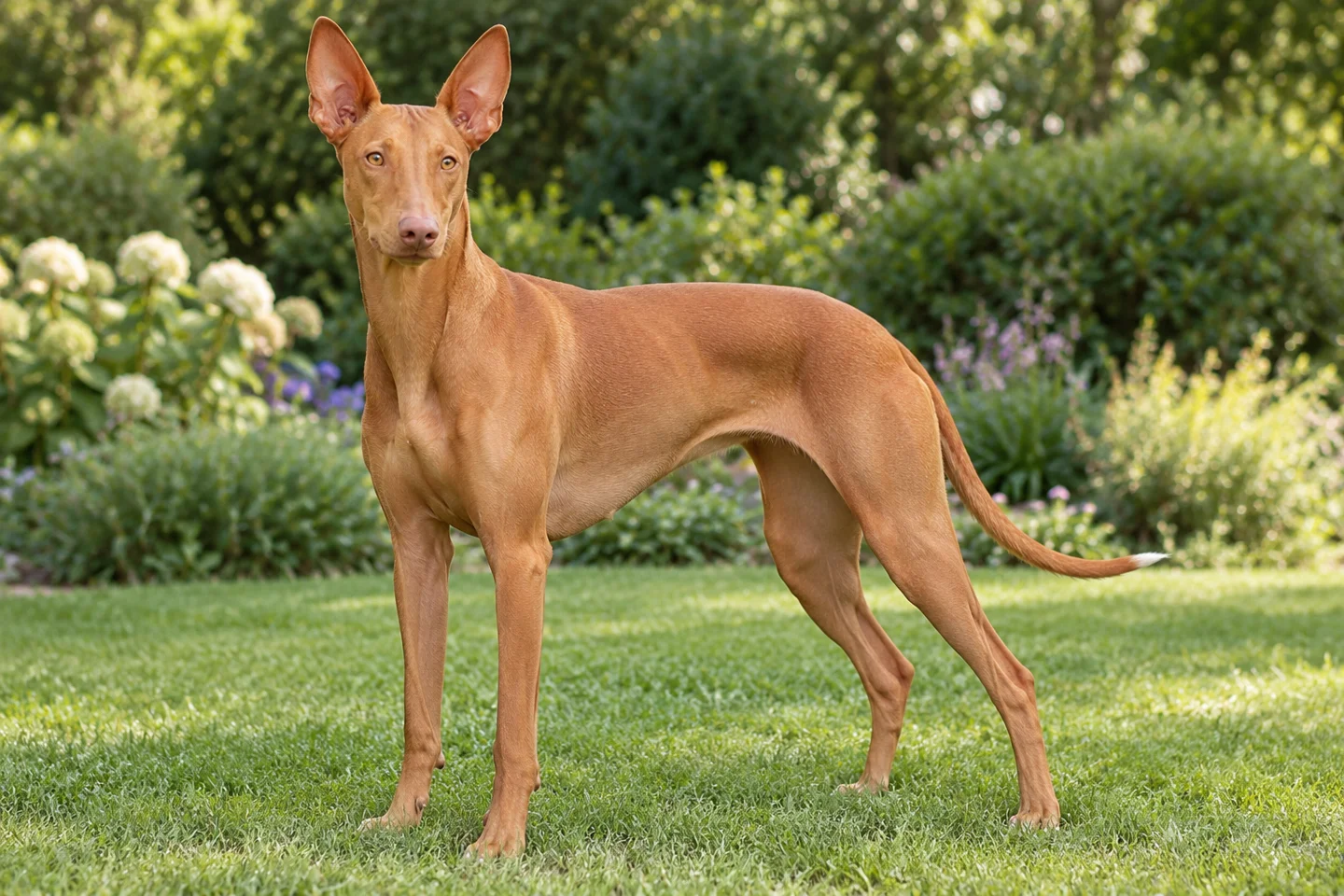
The Pharaoh Hound is a Maltese hunting breed with a tan coat, amber eyes, a flesh-colored nose, and large mobile ears. Its name can encourage stories of direct descent from dogs in ancient Egyptian art, but resemblance is not a modern pedigree. The current FCI standard gives Malta as the country of origin. Use that documented identity when researching breeders, health records, and practical care rather than assuming the name settles its entire history.
The athletic outline can be appealing, but ownership needs more than room for an elegant dog to rest. Plan secure boundaries, controlled outlets for pursuit, and a routine that includes both activity and sleep. Meet adults in ordinary circumstances and ask how they behave around visitors, small animals, and absences. A dog posing quietly may move with remarkable speed a moment later. Choose from observed behavior and records rather than a promise that a graceful hound will automatically be easy to manage in every setting.
Hunting by more than one sense
The FCI describes a hunter using scent and sight, with its ears also important at close quarters. That is a useful reminder that pursuit may begin from something the handler has not noticed. A rustle, smell, or sudden movement can become more rewarding than a familiar cue. Good care provides ways to investigate safely without treating wildlife or neighboring pets as training opportunities.
Ask how the parents' interests are managed outside work. A dog that performs a task successfully still needs domestic skills, including waiting at a door, traveling calmly, and leaving food preparation alone. A puppy's early experiences should prepare it for ordinary handling and rest as well as active play. For a rescue, gather the individual history that is available and introduce new situations carefully. The breed's purpose explains possible motivations, while the actual animal determines which distances, partners, and environments are comfortable enough for learning.
Adult heights and a lean body with healthy muscle
The October 2026 FCI standard gives adult heights at the withers of 56–63.5 cm for males and 53–61 cm for females. It does not specify an obligatory weight range. Use the individual frame and veterinary body-condition assessment rather than borrowing a weight from another tan hound. A tucked abdomen and visible athletic definition can be normal features, but unexplained weight loss or loss of muscle still needs investigation.
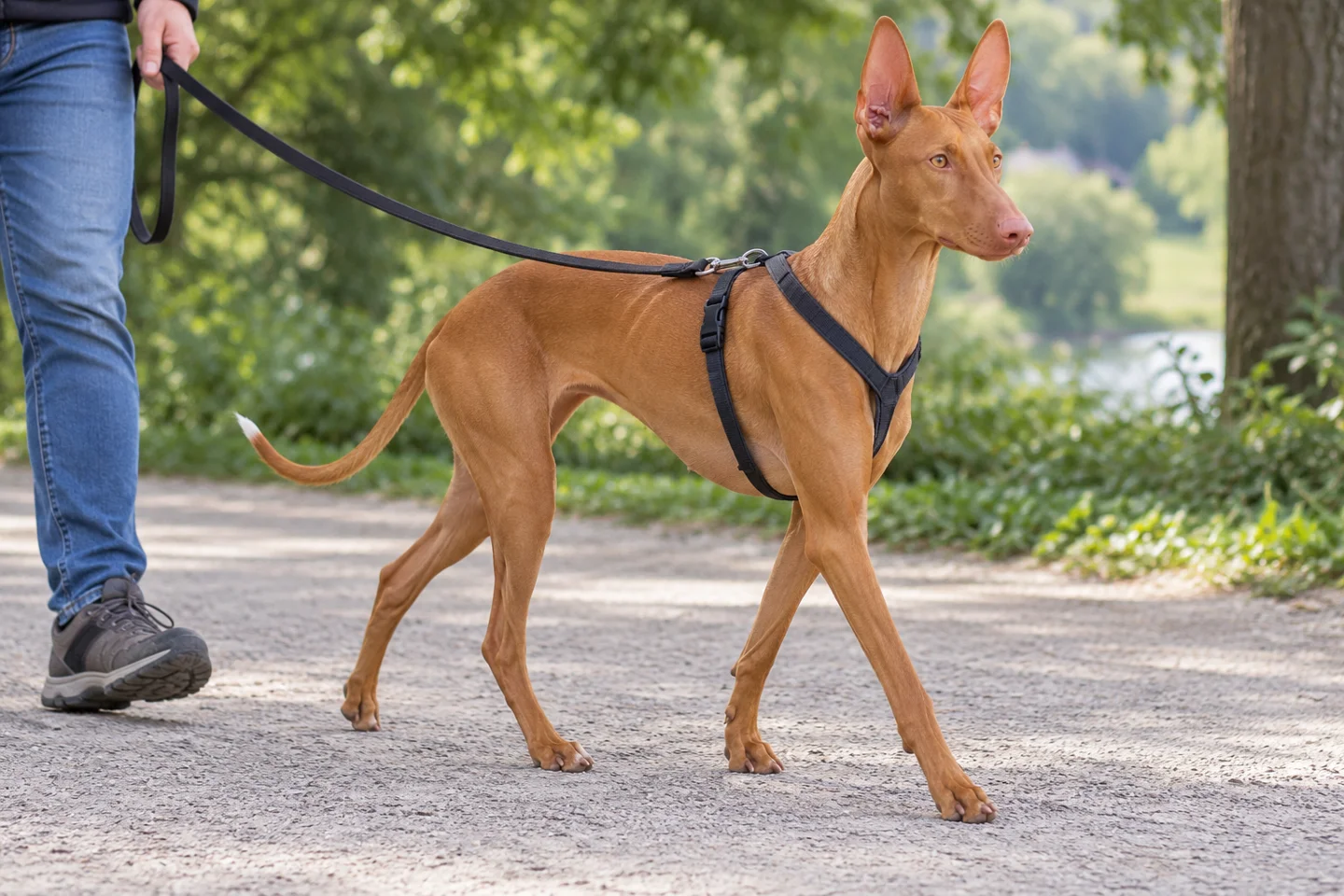
The body is slightly longer than its height, with a deep chest and a long tapering tail. Select a harness that fits this shape without rubbing behind the elbows or restricting shoulder movement. Check whether the dog could back out and ask for fitting help if necessary. Reassess during growth and after weight change. Plan vehicle space and safe restraint for the adult, not only the puppy. A comfortable entry routine is easier to teach when the dog is well than after an injury makes movement difficult.
Coat, pigment, and ears that change with attention
Tan or rich tan is the standard coat color, with specified white markings permitted. The nose blends in flesh color, and the eyes are amber rather than required to be black or very dark brown. The coat is short and unfeathered. A puppy's expression and ear carriage develop with growth, so compare documents and the whole structure instead of expecting an exact copy of a mature illustration.
Large ears are naturally mobile and erect when alert. Do not tape, crop, or manipulate them simply to match an image. The selected illustrations show a rich tan dog with a normal full tail and natural anatomy. They cannot demonstrate pedigree, temperature tolerance, or a clinical finding. If a seller advertises a supposedly rare black mask or a different coat type, ask how that claim relates to the registry used. Unusual appearance should not distract from questions about movement, health assessment, and a puppy's ability to recover comfortably after ordinary activity.
A comfortable home after an active outing
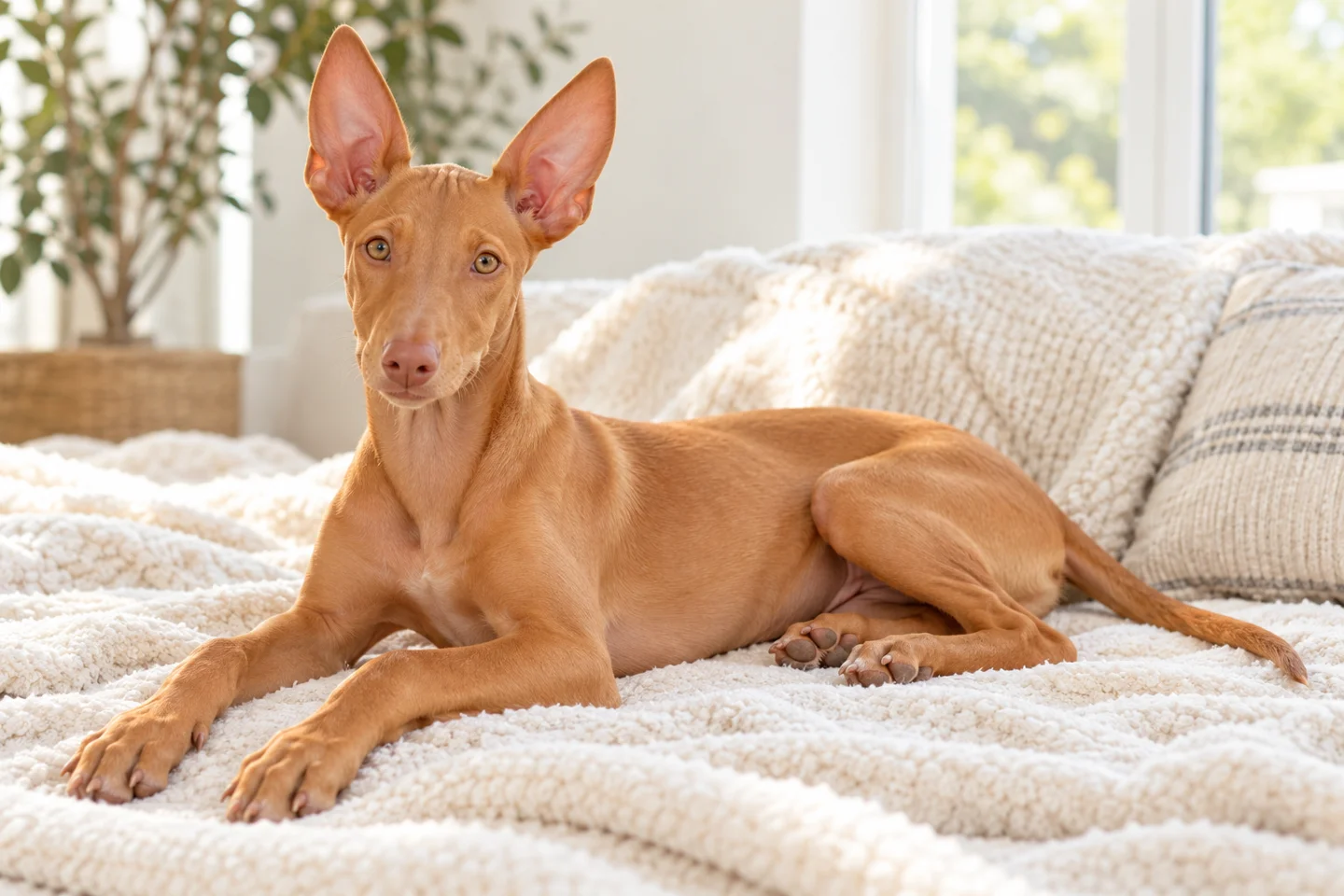
Teach the Pharaoh Hound to settle in a protected area while people continue normal household tasks. Reward resting before the dog begins asking for another game. Constant action can make every pause feel like a signal to demand attention. Provide varied activity and companionship, then let sleep occur without repeated interruptions. A bed should be away from drafts, excessive heat, and a doorway that keeps the animal alert to every movement.
Introduce time apart gradually and observe the response. Begin with brief separations that remain comfortable and increase only when the dog can recover. Record vocalizing, pacing, food use, and rest instead of assuming that a quiet room means the dog feels secure. Persistent distress deserves veterinary and behavior guidance. Getting another dog should be a separate compatibility decision, not an automatic remedy for absence-related difficulty. An individual may enjoy canine company while still needing careful preparation for being separated from a particular person.
Training around movement without a physical contest
Start with attention, hand targeting, recall at short range, and moving away from an opening gate. Reward promptly in a setting where the dog can succeed. Practice returning to the handler and then going back to safe sniffing on some repetitions, so recall does not always predict that the interesting part has ended. Use a suitable line while the skill develops and keep it clear of legs, other dogs, and obstacles.
Teach an exchange for found objects and a comfortable response to harness handling. Do not reach into the mouth to demonstrate control or jerk the lead when the dog notices movement. Reduce the challenge and rebuild the response. A reward-based trainer can help choose distances and rewards that fit the individual. If the dog is already fixated or frightened, it may need more space before useful learning can happen. The goal is a practical set of responses, not a claim that enthusiasm or affection can guarantee immediate obedience beside every running animal.
Exercise with secure space and planned recovery
Combine walks, sniffing, and suitable controlled play rather than relying only on sustained running. If the dog takes part in a sport, use instruction that considers age, conditioning, surface, and recovery. Growing puppies should not perform demanding repetitions because they eagerly follow a moving target. Increase physical demands gradually and notice comfort afterward, including rising from rest and walking the next morning.
Inspect fences and gates before off-lead activity. A tall-looking boundary can still be compromised by a gap, a weak latch, or an object that makes climbing easier. Avoid access to roads or wildlife when recall remains uncertain. Carry water in warmth and choose cooler times if necessary. A short coat does not prevent heat illness, while cool wet weather may call for suitable shelter or clothing. Stop if the dog struggles, changes gait, or cannot recover comfortably, and discuss persistent changes with the veterinary team rather than continuing to build endurance by guesswork.
Socialization and the right to observe first
Introduce a puppy to people, dogs, sounds, handling, and surfaces in manageable conditions. Let it watch from a comfortable distance, pair the experience with something pleasant, and allow retreat. A visitor can sit sideways without reaching toward the ears or face. Contact is optional. A successful encounter can be a calm look followed by choosing to return to the owner, rather than a long period of being touched.
Practice passing dogs and traffic without greeting as well as meeting suitable partners. If the puppy becomes rigid, avoids food it normally likes, or repeatedly tries to escape, reduce the challenge. Continue learning through adolescence and after a frightening experience. For an adult rescue, start with its current comfort rather than assuming maturity supplies missing knowledge. A breed description of friendliness does not tell you how an individual feels about a crowded lift, a child running nearby, or a person handling a sore foot.
Children and fast movement around a lean hound
Adults should organize calm contact and separate the dog during running games or periods when supervision is limited. A Pharaoh Hound can move quickly and may become excited by motion even when its normal response to household children is affectionate. Teach children to call it toward them, touch briefly, and let it leave. Prevent climbing, neck hugging, and following the dog into a protected bed.
Food, chews, and found objects require adult management. A child should never test the dog's tolerance by removing a bowl or reaching into its mouth. Safer participation includes a supervised search or rewarding a familiar cue. Watch for stiffness, turning away, and repeated retreat, ending contact before a warning escalates. Familiarity with one child does not establish safety with every visitor. Explain the rules to visiting adults and use barriers when noise and movement become difficult to manage rather than expecting the dog to sort out a busy household on its own.
Aggression and the circumstances that change a response
A threat, snap, or bite should be described through the events around it. Was the dog resting, guarding food, blocked from leaving, or being touched somewhere painful? A Pharaoh Hound reacting to a rushed greeting needs a different plan from one objecting to a harness over irritated skin. Record the sequence and prevent a repeat rather than deciding the dog is either protective or unfriendly from one label.
Arrange veterinary assessment for a sudden change and seek qualified reward-based behavior support for recurring incidents. Do not punish warning signals or recreate the trigger to test whether the response was serious. Increase distance, use barriers, and manage resources while the plan develops. Where extra protection is needed, introduce a suitable basket muzzle gradually and check for rubbing on the short-haired face. It cannot make an overwhelming meeting comfortable or replace supervision. After a bite, obtain appropriate human medical advice and prioritize reliable prevention before attempting another encounter.
Cats and small animals need protected routes
Discuss pursuit honestly before a Pharaoh Hound joins a home with cats or smaller pets. Begin cat introductions through secure barriers and maintain escape routes that do not require passing the dog. Reward calm observation at a manageable distance and prevent chasing. A cat remaining still may be frightened, and a quiet first encounter does not prove that a sudden run will be ignored later.
Keep rabbits, birds, and similar pets physically separated. Think through daily cleaning, feeding, and movement, including who opens doors and what happens when the usual handler is absent. Training may improve responses, but cannot guarantee that every moving animal will remain safe. Ask about the individual's history while recognizing that a new setting can produce a new response. If reliable separation is not feasible, reconsider the arrangement before adoption. The breed's affection toward people should not be treated as evidence that its hunting interests will never involve another species.
Dog companions and play that remains voluntary
Begin dog meetings with separate handlers and parallel movement in a spacious place. Let both animals pause and choose whether to approach. A dog that repeatedly chases another after it tries to leave is creating a problem even if no growling occurs. Stop escalating play before speed makes interruption difficult. A suitable partner is one whose movement and social habits fit the individual, not simply another elegant or athletic breed.
In a shared household, feed separately and provide enough resting locations that one dog cannot block all comfortable options. Remove valuable objects during early introductions. Monitor recovery afterward, including whether either animal remains vigilant or unable to sleep. Compatibility develops over repeated ordinary experiences and can require continuing management around specific resources. A pleasant outdoor meeting does not answer every question about sharing a narrow hallway, a sofa, or a meal-preparation area. Plan reliable barriers before the new dog arrives so separation remains practical if needed.
Grooming and clinical checks beneath a short coat
Brush gently to remove loose hair and inspect the skin, feet, and contact points beneath equipment. Check for small wounds and plant material after exploring. Short hair makes some findings easier to see, but it does not mean every irritation is minor. A sore that persists, repeated licking, or a painful area needs veterinary advice rather than repeated application of a product used for another dog.
Maintain nails and introduce tooth brushing, ear inspection, and paw handling in brief rewarded steps. The large ears should be checked for irritation, odor, or discharge without forcing tools deep inside. Repeated head shaking warrants assessment. If the dog suddenly resists one part of grooming, investigate discomfort before increasing restraint. A stable nonslip surface and a predictable routine help the animal understand what is happening. Ask for a demonstration if a task remains difficult, rather than trying to complete all care in one long session while the dog becomes increasingly worried.
Health records and the difference between screening and diagnosis
The current AKC Pharaoh Hound recommendations list patella, hip, ophthalmologist, and thyroid evaluations. Ask which findings are recorded for the parents and how a result changed the proposed mating. Thyroid assessment should be identified specifically rather than replaced by a statement that ordinary blood work was normal. Eye, knee, and hip evaluations also answer different questions and should be available as their own records.
For a dog already living with you, changes in activity, weight, coat, or tolerance need clinical interpretation. Those signs have several possible explanations; a breed list cannot diagnose thyroid disease or a joint disorder. Tell the veterinarian when the change began, whether it fluctuates, and which medicines or supplements are being used. Avoid giving a hormone or supplement because an online owner describes similar symptoms. Screening information provides background, while the clinician needs the animal's present findings to decide what investigation and treatment, if any, is appropriate.
Food, procedures, and avoiding blanket medical claims
Use balanced food appropriate to life stage and measure portions against condition and activity. A lean outline should not become a reason to ignore muscle loss or restrict a growing dog. Count rewards and discuss persistent appetite, digestive, or weight changes with the veterinary team. A homemade diet requires suitable formulation, and supplements should address a clear need rather than a claim that all hounds require them.
Before anesthesia or another procedure, provide the dog's own history, medicines, previous reactions, and available results. Do not turn a sighthound label into a universal instruction to avoid all anesthesia or demand one drug protocol. The clinical team should choose a plan for the individual. Know the emergency clinic route and transport arrangements. Severe breathing difficulty, collapse, significant injury, or rapidly worsening distress needs urgent contact. Keep toxic products secured and obtain advice after a suspected ingestion rather than waiting for symptoms or using a guessed home remedy.
Mixes, costs, and choosing a workable life
A Pharaoh Hound mix may vary in adult size, coat, ears, sociability, and pursuit from either parent. A crossbreed name cannot promise an easier hound or guarantee an athletic outline. For a planned mating, ask about relevant assessment for both parental backgrounds. For a rescue, observed behavior and examination findings are the useful starting points, with uncertainty about ancestry stated honestly rather than settled from a tan coat.
Budget for preventive and emergency care, secure boundaries, appropriate walking equipment, transport, training, and a carer who understands the dog's handling needs. Obtain local estimates and rehearse a handover before an absence. Consider warm weather, cold rain, small pets, and visitor routines rather than only exercise space. An owner who enjoys patient teaching and can manage pursuit safely may offer a suitable routine. A household expecting untrained off-lead freedom beside wildlife should reconsider that requirement before choosing a puppy or adult dog.
dogsDating walks that allow room to think
Use dogsDating to describe actual social habits, including preferred walking partners, comfort with unfamiliar dogs, and situations that require more distance. Keep your address and exact home coordinates private. Select a quiet public meeting point from an approximate area, choosing broad paths and separate exits. Avoid an initial meeting beside loose small animals, a narrow gate, or an uncontrolled group of running dogs.
Start with both handlers moving in the same direction at a comfortable separation. Keep toys and shared food out of the introduction and let contact remain optional. Watch for fixation, stiffness, repeated avoidance, or difficulty recovering after excitement. Change distance or leave when needed instead of allowing pursuit to escalate. A calm short walk provides useful information even when no play occurs. Discuss observations afterward and arrange another encounter only if it suits both dogs, without pressure to prove friendliness from a breed reputation or a pleasing first photograph.
Sources and editorial notes
Sources checked October 22, 2026. Breed measurements describe reference ranges, not a diagnosis or an individual dog's ideal weight. Images are AI-generated breed illustrations and do not document a particular dog or health condition.
- AVSAB: Humane Dog Training Position Statement
- VCA Animal Hospitals: Food aggression in puppies
- VCA Animal Hospitals: Common emergencies in dogs
- Orthopedic Foundation for Animals: CHIC health screening programs
- VCA Animal Hospitals: Aggression toward unfamiliar dogs, diagnosis
- VCA Animal Hospitals: Grooming and coat care for your dog
- VCA Animal Hospitals: Ear infections in dogs (otitis externa)
- AAHA: Feeding plans for healthy, appropriate weight cats and dogs
- VCA Animal Hospitals: Heat stroke in dogs
- AVSAB: Puppy Socialization Position Statement
- VCA Animal Hospitals: Dog behavior problems, aggression toward children
- FCI Pharaoh Hound standard 248, October 2026: Maltese identity, pigment, coat and adult heights
- American Kennel Club: Hound Group health testing recommendations for Pharaoh Hound
Keep getting to know dogs.
Read another guide or return to your dogsDating community.
Explore breed guidesBack to dogsDating