Picardy Spaniel
A brown-mottled French pointing spaniel, with practical guidance on coat care, official hip records, DNA identity and safe household routines.
How these guides are researched and reviewed

- Origin
- France
- Adult male height
- 57–62 cm
- Adult female height
- 55–60 cm
- Standard tolerance
- ± 2 cm permitted but undesirable
- Illustrated coat
- Brown mottling, dark brown patches and tan markings
General information for owners. These articles have not been reviewed by a veterinarian. Medical decisions need your dog's history and an examination.
A French pointing spaniel with brown autumn colors
The Picardy Spaniel, or Épagneul Picard, is a medium-sized French pointing dog with a substantial athletic frame, hanging feathered ears, and a brown-mottled coat often carrying tan markings. It is a distinct breed from the Blue Picardy Spaniel. The similar regional names can create confusion in searches and advertisements, so check the complete breed identity before using a standard or health document to interpret a puppy's records.
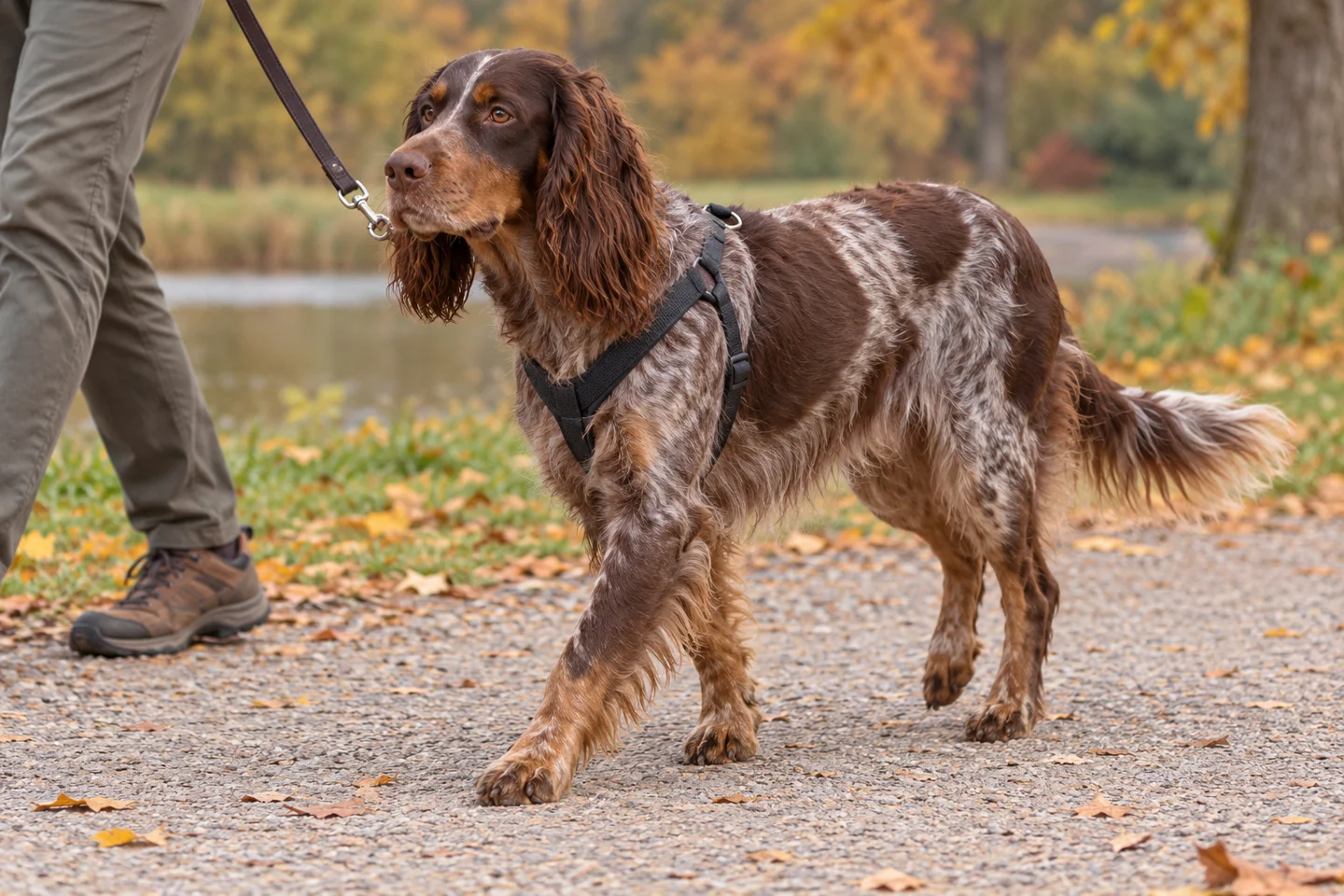
The illustrations select the brown-roan, autumn-leaf appearance described in the standard, with a brown nose, natural pendant ears, and a full feathered tail. They cannot establish a particular dog's pedigree, health, or working ability. An owner should consider daily exploration, coat checks after vegetation, safe exercise, and a quiet place to rest. Meet adults when possible and ask about their life between outings. A calm appearance in one photograph does not explain how the dog copes with a busy visitor, a running cat, or an unfamiliar veterinary examination.
Regional history and the limits of a family description
The FCI account places the breed within Picardy's pointing-dog tradition and distinguishes its coloring from that of the Blue Picardy. Its work involves searching and pointing rather than simply accompanying a person at heel. This context helps explain the value of scent and purposeful exploration. It does not require an owner to hunt or establish that every individual will behave the same way when confronted by birds or small animals.
Breed standards describe desired temperament, sometimes in enthusiastic language about family life. Treat those passages as selection ideals rather than safety guarantees. Ask a breeder what the parents actually do when children run, visitors arrive, or another dog approaches a resting place. Find out which experiences the puppies have had and how they recover after a surprise. For a rescue dog, use the history that is available and observe current behavior. Regional identity and a gentle expression are useful context, while suitability still depends on the actual animal and the household.
Adult heights from the updated French standard
The 2023 FCI standard gives males a height of 57–62 cm at the withers and females 55–60 cm. It permits a tolerance of 2 cm either way, while describing that tolerance as undesirable. The document does not set a compulsory adult weight range. Use veterinary body-condition assessment and the individual frame when planning food, rather than assigning a number from another spaniel or treating the upper height tolerance as a breeding goal.
The body is somewhat longer than its height, with strong limbs and a well-developed chest. Watch the dog walk and turn comfortably, and notice how it rises after rest. Choose a harness that fits without rubbing behind the elbows or pressing down furnishings into a tight knot. Recheck during growth and after substantial coat maintenance. Plan transport for the adult's actual length and height. A safe ramp or entry routine can be taught while the dog is well, before injury or age makes an awkward jump more difficult.
Training cooperation around scent and movement
Teach the Picardy Spaniel to check in, return at short range, wait at an opening, and settle on a mat. Reward these skills in quiet conditions before expecting them near interesting scent. Permission to explore can reinforce a comfortable response, alongside food or another suitable reward. Use a line where necessary and let returning to you lead back to safe activity sometimes, rather than always ending the outing.
Build a calm exchange for found objects before a valuable or dangerous item appears. Invite the dog away from the object and recover it without a confrontation. Avoid collar corrections, shouting, or physical punishment when it becomes distracted. Instead, reduce distance, remove the immediate temptation safely, and practice at a level the dog can manage. A reward-based professional can help if pulling, fixation, or reluctance already affects daily life. The useful question is what the animal understands in that setting, not whether a cooperative breed should obey without teaching.
Exercise with a search to solve and time to rest
Provide regular walking and investigation, with suitable opportunities to search and use scent. An active pointing dog can need more than a brief trip outside, but its schedule should still match age, condition, and recovery. Introduce longer distances and demanding terrain gradually. A puppy should not be pushed through an adult endurance plan because it keeps following eagerly. Alternate activity with genuine opportunities for uninterrupted sleep.
Check secure areas before free movement and keep recall practice controlled around wildlife. Water or marshy ground needs its own assessment of access, current, and safe exit; confidence near water is not proof that every place is safe. Carry drinking water, plan shade in warmth, and shorten the route if recovery becomes difficult. Notice stiffness, limping, or reluctance afterward. If the dog changes gait or avoids a previously easy movement, revise the activity and seek veterinary advice rather than treating enthusiasm during the outing as the final measure of comfort.

Children and the supervision behind a family companion
A family-oriented description does not remove the need for adults to supervise closely. Give the Picardy Spaniel a retreat that children cannot enter, and separate it during meals, chews, rest, and rough running games. Teach a child to invite the dog closer and pause contact so it can choose to remain. Prevent hugging around the neck, climbing over the body, and following the animal behind furniture.
Children can help with a supervised search or reward a familiar cue, while adults manage restraint and resource exchanges. Do not ask a child to remove a bowl or recover an object from the mouth. Watch for stiffness, turning away, repeated retreat, or a change in the dog's willingness to interact. End contact before warnings escalate. Familiarity with household children cannot predict comfort around a noisy visiting group. Plan separate areas during parties and use a gate whenever the supervising adult needs to focus on another task.
Aggression and the value of an accurate incident history
If a dog threatens, snaps, or bites, describe what happened before the response. Approach, location, touch, resource, and an available escape route can all matter. A Picardy Spaniel reacting when a painful ear is handled needs a different plan from one guarding a chew against another dog. Calling it protective or stubborn does not identify the change that could prevent another incident.
Create distance and protect people and animals while arranging help. Sudden changes in tolerance warrant veterinary assessment, and recurring defensive behavior needs qualified reward-based support. Avoid punishing a warning or repeating the trigger to demonstrate whether the response was serious. Use barriers, separate resources, and comfortable walking distances while training develops. If a basket muzzle is advised, introduce it gradually and fit it carefully; it is an added measure rather than permission to force an encounter. Following a bite, obtain appropriate medical advice and prioritize prevention before attempting another introduction.
Dogs, cats, and a household with several species
Begin dog introductions with separate handlers and parallel movement in a spacious place. Let both dogs pause and choose whether to approach. A Picardy Spaniel that enjoys known companions may still dislike a stranger entering its resting space or taking food. Stop repeated pursuit when one animal tries to leave, and do not assume a gentle reputation means every play style will be compatible.
At home, provide separate feeding locations and several comfortable beds. Introduce cats through barriers, maintain protected routes, and prevent chasing. The dog's interest in birds or other small animals should be discussed before adoption, with reliable separation available. Quiet behavior around a stationary enclosure does not prove that running will be ignored. Ask about previous responses while recognizing that a new environment can create new situations. If the household cannot maintain safety during feeding, cleaning, or absences, reconsider the arrangement rather than relying on affection toward people to cancel hunting interests.
Grooming feathering after vegetation and wet ground
Work gently through feathering on the ears, limbs, and tail, checking for tangles and plant material before knots tighten. The coat should be inspected to the skin, especially where a harness rubs. Use suitable tools and ask an experienced groomer to demonstrate if combing repeatedly pulls or causes avoidance. A sporting appearance should not be confused with allowing painful mats or hidden irritation to remain.
After wet outings, dry the dog appropriately and check ears for odor, soreness, or discharge. Repeated head shaking needs veterinary advice rather than a guessed cleaning routine. Maintain nails, inspect feet, and introduce tooth brushing through short rewarded sessions. Do not dig into a sore area to retrieve something you cannot see clearly. New resistance to handling may signal discomfort. The goal is a predictable routine that the dog can cooperate with, allowing ordinary care and early detection of changes without waiting until restraint becomes difficult.
Health: official hip records and the dog in motion
The French breed club provides a hip-dysplasia assessment procedure and explains official radiographic submission from twelve months of age. Ask for the actual parental classification and confirm the current local process with the club and veterinary team. A statement that a dog runs freely is not the same evidence as a properly identified radiograph and official reading. Equally, a classification should be explained in context rather than translated casually into a promise that every offspring will remain comfortable.
For the dog already in your home, note changes in rising, turning, jumping into the vehicle, or recovering after exercise. Record intermittent signs without repeatedly provoking them. Screening for breeding and investigating a present limp have different purposes, and a favorable parental report cannot rule out every cause of pain. Discuss appropriate growth, condition, footing, and activity with the veterinarian. Do not add human pain medicines or force more exercise to strengthen an unexplained problem. The individual examination should guide treatment and review.
DNA identification is not a disease clearance
The breed club's explanation of DNA records distinguishes a genetic identity profile from tests for particular health variants. A parentage profile compares markers to establish identity and relationships. It should not be advertised as proof that all inherited disease has been excluded. Ask which type of document a breeder is presenting and what question it answers before treating the word DNA as a general certificate of health.
The same caution applies to a commercial panel containing many results. A test is useful when the variant and interpretation are relevant to the breed and the decision being made. If a breeder offers additional health results, ask about that relevance and keep the reports for the veterinarian. Avoid turning an older statement about the availability of tests into a claim that no inherited illness exists. Scientific knowledge and programs can change, while clinical history remains important even when a specific genetic assay is unavailable. Confirm current requirements before planning a mating.
Meals and ordinary clinical changes
Choose balanced food appropriate to life stage and measure portions against body condition and activity. The coat can conceal gradual changes, so check ribs and waist with guidance from the veterinary team. Count training rewards and chews within the day's intake. Avoid feeding toward an invented breed weight or adding supplements simply because an online owner uses them for a sporting dog.
Secure medicines, rubbish, and dangerous foods, and contact a veterinarian promptly after suspected toxic ingestion. Provide the product and approximate amount when known rather than waiting for signs. Persistent appetite change, altered drinking, digestive problems, or unexpected weight loss needs assessment. A dog can remain eager outdoors while experiencing discomfort elsewhere. Keep records of onset, diet, medicines, and recovery. A homemade diet requires suitable formulation, and a medically restricted food should have a clear reason and review plan rather than being continued indefinitely because it once appeared to help another dog.
Mixes and choosing the individual over a familiar label
A Picardy Spaniel mix may vary in size, coat, scent interest, pursuit, and comfort with strangers. A crossbreed name cannot promise the same appearance with fewer care needs. For a planned litter, discuss relevant assessment in both parental backgrounds and the breeder's reason for the mating. For a rescue dog with uncertain history, observed behavior and clinical findings are the practical starting points.
Meet the actual animal in more than one manageable setting when possible. Ask about rest, travel, visitors, and other species rather than only whether it likes walks. A family that enjoys patient teaching and outdoor exploration may provide a suitable routine, while a home expecting minimal activity and effortless off-lead reliability should reconsider those requirements. Be honest about absences, stairs, neighbors, and available carers. Matching the real dog's needs to the household is more useful than trying to obtain a regional breed name while hoping that inconvenient characteristics will disappear.
Costs and arranging competent cover
Obtain local estimates for food, preventive care, grooming support, equipment, travel, training, and emergency treatment or insurance. Check exclusions and whether specialist assessment would be accessible if needed. A secure garden boundary and safe vehicle arrangement belong in the budget. A person who can offer a bed but cannot manage lead walking or coat checks may be unable to cover an absence comfortably.
Introduce a potential carer while you are present and write down the routine, veterinary contacts, and any known sensitivities. Rehearse a handover rather than leaving it to an emergency. Include instructions about wildlife, cats, food, and how the dog is secured when doors open. Confirm that the carer can provide the necessary separation if other animals are present. Practical preparation should cover ordinary inconvenient days as well as ideal outings, because illness, work changes, and wet weather can alter a plan that initially seemed straightforward.
dogsDating introductions without borrowing a family-safety promise
Describe the Picardy Spaniel's current social habits on dogsDating, including preferred walking partners and situations that call for more room. Keep exact home coordinates and your address private. Use an approximate area to choose a public location with broad paths and separate exit routes. Avoid a first introduction where loose birds, small animals, or a crowded gate make calm movement difficult.
Start with separate handlers walking in the same direction at a comfortable distance. Let contact remain optional and keep toys or shared food out of the encounter. Watch for stiffness, repeated avoidance, fixation, or trouble settling after excitement. Change distance or leave when necessary. A peaceful short walk offers useful evidence even without play. Discuss what both people observed afterward and arrange another meeting only if the plan suits both dogs, rather than relying on a breed account's description of a gentle household companion.
Sources and editorial notes
Sources checked October 22, 2026. Breed measurements describe reference ranges, not a diagnosis or an individual dog's ideal weight. Images are AI-generated breed illustrations and do not document a particular dog or health condition.
- AVSAB: Humane Dog Training Position Statement
- VCA Animal Hospitals: Food aggression in puppies
- VCA Animal Hospitals: Common emergencies in dogs
- Orthopedic Foundation for Animals: CHIC health screening programs
- VCA Animal Hospitals: Aggression toward unfamiliar dogs, diagnosis
- VCA Animal Hospitals: Grooming and coat care for your dog
- VCA Animal Hospitals: Ear infections in dogs (otitis externa)
- AAHA: Feeding plans for healthy, appropriate weight cats and dogs
- VCA Animal Hospitals: Heat stroke in dogs
- AVSAB: Puppy Socialization Position Statement
- VCA Animal Hospitals: Dog behavior problems, aggression toward children
- FCI Picardy Spaniel standard 108, August 2023: brown coloring, proportions and sex-specific adult heights
- Club des epagneuls de Picardie et Pont Audemer: official dysplasia radiography and reading procedure
- Club des epagneuls de Picardie et Pont Audemer: distinction between DNA identification, health tests and trait tests
Keep getting to know dogs.
Read another guide or return to your dogsDating community.
Explore breed guidesBack to dogsDating