Plott Hound
An American brindled scenthound, with named UKC size references, secure exercise plans and practical guidance on individual health evidence.
How these guides are researched and reviewed
- Origin
- United States
- UKC adult male standard
- 22–27 inches; 50–75 pounds
- UKC adult female standard
- 21–25 inches; 40–65 pounds
- Illustrated coat
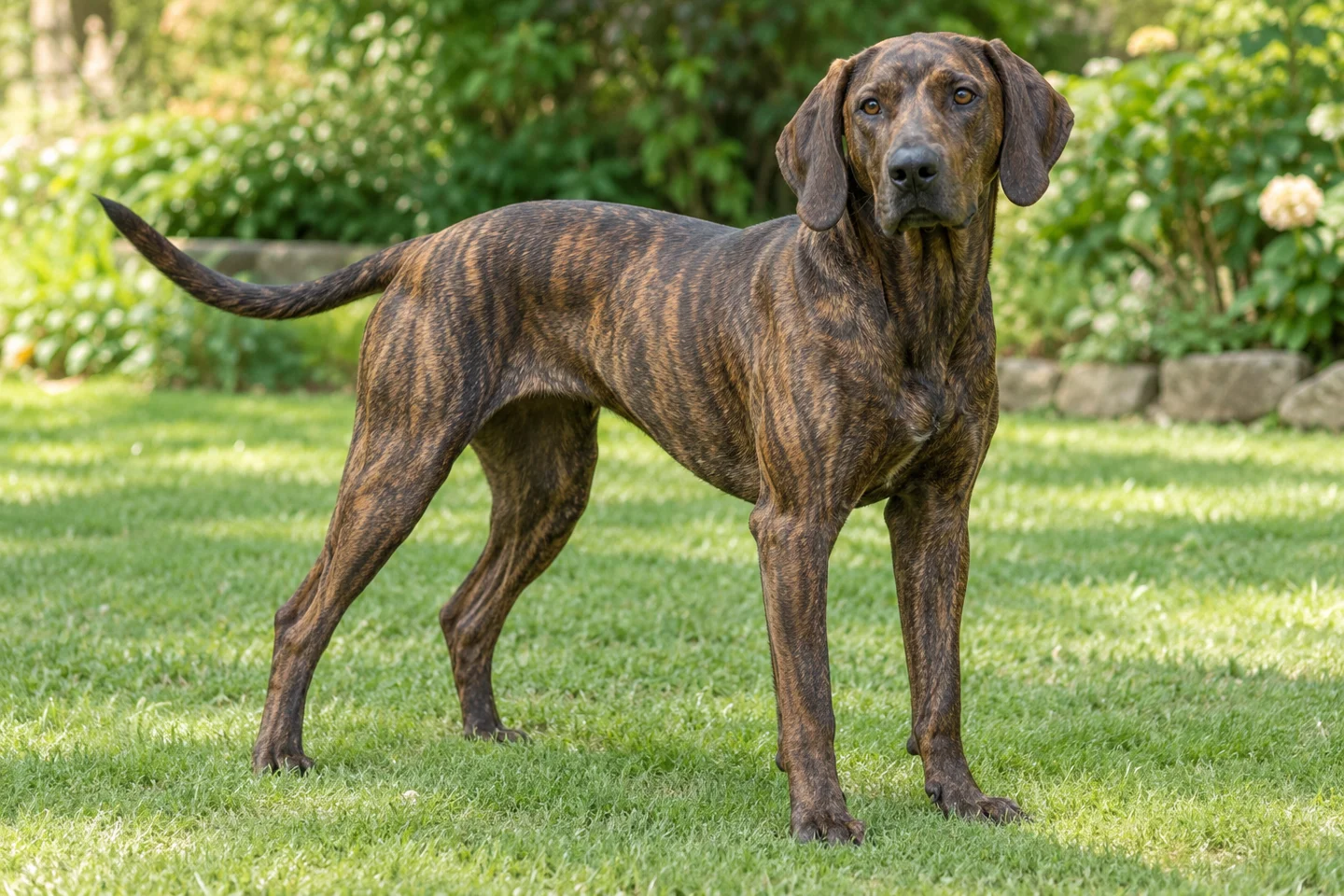
- Dark brindle short coat
General information for owners. These articles have not been reviewed by a veterinarian. Medical decisions need your dog's history and an examination.
An American scenthound with a brindled identity
The Plott Hound is an American scenthound with a muscular, athletic body and a coat often marked with brindle stripes. The name refers to a particular breed, rather than any dark-striped hound or a generic cross. Ask which registry records the dog and examine identifiable parentage when buying a puppy. For a rescue with uncertain background, observed behavior and veterinary findings remain more useful for daily care than a confident guess from coat color.
The illustrations show a dark brindle dog with natural hanging ears and a full tapered tail. A powerful appearance does not establish that the dog is physically ready for every activity or automatically suited to every home. Think about scent-led walks, secure boundaries, visitors, and access to smaller animals. Meet adults in ordinary settings and ask what happens when activity ends. The relevant ownership question is whether the household can provide a workable routine, including quiet days and absences, rather than whether it admires the image of a determined hunting dog.
Plott family history and the modern home
The UKC account connects the breed's development to the Plott family in North Carolina and records UKC registration in 1946. Its work involved challenging game and selection for useful hunting ability. That context explains why owners should discuss persistence and pursuit honestly. It does not require a companion dog to confront wildlife, nor does a hunting description establish that the animal will make safe decisions independently in a public place.
Ask what the parents do outside work and how puppies are prepared for household life. A dog accustomed to an active group may need deliberate teaching about quiet separation, travel, and unfamiliar handling. A successful working record cannot answer all of those questions. For an adult adoption, gather the history available and watch recovery after manageable experiences. A dog can appear composed during one meeting while needing more time to adjust to a new address. Breed history provides context, but the actual animal and available management determine the first practical care plan.
Adult dimensions depend on the named registry
This guide uses the UKC standard for its adult dimension references. It gives males 22–27 inches at the withers and 50–75 pounds, with females 21–25 inches and 40–65 pounds. Other registries publish their own figures, so avoid combining the lower end from one with the upper end from another and presenting that as a single official range. Check the standard relevant to the dog's registration when discussing conformation.
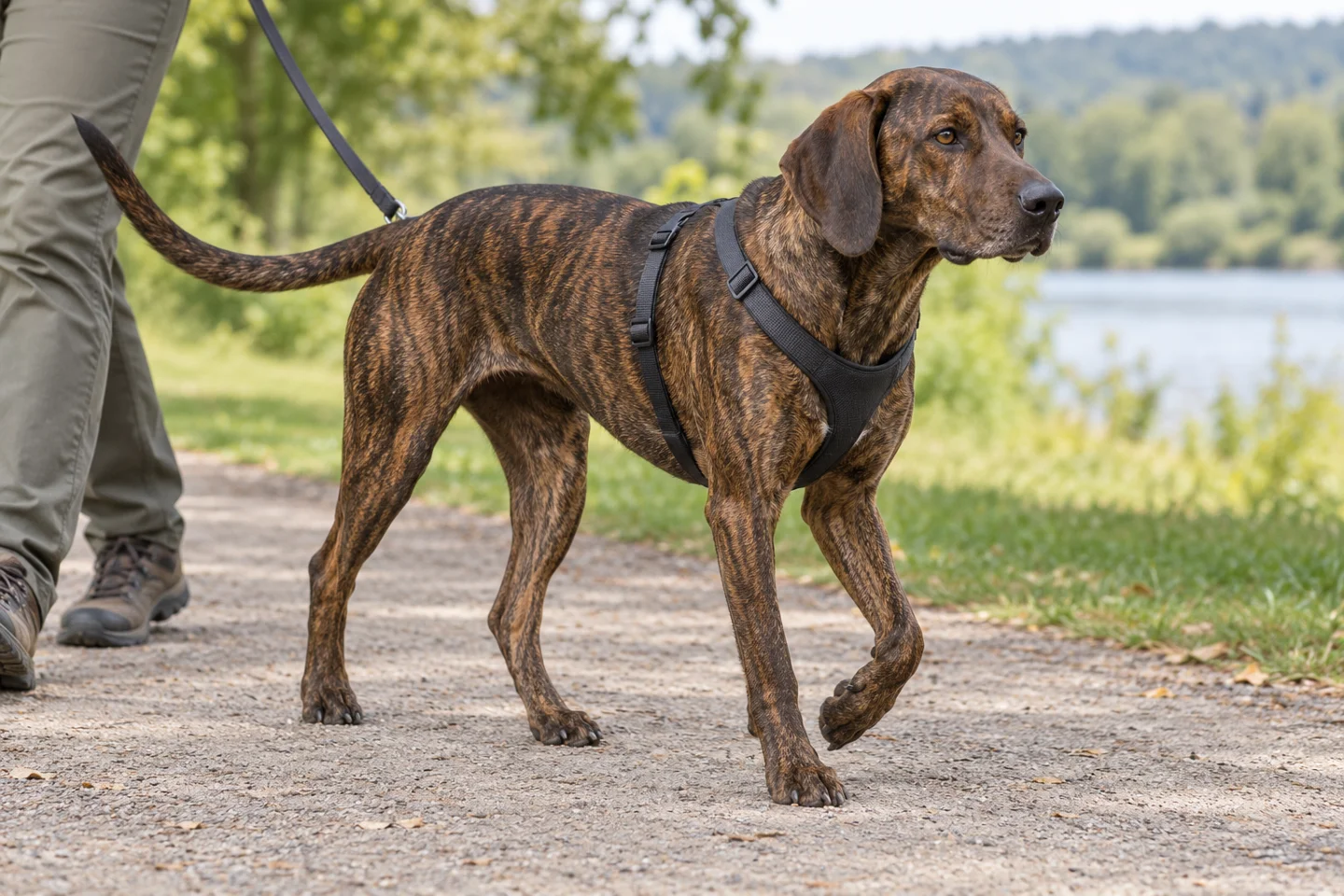
These adult references are not feeding targets. A veterinarian should assess the individual frame, waist, ribs, and muscle condition. A strong hound can carry excess weight while remaining enthusiastic outside. Choose transport and walking equipment for the grown dog and recheck fit through development. The harness should allow shoulder movement without rubbing behind the elbows, and a vehicle setup needs room for comfortable positioning. Think through how an injured adult would reach care, including who could help if it could not climb into the car under its own power.
Brindle and other accepted appearance details
Brindle describes stripes of darker or lighter hair against a contrasting background; it is a pattern rather than a guarantee of ancestry. The UKC standard also describes other accepted colors, so a dog should not be identified or rejected from the illustrated brindle choice alone. Ask for the registry's actual requirements if a seller uses a rare-color claim to explain a substantial difference from familiar images.
The coat is short to medium and smooth in appearance, with a functional hound outline rather than an exaggerated heavy body. The ears hang naturally and the tail is full. A puppy will have less mature muscle and different proportions from a posed adult. Illustrations can show the selected features but cannot demonstrate sound gait, hearing, or clinical health. Look at normal movement, ask about examination findings, and confirm identities on records. A polished photograph or a striking stripe pattern should support interest in meeting the dog, not replace the evidence needed to choose responsibly.
Training a strong response before the scent becomes urgent
Teach attention, recall at short range, waiting at openings, and moving away from food preparation. Start where the dog can succeed and reward promptly. Permission to inspect a safe smell can reinforce comfortable walking alongside food rewards. This gives the Plott a useful reason to cooperate rather than making every lead movement a contest about abandoning the environment. Add more interesting settings gradually.
Use appropriate physical safety while learning continues. A long line in suitable open ground can help, provided it is kept clear of people, other animals, and obstacles. Teach exchanges with ordinary objects before a dangerous find appears. Avoid reaching into the mouth, jerking the collar, or physically confronting the dog when it is already aroused. A reward-based professional can help with pulling and disengagement before strength makes outings unsafe. If a response fails, review distance, distraction, fatigue, and understanding instead of assuming a determined dog needs a harsher lesson.
Exercise built around condition rather than reputation
Plan walking, scent searches, and suitable play according to the dog's age, health, and current fitness. A hunting reputation cannot establish readiness for a long outing over difficult terrain. Increase demands gradually and note recovery after activity. Puppies need rest and manageable movement, while an older dog may enjoy a shorter trail even if its previous distance is no longer appropriate. Avoid using repeated high-speed chasing as the only measure of a successful day.
Carry water and choose cooler periods in warmth. Check surfaces and avoid routes where a line could catch around unstable obstacles. Watch for a change in stride or difficulty recovering, then shorten the outing and seek advice as needed. Stiffness or reluctance the next morning matters even if the dog remained eager at the time. Safe exercise includes the ability to return comfortably and rest afterward. It does not require proving endurance or keeping up with a schedule designed for a fitter dog seen online.

The boundary plan before the first escape
Inspect the whole enclosure before relying on it: gates, gaps, loose panels, and places where digging or climbing could create access. A Plott noticing scent outside the garden may make a choice quickly. Teach waiting while a door opens, but retain physical management while the skill develops. A gate routine should work when a delivery arrives and another person is distracted, not only during a carefully rehearsed training session.
Keep identification and registration details current and ensure carers understand the same entrance rules. A location device may assist recovery but cannot replace a lead, fencing, or supervision. Do not let the dog rehearse running the boundary at passing animals and then expect easy disengagement later. Use visual screening, quieter outside time, or a different resting area when necessary. If escape has already occurred, identify how it happened and repair that route before repeating access, rather than treating a safe return as proof that the next outing will also end well.
Socialization with ordinary life at a useful distance
A puppy needs manageable experiences with people, dogs, equipment, surfaces, and sounds. Let it observe without being forced into contact and pair unfamiliar events with something pleasant. A calm person who respects distance can be more useful than a crowd eager to stroke the puppy. Coordinate exposure with veterinary disease-prevention advice and choose controlled places where you can change the plan or leave.
Practice quiet passing and returning attention as well as greetings. If the dog stiffens, repeatedly retreats, or cannot respond to a familiar easy cue, lower the challenge. Continue this work as it matures and after major changes in environment. An adult rescue needs the same respect for its starting point. Do not assume a confident body or a bold breed description means the animal understands lifts, busy waiting rooms, or strangers carrying equipment. Assess recovery afterward, including whether the dog can rest, rather than judging success solely by the absence of barking during the event.
Children and excitement beside a substantial hound
Adults should arrange calm interactions and separate the Plott from children during rough play, food, chews, and rest. A friendly dog can knock a child over, and running can increase excitement quickly. Teach children to invite the animal closer, pause touching, and let it leave. Prevent neck hugging, climbing, ear pulling, or following the dog behind furniture. A bed should remain a protected retreat.
Children should not take objects from the mouth or remove bowls to test trust. Adults can teach exchanges separately and involve children in safer tasks such as a supervised search or rewarding a familiar cue. Notice stiffness, turning away, and repeated avoidance before a warning escalates. Familiarity with one child does not establish safety around every visiting group. Use gates whenever adult attention must move to cooking, another child, or a phone call. Supervision is an active task, and physical separation is a useful arrangement when close observation is not possible.
Aggression in context rather than borrowed hunting language
Some breed descriptions use strong language about behavior toward quarry. That should not be translated into a diagnosis of a companion's response to people or dogs. Assess the actual event: who approached, what the dog possessed, where it was, and whether it could retreat. A Plott guarding a chew requires different immediate management from one reacting during painful handling. Record the sequence and prevent another exposure while help is arranged.
Sudden changes warrant veterinary assessment. For recurring threats or bites, seek qualified reward-based behavior support rather than punishment or a contest of strength. Move others away from tension and avoid deliberately recreating the trigger to prove the dog means it. Use barriers, separate resources, and suitable walking distances. A basket muzzle can add protection when introduced gradually, but cannot make an overwhelming encounter appropriate. After a bite, obtain suitable medical advice and build reliable prevention before attempting another meeting. Warning signals should lead to a change in the plan, not an invitation to challenge the animal.
Other dogs and small animals need separate questions
Begin dog introductions with parallel walking and separate handlers in a spacious place. Look for voluntary approaches and the ability to pause. A dog that enjoys known companions may still object to being rushed or crowded while sniffing. Stop repeated pursuit when one animal tries to leave. At home, provide separate feeding locations and resting choices rather than assuming all resources can be shared from the first day.
Cats, rabbits, birds, and wildlife require their own safety plan. Introduce cats through secure barriers and preserve routes they can use without passing close to the dog. Prevent chasing rather than testing whether the dog will stop after one run. Keep vulnerable pets reliably separated and consider what happens during cleaning or when the normal handler is absent. A peaceful response to a stationary enclosure does not establish safety during movement. If separation cannot be maintained, discuss suitability before adoption instead of assuming affection toward the family removes pursuit interests.
Grooming and the outdoor inspection routine
Brush gently and inspect the skin, feet, and areas beneath equipment after exploring. A short coat makes some findings visible, but does not rule out ticks, small wounds, or a painful contact point. Check between toes and around nails without digging into tissue. Persistent licking, swelling, or limping needs advice, and a dog that still wants to run can nevertheless be uncomfortable.
Look for ear odor, soreness, discharge, and head shaking, using veterinary guidance rather than leftover drops. Avoid inserting tools deeply into the ear. Maintain nails and teach tooth brushing through brief rewarded steps. A stable nonslip surface can make care easier than trying to hold the dog while it slides. If handling resistance consistently concerns one area, investigate discomfort before increasing restraint. Ask an experienced groomer or veterinary nurse to demonstrate difficult tasks so routine care remains predictable and you can notice a change without turning every inspection into a struggle.
Health: an empty testing list is not proof of no disease
The AKC's current hound testing page lists no recommended health tests for the Plott Hound. That is a statement about the published recommendation list, not evidence that the breed cannot develop inherited or acquired illness. Ask a breeder what assessments it actually uses, which problems have occurred among relatives, and how later diagnoses are communicated. If additional tests are offered, identify their purpose and relevance rather than counting the total on a panel.
For an individual dog, build a veterinary plan from examination, history, lifestyle, and available family information. Missing records in a rescue should be acknowledged without turning uncertainty into either a diagnosis or a guarantee. Keep changes in movement, exercise recovery, skin, appetite, and behavior documented. A favorable routine visit cannot predict every future condition, while a working record does not substitute for clinical assessment. Avoid borrowing a mandatory testing checklist from another coonhound simply to make a sparse evidence base look more complete.
A medical handover after a demanding outing
If the dog becomes unwell outdoors, tell the veterinarian about weather, terrain, duration, water access, possible injury, and any suspected ingestion. Those details may guide the next step more usefully than describing the animal as a tough hunting hound. Know the emergency route before leaving and consider how an adult could be moved if it could no longer walk. Carry contact information where another person can find it.
Collapse, severe breathing difficulty, significant bleeding, or rapidly worsening distress requires urgent veterinary contact. Do not delay because the dog previously recovered quickly from hard exercise. Avoid human medicines or a guessed home remedy while waiting for advice. If the problem is intermittent rather than urgent, a safely recorded video and notes about timing can help the examination. Do not repeatedly provoke a painful movement to improve the recording. Clinical decisions should follow the dog's current findings and the sequence of events, not the reputation of its breed.
Meals, mixes, and the actual household budget
Measure meals, count rewards, and review body condition with the veterinary team. A strong appetite is not a portion guide, and a muscular dog can still gain unnecessary fat. Use balanced food appropriate to life stage and adjust with changes in activity or health. Persistent appetite, digestion, drinking, or weight changes deserve assessment. Homemade food requires suitable formulation, while supplements should have a clear purpose.
A Plott mix may vary in size, coat, voice, sociability, and pursuit. A crossbreed name cannot promise an easier hound or eliminate medical uncertainty. Ask about both parental backgrounds for a planned litter and use observed behavior for a rescue. Budget locally for preventive and emergency care, secure boundaries, transport, equipment, training, and competent cover during absences. Rehearse a handover and provide written entrance and walking rules. A home that enjoys patient teaching and exploration may fit; one requiring effortless silence or untrained recall beside wildlife should reconsider those expectations.
dogsDating walks with a clear exit plan
Describe the Plott's actual preferences on dogsDating, including whether it likes a calm walking partner, needs space from rushing dogs, or becomes highly focused near wildlife. Keep exact home coordinates and your address private. Choose a public meeting place from an approximate area, with broad paths and separate ways to leave. Avoid starting at a crowded gate, beside loose small pets, or inside the dog's home.
Begin apart and move in the same direction. Each adult should attend to one dog, leaving toys and shared food out of the meeting. Let direct contact remain optional and change distance if either animal stiffens, retreats, or cannot disengage. A short walk can provide useful information without play. Compare recovery and comfort afterward before arranging another encounter. Neither person should feel obliged to continue because the dogs are both hounds or expected to enjoy rough activity; the actual response is what determines whether another outing is suitable.
Sources and editorial notes
Sources checked October 22, 2026. Breed measurements describe reference ranges, not a diagnosis or an individual dog's ideal weight. Images are AI-generated breed illustrations and do not document a particular dog or health condition.
- AVSAB: Humane Dog Training Position Statement
- VCA Animal Hospitals: Food aggression in puppies
- VCA Animal Hospitals: Common emergencies in dogs
- Orthopedic Foundation for Animals: CHIC health screening programs
- VCA Animal Hospitals: Aggression toward unfamiliar dogs, diagnosis
- VCA Animal Hospitals: Grooming and coat care for your dog
- VCA Animal Hospitals: Ear infections in dogs (otitis externa)
- AAHA: Feeding plans for healthy, appropriate weight cats and dogs
- VCA Animal Hospitals: Heat stroke in dogs
- AVSAB: Puppy Socialization Position Statement
- VCA Animal Hospitals: Dog behavior problems, aggression toward children
- United Kennel Club: Plott Hound official standard, history, coat and adult dimensions
- American Kennel Club: Plott Hound breed identity and American background
- American Kennel Club: Hound Group health testing list, Plott Hound entry
Keep getting to know dogs.
Read another guide or return to your dogsDating community.
Explore breed guidesBack to dogsDating