Podenco Canario
A lean Canary Islands hunting dog, with guidance on pursuit, secure routines, regional parasite history and individual clinical care.
How these guides are researched and reviewed
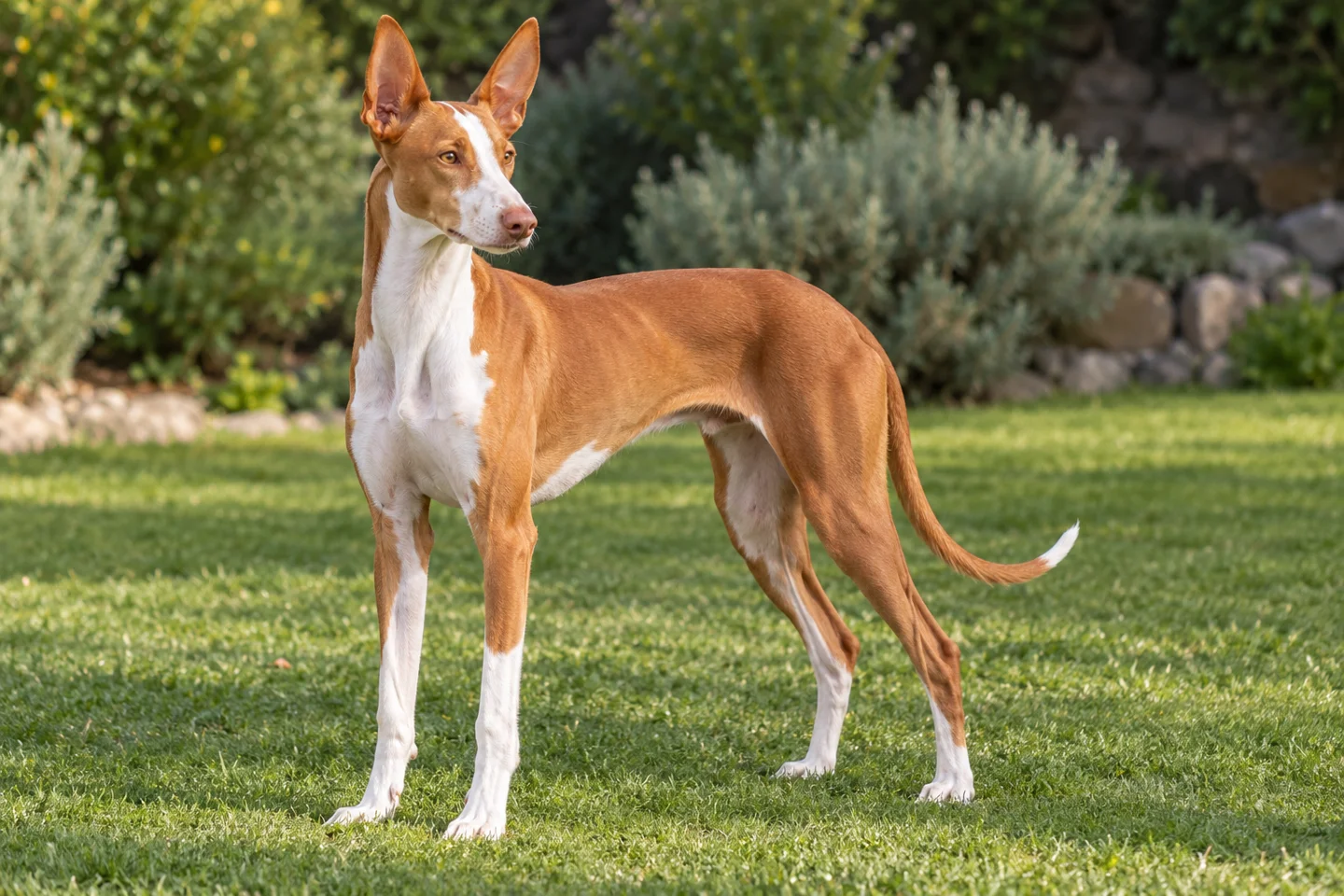
- Origin
- Spain, Canary Islands
- Adult male height
- 55–64 cm
- Adult female height
- 53–60 cm
- Standard tolerance
- Up to ± 2 cm when breed type is maintained
- Illustrated coat
- Short red and white
General information for owners. These articles have not been reviewed by a veterinarian. Medical decisions need your dog's history and an examination.
A Canary Islands hunting dog with a lean outline
The Podenco Canario is a Spanish hunting breed associated with the Canary Islands, with a short coat, large natural ears, and a lean muscular body. It is a distinct breed from the Ibizan Hound and the Portuguese Podengo, even though related-looking names and upright ears can confuse searches. Confirm the full identity on documents before applying another breed's measurements or health recommendations to a puppy.
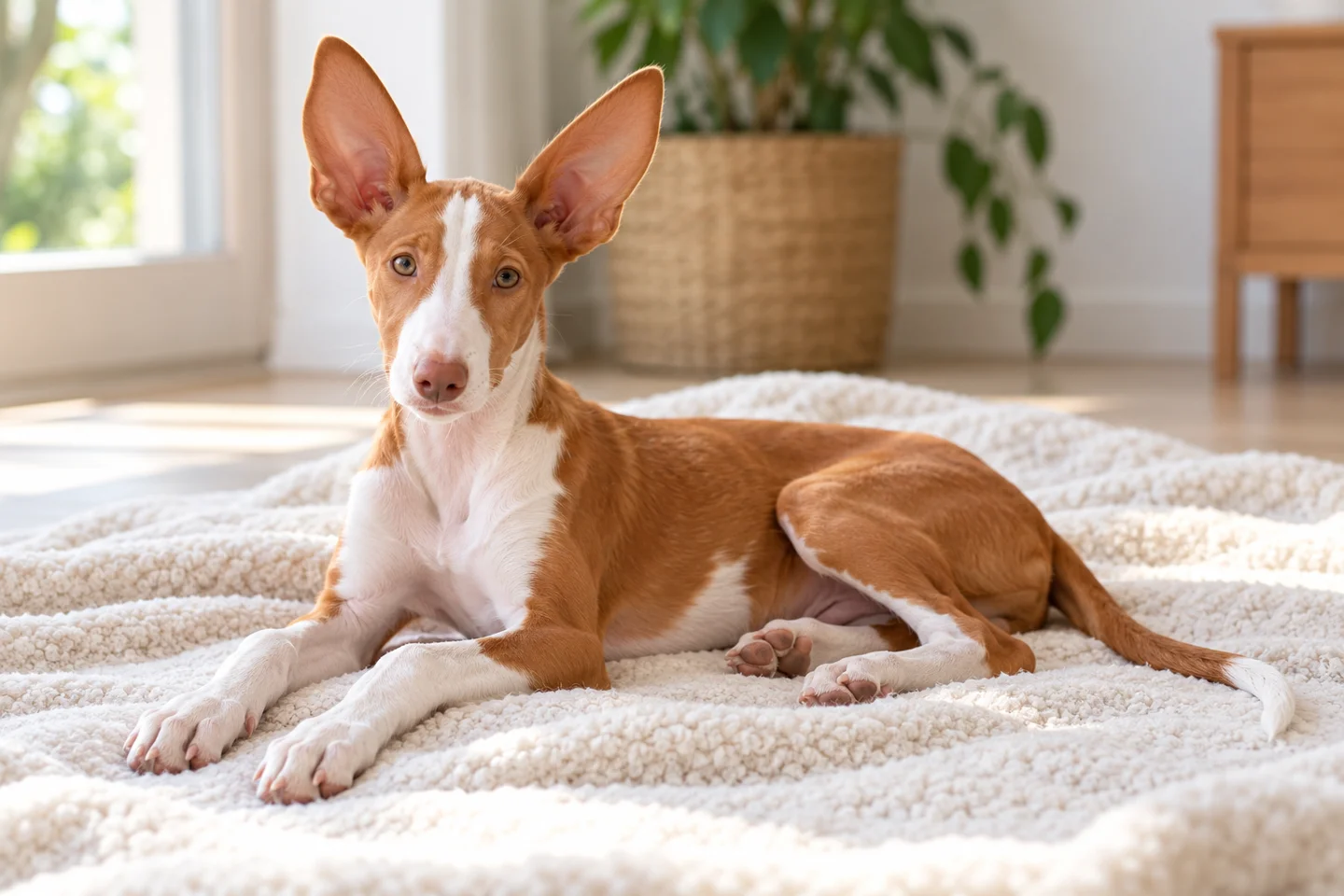
The illustrations show a red-and-white dog with natural ears and a full tail. The body should look athletic, with usable muscle and normal anatomy. A lean breed description does not excuse emaciation, poor feeding, or an unexplained loss of condition. Owners should plan safe movement, secure boundaries, and the ability to keep vulnerable animals apart. Meet adults in ordinary conditions and ask how they settle, travel, and respond to handling. The appeal of an alert face needs to be weighed alongside the routine required by a dog that may notice prey before its person does.
Canarian work without inventing an individual ancient pedigree
The FCI standard describes a rabbit-hunting dog used across the Canary Islands and places its work in varied, demanding terrain. Such accounts provide useful context for scent, movement, and persistence. Historical origin stories in breed literature should not be treated as proof that a modern puppy has a documented personal line extending through a named ancient civilization. Ask for the actual registry information and the records of the parents.
For a companion, investigation can be provided through managed searches and walks rather than access to wildlife or unsafe burrows. Ask a breeder what life looks like between working days, including quiet time and contact with unfamiliar people. A task-focused dog still needs domestic learning. For an adopted animal, previous kenneling, transport, and household experience can matter more immediately than a broad description of the breed. Gather that history when possible and assess the current response to a new setting instead of assuming an active background guarantees confidence everywhere.
Adult heights and interpreting a visibly lean body
The FCI standard gives males 55–64 cm at the withers and females 53–60 cm. It allows deviations of 2 cm beyond those limits when breed type is maintained. These are conformation references rather than a target for selecting extreme size. The standard does not set a compulsory adult weight range. Use the dog's frame, growth, and veterinary condition assessment when deciding how much to feed.
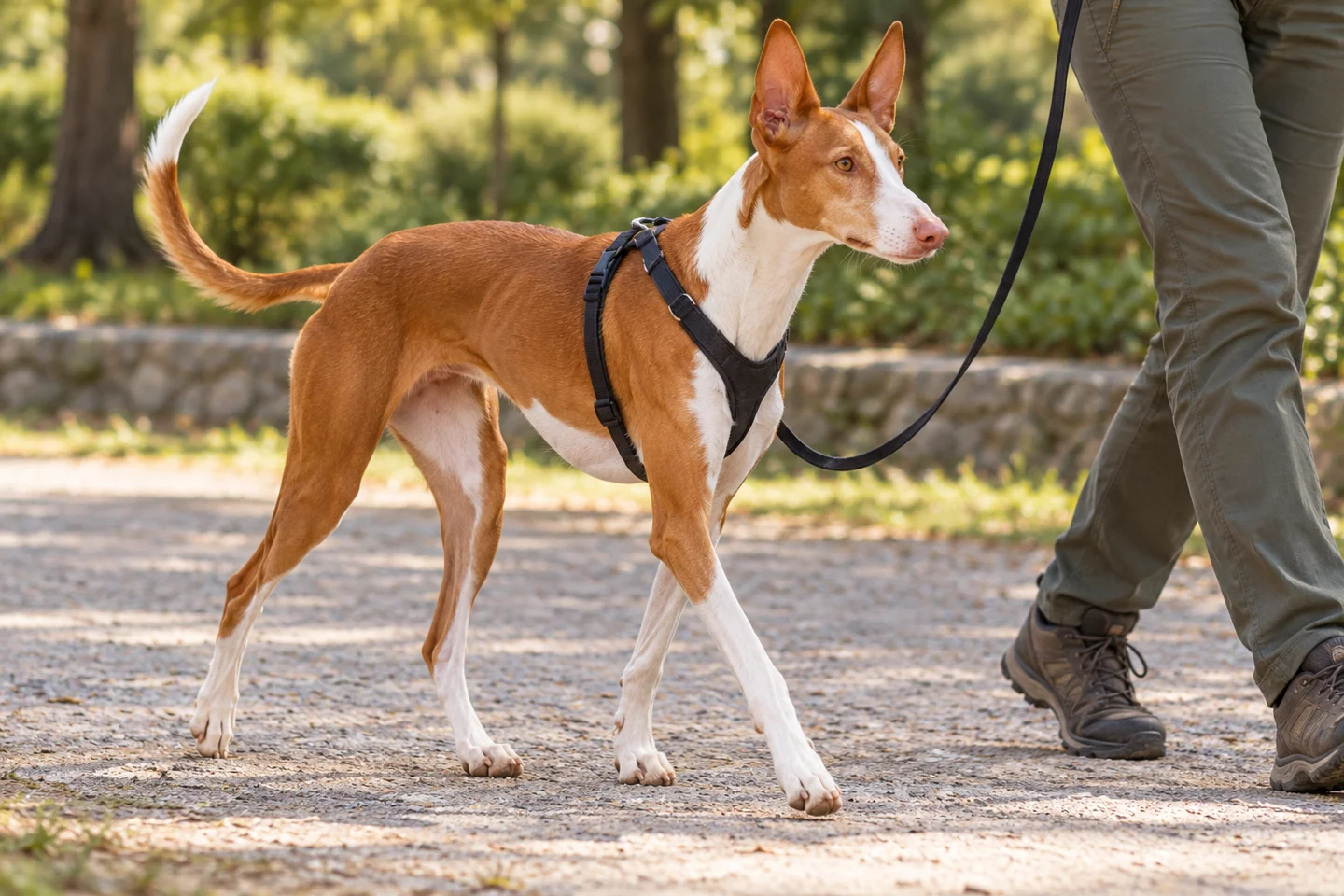
The lean outline can make ribs and muscle more apparent than in a heavily coated dog. Have a veterinarian explain what is appropriate for the individual rather than trying to hide every contour or accepting any degree of thinness as normal. Changes over time are especially useful. Record weight, appetite, activity, and muscle loss if they occur. Select a harness for the deep chest and narrow waist, checking whether the dog could back out. Recheck fit during growth and inspect contact points after walks so friction does not become a hidden source of discomfort.
Red and white, natural ears, and a full tail
The coat is short, smooth, and dense, with red and white combinations described by the standard. Red can vary in intensity. The ears are naturally large and carried erect when attentive, while the full tail tapers and should remain anatomically normal. Do not assume that ear carriage in a developing puppy must look identical to that of a posed adult, or manipulate the ears to match an illustration.
A picture can show selected breed features, but cannot verify pedigree, health, or movement. Look at the animal walking and turning on an ordinary surface. If a seller emphasizes an unusual color, ask how the claim relates to the standard and why it should matter more than clinical records or temperament. Keep physical inspection gentle and manageable. A dog that avoids a particular touch needs time and possibly assessment, rather than a conclusion that a lean hunting breed should tolerate any handling because it is described as resilient.
Training a useful return before pursuit starts
Teach attention, a hand target, and returning from short distances where success is likely. Reward promptly and allow a return to safe exploration on some repetitions. The handler should become relevant during the walk rather than appearing only when everything interesting is removed. Use suitable physical management while recall develops, particularly around sudden movement, wildlife scent, and openings near a road.
Practice waiting at a door, moving away from a gate, and exchanging an ordinary object. Avoid grabbing the collar or reaching into the mouth as the first response to a problem. A reward-based professional can help choose distances and build a plan when fixation or pulling already limits safe outings. Do not test recall by releasing the dog beside prey and hoping affection will override the situation. Training progresses through manageable practice, and a reliable response in a quiet garden is not yet evidence that every distraction can be handled off lead.
Exercise with terrain, temperature, and recovery in mind
Provide walking, sniffing, and suitable controlled activity, adjusting to age, health, fitness, and environment. Introduce more difficult terrain gradually. A puppy needs rest and ordinary exploration rather than forced running to match a working description. An older dog can enjoy a shorter search even when its previous pace is no longer suitable. Notice comfort after the outing as well as enthusiasm during it.
Carry water and choose cooler periods in hot weather. A dog developed in a warm region can still suffer heat illness, and a short coat does not protect it from every exposure. In cold or wet conditions, suitable shelter or clothing may help, provided fit and temperature are checked. Inspect pads after rough surfaces and avoid places where a line can catch around unstable obstacles. If the dog changes stride, struggles to recover, or appears stiff the next morning, revise the plan and obtain veterinary advice where needed rather than continuing to build endurance by guesswork.
Secure boundaries and a travel plan that works twice
Check gates, gaps, weak panels, and climbable objects before relying on an enclosure. Teach entrance routines, but keep physical safety in place while learning develops. An animal noticing movement outside the boundary may act before the person has time to respond. A tracking device may help recovery, but it does not prevent access to traffic, injury, or distress. Keep identification and registration details current.
Travel needs the same attention at both ends. Secure the dog before opening a vehicle door and decide where the lead will attach before arrival. Rehearse loading with rewards while everyone is calm, using a stable nonslip surface. Choose a restraint or carrier that allows comfortable positioning for the adult. Tell carers the exact routine and practice it together. A dog that remains still on one journey may react differently after a long wait, a frightening sound, or an exciting smell near the destination. Safe arrangements should not depend on repeating the easiest journey indefinitely.
Socialization that allows a cautious dog to observe
Offer manageable experiences with people, dogs, sounds, surfaces, and equipment. Let the puppy watch from a distance where it can remain comfortable and pair novelty with rewards. Contact is optional. A visitor can stand or sit sideways and allow the dog to approach rather than leaning over the head or reaching for the ears. Keep a route away available.
If the dog stiffens, stops responding to an easy cue, or repeatedly tries to leave, reduce the challenge. Practice calm passing without greeting as well as meeting suitable partners. Continue through adolescence and after major changes. An adult rescue may need a careful introduction to a household, especially if previous experience differs from the new environment. Use observed comfort rather than assuming that maturity or a lean athletic appearance supplies confidence. Successful learning includes recovery and rest afterward, not simply remaining physically present while people decide the exposure has lasted long enough.
Children and the management of running games
Adults should supervise closely and separate the dog during rough play, meals, chews, and rest. A Podenco Canario can react quickly to movement, and a child running past may create excitement even when quiet contact is usually affectionate. Teach children to invite the animal toward them, touch briefly, and allow it to leave. Prevent hugging, climbing, ear pulling, and chasing the dog into a bed.
Children should not remove objects from the mouth or take bowls away to prove trust. Adults manage exchanges and necessary restraint, while children can participate in a supervised search or familiar cue. Watch turning away, stillness, and repeated retreat before a warning escalates. Familiarity with one child cannot establish safety around every noisy visiting group. Explain the routine to visiting adults and use a gate when attention must move elsewhere. Supervision is active observation, and reliable separation is the appropriate arrangement when cooking, a call, or another child's needs prevent it.
Aggression and a response based on circumstances
Threats, snaps, and bites need attention without assigning a personality label from the breed. Record the lead-up: approach, touch, resource, location, and whether the dog could leave. An animal reacting when a sore foot is handled needs a different immediate plan from one guarding food. Increase space and prevent another exposure while the cause is investigated. Do not repeat an approach to prove whether the warning was serious.
Arrange veterinary assessment for a sudden change in tolerance and qualified reward-based help for recurring defensive behavior. Punishing a growl can remove information without resolving fear or pain. Use barriers, separate resources, and appropriate walking distance while the plan develops. A basket muzzle may add protection when introduced gradually and fitted comfortably, with checks for rubbing on the short-haired face. It should not be used to force contact that the dog is trying to avoid. After a bite, obtain suitable medical advice and prioritize prevention before another meeting is attempted.
Cats, rabbits, and other animals that may trigger pursuit
Discuss small-animal safety before adoption. Introduce cats through secure barriers and maintain routes that do not require passing close to the dog. Prevent chasing instead of allowing a trial run to discover whether it stops. A cat remaining still may be frightened, and quiet observation of a stationary animal does not prove that sudden movement will be ignored later.
Rabbits, birds, and similar pets need reliable physical separation. Think through ordinary cleaning and feeding, who opens doors, and what happens when the normal handler is absent. Ask about the individual's history while recognizing that a new setting may create a different response. Training can improve cooperation but cannot guarantee safety around every moving animal for life. If the home cannot maintain separation when necessary, reconsider the arrangement rather than hoping affection toward people will erase hunting interests. The welfare of existing pets needs the same attention as the needs of the dog being considered.
Dog companions and introductions that remain voluntary
Start with separate handlers and parallel walking where both dogs have room to turn away. Let direct contact develop only if movement remains comfortable. Stop repeated pursuit when one animal tries to leave, and avoid interpreting silence as proof that play is mutual. A dog can be overwhelmed without growling. Choose partners for compatible behavior rather than assuming that similar size or upright ears establish a match.
At home, feed separately and provide resting choices that cannot all be blocked by one dog. Remove valuable items during early shared time and observe recovery after meetings. A pleasant walk does not answer every question about a narrow hallway, sofa, or meal-preparation area. Prepare barriers before the new animal arrives so separation remains practical. Compatibility may require continuing management around particular situations, and each dog should have time when it can rest without being followed. A short calm encounter provides more useful information than prolonged excitement that nobody can interrupt easily.
Grooming and inspection after rough ground
Brush the short coat gently and check skin, pads, nails, and equipment contact points after exploring. Look for small wounds, parasites, and plant material without digging into tissue. A persistent sore, swelling, or repeated licking needs advice. A dog can remain motivated to move while experiencing pain, so enthusiasm should not replace the inspection or a clinical assessment when signs persist.
Check the ears for odor, discharge, redness, and head shaking. Naturally upright ears can still become inflamed, and shape alone cannot identify the cause. Use products as advised for the individual and avoid putting tools deeply into the canal. Maintain nails and introduce tooth brushing through brief rewarded sessions. Use a stable nonslip surface and pause before handling becomes a struggle. If resistance repeatedly concerns one area, investigate discomfort rather than deciding the animal needs firmer restraint. Ask a professional to demonstrate difficult care tasks so the routine remains predictable and manageable.
Health: heartworm evidence needs its date and setting
A University of Las Palmas de Gran Canaria report published in 2010 discussed heartworm findings in Podenco Canario dogs in the islands and the importance of preventive care. It is useful regional evidence, not a current worldwide prevalence estimate or proof that infection is an inherited breed defect. A dog moved from the islands should have its previous location, preventive history, and available results reviewed by the receiving veterinarian.
The American Heartworm Society explains that mosquitoes transmit the infection and that early disease may produce few obvious signs. Outdoor enthusiasm cannot establish that a dog is free of infection. Ask the veterinary team about testing and prevention suited to where the dog has lived and will travel. Do not select a drug or treatment schedule from a breed article, especially when previous preventive use is uncertain. Keep dates and results accessible to carers and future clinics so a change of location does not erase relevant exposure history.
Clinical assessment beyond an inherited-disease checklist
A complete verified universal health-testing protocol for this breed was not established for this guide. Ask a breeder which assessments it uses and request identifiable reports rather than a claim that working dogs are naturally free of illness. A commercial panel needs interpretation: which variants are relevant, what has been tested, and what remains unknown? Do not copy a mandatory list from a different Podenco simply because the names resemble one another.
For the dog in your home, record changes in appetite, drinking, weight, movement, and exercise recovery. Those signs can have several explanations and need clinical assessment. If heartworm or another illness is diagnosed, follow the veterinarian's activity and treatment instructions rather than continuing an ordinary exercise routine because the dog looks eager. Severe breathing difficulty, collapse, significant injury, or rapidly worsening distress requires urgent contact. Provide the clinician with travel, treatment, and exposure history as well as the immediate sequence of events.
Meals, mixes, and the ownership budget
Use balanced food appropriate to life stage and measure portions against growth, condition, and activity. A visibly lean breed should still maintain suitable muscle and energy. Count rewards and discuss unexpected weight change or persistent digestive signs with the veterinarian. Homemade diets require suitable formulation, and supplements should have a specific reason rather than follow an unverified claim that all hunting dogs need them.
A Podenco Canario mix can vary in size, coat, pursuit, and sociability. A crossbreed name cannot guarantee a quieter dog or freedom from medical risk. For a planned litter, ask about both parental backgrounds; for a rescue, use examination findings and behavior. Budget locally for preventive and emergency care, secure boundaries, suitable equipment, transport, training, and competent cover. Rehearse the carer's entrance and walking routine. A household that can provide patient teaching and reliable separation from vulnerable pets may fit; one requiring automatic off-lead freedom near wildlife should reconsider that expectation.
dogsDating meetings away from the home boundary
Describe the Podenco Canario's actual preferences on dogsDating, including comfort with unfamiliar dogs, preferred play style, and the distance needed around movement. Keep exact home coordinates and your address private. Choose a public location from an approximate area, with broad paths and separate exits. Avoid first meetings beside loose small animals, crowded gates, or an environment where both dogs are likely to become highly focused on wildlife.
Each adult should manage one dog and keep attention on body language. Begin with parallel movement at a comfortable separation, leaving toys and shared food out of the introduction. Contact remains optional. If either dog stiffens, retreats, or cannot disengage, change distance or end the outing. A calm short walk is useful even without play. Compare recovery afterward before arranging another meeting, and let either person decline without pressure to prove that two active dogs should enjoy the same encounter.
Sources and editorial notes
Sources checked October 22, 2026. Breed measurements describe reference ranges, not a diagnosis or an individual dog's ideal weight. Images are AI-generated breed illustrations and do not document a particular dog or health condition.
- AVSAB: Humane Dog Training Position Statement
- VCA Animal Hospitals: Food aggression in puppies
- VCA Animal Hospitals: Common emergencies in dogs
- Orthopedic Foundation for Animals: CHIC health screening programs
- VCA Animal Hospitals: Aggression toward unfamiliar dogs, diagnosis
- VCA Animal Hospitals: Grooming and coat care for your dog
- VCA Animal Hospitals: Ear infections in dogs (otitis externa)
- AAHA: Feeding plans for healthy, appropriate weight cats and dogs
- VCA Animal Hospitals: Heat stroke in dogs
- AVSAB: Puppy Socialization Position Statement
- VCA Animal Hospitals: Dog behavior problems, aggression toward children
- FCI Podenco Canario standard 329: Canarian identity, short coat and adult heights
- University of Las Palmas de Gran Canaria, November 2010: regional Podenco Canario heartworm research report
- American Heartworm Society: mosquito transmission, testing, prevention and treatment considerations
Keep getting to know dogs.
Read another guide or return to your dogsDating community.
Explore breed guidesBack to dogsDating