Pointer
The English Pointer, with current FCI height references, practical pursuit management, club health guidance and comfortable social routines.
How these guides are researched and reviewed
- Origin
- Great Britain
- Adult male standard height
- 63–69 cm
- Adult female standard height
- 61–66 cm
- Illustrated coat
- Short white and liver, natural full tail
General information for owners. These articles have not been reviewed by a veterinarian. Medical decisions need your dog's history and an examination.
The English Pointer behind the short breed name
Pointer in this guide means the English Pointer, a British pointing breed with a short coat, athletic frame, defined head, and long tapered tail. It does not mean every dog that points or every breed carrying Pointer in a longer name. German Shorthaired and Wirehaired Pointers have their own standards and health recommendations. Confirm the complete identity when examining a puppy's documents or searching for care information.
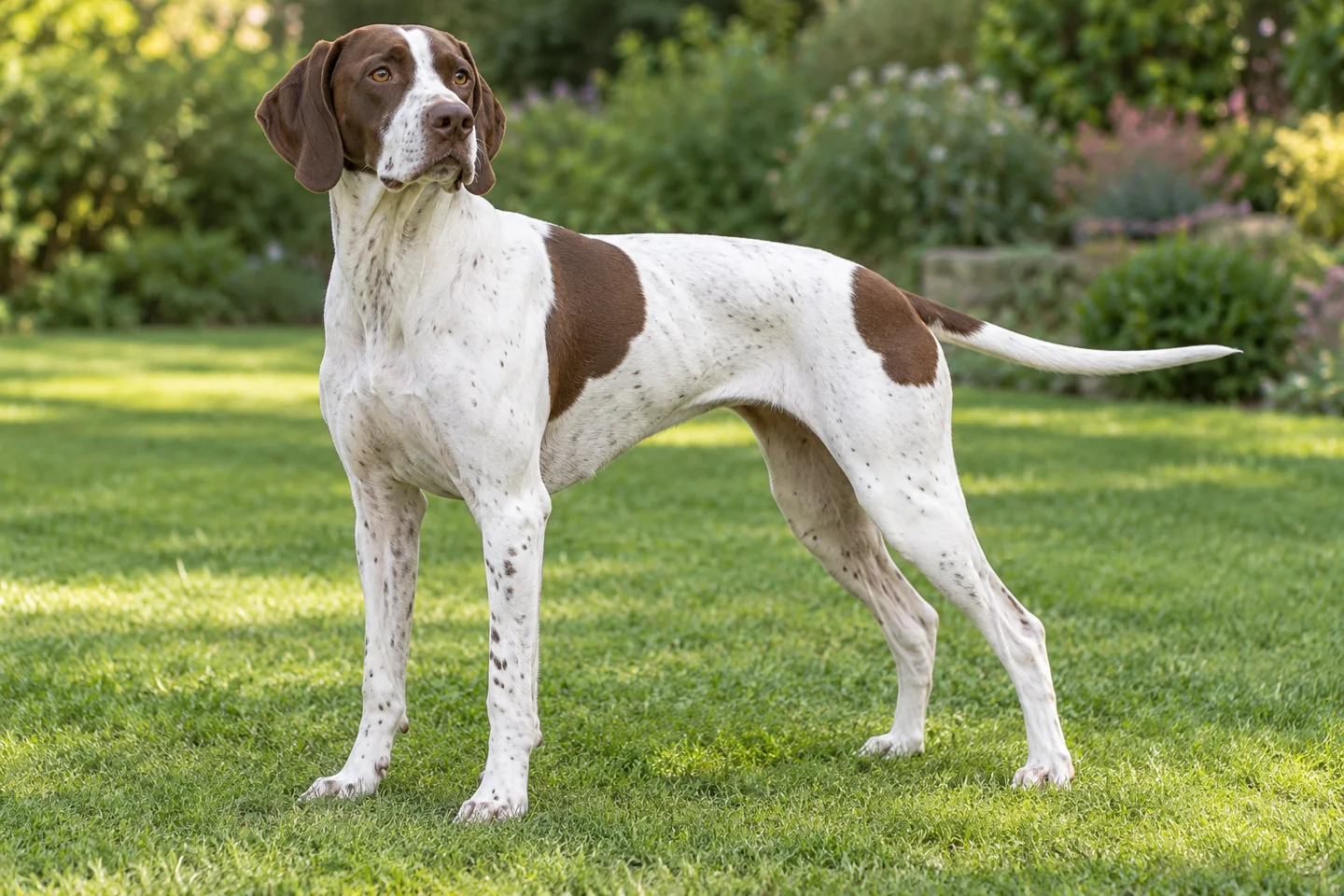
The illustrations show a white-and-liver dog with a liver nose, natural hanging ears, and a full tail. Color and a pointing pose cannot verify ancestry, clinical health, or working ability. Owners should think beyond the familiar field silhouette to daily walking, secure access, quiet rest, and the ability to manage interest in birds. Meet adults where possible and ask what life looks like between outings. A dog that can cover ground enthusiastically still needs a household routine matched to its health, experience, and individual social preferences.
A pointing task and the daily opportunities you provide
The FCI identifies the Pointer as a pointing dog from Great Britain. Its task helps explain why investigating scent and noticing birds may be rewarding. A companion does not need to hunt to receive suitable care, but an owner should provide more than repeated instructions to ignore everything interesting. Structured searches, varied walks, and controlled training can offer useful activity without allowing disturbance of wildlife or access to unsafe ground.
Ask the breeder about the parents' ordinary behavior as well as performance. A field record or show result gives context while leaving questions about settling, visitors, travel, and time alone. Puppies need preparation for those domestic tasks. For a rescue dog, gather the individual history available and observe current comfort in manageable situations. Do not assume that a mature animal understands a new city's traffic or a different household's handling. The breed's purpose guides questions, while the animal's actual responses determine the starting point for teaching and management.
Adult heights and a frame that needs individual assessment
The October 2026 FCI standard gives adult males 63–69 cm at the withers and females 61–66 cm. It does not set a compulsory weight range. Use the individual frame, muscle condition, and veterinary assessment when planning food rather than choosing a kilogram target from another pointing breed. A tucked abdomen and athletic outline do not justify unexplained weight loss, while enthusiasm outdoors does not make excess body fat harmless.
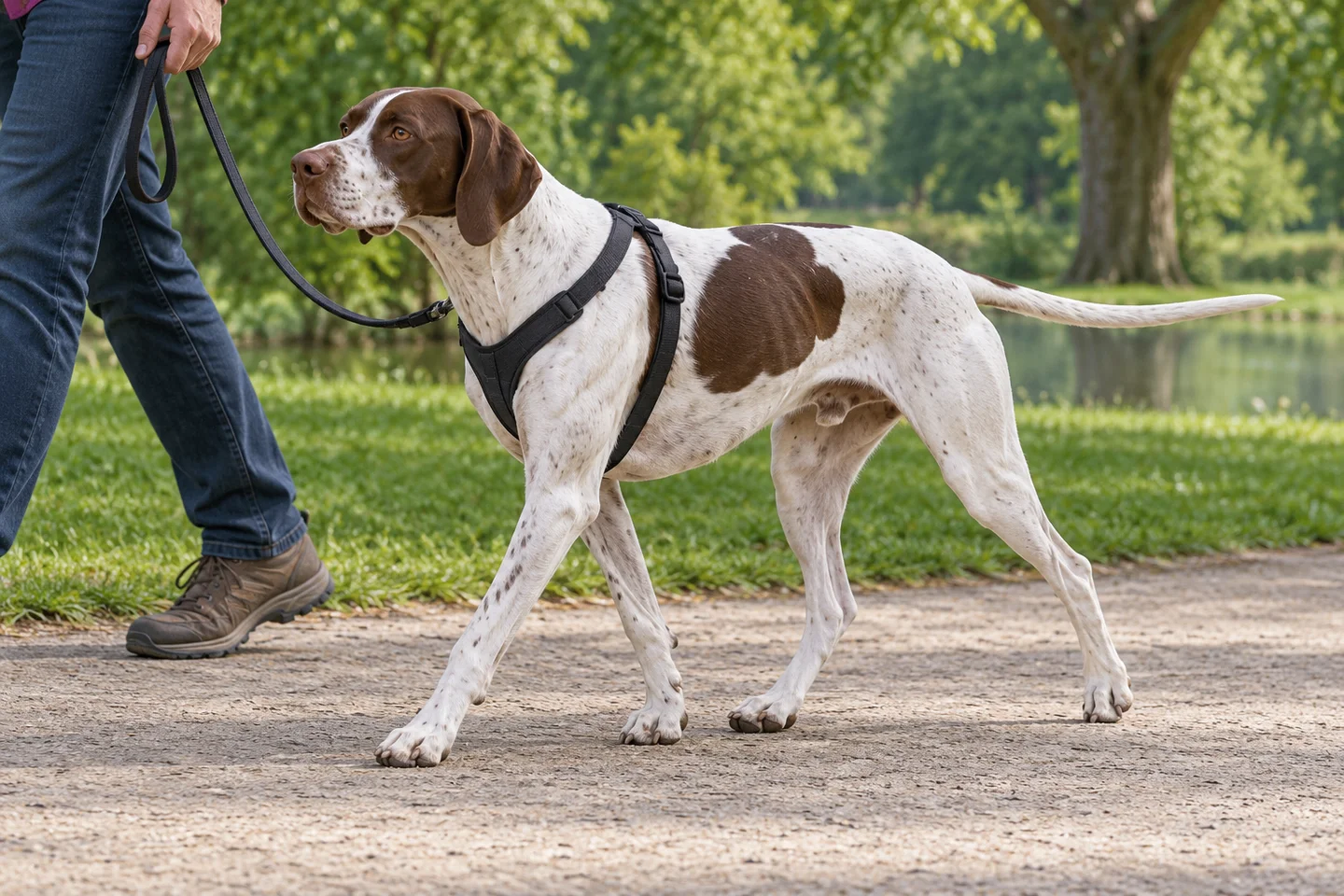
Measure vehicle space and choose a restraint or carrier that allows comfortable positioning for the grown dog. Fit the harness around the actual chest and check behind the elbows for rubbing. Reassess during growth, after weight change, and when changing equipment. Teach a calm entry routine and consider a stable ramp or step when appropriate. Planning transport while the dog is well makes it easier to manage a future injury or age-related limitation without depending on an awkward lift through a narrow opening.
Coat colors and a tail that belongs on the dog
The standard lists several usual color combinations, including liver and white, lemon and white, orange and white, and black and white, with permitted self-colors and tricolors. The illustration's white-and-liver choice is one example. Do not select a puppy chiefly for a rare-color advertisement or assume a particular patch arrangement establishes better health or temperament. Ask how the seller's claims relate to the named registry.
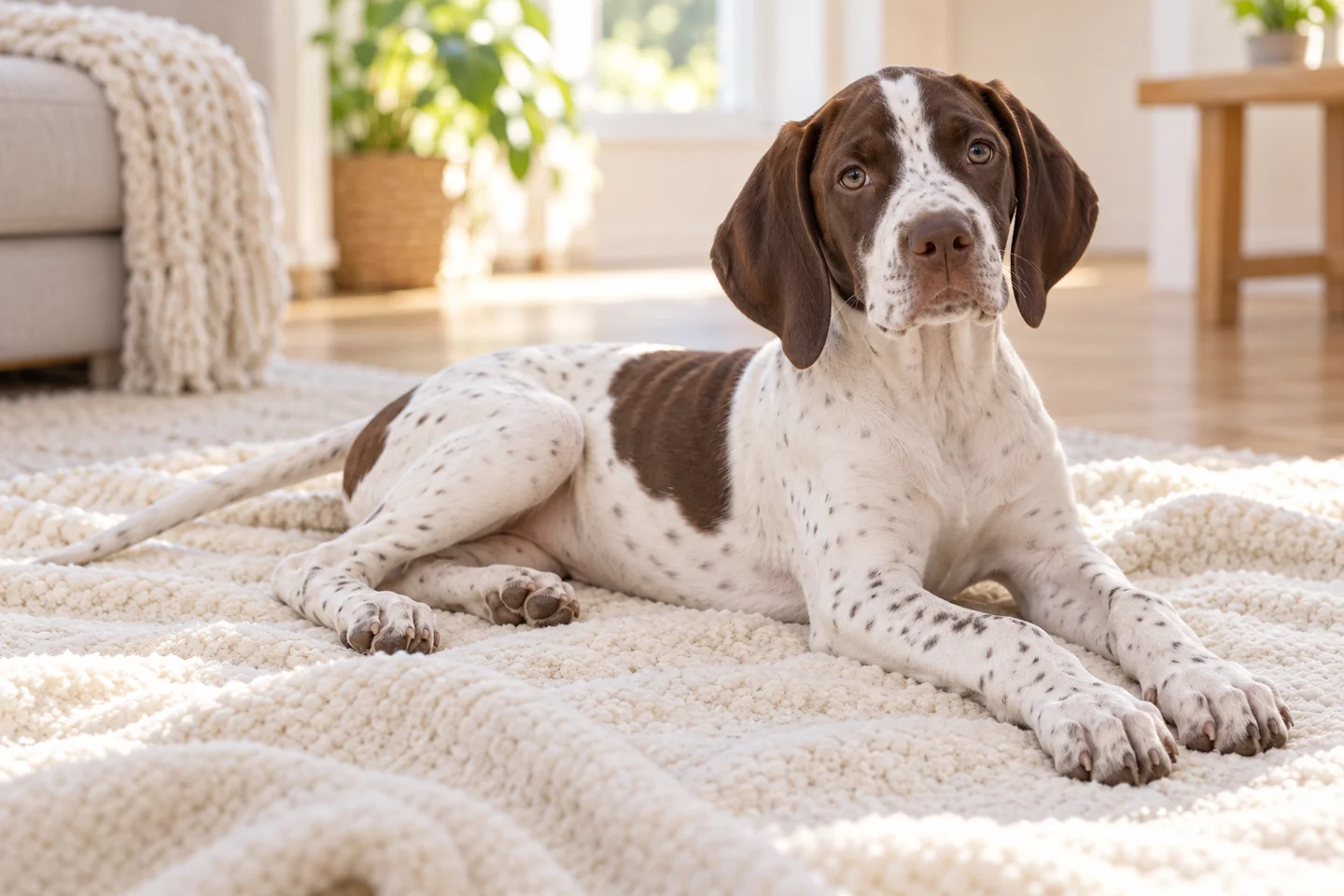
The coat is short and close, without the furnishings of a setter or the characteristic coat of a wirehaired breed. The full tapered tail and natural pendant ears should remain normal anatomical features in the illustrations. A puppy will have different muscle and proportions from a mature adult, so assess development with records and ordinary movement rather than a perfect posed outline. Ask about any consistent gait change or handling sensitivity. An attractive image can begin a conversation, but it cannot replace observation and veterinary information.
Training a return that remains worthwhile
Teach the Pointer to check in, return from short distances, wait at openings, and step onto a mat. Begin where the dog can respond and reward promptly. Sometimes allow it to return to safe exploration after coming to you, so recall does not always end the interesting part of the outing. Increase the difficulty gradually, using appropriate physical safety near roads, wildlife, and unfamiliar animals.
Practice exchanges with safe objects before a dangerous find occurs. Invite the dog away and recover the item calmly rather than reaching into the mouth to prove control. Reward-based teaching gives the owner useful alternatives to shouting or collar jerks. If the dog is already intensely focused on a bird or scent, create more distance and work at an easier level. A qualified instructor can help choose rewards and environments that fit the individual. A cooperative breed reputation does not mean a cue learned in the kitchen has automatically become reliable in an open field.
Exercise with condition, footing, and rest in the plan
Provide regular walking, investigation, and suitable controlled activity. Increase demands through conditioning rather than beginning with a schedule copied from a working adult. Puppies need manageable movement and sleep, while older dogs may enjoy shorter searches that preserve engagement without previous mileage. Watch recovery afterward, including rising from rest, climbing into the vehicle, and walking the following morning.
Choose safe surfaces and inspect an enclosed area before free movement. Keep a long line clear of other animals, people, and obstacles when using one. Carry water, plan shade, and use cooler periods in warm weather. A short coat does not protect against heat illness. In cold rain, appropriate shelter or clothing may help when fit and temperature are checked. Stop if movement changes or the dog struggles to recover, and seek advice for persistent signs. Enthusiasm for another run is information about motivation, not proof that another repetition is physically suitable.
Bird interest and boundaries that work during real life
A dog noticing birds may become still, focused, or quick to move. Teach attention and disengagement at a manageable distance rather than releasing it beside wildlife as a test. Protect nesting areas and obey access requirements for the location. A secure exercise area provides useful freedom when checked for gaps and weak latches. An attractive scent outside a boundary can matter more than what the dog usually does in the garden.
Entrance routines need to remain safe during deliveries, visitors, and car arrivals. Teach waiting, but retain physical management while learning develops. Keep identification details current and show carers exactly how the dog is secured before a door opens. A location device can assist recovery without preventing an escape or injury. If a boundary fails, repair the route before allowing the same access again. A dog returning safely once does not establish that traffic, livestock, or wildlife will remain harmless on the next occasion.
Socialization that includes a quiet pass
Offer a puppy manageable experiences with people, dogs, surfaces, equipment, and ordinary sounds. Let it observe at a comfortable distance, pair novelty with rewards, and provide an exit. Contact is optional. A visitor can wait without leaning over the head, and a passing dog can be noticed without a greeting. Coordinate exposure with veterinary disease-prevention advice and choose settings where you can lower the challenge easily.
If the puppy freezes, repeatedly retreats, or cannot respond to a familiar easy cue, make the next step simpler. Continue learning through adolescence and after a major change in circumstances. An adult rescue deserves the same respect for its current starting point. An athletic body cannot tell you whether an animal understands a crowded lift, a groomer's equipment, or a noisy waiting room. Observe recovery afterward as well as behavior during the event. A calm rest following a short outing is more informative than keeping the dog present until the human schedule says the experience is complete.
Children and the difference between company and tolerance
Adults should supervise contact actively and separate the Pointer during rough play, meals, chews, and rest. Friendly movement can knock a child over, while running can increase excitement. Teach children to invite the dog toward them, touch briefly, and let it leave. Prevent climbing, neck hugging, ear pulling, and following the animal into a protected bed. The retreat needs to remain available even when a child wants another turn.
Children should not recover objects from the mouth or remove food to test trust. Adults manage exchanges and necessary restraint, while children can help with a supervised search or reward a familiar cue. Watch stillness, turning away, and repeated avoidance before a warning escalates. Familiarity with one calm child does not establish safety around every visiting group. Explain the routine to guests and use barriers when adult attention must move to cooking, another child, or a call. Physical separation is a practical way to protect comfort when close observation is unavailable.
Aggression and the information before the incident
Describe a threat, snap, or bite through the circumstances around it. Was the dog sleeping, holding a chew, crowded by another animal, or being touched somewhere painful? A Pointer reacting during ear handling needs a different immediate response from one defending food. Record the sequence and prevent a repeat rather than deciding the animal is stubborn, protective, or unsafe in every setting from one broad label.
Sudden behavior changes warrant veterinary assessment. For recurring defensive responses, seek a qualified reward-based professional and use reliable management meanwhile. Move people away from tension and avoid recreating the trigger to test whether a warning was serious. Punishment can suppress information without addressing fear or pain. Separate resources, provide resting space, and choose suitable walking distances. A basket muzzle may add protection when introduced gradually, but cannot make an overwhelming encounter acceptable. Following a bite, obtain appropriate medical advice and prioritize reliable prevention before attempting another introduction.
Grooming a short coat and checking the body afterward
Brush gently and inspect skin, feet, and equipment contact points after exploring. A close coat can make findings easier to see, but does not rule out small wounds, parasites, or irritation beneath a harness. Check between toes and around nails without digging into tissue. Persistent licking, swelling, or a change in gait needs advice even if the dog continues to show interest in activity.
Inspect ears for odor, soreness, discharge, and repeated head shaking. Use a veterinary plan rather than leftover medication, and avoid inserting tools deeply into the canal. Maintain nails and introduce tooth brushing through brief rewarded sessions. A stable nonslip surface helps the dog feel secure during care. If resistance consistently concerns one area, investigate discomfort before increasing restraint. Ask a professional to demonstrate difficult tasks so grooming becomes predictable and useful, with the owner able to notice changes rather than spending the whole session struggling to keep the dog still.
Health: the club distinguishes thyroid assessment from a generic check
The American Pointer Club recommends hip, elbow, eye, and thyroid assessment, identifying autoimmune thyroiditis as the thyroid concern. Ask which named reports are available and how the findings informed a breeding decision. A statement that routine blood work was normal does not necessarily describe the same assessment. Likewise, an eye examination and orthopedic evaluations should remain identifiable results rather than being merged into a general claim that the parents were checked.
Cornell's laboratory guidance explains that thyroid tests need interpretation together and in context. Medication, other disease, and nutrition can affect hormone measurements, so one low value should not become an owner's diagnosis or a reason to start a supplement. Tell the veterinarian about changes, current products, and any previous treatment. Screening information provides useful background, while the dog's present findings guide clinical decisions. Avoid using a thyroid result to explain every behavioral problem or promising that a favorable panel excludes all future illness.
Joint comfort and a record of changing activity
Note how the dog rises, turns, negotiates slippery flooring, and recovers after a route it previously managed easily. A brief video can help describe an intermittent movement difference, provided recording does not require repeatedly provoking pain. Ask the veterinarian about the finding rather than assigning hip dysplasia from breed or a picture. Several conditions can affect gait, and parental screening cannot rule out every problem in an individual offspring.
Maintain suitable condition and provide secure footing while the issue is assessed. Do not force extra jumping to strengthen a reluctant limb or give human pain medicines without direction. If treatment or an exercise change is prescribed, clarify how progress will be reviewed and which signs require an earlier call. Keep those instructions available to carers. A dog may remain motivated by birds or play even when movement is uncomfortable, so willingness to run should be considered alongside recovery, clinical findings, and ordinary behavior at rest.
Food, mixes, and clinical changes that need attention
Choose balanced food appropriate to life stage and measure portions against growth, condition, and activity. Count rewards and chews in the day's intake. A deep chest and tucked waist are structural features, while unexpected weight or muscle loss deserves assessment. Persistent appetite, drinking, or digestive changes should be discussed rather than covered with richer toppings. Homemade diets require suitable formulation, and supplements should have a clear purpose.
A Pointer mix may vary in size, coat, sociability, and hunting interests from either parent. A crossbreed label cannot guarantee easier recall or remove inherited risk. Ask about both parental backgrounds for a planned litter; use observed behavior and clinical findings for a rescue. Keep toxic products secured, contact a veterinarian after suspected ingestion, and know the emergency route. Severe breathing trouble, collapse, major injury, or rapidly worsening distress needs urgent advice. Provide the sequence and available records instead of waiting for an online diagnosis based on breed.
Costs and the routine when someone else takes over
Obtain local estimates for food, preventive care, equipment, transport, training, specialist assessment if needed, and emergency treatment or suitable insurance. Check exclusions and the practical distance to care. A secure boundary and comfortable vehicle arrangement belong in the ownership budget. Find a carer who can manage lead walking, gates, and separation from vulnerable animals rather than simply providing meals.
Introduce the carer while you are present and rehearse loading, departures, and the walking routine. Write down known preferences, treatment, veterinary contacts, and what to do if the dog becomes highly focused on wildlife. A home that enjoys patient teaching and regular exploration may offer a workable life. One expecting minimal activity or automatic off-lead reliability should reconsider those requirements before choosing. Discuss absences, neighbors, stairs, and inconvenient weather honestly with a breeder or rescue. The real routine needs to work on ordinary difficult days as well as the ideal outing shown in a photograph.
dogsDating plans based on the individual walk
Describe the Pointer's current social habits on dogsDating, including preferred partners, play style, and the space needed around unfamiliar dogs or wildlife. Keep exact home coordinates and your address private. Use an approximate area to choose a public meeting location with broad paths and separate exits. Avoid a first encounter beside loose small pets, a crowded gate, or a place where both dogs are likely to become fixated on birds.
Begin with separate handlers moving in the same direction at a comfortable distance. Keep shared food and toys out of the introduction and let contact remain optional. Watch for stiffness, repeated avoidance, or trouble disengaging, and change distance or leave as needed. A brief peaceful walk provides useful information without requiring play. Discuss recovery afterward before arranging another meeting. Each person should be able to decline a different kind of encounter without pressure to prove that two athletic dogs ought to enjoy the same activity.
Sources and editorial notes
Sources checked October 22, 2026. Breed measurements describe reference ranges, not a diagnosis or an individual dog's ideal weight. Images are AI-generated breed illustrations and do not document a particular dog or health condition.
- AVSAB: Humane Dog Training Position Statement
- VCA Animal Hospitals: Food aggression in puppies
- VCA Animal Hospitals: Common emergencies in dogs
- Orthopedic Foundation for Animals: CHIC health screening programs
- VCA Animal Hospitals: Aggression toward unfamiliar dogs, diagnosis
- VCA Animal Hospitals: Grooming and coat care for your dog
- VCA Animal Hospitals: Ear infections in dogs (otitis externa)
- AAHA: Feeding plans for healthy, appropriate weight cats and dogs
- VCA Animal Hospitals: Heat stroke in dogs
- AVSAB: Puppy Socialization Position Statement
- VCA Animal Hospitals: Dog behavior problems, aggression toward children
- FCI English Pointer standard 1, October 2026: identity, colors, proportions and adult heights
- American Kennel Club: Sporting Group health testing recommendations for Pointer
- American Pointer Club: recommended hip, elbow, eye and autoimmune thyroiditis assessments
- Cornell University Animal Health Diagnostic Center: interpretation and limitations of canine thyroid testing
Keep getting to know dogs.
Read another guide or return to your dogsDating community.
Explore breed guidesBack to dogsDating