Polish Hound
The Ogar Polski is a substantial saddle-and-tan scenthound whose voice, searching interest, and documented eyelid concerns deserve informed ownership.
How these guides are researched and reviewed
- Origin
- Poland
- Adult height
- Males 56–65 cm; females 55–60 cm
- Identity
- Ogar Polski, separate from Gończy Polski
- Coat
- Dark saddle and tan with a dense undercoat
General information for owners. These articles have not been reviewed by a veterinarian. Medical decisions need your dog's history and an examination.
Know which Polish hound you are meeting
The Polish Hound in this guide is the Ogar Polski. It is a separate breed from the Gończy Polski, usually called Polish Hunting Dog in the FCI's English standard. Both have Polish scenthound histories, and loose translation can cause their information to become mixed. Ask a source to give the original name, registry identity, and relevant papers before comparing size or medical advice. A dark saddle and substantial head help describe the Ogar, but a photograph alone cannot document ancestry or establish that a rescue belongs to either breed.
For a prospective owner, precise identity is a starting point for practical questions. Ask how this dog lives when it is not following scent, what its voice means in ordinary routines, and how it copes with unfamiliar handling. Meet adults and observe transitions, including coming indoors and resting while people stop offering attention. A breed known through work still needs a household able to support daily care. An impressive history or affectionate meeting cannot answer whether your available time, surroundings, and support fit the particular puppy or adult being considered.
A documented Polish history with a modern recovery
The FCI account describes Polish literature about hounds across several centuries and a major disruption to breeding after the Second World War. It records Piotr Kartawik importing four hounds in 1959 as part of the modern recovery. This is a more precise account than saying the present population has remained unchanged since medieval times. Keep the history proportional to the evidence. Old depictions and references establish a tradition, but they do not provide a complete pedigree for every modern family or a guarantee of identical behavior.
The dog's scent work and voice remain relevant when planning a home. An owner should ask about current adults rather than treating historical usefulness as a ready-made training programme. A dog may need help leaving an interesting trail, settling after excitement, or managing a setting very different from its previous life. Those needs can be addressed through suitable outlets and teaching without exposing wildlife to uncontrolled pursuit. If a source expects a hunting placement, clarify that before choosing a puppy. Honest agreement about the proposed life is more useful than assuming enthusiasm for the breed resolves a mismatch.
The substantial outline and saddle-and-tan coat
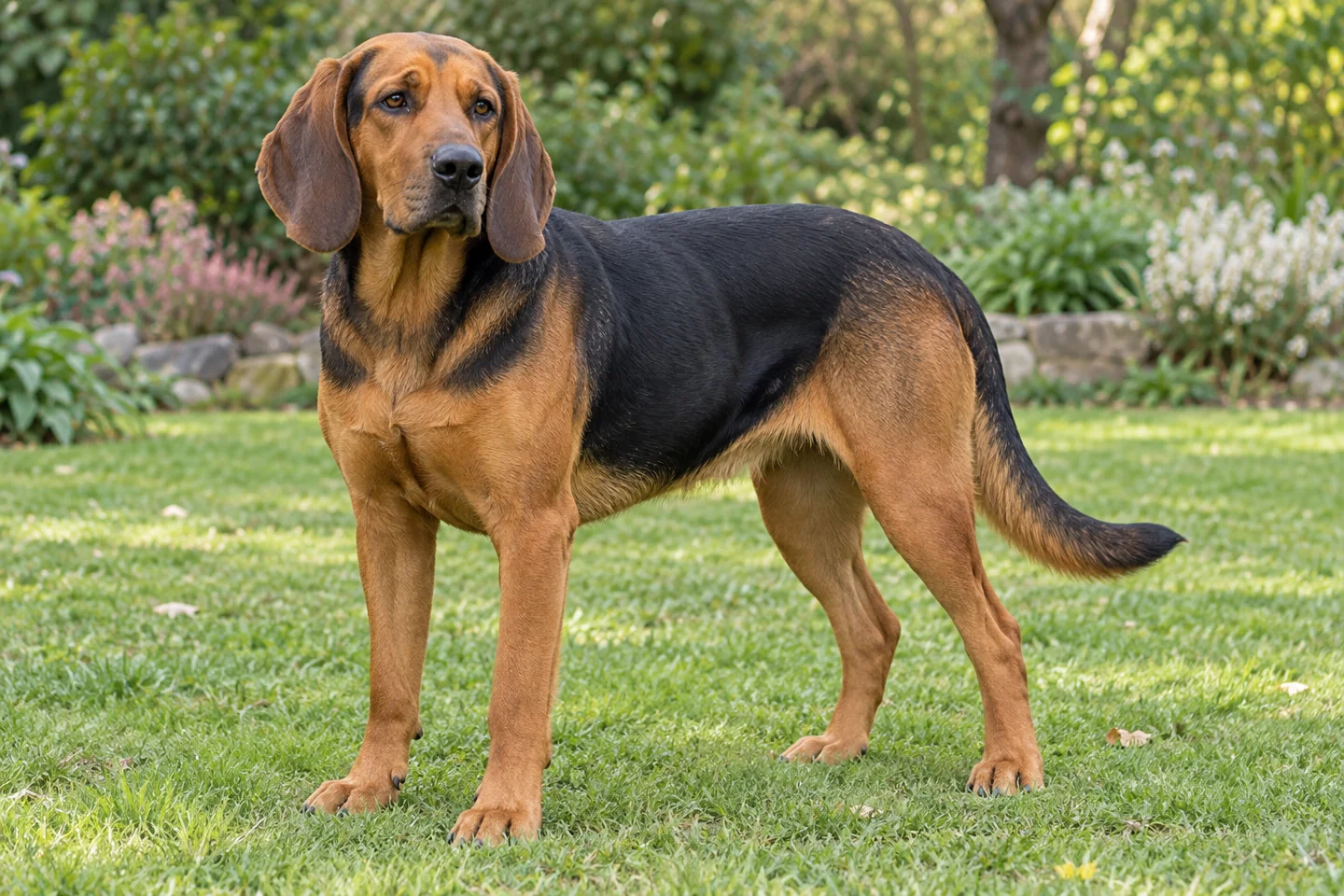
The standard gives male shoulder height as 56–65 cm and female height as 55–60 cm, with weight proportional to the frame rather than a fixed universal number. The Ogar has a substantial rectangular body, a broad head, long hanging ears, and a full tail. Dark hair forms the saddle over the back and sides, with tan on the head, underside, and legs. Ear color is a darker tan. The accompanying illustrations retain those features and natural anatomy, rather than borrowing the leaner outline or black ears of a different hound.
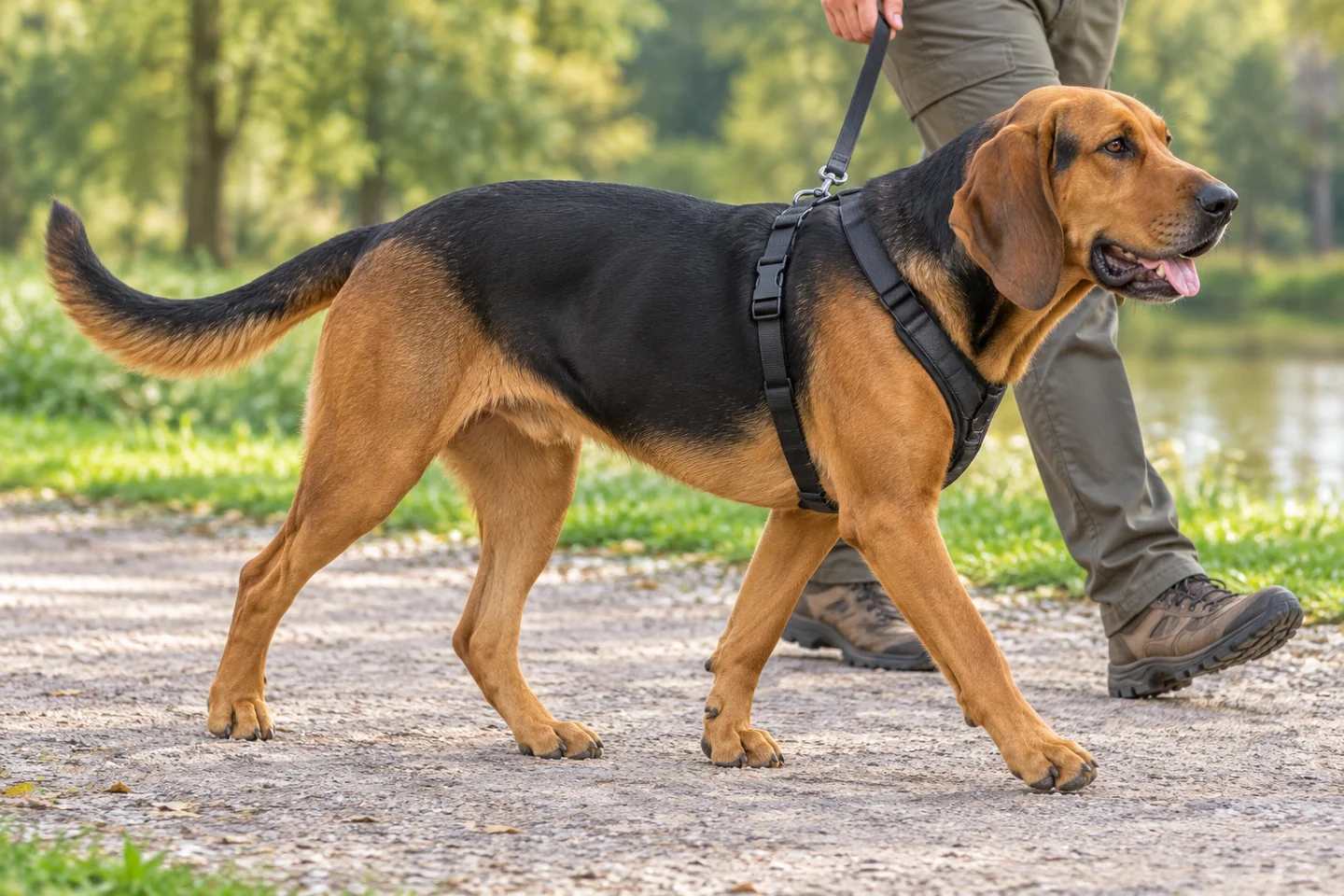
Assess the individual beneath the recognizable pattern. Ask your veterinarian about appropriate condition, and use gentle regular handling to notice changes that the coat can obscure. A deep chest and broad head require equipment fitted to the actual animal. Check that a harness stays secure when the dog backs away and permits free movement when it walks. Repeat fitting checks during growth. Plan transport and a resting place for the adult frame, including enough room to stretch comfortably. A source's standard measurements help preparation, but they do not replace assessment of this dog's movement, comfort, or future care needs.
Training a return from an absorbing discovery
Teach orientation to the handler and recall in an environment where the hound can respond. Reward generously and add distraction in small steps. A dog absorbed in a scent may need greater distance from the discovery rather than another louder repetition. Use suitable secure equipment while the skill develops. Sometimes release the dog to appropriate investigation again after it returns, so cooperation is not always the end of everything interesting. A reward-based instructor can help identify a workable starting point when the owner is repeatedly calling after the dog has already become unreachable in practice.
Make ordinary boundaries clear too. Practise waiting behind a barrier before an outside door opens, entering transport calmly, and moving onto a bed when activity ends. Keep the environment secure until the response is reliable in that context. Teach exchanges with suitable objects rather than routinely chasing or taking things by force. Dangerous finds need prevention and professional advice about safe handling. The household should know what the dog has actually learned and which situations still require management. A working reputation cannot substitute for that information, and a tracking device cannot prevent a road crossing while an unfinished recall is being tested.
Voice and rest are part of the placement discussion
Ask what the Ogar's voice sounds like in its actual home, not only during a demonstration of work. Barking or calling during scent activity differs from distress when left or repeated reactions at a fence. Describe neighbors, shared walls, and the dog's proposed resting area honestly. A source should explain the triggers it has observed and the management that helps. A promise that the dog will simply learn silence on command is less useful than a realistic plan for the setting. Sound can become a placement problem before it becomes a training problem.
Teach a predictable ending to activity and provide rest away from continual visual disturbance. Reward genuine settling instead of starting another game whenever the hound remains alert. Introduce time apart through small manageable experiences after its needs are met, and check whether it actually relaxes. If distress appears, arrange support and appropriate guidance rather than treating a longer absence as the lesson. The routine should include company, investigation, and quiet periods in a balance the individual can manage. Ownership becomes more sustainable when it does not depend on keeping the dog exhausted to obtain every moment of peace.
Exercise should be fitted to condition and terrain
Choose activity from the dog's age, health, recent workload, and recovery. A hound with a working history is not automatically ready for a long unfamiliar route after reduced activity. Build gradually and ask the veterinary team about preparation for demanding work or return after injury. Include time for investigation and suitable learning, rather than making distance the only useful measure. Watch how the dog rises after rest and behaves the following day. Repeated changes in gait or stamina need assessment rather than pressure to keep pace.
Plan an easy way to shorten an outing. Weather, surfaces, transport, and narrow encounters can make a familiar distance more demanding. Provide water and shade as needed and avoid a hot vehicle becoming part of the day's strain. If the dog cannot walk, the person responsible needs a practical transport arrangement and clinic contact. Those details are worth checking before a remote outing. A precise account of what changed and what preceded it helps the veterinarian. Calling discomfort stubbornness or relying on the breed's reputation for endurance supplies much less useful information about the individual patient.
Aggression and bite prevention require the actual sequence
No hound reputation can establish that an individual never bites. Record who approached, the available space, any resource or handling involved, contact, and injury. Prevent repetition while seeking veterinary and behavior advice. Sudden changes around touch, movement, or rest deserve clinical attention. Do not repeat the event for a demonstration or allow someone to test the dog because it behaved warmly earlier. A warning should lead to safer management while its cause is assessed, rather than being punished as if the absence of sound resolves the underlying difficulty.
Keep food, valued chews, and sleep free from unwanted interference. Children should call an adult if an object needs retrieving. Practise appropriate exchanges in safe planned games and maintain distance around unfamiliar animals where needed. A qualified professional can help decide which interactions are suitable and what restrictions the household can sustain. Give carers a factual account of bites and close calls before they take responsibility. If muzzle conditioning is recommended, learn comfortable introduction and fit, retaining barriers and supervision. Protective equipment should support prevention, not invite repeated crowding or conflict as an experiment in tolerance.
Children and animal companions need protected spaces
Teach children to invite contact, stop when the hound walks away, and leave meals and sleep undisturbed. A capable adult should handle the lead, care tasks, and object recovery. Closely supervise interactions and provide comfortable separation when attention must be divided. The dog needs a place where leaving contact actually works, rather than being followed behind furniture. Ask what ages of children and circumstances the source has observed. A friendly response to one calm older child is not evidence about every noisy gathering or younger visitor the household may later receive.
Other animals need their own assessment. Ask about dogs, cats, and smaller pets separately, with concrete descriptions of past contact. A successful walk does not establish safe sharing of food or sleeping areas indoors. Begin canine introductions with enough space for both handlers to leave and retain individual resources at home. Keep vulnerable animals physically protected when safety is uncertain; never release one as a test of pursuit. A suitable placement requires a layout that supports whatever management is needed. If those boundaries cannot be maintained, another arrangement may protect all the animals better than hoping a risky relationship settles itself.
Grooming and inspection of ears, skin, and mouth
The coat needs suitable brushing and regular inspection, especially where equipment or movement creates friction. Introduce care in short cooperative sessions and check feet after outings. Dense undercoat should not conceal changes in condition or a sore area. A groomer or clinic can demonstrate the tools and routine suited to this individual. Keep nails and dental care part of the plan. A dog described as hardy still needs pain investigated, and sudden resistance to a previously easy task should not be dismissed as a new attempt to avoid cooperation.
Long ears merit gentle observation rather than aggressive cleaning. Redness, odor, discharge, head shaking, or pain calls for veterinary advice. Avoid instruments pushed into the canal and do not use prescriptions left from a different animal or episode. Record products and treatment responses if irritation recurs. Give an alternate carer clear instructions and the contact to use if signs change. A practical care file is more useful than saying the dog has always had troublesome ears. The clinician needs a timeline and findings to decide what is happening now, and a future owner needs information that can be followed without reconstructing several incomplete conversations.
Health evidence should include the eyelids and honest sample limits
Entropion, inward rolling of an eyelid, has been documented in Polish Hounds. A 2014 paper by Książek and colleagues examined the difficulty of estimating its frequency when few owners supplied information. That study supports asking about eyelid examinations and previous correction in the actual family. Its historical samples do not justify a precise claim about today's whole population. Request original clinical reports, including any surgery, rather than judging an apparently normal adult face without knowing what treatment occurred. A corrected appearance and an unoperated eyelid history are different pieces of information. Ask whether the mother, father, and older siblings needed eye treatment and whether those details were recorded before a breeding decision. A puppy examination is useful, but the buyer should also understand who will arrange follow-up if an eyelid concern becomes apparent later.
ACVO explains that inward rolling can bring hair against the eye and has several possible causes. If the dog squints, appears painful, or develops a new eye change, obtain prompt veterinary advice instead of treating it as ordinary tearing in a hound. Ask the clinician about diagnosis and the individual's care rather than using an online description to select drops. A generic DNA panel cannot replace examination of the lids. Pass significant diagnosed findings back through a suitable confidential route so future family information becomes more complete. That is a practical response to an evidence gap, without inventing a universal disease-free guarantee from a pedigree or a working record.
Nutrition, mixes, and the financial side of a placement
Use complete food appropriate to life stage and body condition, with portions reviewed by the veterinary team. Measure intake and include rewards, then adjust deliberately when activity changes. A substantial hound should not be fed toward a guessed universal weight. Keep meals separate if another animal creates competition and note persistent appetite or digestive changes. A Polish Hound mix also needs individual assessment. Ask what ancestry is known, consider both parents where documented, and retain uncertainty for a label based on appearance. Mixing does not promise freedom from illness or a predictable halfway temperament.
Obtain local prices for veterinary care, equipment, transport, training support, and suitable sitting or boarding. A carer should understand recall limitations, voice, and any medical or social restrictions before agreeing to cover an absence. Clarify support and return provisions with the source in writing and arrange emergency funding or appropriate insurance. The initial fee is only part of the commitment. A workable plan must continue through work changes, illness, and later care needs, with more than one capable person understanding the essentials. An attractive breed name should not obscure a gap in the support necessary for this particular dog.
dogsDating walks can be useful without close greetings
Describe this Ogar's pace, interest in scent, and preferred canine distance on dogsDating. State current restrictions before arranging a meeting. Share an approximate area while keeping exact coordinates and the home address private. Select a public open starting point with a clear route to leave, avoiding an entrance that forces contact. Each adult should manage their own dog throughout. A profile should prepare the practical conditions, rather than use a hound reputation to guarantee compatibility. The two animals may enjoy walking together while having different needs about play or physical greetings.
Begin in parallel and let the dogs investigate without shared toys or food between them. Increase distance or finish if either repeatedly withdraws, stiffens, or becomes too excited to disengage comfortably. Compare the route, pace, and separation afterward instead of grading success only by whether the dogs touched noses. A quieter setting may be a better next step than off-lead play. Continued meetings should follow evidence of comfort, with owners willing to change course. The purpose is manageable company for the actual animals, preserving the option to leave while the outing remains a suitable experience for both.
Sources and editorial notes
Sources checked October 22, 2026. Breed measurements describe reference ranges, not a diagnosis or an individual dog's ideal weight. Images are AI-generated breed illustrations and do not document a particular dog or health condition.
- AVSAB: Humane Dog Training Position Statement
- VCA Animal Hospitals: Food aggression in puppies
- VCA Animal Hospitals: Common emergencies in dogs
- Orthopedic Foundation for Animals: CHIC health screening programs
- VCA Animal Hospitals: Aggression toward unfamiliar dogs, diagnosis
- VCA Animal Hospitals: Grooming and coat care for your dog
- VCA Animal Hospitals: Ear infections in dogs (otitis externa)
- AAHA: Feeding plans for healthy, appropriate weight cats and dogs
- VCA Animal Hospitals: Heat stroke in dogs
- AVSAB: Puppy Socialization Position Statement
- VCA Animal Hospitals: Dog behavior problems, aggression toward children
- Official breed standard: Polish Hound
- Książek, Gruszczyńska and Grzegrzółka: Problems estimating entropion frequency in Polish Hounds (2014)
- American College of Veterinary Ophthalmologists: Entropion
Keep getting to know dogs.
Read another guide or return to your dogsDating community.
Explore breed guidesBack to dogsDating