Posavac Hound
A Croatian scent-tracking dog with reddish-wheaten hair and clear white markings, best approached through its working interests, individual social history, and practical outdoor care.
How these guides are researched and reviewed
- Origin
- Croatia, Sava region
- FCI male height
- 50–56 cm
- FCI female height
- 47–53 cm
- Coat
- Short reddish-wheaten with clear white markings
General information for owners. These articles have not been reviewed by a veterinarian. Medical decisions need your dog's history and an examination.
A Croatian hound with work behind the outline
The Posavac Hound is a Croatian scenthound associated with the Sava region. Reddish-wheaten hair, white markings, and a sturdy rectangular body belong to a dog selected for tracking work. A prospective owner should start with that practical background. Daily life needs appropriate movement, opportunities to investigate, secure management, and a person willing to teach useful responses. A short coat reduces some grooming demands but does not make the whole commitment small. The important fit is between this particular dog's needs and the household's normal schedule, rather than a photograph or an unfamiliar name.
Ask the source what ordinary life looks like. Does the dog live with other hounds, in a family house, or across both settings? How does it respond when a person leaves, when visitors arrive, and when a scent trail competes with a recall? The answers help plan a transition instead of assuming that success in one environment transfers automatically to another. A puppy is developing, and an adult may need time to learn indoor routines or different handling. Arrange secure rest, reliable company, transport, and veterinary care before bringing the animal home, with an identified source of help if the first weeks prove difficult.
Posavac, Posavaz, and preserving accurate Croatian history
The breed appears under several English spellings, including Posavac, Posavatz, and Posavaz, while the Croatian name is Posavski gonič. Search carefully so records for the same breed are not confused with an unrelated animal. Croatia's domestic-animal gene bank identifies the breed among its native dogs and discusses historical descriptions and depictions. Those records provide evidence of a regional hound tradition. They should not be expanded into a precise uninterrupted pedigree for every current animal or a claim that an ancient working role guarantees a modern dog's health and behavior.
Use ancestry as a route to useful information. Ask about known relatives, the source's selection goals, and how medical and behavioral findings are shared. For a dog registered in another country, retain the original identification and pedigree wording along with an understandable translation where needed. An unknown hound with similar coloring should be described cautiously rather than assigned confirmed ancestry from appearance. Rarity can make records and communication especially useful, but it does not justify lowering expectations for source transparency. A placement should include honest discussion of temperament, treatment history, and practical support after collection.
Adult size and clear white markings
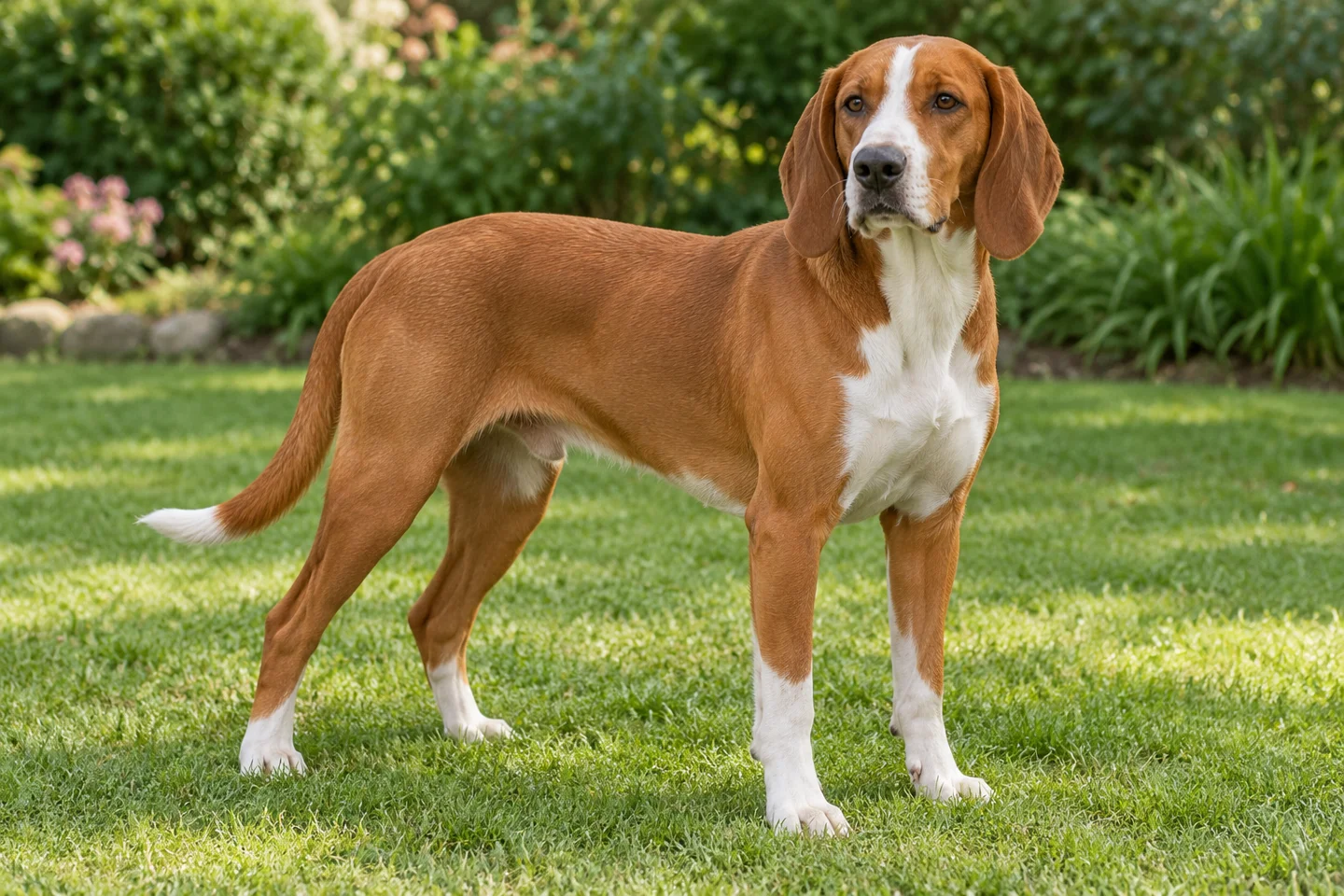
The FCI gives male heights of 50–56 cm and female heights of 47–53 cm, with a limited allowance for excellent specimens. The coat is short and reddish-wheaten, combined with clear white markings in specified areas such as the blaze, collar, chest, feet, and tail tip. White should cover less than a third of the body. The outline is sturdy and somewhat rectangular, with hanging ears and a full tail. The labeled AI illustrations show a reddish-wheaten dog with appropriate clear white, rather than ticking or a dark saddle. They explain morphology, not a specific dog's registration.
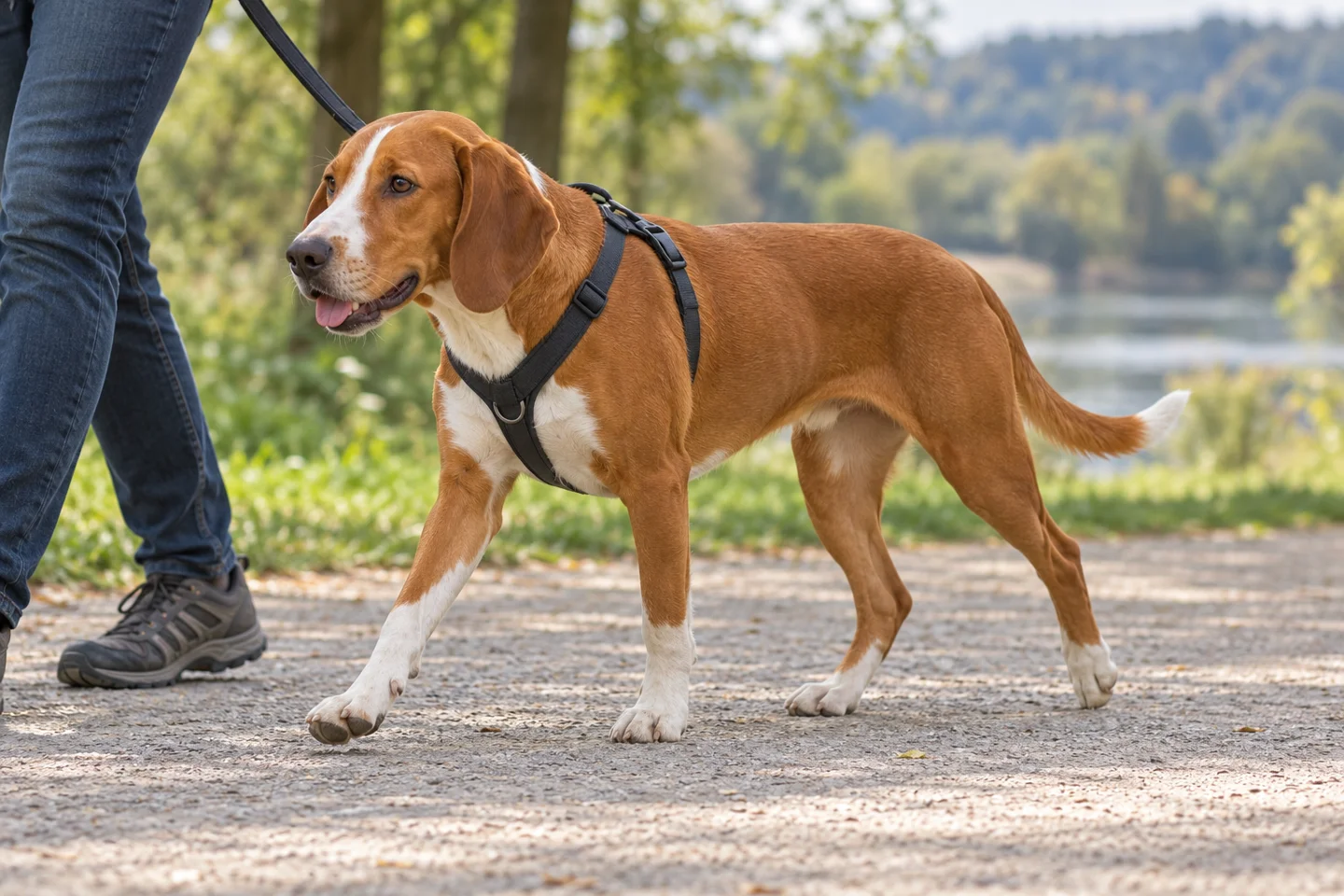
Look at movement and condition directly. A standard range does not replace an examination or set the right weight for every individual. Observe comfortable walking, turning, sitting, and rising, and ask about any injury or change in endurance. Puppies should grow on appropriate nutrition and age-suitable activity, without unnecessary supplements intended to accelerate muscle or size. Fit a harness and transport restraint to the actual dog and recheck as it grows. An animal can be enthusiastic about a walk while still uncomfortable, so changes in stride or recovery deserve attention rather than reassurance based solely on a lively response to the lead.
Temperament, hound company, and a family house
A familiar hound group can teach useful social experience, but it cannot answer every question about an individual in a new home. Ask how the dog responds to unfamiliar dogs, close handling, and temporary separation from its usual companions. A household plan should not depend on immediately acquiring another dog as a solution to distress. Build a predictable routine with quiet company, suitable activity, sleep, and gradual short absences. Observe recovery and adjust demands. An adult entering a family house after a different housing system may need help learning doors, visitors, and quiet indoor expectations without being punished for not already knowing them.
Discuss voice and arousal before choosing a noise-sensitive setting. A hound may vocalize around scent, barriers, or separation, and the owner needs to know the relevant triggers for this dog. Reduce repeated access to an upsetting window or boundary, reward disengagement, and provide a comfortable resting location. Repeated shouting is unlikely to explain an alternative behavior. If distress persists, obtain appropriate assessment. A source who can describe what helps the animal settle is more useful than one who insists every member of the breed is naturally silent at home once it has received enough exercise.
Training a reliable response around scent
Teach recall in a quiet secure setting, reward returning, and often allow the dog back to a safe permitted investigation. Increase difficulty gradually. A correctly fitted harness and safely handled long line offer management where appropriate, but line use needs attention to people, vegetation, and the dog's legs. Do not release an animal near a road, livestock, or wildlife to test whether a familiar route outweighs an interesting odor. A successful recall history is built through achievable repetitions. Repeating the cue once the dog is absorbed in a trail may teach less than changing the setup and practicing at a manageable distance.
Other useful skills include waiting at exits, turning with the handler, comfortable lead movement, and exchanging found items. Offer short scent tasks that have clear beginnings and endings, and stop before difficulty or arousal overwhelms the lesson. Do not make dangerous scavenging into a chase game. Management and practiced trades are safer than repeated physical confrontations over objects. If possession causes freezing, stiffness, or growling, seek qualified guidance. Cooperative checks of feet, ears, mouth, and skin also deserve early teaching because a searching dog's everyday care requires accurate inspection without turning handling into a struggle.
Exercise, secure routes, and weather decisions
Plan varied activity using the dog's age, condition, fitness, and recovery. A working background supports opportunities for purposeful movement and investigation; it does not supply one mandatory distance for every Posavac. Build new demands gradually, especially after illness, transport, or a quiet period. Young dogs need safe exploration and coordination rather than a forced adult schedule. Check comfort later that day and the next morning. Persistent stiffness, reluctance, or reduced tolerance deserves veterinary attention. Repetitive high-speed chasing should not be the only method available to achieve calm indoor behavior.
Inspect boundaries and transfers carefully. A low fence gap, an open gate during a delivery, or a vehicle door opened before the lead is attached can provide an opportunity for a scent-focused dog to leave. Supervise outdoor time and ensure equipment cannot be backed out of when startled. Choose routes away from avoidable traffic or livestock pressure. Carry drinking water and adjust timing and duration in heat, with rest and shade available. A dog that continues following scent may not make a safe decision about fatigue. The handler must be prepared to finish before a normal outing becomes difficult to recover from.

Aggression and preventing conflict before it escalates
Friendly behavior within a familiar group does not guarantee safety in every encounter. Fear, pain, restraint, possession, and a trapped greeting can affect a hound's response. Notice withdrawal, freezing, a hard stare, or a growl and change the situation. Increase distance and remove the pressure rather than punish a warning while continuing the same handling. A sudden change deserves clinical assessment, especially if an ear, paw, mouth, or another body area seems sensitive. Write down what preceded the event and how the dog recovered, avoiding a label that assumes a motive without evidence.
Manage known risks while obtaining help. Protect meals and resting places, use barriers during busy arrivals, and make sure visitors understand that contact is optional. All adults should follow the same door and handling routine. A bite or credible bite risk calls for veterinary and suitably qualified behavior support, with positively introduced basket-muzzle training where appropriate to the plan. A muzzle does not permit forced greetings or rough care. Evaluate improvement through comfortable behavior and successful choices at sensible distances. A dog that stops warning because it has been repeatedly punished may still be experiencing the discomfort that created the risk.
Children, other dogs, and small-animal safety
Adults need to supervise contact with children and prevent ear pulling, climbing, chasing, and interruption of meals or sleep. Provide a separate resting area the child cannot enter, and separate before running games become intense. A sturdy active dog can knock over a child accidentally, while a cornered dog may become frightened. Teach a brief invitation to contact followed by a pause, and respect the animal's choice to move away. A young child cannot be responsible for judging every warning or controlling a hound near a road. The arrangement must remain safe when excitement makes a remembered rule difficult to follow.
Introduce dog companions with separate handlers and space for parallel movement. Being comfortable with familiar hounds does not establish compatibility with every size or play style. Watch whether each animal can stop and disengage before allowing closer interaction. Cats, poultry, rabbits, and other small pets require their own safeguards because movement can engage hunting interest. Acceptance of one animal indoors does not predict every outdoor encounter. Some combinations need permanent separation. Never release the dog toward another animal as a test of affection or training. Accurate prior observations help, but a new setting still requires management and gradual assessment.
Grooming a short coat and checking long ears
Use a gentle brush or suitable grooming mitt to remove loose hair and inspect the skin regularly. Short hair does not make wounds, parasites, or equipment rubbing impossible. Look over feet after rough or brushy routes, check pads and nails, and remove loose surface debris carefully. Bath as needed with suitable products and dry comfortably. Recurrent itching, new lesions, or hair loss needs veterinary advice rather than an assumption based on coat color. Clean bedding and properly adjusted equipment support skin comfort while making changes easier to notice.
Inspect the visible outer ear for redness, smell, discharge, or sensitivity. Repeated head shaking after a walk should not be treated automatically as a routine infection. A clinician may need to examine for several possible causes, including a foreign object. Avoid deep probing or repeatedly applying leftover medication. Teach calm ear lifting in seconds of comfortable contact and reward cooperation. Nail and dental care belong in the regular plan too. A hound that tolerates an inspection willingly can be checked more accurately than one held in place until it struggles, and gradual practice is easier before a painful problem occurs.
Health evidence: keep treatment, screening, and working records distinct
Published information does not support treating a long generic disease list as a defined universal Posavac screening programme. Ask the source which formal examinations apply to its registry, family, and planned pairing and obtain the named reports. Keep those separate from a pedigree, a show evaluation, and a working certificate. Each can be useful, but none answers every medical question. A working achievement demonstrates performance under particular conditions, not the absence of inherited illness. Missing records should remain an acknowledged limit rather than be reinterpreted as evidence that an uncommon breed has no health problems.
Make family questions concrete: ask about surgery, recurring ear or skin treatment, eye trouble, persistent lameness, unexplained collapse, and the reasons close relatives died. These are sensible history questions, not claims that each is an established breed predisposition. The veterinarian can help interpret actual findings and decide whether additional assessment is useful. Keep the dog's baseline examination and subsequent reports organized by date and identity. A broad DNA panel has limits, and its relevance depends on what was tested and validated. Transparent follow-up on a known concern is more informative than an unexplained statement that everything in the line is clear.
Field health includes the route, not only the pedigree
Agriculture Victoria's practical working-dog guidance identifies grass seeds with awns as a source of injury. A scent-searching dog moving through grass or scrub can encounter these hazards regardless of breed. Inspect feet, coat, and visible ear areas after outings and seek veterinary help for a suspected embedded seed rather than digging into tissue. Sudden persistent head shaking, sneezing, licking a foot, or pain after a route should be described accurately to the clinic. The exposure provides useful context without establishing a diagnosis. Short hair does not make the body impervious to sharp plant material.
Choose maintained routes when seasonal vegetation creates avoidable risk, and teach the dog to stand comfortably for a brief post-walk check. Keep a towel, good light, suitable reward, and the clinic's contact details accessible. If swelling, discharge, or recurrent discomfort develops, tell the veterinarian about earlier episodes and places walked. Do not assume a surface improvement proves an embedded object is gone or treat repeated signs indefinitely at home. Prevention also includes appropriate parasite control, clean drinking water, and management of scavenging. These decisions should reflect the actual environment and patient's history, rather than the impression that a traditional working hound must naturally resist outdoor illness or injury.
Nutrition, mixes, and choosing a lasting commitment
Use complete nutrition appropriate to life stage, medical needs, and workload. Measure portions and count rewards used during scent or recall training. Review condition with the veterinary team when activity changes, rather than feeding an unchanging amount through every season. A mix needs individual assessment and consideration of both known parental backgrounds. A reddish coat and white blaze cannot confirm Posavac ancestry. Keep uncertain descriptions honest, and do not assume a cross will have a moderate activity level or lower inherited risk. Choose food for nutritional suitability and the patient's needs, not an unsupported promise attached to a national or working-dog label.
Budget for routine care, emergency funding or suitable insurance, secure boundaries, training support, transport, and competent sitting. Ask a prospective carer how it will handle gates and scent distractions. Clarify the source's ongoing support and return terms in writing. An active home still needs a plan for human illness, difficult weather, and later changes in the dog's mobility. Ordinary quiet days should be manageable without abandoning the animal to boredom or escalating frustration. The choice is sustainable when daily resources match the particular dog, rather than when an owner can offer occasional impressive outings that leave the rest of the week unsupported.
Sources and editorial notes
Sources checked October 22, 2026. Breed measurements describe reference ranges, not a diagnosis or an individual dog's ideal weight. Images are AI-generated breed illustrations and do not document a particular dog or health condition.
- AVSAB: Humane Dog Training Position Statement
- VCA Animal Hospitals: Food aggression in puppies
- VCA Animal Hospitals: Common emergencies in dogs
- Orthopedic Foundation for Animals: CHIC health screening programs
- VCA Animal Hospitals: Aggression toward unfamiliar dogs, diagnosis
- VCA Animal Hospitals: Grooming and coat care for your dog
- VCA Animal Hospitals: Ear infections in dogs (otitis externa)
- AAHA: Feeding plans for healthy, appropriate weight cats and dogs
- VCA Animal Hospitals: Heat stroke in dogs
- AVSAB: Puppy Socialization Position Statement
- VCA Animal Hospitals: Dog behavior problems, aggression toward children
- Official breed standard: Posavac Hound
- Croatian domestic animal gene bank: Posavski gonič identity and historical records
- United Kennel Club: Posavaz Hound breed standard and origin
- Agriculture Victoria: Responsible ownership and routine care of farm working dogs
Keep getting to know dogs.
Read another guide or return to your dogsDating community.
Explore breed guidesBack to dogsDating