Porcelaine
A white and orange French scenthound whose fine appearance belongs to an energetic tracking dog, with companionship, secure management, and comfortable recovery central to daily care.
How these guides are researched and reviewed
- Origin
- France
- FCI male height
- 55–58 cm
- FCI female height
- 53–56 cm
- Coat
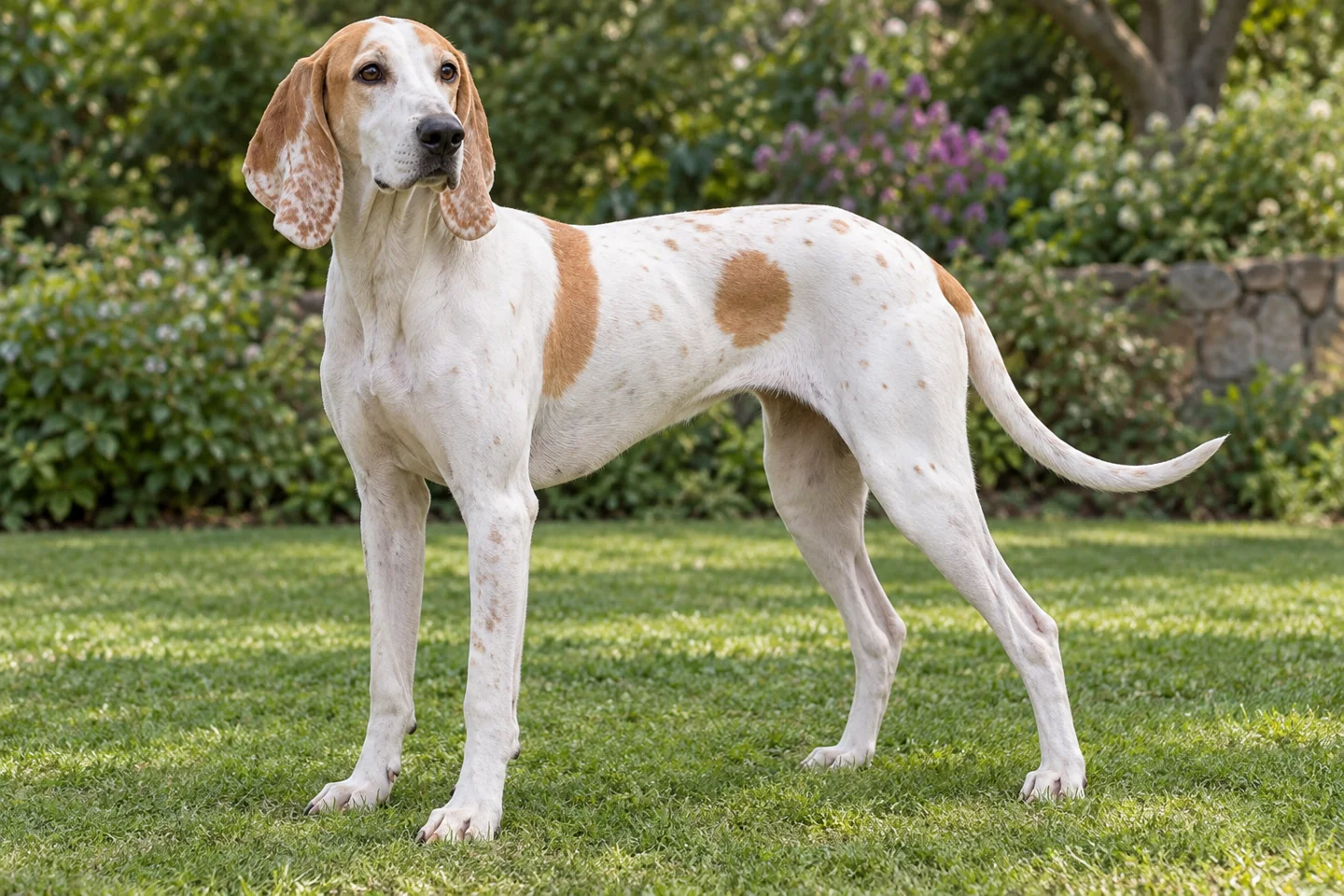
- Fine short white hair with orange patches and ear ticking
General information for owners. These articles have not been reviewed by a veterinarian. Medical decisions need your dog's history and an examination.
A scent trail matters more than a delicate appearance
The Porcelaine is a French scenthound with a fine white coat, orange markings, and long ears. Its polished appearance can suggest a decorative companion, but its working background points toward sustained interest in following scent. A prospective home should plan for safe investigation, suitable exercise, and close attention to boundaries. A garden and a bowl of food do not supply the interaction or varied activity an energetic hound needs. The important question is how this particular dog can live comfortably with the household's ordinary work schedule and available support.
Meet an adult in more than one situation if possible. Watch what happens when the owner stops walking, another dog passes, or something interesting moves beyond a fence. Ask how the animal rests after activity and manages short necessary absences. These details are more useful than broad promises that all Porcelaines make perfect family pets. A puppy will change through development, while a newly adopted adult may behave differently once settled. Prepare sleeping space, secure equipment, transport, and a gradual first-week routine before collection, with an identified person to contact when adjustment is harder than expected.
Adult size, orange markings, and comfortable structure
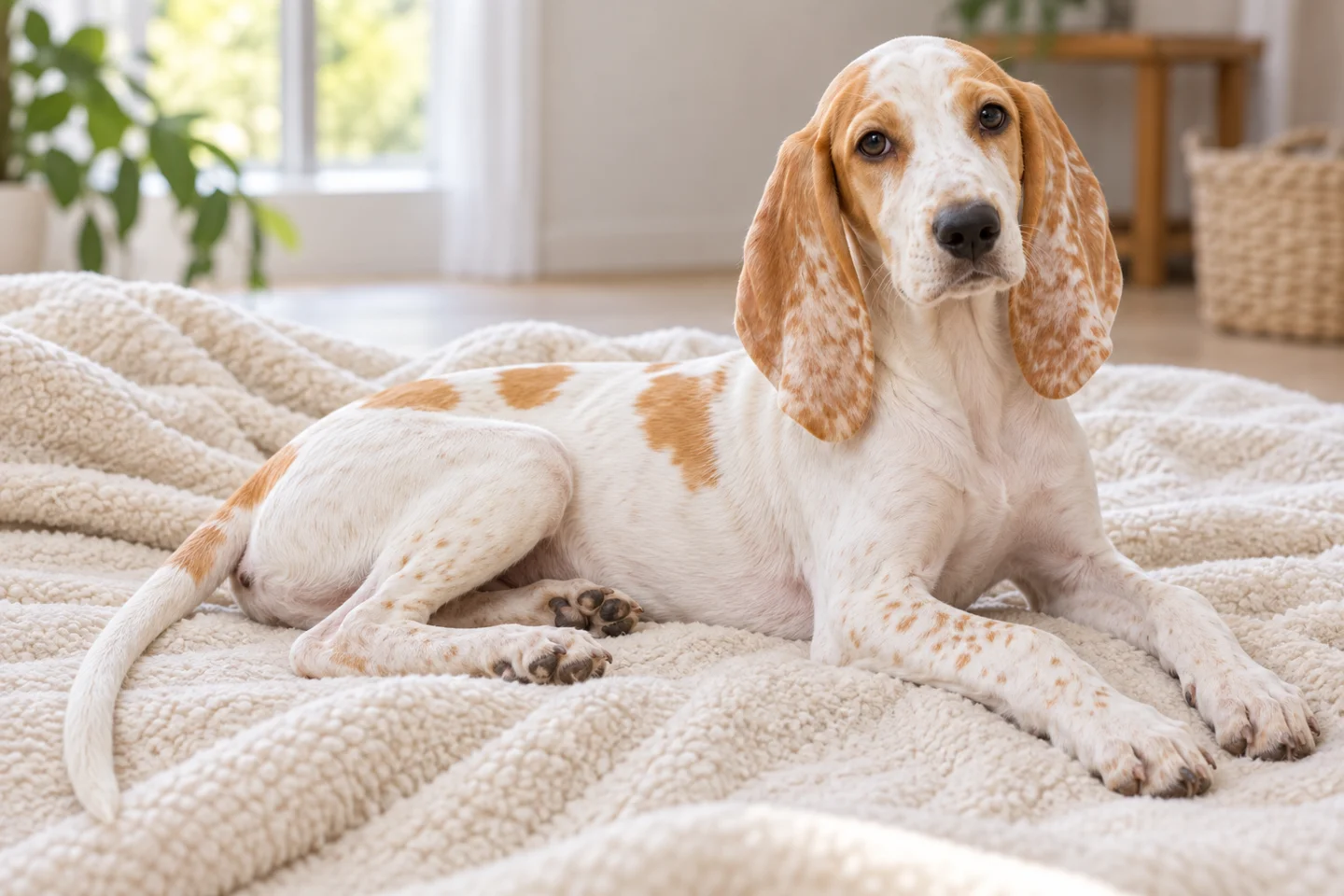
The FCI adult height is 55–58 cm for males and 53–56 cm for females. The coat is very short and fine, white with orange patches, with characteristic orange ticking on the ears. Dark skin pigment can show through the white hair. The head and long ears are refined, while the body belongs to a capable moving hound. The full natural tail has no heavy brush. The accompanying illustrations show these features as labeled AI illustrations. Markings vary between real individuals and are not a certificate of ancestry or health.
Look at comfortable movement rather than expecting an exact photograph match. The dog should be able to walk, turn, and rest without obvious distress. Ask about any change in stride, exercise tolerance, or willingness to be touched. Coat condition and body condition need hands-on assessment; a fine coat makes some changes easy to notice but cannot reveal everything happening beneath it. Puppies should grow on appropriate nutrition and ordinary age-suitable activity. Avoid using extra supplements, forced distance, or repeated jumping to create a desired adult outline. Consult the veterinary team about growth concerns and keep weight records that can show a meaningful trend.
Temperament, companionship, and the sound of a hound
Discuss vocal behavior before committing to shared walls or a noise-sensitive neighborhood. A hound may use its voice when aroused by scent, company, barriers, or separation, and the owner needs to know which situations matter to this animal. Do not wait for complaints before making a routine. Provide suitable activity, reward quiet disengagement from triggers, and arrange a resting place away from a constantly busy window. Shouting across repeated barking can add excitement without explaining a useful alternative. Persistent distress needs assessment rather than a harsher response to the sound.
Companionship should be planned in practical terms. Ask who covers a long workday, how a sitter will manage doors, and whether the dog can rest comfortably when its preferred person is unavailable. Build short absences gradually and use observation to judge whether the dog is coping. Another dog is not a guaranteed treatment for separation problems. For an adult changing homes, preserve predictability while learning its needs. Calm company, suitable investigation, and uninterrupted sleep form a more useful starting routine than a first weekend filled with visitors, dog parks, and constant attempts to test the animal's sociability.
Training that works with a searching nose
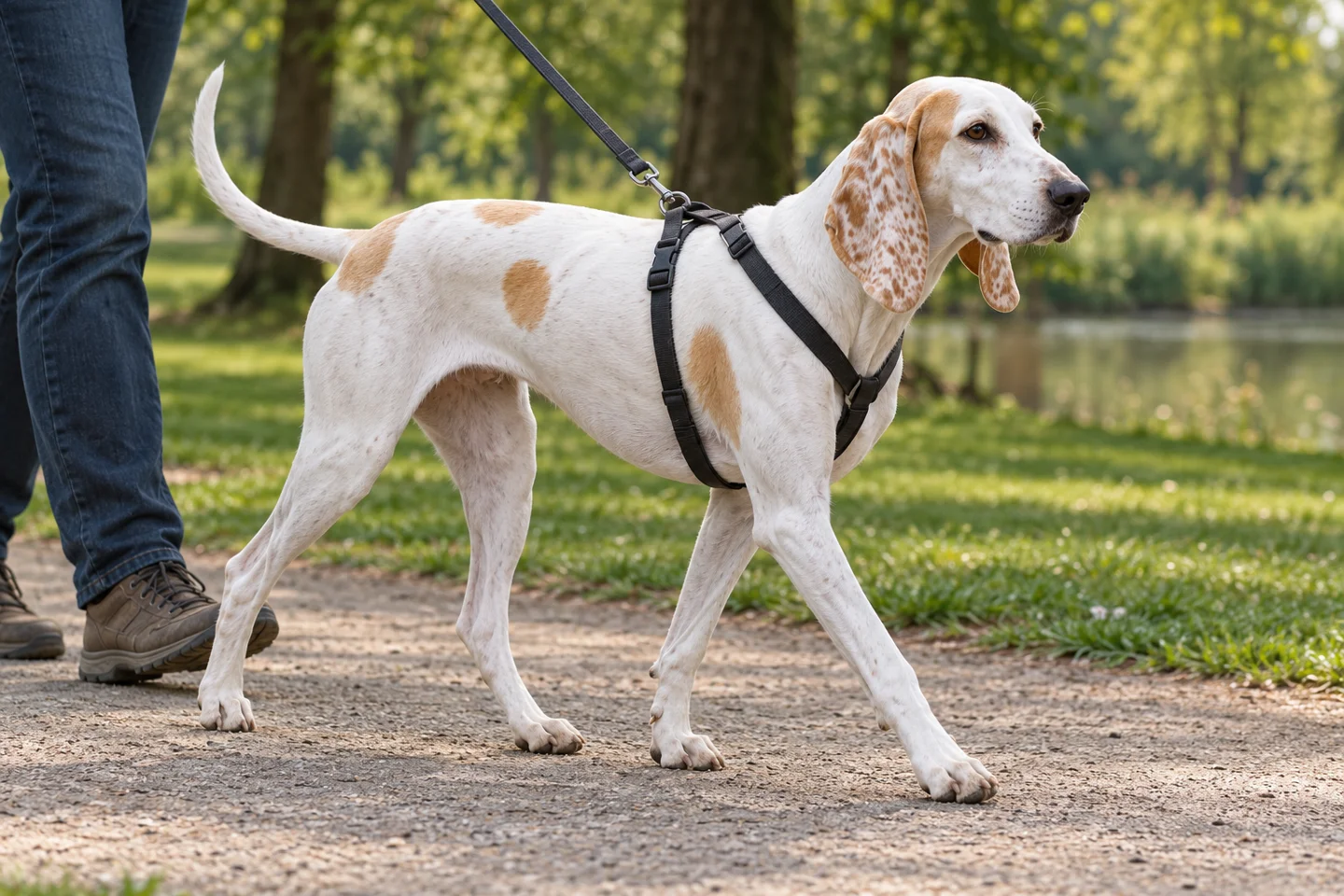
Start with skills that make daily movement safer: a response to name, a reinforced recall, comfortable lead walking, waiting at exits, and releasing an object. Teach each in a low-distraction setting, then increase difficulty in small steps. A Porcelaine investigating a strong trail may need more distance and management than it needed in the kitchen. Use safe enclosed areas and a suitable long line attached to a harness while reliability develops. Never let the line become a trap around another person or animal. Reward voluntary check-ins so returning attention to the handler has a clear history of success.
Give scent interest an appropriate place in the lesson. A cue to search for scattered food in safe grass, or a short laid scent game, can provide a satisfying task without chasing wildlife. End while the dog can still engage and recover. Food placed on a route must be safe and should not encourage taking unknown material during ordinary walks. Practice exchanging found items rather than reaching into the mouth by force. If guarding occurs, adjust management and seek professional guidance. A useful training plan accounts for the individual dog's learning and emotional state instead of calling a hound stubborn whenever its environment becomes difficult.
Exercise, secure boundaries, and checking recovery
Build activity around the animal's age, health, fitness, and weather. Varied routes with sniffing time, some brisk movement, and short training tasks provide different demands from repetitive high-speed chasing. The right amount is assessed partly by recovery: can the dog settle, move comfortably later, and approach the next outing without stiffness or exhaustion? Increase demands gradually after illness, travel, or a period of reduced activity. Young dogs need exploration and skill development rather than a forced adult mileage target. Discuss persistent changes with the veterinary team instead of assuming every reluctant walk reflects low motivation.
Check gates, fence gaps, and access through garages before relying on a boundary. Secure outdoor time should still include supervision and interaction. A hound absorbed in scent should not be expected to stop at an invisible property line or avoid a road because it knows the route. Make transfers between vehicle and building deliberate, with a lead attached before a door opens. Carry water and select cooler, shaded routes when conditions require it. A regular familiar walk can become unsuitable in heat, and planned exercise should be shortened or postponed when the dog's comfort or safety calls for that change. Check that identification tags remain readable and microchip contact details stay current after any move.
Aggression and preventing a preventable bite
A sociable breed description cannot rule out fear, guarding, pain, or conflict. Watch this dog's responses when approached while resting, when food is present, and when strangers reach over its head. Stiffening, freezing, turning away, or growling means the interaction should change. Increase space and remove the pressure. Punishing warnings can leave the underlying discomfort unresolved. A sudden behavioral change deserves veterinary assessment, especially if handling or movement now causes a reaction. Keep notes about what happened immediately before an incident, not merely a label such as jealous or dominant.
Protect everyone while obtaining help. Separate around known triggers, use secure barriers for visitors, and give the dog an undisturbed resting area. Adults should understand the same rules so one person is not encouraging behavior another later punishes. If a bite has occurred or appears likely, involve the veterinarian and a suitably qualified behavior professional. Positively introduced basket-muzzle training may form part of a safety plan, but it does not make forced contact appropriate. Measure progress through relaxed behavior and successful choices at suitable distances, rather than by asking the dog to tolerate increasingly intrusive greetings for a photograph.
Children, dog companions, and small animals
Adults must supervise contact with children and intervene before excitement becomes rough. Long hound ears can be pulled accidentally, and a resting dog should never be climbed on or cornered. Provide a separate safe area during meals, naps, running games, and busy visits. Teach children to invite brief contact and allow the dog to leave. A child who understands a rule may still forget it when excited, so the physical arrangement matters. Do not assign responsibility for preventing bites or managing a strong dog near roads to a young family member.
Dog introductions work better with room for separate movement than with a crowded doorway. Compare play styles and the ability to disengage before allowing closer contact. A Porcelaine accustomed to familiar hounds may still dislike an unfamiliar dog's repeated body slamming or pursuit. Cats and smaller pets require another level of assessment because running can trigger chasing. Use secure barriers and controlled gradual exposure where appropriate, with a plan for lasting separation if needed. Never release the dog to discover what it will do to a small animal. An absence of previous incidents may simply mean the opportunity has not occurred.
Grooming a fine coat and caring for long ears
Short hair reduces combing demands, but regular inspection remains useful. Use a gentle brush or suitable grooming mitt, examine the skin, and look over feet after walks. Check areas beneath straps for friction and remove attached plant material carefully. Bath when necessary with a product suitable for dogs, then dry comfortably. Hair loss, persistent itching, or new lesions deserve an examination rather than an assumption that a pale coat is naturally sensitive. Good light and a calm familiar routine help an owner notice small changes without making every grooming session stressful.
Lift the ear flap gently to inspect the visible outer area, but avoid pushing tools or cotton buds into the canal. Redness, smell, discharge, repeated head shaking, or pain calls for veterinary advice. Follow the prescribed cleaning approach for this patient rather than automatically using leftover medication. Teach cooperative handling by briefly touching an ear, rewarding comfort, and ending before resistance develops. Nail care, dental care, and equipment checks also belong in the routine. A dog that runs willingly may still have a painful nail or ear problem, so enthusiasm is not a substitute for inspection and appropriate care.
Health decisions when breed-wide evidence is limited
Do not turn a short online list into a complete Porcelaine health programme. Ask the source which examinations apply to its registry, family, and planned pairing, and request the actual dated reports. The Société Centrale Canine's LOF Select system can hold pedigree, DNA, health, and related-dog information. Where French records apply, use the correct identification to review what is available and ask about missing information. A blank entry does not prove a normal result, and a show award or working achievement answers different questions from a clinical examination.
Make the family discussion specific: ask about recurrent ear or skin treatment, eye problems, lameness, unexplained collapse, surgery, and reasons relatives died. These questions gather relevant history without claiming those conditions are established Porcelaine predispositions. A veterinarian can help distinguish a formal parental screen from ordinary treatment notes and decide whether further investigation is appropriate. Record the puppy's baseline examination and growth, or an adult's condition on arrival. Keeping an organized file helps future decisions because a vague assurance that the line is healthy becomes less useful when a clinician needs to know exactly what happened to a close relative.
Outdoor and import health depend on exposure
The Porcelaine's nationality does not determine which parasites it has encountered. Travel history, previous housing, hunting locations, and preventive care matter. ESCCAP's guidance for travelling and imported animals supports planning around actual geographic exposure. Tell the veterinarian where the dog has lived and travelled and provide treatment and test dates. A travel document is not a complete medical assessment. Ask whether additional screening or later repeat testing is indicated for this individual, rather than copying a test package intended for a different region or assuming a dog with a clean coat has no exposure history.
For regular woodland activity, establish an appropriate parasite-prevention plan and learn safe inspection and tick-removal methods from the clinic. Look over feet, ears, and skin after brushy routes, and note changes in appetite, movement, energy, or drinking. Avoid consuming carcasses or questionable water during walks through good management and practiced exchanges. Contact a veterinarian promptly for concerning illness after travel and mention the travel history even if the trip was months earlier. Do not use a breed article to diagnose an infection or select medication. The useful action is giving the treating professional accurate dates, places, symptoms, and previous results.
Nutrition, mixes, and choosing a sustainable home
Feed a complete diet that suits life stage, medical needs, and workload. Measure portions and include rewards in the total, then adjust with veterinary advice as activity changes. Keep a simple record when weight, appetite, or stool quality changes rather than repeatedly switching foods without a plan. There is no required fashionable diet for a white and orange hound. An owner should be able to obtain and store the chosen food reliably and explain the routine to another carer. Working days and quiet recovery days can differ, so use the individual dog's condition to guide review.
A Porcelaine mix may inherit varied traits, and pale coloring or long ears cannot prove parentage. Keep uncertain ancestry descriptions honest and assess the dog in front of you. Crossing does not guarantee better health or moderate hunting interest. Budget for routine and urgent care, training help, secure fencing, transport, and reliable cover during absences. Meet the source's expectations in writing, including support and return arrangements. A capable placement is one that can meet the dog's needs through ordinary employment, a family illness, and later-life change, rather than a household able to provide exciting outings only during the first enthusiastic month.
dogsDating meetings should leave room to sniff and disengage
Describe this hound's lead skills, preferred pace, and comfort with other dogs on dogsDating. Share an approximate area while keeping exact coordinates and the home address private. Agree on a public open route and have one capable adult responsible for each dog. Start with parallel walking at a comfortable separation. A narrow gate or a cluster of dogs waiting around a shared treat bag is a poor first introduction. Leave food bowls and valued toys out of the interaction, and ask about size, chase behavior, and any known handling concerns before arrival.
Use the walk to observe whether both animals can sniff, turn away, and continue comfortably. Increase distance or finish early if one repeatedly freezes, tries to escape, or pursues the other. A calm route shared at a distance can be a successful meeting without play. Compare the practical details afterward, including noise, traffic, pace, and duration, and change the next outing accordingly. Keep another person's identifying details and address out of public photographs. The purpose is comfortable companionship for these individual animals, and owners should remain free to change plans when that comfort is not present.
Sources and editorial notes
Sources checked October 22, 2026. Breed measurements describe reference ranges, not a diagnosis or an individual dog's ideal weight. Images are AI-generated breed illustrations and do not document a particular dog or health condition.
- AVSAB: Humane Dog Training Position Statement
- VCA Animal Hospitals: Food aggression in puppies
- VCA Animal Hospitals: Common emergencies in dogs
- Orthopedic Foundation for Animals: CHIC health screening programs
- VCA Animal Hospitals: Aggression toward unfamiliar dogs, diagnosis
- VCA Animal Hospitals: Grooming and coat care for your dog
- VCA Animal Hospitals: Ear infections in dogs (otitis externa)
- AAHA: Feeding plans for healthy, appropriate weight cats and dogs
- VCA Animal Hospitals: Heat stroke in dogs
- AVSAB: Puppy Socialization Position Statement
- VCA Animal Hospitals: Dog behavior problems, aggression toward children
- Official breed standard: Porcelaine
- American Kennel Club: Porcelaine background and care
- Société Centrale Canine: How to use LOF Select health and pedigree records
- ESCCAP: Parasite control for travelling and imported pets, Guideline 9
Keep getting to know dogs.
Read another guide or return to your dogsDating community.
Explore breed guidesBack to dogsDating