Pyrenean Shepherd
The Pyrenean Shepherd is a small French herding dog with considerable responsiveness and energy. Coat variety, social comfort, and the ability to settle deserve attention alongside exercise and training when choosing an individual.
How these guides are researched and reviewed
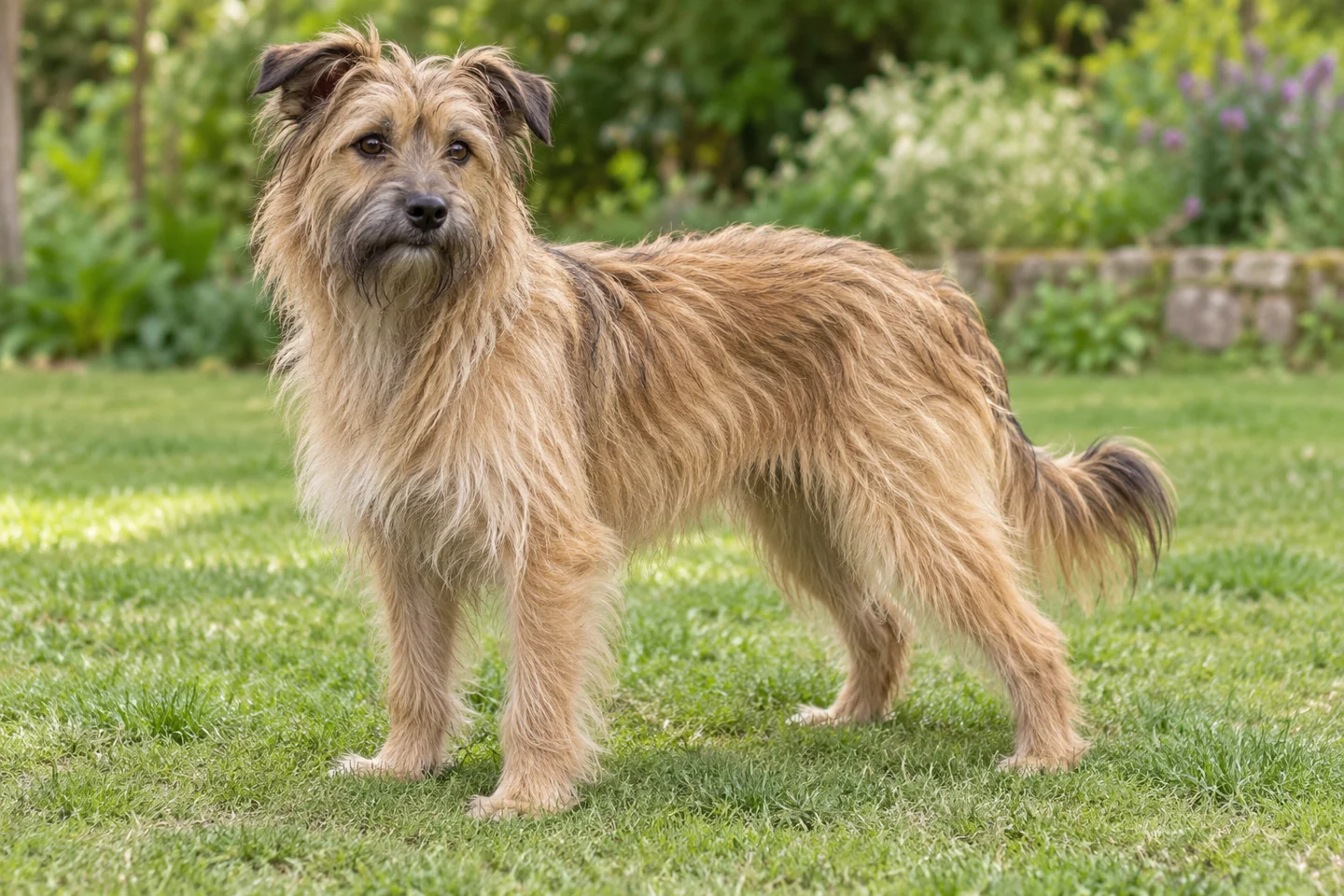
- Origin
- France
- Adult standard size
- Long-haired males 42–48 cm; females 40–46 cm
- Illustrated coat
- Fawn rough-faced long coat
General information for owners. These articles have not been reviewed by a veterinarian. Medical decisions need your dog's history and an examination.
Which Pyrenean dog and which coat
The Pyrenean Shepherd is a small herding dog, distinct from the giant Pyrenean Mastiff and Pyrenean Mountain Dog. It occurs in rough-faced and smooth-faced forms. The FCI publishes separate standards for the long-haired and smooth-faced Pyrenean Sheepdogs. This guide's illustrations choose the rough-faced, long-haired form in fawn. The broader discussion concerns the individual's care, while any measurements should be read with the named variety in mind.
Ask a source which form it breeds and which registry describes the parents. A shaggy face alone cannot prove identity. For an adult rescue, keep uncertain ancestry separate from reliable observations of behavior and care. A manageable physical size does not establish an undemanding companion. Before choosing one, ask about daily routines, sound sensitivity, visitors, and rest. Watching the dog perform a familiar task offers useful information, but the quieter periods afterward reveal another part of the household match that a photograph or short action video leaves out.
A working partner in the Pyrenees
The breed's identity is tied to farm and pasture work in the French Pyrenees. Its historical task helps explain why responsiveness and initiative matter, without proving that every puppy will behave identically or arrive trained around livestock. Ask what the parents actually do and how they respond to ordinary situations outside their work. A title or performance can support one aspect of selection while leaving questions about handling, absences, and family life unanswered.
A companion can use attention in searches, learning sequences, and foundations for a suitable sport. It also needs a clear end to activity and genuine sleep. Avoid making uncontrolled pursuit the household's main outlet. If you want livestock work, seek informed instruction and the animal owner's permission rather than letting ancestry serve as authorization. The daily arrangement should fit this dog, including days when weather, illness, or the person's workload limits activity. Practical support and a flexible routine matter more than a general promise that an intelligent dog will automatically adapt to whatever happens.
Adult measurements and a light frame
For the long-haired form, FCI ranges are 42–48 cm for males and 40–46 cm for females, with a stated tolerance for well-typed dogs. The smooth-faced standard gives different ranges: 40–54 cm for males and 40–52 cm for females. Do not merge those into a single invented range without identifying the form. Adult conformation references are also different from food targets or an assessment of an individual's condition.
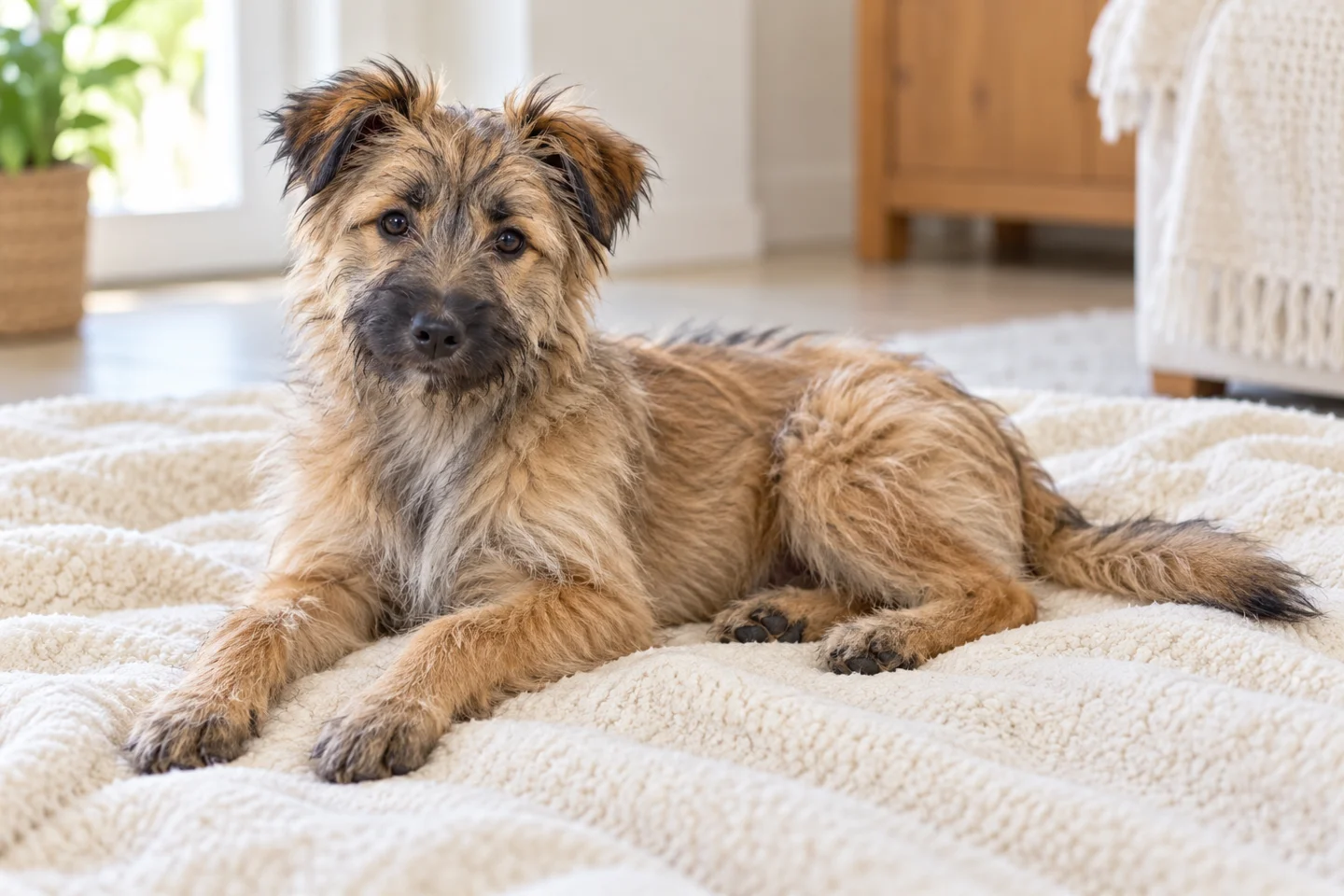
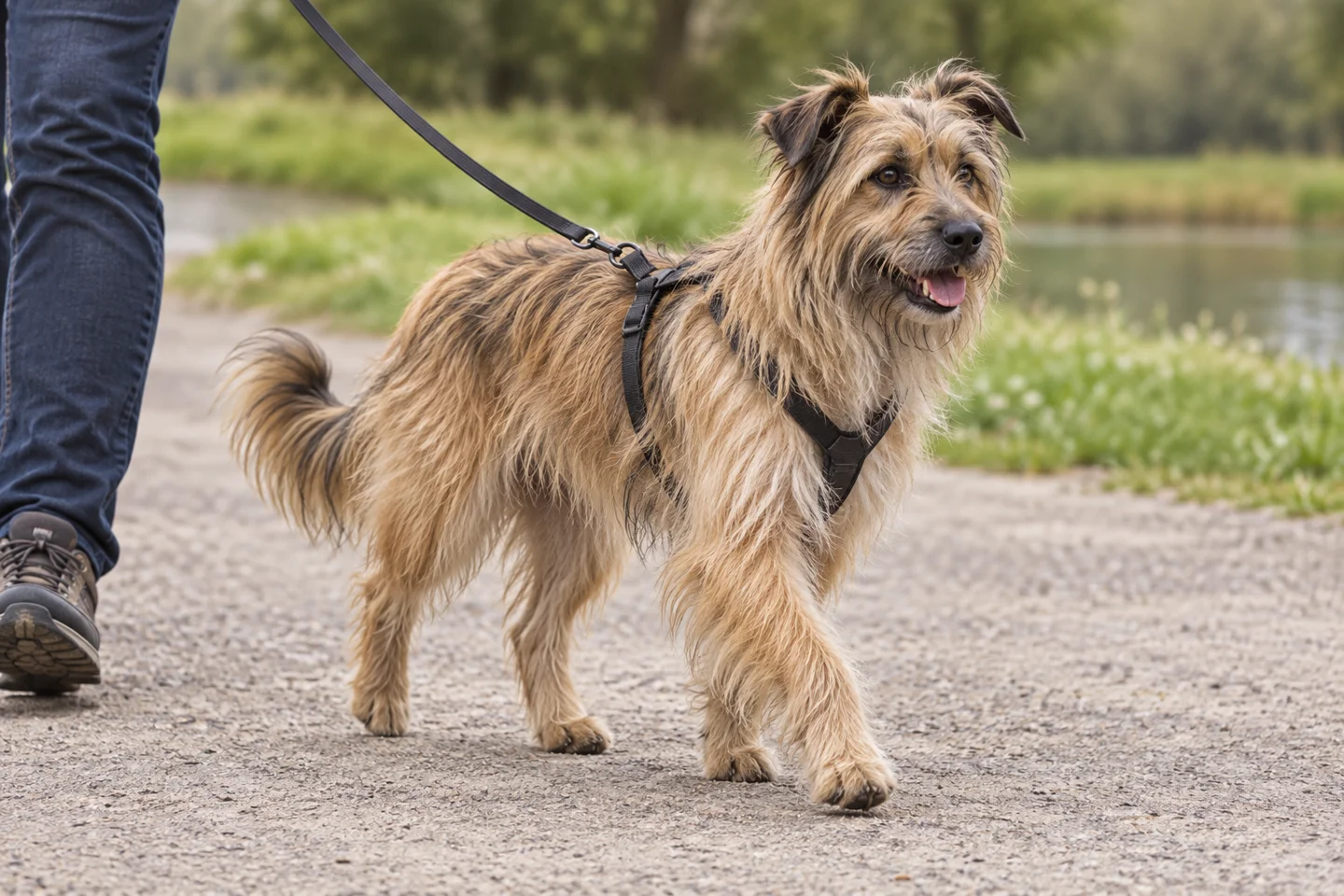
The rough-faced dog is lightly built and slightly longer than tall, with a triangular head and mobile natural ears. This guide's AI-generated illustrations show fawn hair, half-pricked ears with folded upper portions, and a full fringed tail with a hooked tip. They cannot verify health or pedigree. When meeting a real dog, observe comfortable movement and ask about previous treatment. Assess muscle and body condition beneath the coat with veterinary guidance. A quick, lean appearance is not proof of readiness for unrestricted repetitive jumping, particularly during growth or after a period of reduced activity.
Selecting the environment as carefully as the activity
Consider the pace of your home. A dog attentive to movement and change may find a constantly busy entrance or unpredictable household difficult, even when plenty of exercise is available. Ask how the individual recovers after visitors and whether it can relax while familiar people work. Arrange a resting place that does not require supervision of every doorway, and reward short quiet pauses before adding difficulty.
An adult moving homes may need a gradual transition. Begin with a predictable smaller world and expand as it becomes familiar. Observe sleep, appetite, and recovery alongside visible enthusiasm. If the dog remains unable to settle, investigate the context instead of automatically adding more stimulation. Veterinary and qualified behavioral support may be appropriate. Prepare manageable separations too. A strong working relationship with a person does not establish coping skills for an abrupt long absence. Another animal cannot be assumed to solve persistent distress, and an individual plan should follow what actually happens when the dog is apart from its familiar handler.
Training that keeps information clear
Start with useful everyday responses: returning in a secure space, waiting at openings, moving with the handler, and releasing an object. Reward success and increase distraction deliberately. A fast learner can notice inconsistencies just as readily as intended cues. If several people train, agree on the words, release signal, and version of the task the dog currently understands. This matters when a sitter must use the same routine without the primary owner present.
Use suitable boundaries and equipment while skills develop. Practice a calm departure before a crowded outing makes it difficult. A reward-based professional can help break a task down when the dog becomes too excited or worried to respond. Ask how they adapt after failure and how they assess physical comfort. Pressure intended to force immediate compliance may create additional concern about people or surroundings. Useful teaching allows the dog to understand an alternative and perform it successfully. Repetition is valuable when it practices that skill, rather than repeatedly exposing the animal to the same level of difficulty and hoping a different result appears.
Exercise, coordination, and suitable recovery
Provide daily movement and investigation according to health, maturity, and fitness. A small frame and athletic manner should not lead to abrupt strenuous demands. Build longer outings and organized work progressively, and ask the veterinarian about activity during growth or after treatment. A varied walk with time to smell can complement structured tasks. The aim is comfortable function and recovery, not an effort to exhaust an alert dog into silence.
Check surfaces before fast turns, running, or jumping. Slippery flooring and awkward landings can make a familiar exercise harder on the body. In warm weather, adjust timing, carry water, and offer shade and a cool resting place. Inspect paws after rough ground. Watch for altered stride, unusual fatigue, or reluctance during normal activity, and seek assessment when those changes appear. Enthusiasm cannot rule out pain. During medical restriction, ask which quiet tasks are compatible with recovery and tell carers the limits. An energetic indoor game may recreate the physical demands the treatment plan is intended to prevent.
Children and movement the dog can manage
An adult should choose games with clear starts and stops. A child can help hide a reward for a search or ask for a familiar cue under supervision. Avoid encouraging the dog to pursue a running child. Herding identity does not make clothing grabbing acceptable, and children should not be responsible for controlling an excited dog. Use barriers during activity the animal cannot currently handle calmly.
Protect rest and meals and teach children that the dog can leave an interaction. Pulling hair, hugging around the neck, or following it beneath furniture creates unnecessary pressure. Ask about the actual ages and situations it has experienced. A quiet meeting with an older child offers limited evidence about life with a toddler or a visiting group. If avoidance or warnings recur, end contact and seek help. A comfortable relationship develops through experiences both can manage. Neither should be forced into closeness to demonstrate that a family can make the placement work, and direct adult supervision remains necessary even when previous interactions have gone well.
Aggression and responses to unfamiliar people
Allow a dog time to assess a person without requiring immediate touching. A reserved response is information about the individual and situation, not a reason to trap it between several admiring visitors. Give an exit and reward comfortable disengagement. If it becomes still, retreats, growls, or snaps, stop and review what preceded the response. New handling reactions deserve consideration of pain and veterinary assessment.
Teach exchanges with safe objects and prevent access to recurring hazards. Avoid repeatedly removing meals or cornering the animal as a test of trust. A bite history requires honest disclosure and an individual plan with qualified support. Describe the sequence and any injury, including whether escape was available. Reliable separation can prevent another incident while assessment and learning proceed. Physical confrontation intended to establish authority is an unreliable approach. A standard's description cannot certify every dog's safety, and affection toward a familiar handler does not establish comfort with a stranger approaching quickly or reaching for a painful part of the body.
Other dogs, cats, and working animals
A quick, persistent player may overwhelm a quieter companion. Begin dog introductions with space and movement, watching for pauses, voluntary returns, and the ability to respond to handlers. Stop repeated pursuit of a dog seeking shelter. A steady parallel walk can be a satisfying form of contact even if loose play is unsuitable. Similar size or another herding pedigree cannot guarantee the same social style.
At home, provide separate meals and individual resting places during adjustment. A calm walk differs from sharing a valued object or human attention. Cats need protected routes and gradual exposure with separation available. Reward disengagement and prevent chasing from becoming the normal routine. Familiarity with one cat indoors cannot establish safety around an unfamiliar running animal outdoors. Livestock activity requires informed instruction and permission. If serious conflict has occurred, obtain advice before another unrestricted trial. The relevant question is whether these particular animals can share the proposed daily contexts comfortably, including moments when the people are occupied and cannot watch every movement.
Grooming a rough-faced coat
The rough-faced coat should not hide the eyes or become an excuse to overlook skin. Work through areas where friction and debris collect, including behind the ears, under equipment, and around the legs. Ask a groomer experienced with the form to demonstrate suitable tools and maintenance for the actual texture. Coat care differs from styling a generic shaggy dog, and comfort matters more than imitating a presentation the household cannot maintain.
Introduce a stable stand, brief paw contact, and gentle handling near the face in short rewarded steps. Do not pull through painful knots while increasing restraint. Severe matting may require professional removal. Include nails, dental brushing, and external ear checks. Persistent discharge, odor, or head shaking needs veterinary advice, and implements should not enter the ear canal. If a previously easy task suddenly becomes difficult, investigate discomfort and technique. Tell professionals about handling concerns before an appointment. Necessary care may require a clinical plan while cooperative skills develop, rather than repeated sessions that make the next procedure harder.
Health screening and the meaning of a DNA repository
The Pyrenean Shepherd Club of America's published statement identifies hips, specialist eye assessment, and patella evaluation. It also refers to CHIC DNA participation and optional cardiac assessment. Ask the club or registry for the current protocol and obtain actual identified reports. Depositing DNA for research is different from receiving a diagnostic result for a named inherited condition. A source should explain which kind of information it is presenting instead of merging them into one claim of genetic clearance.
Ask about significant diagnoses among relatives and how later findings are communicated. Clinical screening cannot guarantee every future outcome, and a favorable parental report does not diagnose a pet's new limp or visual change. Keep original results and treatment details available when clinics change. For an adult with missing records, establish a useful baseline and decide with the veterinarian which further information would influence care. Acknowledge the gap rather than inventing a disease rate or borrowing a complete test list from another mountain or herding breed. The point is evidence relevant to this family and current patient, not the largest possible collection of test names.
Feeding and care when routines change
The Pyrenean Shepherd Club of America's health statement combines several kinds of information that owners should distinguish. It identifies hip evaluation, specialist eye assessment, and patella evaluation, and also discusses CHIC DNA participation and optional cardiac assessment. Request the actual reports for the parents and confirm the current protocol. An optional assessment should not quietly become a claim that every dog in every country must have the same test list.
A DNA repository stores material for research. Depositing a sample does not by itself produce a diagnostic clearance for a named condition. Ask a source whether the document shows submission to a repository, the result of a particular genetic test, or a clinical assessment. Those are separate answers. The largest stack of paperwork is less useful than a clear explanation of what each item establishes about the proposed litter.
For this active dog, note changes in how it turns, rises, or uses a familiar step. A pet's new limp cannot be explained away by favorable parental records. Record intermittent changes safely and let the veterinarian decide how to investigate. Ask the breeder how later diagnoses are shared with owners, using confirmed findings rather than vague family anecdotes. An adult with incomplete records still benefits from a practical baseline visit and a care plan based on the evidence actually available.
Mixes, sourcing, and recurring costs
A Pyrenean Shepherd mix may have different dimensions, coat, and behavior from the pictured parent. A crossbreed name cannot guarantee predictable maintenance or better health. Evaluate the individual and ask what is documented. An adult with detailed foster observations may offer useful information even when ancestry remains uncertain. A puppy allows early teaching while leaving more uncertainty about adult preferences and drive.
Obtain local costs for preventive care, grooming help, dental treatment, training, transport, boarding, and emergencies. Read insurance terms about prior symptoms and ongoing conditions. A source should discuss support, later family-health information, and what happens if the placement cannot continue. Rarity or an exciting performance is a poor reason to accept vague records or rush. The sustainable match is between the dog's actual needs and the household's reliable resources. That includes time, people who can maintain routines, and willingness to seek informed help, as well as the initial fee and enthusiasm when first meeting a bright, responsive animal.
Planning a dogsDating introduction
A Pyrenean Shepherd may notice small changes in its walking partner's movement before either person reacts. Use dogsDating to describe whether this dog enjoys quiet exploration, accelerates when others run, or becomes vocal when play pauses. Ask how the other dog responds to a partner that changes pace quickly. Similar energy levels do not automatically mean similar play preferences.
Agree on a broad public route and an opening period with the dogs walking separately. Let them look and then return to their own exploration. A comfortable response includes the ability to turn away; repeated staring or pursuit deserves a pause and more room. Avoid a meeting beside livestock, where herding-related attention could complicate the encounter. The handlers should be free to end early rather than escalate the activity to produce a cheerful photograph.
Keep exact user coordinates private. Choose the public entrance or landmark together after approximate discovery identifies a suitable area. There is no need to reveal a home, regular private training space, or detailed personal movement pattern. Note afterward whether barking reduced, whether both dogs could pause, and what separation helped. Those concrete details make another outing easier to plan while leaving both owners free to decide that a different partner would fit better.
Sources and editorial notes
Sources checked October 22, 2026. Breed measurements describe reference ranges, not a diagnosis or an individual dog's ideal weight. Images are AI-generated breed illustrations and do not document a particular dog or health condition.
- AVSAB: Humane Dog Training Position Statement
- VCA Animal Hospitals: Food aggression in puppies
- Orthopedic Foundation for Animals: CHIC health screening programs
- VCA Animal Hospitals: Aggression toward unfamiliar dogs, diagnosis
- VCA Animal Hospitals: Grooming and coat care for your dog
- VCA Animal Hospitals: Ear infections in dogs (otitis externa)
- AAHA: Feeding plans for healthy, appropriate weight cats and dogs
- VCA Animal Hospitals: Heat stroke in dogs
- AVSAB: Puppy Socialization Position Statement
- VCA Animal Hospitals: Dog behavior problems, aggression toward children
- American Kennel Club: Herding group health testing requirements
- FCI: smooth-faced Pyrenean Sheepdog standard
- Pyrenean Shepherd Club of America: health screening statement
- Fédération Cynologique Internationale: Pyrenean Shepherd official breed standard
Keep getting to know dogs.
Read another guide or return to your dogsDating community.
Explore breed guidesBack to dogsDating