Scottish Terrier
A sturdy Scottish terrier with guidance on coat care, cooperation, type III vWD, developing jaw disease and urinary-health discussions.
How these guides are researched and reviewed
- Origin
- Great Britain, Scotland
- Adult standard height
- 25–28 cm
- Adult standard weight
- 8.5–10.5 kg
- Coat colors
- Black, wheaten, or brindle
General information for owners. These articles have not been reviewed by a veterinarian. Medical decisions need your dog's history and an examination.
A compact Scottish terrier with its own limits
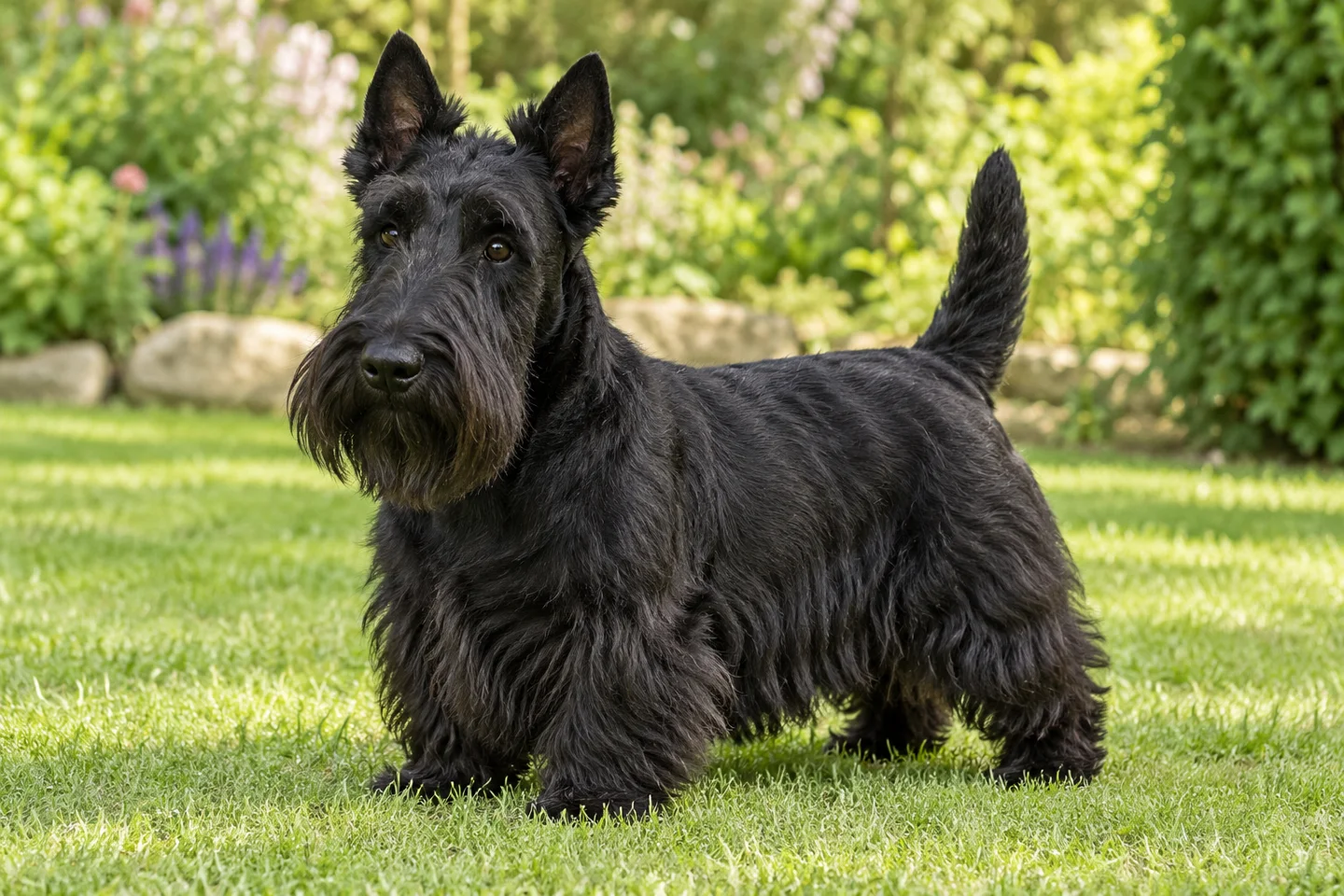
The Scottish Terrier is a sturdy, short-legged terrier with a long strong head, pointed natural ears, a wiry coat, and a thick full tail. Black is familiar, but wheaten and brindle are also recognized. The silhouette can look self-contained and serious while the individual remains affectionate, playful, cautious, or easily excited in different circumstances. Choose a dog from actual behavior and records rather than treating a recognizable outline as a complete personality description.
Think about ordinary handling before choosing a puppy. Its beard needs care, feet need inspection, and a powerful jaw still needs comfortable mouth examinations. A small body does not make forceful restraint a useful substitute for teaching. Meet adults where possible and ask about grooming, visitors, other animals, and the ability to rest between activities. The dog's needs should fit the household on a wet working day as well as during a pleasant walk when everyone has spare time.
History and what independence means in practice
The current FCI standard records the formation of the Scottish Terrier Club in 1882 and connects the modern breed's development with earlier Scottish terrier work. That history explains interest in investigation and a practical body suited to work near the ground. It does not require a companion to enter burrows or confront wildlife, and it cannot establish how one puppy will respond to every household situation.
Independence is often used as a shorthand when training feels difficult. Ask what the dog understands and what reward is available before deciding it simply refuses. A terrier absorbed in a scent may need a clearer cue, less distraction, and more manageable practice. A dog avoiding touch may be uncomfortable. The useful ownership approach combines suitable outlets with consistent teaching and physical safety. Ask breeders how the parents cope with interruption, not only whether they are loyal. Specific examples make an ancestry story relevant to the home the puppy will actually join.
Adult measurements and a short-legged body
The October 2026 FCI standard gives a height at the withers of 25–28 cm and a weight of 8.5–10.5 kg. These are adult conformation references, not a prescription to feed every dog toward the upper value. Frame and condition still matter. Ask the veterinary team to assess ribs, waist, and muscle beneath the coat, and track changes rather than relying on how large the dog looks from the front.
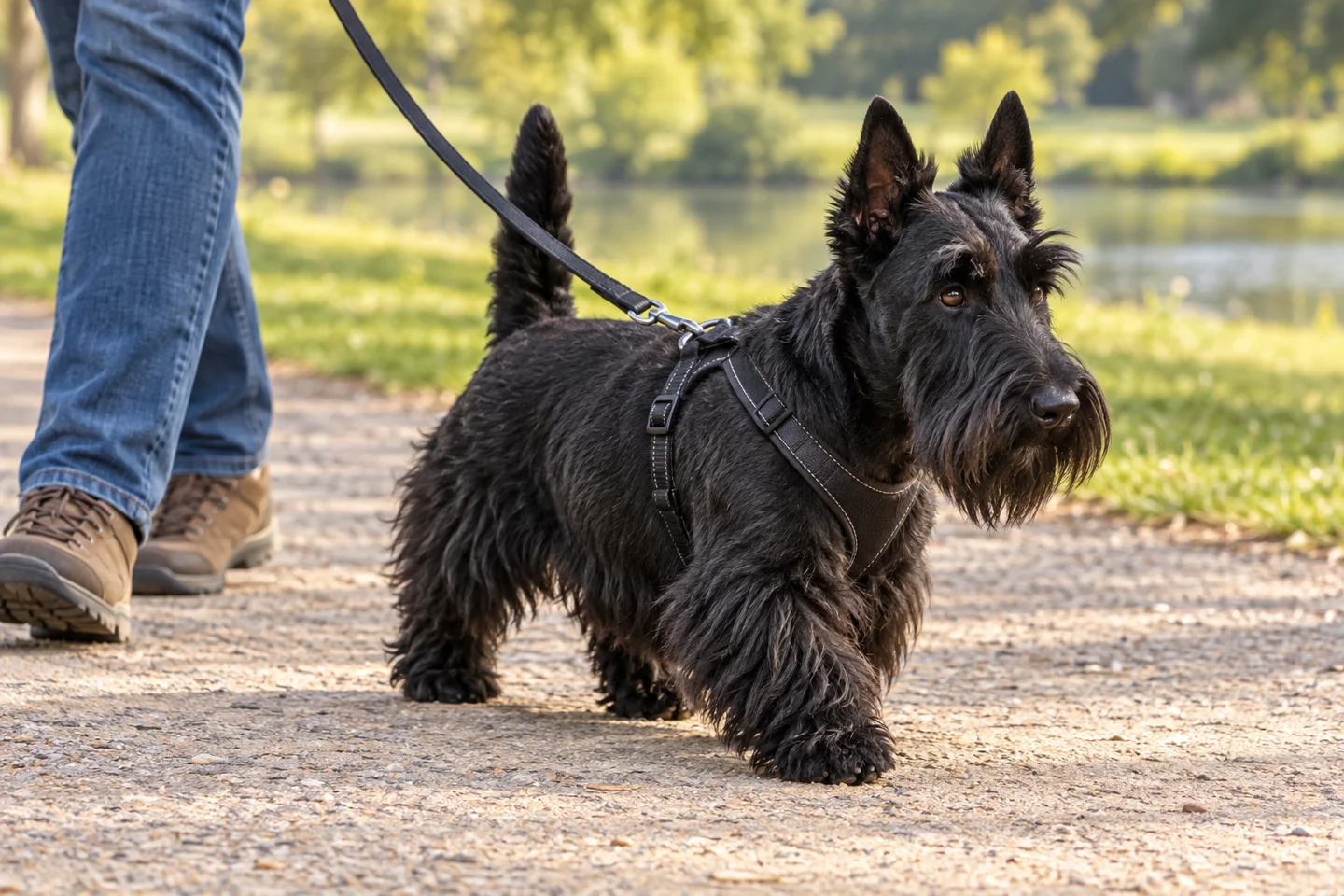
The legs are short while the body carries substantial muscle and bone. Avoid treating extreme heaviness or exaggerated bowing as a desirable sign of strength. Watch movement on ordinary nonslip ground and report a persistent change. Choose equipment that fits the deep chest without rubbing behind the elbows. Teach a comfortable way into a vehicle or onto a safe low surface rather than relying on repeated awkward jumps. A ramp or step should be stable and introduced while the dog is well, before pain or urgency makes unfamiliar equipment harder to use.
Training cooperation instead of a contest over objects
Teach attention, returning at short range, moving away from an entrance, and settling while people handle ordinary tasks. Reward promptly and practice in settings where the dog can succeed. Permission to investigate a safe scent can work alongside food as an outcome worth choosing. Increase distractions gradually rather than expecting a response learned indoors to appear immediately beside wildlife or another barking dog.
An exchange is particularly useful for found objects. Begin with a safe low-value item, offer a reward, and let the dog move away before retrieving it. Avoid opening the mouth by force or repeatedly taking things to prove control. Keep dangerous objects and rubbish inaccessible while skills develop. Punishment, scruffing, and lead jerks can create more conflict without explaining the requested action. A qualified reward-based professional can help if resource guarding or pulling already affects daily life. The practical aim is reliable cooperation, not demonstrating that a person can physically overpower a compact terrier.
Exercise that suits legs, lungs, and recovery
Provide regular walks, scent searches, and suitable play, adjusted to age, health, and fitness. Short legs do not mean no exercise is needed, while determination does not mean unlimited repetitions are safe. Puppies need rest between manageable outings. Adults can enjoy varied routes and supervised digging in an appropriate place. Inspect the material first so the dog cannot swallow dangerous objects or become caught while investigating.
Watch recovery after activity, including rising from rest and moving the following morning. If the dog changes stride, becomes unusually reluctant, or repeatedly asks to stop, revise the plan and seek advice when necessary. Carry water and choose cooler periods in warmth. A dark coat and a busy response to play should not encourage a handler to ignore temperature. Keep recall practice controlled and assess enclosed areas for gaps or digging opportunities. Avoid using wildlife pursuit as a fitness activity; investigation can be rewarding without putting the dog or another animal at risk.
Socialization while respecting a reserved response
Introduce people, dogs, handling, surfaces, and public sounds at a level the puppy can manage. Let it observe without being touched and pair novelty with rewards. A visitor can sit sideways and wait. The dog's willingness to approach is useful information, and retreat should remain possible. Do not hold it still while strangers lean over its head simply because the terrier looks sturdy enough to tolerate it.
Practice a calm pass as well as greetings. Reward looking at a dog or bicycle and returning attention, then leave before the event becomes overwhelming. If the puppy freezes, repeatedly hides, or cannot respond to an easy familiar cue, reduce the difficulty. Continue learning through adolescence and after a major change in the home. An adult rescue needs the same respect for its current experience. A breed description of courage cannot tell you whether the individual understands a crowded lift, a groomer's table, or a stranger carrying unfamiliar equipment.

Children and the right to leave a familiar person
Adults should supervise closely and separate the Scottish Terrier during meals, chews, sleep, and running games. Teach children to invite the dog closer, touch briefly, and stop so it can choose whether to remain. Prevent hugging the neck, pulling the beard, lifting awkwardly, or following the dog into its bed. A sturdy appearance does not make rough handling harmless.
A child finding a terrier with a stolen sock should call an adult and stay back. The adult needs a safe exchange plan, developed away from an urgent incident, rather than a competition over who can pull hardest. Children can help choose a hiding place for a supervised search while the dog waits elsewhere. They should not experiment with its food or attempt to demonstrate how much it trusts them. During visits, check whether the dog can reach its protected space without passing through the group. Turning away, freezing, or repeated attempts to retreat end the interaction. When an adult's attention becomes divided, put the physical separation in place before continuing another task. These arrangements must work for visitors as well as familiar children.
Aggression and warning signals beneath the beard
Facial furnishings can make a dog's expression harder to read, so observe its whole body. A Scottish Terrier freezing over an item or turning away from handling is giving information that should change the interaction. Record the approach, resource, location, touch, and possible escape route after an incident. A response to a painful jaw needs a different plan from guarding food against another dog.
Create space, protect people and animals, and avoid repeating a trigger as a test. Sudden changes warrant veterinary assessment, while recurring threats or bites need qualified reward-based support. Do not punish a warning until it disappears without addressing fear, pain, or conflict. Use barriers and separate resources while a plan develops. Muzzle training may add protection when advised, with a suitable basket fit and gradual teaching. It cannot make an overwhelming encounter appropriate. After a bite, obtain suitable medical advice and make preventing repetition the priority before arranging another introduction.
Other animals and the management of pursuit
Meet unfamiliar dogs with separate handlers and parallel movement in a spacious place. Let both animals pause and approach voluntarily. A terrier that enjoys known companions may still dislike a stranger crowding its bed or an interesting smell. Stop repeated pursuit when one dog tries to leave, and avoid treating tension as something the dogs must settle without help.
For cats, use secure barriers and preserve routes that do not require passing the dog. Prevent chasing rather than allowing it once to discover what happens. Rabbits, birds, and similar pets need reliable physical separation. Ask about previous behavior, while recognizing that a new environment can create new responses. At home, feed dogs separately and provide several resting locations. If the household cannot maintain necessary separation during cleaning, feeding, or absences, discuss suitability before adoption. Affection toward family members is not evidence that every smaller animal will be ignored.
Grooming a wiry coat and maintaining the mouth
The outer coat should be harsh and wiry over a softer undercoat. Work gently through the beard, brows, and leg furnishings and inspect skin beneath equipment. Ask an experienced groomer to demonstrate a suitable maintenance routine rather than assuming a clipped photograph shows every option. The coat should support comfort and movement, with eyes kept visible and no painful mats pulling at the skin.
Clean damp or food-soiled facial hair as needed and check the mouth through brief rewarded handling. Maintain nails and introduce tooth brushing. Pointed ears still need inspection for soreness, discharge, or head shaking, with veterinary advice for persistent signs. Do not insert tools deeply or reuse medication chosen for a different episode. A dog suddenly resisting a previously comfortable task may be painful. Pause and investigate instead of increasing restraint until grooming is completed. A stable nonslip surface and manageable sessions make it easier to notice changes without a struggle.
Health: type III von Willebrand disease before procedures
The current AKC Scottish Terrier recommendations include patella evaluation, type III von Willebrand disease DNA testing, and craniomandibular osteopathy assessment. For vWD, request the breed-relevant report rather than a result for another type or another breed's variant. UC Davis identifies separate type III variants associated with Scottish Terriers, Shetland Sheepdogs, and Kooikerhondjes. Similar disease names do not make those tests interchangeable evidence.
Tell the veterinary team about the dog's own result, previous bleeding, relatives with known disease, and all medicines or supplements before a procedure is planned. A DNA report is useful background, while the clinician must assess the current risk and any additional causes of bleeding. Do not assume that an uneventful earlier procedure proves every future one is safe. Keep reports available for another clinic or emergency carer. Unusual bruising, continued bleeding, marked weakness, or collapse needs prompt advice rather than a wait for a breeder-group discussion to decide the cause.
Jaw pain in a growing dog deserves examination
Craniomandibular osteopathy affects developing skull and jaw bones. University of Bern researchers describe a variant explaining cases in Scottish, Cairn, and West Highland White Terriers, with dominant inheritance and incomplete penetrance. That means a result needs careful interpretation; it should not be forced into the simple carrier rules used for every recessive disorder. Ask the breeder and laboratory what the actual report establishes for the proposed mating.
A puppy reluctant to chew, uncomfortable when opening its mouth, or showing a swollen-looking jaw needs veterinary assessment rather than being labeled fussy. Other problems can produce similar signs, so a photograph cannot establish CMO. Avoid forcing the mouth open to demonstrate pain or giving human pain medicines. Record onset, appetite, and any fever or handling change for the clinic. The examination and suitable investigation guide care. A favorable genetic result cannot exclude every source of oral pain, and ordinary dental and mouth checks remain relevant throughout life.
Bladder health and evidence that should not become a prediction
Purdue's comparative oncology work identifies Scottish Terriers among breeds with increased bladder-cancer risk. A published cohort study of older Scotties also found an association with cigarette-smoke exposure. Those findings justify a focused discussion about urinary signs and avoiding smoke exposure; they should not be converted into a certainty that an individual will develop cancer or a population probability copied without the study's recruitment context.
Ask the veterinarian about appropriate monitoring and report changes such as straining, blood in urine, or altered urination promptly. Such signs can have several explanations and require investigation rather than an owner's cancer diagnosis. Keep previous urine and treatment reports so recurring signs are assessed with the full history. Tell the clinic whether the dog can pass urine normally; inability to do so needs urgent advice. Do not repeatedly continue an old treatment because it seemed to help before, or assume that a favorable genetic panel answers an acquired cancer question. Discuss screening options and their limitations with the clinical team instead of choosing an online test as a substitute for examination.
Meals, body condition, and a practical care budget
Measure balanced food appropriate to life stage and count rewards within the day's intake. A compact muscular body still needs a suitable waist and ribs, assessed with veterinary guidance. Discuss unexpected weight change, persistent digestive problems, altered drinking, or reduced appetite rather than compensating indefinitely with richer extras. A homemade diet requires appropriate formulation, and supplements should address a clear need.
Obtain local estimates for preventive care, grooming, training, transport, dental assessment, and emergency treatment or suitable insurance. Secure medicines and rubbish, and contact a veterinarian after a suspected toxic ingestion. Keep an emergency route and current records accessible to another adult. A carer should understand both the handling routine and any procedure-related information. Introduce that person before an absence and rehearse ordinary care. Ownership costs include the practical support needed on inconvenient days, not only food and a bed. A well-planned routine makes it easier to maintain comfort when work, weather, or illness changes the schedule.
Mixes and choosing a life that suits the actual dog
A Scottish Terrier mix may differ in adult size, coat texture, sociability, and pursuit from either parent. A crossbreed label cannot promise easier grooming or remove inherited risks. For a planned mating, ask about relevant assessment in both backgrounds and the reason for the pairing. For a rescue with uncertain history, use observed behavior and clinical findings to build the immediate plan rather than deciding ancestry from a beard or pointed ears.
Consider visitors, neighboring animals, absences, and available carers honestly. Someone who enjoys patient teaching and can maintain boundaries may offer a suitable home. A household expecting instant affection for strangers or untrained off-lead freedom beside small animals should reconsider those requirements. Meet the dog in more than one manageable setting when possible and observe recovery afterward. Ask about difficult moments as well as appealing ones. Choosing the individual for the life available is more useful than obtaining a familiar breed silhouette and hoping that practical needs will disappear.
dogsDating meetings based on comfort rather than appearance
Describe the Scottish Terrier's actual social habits on dogsDating, including preferred walking partners and situations that require distance. Keep exact home coordinates and your address private. Use an approximate area to choose a public location with broad paths and separate exits. Avoid a first introduction inside the home or beside a narrow gate where either dog may feel crowded.
Decide how the walk will start before arriving. Each handler can take a separate position on a broad path, then move with enough room that the dogs are not obliged to investigate each other. Notice whether they can return to sniffing and ordinary movement after an initial look. A dog repeatedly blocking the other's route or trying to leave needs a different arrangement immediately. Keep resources separate and avoid using a toy to manufacture shared excitement. A short outing may supply all the information needed that day. Afterwards, discuss which spacing and pace worked before deciding whether to repeat the plan. Either person can decline without the terriers having to prove anything about their shared appearance or breed identity.
Sources and editorial notes
Sources checked October 22, 2026. Breed measurements describe reference ranges, not a diagnosis or an individual dog's ideal weight. Images are AI-generated breed illustrations and do not document a particular dog or health condition.
- AVSAB: Humane Dog Training Position Statement
- VCA Animal Hospitals: Food aggression in puppies
- VCA Animal Hospitals: Common emergencies in dogs
- Orthopedic Foundation for Animals: CHIC health screening programs
- VCA Animal Hospitals: Aggression toward unfamiliar dogs, diagnosis
- VCA Animal Hospitals: Grooming and coat care for your dog
- VCA Animal Hospitals: Ear infections in dogs (otitis externa)
- AAHA: Feeding plans for healthy, appropriate weight cats and dogs
- VCA Animal Hospitals: Heat stroke in dogs
- AVSAB: Puppy Socialization Position Statement
- VCA Animal Hospitals: Dog behavior problems, aggression toward children
- FCI Scottish Terrier standard 73, October 2026: structure, coat and adult measurements
- American Kennel Club: Scottish Terrier patella, type III vWD and CMO recommendations
- UC Davis Veterinary Genetics Laboratory: type III von Willebrand disease and breed-specific variants
- University of Bern Institute of Genetics: craniomandibular osteopathy research and incomplete penetrance
- Primary cohort research: cigarette-smoke exposure and urinary bladder cancer in Scottish Terriers
Keep getting to know dogs.
Read another guide or return to your dogsDating community.
Explore breed guidesBack to dogsDating