Serbian Hound
The red-and-black Serbian scenthound, with guidance on domestic learning, secure scent work, evidence-aware health questions and carefully planned introductions.
How these guides are researched and reviewed
- Origin
- Serbia
- Adult male height
- 46–56 cm; ideal 51–52 cm
- Adult female height
- 44–54 cm; ideal 48–49 cm
- Coat
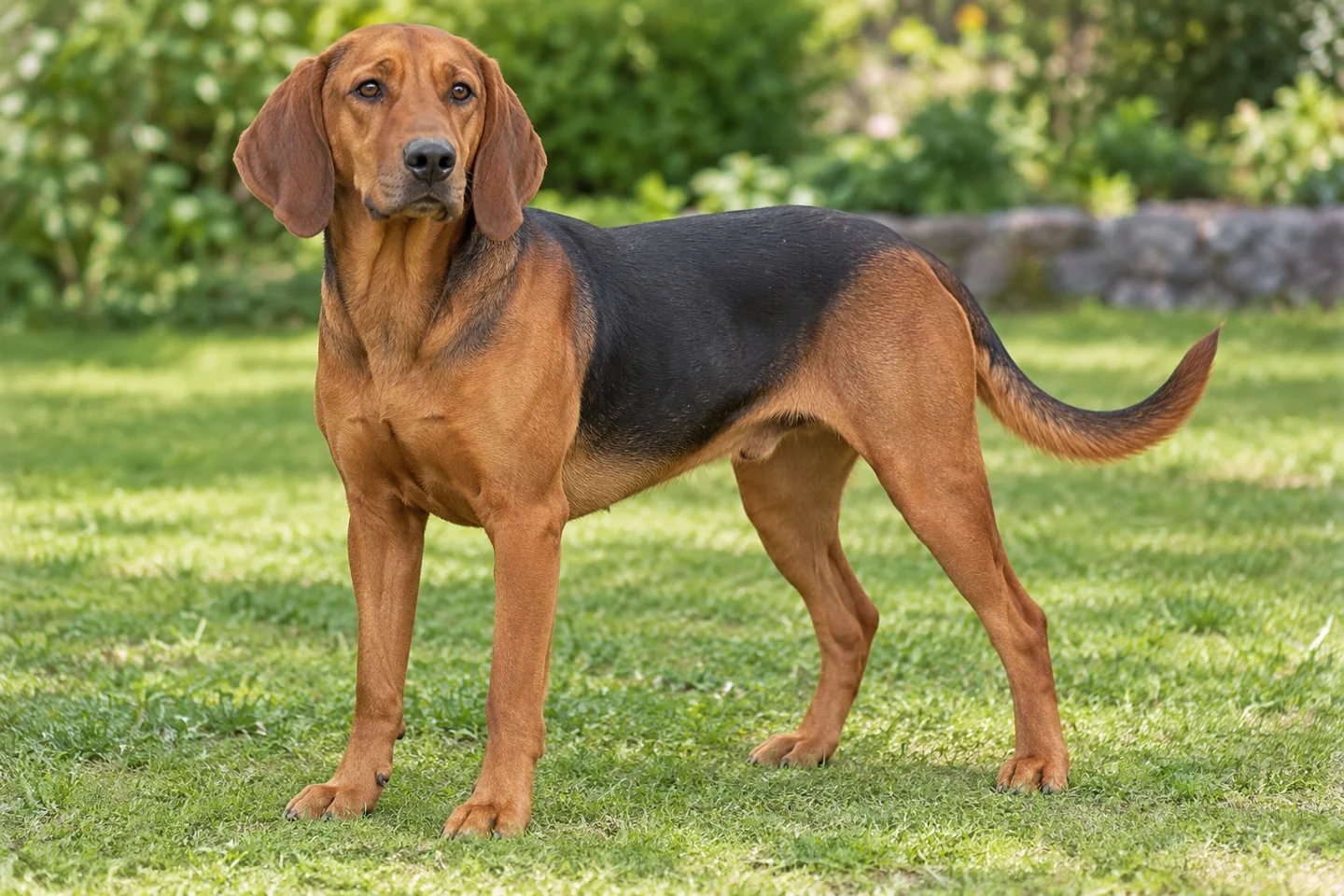
- Short red with a black mantle or saddle
General information for owners. These articles have not been reviewed by a veterinarian. Medical decisions need your dog's history and an examination.
Recognizing the Serbian Hound
The Serbian Hound is the red-and-black scenthound also called Srpski Gonič. The older name Balkan Hound appears in records, so a change of wording does not necessarily mean a different breed. It is separate from the Serbian Tricolour Hound. Confirm the registered identity before comparing pedigrees or interpreting a breeder's documents. Three colors on a dog from Serbia do not establish that it belongs to this particular breed.
The FCI standard places it among medium-sized scenthounds and describes a robust, lively dog. That description explains the general type, while the actual animal supplies the information needed for everyday ownership. Ask to see ordinary walking, resting, and handling rather than only a photograph of a dog standing correctly. The illustrations accompanying this guide show the intended breed appearance. They cannot prove ancestry or show how a real dog will respond to a visitor, a cat, or a veterinary examination.
History and the limits of historical accounts
The FCI records the formal replacement of the Balkan Hound name with Serbian Hound in 1996. Its historical discussion places the breed within the wider Balkan scenthound population. Such accounts need care: a modern breed standard is an institutional description, not independent proof of every suggested ancient ancestry. There is no practical reason to promise a puppy special abilities on the strength of a remote origin story.
For a prospective household, recent history is usually more useful. Ask whether the dog's parents live mainly in kennels or homes, what work they do, and how much experience their offspring receive with domestic life. An adult coming from a working environment may need gradual teaching about stairs, traffic, settling beside people, and being left alone. These are learning questions, not evidence that the animal has failed as a companion. Describe your own setting accurately so that a breeder or rescue can discuss the adjustment rather than matching you through appearance alone.
Adult size and a practical assessment of build
Male height is 46–56 cm at the withers, with 51–52 cm given as ideal. Females measure 44–54 cm, with an ideal of 48–49 cm. The FCI document does not supply an adult weight range. Assess weight through the individual's frame and veterinary body-condition guidance instead of attaching an unsupported kilogram target to every dog. The body is moderately longer than tall.
Before acquiring a puppy, check whether the home can accommodate the likely adult comfortably. A vehicle restraint must fit the grown dog, and a sleeping space should allow it to stretch without blocking the household's main route. Consider who can lift or assist it if it becomes injured. Teach calm access to the car before travel becomes urgent. Changes in ease of rising or willingness to turn deserve attention even when the animal still looks athletic. Measuring a dog's height can help with equipment; it cannot establish joint health, fitness, or the amount of exercise that will suit that individual.
Coat pattern, ears, and useful identification
The characteristic coat combines red coloring with a black mantle or saddle. The standard permits only a very small white chest marking, rather than the extensive white areas used to identify the separate tricolour breed. Natural hanging ears and a full tail complete the outline shown here. Ask the seller to explain identity directly if advertising alternates between Serbian Hound, tricolour, and an unspecified Balkan mix.
Coat resemblance alone is weak evidence for the ancestry of an adopted dog. Record what is known, keep microchip and veterinary details current, and describe uncertain ancestry honestly. Clear photographs of both sides, face, and identifying marks can help if the animal becomes lost. They should complement secure walking equipment and current contact information. Avoid posting documents that reveal a home address alongside a public dog profile. A distinctive saddle may make a dog recognizable, but identifying its household publicly is unnecessary for arranging a walk or discussing breed interests.
Temperament in a household routine
Persistence makes sense in a scent task, but it can become difficult when a person expects the dog to stop investigating immediately. Build a routine in which attention to the handler leads to something useful, such as permission to inspect a safe verge. Notice which environments make cooperation easier and practice there before demanding the same response beside a strong distraction. A dog that cannot yet manage a setting needs teaching and management, not a moral judgment about stubbornness.
Observe rest as well as activity. Does the dog settle after an outing, or continue pacing around doors and windows? Can it remain comfortable while another person prepares food? These answers affect daily suitability more than a broad reputation for friendliness. Preserve quiet periods, provide predictable access to necessary activity, and ask for help when arousal repeatedly prevents sleep or ordinary handling. The standard describes an intended temperament. It cannot certify the emotional state or safety of a particular dog on a particular afternoon.
Training for doors, scent, and found objects
Practice a doorway pause with an internal barrier in place. Reward the dog for waiting while the door moves a little, then make the exercise harder gradually. This allows safe repetitions without relying on a person catching the collar after the hound has noticed something outside. Every regular carer needs the same procedure, including what to do when a delivery arrives unexpectedly.
For scent-led pulling, start where the dog can still turn toward you. Reward a few comfortable steps and then release it to investigate a suitable spot. Teach a return cue on a safely managed line, keeping the line away from legs and obstacles. A discarded wrapper is a separate lesson: practice trading harmless objects before a genuine hazard is involved. Do not repeatedly chase a dog through the house for stolen items, since the chase may become part of the activity. If swallowing dangerous objects is recurring, discuss medical and behavioral possibilities with the veterinary team as well as changing access.

Exercise with a route and an exit plan
Plan activity around the dog's present condition rather than an imagined daily mileage for the entire breed. Walking, controlled scent searches, and suitable outdoor tasks can provide useful outlets. Increase demanding ground or distance gradually. For a puppy, several manageable experiences with rest between them are more appropriate than trying to prove endurance. An older hound may enjoy a brief search beside a familiar path even after longer routes become uncomfortable.
Think through the return journey before leaving. A circular route with no easy exit may become a problem if the dog becomes lame, overheated, or frightened halfway round. Carry water, consider shade and ground temperature, and adjust in hot weather. After rough terrain, examine feet and areas touched by equipment. Keep notes if stiffness repeatedly appears later, since enthusiasm during the walk can hide a developing problem. Secure enclosed exercise areas yourself rather than accepting a name such as dog field as proof that the boundary will contain this animal.
Socialization that teaches ordinary domestic situations
A hound raised in a quiet place may find a lift, busy pavement, or washing machine unfamiliar. Introduce each experience at a level where the dog can observe and recover. Standing at a distance from a school exit may be enough for one session; moving straight into the crowd can create a much harder problem. Let visitors wait while the dog chooses whether to approach, with an alternative resting area available.
Teach handling separately from greetings. A person touching a paw, fastening a harness, or looking near an ear should predict manageable contact and reward. Work in brief sessions and stop before struggling becomes the routine. Adolescents and adults can learn these skills too. Ask an instructor to help set the difficulty when the dog repeatedly freezes, hides, or lunges. Exposure by itself does not establish comfortable learning. The useful question is what the dog could do during the experience and how readily it returned to ordinary behavior afterward.
Children and the moments that need adult planning
A child carrying snacks through a room changes the situation for a food-interested hound. Arrange seating and barriers before the snack appears rather than correcting both child and dog after an approach. Similarly, a running game near the dog's bed is easier to relocate than to supervise through repeated collisions. Adults are responsible for designing these situations, not asking a child to judge when the animal has had enough.
Teach children to pause when a dog turns away and to leave sleeping animals undisturbed. Hands do not belong inside the mouth to retrieve something, and food bowls should not become a trust exercise. An adult can show a child how to reward a familiar cue while maintaining control of the interaction. Visiting children need the same protection, even if the hound is relaxed with household members. If an adult cannot watch both parties closely, arrange physical separation. A comfortable dog-only resting space makes that routine easier to maintain without turning separation into punishment.
Aggression and preventing another incident
Describe a threatening response precisely. A dog that stiffens when approached over a bowl presents a different management problem from one that lunges at dogs behind a fence. Record the distance, resource, movement, and escape options around the event. Remove the immediate pressure and stop access to the situation while a professional assessment is arranged. Repeating the trigger to obtain a better video can create another injury.
Pain and illness belong in the assessment when behavior changes, particularly around touch or movement. Ask the veterinarian about safe examination arrangements if handling is already difficult. A qualified reward-based behavior professional can help build a plan that includes barriers, predictable routines, and training at manageable distances. Suppressing growling through punishment does not resolve the reason the dog warned. After a bite, seek medical advice for the person and review how access occurred before allowing another encounter. No breed description can answer whether that encounter will be safe, and previous friendliness does not remove the need for prevention.
Other dogs and animals at home
Before adding another dog, consider where each animal will eat and rest if they need time apart. A shared interest in scent does not guarantee agreement over a bed, doorway, or chew. Meet away from cramped entrances with handlers able to create space. Observe whether each dog can disengage. Repeatedly trapping one animal against a fence or person is a reason to interrupt, even without an obvious fight.
Cats need a household layout that remains safe after the initial introduction. Provide protected access to their essential resources and prevent the hound from practicing pursuit. The same care applies when doors open for cleaning or deliveries, when a carefully staged arrangement is most likely to fail. Small pets should have secure accommodation with a separate handling plan. A dog that ignores a stationary animal may react differently to sudden movement. Discuss any known chasing history openly before adoption, and decline the match if the home cannot maintain the necessary protection during ordinary daily tasks.
Grooming the short coat and caring for ears
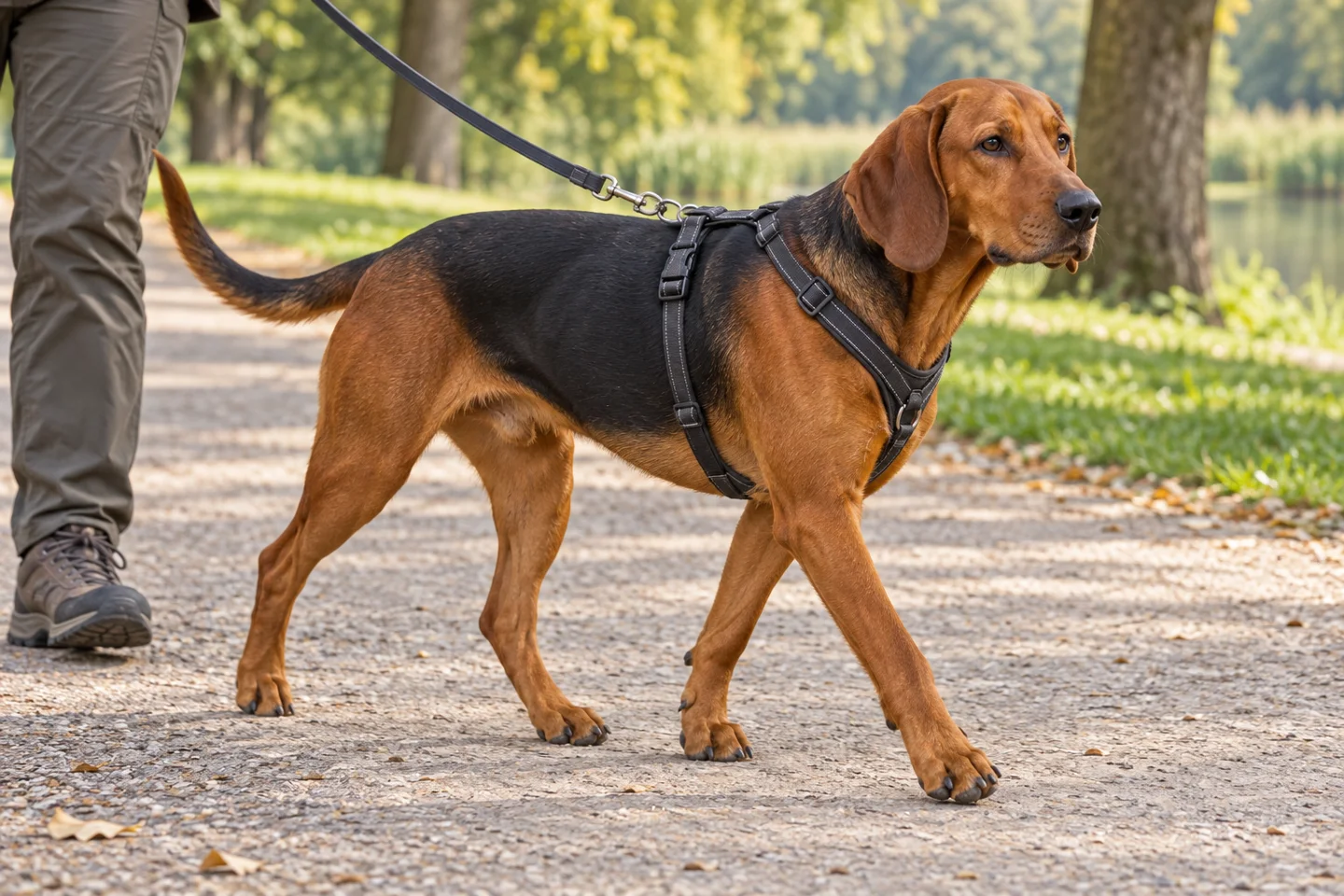
A short coat still needs regular inspection and gentle brushing. Outdoor activity can leave small injuries, ticks, or material caught between toes. Look for rubbing beneath the harness, especially after a wet walk. If one patch becomes sore, change the immediate source of friction and obtain advice about the skin rather than covering the problem with tighter equipment. Maintain nails so that neglected length does not add discomfort to movement.
Inspect the hanging ears without inserting tools deeply. A new smell, discharge, head tilt, or repeated shaking calls for veterinary advice. Ear treatment depends on the cause, so a leftover bottle from another dog is an unreliable shortcut. Introduce tooth brushing and other care in small achievable steps. Set up a nonslip surface and keep equipment ready before beginning. If touching a previously comfortable area suddenly provokes avoidance, investigate the change. Increasing restraint may make future care more difficult while leaving a painful problem untreated.
Health evidence and choosing useful records
The standard establishes appearance and breed identity; it is not a medical screening program. The sources used here do not establish a single international Serbian Hound testing panel or a reliable breed-wide disease frequency. That gap should be stated directly. It does not prove that the breed is free from inherited disease, and it does not justify copying every test recommended for an unrelated hound.
Ask a breeder which registry and current breeding rules govern the litter, then request records that identify the actual parents. Have the veterinary team explain what an examination or laboratory result can answer. A routine vaccination appointment is different from specialist screening, and a commercial DNA list may include conditions whose relevance to this population has not been demonstrated. Ask specifically about medical problems in relatives and the ages at which they appeared. For an adult rescue with limited family information, prioritize an individual examination and a clear account of current symptoms, medication, previous treatment, and behavior around necessary care.
Health changes after an outing
A dog returning from an outdoor activity needs more than a quick look at its coat. Notice whether it drinks normally, walks evenly, and settles in its usual way. Keep a simple record when a change recurs after particular terrain or duration. That pattern can help a clinician decide what to investigate. It cannot diagnose the cause on its own, so do not label every hindlimb problem inherited hip disease or every tired evening ordinary exertion.
Prepare practical information before urgent care is necessary: the veterinary contact, transport arrangements, current medicines, and the location of relevant records. Ask the practice which signs require immediate attendance and how to reach emergency help outside normal hours. Collapse, serious breathing difficulty, and suspected poisoning require prompt professional advice. Avoid giving human pain medication or another animal's prescription. If a plant, chemical, or discarded substance may have been swallowed, provide its identity or packaging when available without delaying care. Prevent further access while the clinic advises the next step.
Feeding, mixes, and the real cost of ownership
Measure the regular ration and include food delivered during training. Review body condition over time, particularly when activity changes through weather, illness, or a new household schedule. A sudden appetite change should prompt questions about health rather than an assumption that all hounds are greedy. The veterinary team can advise on a complete diet appropriate to life stage and on safe changes when digestion is unsettled.
For a Serbian Hound mix, documented ancestry and observed behavior provide more useful information than an invented crossbreed promise. Adult size, coat, voice, and pursuit can vary. Relevant parental assessment still matters where a litter is planned; being a cross does not guarantee freedom from disease. Ask local providers about the actual cost of veterinary care, secure boarding or home care, training support, and transport. Include the time needed to exercise the dog safely. If a household depends on one person for every walk, arrange and practice backup care before illness or travel makes the gap urgent.
dogsDating meetings for a scent-interested companion
Use a dogsDating profile to explain what a successful walk looks like for this dog. It might mean time to investigate verges, room away from unfamiliar dogs, and a handler who prefers a steady route to off-lead play. Keep exact home coordinates private and do not disclose the household address publicly. An approximate area is enough to agree on a public meeting location. Check that the starting point offers space before both parties arrive.
Discuss handling expectations in advance. Each person should be able to turn away, pause, or end the meeting without the other trying to force a greeting. Start apart and observe whether the dogs can continue ordinary walking while aware of each other. Avoid bringing them nose to nose over a dropped treat or through a narrow gate. If either becomes fixed on the other or repeatedly tries to escape contact, increase the gap and reconsider the outing. Compare specific observations afterward: which distance worked, what caused difficulty, and whether another meeting would suit both dogs. A short manageable walk is enough information for an initial decision.
Sources and editorial notes
Sources checked October 22, 2026. Breed measurements describe reference ranges, not a diagnosis or an individual dog's ideal weight. Images are AI-generated breed illustrations and do not document a particular dog or health condition.
- AVSAB: Humane Dog Training Position Statement
- VCA Animal Hospitals: Food aggression in puppies
- VCA Animal Hospitals: Common emergencies in dogs
- Orthopedic Foundation for Animals: CHIC health screening programs
- VCA Animal Hospitals: Aggression toward unfamiliar dogs, diagnosis
- VCA Animal Hospitals: Grooming and coat care for your dog
- VCA Animal Hospitals: Ear infections in dogs (otitis externa)
- AAHA: Feeding plans for healthy, appropriate weight cats and dogs
- VCA Animal Hospitals: Heat stroke in dogs
- AVSAB: Puppy Socialization Position Statement
- VCA Animal Hospitals: Dog behavior problems, aggression toward children
- FCI Serbian Hound standard 150: identity, naming history, adult heights and coat
Keep getting to know dogs.
Read another guide or return to your dogsDating community.
Explore breed guidesBack to dogsDating